Jump to ratings and reviews
Rate this book

Doctor Who Target Books (Numerical Order) #68

Doctor Who and An Unearthly Child

Rate this book
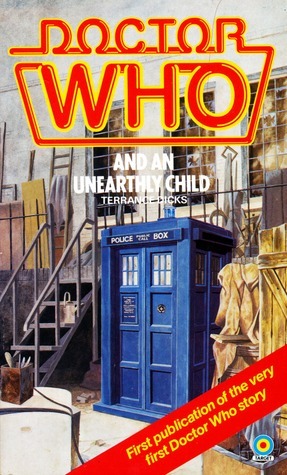
FIRST PUBLICATION OF THE VERY FIRST DOCTOR WHO STORY

A strange girl who knows far more than she should about the past – and the future...

Two worried teachers whose curiosity leads them to a deserted junk yard, an extraordinary police box and a mysterious traveller known only as the Doctor...

A fantastic journey through Space and Time ending in a terrifying adventure at the dawn of history...

DOCTOR WHO AND AN UNEARTHLY CHILD

THE BEGINNING OF A LEGEND

128 pages, Mass Market Paperback

First published October 1, 1981

17 people are currently reading
939 people want to read

About the author

Terrance Dicks

326 books219 followers
Terrance Dicks was an English author, screenwriter, script editor, and producer best known for his extensive contributions to Doctor Who. Serving as the show's script editor from 1968 to 1974, he helped shape many core elements of the series, including the concept of regeneration, the development of the Time Lords, and the naming of the Doctor’s home planet, Gallifrey. His tenure coincided with major thematic expansions, and he worked closely with producer Barry Letts to bring a socially aware tone to the show. Dicks later wrote several Doctor Who serials, including Robot, Horror of Fang Rock, and The Five Doctors, the 20th-anniversary special.
In parallel with his television work, Dicks became one of the most prolific writers of Doctor Who novelisations for Target Books, authoring over 60 titles and serving as the de facto editor of the range. These adaptations introduced a generation of young readers to the franchise. Beyond Doctor Who, he also wrote original novels, including children’s horror and adventure series such as The Baker Street Irregulars, Star Quest, and The Adventures of Goliath.
Dicks also worked on other television programmes including The Avengers, Moonbase 3, and various BBC literary adaptations. His later work included audio dramas and novels tied to Doctor Who. Widely respected for his clarity, imagination, and dedication to storytelling, he remained a central figure in Doctor Who fandom until his death in 2019, leaving behind a vast legacy in television and children's literature.

Ratings & Reviews

What do you think?
Rate this book

Friends & Following

Create a free account to discover what your friends think of this book!

Community Reviews

5 stars
234 (23%)
4 stars
320 (32%)
3 stars
367 (36%)
2 stars
57 (5%)
1 star
15 (1%)
Displaying 1 - 30 of 118 reviews
Profile Image for Alejandro.
1,303 reviews3,778 followers
May 2, 2016
A legend is born


DOCTOR... WHO?

It's odd how legends began. Many successful and enduring sci-fi TV sagas have had odd "pilot" stories. If you think in the "pilot episodes" of some other sci-fi TV series such as Star Trek ( and all its spin-offs ), you hardly can judge the potential of them. I think that sci-fi series, at least in TV, it's a matter of faith and time. You need to give those two things to the production team, so they can be able to develop their series and let them to show you how great, epic and imaginative, those series can be.

In the very first storyline of Doctor Who, you have a mysterious old man who kidnaps the two school teachers of his granddaughter and the four of them travel back to the dawn of time in a police box. Since the title of the series implies to the mysterious old man, you have to deduce that he is the main protagonist. However, in this first story, he is an antipathetical man, he is too fragile to run or fight when it's needed, and even he doesn't know how the time machine really works.

Certainly, fans needed to give a lot of faith and time to the production team of Doctor Who to show them why this British TV series became a landmark in Science Fiction with 50 years of legacy.

And certainly with already 50 years of history in the sci-fi series, believe it or not, there are still things of An Unearthly Child that remains in mystery.

Fans needed to wait 6 years to know how is called the race from The Doctor is; and fans needed to wait 10 years to know the name of his homeworld.

But even 50 years later, fans don't know how exactly is that Susan is the granddaughter of The Doctor, that, and of course, The Doctor's name (that I hope it will remain in a mystery).

So, if you want to engage in this great saga, mystery is something which you have to live with.


THE ADVENTURE BEGINS!

I enjoyed a lot reading this novelization of the first storyarc of Doctor Who. I didn't like how The First Doctor behave in his first adventure, but I was quite entertained with the story about the cavemen tribe and their struggles about leaderships, food and of course...

...fire.

It was quite amusing reading how an advanced alien scientist from the future wasn't able to make fire simply because he lost his matches.

Also, I found interesting the analogy here, of how the secret of making fire was kept in order to retain leadership in the tribe. Humans, we have evolved really little about that. We still keeping breakthrough discoveries from the rest of people in order to be in power and/or advantage over the rest.

Any time travel story which "predicts" something that haven't happened yet at the time of which was written/produced is something to take in account. In here, when the original TV storyarc was shown, Susan (The Doctor's granddaughter) did a comment about inminent using of the decimalisation system on England, that in 1963 (airdate of the TV storyarc) wasn't in use but it did eventually in 1971.


RELEASE THE GEEK!

Releasing my "geek" side for a moment, I wondered how large can be the range of the telepathical field of the TARDIS, since The Doctor and his companions must be quite away from the time machine when they were captured on the caves, and still they were able to understand the language of the cavemen. I thought that they need that the TARDIS would be relatively near of the group to be let them be able to understand other languages. But, it's just my "geek" side and me, babbling about.

Other odd thing was that the "yearometer" marked "zero". Okay, it's the "dawn of time" but there are already cavemen, so hardly time remains as "zero", also, maybe, just maybe can be "zero" in this planet (who may be or not, Earth) but one has to suppose that the Time Lords have other means to measure time in an universal scale, beyond of the local systems of each particular world.

A priceless way to "end" the book was leaving the kinda "cliffhanger" for the next exciting adventure of Doctor Who establishing that the First Doctor was meeting for the first time his greatest enemies...

...The Daleks!!!

Stay tuned, folks!!!


Profile Image for Julie.
684 reviews13 followers
August 5, 2022
3⭐ = Average Read.
I was a huge fan of Doctor Who as a child and watched on a Saturday night, often hidden behind a cushion!
I have decided to re-read a few of the books that were televised. The storyline wasn't fantastic in this book but I was introduced to how the Doctor and his Granddaughter faced their first adventure.
Profile Image for James.
612 reviews121 followers
May 15, 2016
The opening story in the Doctor Who TV canon, this is Terrance Dicks' novelisation of the first four-episode story arc of the same name: An Unearthly Child . Barbara and Ian, two school teachers, are worried about one of their students – Susan. She has some strange behaviours; appears to know far too much about some things and far too little about others. So they decide to follow her home one evening and confront her strange, autocratic father, who identifies himself only as the Doctor. The rest, as they say, quickly became history (and future, and present on other worlds, etc.) as the Doctor whisks them all away in his Tardis to the dawn of time (and a 50 year TV career).

Novelisations have a tendency to be a bit one dimensional, but Dicks brings a depth to the secondary characters here that just wasn't present, or possible, in the TV episodes. Whether this is Dicks embellishing the screenplay to make the novel read better or if there was detail in the original script that wasn't apparent in the episodes isn't clear, but it works. The secondary story featuring the cavemen is really only a device to introduce us to the characters and premises of this, and future, stories. And while well told (arguably better than the original TV episodes) it's always going to be difficult to try and cram a real plot into such a short story while also introducing four central characters and the beginnings of the science-fiction back-history of the Tardis and its capabilities.

Already looking forward to Doctor Who and the Daleks ...
941 reviews5 followers
July 25, 2018
A great read. In several places Dicks cleverly adds to what we know from the televised story ( the first 2 episodes take up nearly 80 of the 128 pages), but that leaves the end feeling a bit rushed at times. Loved the confrontation with the tiger.
Profile Image for Robert Davis.
765 reviews64 followers
September 26, 2018


So, this is where it all started. I first read this in 1983 with great interest. Back then, the original stories from the 1960's (those that survived the great junking) were not yet widely available, even on VHS. So, these Target novelizations were sometimes the only way familiarize with the early stories, and of course, with the stories that remain lost. These little Target books brought Doctor Who to new generations of fans. The writing was hit and miss, but what they may have lacked in sophistication, they made up for by being accessible.

An Unearthly Child is a hit, in at least as far as the writing is concerned. Unlike with many novelizations where liberties are taken with dialogue and plot, Terence Dicks remains very faithful to the original material, (while including a bit of interesting education about the English monetary system of the 1960's).


This story is notable as setting up the tried and true formulae of 'capture--> escape--> recapture--> re-escape' that would be used greatly throughout the run of the series.

At the end of the story, they all


NEXT EPISODE: https://www.goodreads.com/review/show...
Profile Image for Scott Rhee.
2,310 reviews161 followers
October 20, 2014
The long-running BBC TV show "Doctor Who" is a phenomenon. That's an appropriate word, not only for the fact that the show has been running steadily since the late-1950s, but also because the titular character is as enigmatic as he is lovable. Sixty-some years, and we still don't know his name.

Sadly, some of the original episodes may have been lost, according to the BBC. Lack of proper film preservation has led to the degradation of many original episodes. Today, those episodes exist solely in the memories of those who watched their original air-date, as well as the scripts.

Thankfully, countless Doctor Who novels have been published, some of them novelizations of original episodes and some original stories.

Terrance Dicks published "Doctor Who and an Unearthy Child" in 1981, based on the original BBC script by Anthony Coburn. "Unearthly Child" was the first Doctor Who episode aired, according to the blurb on the book's cover. I have seen many classic episodes, but I don't recall this one.

In this episode, we meet the first incarnation of the Doctor, played by William Hartnell. A somewhat grumpy Doctor, Hartnell was probably the oldest incarnation. Susan, the young girl that travels with him (and oddly calls him "grandpa" in this story) is followed to the TARDIS by inquisitive teachers Ian and Barbara, who wonder why Susan is calling for her grandpa and then walking into a blue police box. They follow her in, and the rest, of course, is history.

"It's bigger on the inside": a phrase that is repeated by every new Companion of the Doctor, before they are swept through Time and Space on mind-boggling and exciting adventures.

For those unfamiliar with the show, this may be an awkward one to start with, mainly because so much of the mythos of Doctor Who---the fact that he is a Time Lord, his home planet of Galifray, his relationship with the Daleks---is missing in this story. Then again, perhaps this is the best book to start with, as it was supposedly the episode that started it all.
Profile Image for Jim Reddy.
304 reviews13 followers
June 9, 2024
This 1981 novelization, written by the prolific Terrance Dicks, is of the very first Doctor Who serial from 1963. School teachers Ian Chesterton and Barbara Wright follow their mysterious student Susan to a junkyard. There they wind up meeting The Doctor. After they enter the TARDIS they all travel back in time to the stone age.

The Doctor isn’t as likable as he later becomes and the adventure involving cave people isn’t as exciting as later stories, but it was interesting reading such an early adventure from when they were still developing the character. Written in a simple style, it was a light and fun read.
Profile Image for Michael.
203 reviews38 followers
September 8, 2018
It was only earlier this year that I got my hands on a DVD containing the first three Doctor Who stories broadcast. Having been a fan of the series since the 80's beginning with the Fifth Doctor (Peter Davison) era, this was quite exciting. I watched An Unearthly Child and found myself mesmerized by the first episode.

As a brief aside: if you aren't familiar with the television format of Classic Who, stories were broadcast as multi-part serials, with a new installment appearing every week. Thus, while An Unearthly Child is one story, it's made up of four separate episodes, each meant to fill a 25-minute time slot. Early home video releases and US television broadcasts were usually edited to clip the extraneous closings, credit scrolls, openings, and recaps so they can be watched from start to finish as a single, uninterrupted experience, but the DVD releases have these cliffhangers and recaps intact to recreate the original experience of watching the program at home. Pretty nifty!

Watching the premiere episode of Doctor Who, in all its black and white glory, is a magnificent experience, not just for the historical aspect of what you're watching, but also for the incredible atmosphere and even sense of dread it manages to conjure up. The episode opens on a deserted, fog-enshrouded London street where a lone patrolman walks his beat, inspecting storefronts, shining his flashlight (er, sorry, 'torch') into shadowy spaces, and in general making sure all is well with his area. He takes a brief glance into a scrapyard, owned by one "I.M. Foreman, Scrap Merchant", moves his light over the assorted piles of trash/treasure, and lingers with slight confusion on a police call box before closing the door and continuing on his route.

It's eerie. The darkness in black and white productions is always so crisp and absolute, the whiteness of the fog contrasting with the stark shadows. From the first frame, Doctor Who establishes itself as a program where anything could happen. It's a marvelous introduction to the series, and I'm pleased to see it repeated so well in the novel, where Terrance Dicks gets inside the policeman's head as he performs his rounds. The sight of the police box prompts him to think about the rumors going around about how one day every man on the force would have his own portable walkie-talkie radio, which would make the call boxes obsolete. He discards that idea like rubbish, then goes on about his business, leaving the scrapyard.

Dicks departs from the teleplay by describing how the next day, while performing his rounds and inspecting the scrap yard again, the officer notices the police call box missing and wonders, briefly, if it was somehow connected to the disappearance of the scrap yard proprietor, his granddaughter, and two teachers from the local school. He waves off the thought though:

After all, you couldn't get four people into a police box - could you?


Dicks stays fairly true to the script from that point on, introducing three of the four main characters over the next couple of pages. We meet Susan Foreman, a young woman of roughly 15 years of age, along with Ian Chesterton her science teacher, and Barbara Wright her history instructor. Barbara's been trying to figure Susan out for some time now. She can't put her finger on what it is exactly, but there's something off about Susan. She knows far too much about some things that should be beyond her comprehension, and not enough about the sorts of everyday things you'd expect a fifteen year old girl to be on top of. Finally tonight her curiosity boils over, and after telling Susan to wait while she retrieves a book on the French Revolution for her, Barbara heads to Ian's classroom to talk it over with him.

Ian feels the same way. Half the time, he says he feels like Susan's the one teaching him about math and science. She also has strange notions about the fourth and fifth dimensions, stuff far too advanced for a girl her age, and she's utterly against having visitors over, claiming her grandfather doesn't care for strangers. Barbara hatches a plan to follow Susan home and see where she lives (the address on file with the school is a junkyard with no apparent place of residence), then make sure she's OK.

What follows begins an incredible adventure that captured the imagination of the public so vividly that it's still around today. Ian and Barbara follow Susan, meet her grumbling grandfather, and wind up inside the police box sitting in the scrap yard (which is, of course, bigger on the inside since it's a TARDIS...). Refusing to release the two teachers, this mysterious individual who doesn't answer to 'Foreman', just 'Doctor', sets his craft in motion to travel through time and space and prove to the poor instructors he isn't the crazy, brain-addled old man they believe him to be.

The only thing is, this TARDIS is touchy and temperamental much like its owner. Some of its bits and bobs don't work like they should, especially the chameleon circuitry, which is meant to camouflage it against casual observation. The crew wind up far in the past, in the time of primitive man where savage beasts roam the forests, caves are the best form of shelter, and fire is the tool which sets leaders apart from the rest of the tribe.

Lots of people find the last three episodes of An Unearthly Child far less interesting than the first, and originally I fell into this camp as well. The introduction to the characters is so well done the subsequent scenery and story of survival among the cavemen feels drab by comparison. Dicks' novel, on the other hand, does a great deal to upend this notion. With the only constraint imposed upon him by Target being a maximum page count (most of these books ran 128 pages with few exceptions) and instructions to follow the storyline of the screenplay, he plunges into the minds and thoughts of the various tribe members as they encounter these people in "strange furs" who can seemingly produce fire at will.

The hostility and enmity between the current tribal leader Za (whose father died before passing on the secret of how to make fire to his son), and his rival Kal (who is the only surviving member of a different tribe, but is a fierce warrior possessed of considerable cunning) is well-executed, with both men always looking to obtain favor over the other and willing to use almost any means or make any promise necessary to come out ahead.

While Susan and the Doctor have a fairly good idea of what's going on and where they are, Ian and Barbara (along with the reader, naturally) have to figure it out as they go. Where are they, and more importantly after the Doctor is taken prisoner by Kal and brought to the tribe, how do they get him back so they can return to the TARDIS and get away from this era where they not only don't belong, but also risk death from both the tribe and the creatures which prowl the jungle?

if there's a downside to this novelization (beyond the fact it showed up eight years later than it should have), it's the strict page count to which Dicks had to adhere. The first 79 pages of the book comprise the first two episodes, which leaves Dicks just under 50 pages into which to cram the remaining two, and the story suffers for the required rush.

That said, you really have to appreciate just what Dicks manages to do in this story, fleshing out bits that couldn't be shown on television for obvious reasons--the scene where Za fights a sabertooth tiger is far more exciting in print than on film, since they weren't about to release an actual big cat on an actor.

The rest of the story's strengths are down to Anthony Coburn's original script, which gives us an intelligent, cunning, resourceful, and alien Doctor. Far from the Humanity's Defender persona the character has developed in the current "new Who" era, this Doctor is a visitor, an observer, and a condescending one at that. He has to rely on his human companions, especially Ian, to demonstrate compassion. While the companions serve as a convenient plot device to relate information to the audience, Coburn's screenplay shows they could be more than just the confused sidekicks they could have been.

Barbara and Ian serve to counterbalance the Doctor's initial xenophobia with regards to other species. Far from being dead weight, they keep the Doctor grounded, providing a constant reminder, especially in the early shows, that he's toying with real lives beyond just his and Susan's. If your first exposure to the Doctor was David Tennant or Matt Smith, the scene where the Doctor decides the most logical and expedient solution to a problem is to commit murder will leave a sour taste in your mouth. "That's inhuman!" you'll want to scream at the book, and you'll be correct...and miss the point. The Doctor is not human, and this is just one of the many ways Coburn chose to underscore that detail. Early Doctor Who adventures are surprisingly brutal when compared to the whimsy later writers and actors brought to the part and the stories.

The story also showcases the Doctor's intelligence and cunning. While Hartnell bought a beyond-his-years spryness to the part, the fact remains the Doctor's first screen appearance is within a white-haired and over-the-hill body. While Ian was there to provide the physical excitement, and Barbara and Susan the screams, the Doctor can't rely on brute force to overcome problems, and thus has to out-think his opponents. It's this component of his character, the need to come up with the outside-the-box solutions and provide his enemies with enough rope to hang themselves, that would become a series staple. They're first demonstrated here, as the Doctor tricks Kal into revealing he was the one who committed a murder by using Kal's pride against him. It's a fantastic, underplayed moment you won't see coming until it's too late, and Dicks transcribes it perfectly.

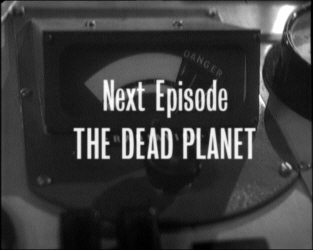
The novel, just like the TV program, ends on a cliffhanger where the TARDIS lands on a different alien world and the group walks out just as the radiation counter flips to life and swings to the 'Danger' zone. In case you aren't already in on the joke, Dicks name-drops the planet and the enemies the Doctor and his companions are about to encounter, which is OK since episode 2 was already novelized back in 1973 as part of the original batch of three. Spoilers for a fifty-five year old story, but it's...the Daleks! (Gasp! Swoon!)

No matter how you look at it, it's impossible to concede An Unearthly Child is anything but as close to perfect as one could hope for. If you've never seen the episode, the book will make you want to read it. If you have seen it, the book does a grand job filling in little bits here and there that make the story that much better. Why Target chose to leave this story until 1981 I'll never know, but if you're looking for a good place to start reading classic Who, this is an ideal choice: it's short, it's brilliant, and best of all it's very inexpensive thanks to a slew of printings (mine's a fourth printing from 1984; there may have been more beyond that).

Four-and-a-half spinning blue police box lights out of five for the Doctor's first outing.
Profile Image for Craig.
6,330 reviews178 followers
July 19, 2021
This is a novelization by Terrance Dicks of a teleplay by Anthony Coburn and is the very first adventure of the first iteration of The Doctor in The Doctor Who series. The show was first broadcast on 11/23/63 (really!), but Dicks' book didn't appear until 1981, after popularity for all things Whovian was at its (first) peak. Two school teachers, Ian Chesterton and Barbara Wright, take a special interest in a teen-aged girl, Susan Foreman, and follow her to her home in a junkyard where she lives with her grandfather. They actually live in The TARDIS (c'mon, we all know what that stands for!), and the four are transported to the time of the cave men, where they have some harrowing adventures. It's not really a very complex plot, but Dicks does a good job of fleshing it out some, as well as compressing some of the tedious chases. He was the premiere adapter of the Doctor episodes to novel form. This one is a quick read, and engaging not only for the unique value of being first. They escape from the dawn of Earth only to come to rest on a bleak and barren landscape, unaware as of yet that they're on Skaro and the Daleks await...
Profile Image for Ken.
2,562 reviews1,375 followers
April 28, 2018
School teachers Ian Chesterton and Barbara Wright are concerned about the strange behaviour of student Susan.
Having decided to follow her home one evening to the address given, a deserted junkyard in Totters Lane.
There’s no sign of Susan, just an old looking man with white hair and a strange blue box that seems to be humming.
This is the start of great adventure in time and space!

Terrace Dick’s novelisation is very faithful to the first televised story, even all the iconic lines feature.
The Time Travellers find themselves faced with a tribe of cavemen, the story flows quite nicely into this section during the second half of the novel.
Dicks adds depth to the tribe, their power struggles for leadership is fascinating

It’s a well written book, predominantly aimed at a younger audience, it’s a fantastic read for both long term fans and those that are interested in how this iconic character was first introduced.
Profile Image for Gabriel Mero.
Author 5 books7 followers
February 23, 2025
The first ever episode of Doctor Who. In 1963 it was considered a big deal, but by today's standards, the story is meh at best. The Doctor spends more time being petulant and crabby than actually doing anything to help. If it wasn't for Ian Chesterton, the Doctor, Susan, and Barbara would have died. I'm glad this formula didn't last long.
Profile Image for Joseph R..
1,262 reviews19 followers
August 31, 2018
As boldly announced on the cover, this book is the "First publication of the very first Doctor Who story." Having never seen the very first episode, I was intrigued to read the book. The story has many elements that have lasted throughout the years--kidnapping of the Doctor and his friends, escaping and being re-kidnapped, co-ordinating various skills in the group, discussing the "it's bigger on the inside" nature of the TARDIS, and traveling to an exotic time.


The story starts with Susan, a brilliant school student who doesn't know some of the basics, like how pre-metric English money works. Two teachers, Barbara and Ian, are concerned about her and follow her home to the address the school has--a junkyard in town. In the yard, they don't see Susan but they do see a perfectly serviceable police box and an old man fussing around. Soon enough, they are inside the TARDIS and wind up in pre-historic Earth where a tribe of cavemen fret over the invention of fire. Action and excitement ensue.

I enjoyed the story though the writing is very plain. It's the perfect sort of beach-reading fun novel. The Doctor Who connection is a bonus. Now I must hunt down the original episode on DVD or streaming somewhere.

Mildly recommended.
Profile Image for Alex.
202 reviews60 followers
March 16, 2015
As someone who has religiously watched Doctor Who since it made it's return 10 years ago (is it really that long??) I'm a little shocked that I only saw the first ever episode very recently. This is the novelisation of the first ever episode, and the first chance we get to meet the Doctor.

It's got everything I love about Doctor Who in. Time travel, alien worlds, bad guys an the Doctor himself. The story is written in a simplistic style with very little description or waffle; it's very much dialogue-action-dialogue-action. It works though. The downside to this is that there's very little character development, and I haven't yet got much of a sense for the first Doctor.

A very enjoyable way to see how it all began.
Profile Image for Camilla.
142 reviews38 followers
October 10, 2012

This novelization of the first Doctor Who story arch ever felt like a transcript reworked into a novel, which I suppose is fine. It wasn't horribly fleshed out though. There was hardly anything about what any of the characters were thinking or feeling. The book is for children, and it shows. It tries to slip a little educational content in, like when it said that dinosaurs living with humans during the Stone Age was a common misconception. Also, in the worst line in the book:

'Me neither,' said Ian ungrammatically.

The book is worth it for those who like completion, but probably not for most people, despite the wonderful story.
Profile Image for Christian Petrie.
253 reviews2 followers
June 18, 2011
The book starts off strong with Ian and Barbara heading to find out more about Susan, thus leading to the Doctor. The introduction to the Doctor and the TARDIS is great, along with the Doctor taking Ian and Barbara. With the reactions and interactions between the main characters, we see where everyone comes from. Once we reach the the cavemen, things slow down as it becomes get captured, escape, and get captured again. The cavemen are just there, simple characters with not much going for them. The brights side is that it feels that Terrance Dicks had problems with this as well, since the first episode and half of the series takes up more than half the story. Also, he focuses more on the main characters interactions during this time as well. The caveman plot does move faster than the actual episode. Overall, not too bad starting off the Doctor Who book range.
Profile Image for michelle+8.
116 reviews26 followers
February 3, 2017
Being an avid Doctor Who fan, I have of course developed an interest in all those classic Who stories that I missed out on by coming in so late in the game. So far I have found the novelizations to be a great way to catch up. This story was a pretty interesting look at the first Doctor and his companions on their very first adventure together. It's clear that the Doctor's character has come a long way since those early days. I have to admit, I was a tiny bit disappointed in one respect. I'd expected the novelizations to be true to the TV show, but one of my favorite lines was cut out -- the part where Ian (or was it Barbara?) addresses the Doctor as Doctor Foreman and he replies, "Doctor Who?" ;)
Profile Image for Tiffany Sherrum.
17 reviews
May 3, 2013
A lot better than I expected! I mainly know this story from watching the DVD of the original episodes, and always considered the cavemen storyline to be one of the more dull Doctor Who episodes, only really notable for being the first journey seen.

The book, on the other hand, made the story a lot more engaging! The characters are a lot more memorable when you're reading their associated character names and their thoughts, rather than watching the episodes themselves where there's a lot of unintelligible floundering around.

In short, it took a bad Doctor Who story and made it much easier to follow, and as such, much more entertaining!
Profile Image for Patricia.
313 reviews19 followers
November 30, 2012
Muy buena esta novelita, la primera que leo de Doctor Who, al que le guste la serie, aunque no haya visto nada de la serie original esta novela le va a encantar, narra el principio de la serie con el primer doctor, me encantó!
Profile Image for Tom Jones.
106 reviews17 followers
November 2, 2017
I prefer original fiction and the ranges like The Virgin New adventures, Missing Adventures, Past Doctor Adventures and so on. Now, I've decided to start reading the target books more because I do have almost all of them.

What's great about the Target books is not only do they sometimes add extended details and depth to the original story (like Power and Evil of the Daleks) but they can be really easy quick reads that take about an hour or two to read. Like short stories, Target Books are a good way to spend an hour or two.

First review is of the pilot story being "An Unearthly Child" originally written by "Anthony Coburn" for the TV story and it's novelised by my favourite writer "Terrance Dicks." Such a legendary name in Doctor Who and with the Target book range as he's novelised so many classic TV stories. The War Games and Horror of Fang Rock by him are my favourite pieces of television and content ever produced.

I have quite an unpopular opinion of enjoying episode 2,3 and 4 of An Unearthly Child. Some people find it dull but I enjoy the TV story as a whole. I was very interested to see how the novelisation would go down.

REVIEW
The plot of the story is it's set in Cold Hill School with the introduction of Susan's teachers Ian (Science) and Barbara (History) being concerned and curious about Susan and find her a mystery. This leads Ian and Barbara to then make a bad mistake of getting into evidence that will take them away from earth as they know it and in time and space. Lost from home, they first end up in 100,000BC with deadly savages. Ian, Barbara, The Doctor and Susan tie into the dangers of the tribe trying to get fire.

Terrance Dicks captures the characters and how they were portrayed in the story fantastically. Episode 01 doesn't feel rushed and the length feels perfect. It gets the point across of Susan being a mystery, Ian and Barbara concerned about Susan and The Doctor introduced well. It flows at a good pace with the TV story and no unnecessary padding. Some scenes and dialogue is a little different and has been changed slightly in places by Terrance Dicks.

Episode 02 is structured a little different. It does state Kal's intentions (One of the savages) right off the bat and I personally didn't find that good story telling. It should of been revealed how the TV story did it. It feels a little contrived in this manner. However, near the end of this section of the story, I liked the animosity towards Ian and The Doctor. When The Doctor claimed it was his fault of being captured and Susan say's "Don't blame yourself grandfather." Ian thinks very aggressively at The Doctor. The tension works well between them and continues to do so in episode 3 with the rock scene and the final part. It plays nice respect to the original story and the relationship the main characters had during The Beginning Box set. (An Unearthly Child, The Daleks and The Edge of Destruction.)

The throw down between Za and Kal was executed pretty poorly in my opinion and was hoping it would go in a bit more depth of what the two were thinking when in a fight to the death.

Overall, a good novelisation and well written by Terrance Dicks. It's just under the TV story in my opinion because it does develop two problems that weren't present in the TV story. Kal's intentions were revealed in a contrived way and the fight sequence could be been better executed with some depth. Perhaps we could see the fight and thoughts of Za and Kal when they were fighting to the death. Other than that, it was very well paced and the drive was good. The drive in the novelisation felt the same as the TV story. It gets a very strong 7 from me but not quite an 8.

I will never end up reviewing Target books on my YouTube Channel: TJ Productions. (An overview perhaps) But I will be reviewing them here.

Novelisation: 7/10
TV Story: 8/10


Profile Image for Karl.
111 reviews
April 10, 2020
School Reunion. That's it. That's when I became a fan of Doctor Who. It was the first time I was ever exposed to Doctor Who. And I fell in love with it immediately. I didn't even watch it because it was Doctor Who. I had never even heard of Doctor Who, to be honest. The only reason I knew about story was because Anthony Head was in it. I adored him in Buffy: The Vampire Slayer and when I heard he was in it, my interest was peaked. At least enough to mention to a friend who was visiting who, uh, happened to have it with him (somehow).

It wasn't really a good story to begin with, loaded with lore as it were and it was a bit into the second series (David Tennant's first) so a LOT went straight over my head.

But I still fell in love with it and for years I followed it religiously. There were ups and downs but through it all, every week waiting for Doctor Who was a brilliant one.

Then one day I decided it was time for me to take a look back in Doctor Who, going back all the way to the beginning. Discovering that a ton of episodes were still missing (and will probably stay that way) and how different the format was, of the cancelation and attempts at spin-offs and novelizations and... it was a lot to understand, to realize. At first I decided I wasn't going to watch any stories with missing episodes but... then I thought "No, I owe it to Doctor Who to understand what it's all about." and having only listened to the episodes I got a taste for audio dramas and... wow, it was just such a big part of my life for a while there, I now realize.

I first became interested in the novelizations when watching numerous specials on the early Doctor Who, where fans spoke lovingly about the Target novelizations since that was one of the few ways that they could still experience the old show. Perhaps more importantly, however, was when several of the writers explained the huge difference between what was in the script and what eventually ended up on the air (due to budget, time and space). And since the novelizations are based on the scripts, I thought "Well, through the lens of my mind... it has to be just a bit better."

So here I am. Reading the old Target novelizations of Doctor Who. And I was... right!

Doctor Who and an Unearthly Child is the novelization of the first Doctor Who serial that ever aired (of, more or less, the same name). It's a pretty faithful adaptation of the show by Terrance Dicks given just a bit more flair and sense of adventure than the original show was ever able to produce. I'm not saying this to be mean to the original show, it was what it was and I'm sure at the time, it was the very best it could be. It's hopelessly charming and I've learned so much from it and by the Gods, when the stories are good, they're REALLY good.
But the pictures painted in the eye of my mind when reading was significantly more impressive than the original show. I'm sure some fans will disagree with me on that, that was ended up on the screen was the ultimate shape it could take but... ehhhhhhh...

This isn't a very long read, it's quite short by most standards, just over a hundred pages, and the pace is really quick. It took me about as long to read this as it would've to actually watch the opening serial and it's written in a very fast paced way, even the dialog seems a lot more punchy than it did in the show.

It really is just a little taste of things to come but even though it focused on the aspects of the early Doctor Who I liked the least, the historical serials, it was still very much enjoyable. It'll be interesting to see how things like Marco Polo, The Crusades and other historical fictions hold up.

In some ways I think this might actually be a better alternative to actually watching the early show to young fans.
12 reviews2 followers
January 24, 2023
I've always been a side-line Doctor Who fan. Although having never really invested much of my time into the show over the years, the character has always been there and I've appreciated it for what it is, now a global British cultural phenomenon that has quite simply exploded on the world stage in the last decade or so.

My interest in Doctor Who has recently been rekindled as I have found myself with a bit more time on my hands. It started with watching the 'old' series with Christopher Ecclestone on BBC iPlayer but then I thought, considering I am reading a lot more lately as well, why not try the books? Coming into a rather extensive collection of the novels, my aim is to go through many of them simply as 'light reads'. Fascinated by this side of Doctor Who and in attempt to see 'how it all began', this was my first stop of what I feel will be many in the future.

I am not sure about some of the newer books, but if the 'first' one is anything to go by, they can easily be read within a two-hour sitting. I write 'first' as although this is the first in the chronology of Doctor Who stories, if such a thing truly exists, it was not released until nearly 20 years after the TV serialisation of this story was aired in the 60's. This would have been my mum's era of television, and to be honest I think it makes me interested all the more. Imagining what my mother would have thought watching this for the first time is something very humbling indeed. As many people will complain that Doctor Who is not 'as good as it used to be', I think it's about time I find out just how good it was.

Being a children's book, the story is very simple, as is mostly the language. We start with two teachers who are discussing the oddities of one of their students, Susan Foreman, and decide to follow her home one evening to find out where she truly lives, as the given address leads only to a junkyard that couldn't possibly be her home. As they arrive, they find the now famous TARDIS, standing amongst a load of other junk. Eventually Susan arrives and we are given our first introduction to her 'grandfather' The Doctor and soon enough, he, Susan and her two teachers find themselves spiralling back through time where cavemen rule the lands and are in search of how to make fire.

The story explores human tribalism and gives a good introduction to what kind of character The Doctor is and acts as good source of reference to where some of the idiosyncrasies of the show originate. Why is the TARDIS always a police box? The answer is equally as prosaic as it is satisfying and very much in line with the mood of future stories to come.

If one is not particularly interested in Doctor Who, then I don't think it will give much enjoyment to the reader, but it is essential reading to anyone who calls themselves a 'Whovian'.
Profile Image for David Sarkies.
1,930 reviews382 followers
September 14, 2024
Introducing the Doctor
10 August 2024

So, this is the first episode of probably what is the longest running Sci-Fi TV series ever (and they are still making episodes which is probably because people keep on watching it, though it sounds as if in the world of streaming unless millions watch it the minute it is released then it is a failure – go figure).

Anyway, this is the novelisation of the series, and I believe that they have actually novelised all of them. The funny thing is that these days you don’t seem to novelise movies and TV series as much as you did previously. In fact it appears that only the original series were novelised, and when the new series began (and after the original ended) they simply wrote books that were, well, new adventures.

The thing with this book is that it is hard to actually look at it from the original reader (well, we do need to remember that these books were written sometime after the episodes were released, one of the reasons being that a lot of the episodes had been lost – or rather destroyed).

The funny thing is that when this episode was first released, there was no mention of The Doctor being an alien. In fact, nobody actually knew who he was, except that he might have just been some eccentric inventor. In fact, when they remade a couple of serials into movies the Doctor was actually just an eccentric inventor – no mention of him being a time lord from Gallifrey. Mind you, all these years later, and with the constant retconning by the series, we now have some alien that isn’t even Gallifrean but rather some unknown godlike being that can forever regenerate, and also taught the Gallifreans how to regenerate. Yeah, I’m not a particularly big fan of the new series.

Mind you, for an initial story I have to say it isn’t bad. It pretty much introduces us to the main protagonists, and basically sends them back to the Stone Age where a tribe is fighting with itself over an attempt to create fire. It doesn’t end up being a clear-cut story either, with a number of twists and turns, and as is typical of a lot of Doctor Who stories, enemies turning out to be friends and friends turning out to be enemies.

Oh, and the other thing I liked about these books is not only are they very close to the original, they are also written for younger audiences as well (despite Doctor Who actually being one of the scarier Sci-Fi shows out there).
Profile Image for Tony.
1,002 reviews21 followers
March 26, 2024
This is the first of today's Doctor Who Target reads. An exercise in seeing how many Target books I can read in a day. No idea why I'm doing it. But I am.

Anyway this is Terrance Dicks at his most efficient converting the four episodes of 'An Unearthly Child', which is Doctor Who's first ever story, into 119 pages of adventure. The magic of Terrance Dicks is that you think he can't possible do the story justice in so few pages, but he always does. Every major scene is here and Ian, Barbara, Susan, and The Doctor are given enough character beats for us to recognise them as the same characters as the TV series.

He even manages to give a little more depth to the Za, Hur, and Kal. I once said that everyone's take on An Unearthly Child is that it is a magnificent first episode followed by three dull caveman ones. But I've always felt that there is something more to those three episodes and that Anthony Coburn's script creates a kind of Macbeth/West Wing drive as the cavemen politic against each other in the most basic of ways.

Za is the current leader of the tribe, because his father was leader before him. But he doesn't know how to make fire and everyone is getting a tad antsy. Hur, Horg's daughter, loves Za - for want of a better word - but Kal is a threat to them both. A stranger and great hunter he challenges Za for his failures. Then there is 'Old Mother' who hates and fears fire.

Into this situation stumbles the TARDIS crew who have been thrust together unhappily. Ian and Barbara who are teachers at Coal Hill School have suspicions about Susan, one of their students. She's odd. She seems to have knowledge she shouldn't have. So, they've come to see what's what. They stumble into the junkyard, clash with The Doctor, and end up kidnapped.

It's all fun and games until someone ends up trapped in a cave threatened with sacrifice.

It's doesn't quite have the impact of the TV version but Terrance tells the story well and his prose as always has a directness and drive to it that makes this a page turner.
Profile Image for K.
645 reviews3 followers
January 15, 2021
あらすじ

コール・ヒル高校の教師バーバラ・ライトは同僚のイアン・チェスタートンに生徒のスーザン・フォアマンについて相談する。スーザンはとても優秀なのにそのことを隠すようなそぶりをみせると思えば、驚くほど常識的な知識が欠如していたりする。イアンもスーザンについて同じ疑問を持っていた。家庭の事情があるのかと、二人はスーザンをこっそり尾行。スーザンを見失ってしまった二人がたどり着いたのは青塗りで木製の古い警察官詰所。そこで奇妙な老人と出会う。


感想

Doctor Who season1 episode1を小説化したもの。いろいろと興味深かった。オープンマインドのスーザンと違ってドクターは地球人に対してとても懐疑的。イアンとバーバラのこともまったく信頼せず、”秘密を知られたからにはもう元の生活にもどすわけにはいかないー”的な頑固な態度。イアンとバーバラはもちろんドクターやスーザンを異星人となかなか信じない。見つかるはずのないターディスが見つかったのはどうやらこの頃から。6ヶ月も同じ場所に留まったのもこの時がはじめて。スーザンとドクターはとにかく慌ててギャリフレイから逃げ出してきたらしく、なんの保護もなく未開の異世界で流浪の身と嘆いている。追放と言ってるぐらいなので何か母星にいられないことをやらかしたか、まきこまれたかなのだろうと思われる。しかも、慌てて飛び出してきたので、ドクターはターディスの座標マニュアルを持ち出すことができず、ほぼあてずっぽうでターディスを飛ばしている。秘密を知った彼らを帰すわけにはいかないと二人をのせたままターディスを発進させたものの、冒険を通してある程度の信頼関係が生まれたあとでも、彼らをもといた時間と場所にもどすのはドクターの運転能力では不可能で、二人は正しい時間と場所に戻してもらうために、ドクターにつきあって旅をして正しい座標のデータを集めて、ドクターがターディスの操作法にある程度熟練しないと無理という......のが、地球人のコンパニオンと旅するようになったそもそもの発端だったという。どうりで、ドクターってば未だに狙い通りの時間と場所にターディスで飛べないはずだと、ものすごく納得。しかもこの頃のドクターはとってもタイムロードな性格でかなり高慢で非道。”困った人がいるからって自分は関係ないのになんで助けてあげなきゃいけないのさ?理屈にあわないこといわないでくれるかい?”的態度でイアンとバーバラとしょっちゅう衝突する。しかも自分の意見が通らないとすぐ拗ねてだまりこむというおこちゃまぶり。性善説派というよりは性悪説派。
よくできたティーン・エイジャーな孫娘スーザンがいなければ、ドクターがいまのように希望の象徴のような存在にはなってなかったんじゃないかという気がする。少なくとも地球には興味を持ってなかっただろう。スーザンが気に入っていたからドクターも渋々地球に留まっていただけだ。地球人と関わりあうようになった経験がドクターを人情派タイムロードに育てていったのかなぁとか。1stドクターはとにかくおじいちゃんなので口で強がっても体力がない。瞬発的には強い時もあるのだが、その見かけの歳の割にはな程度の体力なのでもう走れないーとすぐ弱音を吐く。でも”おんぶしますよ”とかいうと年寄りあつかいするなー!って怒るし。
869 reviews6 followers
January 13, 2021
Inspired by my tear away Doctor Who calendar for the year, have decided to embark on another reread of my Target collection :) (A few will be for the first time, as it has grown since last time, though still missing a few unfortunately). To begin with it will be catching up to the calendar, then trying to keep pace until reaching the end of the classic stories.
So I get to start at the beginning with an Unearthly Child. When first reading it, I hadn't had much opportunity to watch it, but now I have been able to watch it a few times, and the book is definitely faithful to the TV series, capturing it's feel quite well, and so introducing us nicely to the Doctor, Susan and my two favourite companions, Ian and Barbara. While the plot of what happens where / when they travel to isn't that novel / exciting, as a beginning to a series it does very well in providing mystery around the Doctor, Susan and the TARDIS, as well as excitement around the possibilities it allows for.
Profile Image for Andrew.
188 reviews2 followers
August 1, 2023
The Doctors first adventure, the tv episode was broadcast in 1963 but the novelisation would have to wait until 1981 to be published on the back of the success of the Target book series.

Its a nice touch with the story having our first two companions being treated like imbeciles by the doctor then the first adventure has them encountering a primitive tribe almost mirroring the technological gulf between them and the Doctor.

Obviously TD was tied to the tv show but he does his best to flesh out the characters and situations which he does quite well, Barbara especially. Some aspects of the story haven't aged well with attitudes firmly rooted in the early 1960s but things need to be looked at in the context of thier time.

Its been years since i saw the tv episodes and uf im honest it wasn't that thrilling, the book does give an air of jeopardy and mystery, its not perfect by any stretch but it does its job quite well.
Profile Image for Octavia Cade.
Author 94 books135 followers
September 22, 2019
I'm currently doing a rewatch of the very first series - it's been a long time since I saw it! - and got this from the library for comparison. There's a lot to like about the first episode of what would become one of the biggest franchises in science fiction, but surprisingly none of what's likeable is the Doctor. He's an old grump here, and not in a good way. It's the two teachers, Barbara and Ian, who are the most attractive characters, and as they're acting as audience substitutes I suppose that's intended. Anyway, away from the dodgy sets of the television programme, the novelisation is pretty good. It's a bit basic - there's not a lot added here, and I tend to expect more from novelisations than bare transcription - but it's still a fun read that zips along quickly. A bit pacier even than the actual episodes, I think.
Profile Image for Ben Goodridge.
Author 16 books19 followers
February 2, 2022
This is apparently the first Doctor Who story, though according to the spine it's #68 in the series. I presume this is because Britain is on the metric system.

There are worse ways to start reading a collection of Doctor Who novels than at the beginning, and this one was written (after screenwriter Anthony Coburn) by Terrance Dicks, who pretty much wrote the bulk of the Doctor Who aftermarket in the 1980s all by himself. While this resulted in lots of tight, zippy little novellas like this one, Dicks also leaned into a tendency to tell rather than show, resulting in rote description without ornamentation.

To be honest, he wasn't given much to work with. The serial was kind of padded, with lots of running from A to B only to be dragged back to A again. I think he does elevate the material into a solid story, even if it does lack a little depth.
Displaying 1 - 30 of 118 reviews

Can't find what you're looking for?

Get help and learn more about the design.