Here is a collection of dark and wonderful stories by one of the most explosive talents in science fiction today. He has won more Hugo and Nebular awards—the most coveted trophies of the SF world—than just about any other writer, and, reading these tales of conflict, alienation and future fantasy, it is easy to see why.
Contents: * Are You Listening? * Try a Dull Knife * In Lonely Lands * Eyes of Dust * Nothing for my Noon Meal * O Ye of Little Faith * The Time of the Eye * Life Hutch * The Very Last Day of a Good Woman * Night Vigil * Lonelyache * Pennies, Off a Dead Man's Eyes
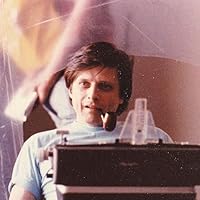
Harlan Jay Ellison (1934-2018) was a prolific American writer of short stories, novellas, teleplays, essays, and criticism.
His literary and television work has received many awards. He wrote for the original series of both The Outer Limits and Star Trek as well as The Alfred Hitchcock Hour; edited the multiple-award-winning short story anthology series Dangerous Visions; and served as creative consultant/writer to the science fiction TV series The New Twilight Zone and Babylon 5.
Several of his short fiction pieces have been made into movies, such as the classic "The Boy and His Dog".
This book is actually the second half of Ellison's 1971 collection Alone Against Tomorrow, which was published in Great Britain split into two mass-market paperback volumes, All the Sounds of Fear and this one. Alone Against Tomorrow was a retrospective collection of thematically-linked stories about alienation, and this half includes some very good stories that originally appeared from the mid-1950s through the 60s about trying to overcome loneliness. Life Hutch has always been one of my favorites of his straight-sf works, and Are You Listening?, Lonelyache, and Pennies, Off a Dead Man's Eyes are all particularly poignant pieces, though there's not really a bad apple in the barrel. Ellison has always been one of my favorites.
Dude is the champion of 'I Hate My Wife' stories. If ya hate your wife so much, why d'ya go ahead and collect five of 'em, hey Harlan? And whilst we're on the subject, d'ya need a sixth?
The Time of the Eye is an eponymous collection of short stories centered, according to Ellison’s own words in the front matter, on the “demon of solitude,” the problem of alienation and its offspring, loneliness. As with some of Ellison’s other work, many of these short stories are very dark. Yet, in their very darkness, they magnify some sense of human hope. When I read the eponymous short story, “The Time of the Eye,” I sensed the conclusion while my emotions screamed, “No!” When I read “Night Vigil,” I experienced some of the madness which the protagonist seems to avoid. My emotions begged my consciousness to never let myself be cut-off from companionship, speech, and new stimuli to keep the brain active. In this story, I didn’t sense the conclusion, but I liked it.
Anyone curious about whether this book is for them merely has to read the first story in the collection, “Are You Listening?” I don’t think Ellison was trying to solve the conundrum of the sound of a tree falling in the forest when no one is there, but the question perversely comes to mind as one reads about this Mr. Winsocki who keeps trying to communicate with those around him while no one hears. Ellison crafts this nightmare into a coherent message about how one should live one’s life. I don’t know if he set out to establish a moral statement, but he succeeds, nonetheless. Need I confess that I was hooked from the first story onward (though, as in any anthology, the proffered tales seem uneven according to my subjective interest).
My favorite story in the collection is “Life Hutch.” This story posits the idea of an intergalactic war where armies have placed rescue/medical stations where crash victims can hole up and get medical treatment in the event of a crash (but not fatal) landing. If you’re like me and haven’t considered what might go wrong in such a setting, you’ll feel the violence palpably as something so good becomes something so horrible. I appreciated the climax of the story in a cathartic way. I wouldn’t have been happy with any other solution.
“The Very Last Day of a Good Woman” is a reprint of “The Last Day,” a short story which was originally published in a now-defunct men’s magazine called Rogue. The ending isn’t quite what I expected, considering the intriguing “gift” which the protagonist possesses. The truth is that I wasn’t expecting the identity of the good woman in the title nor the use to which the protagonist put his “gift.” But when I reached the conclusion, it was just as it had to be. Anyone who follows my reviews will know that I am not a particular devotee of the short story genre. Even with that in mind, I commend The Time of the Eye as a particularly well-curated anthology. It lives up to Ellison’s introductory remarks and then some!
I have read that Harlan Ellison did not suffer fools so, rather than try to write anything deep or insightful, I will simply state that I love what he writes.
In his introduction Harlan describes the theme of these collected short stories as "alienation", but that probably says more about him than the book's content. The publisher's blurb starts off with "More wry delusions..." and that epitomises the 12 tales.
I read this story when I was a teenager and it was the first one by Mr. Ellison that pissed me off. I adore it now, but at the time I was really mad about the ending. Ah, youthful hope and enthusiasim, it's a funny thing.