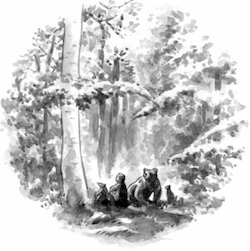
The adventure story of the book, itself, I would probably rate a 2-stars. It's pretty standard - a group of animals (including one young boy) find themselves in a strange situation, and are being chased by villains, so they have to stick together for mutual safety, become friends, and try to find their way to safety.
I generally liked the animal characters more than Max, who didn't come across as a realistic 12 year old boy. Then again, he is smarter than most people his age - as he outright tells his companions - and as we're told again at the end because he figured out the whole thing before it had to be explained to him... though, of course, that didn't stop the "wizard" from ending the story by explaining everything anyway.
So... no we're going to get into spoiler territory, so consider yourself forewarned:
The whole "mysterly" of the book comes about because Max and the animals find themselves in a strange wood, and they don't know how they got there. They also don't know, at first, why they can understand each other when normally they wouldn't be able to. They also don't know why they're being chased by the Blue Cutters, or who the Cutters are. Banderbrock, the badger, thinks they're in an afterlife, but Max isn't so sure.
So, the ending reveal makes it seem like Max is super clever for having figured it out, but I found it fairly obvious from at least halfway through the book, if not earlier.
Basically, the whole thing is a meta-lamentation. The "Wizards" in the book are creators - i.e. authors - who are the clever, lucky few who have the talent and ability to create new worlds and characters. The world that Max and Co find themselves in a sort of afterlife where characters go after their creators die, where they are able to live out the rest of their lives without authorial interference - because, you see, the worlds and characters that the "wizards" create are all real, though many authors don't realize it at the time.
The Blue Cutters, who are the villains who want to cut out parts of the characters to tame them and make them more amenable, are, of course, editors - referring to the blue pen often used by copy editors.
The whole book is basically an author's whining about how editors and critics and, like, everyone that's not an author is just jealous of their ability to actually create, and since they can't create they want to tame and make fashionable...
It's also a critique of society and politics, in that the Blue Cutters want to change the characters based on what's "fashionable" at the time. There's a bit earlier in the book where one of the Blue Cutters say how it's a shame that Max would need to be cut, since, in the past, he was just the kind of morally righteous and forthright character which would've been deemed a good, strong character... but now... now that "fashion" has changed and society has moved on and dare to not want characters to be drawn in broad, black/white strokes... now the Cutters must change Max, where once he would've been left alone.
Basically, in addition to a lament about how those evil editors and critics dare to question the genius of the creativity of the wizard, it's also a lament about the lack of moral certaintude of society.
It also, somewhat ironically, has a bit where he talks about people taking other people's characters and remolding them for current fashions - which sounds, frankly, a lot like a critique of fan-fiction and retellings and the like.
Now, this is ironic for 2 reasons - the first being that the characters in this book, Max and Co specifically, are "borrowed" from other stories. The second being that Willingham's popular comic, Fables, is doing the same thing - taking famous and popular fairy tale characters and using those characters in his own story, and changing them, as needed, to suit his own narrative.
Apparently this book predates Fables, but I have to say that the whole bit with him talking about the lack of creativity in taking other people's characters and modeling them into your own story for your own needs was just way too ironic - and not in a good way.
***
TLDR: The adventure story, itself, was fairly typical but not bad, and I'd give it 2 stars.
The fact that the meta aspect of the whole story is just an author whining about people who dare not appreciate the author's creativity and who either want to edit the characters, or the stories, or remodel old character to modern tastes was eye-rollingly annoying enough to drop the 2-stars to 1.5-stars dropped to 1.