Michael John Moorcock is an English writer primarily of science fiction and fantasy who has also published a number of literary novels.
Moorcock has mentioned The Gods of Mars by Edgar Rice Burroughs, The Apple Cart by George Bernard Shaw and The Constable of St. Nicholas by Edward Lester Arnold as the first three books which captured his imagination. He became editor of Tarzan Adventures in 1956, at the age of sixteen, and later moved on to edit Sexton Blake Library. As editor of the controversial British science fiction magazine New Worlds, from May 1964 until March 1971 and then again from 1976 to 1996, Moorcock fostered the development of the science fiction "New Wave" in the UK and indirectly in the United States. His serialization of Norman Spinrad's Bug Jack Barron was notorious for causing British MPs to condemn in Parliament the Arts Council's funding of the magazine.
During this time, he occasionally wrote under the pseudonym of "James Colvin," a "house pseudonym" used by other critics on New Worlds. A spoof obituary of Colvin appeared in New Worlds #197 (January 1970), written by "William Barclay" (another Moorcock pseudonym). Moorcock, indeed, makes much use of the initials "JC", and not entirely coincidentally these are also the initials of Jesus Christ, the subject of his 1967 Nebula award-winning novella Behold the Man, which tells the story of Karl Glogauer, a time-traveller who takes on the role of Christ. They are also the initials of various "Eternal Champion" Moorcock characters such as Jerry Cornelius, Jerry Cornell and Jherek Carnelian. In more recent years, Moorcock has taken to using "Warwick Colvin, Jr." as yet another pseudonym, particularly in his Second Ether fiction.
Homeboy gets transported to a new time, and he KNOWS that he's hanging around with the goodguys. Then, he gets captured by the other side, and he's belligerent--but wait! Then, he realizes that NOW he's with the REAL goodguys! Until he's stolen by someone else, and he's belligerent again, until he realizes that THIS TIME he's with the goodguys! And so on.
I think this process happens about five times over the 340 pages of the first two volumes of this series. It gets tedious.
Alright, plot synopsis: Michael Moorcock's grandfather (also named Michael Moorcock) travels to China in the attempt to find the time traveler Oswald Bastable, who told him about his first adventures (printed in The Warlord of The Air) years ago before disappearing. Moorcock doesn't manage to find Bastable, but he DOES stumble across a second manuscript written by Bastable, chronicling another of his adventures. (This whole goofy framing of the story takes up a third of the book, and doesn't add anything to the story. Nor does it seem the least bit plausible.)
Bastable's actual adventure begins with his return to the temple that originally caused him to be thrown into the time stream. Once again, the temple sends him through time. However, to his dismay, it doesn't send him back to his own time, but sends him to yet another world ravaged by war.
In this world, an especially brilliant scientist has invented all sorts of complicated weapons and bombs, and then dedicated himself to designing machines to improve life for the people of Earth, and make everyone's life leisurely and relatively comfortable. But, with all the free time this gave the less wealthy, they began demanding real equality. Then, things get ugly. War breaks out, and diseases ravage the land. The world is a wasteland, and most everyone wants to be on the sea to avoid plagues that have broken out everywhere, and the Afro Samurai...I'm sorry, the 'Black Atilla'...is leading a crusade across the world, conquering areas and enslaving the Caucasians! Bastable ends up in a small Utopia-like country which is ran by President Gandhi, but then Gandhi sends him as a diplomat to work with the Black Atilla. The Black Atilla has decided to take over the USA, using his gigantic digging machine, The Land Leviathan. Of course, once Bastable is with this dude, Bastable learns that he isn't such a bad guy after all, and that he isn't really enslaving people, he's simply giving the Black People positions of slightly greater power and putting White Guys in more menial of tasks. In effect, he is simply switching the power around as a bit of revenge for all the sufferings his people went through.
It all ends with a big war and stuff. Bastable is fine, and so is the Black Atilla. And Gandhi is just fine, and charming as ever.
If all of this sounds remarkably silly, then I've done a good job of capturing the feeling of the book. I don't know how intentional the silliness is, and perhaps in a much longer book, the storyline could be made more plausible. But the storyline and characters are way, WAY less interesting than the strange world Bastable is stuck in.
Superficially, the book seems to be about issues of race. As far as what the book is actually SAYING about race, I don't know. One never gets the feeling that Moorcock condones the actions of Attila--he seems to find this racism less awful than the more extreme racism being exacted by the Caucasians still in the USA (they have reverted to slavery, forcing the Blacks to toil to the point of death). So, apparently, cruel racism is worse than more tolerant racism. Thanks, Moorcock. You really pulled out the philosophy degree for that one.
Perhaps I'm being overly harsh on this book. But, despite the short investment of time I made in reading it, I feel like I got ripped off. I put back a copy of The Lies of Locke Lamora to buy this, and now it's going on the Craptastic shelf. Damn you, Moorcock!
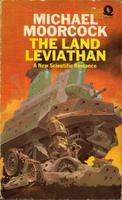
This is the second volume in Moorcock's Oswald Bastable trilogy, the Nomad of the Timestreams, an alternate history, post-apocalyptic, steampunk-before-it-was-a-thing series of adventures. It follows The Warlord of the Air and precedes The Steel Tsar. This one suffers from the middle-book syndrome a bit, revisiting too many of the ideas of the first book without developing too much that was new. He expounds a bit on the themes or nationalism and racism, and expands a bit his vision of the nature of his multiverse tapestry, but ultimately this one isn't one of his best works. (I do particularly like the Michael Whelan cover on my DAW edition.)
This diatribe against racism doesn't ring quite as true as Moorcock's war against colonialism in The Warlord of the Air. And the problem of Bastable being a passive observer except for a few decisions of loyalty here and there also slows the book down. Still, it starts to open up the multiverse with an intriguing dystopia(?).
The second book in the Oswald Bastable trilogy is not as good as the first. The book is divided into two parts - the first third recounts the adventures of Moorcock's grandfather in searching for Bastable and is a continuation from the end of The Warlord of the Air. While unsuccessful in finding Bastable, he does a second manuscript detailing Bastable's adventures, which comprises the remainder of the book.
Bastable has continued to search for a way to return to his own time and world - he is successful in returning to his own, Edwardian, time, but is now in a post-apocalyptic world where technological advances in the 1870s and 80s has ended poverty, but also led to a world war with super weapons.
I don't think the reader is meant to find Bastable a sympathetic character in this book - he is an "enlightened" English gentleman from the early 1900s, and his world view is antithetical to Moorcock's own views - being heavily involved in the counter-culture movement of the 60s and 70s. Bastable's views are constantly challenged, but he holds stubbornly to them for most of the story, despite evidence that he is on the wrong side. This leads to him being a mostly ineffectual character - more a narrator of events rather than a participant.
The Bastable books are more political than most of Moorcock's novels of the period, but are still notable as being very different to what was main stream SFF of the time.
After the enjoyment of book one, book two, The Land Leviathan, was a huge letdown.
This story deserved to be stretched out to full novel length, not crammed into 188 pages. Everything is so rushed that it almost feels like a time-lapse. The story rapidly rushes the reader from one incident to the next, making it impossible for them to get their bearings. There is no real depth or emotion in the prose because the story is so condensed, making everything feel very superficial, to the point of uninteresting. For the same reason, the characters feel paper thin offering nothing for the reader to become attached to. Essentially, Moorcock doesn't allow the reader the opportunity to care. Even the main character, Bastable, with whom we spend much of the book, isn’t afforded the time to be fleshed out or given any real depth, so we never really get to know him. And, as if to make it more impossible to discover just who this character is, his opinions and allegiances constantly shift throughout the story.
Oh, and I don’t think I’ve ever read a book with such a horrific outlook on humanity. Truly depressing.
I have sometimes wondered what social stability is. It is probably just a question of points of view and personal experience.
This is pretty similar to the first installment, the multiverse is myriad and the alternate history stumbled upon has wonky technology and world wide race war rife with biological weapons and ritual torture. There was hasty aspect to this, a few ideas are given flesh and then insert some gruesome battle scenes. There was a philosophical dimension to this one.
Michael Moorcock's second novel starring Cpt. Oswald Bastable is a rushed and rather confused handling of a very compelling theme. This is only the second complete work by Moorcock that I've read (this book's prequel, The Warlord of the Air, being the first). I originally became aware of Moorcock through his collaborations with the space rock band Hawkwind. What first struck me about the Oswald Bastable novels is how deliberately antiquated they are - the language and mannerisms of the characters would not be out of place in one of Edgar Rice Burroughs's earlier works (Bastable reminds me significantly of a pre-"Warlord of Mars" status John Carter), and this approach is generally quite charming. What surprised me, however, is how paternalistic and, frankly, bigoted Bastable's take on an "alternative" historical situation often is. This especially surprised me coming from an author firmly aligned with the 60's/70's counterculture, who has described himself on many occasions as an anarchist, and who has even called out authors like Robert Heinlein for their "authoritarian" or patriarchal stances.
Shortly after finishing this book, I read a bit about the origins of the Bastable character, who was originally created by author Edith Nesbit, a member of the Fabian Society who believed that social change and revolution must be brought about by gradual ideological change within societies. Though Moorcock's Bastable is significantly different than Nesbit's, this information greatly helps to contextualize Moorcock's character. His views on society are typical of an "enlightened" European of the early 1900's, and these views are consistently challenged by the upended circumstances of the alternate realities in which he finds himself.
This journey towards social awareness was quite compelling in The Warlord of the Air, but it is rather hackneyed in The Land Leviathan. Cicero Hood, a.k.a. The Black Attila, is the central antagonist of the novel, a warlord who dreams of liberating the black peoples of earth and delivering an inevitable comeuppance to their white masters. Bastable fluctuates in his opinions of Hood and his empire multiple times throughout the novel, and in a longer work, this crisis of conscience could well have been fascinating. Here, however, everything feels quite rushed and one-dimensional. Bastable's obvious discomfort at being treated as a lesser being by Hood and his countrymen is doubtlessly meant to reflect the feelings experienced by minorities in Western society, but I have the distinct feeling that the average reader would take these scenes at face value and begin to view Bastable, and by extension even Moorcock, as a sort of apologist for imperialism with little perspective on racial issues. As I mentioned above, the knowledge that Moorcock named his protagonist after a character created by an enthusiastic member of the basically righteous but misguided Fabian Society helps to put everything into perspective - this is Moorcock's countercultural 1970's vision written in the style and voice of a relatively liberal English officer of the early 1900's. However, the book is so short and lacking of any serious contemplation on this complex issues that the reader could be forgiven for failing to realize this. Ultimately, this book would have functioned much better as either a short, simple adventure story or as a longer, more philosophical work of speculative fiction. As such, Moorcock attempts to have it both ways, with disappointing results.
With that said, I'm still intrigued enough to read the final book of the Bastable trilogy, The Steel Tsar.
"Land Leviathan" is the second book featuring Oswald Bastable, written by Michael Moorcock. However, this second adventure doesn't quite capture the success of the first book. Nonetheless, I enjoyed the author's blend of steampunk, fantasy, and alternate history, which was well-executed. The book takes place in a world where airships rule the skies, and political intrigue is interwoven with technological marvels. The characters were a bit two-dimensional, lacking depth. The plot was unpredictable at times, with a few twists along the way. The alternative history aspect makes it a thought-provoking read, especially if you're a fan of speculative fiction. Moorcock somehow manages to keep you engaged throughout the book. Overall, I found it to be a unique and compelling adventure, and I'm looking forward to reading Bastable's final adventure.
Le deuxième volume de la trilogie des aventures d'Oswald Bastable m'a semblé un peu moins réussi que le premier : comme je l'ai lu dans une autre critique ici, Michael Moorcock réutilise les mêmes ficelles, avec un protagoniste plongé dans une situation d'affrontement où il prend d'abord le parti d'un camp avant de réaliser progressivement que ses valeurs le portent plutôt vers l'autre camp.
Cela reste tout de même divertissement, à la fois dans la description d'un monde uchronique différent du notre et dans la dénonciation politique qui l'accompagne.
J'espère que le troisième et dernier tome conclura la trilogie avec brio, avec les mêmes éléments qui ont fait deux premiers des lectures agréables, tout en apportant un peu plus d'originalité dans le récit que dans celui-ci.
And so the adventures of Oswald Bastable continue, thrusting him yet again through the barriers of time and into a strange Earth at once familiar and disturbing. The themes and characters we explore are similar to the first volume, featuring at the center yet another Nemo-esque warlord whose methods give our narrator uneasy pause. By the end, we find ourselves liable to agree with Mr. Bastable's suspicion that time is having a laugh at his expense, forcing him to experience history as 'variations on a theme', and not a theme he appreciates reliving.
Usually, describing a book like this as 'alternate history' is a malapropism, since 'alternate' means to shift back and forth between things while 'alternative' means 'of a different sort'. So, if we described wind power as an 'alternate energy' to coal, that would mean we would be constantly switching between wind and coal, not replacing one with the other. But in Moorcock's case, both terms are actually applicable, which must be a boon to sci fi fans that have trouble keeping words straight.
So, if our theme is 'world-shaking war', the variation here is 'global politics of racism'. There is a certain tension throughout the book because Moorcock presents a lot of genuinely racist characters of different stripes and degrees, and even lets prejudice slip into his narrator's mouth. It's clear that the violence and rhetoric of the Civil Rights Era tickled Moorcock's unyielding imagination, so we get quite a few powerful (and somewhat unsettling) scenes charged with the complexities race dynamics.
Moorcock also seemed to take a bit more time with his narrative as compared to the last book, and didn't rely quite as much on bare exposition to carry the story along, which was nice--but as usual with Moorcock, it was a fairly straightforward adventure with some interesting concepts driving it along throughout, but lacking polish and care.
Reminds me of this charming episode of Neal Degrasse Tyson's StarTalk where sex researcher Mary Roach talks about the fact that long-term couples experience better sex because they tend to take their time and get lost in the moment, whereas newer couples are often 'going through the motions' of what they think should work. It's the same with writing books, people: don't just go through the motions when you should be in the moment, taking the time to give your narrative the attention it deserves.
Michael Moorcockin "Leviatan maan päällä" (Vaskikirjat, 2013) jatkaa sarjaa, joissa kerrotaan Oswald Bastablen merkillisistä matkoista vaihtoehtohistoriallisissa maailmoissa.
Kirjan alkupuolella kuvaillaan Michael Moorcockin isoisän matkaa Kiinassa, jossa hän yrittää löytää "Ilmojen sotaherrasta" tuttua Bastablea kiinalaisesta laaksosta. Hanke epäonnistuu, mutta mielikuvituksellinen käsikirjoitus päätyy jälleen hänen käsiinsä. Bastable kuvailee siinä seikkailujaan vaihtoehtohistoriallisessa vuodessa 1907, jossa hän päätyy muun muassa Gandhin johtamaan idealistiseen Bantustaniin ja Mustaksi Attilaksi nimetyn, Asantin keisarikuntaa johtavan afrikkalaiskenraali Cicero Hoodin esikuntaan. Kirja huipentuu taisteluun Yhdysvaltain itärannikosta, jolloin käyttöön otetaan Maanpäälliseksi Leviataniksi nimetty valtava sotakone.
Steampunk-genre pioneereihin lukeutuvan teoksen vanhahtava kirjoitustyyli ja tapahtumien vähän ylimalkainen kuvaus ovat jo itsessään jonkinlainen tuulahdus 1900-luvun alkupuolelta. Moorcock suomii romaanissa kolonialismia ja eritoten orjakaupan uhriksi joutuneen mustan väestönosan kovaa kohtaloa. Kirja onkin omistettu mm. Steve Bikon ja Malcom X:n muistolle.
Ei tämä ole oikeastaan yhtään sen huonompi romaani kuin "Ilmojen sotaherrakaan", mutta ei kyllä tempaissut ihmeemmin mukaansa, ja uudelleenviehätyksen puuttuessa arvosanaksi saa jäädä kaksi tähteä. Ihan ok, mutta ei tosiaankaan enempää.
SOME POTENTIAL SPOILERS BELOW - the second book of the Nomads of the Time Streams trilogy, in which Oswald Bastable, trying to return to his own timeline, somehow slips between alternate timestreams again. He ends up in a world devastated by horrific world war, and in which biological weapons have wreaked havoc on southern England and America. Now, much of the character of the conflict has taken on aspects of a "race war" - and there is the seemingly sinister rise of a man named Cicero Hood, the so called Black Attila, born African-American but having created an empire in Africa (the Ashanti Empire), sets out to conquer Europe and western Asia to fuel a war machine capable of invading North America to liberate Blacks there from the oppression of white people. Bastable opposes the apparently bloodthirsty, racially-motivated mass-murderer Hood . . . but as he ends up observing him at close range, becomes oddly sympathetic to the Black Attila's cause. When Hood's forces land in America, they reveal their ultimate weapon - the Land Leviathan, a sort of moving fortress, a tank of incredible size and power, the most powerful weapon ever created, which may allow Cicero Hood to overcome any resistance. Bastable observes the horrific racism of the remaining white "civilization" in America, and the justice of Hood's cause of liberation, and feels very conflicted - should he betray his white race and support the cause of justice by supporting Black liberation? I won't give away the ending, except to say that by the end, Bastable is willing to try again to return to his own timeline . . .
EDIT: In the earlier edition of this book I had read, the last white president of the United States was named Penfield, I believe. In this edition, it is President Beesley, evidently another manifestation of the Bishop Beesley character from the Cornelius Quartet . . .
I was just expecting another romp through an alternate timeline with Captain Bastable again but this one was different, spoilers ahead. . . . In this timestream Britain is screwed and 'The Black Attila' has conquered Europe and is heading to conquer America too after creating an African empire. There is a lot of racial stuff going on here that I wasn't expecting but I am reading this at the beginning of 2021 where everywhere I turn on social media or tv it's BLM and Black rights and I know this was written back in the eighties, so yeah. . . Black Africans are conquering the world and subjugating the whites and Bastable finds himself involved with this Empire and see's things from there perspective for good or bad. More steampunk machines and terrible inventions of war including crazy diseases that have turned much of the world into a sort of post-apocalyptic nightmare. Airships as well of course, got to have airships.
Edeltäjään Ilmojen sotaherraa piirun verran parempi Leviatan maan päällä on osa Moorcockin aikamatkustussykliä, jossa viktoriaaniset hahmot pääsevät tutustumaan erilaisiin vaihtoehtoisiin nykyisyyksiin. Vaikkeivat Moorcockin maalailemat läpeensä poliittiset utopiat tai dystopiat sinänsä kiinnostaisi, poukkoilee kirja viktoriaanisen kirjallisuuden trooppien parissa erittäin viihdyttävästi. Tässä teoksessa oli astetta enemmän viktoriaanista pastissia ja se pysyi minusta siksi paremmin koossa, joten täytynee lukea toistaiseksi erinomaisesti käännetyn syklin kolmaskin osa.
Further fun alternate history adventures with our ideologically persuadable protagonist Bastable. Maybe more expansive and grand than the first book, this alternate world being more greatly changed and tragically so, and Bastable jetting around to see quite a lot of it: the ruins of the south of England, a utopic South Africa, the fallen towers of New York. The framing device of it being a manuscript conveyed to Moorcock by his ancestor is great, and I wish it was more sort of integrated with the rest of the story.
La fel ca si in seria Dune, deosebirea binelui fata de rau este foarte greu de stabilit atunci cand privesti lucrurile din perspective diferite, ceea ce pe unii ii dezamageste, neavand ceva bine definit in care sa se regaseasca.
Mie mi-a placut la nebunie! Scriitura e buna, povestea este relatata de autor la persoana intai, usor de urmarit si plina de actiune. Recomand! Pacat ca editura Aldo, n-a mai apucat sa publice si ultima parte din trilogie!
For the most part continues the standards of the previous novel in the Oswald Bastable series, but it's marred by a "both sides are just as bad" attitude which frames black militants as equivalent to the KKK, but given the direction in which institutional privilege runs this concept doesn't hold water. Full review: https://fakegeekboy.wordpress.com/201...
So far better. Its faster paced a bit more interesting. The first 1/3 of the prologue is interesting (Moorcock's grandson trying to publish Bastible's story) and the latter 2/3's (Finding bastible) gets lost in the sauce.
Much better than book 1 but still not that good. For its time it was just as revolutionary as all the other worlds Moorcock created but that is no longer the case. It's cool to see someone write about steampunk before it was a think but I'm not very interested in alternative war stories. Concepts were cool but describing in length machines, airships, and their battle tactics aren't my thing. Cool alternate time line in which there's an African leader who is conquering the world as retribution to slavery. A lot of the real world characters like ghandi playing different roles didn't add much. Nonetheless, better alternative war history than book 1.
Surprisingly readable. And vaguely modern feeling. Lots and lots of war. And white people being awful . Again there is no good explanation of how Bastable gets between times. Again this doesn't really feel like an Eternal Champion story. It has been a long time since I read any of these. 3.5 of 5
Excellent sequel to "The Warlord of The Air" which continues the adventures of Oswald Bastable. In this one, a USA that has re-introduced slavery faces an African warlord out for revenge.
Bastable comes across as more of a reactionary character in this book. I loved the Mad Max esque intro but the rest of the book was full of politics and just wasn't a fun read.