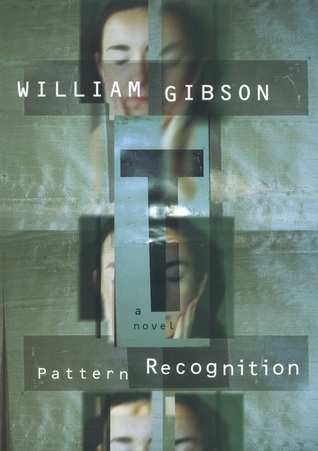
Pattern Recognition (Blue Ant #1)
Cayce Pollard is an expensive, spookily intuitive market-research consultant. In London on a job, she is offered a secret assignment: to investigate some intriguing snippets of video that have been appearing on the Internet. An entire subculture of people is obsessed with these bits of footage, and anybody who can create that kind of brand loyalty would be a gold mine for...more
Hardcover, 356 pages
Published
February 3rd 2003
by Putnam Adult
(first published 2003)
Friend Reviews
To see what your friends thought of this book,
please sign up.
This book is not yet featured on Listopia.
Add this book to your favorite list »
Community Reviews
(showing
1-30
of
3,000)
I loved Pattern Recognition nearly as much as Neuromancer and felt the two novels had a lot of similarities. Even though it is classified as general fiction, the novel has a strong SF feel to it. The highly technological societies (New York and the "mirror world" of London) where things are similar but a little different and the efficient, individualistic, widely traveled and rootless characters make Pattern Recognition feel dark and surreal and more like SF.
Boone Chu was an interesting characte...more
It'll happen one day, you'll see. William Gibson WILL right an ending that resembles something other then a last ditch attempt from a man desperate not to default on his contract.
It will not stink of a man who has just watched the sunrise with a headful of Jack Daniels. No it will be thematically fufilling, and tie up and enrich the man threads that have wound through the novel like a tapestry. Giving these rich themes, imagery, and characters the proper glory rather then merely tarnishing ever...more
This review has been hidden because it contains spoilers. To view it,
click here.
Apr 29, 2007
Alexis
rated it
5 of 5 stars
·
review of another edition
Recommends it for:
Contemporary Artists (or fans of)
Shelves:
all-time-faves
The novel is set in a number of present day cities, in a way that seems futuristic/sci-fi. I read this book in a class called "The Novel and Globalization"--and I believe having that context was helpful-at first. As the book progressed the suspence was built on the mystery of where the many relavent themes and styles converge in the plot.
My favorite part of reading the book was digesting the refernces to art, architecture, and literature, throughout that acutally added meaning to the text rathe...more
This is a little different for Gibson. It's not really a future setting, but it drips with the usual Gibson sentence fragments and whimsy. Overall, the story is there and it has a beginning a middle and an end, but to be honest, the book lacks in a particular quality - there's nothing really at stake.
The story is fairly linear, and focuses on the main character, Casey Pollard. She's what is called a 'cool hunter'. She divines trends and evaluates logo work. She has a literal allergy to fashion a...more
A really big letdown after the masterful depiction of cyberpunk in Neuromancer. Perhaps the problem is that the entire story takes place in a modern-day setting instead of in an interesting future. Or perhaps the problem is lack of relatable characters or a plot that maintains the reader's interest for the duration of the story. In any case, steer clear of this one.
Mar 26, 2008
Deborah
rated it
5 of 5 stars
·
review of another edition
Recommends it for:
Mark, Robbie
Shelves:
desert-island-books
I just re-read this book and liked it even more during the second reading (and have changed my rating from four to five stars). Gibson has pared an already spare writing style down without sacrificing the elegance or evocative nature of his prose. He makes you see things in the plot as though they occur at the very edge of peripheral vision. Were they even there at all? Although it would seem that this would create an emotional distance too profound to be crossed, the opposite is true. As I writ...more
Книга должна быть интересна поклонникам предыдущих романов Уильяма Гибсона. В отличие от предыдущих романов — это не фантастика, но это всё тот же киберпанк. Тот же стиль, тот же саспенс, тот же ритм, но ничего такого, что не могло бы происходить в действительности. Лондон, Токио, Москва наших дней, странные люди, загадочные устройства, неизвестного происхождения файлы, непонятные дела. Как сказал однажды автор в одном из интервью: «Будущее уже здесь, но оно не очень равномерно распределено». Во...more
Brilliantly written, but like the rest of Gibson's novels, the ending leaves something to be desired. Not exactly unfulfilling, more like seeing all of the pieces come together into a picture that is just a little underwhelming. Just like the rest of Gibson's other works (Neuromancer and Spook Country being the only two i have read, in all honesty), the story is initially compelling and the mysteries and conspiracies are thought provoking. But the resolution just doesn't have that same "snap" or...more
Jan 30, 2008
John Huizar
rated it
5 of 5 stars
·
review of another edition
Recommends it for:
everyone
I love the way that William Gibson writes women. Gibson usually has both male and female protagonists in his books, who may or may not even see one another during the course of the story (the almost-but-never-quite is something he comes back to again and again). Regardless, his female characters are always as strong and capable as the men (and often more so). Cayce Pollard is a wonderful character, and I think that Gibson deftly avoided all the usual pitfalls of men writing female characters.
Fo...more
Fo...more
Refreshingly unlike his classic book, Neuromancer, and the others in the Sprawl trilogy, Pattern Recognition cements for me the idea of Gibson as a great writer, showcasing his ability to predict societal trends, blend those into an exciting external plot while maintaining an overall satisfying emotional journey. I'd go into details, but when summed up I don't think they sound anywhere as interesting as the book actually is.
As a side note, the book's maybe a bit more cerebral than visceral, and...more
Sep 24, 2010
Cheryl
rated it
4 of 5 stars
·
review of another edition
Shelves:
50-books-for-2010,
just-because-i-like-it
Okay then. I liked the book. From the start, it was written very differently than what I am used to, but the flow of words, which my son found awkward (being kind), worked okay for me. My brain is wired in a similar fashion, so the it worked for me.
I can't say the story itself sucked me in right away, but I found I liked it more and more as I continued to read. Towards the end, I felt somethig like whiplash as things suddenly felt like they went break-neck speed. I've seen a good number of compl...more
This was a re-read for me, because I remembered it fondly. Just as cool the second time around. I take away a star only because the conspiracy/secrecy part of the plot was so complex that I'm still not sure I have it all pieced together correctly. Nonetheless, I love Gibson's vocabulary, setting descriptions, unexpected bursts of goofy humor, likable and realistic protagonist (in Cayce), and overall geeky super-coolness. Made me feel smarter just reading it. Will give the other Bigend novels a t...more
I has an affinity for cyberpunk stories, which is how I know Gibson's work. I feel a certain distance, though, between his characters and the world they are caught up in; the language is scintillating, but it feels very "surface" to me. Pattern Recognition was the first of his novels that really spoke to me perhaps because the main character reflected a lot of what I was going through, and my own confusion with my emerging values versus the identity I wanted to step into. I enjoyed the book imme...more
I'd been meaning to read something by Gibson for a long time. I thought it would be Neuromancer. But this book fell into my hands first. Despite its 2003 copyright, which makes it very old by computer-world standards, the high-tech world that Gibson whips up here feels fresh. It takes place today--not in the distant future. Email, the web, viral marketing, high fashion, international espionage, contemporary underground art all collide here. I could not put it down. Takes place mostly in London,...more
Though the deluge of brand names and pointedly modern references are surprising and dizzying at first, Gibson's 'Pattern Recognition' is uniquely of the moment. Whether it will be readable even five years from now, though, or extremely dated, remains to be seen.
The story begins with an abundance of name-dropping: Google, Levi's 509s, Starbucks. It's easy to see how the heroine, Cayce Pollard, has developed a phobia of commercialism. However, spotting trends and pinpointing logos that will succe...more
This review has been hidden because it contains spoilers. To view it,
click here.
The thing I like about Gibson's work in general is that it's equal parts style and substance. I find his prose satisfying, his phrasing and pacing superb, and everything suffused with a sense of cutting-edge cool. Pattern Recognition is no different, even with it's present-day setting. This may be the first book I've read that successfully bridges the present, and the weird, unfolding future that creeps in every day.
It's a copout to say that this book is about marketing and advertisement. It is,...more
Originally published on my blog here in May 2008.
One of the oddest feelings when reading (or, even more, re-reading) science fiction from the past is when time has often caught up with it, and you are reading a novel of the future set at at date which is in your past. This is particularly the case with novels which were important to you personally, which were influential, and which contain much accurate prediction, as is the case for me with Gibson's first novel, Neuromancer. Almost thirty years...more
“Gibson getta uno sguardo magistrale sul presente ed è come se ce lo mostrasse per la prima volta”. Neil Gaiman
L’accademia dei sogni non è un romanzo ambientato in un lontano futuro fantascientifico, né in un vicino futuro cyperpunk: la realtà descritta da Gibson nella meravigliosa trilogia dello Sprawl è stata superata infatti dagli eventi; ciò che viene narrato in questo romanzo è l’oggi. Un oggi in cui l’attenzione del popolo di internet viene catalizzata da una serie di affascinanti filmati...more
William Gibson has been described by a friend of mine as an author who's really good at world building, and really good at putting pieces into play and getting them moving, but he's not so good at remembering that all of this is supposed to have a point.
In Pattern Recognition, I think he found his point.
Or maybe not. In some ways, he uses the post 9/11 world to make it okay that he doesn't have one. It's a character and a world still trying to figure out where to go next, and latching on to what...more
In Pattern Recognition, I think he found his point.
Or maybe not. In some ways, he uses the post 9/11 world to make it okay that he doesn't have one. It's a character and a world still trying to figure out where to go next, and latching on to what...more
Jul 07, 2012
St[♥]r Pr!nc:$$ N[♥]usheen, pictures, pictures ||i've become your star:::tonight::::today:::||
marked it as to-read
·
review of another edition
Recommended to St[♥]r Pr!nc:$$ N[♥]usheen, pictures, pictures by:
GoodReads
Just added this one today cos of the fancy title, two tricky words I like a lot. The story seems unusual but may have contrived stuff like robberies and break-ins...copy-pasted the plotline below:
****************************************************
Cayce Pollard is an expensive, spookily intuitive market-research consultant. In London on a job, she is offered a secret assignment: to investigate some intriguing snippets of video that have been appearing on the Internet. An entire subculture of peo...more
****************************************************
Cayce Pollard is an expensive, spookily intuitive market-research consultant. In London on a job, she is offered a secret assignment: to investigate some intriguing snippets of video that have been appearing on the Internet. An entire subculture of peo...more
Pattern Recognition. What can the unitiated reader say about it? I got this book as a gift and realized right away that it was a departure for me. I like the main character, Cayce Pollard, mainly because she has to rely on her wits and nothing much else to get herself out of the maze of international crime she's landed in the middle of. She is able, through an unexplainable second sense, to predict what will be trendy in the future. In this capacity, she serves as a consultant to businesses look...more
This is my 2nd or 3rd William Gibson novel to read and every one is difficult to understand in the beginning. I was probably about 4 chapters deep before I finally caught on and took off with my reading. I didn't bother to go back and analyze why, but wouldn't be surprised if it's a combination of the language--some made up words, lots of verbal phrases instead of sentences, and details and adjectives to the point of tedium and interrupting the flow of the plot--and front-loading background. How...more
The thing I love most about Gibson's novels is his prose. It's not that it's beautiful or descriptive, although it is. It sucks me in, so it feels like I'm drowning in it. But that's not a bad thing at all.
Oddly, however, in this particular case, for all the description, I have very little idea about what the protagonist of this novel actually looks like. It's not necessary to know; the story works fine without it, but it's an interesting omission.
While it's shelved under SF, I don't think this...more
Oddly, however, in this particular case, for all the description, I have very little idea about what the protagonist of this novel actually looks like. It's not necessary to know; the story works fine without it, but it's an interesting omission.
While it's shelved under SF, I don't think this...more
I picked up this book because I was looking for an author similar to Neal Stephenson. Both What Should I Read Next and Literature Map both said that William Gibson was most like him. And while I had read Neuromancer previously and not been a big fan, I figured I'd give Gibson another chance.
This book was okay. It took me awhile to get into Gibson's style of truncated, choppy phrasing. It's somewhat stream of consciousness and takes a little bit of doing to feel the flow. Once I'd adjusted to the...more
Mar 18, 2012
John E. Branch Jr.
rated it
4 of 5 stars
Shelves:
fiction-contemporary,
near-future-fiction
Cayce, the protagonist in this novel, bears a name highly reminiscent of Case, the cyberspace cowboy at the center of Gibson's first novel, Neuromancer. There are clear similarities: these characters live and work at some remove from the powers of the world (which in Gibson's novels are never nation-states); they're offered a mission that they pretty much need to accept, which puts them in the service of one of those powers; and they realize only gradually what they're really doing, whom they're...more
It is 2002 and Cayce Pollard is a "cool hunter," a marketing expert who has an innate sense of what kinds of corporate designs will work and yet is allergic, even fearful, of brand names. She becomes enthralled with an Internet meme known only as "the footage," a montage of video cuts that has all of web culture guessing. A wealthy and eccentric client hires Cayce to track down the source of "the footage" at any cost. This journey takes her from London to Tokyo and then to Russia, culminating in...more
| topics | posts | views | last activity | |
|---|---|---|---|---|
| Society For Displ...: Apr BotM: Pattern Recognition | 16 | 27 | May 19, 2013 07:34am | |
| What's The Name o...: FOUND: book that *feels* like cyberpunk, but isn't actually science fiction at all [s] | 3 | 44 | Jan 12, 2012 12:56pm |
Librarian Note: There is more than one author in the Goodreads database with this name. See this thread for more information.
William Ford Gibson is an American-Canadian writer who has been called the father of the cyberpunk subgenre of science fiction, having coined the term cyberspace in 1982 and popularized it in his first novel, Neuromancer(1984), which has sold more than 6.5 million copies wor...more
More about William Gibson...
William Ford Gibson is an American-Canadian writer who has been called the father of the cyberpunk subgenre of science fiction, having coined the term cyberspace in 1982 and popularized it in his first novel, Neuromancer(1984), which has sold more than 6.5 million copies wor...more
Share This Book
2 trivia questions
More quizzes & trivia...
“The future is there... looking back at us. Trying to make sense of the fiction we will have become.”
—
1,471 people liked it
“We have no idea, now, of who or what the inhabitants of our future might be. In that sense, we have no future. Not in the sense that our grandparents had a future, or thought they did. Fully imagined cultural futures were the luxury of another day, one in which 'now' was of some greater duration. For us, of course, things can change so abruptly, so violently, so profoundly, that futures like our grandparents' have insufficient 'now' to stand on. We have no future because our present is too volatile. ... We have only risk management. The spinning of the given moment's scenarios. Pattern recognition”
—
58 people liked it
More quotes…

Loading...


May 04, 2012 10:34am
May 06, 2012 07:50am