

What do you think?
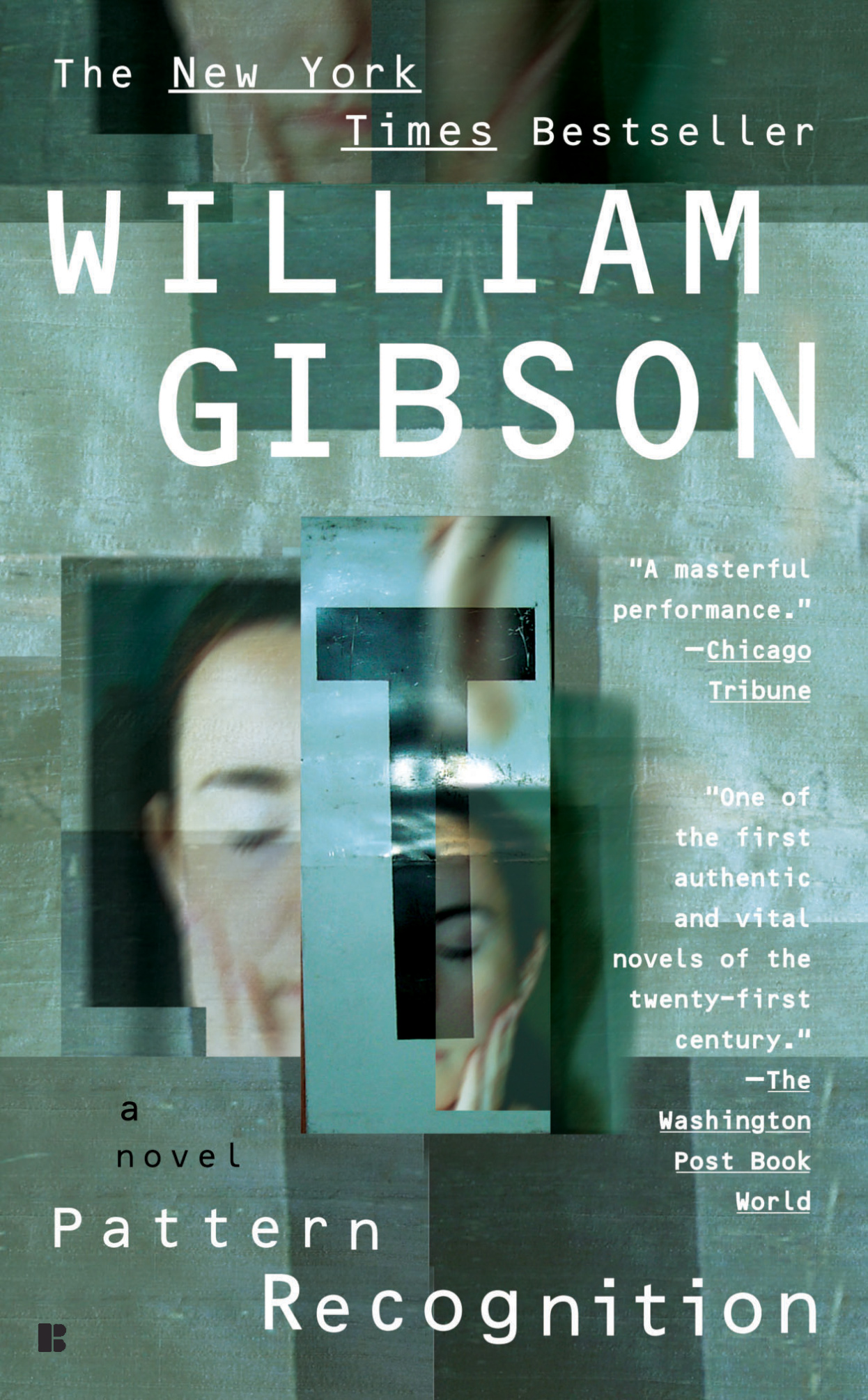
Blue Ant #1
Pattern Recognition
We have no future because our present is too volatile. We have only risk management. The spinning of the given moment's scenarios. Pattern recognition...
Cayce Pollard is a new kind of prophet — a world-renowned “coolhunter” who predicts the hottest trends. While in London to evaluate the redesign of a famous corporate logo, she's offered a different assignment: find the creator of the obscure, enigmatic video clips being uploaded to the Internet — footage that is generating massive underground buzz worldwide.
Still haunted by the memory of her missing father — a Cold War security guru who disappared in downtown Manhattan on the morning of September 11, 200l — Cayce is soon traveling through parallel universes of marketing, globalization, and terror, heading always for the still point where the three converge. From London to Tokyo to Moscow, she follows the implications of a secret as disturbing — and compelling — as the twenty-first century promises to be...
Cover illustration by Benita Raphan
Cayce Pollard is a new kind of prophet — a world-renowned “coolhunter” who predicts the hottest trends. While in London to evaluate the redesign of a famous corporate logo, she's offered a different assignment: find the creator of the obscure, enigmatic video clips being uploaded to the Internet — footage that is generating massive underground buzz worldwide.
Still haunted by the memory of her missing father — a Cold War security guru who disappared in downtown Manhattan on the morning of September 11, 200l — Cayce is soon traveling through parallel universes of marketing, globalization, and terror, heading always for the still point where the three converge. From London to Tokyo to Moscow, she follows the implications of a secret as disturbing — and compelling — as the twenty-first century promises to be...
Cover illustration by Benita Raphan
367 pages, Mass Market Paperback
First published February 3, 2003
About the author
William Gibson
329 books15.5k followersLibrarian Note: There is more than one author in the Goodreads database with this name. See this thread for more information.
William Ford Gibson is an American-Canadian writer who has been called the father of the cyberpunk subgenre of science fiction, having coined the term cyberspace in 1982 and popularized it in his first novel, Neuromancer (1984), which has sold more than 6.5 million copies worldwide.
While his early writing took the form of short stories, Gibson has since written nine critically acclaimed novels (one in collaboration), contributed articles to several major publications, and has collaborated extensively with performance artists, filmmakers and musicians. His thought has been cited as an influence on science fiction authors, academia, cyberculture, and technology.
---------------------------------
William Gibson. (2007, October 17). In Wikipedia, The Free Encyclopedia. Retrieved 20:30, October 19, 2007, from http://en.wikipedia.org/w/index.php?t...
William Ford Gibson is an American-Canadian writer who has been called the father of the cyberpunk subgenre of science fiction, having coined the term cyberspace in 1982 and popularized it in his first novel, Neuromancer (1984), which has sold more than 6.5 million copies worldwide.
While his early writing took the form of short stories, Gibson has since written nine critically acclaimed novels (one in collaboration), contributed articles to several major publications, and has collaborated extensively with performance artists, filmmakers and musicians. His thought has been cited as an influence on science fiction authors, academia, cyberculture, and technology.
---------------------------------
William Gibson. (2007, October 17). In Wikipedia, The Free Encyclopedia. Retrieved 20:30, October 19, 2007, from http://en.wikipedia.org/w/index.php?t...
Ratings & Reviews
Friends & Following
Create a free account to discover what your friends think of this book!
Community Reviews
Displaying 1 - 2 of 2 reviews

November 27, 2021
D’après lui, l’Homo sapiens vit pour l’identification, la reconnaissance des schémas. C’est un don. C’est un piège.
Identification des schémas est le premier livre composant la trilogie Blue Ant ou Bigend. Le niveau d’anticipation est bien moins grand que dans Neuromancien, on pourrait même dire que ce n’est tout simplement pas de la science-fiction puisque l’histoire se déroule dans une époque contemporaine. L’intrigue est très difficile à résumer même si l’on peut dire qu’elle tourne autour d’un mystérieux film qui est diffusé par fragments sur internet et qui passionne des groupes de fans qui se réunissent et discutent sur des forums spécialisés. Cet intérêt va croitre pour quitter les sphère des happy fews et des nerds et rejoindre celle du capitalisme. L’identité de ce (ou cette) mystérieux(se) cinéaste va devenir une question brulante.
William Gibson est très fort pour construire des univers comme ici bourrés de références et de bonnes idées. Pour n’en citer qu’une j’ai adoré les collectionneurs d’anciennes machines à calculer et ordinateurs – je ne connaissais pas la Curta[1] et j’ai trouvé cette histoire géniale. Tout le livre est très inventif, l’inconvénient est qu’il faut suivre. Ce n’est pas un livre à lire distraitement dans les transports en commun. La sanction est immédiate, chaque phrase compte et chaque moment d’inattention de la part du lecteur se paie cash. Je trouve que Gibson est le Bret Easton Ellis de la science-fiction – je parle plus des techniques d’écriture que des sujets. Ce n’est peut-être pas un livre pour tout le monde, mais j’ai adoré. Il demande un peu – beaucoup – de concentration – moins que Neuromancien quand même –, mais cet effort en vaut largement la peine.
Il faut toujours laisser une place à la coïncidence, selon Win [le diminutif du père de l’héroïne du livre Cayce Pollard]. Quand on ne le fait pas, on tombe fatalement dans l’apophénie[2].
----
[1] La Curta est une petite calculatrice mécanique produite entre 1948 et 19721 par Contina AG Mauren au Liechtenstein. Elle est composée d’un corps cylindrique et d’une petite manivelle la faisant ressembler à un moulin à poivre ou à café.(Wikipédia)
[2] En psychiatrie, une apophénie est une altération de la perception qui conduit un individu à attribuer un sens particulier à des événements banals en établissant des rapports non motivés entre les choses. Tout lui paraît avoir été préparé pour lui : pour tester s’il remarque ces bizarreries, etc. (Wikipédia)
Également publié sur mon blog.
February 15, 2021
Moui bon pas très convaincu, c’est un peu le Stephen King du cyberpunk, sauf que c’est juste un thriller avec des vibes Millenium. Ça m’a aussi rappelé Night Film de Marisha Pessl. C’est pas mauvais non plus, juste… pas vraiment mémorable.
La traduction est pas ouf, ça doit être moins ringard en VO (peut-être).
La traduction est pas ouf, ça doit être moins ringard en VO (peut-être).
Displaying 1 - 2 of 2 reviews