

What do you think?
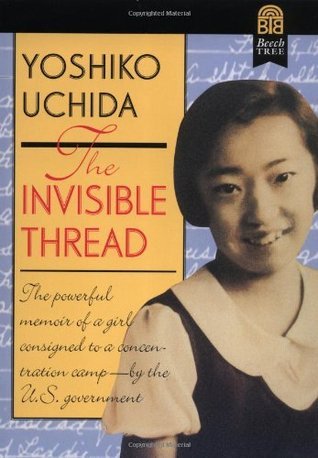
The Invisible Thread: An Autobiography
Growing up in California, Yoshi knew her family looked different from their neighbors. Still, she felt like an American. But everything changed when America went to war against Japan. Along with all the other Japanese-Americans on the West Coast, Yoshi's family were rounded up and imprisoned in a crowded. badly built camp in the desert because they "looked like the enemy." Yoshiko Uchida grew up to be an award-winning author. This memoir of her childhood gives a personal account of a shameful episode in American history.
136 pages, Paperback
First published January 1, 1991
About the author
Yoshiko Uchida
53 books97 followersYoshiko, born on November 24, 1921, was the second daughter of Japanese immigrant parents Takashi and Iku. Her father worked as a businessman for Mitsui and Company in San Francisco, and Iku wrote poetry, passing along her love of literature to her girls. Though the Great Depression raged, the Uchida family enjoyed comforts because of Takashi's well-paying job and their own frugality. Yoshiko loved to write, and her stories played out on pieces of brown wrapping paper. She also kept a journal to record her thoughts and events.
Enveloped in love and tradition at home, Yoshiko weathered the prejudice she sometimes faced. Many white students at University High School in Oakland didn't invite her to their parties and wouldn't socialize with her, deeming her a foreigner. Even while attending the University of California at Berkley, Yoshiko often faced the same dilemma of being ostracized. She found friendships with other Japanese American students and was preparing to graduate when Pearl Harbor was bombed, changing her life.
The United States government rounded up 120,000 people of Japanese descent and put them into camps. The Uchida family first resided in a horse stall at a racetrack in California, surrounded by barbed wire and armed guards. Though difficult to endure, the next move was worse. Almost 8,000 Japanese were sent to a relocation concentration camp called Topaz in the Utah desert. The detainees suffered from violent dust storms, scorpions, snakes, and exceedingly poor living conditions. Yoshiko taught second grade children there until she received a fellowship from Smith College to earn a master's degree in education.
Yoshiko and her sister both left the camp in May of 1943, with their parents gaining release later that year. Teaching for several years in a Quaker school outside of Philadelphia, Yoshiko decided to quit teaching and find work that allowed more time for writing. She moved to New York City and began as a secretary, penning stories in the evenings. Asked to contribute to a book about Japanese folk tales, Yoshiko discovered that though the book didn't come to be, with time she could create a full collection of folk tales. Writing a few pieces for adults, Yoshiko realized she was better suited for children's books.
A Ford Foundation fellowship sent her to Japan to research the culture and their stories. Spending two years, Yoshiko found her time to be healing as she learned about her own ancestry. The pain of the concentration camps lessened, and she began writing about the experiences in fictional books such as Journey to Topaz and Journey Home. Her career as an author soared as people regarded her as a pioneer in Japanese American children's literature. The author of almost forty works, including Japanese folk tales and stories of Japanese American children making their way in the world, Yoshiko traveled extensively, lectured, and wrote. After suffering from a stroke, Yoshiko passed away on June 25, 1992, in Berkeley, California.
Enveloped in love and tradition at home, Yoshiko weathered the prejudice she sometimes faced. Many white students at University High School in Oakland didn't invite her to their parties and wouldn't socialize with her, deeming her a foreigner. Even while attending the University of California at Berkley, Yoshiko often faced the same dilemma of being ostracized. She found friendships with other Japanese American students and was preparing to graduate when Pearl Harbor was bombed, changing her life.
The United States government rounded up 120,000 people of Japanese descent and put them into camps. The Uchida family first resided in a horse stall at a racetrack in California, surrounded by barbed wire and armed guards. Though difficult to endure, the next move was worse. Almost 8,000 Japanese were sent to a relocation concentration camp called Topaz in the Utah desert. The detainees suffered from violent dust storms, scorpions, snakes, and exceedingly poor living conditions. Yoshiko taught second grade children there until she received a fellowship from Smith College to earn a master's degree in education.
Yoshiko and her sister both left the camp in May of 1943, with their parents gaining release later that year. Teaching for several years in a Quaker school outside of Philadelphia, Yoshiko decided to quit teaching and find work that allowed more time for writing. She moved to New York City and began as a secretary, penning stories in the evenings. Asked to contribute to a book about Japanese folk tales, Yoshiko discovered that though the book didn't come to be, with time she could create a full collection of folk tales. Writing a few pieces for adults, Yoshiko realized she was better suited for children's books.
A Ford Foundation fellowship sent her to Japan to research the culture and their stories. Spending two years, Yoshiko found her time to be healing as she learned about her own ancestry. The pain of the concentration camps lessened, and she began writing about the experiences in fictional books such as Journey to Topaz and Journey Home. Her career as an author soared as people regarded her as a pioneer in Japanese American children's literature. The author of almost forty works, including Japanese folk tales and stories of Japanese American children making their way in the world, Yoshiko traveled extensively, lectured, and wrote. After suffering from a stroke, Yoshiko passed away on June 25, 1992, in Berkeley, California.
Ratings & Reviews
Friends & Following
Create a free account to discover what your friends think of this book!
Community Reviews
Displaying 1 - 2 of 2 reviews

January 27, 2020
Este fue mi primer libro en inglés. Nuestra maestra nos pidió leer uno y pensé que sería fácil porque son las memorias de una niña que vivió en los campos de concentración de Estados Unidos después del ataque de Pearl Harbor.
El lenguaje fue muy difícil para mí dado que apenas comenzaba, y la historia fue desgarradora, no sabía que eso había pasado.
El lenguaje fue muy difícil para mí dado que apenas comenzaba, y la historia fue desgarradora, no sabía que eso había pasado.
March 12, 2024
Una historia dura buscando siempre sacar lo mejor de cada situación, narrada por una sobreviviente de los campos de concentración para japoneses en EU.
Displaying 1 - 2 of 2 reviews