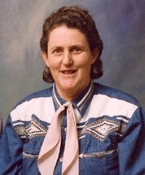
In this innovative book, Dr. Temple Grandin gets down to the REAL issues of autism, the ones parents, teachers, and individuals on the spectrum face every day. Temple offers helpful do’s and don’ts, practical strategies, and try-it-now tips, all based on her “insider” perspective and a great deal of research. These are just some of the specific topics Temple delves into:
How and Why People with Autism Think Differently Economical Early Intervention Programs that Work How Sensory Sensitivities Affect Learning Behaviors Caused by a Disability vs. Just Bad Behaviors Teaching People with Autism to Live in an Unpredictable World Alternative Medicine vs. Conventional Medicine Employment Ideas for Adults with Autism
This revised and expanded edition contains revisions based on the most current autism research, as well as 14 additional articles including:
The Role of Genetics and Environmental Factors in Causing Autism Understanding the Mind of a Nonverbal Person with Autism Finding Mentors and Appropriate Colleges
Mary Temple Grandin is an American academic and animal behaviorist. She is a prominent proponent of the humane treatment of livestock for slaughter and the author of more than 60 scientific papers on animal behavior. Grandin is a consultant to the livestock industry, where she offers advice on animal behavior, and is also an autism spokesperson. Grandin is one of the first autistic people to document the insights she gained from her personal experiences with autism. She is a faculty member with Animal Sciences in the College of Agricultural Sciences at Colorado State University. In 2010, Time 100, an annual list of the 100 most influential people in the world, named her in the "Heroes" category. She was the subject of the Emmy- and Golden Globe-winning biographical film Temple Grandin. Grandin has been an outspoken proponent of autism rights and neurodiversity movements.
This book is [mostly] a collection of articles by Grandin and suffers from the typical issues of article and blog post collections: repetition and lack of depth.
I've read a fair amount of Aspie stuff online over the years, but mostly avoided published Autism related stuff as it's so focused on childhood development. There is some good stuff here, and I mostly enjoyed it, but I think I might enjoy her book The Autisitic Brain more.
I feel Grandin's personal variation as visual thinker biases her ideas about language. She sometimes writes as if it's only function is social.
In lieu of an in depth review, here are some bits I highlighted, and occasionally my responses:
Music and Math Thinkers - Patterns instead of pictures dominate the thinking processes of these children. Both music and math are a world of patterns, and children who think this way can have strong associative abilities. Research shows that they have superior abilities to perform mental rotation tasks.
The thinking patterns of individuals with ASD are markedly different from the way “normal” people think.
--- Well how the fuck do normal people think?
Both as a young child and throughout my high school years I was motivated by two factors. The first was getting recognition from others and, secondly, I enjoyed seeing my creations being used in places and events that were important to me.
Sensory Problems Are Variable One of the problems in understanding sensory issues is that sensory sensitivities are very variable, among individuals and within the same individual. A person can be hyper-sensitive in one area (like hearing) and hypo-sensitive in another (like touch). One person can have a marked olfactory sensitivity and another might not be affected at all in that sense. Complicating matters even further, on a day-to-day basis, in the same individual, the sensory sensitivities can change, especially when the person is tired or stressed.
There are two kinds of auditory problems: 1) sensitivity to loud noise in general and 2) not being able to hear auditory detail, such as discerning one voice among other sounds, or hearing the hard consonant sounds of words.
they may have difficulty going up and down a strange set of stairs due to distorted depth perception
Even though children and adults with ASD can easily pass a standard hearing test, they often have difficulty hearing auditory detail.
Fear Is the Main Emotion
An individual with severe autism can easily panic if something new is suddenly introduced.
--- Birds!
When I stimmed, sounds that hurt my ears stopped. Most kids with autism do these repetitive behaviors because it feels good in some way. It may counteract an overwhelming sensory environment, or alleviate the high levels of internal anxiety these kids typically feel every day.
Another reason having a good career is so important to me is that I am what I do instead of what I feel.
--- Both horrible options.
For many people on the autism spectrum, the most effective dose of antidepressants and atypical medications is much lower than the recommended dose on the label.
Not all the “problems” within autism arise from the autism. Some arise just because of who we are and the personality we each have.
It is my opinion that most people with autism notice far more details in any given situation than do people without autism.
You simply cannot tell other people they are stupid, even if they really are stupid.
I have a feeling the nanny might have been Asperger’s herself, because she had an old car seat out of a jeep that she had in her room—it was her favorite chair.
In contrast to "Thinking in Pictures" which is a classic in autistic literature, this work is absolutely dreadful. Temple is a star on the parent conference circuit and presumably purchased this for the sole purpose of having something to sell to autograph seekers. She comes across as impatient crank urging parents to be firm and strict. In fact Temple owes her success in life to a remarkably flexible and accommodating mother. If you must buy it in order to secure her autograph. Do not read it. Do not lend it to anyone nor encourage them to read it.
Business is business afterall. Pretzels and beer are sold at ball parks. Popcorn is marketed in movie theatres. Ghastly objects like this are sold to autograph seekers at parent conferences.
"The Way I See It" is a look at autism and Asperger's syndrome from someone who it contends with it every day. The author is Temple Grandin, who is a big-name and animal behavior in animal psychology. In fact, autism has helped her become successful in her field because of the way that she sees the world. I have really enjoyed her other books and I especially enjoyed the books about her own personal struggles with autism. Autism and Asperger's syndrome affect many people. No one knows what causes it and although headway has been made with treatments, there is still a little bit to go.
Grandin gives readers of front seat look at what it's like to contend with autism every day and how it affects the way that she sees the world. She also gives out some advice about what to do and how to interact with people with autism. She also deals some controversial advice in some parts. I really liked how up front she was with everything that she goes through. Honesty went a long way in making this book so interesting!
It was really interesting to hear from somebody who faces autism every day as to what her personal experience was. She writes with clarity and honesty that really gave me an appreciation for everything that she was going through. Overall, I think this is a really unique perspective of autism and readers who are interested in the subject will enjoy this book.
I read through this book because I adore Temple Grandin. However, as a compilation of separate articles, this book has no flow, no continuation, and is rather repetitive, as the articles were originally written as stand-alone pieces. This does not diminish my admiration for Ms. Grandin, however.
I especially love how she points out, over and over again, that parents need to take charge of their kids. Parents need to expect and demand proper behavior from their children. I love the part where she says that her mother forced her to drive to the lumber yard to do some shopping, even though Ms. Grandin begged off, saying that it would upset her so much that it'd make her cry. Her mother replied (and I broadly paraphrase), "OK, well, cry, just go to the lumberyard." Ms. Grandin reports that she went to the lumber yard, she cried, she completed the task, and *never again* was a trip to the lumber yard frightening, and future trips went off without a hitch. I just love this.
If you love Ms. Grandin, you'll most likely like this book, but her other books are far more interesting and informative.
I am just a bit into this book, but it is full of very concrete, helpful advice for working with kids with AS disorders. I wish that I had read this when I was working in EI. Though I am reading it with professional's eye, it is written in very clear, straightforward way. This is a result of Dr. Grandin's diagnosis and thank goodness for that! In other words, in my own circuitous way what I am trying to say is that this is a great book for professionals and parents alike.
One of my favorite pieces of advice is to use transition sentences such as "Kaitie, I have something to tell you" when changing subjects. She explains that because their processing may be slower, many times statements about new subjects get "clipped". For example if you are working on an art project and then all of a sudden say "I put your juice on the table", the child may only hear "on the table" while the brain plays catch up. This seems like great advice for not just kids and adults with autism, but ADD, nuero issues and injuries, MR, etc. It is little things like this that can make a world of difference.
Personally, this book was wonderful. As the parent of an autistic child, there was such a wealth of knowledge and ideas and things I marked to try with my child. It really gave me so much more of an insight than all the doctors we’ve seen because this is from a woman who is actually autistic, who is on the inside. I have to say, I’m not clear on why a few people who are vegan or vegetarian are using that as a reason to criticize the book. Temple Grandin’s career in animal husbandry, includes slaughtering cattle, really has no impact on her advice on helping children with autism. And for the parents who are desperately seeking answers, or just any kind of window into their children so we can begin to help, we really do not care if she’s not a vegetarian.
The title of this book is a bit misleading. That is, I expected that "A Personal Look" would be more focused on Grandin's own life and experiences. Instead, this is a compilation of articles Grandin has written, mostly involving practical advice on how to pursue help for people on the autism spectrum in either school or the work world. There is personal information in it, and she relates information to her own experiences on occasion, but this book is more like an advice book for parents dealing with children on the Autism spectrum and for people who are on the spectrum who need to learn how to move into the working world. Much of the material is repetitive--a lot of 'keep trying until you find the routines and conditions that best work for your child' and 'encourage strengths, don't focus on weaknesses.' Some examples/pieces of advice get overused, like the idea that people on the spectrum who are sensitive to fluorescent lights can have their own incandescent lamps at desks or work stations, and that in the past children learned proper manners, but they aren't subject to the same strict upbringing these days. The writing is also not the strongest. Some of my pet peeves, such as vague words like "very" and "good" were riddled throughout the book. The advice, generally speaking, is, ahem, good--but for people not dealing regularly with people on the spectrum or not on the spectrum themselves, it becomes tedious.
Part biography, part self aggrandizing, part text book, Dr. Grandin takes you into her world of Autism through magazine articles previously published and reorganized into an easier to follow format that incorporates her opinions on the inner workings of Autism and Asperger's.
I loved her comment about -- if it wasn't for Autism we would be a world full of highly social people who would accomplish very little. The Social people are not going to want to spend the time necessary to create great art, beautiful music, or masterworks of engineering that require a great attention to detail.
Instead of thinking about Asperger's as a detriment, it's now easier to see that it can be a gift, the ability to use different parts of the brain that the rest of the population is clueless about. So, some people are wired differently, may not have the same social skills, but in the long run, if it wasn't for people thinking differently, would I be able use this computer. Would there even be computers?
I highly recommend this fascinating book; I just suggest that you take it in small bits so you can digest the full meaning that Dr. Grandin is trying to get across.
Great book. Divided into small concise sections about various issues relating to the autistic spectrum. Temple Grandin gives practical information and advice to people on the spectrum and their parents and carers.
Her focus is largely on encouraging people on the autistic spectrum to pursue their special interests, and not to try to become something they are not. She emphasises that the focus should not be on weaknesses but on strengths. At the same time, she is big on the importance of following certain social etiquette, such as: 'You simply cannot tell other people they are stupid, even if they really are stupid.' This made me smile. :-)
In all, the book had lots of useful, common-sense tips. It felt a bit bitty to read, but then that is because it's a collection of articles she's written over the years, rather than something she wrote as a whole. I think I'd like to read a book she has written as a whole book.
I was a bit torn on what rating to give this book, because it has so much good in it, but so much that concerns me as well. I settled on the 4-star rating because I really did find the book engaging and interesting, and Grandin shares some very important information.
I appreciated Temple Grandin's personal perspective on autism and her encouragement of the strengths that are associated with the condition. She had some things to say about differences in sensory perception that I hadn't heard before. She has interesting theories about how people with autism think, based partly on how she thinks and partly on what she has heard from others, and I enjoyed reading her ideas.
I didn't appreciate Grandin's support for potentially harmful treatments and therapies, such as ABA and highly restrictive diets. I don't like the quoting of statistics from a negative perspective, like the supposedly alarming increase in autism diagnoses or the high costs of caring for a child with autism. However, this book was written a couple of decades ago, and a lot has changed in our understanding of autism and the harms of certain therapies. Grandin doesn't try to tell people exactly what will work for them, she just suggests ideas. It could be worse.
But when she writes about different treatments, it's often unclear what she is even suggesting should be treated. The implication is that these are treatments for autism, but most of the time I think she's actually suggesting treatments for other conditions. She speaks about her own methods of treating her anxiety and yeast infections. These aren't necessarily part of her autism or caused by her autism. Autistic people need treatment for medical conditions, just like non-autistic people, but I feel uncomfortable when books about autism don't differentiate between treatments for issues that are part of autism and general medical care. Autistic people deserve appropriate medical care for all their medical conditions. Often that helps them function better (as it would for anyone). That doesn't mean that all medical care received by autistic people is treatment for autism. This is something that frequently frustrates me in books about autism.
Tangent aside, I do recommend this book, but I suggest that readers view it as the title suggests: a personal look at autism. Temple Grandin is an autistic person who has publicly and helpfully told her own story. Her advice to others and theories about autism in general are just her own thoughts, and should be taken with a grain of salt.
I've read a few books on autism now in the hopes to find something that will help me with a student I am feeling stuck with. This is the first book I've read written by someone with autism, and it was just what I needed. Dr. Grandin is just an all around awesome person. It was so helpful to read about her journey from childhood to college and a successful career. She explains what it was like for her as a child with autism, and she includes perspectives of others who have different experiences with autism. I like her idea of people we consider nerds and those with highly functioning ASD being the same. She stresses teaching manners and supportively pushing children out of their comfort zone in order to help them feel more comfortable in social situations and prepare for future employment. I will definitely be applying what I learned here in my work with my students.
An easy breezy informative novel from Templin’s perspective. She had some wonderful outlooks that not all can translate to their struggle w/ autism but many who don’t still can enjoy the book. I did!
Fascinating book. A must read for parents of autistic child, anyone who has to deal with autistic person, anyone who works with public. I would say everyone. You can understand for example why your co-worker is so weird. And how to deal with it. And make sure you read her other books. Absolutely amazing woman. But she wouldn't be who she is if it wouldn't be for her mother. Thats why I believe that this book should be taught in school.
My rating: 3 of 5 stars Recommended for: Parents of autistic/aspergers children
This is my first book read in the new year. The book is really a collection of articles written by the author over the years. A lot of them dealt more with children with autism and aspergers than they did adult topics, and therefore weren't entirely relevant to me. I did however recognize some of the behaviors and difficulties I had as a child. I would recommend this book to the parents of a child on the spectrum more than I would an adult with asperger's or autism, particularly one that wasn't diagnosed until later in life.
That being said, there is a lot of good information here. The articles are well-written, and easy for a lay person with little experience on the science of the topic to read. The subject manner is presented in an engaging way, and the topics are divided up up into chapters with interrelated articles so you can easily find a topic if you want to read about something specific. The author herself is on the spectrum, and therefore her knowledge on the topics is personal as well as professional.
The Way I See It is a complication of articles Ms. Grandin has written for the Autism Asperger's Digest magazine over the past decade or so, grouped into loose categories. The nature of the format means that the book is somewhat repetitive and choppy with little, if any, transition between the short articles (often only 3-4 pages each).
Ms. Grandin provides solid information on how people on the Spectrum think, how to help them broaden their skill sets and deal with sensory issues, with an emphasis on discipline and teaching proper appropriate behavior. I actually found several ideas I think may help with my son with ADHD.
Many interesting insights including this one: "I have often thought that people on the mild end of the Asperger's spectrum may have fit in better years ago than they do today...In many ways, today's 'always connected' society has put more social demands on people, and a lack of social ability may be seen as more of a handicap than in the past."
I think highly of Temple and admire her advocacy and openness when it comes to sharing her views as a woman with ASD. There is a lot of valuable information in this book, especially for those just exploring the autism spectrum. I disagree with some of Temple's ideas and approaches to parenting and educating children on the spectrum. The key thing for me to remember whilst reading is that this is the way Temple sees it based on her experiences. This book is a worthwhile read for parents and educators who can remember that all of us, ASD or NT, are individuals. Whilst ASD children obviously share specific challenges and issues, there is no cut and dry "one size fits all" approach that works across the board.
Temple Grandin compiled articles that she had written to form this book. She covered several broad topics from early education to getting and keeping a job. Based on her own experiences, on years of working with children on the autism spectrum, and on medical and educational research, the book is very helpful for parents, teachers, and medical personnel dealing with these young people. She has a section of the book on drugs that may help or are sometimes used by people with autism, when to use them, what their side effects are. Grandin writes in a very practical, readable style with anecdotes of her experiences. Many of the articles include suggested reading lists which look helpful and useful. I hope to read more of her books.
Compilation of short articles about various aspects of autism and Asperger's based in large part on her own experience of being autistic. Always iffy to draw general conclusions from one's own experience (i had tremendous noise sensitivity, so people with autism are noise sensitive), but she supplements the personal anecdotes with information gleaned from people who write her or come to hear her speak, as well as more systematic research. Her ability to analyze the condition objectively, acknowledge variability in people's symptoms and experiences, and communicate to "neurotypicals" is outstanding.
this was an interesting book about autism/Asperger's... i think i would have enjoyed reading one of her earlier books that describes the experience of being on the autism spectrum a bit more than i would did this book. it got repetitive nearing the middle of the book...while i was looking to be educated on how to handle situations i face with folks who are autistic, i found it a little too specific and more directed towards folks who actually have the disorder rather than those who interact with them.
Very good book. It is great to have the insight of someone who actually is Autistic rather than someone who has only studied those who are Autistic. It gives a whole new perspective on the daily situations and life of a person with opposed to those without. What I liked about Temple's book more than others is that she gives you a sample situation and then also gives you a possible solution. Other books just tell you what is wrong and give various situations about what is going wrong but offer nothing in the way of a solution.
"The Way I See It" by Temple Grandin is an excellent resource for anyone who is dealing with an Autism Spectrum Disorder, or just interested in finding out more about Autism. It is a collection of articles she has written covering every aspect of autism and, because she has Autism herself, is really insightful, concise, and logical, with the unique perspective of someone on the Autism Spectrum. I highly recommend this book - especially to parents of children with an ASD. I am definitely going to read more of her books.
a book of previously published essays by autism expert Temple Grandin. It got repetitive (topics covered more than one essay) and seemed to be meant for teachers or parents of autistic children. specific rather than general. I listened to part of this but will try another one of hers for more basic info.
A good read for anyone who wants to learn about autism and asperger's. It is a collection of articles, so easy to read. Not overly detailed. Grandin being autistic makes this book more credible and her research helps us understand the needs of these people. A good resource.
"The Way I See It" by Temple Grandin is an invaluable resource for anyone seeking to understand autism spectrum disorders from an insider's perspective. Grandin's unique combination of personal experience and professional expertise provides a depth of insight that is rare in the field.
The book's comprehensive coverage of topics ranging from early intervention to adult employment makes it a versatile guide for parents, educators, and individuals with ASD. Grandin's emphasis on recognizing and building upon strengths, rather than focusing solely on deficits, is refreshing and empowering.
Particularly noteworthy are the practical strategies Grandin offers for managing sensory issues, improving social skills, and navigating the workplace. Her frank discussion of her own experiences with medication and other interventions provides a balanced perspective on these often-controversial topics.
While the book's personal anecdotes and practical advice are its greatest strengths, readers should be aware that Grandin's experiences may not be representative of all individuals on the autism spectrum. Additionally, the book focuses primarily on higher-functioning autism and Asperger's Syndrome, with less coverage of more severe forms of autism.
Some readers may find the book's organization and occasional repetition of concepts challenging, but many will appreciate the reinforcement of key ideas. Grandin's straightforward writing style, while sometimes wordy, makes complex concepts accessible to a wide audience.
Overall, "The Way I See It" is a valuable addition to the autism literature, offering a unique blend of personal insight and professional knowledge. It's an essential read for anyone seeking to understand autism from the inside out. While not perfect, its strengths far outweigh its weaknesses, earning it a solid 4 out of 5 stars.
The book, “The Way I See It” by Temple Grandin PH.D., is especially interesting, since the author has had her place on “the spectrum”, having autism since birth. Autism is a developmental disorder with different degrees of strengths and challenges. Individuals who are very close to the same place on the spectrum may react with very different levels of severity. Every person with autism is unique and that is why it is referred to as a spectrum disorder. The issues can range from problems of being nonverbal and challenges, that can include self-injurious behaviors and mental challenges, to the higher functioning level known as Asperger’s Syndrome. At the higher level of the spectrum people are often extremely intelligent and have expressive language skills.
Grandin says that she does not think in words but instead retrieves images from memory. She says she lacks social intuition and relies on logic to guide her behavior. She is a professor of animal behavior and well-known designer of livestock equipment. She credits her autism to her success in understanding animals.
The original title for this book was A Cow's Eye View and it was her observation of cattle's reactions in squeeze chutes that led her to design a squeeze machine that she uses daily to calm her anxieties. Her work with animals is fascinating and the book profiles much of her work.
3.5 stars rounded up due to the incredible volume of other sources/articles listed
I greatly respect Dr. Grandin and have read several of her books. I appreciate the number of topics that she attempted to cover in this one volume. However, it bothered me a lot that she repeated at least 10 times in The Way I See It that she thinks many behavioral issues in children/young adults with ASD today are caused by lack of discipline in the modern household. There were many stories of having to dress and go to church, whether she wanted to or not, and having to learn to be at dinner at the same time every night while using appropriate table manners, etc. as reasons she believes that she has been able to accomplish so many things in her life. And, it bothered me because it reminds me of how the occurrence of autism decades ago was blamed on mothers for not holding their children enough, or loving them enough. I think Dr. Grandin's mother was an incredible person who did everything she could to help her child at a time when resources were slim to none. And, I believe all households run better with reasonable rules and expectations instead of complete chaos. But, I do not think parents of children with ASD should ever think about hating themselves for not being "good enough parents" to "prevent" effects of their child's disorder. And, this affected my view of reading of the book.
Temple Grandin is an icon and a hero. She is an advocate not only for the ethical treatment of animals but also for those who are on the autism spectrum. A high-functioning autistic individual, she is a professor of animal science at Colorado State University and works with many large corporations, including McDonald's, to ensure that the animals used in their menu items are treated ethically and humanely.
The book is a series of essays that she has written for various publications emphasizing the possibilities of autistic individuals, including those who have Asperger's Syndrome, and how parents, educators and medical personnel can enable these individuals to reach their full potential. There are also articles for the autistic person themselves to see their lives not as a deficit but for the high purpose and capabilities that they can achieve.
This is a must read for parents, educators, medical personnel and teen and adult individuals who are living with autism or Asperger's.
Let me preface this review by saying I’m a behavior interventionist that works with kids with autism (and other developmental disabilities.)
This book was aptly named “The Way I See It” as it is a collection of articles and essays that she wrote that are based on her opinion (though she cites her sources in depth.)
I’ve heard that her other books are written in a different format, (not a collection of essays/articles) and I’m intrigued to read one of those as I found this book very redundant. That being said, I gravely respect Miss Grandin and having met her, truly believe she is one of the strongest advocates of ASD in our field. I guess I was just hoping for a little more from this book. I probably should have read one of her other, more “popular” books.