Jump to ratings and reviews
Rate this book

A Fez of The Heart: Travels around Turkey in Search of a Hat

Rate this book
'It was January 1993 when a kindly but disbelieving Turk in an ill-fitting suit and a homburg approached me as our flight was called at Heathrow Airport . . . '

Paperback

First published January 13, 1995

21 people are currently reading
536 people want to read

About the author

Jeremy Seal

11 books7 followers
Jeremy Seal is a writer and broadcaster. His first book, A Fez of the Heart, was shortlisted for the 1995 Thomas Cook Travel Book Award. He is also the author of The Snakebite Survivors' Club and The Wreck at Sharpnose Point, and presenter of Channel 4's ‘Wreck Detectives’. He lives in Bath with his wife and daughters.

Ratings & Reviews

What do you think?
Rate this book

Friends & Following

Create a free account to discover what your friends think of this book!

Community Reviews

5 stars
88 (21%)
4 stars
156 (37%)
3 stars
121 (29%)
2 stars
34 (8%)
1 star
14 (3%)
Displaying 1 - 30 of 56 reviews
Profile Image for Jeffrey Keeten.
Author 5 books253k followers
July 14, 2018
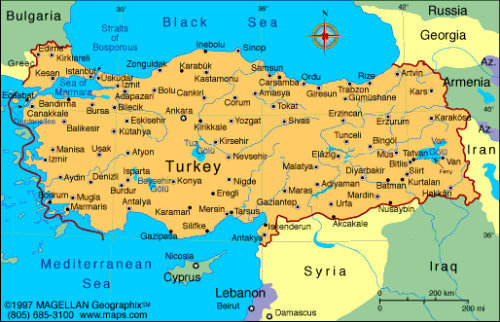
"Europe observes Turkey's growing pains through suspicious eyes, seeing a country that walks a geographic, ethnic, and cultural tightrope, balanced uneasily between two worlds; a bridge between East and West with a foot in both camps, but with her heart in neither."

TurkeyMap_zpsdd383bb0

Turkey is simply amazing. They were on the losing side of the conflict during World War One, and then promptly fought the Turkish War of Independence to wiggle free from under the thumb of the allies. They have charted their own course ever since. As I was growing up, the romance of Turkey always had an allure to me. For those of us in the West, Turkey has always proved to be a ally, a Muslim country that we felt comfortable with and who felt comfortable with us. For forty years they have been custodians of our nuclear weapons providing a checkpoint against a potential Soviet/Russian assault on Europe. It is kind of crazy that they did that for America and Europe, putting themselves on the front lines of what would have been World War Three, and I hope we never forget their role in providing a bulwark long enough for the Cold War to dissipate peacefully.

Jeremy Seal found a fez in his attic which inspired him to not only learn to speak Turkish, but also spend a significant time in Turkey immersing himself in their culture. The theme of this book is his search to understand the origin of the fez, and also as it turns out to understand the truly bizarre relationship that Turkey has had with headgear.

The problem with travel writing is a lot of times, especially for an article in a magazine, a travel writer basically parachutes in and hopes he finds some kind of story to write in the couple days that the magazine has given him to actually physically be in the spot he is supposed to be writing about. Most of the writing is done once they return home. They spruce the article up with a bit of research, check that their word count fits the box the editor has given them, and then they are off on another all expense paid trip to somewhere else. God love 'em, but as a rule I wouldn't put much faith in those articles providing you with anything more than a heavily colored snapshot of a place that may have been experienced for only a few hours by the writer.

As I mentioned Jeremy Seal has logged not hours, but months and maybe years in Turkey, so I trust his impressions, although we are reminded throughout, by his reactions, that he is looking at the culture through the long lens of Western conjecture. Poke a stick at it and see if it moves. He reveals a bit of impatience with a culture that comes to a halt for pray.

"The receptionist's forehead lay between outstretched palms upon the counter in front of him. Every so often he would lift his head a few inches to offer up rhythmic mutterings. And whenever he did so, I would lean forward with a raised finger to signal my presence. I was beginning to worry about the time, and increasingly hoped he was working up to a devotional climax. It was the old dilemma: he had a God to talk to; I had a bus to catch. I respected his God, but I also knew that the Turks respected their bus timetables.
Settling his bill would have to wait.

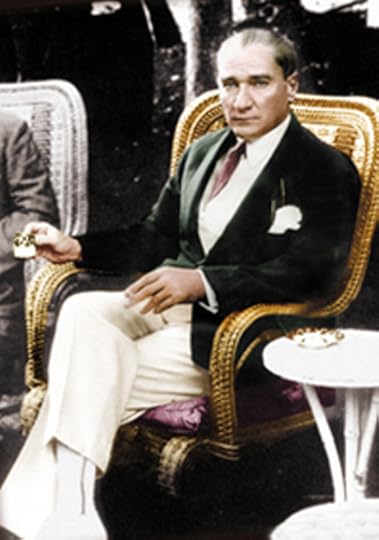
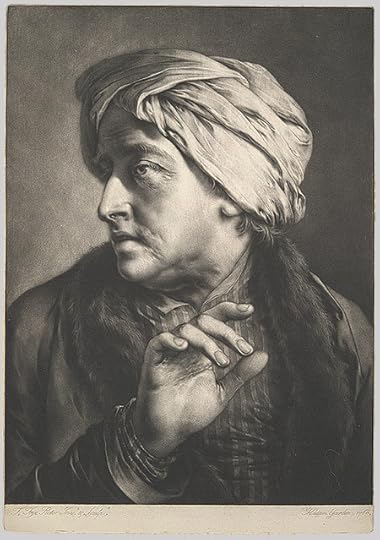
From a Western perspective Turkey is the most modern and progressive of the Middle Eastern countries and the reason is one man named Mustafa Kemal Ataturk. He was the hero of the revolution and his goal from the beginning was to Westernize his country. He separated Islamic law from secular law. He allowed women to vote. He banned the turban.

Photobucket
Turban

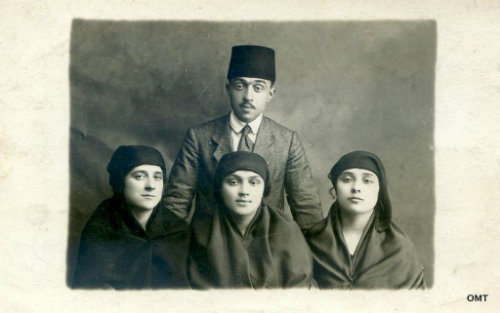
And replaced it with the fez.

FezHat_zps93f32dd2
Turkish Fez on the young man in the photo

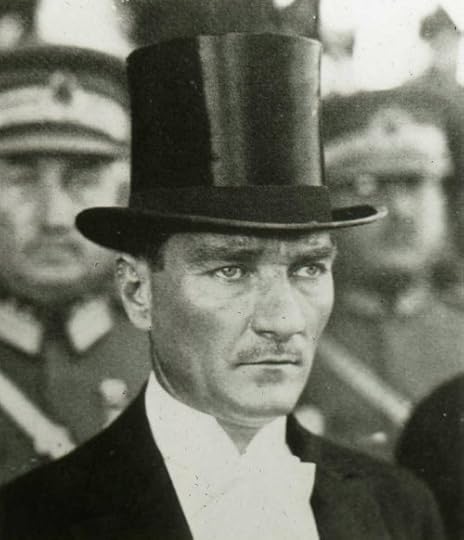
And then Ataturk decided that the fez was too non-western as well and banned it. He encouraged everyone to adopt a brimmed hat that was especially controversial because it was not conducive to prayer as the brim got between the head and the ground.

Ataturk_zps456b2c50
Ataturk sporting Western headgear.

Are you confused yet? I had no idea that Turkey had such a headgear issue. Men were actually hanged for wearing the fez after the hat was banned by the government. Regardless of the ban Turkey will always be associated with the fez and now tourists from Europe buy them more as a joke than as a piece of Turkish history. Just to add one more head whipping change Ataturk decided, in the end, that wearing no hat at all was best. An understandably confused population did their best to comply with the wishes of their venerated leader.

Photobucket
Ataturk looking dapper and very European

Seal criss-crosses the country and one thing that is never in doubt is the reverence which everyone he talked to had for Ataturk, even though they didn't agree with any of his views. It sort of reminds me of talking to Republicans about Ronald Reagan. They hold him up as the paragon of the party and yet if he were running for president today they would not agree with any of his policies. They will brook no criticism of his policies and simply will not believe that he raised taxes or could have been involved with an arms for hostages deal. The conception that people have of him has far exceeded the man's deeds. I want to share one such conversation that makes the same point about Ataturk.

'I am Ataturk's greatest admirer,' Ali Bey told me. But Ali Bey also told me that he was not a rim-wearer, unlike Ataturk. Nor, in this alcohol-free village, did he drink alcohol; Ataturk had drunk raki, the local Pernod with muscles, to distraction if not to death. Like most of the men in the village, Ali Bey supported Refah, the Islamic Welfare Party, and its call for the restitution of the sheriat or code of Islamic law. He would not brook the notion of the women of the village voting or even holding political views although they had been granted the vote in 1934-by Ataturk. Ali Bey seemed to revere Ataturk in spite of himself.


Turkey, as expected, is a complex society, not easily categorized from a Western or an Eastern perspective. Ataturk had an alarmingly overbearing influence on the culture of Turkey, bringing them reluctantly into a "modern era". Through my Western eyes I have to say Ataturk did us a great favor and at the same time made Turkey relevant in European and Middle Eastern affairs. Turkey is a natural bridge between two philosophies; a culture that I hope will continue to benefit from the influences of the West as well as the East. This book gave me a peek into a country that is in the midst of flux, a country trying to be European; and yet, as a majority much more comfortable with more traditional Islamic beliefs. Turkey is a country I can't wait to experience for myself.
Profile Image for Margitte.
1,188 reviews671 followers
February 23, 2020
There are other themed-travel journals who managed to stay on course and provide fascinating experiences for armchair travellers such as yours truly. Some of my favorite ones are:

1) Blue Highways by William Least Heat-Moon;

2) On the Road to Babadag: Travels in the Other Europe by Andrzej Stasiuk, Michael Kandel (Translator);

3) Shopping for Buddhas by Jeff Greenwald;

4) The Devil's Cup: A History of the World According to Coffee by Stewart Lee Allen;

And ALL of Peter Jenkins' as well as ALL of Michael Palin's books. I read these two authors before I joined GR. How they opened up the world to their readers!

Well, let's see where A Fez Of The Heart fits into my travelomania. Or rather, armchair obsessions with travel journals. I guess it stems from the chappie-wrappers when I was a child as mentioned in my review of The Devil's Cup and later in life, the wonderful letters received from friends travelling the world. So A Fez Of The Heart got the bubbly occupying my blood again. Just had to visit Turkey with Jeremy Seal. For the first time I wanted to discover the passion and obsession behind a hat. Yes, a hat. I know for sure, that I will look differently at all hats from now on. Seriously. (no, not really!) :-))

The author summarizes his own book in this parapgraph:
"Europe observes Turkey's growing pains through suspicious eyes, seeing a country that walks a geographic, ethnic, and cultural tightrope, balanced uneasily between two worlds; a bridge between East and West with a foot in both camps, but with her heart in neither."


The great Ottoman empire began and ended in Turkey. The author in eloquent prose shared the pulses of history raging through this country. The invasions by Hittites (who presumably built the now famous Derinkuyu Underground City around the 15th century BC), Mongols, Romans, Persians, Selcuks, Ottomans, British and countless others besides. The author's irony and wit often lightened the mood. He skillfully stayed clear of controversial issues by staying focused on the history, politics and culture behind the fez. I must say that I really missed the more in-depth aspects of the residents' lives. I don't know, perhaps I just did not connect very well. The book was just way too repetitive to keep me glued to the text. Yes, perhaps to snowy and rainy as well. Sigh.

However, I learnt so much of the history and the impact the wearing of different hats had on the Turks. A hat stood/stand for their cultural, religious and personal identity. Each era brought a change of hats! Each new pulse of history brought radical social changes, which often resulted in jaws gaping open that have not closed since. And it all kicked off with the wearing of new hats: homburgs, panamas, bowlers, and flat caps. And so a series of hats have provided the stepping-stones, the caravanserais on the central theme of Turkish history, her great march westwards towards the promised land represented by that ultimate measure of Westernization - the bare head.

Jeremy Seal's journey took place in the cold snowy winter in the region. Dirty snow, dirty smoke, dirty roads, old buses and barely-running taxis populated just about every page of this memoir. Grime everywhere, with poverty and hardship the norm in almost all the places mentioned in the book.

By the time 'we' reached Nemrut Mountain in Eastern Turkey where another part of the Turkish past established itself in a multitude of old statues (yes, the cone-shaped hats were there, forever, even though modern history dictated differently), I just about had enough. The peak of Nemrut Mountain was the geographical and spiritual heart of the Commagene kingdom, established a few decades before the birth of Christ as a buffer state between Roman and Persian empires. They never became a dynasty, but left their legacy in the form of these gigantic statues, making a big name for themselves. It was as though they deemed divinity as their absolute due. A kinship with the gods, you could say. Naked Hercules was even present, shaking hands with Mithradates, the founder of the Commagene period.

Yet, I still waited to discover the origin of the fez and patiently meandered off with the author into another chapter of this fascinating country.

I would love to experience spring in those remote mountains, where overgrazing have not yet destroyed the wonderland of flowers.
Until now, my own journey had largely been through the manageable past, the nineteenth and early twentieth centuries. It was a past chronicled by crinkly letters in spidery handwriting or the impressions left by the keys of the earliest typewriters, by fading daguerreotypes and even the living memories of the very elderly, lives you could reach out to and touch where history was still warm, still alive. And I was not sure what was drawing me to the old bones, history’s charnel house on Nemrut Mountain.
Turkey is not only the only country in the world to span two continents, it's probably also the country where different cultures stand with one leg on each continent as well. The contrast of old and new; of past and future hopefully finding a way to connect on the Eurasion bridge crossing the Bosphorus river between Europe and Asia. This journal is a bit dated in the sense that new developments in the region already indicates yet another pulse of history to begin.

There are really informative, excellent reviews of this book on GR. If you enjoy this genre as much as I do and would love to learn more about this fascinating country, I strongly encourage you to read these reviews. A Fez Of The Heart was a good read. The journal inspired me to find all the places on the internet. It enriched the experienced tremendously. As usual.

And now it's back to reality. Sigh.
Profile Image for Richard Derus.
4,297 reviews2,295 followers
May 4, 2013
Rating: 3.25* of five

The Book Report: Author Jeremy Seal, British of course, found an elderly fex in his parents' attic and, in true Brit fashion, became obsessed with Turkey. I mean, what else is possible when one finds a fez in the attic?

I think an American would be more interested in how the fez got there, which parent had the Turkish man as a lover, what the hell the thing was...not leap straight into Turkophilia. But us colonials, we're just not as finely tuned as the Motherlanders to the nuances of life.

In other words; we're sane.

So off Jezza goes, in 1993 mind you, as a grown man, to indulge his peculiar obsession. He arrives in a Turkey that resembles the fez-wearing Turkey of his childhood interest very little. The story he tells us as we tag along with him on his voyage of discovery is that of Turkey's utterly fascinating reinvention of itself after the Great War swept away empire and sultan all in a day. We meet Turks old and young, and to a one they are as crotchety and odd as one could wish them to be. In the end, the hat that brought Jeremy Seal to Turkey is his personal madeleine, the key to memory and knowledge.

My Review: I like stuff about Turkey because I think it's one of the most interesting places on the surface of the earth. I've liked every Turk I've met, too, and dated one Turk for a year or so. I went into reading this book, on a friend's recommendation, with all sorts of goodwill and eagerness.

I came out with all the goodwill and none of the eagerness.

I like the book, don't get me wrong. I quite enjoyed the capsule Turkish history, I was amused by the cultural divide the author frequently fell into, and I was kept reading by the author's evident love for his subject.

I don't like Jeremy Seal. Not even a little bit. I think he comes across as a snotty little prig, a self-absorbed twit, and an obsessive-compulsive hat fetishist. If I met him in the flesh, I would not be inclined to linger, but rather to escape.

And that, sad to say, is my take-away from this very nice book. It overrode the pleasures of Turkophilia, which I too have, and left me with Sealophobia. I think that's a damn shame.

Creative Commons License
This work is licensed under a Creative Commons Attribution-NonCommercial-ShareAlike 3.0 Unported License.
Profile Image for Shovelmonkey1.
353 reviews971 followers
March 19, 2012
Don't be put off by the oober naff title. Yes it is a heartily amusing pun, much like the sort favoured by many on this website... raise your hands gentlemen, you know who you are.

This is a great and readable book about Turkish culture and history and will ease you into the subject - the literary equivalent of being able to wear a nice comfy vest before being forced into a corset (the corset being Andrew Mango or some weighty word brick produced by academics such as John Juliue Norwich)- I don't recommend diving into some weighty Andrew Mango tome straight off the bat unless you are feeling really hard core!

I delight in all things Turkish, although I do not like Turkish Delight (which is not the same as afternoon delight), and have spent a good proportion of my life living and working there. Jeremy Seal uses the fez as a central theme and a tool to examine the Turkish people, their identity and their history as well as their relationship with that most distinctive and surprisingly political piece of head gear. Turkey is a difficult place to get your head around because it has been a crossing point for millenia. the place where east meets west; a melting pot for culture, philosophy, religion, costume, trade and exchange. Seeing it via the medium of the Fez does not directly clarify this melting pot but it does make some of the more salient points bob to the surface.

Profile Image for Daren.
1,590 reviews4,585 followers
dnf
July 12, 2019
This book receives many accolades from both reviewers and well respected authors - A favourite of mine, Eric Newby has a fawning quotation on the cover of my edition, Patrick French and William Dalrymple on the back cover.

For me, I really struggled to make a connection with this book, and after a landmarking 100 pages I threw in the towel. It wouldn't have killed me to continue reading, and in most cases I finish books despite not really connecting, and I would probably have given it 2 stars had it not improved for me, but really, I just wanted to get onto a new book which made me want to pick it up.

I am pretty confused, as reviewers say it is amusing, or funny. I kept persevering, waiting for that to come, and really it didn't. I began wondering if I skipped over some vital parts, or was perhaps distracted while reading it, because I just didn't pick it up.

I won't distract myself longer than this on a review, as I doubt it is helpful to many people, and I really do suspect it is better than I am giving it credit for.

DNF
Profile Image for Kay.
1,020 reviews222 followers
August 23, 2008
I keep hoping (and occasionally checking to see if) Jeremy Seal has written any new travelogues, as this book and The Snakebite Survivor's Club were both highly enjoyable. This particular book was read before going to Turkey several years back, and I found Seal's approach quite charming. Exploring Turkey's dilemma with modernization vs. tradition through a history of its headgear was a rather clever approach, I thought. Seal's narrative is witty and engaging even as it tackles some complex (and controversial) issues.

I've noted that this book has come under attack by some fairly thin-skinned reviewers (in my opinion) at Amazon.com. I think they're missing the point. This sort of bemused and tongue-in-cheek travelogue, detailing the author's misadventures in (and misunderstandings of) another culture are a sub-genre in British travel writing. Look no further than Eric Newby's A Short Walk in the Hindu Kush, Peter Fleming's Brazilian Adventure or Bill Bryson's In a Sunburned Country for other examples. (And, yes, I know Bryson's an American, but he writes in a thoroughly British vein.) If Seal were held to the high standards of cultural sensitivity that his critics seem to demand, then I'm afraid this book would have been little more than a politically correct bore.

And if that makes me culturally insensitive, then I have two words for you: "tough nuts".
Profile Image for Robert Isenberg.
Author 32 books155 followers
June 2, 2009
I had high expectations for this book -- after all, it's not every travel writer who explores an entire culture through headgear. Turkey is a peculiar case-study, too: In the early 19th century, the Ottomans outlawed turbans, in order to appear more "modern." In the 1920's, Ataturk also banned fezes, which had great symbolic value to Turkish citizens. Wearing a fez in protest courted imprisonment or even death.

But Seal has a truly irritating prose style. He's wordy and tries too hard to be clever; "Fez" is clearly a debut work. Seal wants to win over readers with a barrage of English wit, but his writing comes off as cutesy and condescending, as if he's wandering through a minefield of adorable Turkish ironies, just waiting for an explosion. Seal is allegedly fluent in Turkish, and he taught English in Turkey for some time, but never once does he express affection for Turkish people or culture. We're led to wonder why he's there at all.

Most obnoxious of all, Seal tours Turkey the hard way, journeying by bus through frozen villages and ugly border towns. Locals repeatedly warn him against visiting such places, but Seal persists; then, when he arrives in some wretched Turkish ghetto, he complains about everything. But was Seal forced to go there? Didn't the Turks dissuade him, in no uncertain terms? Seal is a comedian pandering for martyrdom. If you read only one book about Turkey, skip this one and read Pamuk's beautiful "Istanbul." It may not say much about fezes, but at least Pamuk's sense of humor is genuine.
Profile Image for Veronica.
863 reviews130 followers
September 4, 2011
It may seem silly, but I had to stop reading this book because of the number of spelling and grammatical errors. It's a little unfortunate that in a book about tasselled hats, the word "tassel" is spelt wrongly throughout. One person is described as having "an educated palette". As I've already mentioned in my earlier comment, Seal uses words without knowing or apparently caring what they mean: "the broken horse standing patiently between the withers" makes no sense at all. Surely a major publisher like Picador can afford to pay copy editors?

To be fair, if I'd been more interested in the topic I would probably have persisted. But I don't know much about Turkey, and this book wasn't really enlightening me or making me want to find out more (although the premise, that hats have been a hot political issue in Turkey for centuries, was intriguing). I've read enough of it to know that it's unfair to judge it by the standards of academic publishing, as some of the negative reviews on Amazon appear to do. It's a personal travelogue which is intended to be humorous, although I didn't manage to raise many smiles -- I was too busy gnashing my teeth at the egregious errors.
Profile Image for Jaclynn (JackieReadsAlot).
696 reviews44 followers
January 11, 2017
I really enjoyed this read, despite some grammatical errors here and there, and I learned a lot about about Turkey's early growing pains. I've been to Turkey twice now and I absolutely love the country. I had considered moving there to teach, like the author did in the 80s, but given the current political climate I decided, wisely I believe, against it. Turkey has a place in my heart, but Turkey has a lot of problems. And this book, written in the early 90s, after Seal's teaching experience and further travels within the country, explain why Turkey has had such a rough go of it since the 1800s. In fact, it really sets the stage for the problems Turkey is experiencing now.

A fabulous look into Turkish history and the historical difficulties of reconciling the secular and religious in the 20th century there, all told via the history of a hat. Part travelogue, part history, completely satisfying read.

"Europe observes Turkey's growing pains through suspicious eyes, seeing a country that walks a geographic, ethnic, and cultural tightrope, balanced uneasily between two worlds; a bridge between East and West with a foot in both camps, but with her heart in neither."
Profile Image for David P.
60 reviews8 followers
November 29, 2012
A subtitle nicely captures the essence of the book: "Travels around Turkey in search of a hat." The hat is the fez, a bright red cone ending in a flat top, once the national headgear of Turkey. More than a hat, it was a symbol, and both its arrival and departure marked major shifts in the destiny of Turkey. The fez was decreed in 1820 by Sultan Mahmoud II as a symbol of a multi-cultural Ottoman Empire. "Henceforth," the Sultan announced, "I recognize Muslims only in the mosque, Christians only in the church, Jews only in the synagogue. Outside these places of worship, I desire every individual to enjoy the same political rights and my fatherly protection."

A century later, in 1925, that same fez was banned, its wearing made a punishable offense. It was a decree by Mustafa Kemal Ataturk, founder of modern Turkey--the man who replaced Turkey's Arabic script with Latin characters (modified to its own style), who moved the capital from bustling Istanbul to far-away Ankara. Ataturk saw in the fez a relic of the old ways, and banned it in order to make way for the homburg and other European-style brimmed hats. The empire by then was gone, too, and the broad tolerance of Mahmud II (to the extent it was actually practiced) had given way to Turkish nationalism.

Jeremy Seal knows his Turks: he had taught English in Ankara and speaks Turkish fluently. He is familiar with Turkey's long and varied history and its many cultures, and the reader who follows his "search for a hat" learns a great deal about them. Turkey is a nation in uncertain transition: the old ways, which Ataturk tried to dispose of, still persist. The modern and the old still coexist and still struggle for the nation's soul, through persuasion, intense political rivalry and even political assassinations. Meanwhile poor people still scramble for a living, European tourists still come to enjoy sunny beaches and magnificent antiquities, and non-Turks such as Kurds still try to carve out their own niche and to preserve their language.

Through all this wanders Jeremy Seal, seemingly a wide-eyed innocent taking it all in, leavening his travelogue with a healthy sense of humor, listening to all and giving the reader a good sense of what Turkey and the life of its people are like.

And you learn all you might ever want to know about that uncommon headgear, the fez. About its manufacture--as an Austrian export item and in an imperial factory in Istanbul--about the riots which followed its ban, and about the sikke, twice as tall, still being made in the town of Konya and worn by whirling derwishes in their wild dances. Seal even travels to the city of Fez in Morroco, supposedly the birthplace of the conical hat. The fez is hardly worn there any more--just by tourist guides and old men--and it has a different name altogether, tarboosh. The locals claim it came from Spain, or rather "Andalusia, when we Arabs ran it," a thousand years ago.

Go figure.
5 reviews3 followers
August 9, 2008
The worst book ever on Turkey. Questioning Turkish claims for modernity, change and refomations. Concluding that Turkey is doomed to stay as it was and change is out of question as far is Turkey is concerned.
According to the writer his book is a sign of his love for Turkey where he spent almost a year teaching English in Ankara. Read in-between the lines and you discover that his narrative is totally biased from the beginning to the end. He goes s far as saying Turkish application to European Union in the late 1980s was the "the third Vienna siege". For anyone who is interested more on that I can send my chapter in my dissertation on this book. Seal means to say that do not be mistaken, deceieved by Turks' tolerance for the tourists Turkey is a totally different palce despite their claims for European identity Turks still keep the fez in their hearts. Their Europeanness, or Westernness is just skin deep. Scratch a little bit and you find how Oriental, Middle Eastern and different they are.
Yet this travel book has been translated into several Euroepan languages and a big success.
Profile Image for Melek Cansu Petek.
44 reviews15 followers
May 15, 2024
I picked up this book out of curiosity when strolling through Brattle in Boston. It seemed like a somewhat odd but potentially interesting read — focusing on the history of a now-abandoned hat, and using that as a launching point for a commentary on modern day Turkey. I was wrong.

334 pages of over-the-top descriptions, relentless Western snobbery and disdain, and countless failed attempts at trying to be witty. There were a few moments of interesting tidbits and that’s the only reason why this is 2-stars, instead of 1.

Admittedly, I am Turkish, and grew up in the 90s (the author’s travels take place in 1993), and I did wonder if my dislike for this book was due to this obvious bias. So I ended up reading parts of it out loud to my husband (he’s American) to get a second opinion. And he was a) amazed that this book ever got past an editor and b) that I continued to read it. So there’s that.
Profile Image for Rupert.
53 reviews3 followers
September 1, 2013
Thoroughly enjoyable: a fascinating, insightful and (very) funny book.

If you are going to Turkey you really must read it.

Learnt a lot about Turkish history, and an astonishing insight into the ternsions and current affairs.

If that makes it sound dry or dull, it isn't: it is very funny (literally, laugh out loud funny at times) and brilliantly written.

My only complaint: it was written in 1995 & I'd love a second edition with an update.

Profile Image for Cheryl.
1,323 reviews70 followers
July 19, 2017
In the epilogue of the book, one of the people the author meets tells him that the essence of Turkey is indecisiveness. That turns out to be an excellent summation of this book, which explores the dichotomy of the country which is part of the EU despite being located almost entirely in Asia, is a secular democracy that is profoundly Islamic and founded by a dictator, that is all about freedom but has a history of outlawing specific headgear and the speaking of native languages other than Turkish. It helped me understand a bit why they would have just held a democratic referendum vote to give their elected leader the powers of a dictator. The soul of Turkey is a pendulum constantly swinging back and forth between passionate ideals, and the author's search for the history of the fez illuminates the history and culture that the pendulum swings on.
124 reviews
July 27, 2023
It's essentially a themed travel book that interweaves a lot of interesting detail about Turkish history and culture with a first person narrative journey. My 1995 Picador edition of this is lovely - printed on top quality paper, a nice font and a very pleasing feel to the cover. Reminds one that a paperback can be a joy to hold and what a shame it is that most are produced to much lower standards. l like the punning title and this edition has none of the typos that seem to have annoyed other readers. Bought to be read on a recent Turkish road trip, it worked very well. Very nicely written, with lovely phrases and masterful use of language.
Profile Image for Chris Bartholomew.
98 reviews2 followers
July 28, 2017
I wanted to like this book mostly because I loved the title. However I found it a bit dull. The history of the fez is apparently not that interesting. The real story of course was about reconciling the desires of the people of Turkey to turn to the West while holding tight to Eastern traditions. That was described well enough and was enlightening to me. But the fez? It's a hat.
180 reviews
January 9, 2022
I picked this book up at my local library in preparation for my first trip to Turkey. Using the fez as a foundation and focal point for this travelogue seemed a fun, irreverent idea, but the execution was nothing short of painful. Virtually unreadable - a boring, dull, lifeless slog.

I loved my trip to Turkey anyway.
42 reviews
June 18, 2025
Non so cosa aspettavo da questo libro e non so neanche se sono soddisfatto. Anche se ha raccontato un po’ sulle fez, il libro era destinato di più alla storia turca, i modi di pensare della gente nei paesini e le ideologie. Il fatto che ha raccontato oggettivamente mi è piaciuto. Come un Turco, è stato bello leggere la mia storia da un punto di vista esterno
Profile Image for Angela Gostling.
107 reviews1 follower
January 31, 2025
Most enjoyable and a good concept; a bit quirky. An excellent insight into the lives of Turkish people of the time. Well researched, written and intriguing. I never now see a fez without thinking of its history.
269 reviews4 followers
December 24, 2025
An intelligent and humorously written account of Turkey in the early 1990s as seen through the guise of its headwear, or lack thereof. Also a very insightful portrait of the country a decade before the AKP came to power and, as such, a very valuable contribution to the wider literature.
Profile Image for John.
454 reviews1 follower
August 11, 2017
Very interesting travelogue in Turkey in the 90's. the author sets off to discover the origins of the fez and discovers another lesson about Turkey.
Profile Image for Karen.
190 reviews3 followers
June 26, 2020
Decent travel log. Learned a few new tidbits about Turkey.
Profile Image for Linda Chrisman.
555 reviews2 followers
March 19, 2022
Really enjoyed this book. Enlightening as to the conditions in present-day Turkey as well as some interesting history. Great premise!
Profile Image for Jennifer.
1 review
May 30, 2022
An entertaining travelogue about Turkey, and the history of the fez.
Profile Image for Dilara Ekici.
50 reviews1 follower
February 23, 2023
I had to give this book a couple of attempts to finish over the years. Now that I finally did... the writing style in the book can be a little hard to follow. Through the history of a hat, fez, Seal explains the difficulties of reconciling the secular and religious in the 20th century Turkey. However, without having lived in Turkey, it requires a great deal of background information to get a grasp of the concepts mentioned. Overall, it cannot really go beyond 2 stars.
214 reviews9 followers
May 6, 2023
I liked the variety travelogue in country of Turkey while traveling there myself. I struggled at times to understand some references, but a very fast and fun and meaningful read.
658 reviews2 followers
November 30, 2024
A wondrous book. Luminous prose, instructive and very funny in places. Bravo!
3 reviews
July 11, 2025
Badly written almost unintelligible
Profile Image for Stephen Gallup.
Author 2 books73 followers
October 7, 2011
This is an engaging travel memoir, written by a European visiting Turkey in the early 90s. The author is fluent in the native language and had previously taught ESL classes there, so he was well-equipped to set out by bus on a big loop through the country, striking up conversations all along the way, ostensibly in pursuit of a long-banned Turkish hat known as the fez.

Writing in rather elegant sentences, Jeremy Seal describes Turkey in terms of its historically awkward position on the divide between the Islamic world and modern Europe. The most obvious indicator of its orientation at any given time, according to Seal, is the kind of headwear in vogue. He's most intrested in the fez, which by decree supplanted the turban in 1825 as a signal that Turkey's rulers wanted to emulate Western styles without going overboard and totally abandoning their identity (the fez being sort of a bowler without a brim). A century later, however, the fez too was outlawed, for the same reason: It had become too non-Western. Initially, some Turks were imprisoned or even hanged for refusing to give it up, but by the time of Seal's arrival even mentioning the fez was something one did not do in polite company. Seal sets himself the task of exploring the country's state of mind via this slightly eccentric focus.

Seal tells the story of his travels using mildly self-deprecating humor that produces enjoyable passages like the following:

I was returning to my hotel when an old man wearing a purple, brimless hat walked across the road in front of me, causing me to jump. More domed than conical and lacking a tassel, it was not the classic fez, but I suspected it to be a very close relation. ... I began to track it, my heart beating rapidly, stopping to feign interest in a particular lamppost whenever the fez wearer greeted friends or examining an apple at close quarters whenever he shot the breeze with stallholders in the market. He crossed the road with me in surreptitious pursuit and started to describe a large circle until we passed the apple stall again. Gradually, it became clear to me that the old man was going nowhere in particular.

and:

Arriving at the Yozgat bus station had the powerful effect of sending my imagination into panic-stricken overdrive, so that the destinations brightly painted on the bus company windows there transmitted messages of hope and indescribable beauty. I almost cried at the thought of distant towns that I had never seen but felt sure were all I could ever want, home and sanctuary for the rest of my life, after what I had seen of Yozgat.

There are other gems, too, such as a description of his progress through a museum when he's trying to evade surveillance in order to get a closer look at the fezes on wax figures, or the time he sits down in a restaurant and finds everybody in the place staring at him "with utterly blank expressions." Self-consciousness turns to fear when a big guy stands and approaches him--but it's only to turn a knob on the TV above his head! You'll have to read the book if you like this stuff. I haven't seen an author poke fun at himself this amusingly since James Herriot.

The many individuals he meets along the way are colorful and endearing in their own zany ways, whether they are arguing that Islam is better than Christianity (because it's newer), or getting into brawls with strangers over imagined insults (just like stereotypical rednecks), or asking for help with their English (Which word is correct, dick or cock?).

In short, the author's personal experiences are rendered vividly and memorably. The book's drawback is in the way he weaves in historical context at every turn. The context is important, of course. Wanting to understand Turkey is part of why I picked up this book. (After all, its current ruler was recently described as someone who could start World War III.) But until near the end, Seal generally fails to maintain the same enthusiasm when reporting on bygone times. I won't say those parts of the book are incomprensible, but sometimes they are so dull that they might as well be.

Only in the latter chapters, when he makes a separate trek through the SE corner of Turkey and gets around to the Armenian massacre and the grievances between Turks and Kurds, does the history come to life.

The ultimate point of his historical observations, I think, is that abolishing non-Western headgear has not ended non-Western thought. The prediction is made, in think in 1992, that an Islamic revolution in secular Turkey may occur in 20 years. There's nothing dull (or amusing) in that prospect!
Profile Image for Vampire Who Baked.
158 reviews102 followers
July 21, 2020
Funny prose. Decent travelogue. Writer can sometimes try to be too clever by half.
Displaying 1 - 30 of 56 reviews

Can't find what you're looking for?

Get help and learn more about the design.