

What do you think?
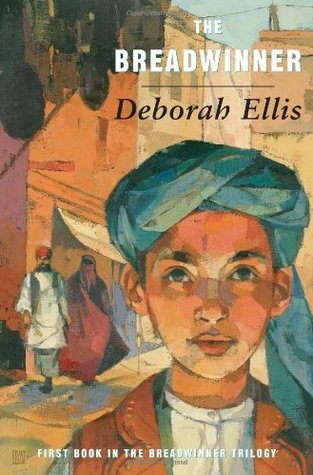
The Breadwinner #1
The Breadwinner
Since the Taliban took over Afghanistan, 11-year-old Parvana has rarely been outdoors. Barred from attending school, shopping at the market, or even playing in the streets of Kabul, the heroine of Deborah Ellis's engrossing children's novel The Breadwinner is trapped inside her family's one-room home. That is, until the Taliban hauls away her father and Parvana realizes that it's up to her to become the "breadwinner" and disguise herself as a boy to support her mother, two sisters, and baby brother. Set in the early years of the Taliban regime, this topical novel for middle readers explores the harsh realities of life for girls and women in modern-day Afghanistan. A political activist whose first book for children, Looking for X, dealt with poverty in Toronto, Ellis based The Breadwinner on the true-life stories of women in Afghan refugee camps.
In the wily Parvana, Ellis creates a character to whom North American children will have no difficulty relating. The daughter of university-educated parents, Parvana is thoroughly westernized in her outlook and responses. A pint-sized version of Offred from Margaret Atwood's The Handmaid's Tale, Parvana conceals her critique of the repressive Muslim state behind the veil of her chador. Although the dialogue is occasionally stilted and the ending disappointingly sketchy, The Breadwinner is essential reading for any child curious about ordinary Afghans. Like so many books and movies on the subject, it is also eerily prophetic. "Maybe someone should drop a big bomb on the country and start again," says a friend of Parvana's. "'They've tried that,' Parvana said, 'It only made things worse.'" (Ages 9 to 12) --Lisa Alward
171 pages, Paperback
First published September 1, 2000
About the author
Deborah Ellis
65 books611 followersLibrarian Note: There is more than one author by this name in the Goodreads database.
Deborah Ellis (1 January 1960 - ) has achieved international acclaim with her courageous and dramatic books that give Western readers a glimpse into the plight of children in developing countries.
She has won the Governor General's Award, Sweden's Peter Pan Prize, the Ruth Schwartz Award, the University of California's Middle East Book Award, the Jane Addams Children's Book Award and the Vicky Metcalf Award.
A long-time feminist and anti-war activist, she is best known for The Breadwinner Trilogy, which has been published around the world in seventeen languages, with more than a million dollars in royalties donated to Street Kids International and to Women for Women, an organization that supports health and education projects in Afghanistan. In 2006, Deb was named to the Order of Ontario.
Deborah Ellis (1 January 1960 - ) has achieved international acclaim with her courageous and dramatic books that give Western readers a glimpse into the plight of children in developing countries.
She has won the Governor General's Award, Sweden's Peter Pan Prize, the Ruth Schwartz Award, the University of California's Middle East Book Award, the Jane Addams Children's Book Award and the Vicky Metcalf Award.
A long-time feminist and anti-war activist, she is best known for The Breadwinner Trilogy, which has been published around the world in seventeen languages, with more than a million dollars in royalties donated to Street Kids International and to Women for Women, an organization that supports health and education projects in Afghanistan. In 2006, Deb was named to the Order of Ontario.
Ratings & Reviews
Friends & Following
Create a free account to discover what your friends think of this book!
Community Reviews
Displaying 1 - 30 of 3,042 reviews

November 18, 2014
According to a 2014 UN report, Afghanistan is the worst country in the world to be born a girl. The average life expectancy of a woman is 44 years. Given such harsh gender segregation, many families are bringing up their daughters as sons. They are known as bacha posh – the literal term translated from Dari for a girl “dressed like a boy” in Afghanistan.

This is a photo of Mehran Rafaat, a girl disguised as a boy, with her twin sisters outside their family home in Afghanistan.
Photograph: Adam Ferguson, courtesy of The Guardian.
According to Afghan teachers, midwives and doctors, it is “not uncommon” to find a bacha posh in each school or extended family, because it is easier to have access to an education in the most conservative areas, where few girls are able to go to school. The family may also need a child who can move around more, who can work or run errands for the family, or escort sisters.
In 1996, when Deborah Ellis read about the Taliban occupation of Afghanistan, and about their brutal treatment of girls and women, she decided that she had to get involved. She visited refugee camps in Pakistan, met Afghan women and heard about their experiences. She was particularly struck by the story of a young girl who cut off her hair and disguised herself as a boy so she could earn money to support her family. Deborah knew she had to turn that story into a book and the result was The Breadwinner trilogy. The trilogy has been a phenomenal success, both critically and commercially, receiving several literary awards, including the Peter Pan Prize and the Middle East Book Award in 2002.
The first novel in the trilogy, The Breadwinner, was published in 2000. It is about an 11 year old girl called Parvana, who is forced by circumstances to be the breadwinner for her family in the war-torn Taliban-era of Kabul, in Afghanistan.
Parvana lives with her mother and father, her older sister Nooria and two younger siblings, Maryam (sister) and Ali (brother). Nooria hadn't always been the oldest. Hossain had been the oldest child. He had been killed by a land mine when he was 14 years old.

Landmines kill or injure thousands of people around the world every year. The large number of amputees in some mine-infested countries create entire societies.
Both of Parvana's parents had come from old respected Afghan families. They both received their education overseas, returning to Afghanistan to settle. Her father was a teacher at a local high school and her mother a writer for a local radio station.
The novel starts during the Taliban militia ruling. Kabul is in a state of ruin. Various rules are in place;
- girls are forbidden to go to school,
- no woman can work,
- all girls and women have to stay inside their homes,
- all windows have to be painted over with black paint so that no one can see the women inside,
- buses are not permitted to carry women who do not have a man with them,
- photographs are illegal,
and many other atrocities.
Soon after the novel starts, we learn that Parvana's family have gone from a relatively comfortable life to one where they live from day to day. The five family members live in a one room apartment of a bombed apartment complex. It was during a bombing at the local high school that Parvana's father loses a leg.

Amputees are an alarmingly common sight in Afghanistan.
Photograph: courtesy of DW
Each day Parvana must accompany her crippled father to the market, where he earns money by reading and writing letters for the largely illiterate population of Kabul. One night, Taliban soldiers storm into her house and arrest her father for not having an Afghan education, but instead going to university in a different country.
At the capture of her father, her mother becomes depressed and lies in the one spot, unable to move. The family starts to starve, as they have no male escort and therefore can't travel outside. It is at this point that the family decides that they will disguise Parvana as a boy. They cut her hair and dress her in her dead brother's clothes. They hope that this disguise will enable her to freely roam the city without suspicion. She earns money in any way she can: by writing letters, digging up bones from corpses, and selling cigarettes with her friend Shauzia. One day she discovers a young woman refugee hiding, and Parvana brings her home to keep her safe. Finally Parvana’s father returns home, to Parvana’s great joy.
At the book’s end, the family’s future is still uncertain, since Parvana’s mother, sisters, and brother, are en route to another town that has been suddenly captured by the Taliban, and Parvana and her father must travel to meet them.
The Breadwinner is an important book and one that girls (and guys) everywhere should read to learn how women are treated in some societies. It reminds us how courageous and strong women are around the world, and how in difficult circumstances, they often have to make hard choices and find strength to deal with them. This book, in my mind, accurately depicts war-torn regions. Deborah Ellis has created characters and a world that feel realistic and familiar to me. Her writing and story telling is inspiring.
And as to the practice of bacha posh? It begins to crystallise as one of the clearest symptoms of a segregated society so dysfunctional that it inevitably must change. When one gender is so suppressed and so unwanted, there will always be those who try to pass over to the other side, to reach for the small freedoms every human should have. It also has historical parallels throughout societies that were repressive to groups for reasons of religion and race.
That bacha posh has existed right under the surface as a way to creatively buck a system of gender segregation for this entire time should prompt us to ask what else we were missing in our decade-long effort to turn around one of the world’s poorest and most undeveloped countries, where being born a girl always required survival efforts and a resilience that we could have never imagined.
A MUST READ book for everyone.
This is a photo of Mehran Rafaat, a girl disguised as a boy, with her twin sisters outside their family home in Afghanistan.
Photograph: Adam Ferguson, courtesy of The Guardian.
According to Afghan teachers, midwives and doctors, it is “not uncommon” to find a bacha posh in each school or extended family, because it is easier to have access to an education in the most conservative areas, where few girls are able to go to school. The family may also need a child who can move around more, who can work or run errands for the family, or escort sisters.
In 1996, when Deborah Ellis read about the Taliban occupation of Afghanistan, and about their brutal treatment of girls and women, she decided that she had to get involved. She visited refugee camps in Pakistan, met Afghan women and heard about their experiences. She was particularly struck by the story of a young girl who cut off her hair and disguised herself as a boy so she could earn money to support her family. Deborah knew she had to turn that story into a book and the result was The Breadwinner trilogy. The trilogy has been a phenomenal success, both critically and commercially, receiving several literary awards, including the Peter Pan Prize and the Middle East Book Award in 2002.
The first novel in the trilogy, The Breadwinner, was published in 2000. It is about an 11 year old girl called Parvana, who is forced by circumstances to be the breadwinner for her family in the war-torn Taliban-era of Kabul, in Afghanistan.
Parvana lives with her mother and father, her older sister Nooria and two younger siblings, Maryam (sister) and Ali (brother). Nooria hadn't always been the oldest. Hossain had been the oldest child. He had been killed by a land mine when he was 14 years old.
Landmines kill or injure thousands of people around the world every year. The large number of amputees in some mine-infested countries create entire societies.
Both of Parvana's parents had come from old respected Afghan families. They both received their education overseas, returning to Afghanistan to settle. Her father was a teacher at a local high school and her mother a writer for a local radio station.
The novel starts during the Taliban militia ruling. Kabul is in a state of ruin. Various rules are in place;
- girls are forbidden to go to school,
- no woman can work,
- all girls and women have to stay inside their homes,
- all windows have to be painted over with black paint so that no one can see the women inside,
- buses are not permitted to carry women who do not have a man with them,
- photographs are illegal,
and many other atrocities.
Soon after the novel starts, we learn that Parvana's family have gone from a relatively comfortable life to one where they live from day to day. The five family members live in a one room apartment of a bombed apartment complex. It was during a bombing at the local high school that Parvana's father loses a leg.
Amputees are an alarmingly common sight in Afghanistan.
Photograph: courtesy of DW
Each day Parvana must accompany her crippled father to the market, where he earns money by reading and writing letters for the largely illiterate population of Kabul. One night, Taliban soldiers storm into her house and arrest her father for not having an Afghan education, but instead going to university in a different country.
At the capture of her father, her mother becomes depressed and lies in the one spot, unable to move. The family starts to starve, as they have no male escort and therefore can't travel outside. It is at this point that the family decides that they will disguise Parvana as a boy. They cut her hair and dress her in her dead brother's clothes. They hope that this disguise will enable her to freely roam the city without suspicion. She earns money in any way she can: by writing letters, digging up bones from corpses, and selling cigarettes with her friend Shauzia. One day she discovers a young woman refugee hiding, and Parvana brings her home to keep her safe. Finally Parvana’s father returns home, to Parvana’s great joy.
At the book’s end, the family’s future is still uncertain, since Parvana’s mother, sisters, and brother, are en route to another town that has been suddenly captured by the Taliban, and Parvana and her father must travel to meet them.
The Breadwinner is an important book and one that girls (and guys) everywhere should read to learn how women are treated in some societies. It reminds us how courageous and strong women are around the world, and how in difficult circumstances, they often have to make hard choices and find strength to deal with them. This book, in my mind, accurately depicts war-torn regions. Deborah Ellis has created characters and a world that feel realistic and familiar to me. Her writing and story telling is inspiring.
And as to the practice of bacha posh? It begins to crystallise as one of the clearest symptoms of a segregated society so dysfunctional that it inevitably must change. When one gender is so suppressed and so unwanted, there will always be those who try to pass over to the other side, to reach for the small freedoms every human should have. It also has historical parallels throughout societies that were repressive to groups for reasons of religion and race.
That bacha posh has existed right under the surface as a way to creatively buck a system of gender segregation for this entire time should prompt us to ask what else we were missing in our decade-long effort to turn around one of the world’s poorest and most undeveloped countries, where being born a girl always required survival efforts and a resilience that we could have never imagined.
A MUST READ book for everyone.

November 7, 2022
Parvana's story gives the reader a window into life in Afghanistan when the Taliban took over in the mid-1990's. Her family finds themselves moving from one dwelling to the next as each gets bombed and their worldly possessions diminish each time. The children are not able to go to school. Women hide in apartments or go out in burqas, risking assault by soldiers. This book does not sugarcoat the truth. There are beatings, punishments, and mutilations. Deborah Ellis presents the truth in a way that is accessible to middle grade kids. Understanding what it is like for kids in Afghanistan helps the headlines to become more real inspiring empathy and action. This first book in the series ends on a bit of a cliff hanger. There are four more books covering a 20-year period.

March 28, 2013
My middle school students responded so strongly to my booktalk about this book, that the library and the local bookstores ran out, and many went on to read the sequel. However, do not be quick to label this as purely young adult fiction. As an adult, I was changed and moved by Parvana and her family, and this novel has stuck with me vividly for 20 years.

July 30, 2010
I absolutely LOVED this book. I read it in less than 24 hours. It is a beautifully written story about a young Afghan girl named Parvana who is growing up in Taliban-occupied Afghanistan. Her story is amazing, I know that it is fiction, but I believe that the author, Deborah Ellis, did a lot of research on how women live in Afghanistan. Anyway, Parvana's family is very well educated, and thus are considered to be a threat to the Taliban. Parvana's father can read and has a little place in the marketplace where he reads and writes for different people in Kabul. Parvana is young enough that she is allowed to go with him into the marketplace. Women, as we know, are not allowed to leave the house without both a burka and a male escort. Parvanas father is arrested by the Taliban, and the family starts to suffer from his absence. Parvana's family decides that the only way they are going to survive without the father is if Parvana disguises herself as a boy and goes out and works in the marketplace. This story is so full of hope and heart, and Parvana is a great heroine! She is scared at first that she will be found out, but after time she learns to be brave, and she feels like she can do anything to save her Afghanistan. This is a great story, and I loved it from beginning to end! Thank you so much for the recommendation Jody!

May 24, 2022
فیلم هایی با موضوع اینکه دختری با پوشیدن لباس پسرانه میره در اجتماعی که پسرها فقط اجازه ورود به اونجا رو دارند رو حتما دیدید یا دربارشون شنیدید مثلا فیلم قدیمی she is the man که شخصیت دختر به دلیل علاقه اش به فوتبال این تغییر رو انجام میده
اما اینجا دختری افغان لباس مبدل میپوشه و از پروانه به قاسم تبدیل میشه تا بتونه در نبود پدرش پولی رو برای گذران زندگی خانواده به دست بیاره در حالی که طالبان کار کردن زنان و حتی حضور عادی اون ها رو هم در خیابان ممنوع کرده
این داستان رو دبورا الیس نویسنده ای کانادایی نوشته که ایده این داستان رو از مادری افغان در اردوگاه پناهندگان پاکستان الهام گرفته
من تونستم به خوبی با داستان ارتباط بگیرم ولی میتونه برای «نوجوان ها» مناسب تر باشه
بنظرم آشنایی با رنج های بچه های کشور همسایه درک بهتری بهمون میده مخصوصا در استانی مثل خراسان که بچه ها با مهاجرین افغان ارتباط بیشتری دارند
غم انگیزترین قسمت کتاب برای من صفحه آخر و یادداشت نویسنده بود «در پاییز 2001 میلادی با حمله آمریکا به خاک این کشور طالبان از خاک افغانستان رانده شد ...»
خوندن این جمله در دو سه سال پیش همین میتونست امید به روزهای بهتر رو در کشور همسایه بده اما الان و امروز میدونیم که هیچ چیزی تغییر نکرده
اما اینجا دختری افغان لباس مبدل میپوشه و از پروانه به قاسم تبدیل میشه تا بتونه در نبود پدرش پولی رو برای گذران زندگی خانواده به دست بیاره در حالی که طالبان کار کردن زنان و حتی حضور عادی اون ها رو هم در خیابان ممنوع کرده
این داستان رو دبورا الیس نویسنده ای کانادایی نوشته که ایده این داستان رو از مادری افغان در اردوگاه پناهندگان پاکستان الهام گرفته
من تونستم به خوبی با داستان ارتباط بگیرم ولی میتونه برای «نوجوان ها» مناسب تر باشه
بنظرم آشنایی با رنج های بچه های کشور همسایه درک بهتری بهمون میده مخصوصا در استانی مثل خراسان که بچه ها با مهاجرین افغان ارتباط بیشتری دارند
غم انگیزترین قسمت کتاب برای من صفحه آخر و یادداشت نویسنده بود «در پاییز 2001 میلادی با حمله آمریکا به خاک این کشور طالبان از خاک افغانستان رانده شد ...»
خوندن این جمله در دو سه سال پیش همین میتونست امید به روزهای بهتر رو در کشور همسایه بده اما الان و امروز میدونیم که هیچ چیزی تغییر نکرده
August 4, 2022
3.5/5
outstanding story but i liked the movie adaptation more.
outstanding story but i liked the movie adaptation more.

May 9, 2026
I read this book along with classmates in grade 11. I never knew about Afghanistan before picking it up. I was disinterested in reading it with the class but certain moments from the story stuck with me, even after all these years.
I saw a few scenes of the animated movie based on the book on Instagram and YouTube and I was reminded of how much this story stuck with me, even superficially. I found a copy at my library and took it home. To read the story in its entirety was an experience. The Breadwinner is full of violence, despair, suffering… and hope. Hope for a better future - one that is still far out of reach for Afghanistan even in 2026. Nevertheless, this story was very touching and endearing.
Years later, I still remembered the feeling this story left behind even when I had forgotten parts of the plot itself. I think that says something about how deeply human suffering and hope can imprint themselves on us, even when we’re too young to fully comprehend.
I saw a few scenes of the animated movie based on the book on Instagram and YouTube and I was reminded of how much this story stuck with me, even superficially. I found a copy at my library and took it home. To read the story in its entirety was an experience. The Breadwinner is full of violence, despair, suffering… and hope. Hope for a better future - one that is still far out of reach for Afghanistan even in 2026. Nevertheless, this story was very touching and endearing.
Years later, I still remembered the feeling this story left behind even when I had forgotten parts of the plot itself. I think that says something about how deeply human suffering and hope can imprint themselves on us, even when we’re too young to fully comprehend.
April 26, 2019
To put it simply- The Breadwinner is a glimpse into the lives of women and girls in the war torn country of Afghanistan. 20 years of war have resulted in poor governing and awful treatment towards the lives of women and young girls.
The Taliban are very prominent in Afghanistan’s turmoil and this novel’s portrayal of events. Before reading the Breadwinner, all I’d known of the Taliban came from Malala Yousafzai’s real life story. The horrifying things that they do to supposedly keep citizens in line. With this book, I had been opened up to a whole lot more than that. I learned a considerable amount about a country that is far less fortunate than us.
Parvani -an eleven year old Afghan girl- is the main focus of the book. Written in such a way that middle schoolers and adults alike are able to understand and enjoy, The Breadwinner is an alarming, informative story about the real life events that still plague the world today.
I was able to fly through this book in less than two hours. This was short yet so, so important. I definitely don’t regret grabbing this book from my teacher’s shelf. I really do need to stop doubting the glory that is classroom bookshelves. There are a ton of hidden gems like this one hidden in plain sight.
The Taliban are very prominent in Afghanistan’s turmoil and this novel’s portrayal of events. Before reading the Breadwinner, all I’d known of the Taliban came from Malala Yousafzai’s real life story. The horrifying things that they do to supposedly keep citizens in line. With this book, I had been opened up to a whole lot more than that. I learned a considerable amount about a country that is far less fortunate than us.
Parvani -an eleven year old Afghan girl- is the main focus of the book. Written in such a way that middle schoolers and adults alike are able to understand and enjoy, The Breadwinner is an alarming, informative story about the real life events that still plague the world today.
I was able to fly through this book in less than two hours. This was short yet so, so important. I definitely don’t regret grabbing this book from my teacher’s shelf. I really do need to stop doubting the glory that is classroom bookshelves. There are a ton of hidden gems like this one hidden in plain sight.

November 14, 2017
I think Khaled hosseini is the first person for most of us who raised an interest to have a sight on Afgan lifestyle, their politics, their history and so on. I am not any different from those readers. for the sake of that, I have been reading anything on Afganistan since the Kite Runner amused me. Through this journey, I have met beautiful writers and their heartbreaking stories. Deborah Ellis is not different than them.
I have discovered the Breadwinner while watching movie trailers on youtube and the animation was spectacular as well as the gist of story shown in the trailer. So, I searched the book finding out the movie is a book adaptation and fly through it .... literally. It's short, easy, lightly written but very heavy on emotional thirst of the heart.
Currently flying through the second book of the series and already having a feeling that this series is gonna sit near my heart for long time.
HIGHLY RECOMMENDED!
I have discovered the Breadwinner while watching movie trailers on youtube and the animation was spectacular as well as the gist of story shown in the trailer. So, I searched the book finding out the movie is a book adaptation and fly through it .... literally. It's short, easy, lightly written but very heavy on emotional thirst of the heart.
Currently flying through the second book of the series and already having a feeling that this series is gonna sit near my heart for long time.
HIGHLY RECOMMENDED!

January 21, 2018
I have wanted to read this book since middle school and finally decided to cheack it out after seeing a trailer for the movie.
Parvana is a young girl living in Afganistan during the Taliban regime. After her father is arrested and sent to prison, Parvana must dress and live as a boy in order to provide for her family.
I loved Parvana and her family and I plan on reading the rest of the series really soon.
Parvana is a young girl living in Afganistan during the Taliban regime. After her father is arrested and sent to prison, Parvana must dress and live as a boy in order to provide for her family.
I loved Parvana and her family and I plan on reading the rest of the series really soon.

February 26, 2018
A quiet tale of heroic courage set in Afghanistan, ‘The Breadwinner’ is a charming tale that speaks of the horrors of war with a warm dignity. I have read quite a few books on war, but I don’t think I have read many written for a child.
Parvana’s voice is lyrical and affecting, and as I read certain chapters of the book, I was moved by how the things we take for granted are often missed in life elsewhere. That’s one of the reasons I travel. There is this passage where Parvana is able to take her sister, Nooria, outside. Her sister sits there, warming herself in the sun, and says she had forgotten how good that feels. Imagine! To be cooped up in a room all day, and to not be able to go out! There are lots of children’s books out there that may be all fun and fluff, but this is an important book for anyone to read so that we learn to respond to the world humanely - with courage, conviction, and compassion.
Parvana’s voice is lyrical and affecting, and as I read certain chapters of the book, I was moved by how the things we take for granted are often missed in life elsewhere. That’s one of the reasons I travel. There is this passage where Parvana is able to take her sister, Nooria, outside. Her sister sits there, warming herself in the sun, and says she had forgotten how good that feels. Imagine! To be cooped up in a room all day, and to not be able to go out! There are lots of children’s books out there that may be all fun and fluff, but this is an important book for anyone to read so that we learn to respond to the world humanely - with courage, conviction, and compassion.

October 13, 2017
به نظرم این کتاب در بعضی از نواحی ایران مثل یزد و کرمان باید مثل کتاب درسی خواندنش برای بچه ها اجباری شود. در اکثر نقاط ایران حضور کودکان مهاجر افغانستانی در مدارس ایرانی پذیرفته نیست و ادغام کودکان مهاجر با کودکان ایرانی خیلی سخت صورت می گیرد. در عمل البته هیچ برنامه ای برای این ادغام وجود ندارد. به نظرم خواندن این رمان برای بچه های ایرانی باعث آشنایی آن ها با رنج و دردهای ملت همسایه می شود. یک گام خیلی خوب خواهد برای ادغام و آسیب ندیدن و تحقیر نشدن کودکان مهاجر...
خود کتاب هم فوق العاده بود. دبورا الیس شاهکاری آفریده بود. پروانه دختر دوم یک خانواده ی 6 نفره ی افغانستانی است. پدرش معلم بوده و مادرش نویسنده ی رادیوی کابل. اما با ظهور طالبان مادرش خانه نشین می شود. جنگ داخلی که می شود در اثر انفجار یک بمب پدرش یک پایش را از دست می دهد. خواهر بزرگترش نوریه هم به اجبار طالبان خانه نشین است. خواهر کوچکترش مریم 5 سال دارد و برادرش علی 2 سال. پروانه 10 ساله است. هر روز همراه پدرش می رود به بازار. بعد از تعطیلی مدارس پدرش برای معاش شغل دیگری را برگزیده: نامه های مردم را می خواند و جواب نامه می نویسد. در سرزمین افغانستان بی سواد زیاد است و کسی که نامه بخواند و جواب نامه بنویسد خودش یک شغل است...
اما یک روز طالبان می ریزند به خانه ی آن ها و پدرش را به جرم این که در انگلستان تحصیل کرده است می برند. به ناکجاآباد می برند. هر چه قدر مادر و پروانه به این در و آن در می زنند که بفهمند پدر را کجا برده اند به جایی نمی رسند... پدر او را هم مثل خیلی از مردان افغان دیگر طالبان سربه نیست کرده است...
بعد از مدتی معاش خانواده به گردن پروانه می افتد. او 10 ساله است. هنوز دختر نشده است. به این فکر می افتند که او را به شکل پسر دربیاورند و او برود و جای پدرش در بازار نامه بخواند و نامه بنویسد و پول درمی آورد. موهایش را کوتاه می کنند. لباس پسرانه تنش می کنند و او می شود نان آور خانواده... در بازار می فهمد که یکی دیگر از هم کلاسی های قدیم او (دوران قبل از طالبان که مدارس دخترانه باز بودند) هم مثل او ظاهری پسرانه به هم زده و شاگرد قهوه چی شده است.
ماجراهای تلخ و تکان دهنده ی پول درآوردن دختر 10 ساله ای به اسم پروانه که خانواده ای را می چرخاند و شیرینی ها و تلخی های زندگی خانواده شان ماجراهای کتاب را شکل می دهد.
کتاب پرکشش و راحت خوانی است. در هر صفحه اتفاقی می افتد و این سوال ها که بعدش چه می شود, آخرش چه می شود, آیا پدر برمی گردد؟ آیا مادر و خانواده به سلامت به مزارشریف رسیده اند؟ آیا به دست طالبان نیفتاده اند؟ و... در طول کتاب دست از سر آدم برنمی دارند... به شدت پرکشش و تکان دهنده.
خود کتاب هم فوق العاده بود. دبورا الیس شاهکاری آفریده بود. پروانه دختر دوم یک خانواده ی 6 نفره ی افغانستانی است. پدرش معلم بوده و مادرش نویسنده ی رادیوی کابل. اما با ظهور طالبان مادرش خانه نشین می شود. جنگ داخلی که می شود در اثر انفجار یک بمب پدرش یک پایش را از دست می دهد. خواهر بزرگترش نوریه هم به اجبار طالبان خانه نشین است. خواهر کوچکترش مریم 5 سال دارد و برادرش علی 2 سال. پروانه 10 ساله است. هر روز همراه پدرش می رود به بازار. بعد از تعطیلی مدارس پدرش برای معاش شغل دیگری را برگزیده: نامه های مردم را می خواند و جواب نامه می نویسد. در سرزمین افغانستان بی سواد زیاد است و کسی که نامه بخواند و جواب نامه بنویسد خودش یک شغل است...
اما یک روز طالبان می ریزند به خانه ی آن ها و پدرش را به جرم این که در انگلستان تحصیل کرده است می برند. به ناکجاآباد می برند. هر چه قدر مادر و پروانه به این در و آن در می زنند که بفهمند پدر را کجا برده اند به جایی نمی رسند... پدر او را هم مثل خیلی از مردان افغان دیگر طالبان سربه نیست کرده است...
بعد از مدتی معاش خانواده به گردن پروانه می افتد. او 10 ساله است. هنوز دختر نشده است. به این فکر می افتند که او را به شکل پسر دربیاورند و او برود و جای پدرش در بازار نامه بخواند و نامه بنویسد و پول درمی آورد. موهایش را کوتاه می کنند. لباس پسرانه تنش می کنند و او می شود نان آور خانواده... در بازار می فهمد که یکی دیگر از هم کلاسی های قدیم او (دوران قبل از طالبان که مدارس دخترانه باز بودند) هم مثل او ظاهری پسرانه به هم زده و شاگرد قهوه چی شده است.
ماجراهای تلخ و تکان دهنده ی پول درآوردن دختر 10 ساله ای به اسم پروانه که خانواده ای را می چرخاند و شیرینی ها و تلخی های زندگی خانواده شان ماجراهای کتاب را شکل می دهد.
کتاب پرکشش و راحت خوانی است. در هر صفحه اتفاقی می افتد و این سوال ها که بعدش چه می شود, آخرش چه می شود, آیا پدر برمی گردد؟ آیا مادر و خانواده به سلامت به مزارشریف رسیده اند؟ آیا به دست طالبان نیفتاده اند؟ و... در طول کتاب دست از سر آدم برنمی دارند... به شدت پرکشش و تکان دهنده.
September 8, 2011
This is one of the best books I have ever read. All The ideas in the book have logical supporting evidence, The characters are very realistic due to their activities and appearance. I would recommend this book to each and every student in the world (Even the bullies). I think when someone reads this book their thought about Afghanistan and Afghan people must change. This book was just so realistic and so pure that it took my breath away. I could literally feel the characters' feelings, sometimes I used to get in trouble for being grumpy after reading the book. Normally when I read books I ran out of time but when I read this I simply ran out of pages.

November 5, 2019
Libro molto bello ed allo stesso tempo triste perché tramite vere testimonianze si capisce cosa passano le donne e gli uomini in Afghanistan sotto il regime talebano... Molto toccante... Ti fa riflettere... Per questo secondo me merita 5 ⭐
February 1, 2021
This book gave a glimpse of lives of the people in Afghanistan. My emotions were all over the place as I read this.

May 5, 2026
The Breadwinner by Deborah Ellis is a deeply moving and unforgettable book that exposes the harsh reality of life under oppressive rule through the eyes of a child. What struck me most was the overwhelming sense of injustice that runs through every part of the story.
Parvana’s life is turned upside down simply because she is a girl, and the rules she has to live under feel arbitrary and deeply unfair. Ordinary things—like going outside, working, or getting an education—become dangerous or forbidden, and that contrast makes the injustice even more powerful.
Despite this, Parvana’s resilience is remarkable. Watching her adapt to impossible circumstances and take on responsibilities far beyond her years is both heartbreaking and inspiring. The story forces you to confront how quickly childhood can be stripped away when basic rights are taken.
Deborah Ellis writes in a simple but impactful way that makes the emotions and reality of the situation hit even harder. It’s not just a story—it’s an experience that stays with you long after you finish reading.
This is a book that leaves you reflecting on fairness, human rights, and the strength it takes to survive in an unjust world. A must-read.
Parvana’s life is turned upside down simply because she is a girl, and the rules she has to live under feel arbitrary and deeply unfair. Ordinary things—like going outside, working, or getting an education—become dangerous or forbidden, and that contrast makes the injustice even more powerful.
Despite this, Parvana’s resilience is remarkable. Watching her adapt to impossible circumstances and take on responsibilities far beyond her years is both heartbreaking and inspiring. The story forces you to confront how quickly childhood can be stripped away when basic rights are taken.
Deborah Ellis writes in a simple but impactful way that makes the emotions and reality of the situation hit even harder. It’s not just a story—it’s an experience that stays with you long after you finish reading.
This is a book that leaves you reflecting on fairness, human rights, and the strength it takes to survive in an unjust world. A must-read.

February 29, 2016
Parvana by Deborah Ellis
It was a re-read and a quick one at that but every word on every page was so perfectly put. I can't even write out all of the things that are running through my head.
Tragedy after tragedy. Hope and disappointment. A happy moment followed by days and weeks of depression. It's just kind of hard to imagine that so many people actually have that life. Girls that have to disguise themselves as boys. Women not being able to go outside. Men being punished for having an education and books in their possession.
It's an eye-opening book, and reading it a bit older than I was the first time, I found that I understood more than when I did when I was 12. I will most definitely read it again in the future.
It was a re-read and a quick one at that but every word on every page was so perfectly put. I can't even write out all of the things that are running through my head.
Tragedy after tragedy. Hope and disappointment. A happy moment followed by days and weeks of depression. It's just kind of hard to imagine that so many people actually have that life. Girls that have to disguise themselves as boys. Women not being able to go outside. Men being punished for having an education and books in their possession.
It's an eye-opening book, and reading it a bit older than I was the first time, I found that I understood more than when I did when I was 12. I will most definitely read it again in the future.

September 16, 2011
Parvana is a great book! The book is very interesting... It doesn't only explain how Parvana is feeling, but it also describes how other girls in Afghanistan survive with the Taliban in control. Some girls in Afghanistan are scared to go outside, I would be too, but Parvana is brave to go outside to get food for her family. At the end Parvana, goes back to see her family which is sad and happy at the same time... I really LOVED this book and I can't wait to read "Parvana's Journey!"

May 2, 2016
5.5 stars
Strong storyline, excellent characterisation, gripping prose - and worst of all.....it's true. These things did happen, are happening; it's real. The story is a story but someone like these characters exists. Tragic. Horrific. We in the West are so spoiled and lucky.
Read this - it's worth the short amount of time it will take you. It's no YA book, it's for everyone. And the women out there with no voices deserve to have us at least contemplate what their lives are like.
Strong storyline, excellent characterisation, gripping prose - and worst of all.....it's true. These things did happen, are happening; it's real. The story is a story but someone like these characters exists. Tragic. Horrific. We in the West are so spoiled and lucky.
Read this - it's worth the short amount of time it will take you. It's no YA book, it's for everyone. And the women out there with no voices deserve to have us at least contemplate what their lives are like.

March 31, 2018
The book tells you about Parvana, a little Afghan girl, and her mother, who try to make a living. The mother is waiting for Jamil, Parvana's elder brother, to visit them for the first time after years.
He must come and visit them soon.
He must.
My first introduction to Afghanistan when I was on my first year after primary school. I remember we have collected milk to send to Afghan children at the time. Incidentally, it was my first introduction to Nantes too.
He must come and visit them soon.
He must.
My first introduction to Afghanistan when I was on my first year after primary school. I remember we have collected milk to send to Afghan children at the time. Incidentally, it was my first introduction to Nantes too.

July 12, 2019
This book will left you with a heavy heart! 💔

October 17, 2018
I am not sure what to call this fiction - neo-colonialist? (White, well-bred Westerners writing about perceived hardships in ‘developing’ countries.)
It’s that, anyway.
A lot may be ‘forgiven’ for when the book was written - during the fin de siècle, before the events of 2001 - and under what circumstances: the internet had a different tone, newsroom op-eds had much heavier sway; information was far more limited. Accommodations have to be made for that zeitgeist.
(And from notes in the book itself, Afghani women in Pakistani refugee camps seem to have been the author’s primary sources.)
It has a fast-paced narrative, sometimes too much so, told in straightforward language that is easily absorbable to a wide spectrum of young teenage readers. There are a range of Health and Wellbeing and Globalism/Sustainability-type topics to stop and discuss. It’s decent for that.
The problems really come during an adult reading.
There is an imbalanced leaning to the political Left - tones, content. It is effectively political literature more than human: the family read like (banal - it must be said) avatars of an Upper Middle Class family from the English Home Counties.
Everything from the mannerisms of Mrs. Weera, mother’s child-deferring depression, the brand of sibling rivalry, the necessity of creating a school (which beams obviously from its heart the curricular notions of the traditional British classroom of the 19th and 20th centuries), and most of all: the whole drive to create a magazine and spread anti-government opinion as soon as an income is established (here the question of child abuse rises regarding Parvana’s whole situation). In effect, this is a by-numbers Western family of the type mentioned above; crediting the original point about political literature. Brace for that if you are looking for something purely human (emotive).
This is all supplanted by the complete absence of God (Allah). Not only is God apparently absent from their lives, he is never discussed. I am not an Afghani female, but I feel I would have found this insulting if I were.
Likewise, the burqa seems to function as the removable prison we are taught it to be in the West. It would appear unthinkable that some women find liberation under it - their spirits unburdened from the avarice inherent in pressures to gain attention.
And perhaps all the women of Afghanistan really do desire the lives of the English Middle Class set, and perhaps they are helplessly imprisoned psychologically and socially by a ‘backward’ patriarchal society and culture.
Personally, I like to give them more credit.
It’s that, anyway.
A lot may be ‘forgiven’ for when the book was written - during the fin de siècle, before the events of 2001 - and under what circumstances: the internet had a different tone, newsroom op-eds had much heavier sway; information was far more limited. Accommodations have to be made for that zeitgeist.
(And from notes in the book itself, Afghani women in Pakistani refugee camps seem to have been the author’s primary sources.)
It has a fast-paced narrative, sometimes too much so, told in straightforward language that is easily absorbable to a wide spectrum of young teenage readers. There are a range of Health and Wellbeing and Globalism/Sustainability-type topics to stop and discuss. It’s decent for that.
The problems really come during an adult reading.
There is an imbalanced leaning to the political Left - tones, content. It is effectively political literature more than human: the family read like (banal - it must be said) avatars of an Upper Middle Class family from the English Home Counties.
Everything from the mannerisms of Mrs. Weera, mother’s child-deferring depression, the brand of sibling rivalry, the necessity of creating a school (which beams obviously from its heart the curricular notions of the traditional British classroom of the 19th and 20th centuries), and most of all: the whole drive to create a magazine and spread anti-government opinion as soon as an income is established (here the question of child abuse rises regarding Parvana’s whole situation). In effect, this is a by-numbers Western family of the type mentioned above; crediting the original point about political literature. Brace for that if you are looking for something purely human (emotive).
This is all supplanted by the complete absence of God (Allah). Not only is God apparently absent from their lives, he is never discussed. I am not an Afghani female, but I feel I would have found this insulting if I were.
Likewise, the burqa seems to function as the removable prison we are taught it to be in the West. It would appear unthinkable that some women find liberation under it - their spirits unburdened from the avarice inherent in pressures to gain attention.
And perhaps all the women of Afghanistan really do desire the lives of the English Middle Class set, and perhaps they are helplessly imprisoned psychologically and socially by a ‘backward’ patriarchal society and culture.
Personally, I like to give them more credit.

November 15, 2017
I can't praise this book enough. This book serves as an insight into the lives of the Afghan people who are going through continuous wars for more than 20 years. Some kids were born during war time, heard about the prosperous past of their nation from their parents and dreamed at night about better future, later died during war time. However,this particular novella sheds light in the Taliban rule in Afghanistan and tells the story of an 11 years old girl,Parvana. Born in a highly educated and prosperous family, Parvana's life is turned upside down as the family's house is bombed into million pieces. The family is forced to move into a one room apartment and trap their lives under the veils of burqa while only Parvana can go outside with his old and lame father to help him earn his meagre income. When the Taliban takes her father away,the real struggle begins. Parvana must do something to feed her family and in the process she pretends to become a boy. The world becomes new in the newly found boy's eyes but Parvana has still a long way to go to survive in a place where no one is safe and anything can happen.
What can I say about the book? Simple small sentences with vast meanings. Such an emotional reading experience. Deserves more than 5 star. A must read for the historical fiction lovers.
What can I say about the book? Simple small sentences with vast meanings. Such an emotional reading experience. Deserves more than 5 star. A must read for the historical fiction lovers.
December 21, 2011
This book had potential. A children/young adult book set in a country ravaged by war COULD have been an interesting, dark book, but simple bad writing ruined it.
The whole book was written in the style of:
My mother cried and started hitting them. They shot her. I cried and hid. They went away. I came out.
It's very bland, clunky and downright painful. There is little exploration of their religion, and characters who hasn't been educated is quickly dismissed as stupid and unimportant, even if they haven't had any opportunity.
There's an awkward attempt to explore moralities and the idea of the Taliban as real people, but the theme is quickly dropped to focus on more of Parvana saying the same thing over and over again.
The vocabulary is very simple, and the story is as well. As a year seven I had this assigned, and couldn't get over how patronizing and filtered it is. A horrible book that I would never recommend.
The whole book was written in the style of:
My mother cried and started hitting them. They shot her. I cried and hid. They went away. I came out.
It's very bland, clunky and downright painful. There is little exploration of their religion, and characters who hasn't been educated is quickly dismissed as stupid and unimportant, even if they haven't had any opportunity.
There's an awkward attempt to explore moralities and the idea of the Taliban as real people, but the theme is quickly dropped to focus on more of Parvana saying the same thing over and over again.
The vocabulary is very simple, and the story is as well. As a year seven I had this assigned, and couldn't get over how patronizing and filtered it is. A horrible book that I would never recommend.

March 10, 2016
كنت في زيارة جميلة إلى الشارقة، زرت فيها القصباء، ودخلت دار روايات للتفاهم معهم حول مجموعة قصصية جديدة لي قيد النشر.. وبينما أنا خارج من القصباء إذ دخلت مكتبة هناك، استقبلتني فتاة صغيرة رقيقة، عرضت عليَّ منشورات دار روايات، قالت لي: «دعك من هذا الرف، فهو مخصص لروايات الخيال العلمي».. قلت لها مبتسماً: «أنا مهووس بالخيال العلمي».. اشتريت كتاباً أو كتابين، وهممت بالخروج عندما عرضت علي الفتاة هذا الكتاب..
«المُعيلة.. رواية رائعة، ستعجبك»
الحق يقال أنني لم أتوقع أن تعجبني، لكنني أخذتها مجاملة لها.
الرواية جميلة جدا، تحكي مأساة من مآسي الشعب الأفغاني، مع تسليط الضوء على المرأة هناك.
الترجمة ـ سأكون صريحاً كعادتي ـ ليست جميلة جدا، لكنها ليست بهذا السوء.. ليست جذابة كثيراً، لكنها ليست منفرة.. دعوني أقول أنها متعثرة بعض الشيء، غير أنها تحوي تماسكاً في بعض الأحداث لا يمكن إنكاره.. يغفر للمترجمة اختيارها الجميل للرواية، فالرواية تستحق بالفعل أن تُقرأ.
لن أقول أن نهاية الرواية سيئة، لكنني توقعت الأفضل.
«المُعيلة.. رواية رائعة، ستعجبك»
الحق يقال أنني لم أتوقع أن تعجبني، لكنني أخذتها مجاملة لها.
الرواية جميلة جدا، تحكي مأساة من مآسي الشعب الأفغاني، مع تسليط الضوء على المرأة هناك.
الترجمة ـ سأكون صريحاً كعادتي ـ ليست جميلة جدا، لكنها ليست بهذا السوء.. ليست جذابة كثيراً، لكنها ليست منفرة.. دعوني أقول أنها متعثرة بعض الشيء، غير أنها تحوي تماسكاً في بعض الأحداث لا يمكن إنكاره.. يغفر للمترجمة اختيارها الجميل للرواية، فالرواية تستحق بالفعل أن تُقرأ.
لن أقول أن نهاية الرواية سيئة، لكنني توقعت الأفضل.

July 1, 2017
Globalni ciljevi: druga kultura
Čitala sam ju drugi put, ovaj put vezano uz posao i Noć knjige. Tema Noći knjige bila je sloboda pa mi je knjiga odlično odgovarala kao primjer uskraćivanja raznih sloboda djevojčicama i ženama u Afganistanu (a i lektira je za 7. razred).
Nemam što puno dodati, tematika teška, kao i kod svake druge knjige s tog podneblja – oca uhite, obitelj se mora snaći bez njega, žene su zatvorene u kuće... S tim što Parvana kao jedanaestogodišnja djevojčica sve to nekako ublaži svojim djetinjim problemima, svađama sa sestrom, ljubavlju prema svojoj obitelji, nevinošću i dječjim fantazijama.
Uzela sam sad u knižnici i iduća dva nastavka pa i njih planiram ovih dana pročitati.
Čitala sam ju drugi put, ovaj put vezano uz posao i Noć knjige. Tema Noći knjige bila je sloboda pa mi je knjiga odlično odgovarala kao primjer uskraćivanja raznih sloboda djevojčicama i ženama u Afganistanu (a i lektira je za 7. razred).
Nemam što puno dodati, tematika teška, kao i kod svake druge knjige s tog podneblja – oca uhite, obitelj se mora snaći bez njega, žene su zatvorene u kuće... S tim što Parvana kao jedanaestogodišnja djevojčica sve to nekako ublaži svojim djetinjim problemima, svađama sa sestrom, ljubavlju prema svojoj obitelji, nevinošću i dječjim fantazijama.
Uzela sam sad u knižnici i iduća dva nastavka pa i njih planiram ovih dana pročitati.
January 4, 2012
This book was assigned to my son, who is in the 6th grade. Because he struggles with reading, I have made it a habit to read the same books that he is reading for school.
And I am so glad.
Because I might not have had any other reason to discover this very compelling story.
It was a fast read and one that gave me particular insights into life under the Taliban regime. I am looking forward to many great discussions with my son as he and his classmates make their way through it.
And I am so glad.
Because I might not have had any other reason to discover this very compelling story.
It was a fast read and one that gave me particular insights into life under the Taliban regime. I am looking forward to many great discussions with my son as he and his classmates make their way through it.
June 2, 2026
Nos quejamos de que en determinados países vivimos mal, que nos faltan muchas cosas o que son caras pero.... Este es un claro ejemplo de donde faltan las cosas, de no poder salir a la calle, donde están los derechos de cada persona? Deberíamos pararnos a leer libros así para intentar cambiar la vida de esos países....

January 18, 2025
Es triste saber que en realidad hay poca ficción en las palabras que tejen esta historia. Malali, eres mi superheroína favorita de todos los tiempos. Por más niñas valientes en tiempos difíciles y, sobre todo, por menos tiempos difíciles.
Displaying 1 - 30 of 3,042 reviews