The King of Capri is so greedy that he wishes he had two mouths with which to feed himself. Meanwhile, across the bay in the city of Naples, the washerwoman Mrs. Jewel barely manages to feed herself and her very skinny cat. But one night a great wind blows in and carries everything away from the King's castle, towards Naples, and into Mrs. Jewel's yard. The King is left alone and forlorn as everyone leaves Capri to visit the generous Mrs. Jewel, who has become the Queen of Naples. When he goes to make this new queen's acquaintance, the King of Capri and the Queen of Naples fall in love and they have nothing left to wish for.
Novelist Jeanette Winterson was born in Manchester, England in 1959. She was adopted and brought up in Accrington, Lancashire, in the north of England. Her strict Pentecostal Evangelist upbringing provides the background to her acclaimed first novel, Oranges Are Not the Only Fruit, published in 1985. She graduated from St Catherine's College, Oxford, and moved to London where she worked as an assistant editor at Pandora Press.
One of the most original voices in British fiction to emerge during the 1980s, Winterson was named as one of the 20 "Best of Young British Writers" in a promotion run jointly between the literary magazine Granta and the Book Marketing Council.
She adapted Oranges Are Not the Only Fruit for BBC television in 1990 and also wrote "Great Moments in Aviation," a television screenplay directed by Beeban Kidron for BBC2 in 1994. She is editor of a series of new editions of novels by Virginia Woolf published in the UK by Vintage. She is a regular contributor of reviews and articles to many newspapers and journals and has a regular column published in The Guardian. Her radio drama includes the play Text Message, broadcast by BBC Radio in November 2001.
Winterson lives in Gloucestershire and London. Her work is published in 28 countries.
Winterson's children's book, this is a cute story with some social commentary. My only complain is that if you're going to attempt to subvert the dominant paradigm, why end with the king and queen getting married? C'mon, Jeanette!
For awhile, my daughter adored this book. Hoping it comes back into favor again soon.
This is a lovely story with a good moral from Jeanette Winterson, complemented by Jane Ray's bright, vibrant illustrations. I came across this book at a friend's house, whose two year old son loves it (more for the illustrations I think than the story, though he was glued to every word), but I'm sure that it would capture the interest of children much older too.
The King of Capri is a greedy, selfish man, who longs to have two mouths so that he could eat even more without spilling food on to his luxurious clothes. The people of Capri and neighbouring Naples live in poverty, while the King is wasteful and ignores their needs.
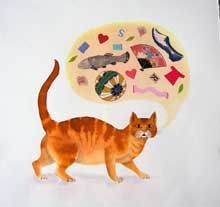
One night the wind gathers up all of the King's belongings and drops them all in the garden of a poor washer woman in Naples, Mrs Jewel. Overnight Mrs Jewel and her cat Wash have their fortunes transformed from having nothing, to having everything they could need. Mrs Jewel becomes known as the Queen of Naples, but unlike the King of Capri, she treats everyone who comes to see her with kindness, sharing her wealth, helping the city become prosperous..
The King hears of the new Queen's generosity and decides to row across the bay to see her in Naples. When he gets there he finds that her riches were once his own. On hearing this Mrs Jewel insists that the wind takes everything back to where they came from. Mrs Jewel's example makes the King see the error of his ways. The two fall in love and marry, and continue to share their wealth with the people of both Capri and Naples.
I enjoyed the light touches of humour in the book and the characters, but above all I think the illustrations are fantastic. I did find it slightly strange that Mrs Jewel agreed to marry the King, but maybe she was impressed by his capacity for change! I think the book could spark some discussion about questions such as 'what makes a good King/Queen/ruler?' Or 'do you need money to be happy?'
Crammed with curiosities and humourous details this gorgeously illustrated and leisurely told fairy tale reminds us of the perils of reckless consumption and the priceless pleasure of good company.
My six year old and I got to the last bit and guessed what happened. And found ourselves a little disappointed that the Queen of Naples decided to marry the King of Capri.
But I remain a lover of Winterson’s prose, and my six year old appreciated her language and appropriate amount of silliness.
I have been tasked with helping to give ‘guidance’ to the daughter of a friend, so have decided to give her books that I think every child should read. This was high on my list. I bought it for my own children and loved it so much that I totally have it in my top 10 children’s books of all time. I hope that my friend’s daughter loves this book as much as I do.
Dieses Buch habe ich bereits vor über 20 Jahren gemeinsam mit meinen Kindern gelesen. Die Gier des hochnäsigen, unfreundlichen Königs von Capri ist so groß, dass er am liebsten zwei Münder hätte, um alle seine Lieblingsspeisen hineinzustopfen. Er ist egozentrisch und hat für seine Untertanen nichts übrig. Diese sind so arm, dass sie manchmal mit leerem Magen ins Bett gehen müssen. Nach einem vom König gegebenen prachtvollen Bankett tobt ein schwerer Sturm über der Insel Capri und verweht alles, was der König besitzt. Aus dem einst mächtigen Herrscher wird ein armer Schlucker, der gerade noch seine Haut retten kann. Mühsam muss er begreifen, wie ephemer Schmuck, Kleider, Möbel und Essen sind, und lernen, mit den wesentlichen Dingen des Lebens wie Freundschaft und Liebe umzugehen. Beim Vorlesen dieses sehr detailreich illustrierten Buches für die ganze Familie haben meine Kinder ihre erste Begegnung mit der italienischen Sprache gemacht und gelernt, was „Guten Morgen“ (buon giorno), „Schon gut“ (non c’è di che) und „Ja“ (sì, sì, sì) bedeuten. Vielleicht dachten meine Kinder damals: Gut, dass wir nicht zwei Münder brauchen, um alles zu essen – und dass Freundschaft und Liebe sowieso wichtiger sind als der ganze Königsschmuck. Und ganz nebenbei hatten sie ihre ersten italienischen Vokabeln gelernt – eine königliche Lektion auf mehreren Ebenen!
I love that the king learned a good lesson and earned a Happily Ever After. But the washerwoman is the hero of the story... or maybe the Wind is. Fantastical, funny, & fun LFL find.
One of my childhood favourites, The King of Capri teaches children about greed and the power of love and kindness. It's told in a way that makes it understandable for children of all ages to be grateful for what they have and to always be kind and generous.
Ms. Winterson is known mainly for her adult writings. So I was lured in by seeing her name on a children’s book. It’s always interesting to see how capably authors who write for one segment of the population perform when turning their attentions to another.
The titular royal isn’t cruel or vicious so much as indifferent to other’s sufferings and a tad gluttonous. When the (literal) winds of fate swoop in, it produces a dramatic effect on all involved. The text and illustrations follows these proverbial winds, each corresponding to the other, so the readers must let their eyes wander across the page to follow the story.
The illustrations are simple, without shadow, reflection or perspective. But they brim with the colorful hues you would expect to find for a depiction of a sunny Italian isle. They are realistic but dotted here and there with (capri)cious touches. A black-and-white cow has images from blue china plates stamped on its hide. A bird clutches a balloon in its beak. A duck wears a bouffant, Mary-Tyler-Mooresque wig and a plaid-covered chair sports shoes on its legs as if it intends to dance.
The book is saucy, sly fun with a traditional happy ending. With its counting and lists, it marks itself as a true story for children, displaying the versatility of its author.
The king of Capri is a greedy, spoiled monarch who was everything he wants, until a strong wind blows everything across the bay to Naples and into the yard of a poor laundress named Mrs. Jewel. While the King selfishly kept everything for himself, Mrs. Jewel shares it with the community. The King eventually leaves his island and travels to prosperous Naples where he meets Mrs. Jewel and repents his selfishness. The illustrations are beautifully colorful and the text becomes part of the pictures, swirling along with the troublesome wind. This story was recommended to me by my local children's librarian because of it's immense popularity.
What a beauty, both in language and in illustration. A good, short, fantastical story that draws some attention to what it is to be poor and what it is to be rich. I would yearn for a different ending, IF the author was not Winterson, but for Winterson a very unusual ending, so perfect for the story.
This is the very first picture book I bought for my daughter. She was still in my tummy! I fell in love withe the amazing Italian illustrations, and of course I had been to Capri in my travels. I love the story and the illustrations are well, just magical!
Winterson is one of my favorite female authors and I like her style of writing very much.
"The king of Capri" is a lovely story for children and adults. The book contains wonderful illustrations. For Capri-Fans a Must-have. I like to read it again and again.
amazing art and cool story. the only two problems are that the man and woman get together (REALLY, MS. WINTERSON?) and the fact that the cat needs more screen time.