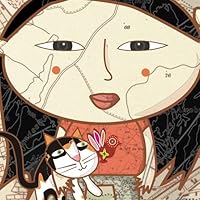
FICTION - Mamaborg's Milk and the Brilliance of Gems by D.A. Xiaolin Spires - Homecoming is Just Another Word for the Sublimation of the Self by Isabel J. Kim - The Orbiting Guan Erye by Wang Zhenzhen, translated by Carmen Yiling Yan - Submergence by Arula Ratnakar - 55 Plaque by Isabel Lee - Comments on Your Provisional Patent Application for an Eternal Spirit Core by Wole Talabi - To Study the Old Masters in the Prado at the End of the World by Sarah Pauling
NON-FICTION - We'll Know It When We See It: The Trouble with Finding (Alien) Life by Julie Nováková - Falling in Love and the Collective Consciousness: An Interview with Elly Bangs by Arley Sorg - Important Strangers: A Conversation with Becky Chambers by Arley Sorg - Editor's Desk: The Best from 2020 by Neil Clarke
PODCASTS - Mamaborg's Milk and the Brilliance of Gems by D.A. Xiaolin Spires, read by Kate Baker
Neil Clarke is best known as the editor and publisher of the Hugo and World Fantasy Award-winning Clarkesworld Magazine. Launched in October 2006, the online magazine has been a finalist for the Hugo Award for Best Semiprozine four times (winning three times), the World Fantasy Award four times (winning once), and the British Fantasy Award once (winning once). Neil is also a ten-time finalist for the Hugo Award for Best Editor Short Form (winning once in 2022), three-time winner of the Chesley Award for Best Art Director, and a recipient of the Kate Wilhelm Solstice Award. In the fifteen years since Clarkesworld Magazine launched, numerous stories that he has published have been nominated for or won the Hugo, Nebula, World Fantasy, Sturgeon, Locus, BSFA, Shirley Jackson, WSFA Small Press, and Stoker Awards.
Rating is only for Homecoming is Just Another Word for the Sublimation of the Self, since I failed to find a separate listing for that title (other than the new book coming out). Damn, immigration short stories really get me.
A very mixed bag. A few interesting stories by Asian and Asian American writers. Also two short-short stories that I didn’t resonate with me at all. The best story was definitely Resemblance, a moving tale about identity, memory and climate change that explores some very interesting science. I also liked the interview with Becky Chambers at the end. 3.5 stars on average I think.
She really ended it like that! Ballsy move. This is my first time reading anything by Isabel Kim, and I wasn't disappointed. Kim packs a lot of emotions and nuance in this 6k-word story. I was impressed by how she was able to address so much and still be able to develop a world that was understandable to the reader. It was rather meticulously done, and while yes I had a couple more questions (can you instance more than once?), SF isn't meant to answer all of the reader's questions (as demonstrated by that cruel ending), and I can respect that.
This story tackles a lot of the generational traumas experience by the diaspora and shows trauma and cognitive dissonance using the concept of Instances. Copies of yourself that are created when you make a big decision that has you leaving one place for another. I loved how emotionally Kim managed to make that final scene. The way Soyoung talks about the regret of leaving Korea, and regret of not leaving for America, and the way that regret would be compounded if she were able to live all the lives possible to her. It reminded me a lot of Everything Everywhere All At Once, and while the film tackled the issue differently the sentiment was almost the same.
'Submergence' by Arula Ratnakar ***** '55 Plaque' by Isabel Lee **** 'Comments on Your Provisional Patent Application for an Eternal Spirit Core' by Wole Talabi * 'To Study the Old Masters in the Prado at the End of the World' by Sarah Pauling ***
MAMABORG'S MILK AND THE BRILLIANCE OF GEMS by D.A. XIAOLIN SPIRES, 3180 WORDS Odd. I didn‘t connect. Mamaborg wears an exoskeleton and can’t nurse her child…🪆🪆
HOMECOMING IS JUST ANOTHER WORD FOR THE SUBLIMATION OF THE SELF by ISABEL J. KIM, 6240 WORDS I loved it. In this world everybody crossing a border leaves behind an instance of themselves, with a full alternate life. Brilliantly imagined. 👯👯♀️👯♂️👯👯♀️
THE ORBITING GUAN ERYE by WANG ZHENZHEN, translated by CARMEN YILING YAN, 4560 WORDS Ok, this one was bizarre. A humorous story about astrological space junk… 🐟🐟🐟
SUBMERGENCE by ARULA RATNAKAR, 20800 WORDS, 2022 FINALIST: UTOPIA AWARD FOR BEST UTOPIAN NOVELLA “As the people began to die, desperation drove us to the depths of the sea for cures. We mined mineral-rich vents until the tube worms went extinct, stripped polymetallic nodule fields bare, squeezed sludge out of sea sponges to treat the new diseases, these monstrous incurable plagues, born from our new climate, that spread through our air. But the people still died. So we dug even deeper…“ Sounded like a mesmerizing tale of exploitation and facing the consequences. However, there was also a narrative with uploaded memories and how they impact the life of the person reliving them. I loved the parts with the (almost) sentient sponges, the other part of the story made the narrative uneven. The pace was too slow for my taste as well. And parts were too scientific. Interesting idea, but the telling of it was a little meh. 🧽🧽🧽
55 PLAQUE by ISABEL LEE, 7670 words, novelette “There are only nine plaques that have arrived on Earth so far; 55 comes from the number of years between the ninth plaque and this coming tenth one, a number that follows a very special pattern called the Fibonacci sequence.“ Loved it! Great story well told. Loved the characters, felt with them. I was engaged. ☄️☄️☄️☄️☄️
I skimmed the last two short stories. They were pretty unusual and I wasn’t in the mood for weirdness.
Rating for the short story by Isabel J Kim "Homecoming is Just Another Word for the Sublimation of the Self", which was recommended to me by my friend T. Despite being a short story I found the setting and premise super interesting and unique - loved it !
Homecoming is Just Another Word for the Sublimation of the Self by Isabel J. Kim 4/5 stars
Wow! I came here to see what the hype was about and Isabel J. Kim's first short story delivered!
While it was difficult for me to understand the technicalities of instancing (which definitely isn't the point since this is more of an abstract concept in a larger sense), this short story spoke so many volumes about immigration and the ideas, people, and sense of self we leave behind when leaving our birth country. The whole idea was equal parts interesting and unsettling.
In so many words, you can understand the MC's complicated thoughts and feelings about dis-instantiating. The historical events and stories sprinkled throughout really brought a rounded view of the entire situation.
A strong issue of a magazine that serves a great place to read a variety of new and not so new authors. The stories are a mix of hard science concepts and science fiction standards (stuck on a space station with only one other person for company / a recognisable earth with a new historical event thrown in) . This issue benefited from being a mix of tone as well as I don’t remember the last time I laughed to a story featured in clarkesworld and the whole issue benefited from that lightness provided. This magazine serve authors and readers who want to be challenges and this can be hard work for the casual reader. This issue is more accessible than most.
I don’t often comment on the interviews or the non fiction but I enjoyed them. (Elly Bangs and Becky Chambers) gave a sharp insight into their writing. Also , Julia Novakova’s piece on is there life outside earth was a timely thoughtful information piece with perseverance studying Mars.
What a thoughtful, interesting novella! I had no idea at the beginning how the different elements of the story — environmental/health crises, murder mystery, romance, and scifi memory-tech — were all possibly going to all going to come together in a couple hours of narration, but they really did, into something really beautiful and timely. I think there were some parts that I didn't quite get because I'm not particularly science-brained, but that's fine — I'll still be thinking about this work for a long time to come.
ony read Homecoming is Just Another Word for the Sublimation of the Self and OFCOURSE it's all T's fault and i loved it and i would read Isabel J. Kim's Sublimation even though she didn't love it (and i am not a sf fan) cause well this idea was too intriguing and also this instancing so heart wrenching and so now. i want to see how kim feels about it and must admit the "you" thing was super awful for me even in this short format and so with a whole lot of fear i would be reading kim's debut, BUT i can't NOT read it. all T's fault!!!
For some reason, "Homecoming is Just Another Word for the Sublimation of the Self" by Isabel J. Kim does not have its own Goodreads page, so reviewing that here. This is an extremely introspective sci-fi short story of the best kind -- there is only one difference between our world and that of Homecoming, namely the existence of "instances", clones of yourself that are created when you move countries; one staying at home and the other moving abroad. The story however uses this minor change to explore real world issues including, but not limited to the way identity and culture work in diasporas caused by first generation immigration, particularly in individuals who move at that period of their childhood that they have memories of growing up in both places. I especially liked the reimagining of what things like the Odyssey would be like in a world such as this.
Probably the strongest single magazine issue I've read in a few months. My favorite story was the Lee piece, with its slow-motion first contact meeting our modern society, but the Kim and Ratnakar stories are right behind it, and there wasn't a disappointment among them.
Partially read, cherry picking, and some diverse reactions:
26th February 2023
I have only read, so far, "Homecoming is Just Another Word for the Sublimation of the Self" by Isabel J. Kim available here.
I really liked a recent short story of hers I read recently and I went looking for more. And wow, it is a totally different theme and concerns from that other story, but it was also very very good in a different theme and mood.
In an alternate universe where people create "instances" in moments of leaving their settled lives like immigration, this is the story of a Korean-American going back to Korea and meeting her instance, her other self and reflecting on sublimation of self (yeah, the title does make sense after reading the story), on immigration and America and being a something-hiphen-American and Korea, and greek myths and and it is all deeply personal, reflective about choices and freedoms. It is very very good: the writing, the depth to the world, the references, the characters. It stops at a cruel moment, but maybe it is the perfect moment to stop telling a short story.
I think this was her first published story (?), and wow. It is incredibly self-assured, mature, polished. I am looking for more short stories of hers. (edit: I became a full fledged fangirl. She can write and has ideas!).
February 10th, 2024
Now I read a much longer piece Submergence by Arula Ratnakar, novella length sf, near future, about climate change and neuroscience and memory, and children's movements. I was surprised at reading the overwhelmingly positive reviews of it here, because it is one of those instances which make me wonder about book gremlins reedited works so I read something totally different, a draft or summary or something (this actually happened to me a few times, usually "abridged" versions for language learners or something). This story was quite ambitious in concept but the writing, and characters, even central conflicts all felt so very wooden - and the work very very long. It was a chore to finish it really.
The infodumps are lovingly detailed, usually by people throwing, as dialogue long paragraphs of descriptions of what is supposed to be known about a species, though some crucial things are revealed too late, or too confusingly IMO. And for all (and the author's bio says she is a neuroscientist) that the scientists do not sound, seem to think, like scientists (" We have to tell everyone” or showing curiosity, precision about the mysterious "scan" process - what kind of scan, what is a scan, just taking as given "scan" always results in a certain phenomena). (I was also quite dodgy about those suits allowing independent movement at the bottom of the Mariana Trench, in the near future.. The pressure! How could they move under that pressure just using their muscles? Despites lots and lots and lots of jargon the science was overwhelmingly sketchy, to my mind.... The music as language concept, what, I think you would not have enough variance to portray long complex words, not as described and required by plot! ). And the characters were again wooden, and without personality. Very long and totally not for me. With new authors, I like to check later works and Axiom of Dreams has been getting a lot of good reviews (but so did this one!), but I will only do it for something much shorter. 21k words of wooden technobabble with wooden characters and earnest simplist message ("The corrupt leadership of the research company was quickly removed and faced serious consequences"), I will not do it again with this author.
Submergence is a cli-fi novella that asks questions about the relationship of identity, selfhood and memory; about sentience and intelligence; and the ethics of scientific research and the cost of ‘progress’. I am not sure how to rate this novella. The plot is a good 5 stars but the writing swings wildly between 2 stars and 5.
The novella is set in future where humanity has destroyed its environment and humanity is racked with ‘monstrous incurable plagues’ (which are monstrous indeed). There is a new technology that allows people to experience memories of the dead, and our protagonist, Nithya, has been selected to receive the memories of a scientist, Noor, who died under unusual circumstances. Before her death, Noor was studying a newly discovered deep sea sponge that has proven to have amazing medical properties and is currently the only treated for the plague ravaging humanity. But as Nithya experiences Noor’s memories every night, she uncovers a deeper mystery that makes her question her identity and the cost of scientific research.
One of the strongest parts of the writing and the storytelling are the medical and research portions of the story. Arula Ratnakar is a scientist specialising in neuroscience, and it really shows. Not that I could tell you if she made any glaring errors, of course, but I felt secure in the hands of a writer who seemed to know what she was talking about and wondered how she had done her research to get it feeling so right in the text.
The patchy writing is the weakest part of the story. There are some places where the writing is terribly bland, where arguments are spelled out rather than explored, and some where the word choice threw me out of the story completely. At times I felt like I was reading a second or third draft of the story rather than a final, edited version.
It clocks in at 20800 words, and I think it could have used an extra 5000 or so to do some character development work towards the beginning and the end of the story. We are expected to see Nithya become Noor as she experiences Noor’s memories until, by the end of the novella, Nithya becomes someone else, some combination of Noor’s and Nithya’s lived experience. This is a really interesting premise, but since Nithya’s character pre-Noor is very poorly established we don’t really get to see any change. It reduces one of the books main arguments to something merely intellectual without any of the emotional punch I expect from fiction. The ending felt really rushed, too. Everything sort of came together too quickly and too neatly in the last few paragraphs. Almost the only thing missing was a little bow on top! I would have liked at least a section or two
Parts of the story reminded me of Asimov (and I do not mean that in a bad way). The jumps between Noor’s and Nithya’s sections are handled well enough. And this is a complicated story with a structure that was probably quite difficult to wrangle. I know, patchy writing and all, that I am going think of this story for a long time to come. The pervasive sense of horror and hopelessness of the world and the truth about the sponges…all of that is going to stay with me. You know what, I am looking forward to reading more of Ratnakar’s work, and that deserves 3.5 stars at least.
Loved the first half, especially Nithya's voice and the way we were immediately thrown into a very interesting and fleshed out world. This story dealt with a lot of interesting ideas and moral conundrums. Noor and Nithya's voices also sounded really distinct.
Where it began to lack for me was the ending. It was so neat and quick that I felt like 5k words or another 10 pages were missing. When I got to the end I thought 'oh, is that it?'. There's a big time skip where a lot of stuff is suggested to have happened which took a lot of the energy out of the end. Nithya's voice also looses some of its bite and sass which made the prose a bit less enjoyable to read.
Overall, this was really great sci-fi and a very efficiently told narrative that unfortunately had a lacklustre conclusion. I recommend reading it, and have already recommended it to a friend.
Loved this wonderful and strange novella about ethics, relationships, and what makes an individual. Is it your body? Your memories? Or if it's some combination of both, what happens when you add someone else's memories to your own, or take them away? Also loved the depiction of the children's climate movement and the ... let's say varying adult responses to it, which felt exceedingly true to life.
Isabel J Kim - Homecoming is Just Another Word for Sublimation of the Self This short story tries to put a Science Fiction of fantasy element into the bifurcation of experience suffered by the homecoming immigrant. Mixing it up with folk tales of fishermen who lose decades of their lives after following sea spirits to underwater cities and returning to imagined lives that have changed.
Not rating as I have a (very short) story in this issue but it is a very strong issue with great stories in it. I especially enjoyed 'Submergence' which draws on some of the same themes as my own story.