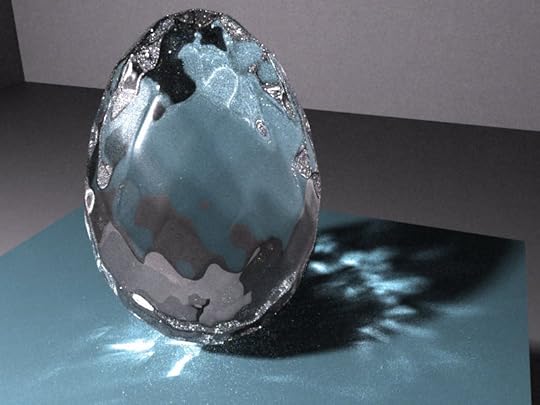
From "The Crystal Egg": There was, until a year ago, a little & very grimy-looking shop near Seven Dials over which, in weather-worn yellow lettering, the name of "C. Cave, Naturalist & Dealer in Antiquities," was inscribed. The contents of its window were curiously variegated. They comprised some elephant tusks & an imperfect set of chessmen, beads & weapons, a box of eyes, two skulls of tigers & one human, several moth-eaten stuffed monkeys (one holding a lamp), an old-fashioned cabinet, a flyblown ostrich egg or so, some fishing-tackle, & an extraordinarily dirty, empty glass fish tank. There was also, at the moment the story begins, a mass of crystal, worked into the shape of an egg & brilliantly polished.The clergyman, without any ceremony, asked the price of the crystal egg. "Five pounds is my price," said Mr. Cave, with a quiver in his voice.Also included in this volume are Wells's "The Man Who Could Work Miracles," "The Plattner Story," "The Strange Orchid," "The New Accelerator," "The Diamond Maker," "The Apple" & "The Purple Pileus."
Herbert George Wells was born to a working class family in Kent, England. Young Wells received a spotty education, interrupted by several illnesses and family difficulties, and became a draper's apprentice as a teenager. The headmaster of Midhurst Grammar School, where he had spent a year, arranged for him to return as an "usher," or student teacher. Wells earned a government scholarship in 1884, to study biology under Thomas Henry Huxley at the Normal School of Science. Wells earned his bachelor of science and doctor of science degrees at the University of London. After marrying his cousin, Isabel, Wells began to supplement his teaching salary with short stories and freelance articles, then books, including The Time Machine (1895), The Island of Dr. Moreau (1896), The Invisible Man (1897), and The War of the Worlds (1898).
Wells created a mild scandal when he divorced his cousin to marry one of his best students, Amy Catherine Robbins. Although his second marriage was lasting and produced two sons, Wells was an unabashed advocate of free (as opposed to "indiscriminate") love. He continued to openly have extra-marital liaisons, most famously with Margaret Sanger, and a ten-year relationship with the author Rebecca West, who had one of his two out-of-wedlock children. A one-time member of the Fabian Society, Wells sought active change. His 100 books included many novels, as well as nonfiction, such as A Modern Utopia (1905), The Outline of History (1920), A Short History of the World (1922), The Shape of Things to Come (1933), and The Work, Wealth and Happiness of Mankind (1932). One of his booklets was Crux Ansata, An Indictment of the Roman Catholic Church. Although Wells toyed briefly with the idea of a "divine will" in his book, God the Invisible King (1917), it was a temporary aberration. Wells used his international fame to promote his favorite causes, including the prevention of war, and was received by government officials around the world. He is best-remembered as an early writer of science fiction and futurism.
He was also an outspoken socialist. Wells and Jules Verne are each sometimes referred to as "The Fathers of Science Fiction". D. 1946.
This an important story (The Crystal Egg). So important that the writer Jorge Luis Borges wrote in Buenos Aires, on the 3rd of March 1949, in his Epilogue to "Ficciones":"In The Zahir and The Aleph I believe I can pinpoint some influence of the short story The Crystal Egg (1899) by Wells".
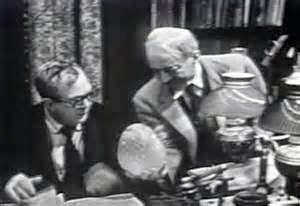
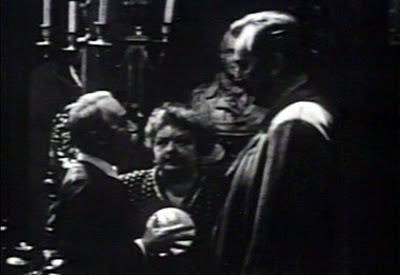
I have watched the story The Crystal Egg in the old series “Tales of tomorrow”. It’s a story bordering on personal belief and science. A very good one.
"And in a perfect darkness, such as could be produced by velvet wrapping, the crystal did undoubtedly appear very faintly phosphorescent." (from the book)
"Suffice that the effect was this: the crystal, being peered into at an angle of about 137 degrees from the direction of the illuminating ray, gave a clear and consistent picture of a wide and peculiar country-side." (from the book)
The introductory lines are full of resonance. They would make anyone wonder about. You may hear:“what would you do if you thought someone from another world is watching you?”.
It all started in an antiques shop. A man (quite obfuscated in his appearance) seems to be interested in one item: a crystal egg which looks dusty and is the focus of a brief negotiating dialogue. The antiques’ dealer wants 5 pounds for it, but the man just has 2.10. It seems they reach a sort of arrangement: the man will show up again to cover for the missing money.
Why the interest in that piece? Only a hint is given by the interested man: “I was told…”.
Meanwhile, the antiques’ dealer decides to contact a distinguished Physics professor for an analysis of the egg: Professor Frederick Vaneck, a man of sciences, for 10 years running one department at Cambridge University. Though very busy, he accepts the task of analysis, but tells the Antiques man to show up only the next day.
Vaneck spends all night in his “lab”: all lights off, just the egg under analysis on his table, now a crystal egg with “light of its own”. Yes, inside of it Vaneck discovers a “landscape”: “Mars’”. He concludes due to the position of ascending Neptune. Plus: he’s seen a (one-eyed) creature staring at himself.
In the morning the antiques dealer, despite being asked for some additional days of analysis, (even told “don’t sell it!” and “”it has a world inside of it”) runs away with the coveted crystal egg.
Vaneck is desperate. He’s got to find the egg. He searches on the Antiques shop but finds about something terrible: the dealer got dead; “died in an alley”.
Then Vaneck wants an article on the issue published by his editor, an "old friend". However, the editor gets reluctant: he wants proof for the story: “where is the crystal egg?!”.
Vaneck looks maddened: “all who see it first are mad!!” . It would be like Galileo’s” (at his telescope seeing for the first time Jupiter’s). Vaneck reiterates he’s seen the creature “watching us”: “through their crystal egg they are seeing us night and day!”. No way, the editor remains skeptical.
At home, Vaneck is recording his story on tape. The disk-tape is moving, but someone enters the room and Vaneck gets shot. No hint about who did it.
He (Vaneck) was right, those who “watch us” get sure: no proofs left behind. No loose ends.
H. G . Wells-The Crystal Egg & Other Stories ✏"The short story is a fiction that may be read in something under an hour,and so that is moving and delightful..." ✍"-The worst of all the things that haunt poor mortal man,said I;-and that is ,in all its nakedness-Fear! Fear that will not have light nor sound,that will not bear with reason,that deafens and darkens and overwhelms. It followed me through the corridor,it faught against me in the room." 🇷🇸 👍Zbirka sadrži 34 pripovetke koje su bogatstvo stila i raznovrsnost tema. Velsov "rog izoblja" koji sam gustirala čitav mesec,ali pošto ne mogu sve da predstavim,ovih osam odabranih su samo mrvice. Nadam se dovoljne da prikažu kakvo blago se ovde krije. 🥚The Crystal Egg-reći ću samo da je Borhesov Aleph inspirisan tom pričom 🙈The Country of the Blind-Da li čovek koji vidi,ma kako ništavan inače bio,može da bude kralj ako slučajno zaluta u Zemlju slepih. Ironično i vrlo poučno. 👨🔬The Platnner Story-SF priča o hemičaru kome se desila nezgoda,pa se razneo na atome i otišao u Četvrtu Dimenziju 🚪The Door In The Wall-Fantasy priča o večnoj ljudskoj težnji za nekim idealnim svetom 👨⚕️Under the knife-Vantelesno iskustvo u toku operacije 💕Miss Winchelsea's heart-Veoma duhovita priča o putovanju u Rim,romansi i gospođici koja je odbila čoveka samo zato što ima"glupo ime". ✨In the Avu observatory-Horor priča o čoveku koji dežura preko noći u observatoriji na Borneu 🧒The Beautifull suit-Jedna lirska divna priča o dečaku kome je mama sašila čudesno odelo 🇺🇸 👍34 short stories that represent all richness of style and themes from Whells' cornucopia. I enjoyed the whole month and the 8 chosen are just some little crumbs of all that treashure you're gonna find in this book. 🥚The Crystal Egg-inspired Broges' Aleph 🙈The Country of the Blind-Ironical story revealing the (im)possibility of the saying-In the country of the blind one eyed man is king. 👨🔬The Plattner Story-SF story of the chemical experiment gone wrong 🚪The door in the wall-Fantasy about the eternal human dream of some other,beautiful world 👨⚕️Under the knife⬇⬇️⬇️ #7sensesofabook #knjige #classicliterature #bookstagram #literature #readingaddict
Herbert George Wells zählt neben Jules Verne zu den (Groß)Vätern des Science Fiction-Genres, wobei man einschränken muss, dass weder Wells sich mit Verne noch umgekehrt vergleichen wollten. Verne hat immer mehr Jugendromane geschrieben, während Wells immer einen mehr wissenschaftlichen und sozialutopischen Ansatz in seinen Werken verfolgte. Am bekanntesten sind von ihm „Krieg der Welten“, „Die Zeitmaschine“ und „Die Insel des Doktor Moreau“. Alle drei Werke sind durch zahlreiche Verfilmungen fest im allgemeinen Kulturgedächtnis verankert. Wells war ein ungemein produktiver Autor. Er hat rund 60 Romane, 90 wissenschaftliche Werke sowie mehr als 100 Kurzgeschichten geschrieben. Dieser Band hier versammelt rund 20 Geschichten aus allen Schaffensphasen des Schriftstellers. Somit bietet das Buch nicht nur einen Einblick in die utopischen Arbeiten sondern auch in die phantastischen Geschichten, die es bei Wells ebenso gibt. Ins Feld Science Fiction passt am ehesten noch die Titelgeschichte. Sie erzählt von die Geschichte des Antiquitätenhändlers Cave, der in seinem Laden ein Kristallei hat, das er wie seinen Augapfel hütet. Wie sich herausstellt, ermöglicht es das Kristallei, das Leben auf dem Mars zu beobachten. In den phantastischem Bereich fallen eher Geschichten wie „Das Reich der Ameisen“ oder „Der gestohlene Körper“. Erstere erzählt von einer Forschungsexpedition in Südamerika, die anberaumt wurde, um herauszufinden, warum Menschen aus bestimmten Regionen panisch fliehen. Die Expedition findet heraus, dass sie von einem neuartigen Ameisenvolk vertrieben wird, dass strategische Kriegsführung anwendet. „Der gestohlene Körper“ erzählt die Geschichte von Mr. Bessel, dem es mittels Seancen und Selbsthypnose gelingt, aus seinem eigenen Körper herauszutreten. Problematisch wird es für ihn, als eine andere Seele die Gelegenheit nutzt, um von Bessels Körper Besitz zu ergreifen. Meine Lieblingsgeschichte dieses Bandes ist „Eine Vision vom Jüngsten Gericht“. Es erzählt in einer Art Zeitzeugenbericht vom Jüngsten Gericht, welches von Gott und Erzengel Gabriel über die Menschheit abgehalten wird. Der Erzählstil ist schnoddrig und frei von jedem religiösen Pathos, was das Jüngste Gericht wie eine schnöde Gerichtsverhandlung wirken lässt. Der Erzählstil Wells‘ folgt den typischen englischen Erzähltraditionen der Wende vom 19. ins 20. Jahrhundert. Die Sujets sind so wie man sie auch bei Chesterton, James oder Conrad findet. Wobei bei Wells in die realistischen Alltagsschilderungen das Neue oder Unbekannte einbricht. Von den Erzählfiguren wird das zwar mit Verwunderung aufgenommen, aber niemals mit Schrecken oder Angst, eher dominiert der Forschungsdrang hinter das Geheimnis des außergewöhnlichen Ereignisses zu kommen. Damit ist Wells ganz Kind seiner Zeit. Die Industrialisierung war im vollen Schwung und die britischen Kolonien lieferten immer neue Entdeckungen und Sensationen. Somit stand die Gesellschaft dem Unbekannten immer mit großen Interesse gegenüber. Das wird auch im Erzählstil der Kurzgeschichten deutlich. Der Erzähler ist in den Geschichten zumeist ein Beobachter, entweder ein Wissenschaftler, der Erlebnisse besonderer Experimente niederschreibt („Die merkwürdige Geschichte von Davidsons Augen“) oder ein Freund oder Bekannter, der die Geschichte eines Anderen in einem Bericht für die Nachwelt festhält („Die Tür in der Mauer“ oder „Die seltsame Geschichte“). Der Band bietet einen guten Einblick in den Beginn des Science Fiction-Genres und zeigt auf, aus welchen anderen Genres es sich entwickelt hat.
'The Crystal Egg' by H.G. Wells Hmm.... well, this guy whose name is Cave has this antique shop, he's a naturalist and deals in some pretty weird stuff like stuffed animals and the like. He had these oddities in his showcase together with a strange egg-shaped crystal. Two odd guys show up one day really interested in the egg, Cave refuses to sell it because he thinks, oh yes he thinks, that something really strange is attached to it............
Oh, by the way, this edition also contains other of Wells' short stories like 'The New Accelerator' and 'The Plattner Story'.
This is a wonderful collection of short stories from the ‘father of science fiction’. I enjoyed every tale very much. It seems to me that there is hardly anything left not thought of and not written about by H.G. Wells. In this collection we can find everything from the life of prehistoric people to the life after death. We rise into the sky to observe the first airplanes and we plunge into the depth of seas to find the underwater world.
Wells plays with many physical features of the world breaking down the barriers of possible. The power of curiosity has no limits; and the imagination, unbound, is let go in constant drift, only one question that matters is ‘What if ... ?’.
Weird story. I felt bored through the description of Mr.Cave's addiction. Creatures on Mars with tails and tentacles -well,that was one classic sci- fi touch. I finished it just because I wanted to see the end.
It's an interesting story about an egg shaped crystal that allows the holder to get a view of Mars and its inhabitants and vice versa. As interesting as the premise is, the ending left much to be desired.
George Fotheringay erhält von einem Tag auf den anderen auf einmal die Fähigkeit Wunder zu vollbringen. Zuerst nutzt er diese noch für kleinere Dinge. Nachdem er sich aber Rat geholt hat bei einem Geistlichen, wollen sie Größeres bewirken und geraten unversehens in ein großes Chaos. (Der Mann, der Wunder tun konnte) Professor Gibberne entwickelt ein Elixir, mit dem er und der Hauptprotagonist sich in unglaublicher Geschwindigkeit fortbewegen können, sodass alles andere wie in der Zeit festgehalten erscheint. Das kommt aber nicht ohne Nebenwirkungen. (Der neue Akzelerator) Ein Mann wacht plötzlich jedes Mal, wenn er sich schlafen legt in einem fremden Leben in der Zukunft auf. Dort ist er auf der Flucht vor einem Regime und eines darauffolgenden Krieges. Er muss mitansehen, wie die Welt um ihn zerfällt und er seine große Liebe verliert. (Ein Traum von Armageddon) Eden, ein junger Mann, wird eines Tages von einem älteren Herrn namens Mr. Elvesham angesprochen, da der auf der Suche ist nach einem Erben für sein Reichtum. Was Eden wie ein Glücksfall und Segen vorkommt, entwickelt sich zum Albtraum als er eines Tages im Körper des alten Mannes aufwacht und dieser in seinem jungen Körper auf und davon ist. (Die Geschichte des verstorbenen Mr. Elvesham) Der Bergsteiger Nunez stürzt bei einer Klettertour in den Anden ab und wird für tot gehalten. In Wahrheit hat er aber überlebt und entdeckt das sagenumwobene Land der Blinden, versteckt in einem tiefen Tal. Er erwartet dort als Sehender für ein König gehalten zu werden, jedoch wissen die Blinden gar nicht erst was Sehen überhaupt bedeutet, da sie seit Generationen blind sind. Sie glauben ihm nicht, halten ihn für dumm. Nunez sieht kein Entkommen aus dem Tal und versucht sich mit seinem Schicksal dort zu versöhnen. Doch eines Tages wollen sie ihn ,,heilen" und ihm sein Augenlicht nehmen...( Das Land der Blinden) Das sind nur fünf der fünfzehn Kurzgeschichten in diesem Erzählband der den Ideenreichtum und die Fantasie von H.G. Wells, einer der Pioniere des Science Fiction Genres, zeigt.📖
In letzter Zeit kam ich etwas weniger zum Lesen, weswegen ich ein wenig länger für dieses Buch brauchte. Doch jedes Mal, wenn ich dazu griff, war ich wieder beeindruckt von H.G. Wells Einfallsreichtum. Jede Kurzgeschichte entführte mich in eine andere Welt, in ein anderes Szenario und war es wert gelesen zu werden. Manche empfand ich als etwas leichter, unspektakulärer und vielleicht sogar etwas amüsant wie die, in der ein Hobby Botaniker plötzlich von seiner exotischen Lieblingsorchidee angegriffen wurde oder die, in der ein Mann namens Pyekraft plötzlich schwerelos an der Decke schwebte, nachdem er ein vermeintliches Wundermittel zur Gewichtsabnahme (in diesem Fall buchstäblich) eingenommen hatte. Andere Geschichten wiederum empfand ich als bedrückend. Wie der oben genannten des Mr. Elvesham, dem Traum von Armageddon und des Land der Blinden. Die Protagonisten saßen dort fest in ihrer Lage und H.G. Wells ist nicht immer ein Anhänger von Happy Ends. Überraschend war für mich auch, dass er selbst Spirituelles nicht ausließ. In ,,Plattners Geschichte" landete der Lehrer durch ein missglücktes Chemie Experiment in der vierten Dimension. Er sah alienartig aussehende Geister, von denen jeder einem Menschen in der dritten Dimension zugehörig war und wurde sogar Zeuge ihres Verhaltens, wenn ein Mensch dort starb. Nur durch Glück konnte er schließlich wieder in seine Dimension zurückkehren. ,,Der Mann, der Wunder tun konnte" war einer meiner Favoriten, da sie Verrücktes, Amüsantes und Übernatürliches verbannt. Kurios bei der Geschichte- ausgerechnet der um Hilfe gebetene Geistliche spornte den Hauptcharakter zu Übermut an. Die Geschichte wird übrigens im Januar 2026 im Splitter Verlag als Comic erscheinen. Von H.G. Wells hab ich bereits ein paar Romane gelesen und doch muss ich sagen, dass er in seinen Erzählungen schlicht noch besser ist. Er schafft es einfach einen in kürzester Zeit in den Bann zu ziehen, sodass man unbedingt weiterlesen und die Auflösung wissen möchte. Die Kürze spornt dabei noch zusätzlich an. Das Buch war ein Sammelwerk von Unglaublichen und Fantastischen und war trotz des Alters der Geschichten von bereits über hundert Jahren leicht zu lesen und unterhaltsam. Wer sich mal von ungewöhnlichen und erstaunlichen Erzählungen überraschen lassen möchte kann hier guten Gewissens zugreifen, auch wenn er/sie vielleicht eigentlich gar nicht so Science Fiction affin ist. (4/5)⭐️😊
The main plotline of The Crystal Egg, written by H.G. Wells in 1897 and often considered a precursor to another well-known science fiction The War of the Worlds:
The story begins with a small, grimy-looking shop located at Seven Dials Street, where two strange men were very eager to buy a translucent crystal egg at the price of 5 pounds from a naturalist and dealer in anquities named Mr.Cave. But for some peculiar reasons, Mr. Cave didn't want to sell the egg to the two guys, saying the little paper-weight had been ordered by a nonexistent customer previously.
Mr. Cave's wife, Mrs. Cave and his two step children were not on good terms with himself. Mrs. Cave wanted to sell the crystal egg for some expensive clothes and a trip abroad.
One day, all of four members in his family found out that the strange egg suddenly vaporized. They routed the egg up and down the house but it was of no avail at all.
As a matter of fact, It was Mr. Cave who had transferred the crystal egg to the hand of a demonstrator Mr. Wace who excelled at doing scientific researches and prudent analysis.
Mr. Cave and Mr. Wace found, peering into the crystal egg, one can observe the vista of part of Mars and procedures of winged Martians, which startled them very much.
A more meticulous scrutiny of the egg suggested that what they saw from the chimeric ball was indeed the condition of things on Mars; and there were some similar crystal eggs on the masts on Mars, through which these Martains also can observe human beings in the earth as well.
The crystal on the mast in Mars and the crystal egg of Mr. Cave's to be some physical, but at present quite inexplicable, way en rapport, and further the terrestrial crystal must have been, possibly at some remote date, sent hither from the planet, in order to give the Martians a near view of humanity affairs.
13 der enthalten 17 Kurzgeschichten hatten mir gut bis sehr gut gefallen. Neben frühen Varianten der Science-Fiction finden sich auch unheimliche wie auch sozialkritische Erzählungen in diesem Band.
In der Reclam-Ausgabe von 1987 sind folgende Erzählungen enthalten: 1. Das Land der Blinden (1 Stern) 2. Der Stern (5 Sterne) 3. Eine Vision vom Jüngsten Gericht (4 Sterne) 4. Das Kristallei (4 Sterne) 5. In der Tiefe (4 Sterne) 6. Das Reich der Ameisen (2 Sterne) 7. Die Äpyornis-Insel (1 Stern) 8. Die seltsame Orchidee (3 Sterne) 9. Plattners Geschichte (4 Sterne) 10. Die merkwürdige Geschichte von Davidsons Augen (5 Sterne) 11. Die Tür in der Mauer (4 Sterne) 12. Ein Traum von Armageddon (4 Sterne) 13. Mein erstes Flugzeug (5 Sterne) 14. Der neue Beschleuniger (5 Sterne) 15. Die Wahrheit über Pyecraft (5 Sterne) 16. Der gestohlene Körper (4 Sterne) 17. Die Geschichte des kürzlich verstorbenen Mr. Elvesham (4 Sterne)
Biography of the Author by Simon J. James ✔ Introduction by Cedric Watts ✔ The Crystal Egg 4.25⭐ The Cone 4⭐ The Country of the Blind 5⭐ The Man Who Could Work Miracles 5⭐ A Story of the Stone Age 4.5⭐ The Star 5⭐ The Red Room 5⭐ In the Abyss 3.25⭐ The Plattner Story 3.5⭐ The New Accelerator 5⭐ A Slip Under the Microscope 3.5⭐ The Stolen Bacillus 5⭐ The Remarkable Case of Davidson's Eyes 4⭐ The Lord of the Dynamos 4.25⭐ The Grisly Folk 3.5⭐ The Door in the Wall 5⭐ The Diamond Maker 4.5⭐ Under the Knife 3.25⭐ The Sea-Raiders 5⭐ The Purple Pileus 2.5⭐ The Truth about Pyecraft 3.5⭐ Jimmy Googles the God 4⭐ The Flowering of the Strange Orchid 4⭐ The Argonauts of the Air 3⭐ Miss Winchelsea's Heart 3.5⭐ A Vision of Judgment 4.5⭐ The Land Ironclads 3.25⭐ The Flying Man 4⭐ In the Avu Observatory 3.25⭐ The Triumphs of a Taxidermist 3.25⭐ A Deal in Ostriches 4⭐ Through a Window 4.5⭐ The Temptation of Harringay 4⭐ The Beautiful Suit 4⭐
Recebi este livro através do BookCrossing e queria lê-lo porque nunca tinha lido nada deste prolífico autor, um pilar fundamental da literatura fantástica e de ficção científica.
Existem história com temas muito diferentes, desde viagens às profundezas do mar, contactos com Marte, narrativas na pré-história ou simplesmente histórias da vida diária. Algumas são muito bem humoradas, outras com uma tensão mais negativa. Todas elas escritas num inglês antigo, um pouco difícil de descortinar, mas extremamente claras e líricas.
É muito interessante ver como o autor revoluciona o campo da ficção científica, prevendo elementos como viagens espaciais e tanques, mas ainda assim se mantém fiel à sua época, revelando um machismo intrínseco e estabelecendo uma forte divisão entre classes.
Assim, é uma leitura muito curiosa e muito interessante, que recomendo.
Part of LibriVox Short Science Fiction Collection 015. A classic from Wells with emphasis on the then popular cult of spiritualism that he was exploiting at the time. That said it was excellent with great characterisation and also revealed the depth of his prodigious imagination. A shopkeeper is curiously reluctant to part with an item despite the urgent insistancy of the arguments for the sale proposed by both his wife and stepson and a prospective customer. 39:53
Great for when you're the middle of your teenager's leaving cert as its easy to put down and pick back up again. Lots of stories that are entertaining in a typically HG Wells "out there" way.
Audio Book MP3 downloaded from http://librivox.org/short-science-fic... Public Domain stories from Project Gutenberg, that are read by volunteers. I listen to these short stories while walking to and from work.
This was enjoyable short read! Not the finish that I had expected. The only other telling of this story that I knew was on the old TV anthology series Tales of Tomorrow. Wells' original was much different and equally as interesting.
i read this solely because it was mentioned in "league of extraordinary gentlemen". the action was good, but the writing tended to get a bit too philosophical for my taste.
These stories are all like a rough draft of a good idea. They have some central idea that is neat, but they are just rough, ok stories. Decent enough to read on a trip or plane ride like I did.