

What do you think?

One Square Inch of Silence: One Man's Quest to Preserve Quiet
In the visionary tradition of Rachel Carson’s Silent Spring, One Square Inch of Silence alerts us to beauty that we take for granted and sounds an urgent environmental alarm.
Natural silence is our nation’s fastest-disappearing resource, warns Emmy-winning acoustic ecologist Gordon Hempton, who has made it his mission to record and preserve it in all its variety—before these soul-soothing terrestrial soundscapes vanish completely in the ever-rising din of man-made noise. Recalling the great works on nature written by John Muir, John McPhee, and Peter Matthiessen, this beautifully written narrative, co-authored with John Grossmann, is also a quintessentially American story—a road trip across the continent from west to east in a 1964 VW bus.
But no one has crossed America like this. Armed with his recording equipment and a decibel-measuring sound-level meter, Hempton bends an inquisitive and loving ear to the varied natural voices of the American landscape—bugling elk, trilling thrushes, and drumming, endangered prairie chickens. He is an equally patient and perceptive listener when talking with people he meets on his journey about the importance of quiet in their lives. By the time he reaches his destination, Washington, D.C., where he meets with federal officials to press his case for natural silence preservation, Hempton has produced a historic and unforgettable sonic record of America.
With the incisiveness of Jack Kerouac’s observations on the road and the stirring wisdom of Robert Pirsig repairing an aging vehicle and his life, One Square Inch of Silence provides a moving call to action. More than simply a book, it is an actual place, too, located in one of America’s last naturally quiet places, in Olympic National Park in Washington State.
Natural silence is our nation’s fastest-disappearing resource, warns Emmy-winning acoustic ecologist Gordon Hempton, who has made it his mission to record and preserve it in all its variety—before these soul-soothing terrestrial soundscapes vanish completely in the ever-rising din of man-made noise. Recalling the great works on nature written by John Muir, John McPhee, and Peter Matthiessen, this beautifully written narrative, co-authored with John Grossmann, is also a quintessentially American story—a road trip across the continent from west to east in a 1964 VW bus.
But no one has crossed America like this. Armed with his recording equipment and a decibel-measuring sound-level meter, Hempton bends an inquisitive and loving ear to the varied natural voices of the American landscape—bugling elk, trilling thrushes, and drumming, endangered prairie chickens. He is an equally patient and perceptive listener when talking with people he meets on his journey about the importance of quiet in their lives. By the time he reaches his destination, Washington, D.C., where he meets with federal officials to press his case for natural silence preservation, Hempton has produced a historic and unforgettable sonic record of America.
With the incisiveness of Jack Kerouac’s observations on the road and the stirring wisdom of Robert Pirsig repairing an aging vehicle and his life, One Square Inch of Silence provides a moving call to action. More than simply a book, it is an actual place, too, located in one of America’s last naturally quiet places, in Olympic National Park in Washington State.
368 pages, Paperback
First published March 31, 2009
Ratings & Reviews
Friends & Following
Create a free account to discover what your friends think of this book!
Community Reviews
Displaying 1 - 30 of 85 reviews

December 28, 2009
I really want to love this book. I strongly support Gordon's mission. But this is an interesting idea and a few good stories buried within page after page of reiteration and senseless descriptive narrative.
I highly recommend reading the first chapter or two, and learning more about the One Square Inch project; we even took the hike to visit it. But I cannot recommend reading this entire book.
I highly recommend reading the first chapter or two, and learning more about the One Square Inch project; we even took the hike to visit it. But I cannot recommend reading this entire book.
March 9, 2013
I consider myself a fairly aware and in-tune with nature person and I like to think that I use all of my senses - sight, smell, taste, touch, hearing when interacting with the world around me. However, reading this book I realized how immune I've become to sounds around me. On a daily basis, I experience such a barage of human-made sounds, many of which are loud and unpleasant to my ears, that I've taught myself (unconsciously) to tune them out. In this book, Hempton goes in search of silence which he defines as 15 seconds of natural sound uniterrupted by human made noise. 15 seconds is not a very long time and one would think that finding 15 seconds of Hempton's "silence" would be fairly easy to come by. Traveling from the Olympic Pennisula in Washington state to Washington DC, Hempton tries to find silence. He visits national parks and wilderness areas only to be met time and again with aural assaults on his ears.
In this age of "conservation" and "sustainability" Hempton demonstrates (in writing and with sound meter readings) the importance of adding natural quiet to these lists.
Easy to read, funny, and sometimes heartbreaking this book has changed the way I listen.
For more information about Hempton's project, visit: http://onesquareinch.org
In this age of "conservation" and "sustainability" Hempton demonstrates (in writing and with sound meter readings) the importance of adding natural quiet to these lists.
Easy to read, funny, and sometimes heartbreaking this book has changed the way I listen.
For more information about Hempton's project, visit: http://onesquareinch.org

August 20, 2020
The subject of the book is actually very relevant. Noise pollution is a serious matter, and there are few activists who fight against it. I learnt a lot reading this book, both about the technical aspects of noise and the issue of noise pollution having taken so much space in our daily life.
I really enjoyed the descriptions of nature and wild life. This book definitely changed something in me a little bit, as I now pay more attention to the different kind of sounds and their impact on the world.
However, it is hard to read this book without, at best, a slight smile on one's face, or, at worst, a constant feeling of annoyance. First of all, the author includes too many irrelevant details and too much repetition. I understand how there is beauty in every little thing (drinking a cup of tea, etc), however I do not need to know exactly all the details of what the author has been up to or though as he was writing this book: "Jet intrusion, jet intrusion, jet intrusion, DbA, DbA, DbA".
At times, I also found it hard to sympathize with the author's mission given that he does not seem to care about his own noise making / ecological impact : travelling in an old and loud WW, taking commercial jets to fly home several times over the course of his 3 months journey, etc. So no one should make noise, but Mr. Hempton can ?
All in all, I appreciated parts of this book as we share a love for nature, but I was disappointed at the author's lack of self-awareness and perspective.
I really enjoyed the descriptions of nature and wild life. This book definitely changed something in me a little bit, as I now pay more attention to the different kind of sounds and their impact on the world.
However, it is hard to read this book without, at best, a slight smile on one's face, or, at worst, a constant feeling of annoyance. First of all, the author includes too many irrelevant details and too much repetition. I understand how there is beauty in every little thing (drinking a cup of tea, etc), however I do not need to know exactly all the details of what the author has been up to or though as he was writing this book: "Jet intrusion, jet intrusion, jet intrusion, DbA, DbA, DbA".
At times, I also found it hard to sympathize with the author's mission given that he does not seem to care about his own noise making / ecological impact : travelling in an old and loud WW, taking commercial jets to fly home several times over the course of his 3 months journey, etc. So no one should make noise, but Mr. Hempton can ?
All in all, I appreciated parts of this book as we share a love for nature, but I was disappointed at the author's lack of self-awareness and perspective.

February 22, 2018
Realmente interesante esta suerte de viaje "sonoro" en busca del silencio en EEUU. Un libro ameno, inspirador, y que me ha hecho pensar, y mucho, en los paisajes sonoros que nos rodean en nuestro día a día y, ante todo, en si alguna vez volveremos a ser capaces de escuchar el sonido del silencio en este mundo cada vez más avasallado por la mano del hombre.
September 16, 2010
This book makes me want to go hiking in the Olympic rain forest. I remember camping here as a kid and waking up in the morning and everything was wet: outside of tent, inside of tent, any clothes inside of tent. The best strategy was stuffing clothes inside of sleeping bag so that they would be a bit dry and warm in the morning. Also remember the moss. Everything was covered in moss. Moss on the ground, moss covering all of the logs on the ground, moss hanging from the trees.
And I want to back to Canyonland NP. The most stars that I have ever seen!
The author seemed a little nutty, but in a kind of sweet way. I felt a little sorry for his daughter having to put up with his dedication (better word?) to this cause. But after reading this book I am listening more and am much more cognizant of my reactions to various sounds.
And I want to back to Canyonland NP. The most stars that I have ever seen!
The author seemed a little nutty, but in a kind of sweet way. I felt a little sorry for his daughter having to put up with his dedication (better word?) to this cause. But after reading this book I am listening more and am much more cognizant of my reactions to various sounds.

November 9, 2009
Five stars for the message, four for the messenger.

September 21, 2020
A profound book that will transform your auditory experience of the world, despite the occasional aimlessness of the travelogue.

December 12, 2023
Great story of trying to conquer noise pollution. It's dated, but there is follow-up info on the web.
May 20, 2025
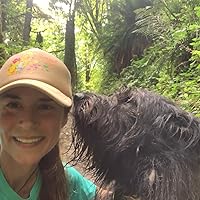
I met a friend of Gordon Hempton when I was hiking with my dog at Striped Peak. That’s how I heard about this book, and I’m so glad I found it. You can also just check out his website and learn all about this effort to preserve quiet: https://onesquareinch.org/, but I highly recommend this book.
It takes place where I call home, the Olympic Peninsula, and is a topic I am deeply interested in, ecology and the wilderness experience. It’s the Hoh Rainforest where he finds one square inch of silence, but that silence needs to be protected. He proposes that potentially more than 1,000 square miles can experience silence by protecting one single square inch of backcountry wilderness.
His writing is beyond beautiful at many points. I wanted to highlight so much of the first quarter to half of the book. Here’s some example of the gorgeous writing.
He argues we need to “reconnect and listen to the land. And the land is speaking”(p1). “It is our birthright to listen, quietly and undisturbed, to the natural environment and take whatever meaning we may. Long before the noises of mankind, there were only the sounds of the natural world. Our ears evolved perfectly tuned to hear these sounds - sounds that far exceed the range of human speech or even our most ambitious musical performances: a passing breeze that indicates a weather change, the first bird song of spring heralding, a regreening of the land and a return to growth and prosperity, an approaching storm promising relief from a drought, and the shifting tide reminding us of the celestial ballet. All of these experiences connect us back to the land and to our evolutionary past. One Square Inch of Silence is more than a book; it is a place in the Hoh Rainforest, part of Olympic National Park – arguably the quietest place in the United States. But it, too, is endangered…”(p2).
He argues for better protection against loose pollution. “Preserving natural silence is as necessary and essential as species preservation, habitat restoration, toxic waste cleanup, and carbon dioxide reduction, to name but a few of the immediate challenges that confront us in this still young century. The good news is that rescuing silence can come much more easily than tackling these other problems. A single law would signal a huge and immediate improvement. That law would prohibit all aircraft from flying over our most pristine national parks”(p2).
Silence is not what’s created by noise canceling headphones. It’s the natural lack of man-made noise, quiet amongst nature that’s not silent at all. “Silence is not the absence of something, but the presence of everything. It lives here, profoundly, at One Square Inch in the Hoh Rainforest. It is the presence of time, undisturbed. It can be felt within the chest. Silence nurtures our nature, our human nature, and lets us know who we are. Left with a more receptive mind and a more attuned ear, we become better listeners, not only to nature, but to each other.… To experience the soul-swelling wonder of silence, you must hear it. Silence is a sound, many, many sounds.… It’s the falling whisper of snow that will later melt with an astonishing reggae rhythm so crisp that you will want to dance to it.… Silence is the passing flock of chestnut-back chickadees and red-breasted nuthatches, chirping and fluttering, reminding you of your own curiosity. Have you heard the rain lately?… this liquid ballet…(p2-3).
On the value of silence. “A quiet place is the think tank of the soul, the spawning ground of truth and beauty”(p12).
He quotes John Muir’s description of the water ouzel, which I adore. “He is the mountain streams' own darling, the humming-bird of blooming waters, loving rocky ripple-slopes and sheets of foam as a bee loves flowers, as a lark loves sunshine and meadows. … The more striking strains are perfect arabesques of melody, composed of a few full, round, mellow notes, embroidered with delicate trills which fade and melt in long slender cadences. In a general way his music is that of the streams refined and spiritualized. The deep booming notes of the falls are in it, the trills of rapids, the gurgling of margin eddies, the low whispering of level reaches, and the sweet tinkle of separate drops oozing from the ends of mosses and falling into tranquil pools” (p21, but I also found it here - https://vault.sierraclub.org/john_mui...).
Describing the sound of the waterfall at Mineral Creek - “… the only sound is water in all its guises: it’s thundering cascade, gurgles in rock enclosures, and distant sprays”(p23).
He describes what it feels like to come back from a walk after dinner while backpacking, and slipping into a sleeping bag. “In my heart I have the same feelings that I have late at night gazing at wood embers: reverence, loyalty, devotion, gratitude”(p24).
“I’ve come to think of silence in two ways. Inner silence is that feeling of reverence for life… It resides as a soul level. Outer silence is different. It is what we experience when we are in a naturally quiet place without the modern noise intrusions … Outer silence invites us to open up our senses and get connected … to everything around us…. Outer silence can recharge my inner silence”(p31).
His words here perfectly capture how I feel in a misty forest when sunlight breaks through. Magic… “Sunlight breaks through dark, dense clouds, suddenly illuminating, each raindrop that still hangs like magic from the tips of millions of forest twigs. A display as remarkable as Christmas”(p49).
He quotes Chief Seattle on the noise pollution in cities, p58. “There is no quiet place in the white man’s cities. No place to hear the unfurling of leaves in spring or the rustle of insect’s wings. But perhaps it is because I am a savage and do not understand. The clatter only seems to insult the ears. And what is there to life if a man cannot hear the lonely cry of the whipporwill or the arguments of the frogs around a pond at night? I am a red man and do not understand. The Indian prefers the soft sound of the wind darting over the face of a pond, and the smell of the wind itself, cleansed by a midday rain, or scented with pinon pine.
The air is precious to the red man, for all things share the same breath―the beast, the tree, the man, they all share the same breath.”(https://www.washington.edu/uwired/out....)
His encapsulation of the Anthropocene- “Today we live in a time of planetary fast-forward. We’ve unleashed a million years worth of changes in a single human generation. We take from the Earth and return less than we greedily grab, and all too often we don’t even know what we’ve lost”(p58).
He visits Seattle’s newly built public library, which cost $169.2M, a space built with acoustics at the forefront of the design intention, and muses - “… I’m reminded of the vital importance of preserving places outside of human intension, unspoiled wilderness areas, places where we might regain sensory balance and learn from the unscripted, unedited, unenhanced, raw opportunity of nature. The wilderness is a place for recreation and certainly for learning and for the planet’s original, pure music. The Earth speaks to us through the language of the senses. I don’t be grudge $169.2 million spent on a library, but why not allocate even a fraction of that amount to preserve the living library that is at Seattle’s back door: Olympic National Park”(p70).
He visits Montana where the Air Force had proposed a training ground, and had argued that their noise pollution was like the sound of a vacuum cleaner, and doesn’t leave a lasting impact. The author makes an amazing point, “ how can we profess our love of the wilderness and then abuse it on the grounds that the insult is temporary? This certainly wouldn’t work in a marriage”(p90-91).
More musings on silence - “ silence seems to make music from everything, simply by isolating. Individual sounds, allowing the sounds time to form temporal relationships. Music is made out of rests and notes. Quiet times and exciting times, silence and sound. We need them both. More than any other sense, hearing unites everything”(p112).
He talks to Doug Peacock about grizzly country, and the value of wilderness – “Once you’re in bear country, your self-indulgence vanishes. All your senses are directed outward. It’s such a healthy attitude. It’s really enforced humility. And the ambience in which it happens, happens to be very, very quiet. They only live in the most people-less, remote habitats now… I also think… It’s the closest way to really get in touch with what I consider your innermost humanity, because that’s how we evolved, listening and smelling in ways that aren’t imaginable today. We’re the same species. The human mind, our intelligence, our consciousness, it all evolved from a habitat, whose remnants here in this country we call wilderness. The issue I’m continually raising is this: We evolved from that, which is essentially a wilderness, a wild habitat, using our senses, and that which evolves doesn’t persist without sustaining the conditions of its creation. That’s a giant argument for silence right there“(p118, Doug Peacock). This makes me want to read some of Doug Peacock’s work. If this quotation is an indication of how eloquent his writing could be, I’m in.
He quotes Charles Lindbergh. “Where civilization is most advanced, few birds exist… I would rather have birds than airplanes”(p121).
He also quotes Stuart Udall, who was instrumental in the Wilderness Act. In 1964, he warned, “America today stands poised on a pinnacle of wealth and power, yet we live in a land of vanishing beauty, of increasing ugliness, or shrinking open space, and an over-evil environment that is diminished daily by pollution and noise and blight” (p123).
While in Utah, he visits a quiet spot with Jay Salter who has many interesting things to say. About his quiet place in Canyonlands, it’s “a place where I can return to myself … once you’re out there, it’s just yourself and the place. My mind has to let go” (p133). “We all have places that somehow speak to us. Places we feel most whole in, where we can discover more and more pieces of ourselves”(p149). “For me, being here is a meditation. I come here to renew myself, to remember what it is to be human, which is not to be listening to a lot of things telling me what to buy or who I am or who I could be, but to find out who I am, to remember who I am, and to take that back into the world. What I’m hearing when I hear a plane is the contents of that mind that I’m coming here to get away from”(p150).
Hampton on the dawn chorus of birds - “The dawn chorus precedes the first rays of light, a sonic rollcall of bird species as distinct for every locale as a thumbprint”(p136). He describes this time as an especially sonically delicate time of day, precisely when songbirds send their messages most efficiently and wilderness seekers can listen to a place at its most expansive”(p137). So when a jet intrusion comes at 6:20 am while in Canyonlands, he’s not happy about it.
He quotes Edward Abbey, and his observation of the area’s stillness, the region of Canyonlands and Arches National Parks. “… the mighty stillness embraces and includes me; I can see the stars again and the world of starlight. I am 20 miles or more from the nearest fellow human, but instead of loneliness, I feel loveliness. Loveliness and a quiet exultation”(p140).
He talks to a bioacoustician, Kurt Fristrup who laments “The loss of quiet is literally the loss of awareness. Quiet is being lost without people even becoming aware of what they’re losing”(p173).
He quotes Hans Margoulis, a philosopher. “Only in quiet waters do things mirror themselves undistorted. Only in a quiet mind is adequate perception of the world”(p252). This echoes the Zen parable that just as silt settles to the bottom of a body of water when the water is still, thoughts and emotions settle and quiet when the mind is still.
He also quotes Max Picard, 1948, from his book The World of Silence. “Nothing has changed the nature of man so much as the loss of silence… this fact that silence is no longer taken for granted, as something as natural as the sky above or the air we breathe. Man who has lost silence has not merely lost one human quality, but his whole structure has been changed thereby”(p274).
He references Preserving Nature in the National Parks: a history, a book by Richard Sellers that I plan to read soon. Sellers talks about the history of management of our national parks and how scenery has been the primary driver. This has been problematic, and inadequate noise management is one exemplar of this.
One of his last sentences is. “When we listen to silence, we hear not absence, but presence”(p315).
It takes place where I call home, the Olympic Peninsula, and is a topic I am deeply interested in, ecology and the wilderness experience. It’s the Hoh Rainforest where he finds one square inch of silence, but that silence needs to be protected. He proposes that potentially more than 1,000 square miles can experience silence by protecting one single square inch of backcountry wilderness.
His writing is beyond beautiful at many points. I wanted to highlight so much of the first quarter to half of the book. Here’s some example of the gorgeous writing.
He argues we need to “reconnect and listen to the land. And the land is speaking”(p1). “It is our birthright to listen, quietly and undisturbed, to the natural environment and take whatever meaning we may. Long before the noises of mankind, there were only the sounds of the natural world. Our ears evolved perfectly tuned to hear these sounds - sounds that far exceed the range of human speech or even our most ambitious musical performances: a passing breeze that indicates a weather change, the first bird song of spring heralding, a regreening of the land and a return to growth and prosperity, an approaching storm promising relief from a drought, and the shifting tide reminding us of the celestial ballet. All of these experiences connect us back to the land and to our evolutionary past. One Square Inch of Silence is more than a book; it is a place in the Hoh Rainforest, part of Olympic National Park – arguably the quietest place in the United States. But it, too, is endangered…”(p2).
He argues for better protection against loose pollution. “Preserving natural silence is as necessary and essential as species preservation, habitat restoration, toxic waste cleanup, and carbon dioxide reduction, to name but a few of the immediate challenges that confront us in this still young century. The good news is that rescuing silence can come much more easily than tackling these other problems. A single law would signal a huge and immediate improvement. That law would prohibit all aircraft from flying over our most pristine national parks”(p2).
Silence is not what’s created by noise canceling headphones. It’s the natural lack of man-made noise, quiet amongst nature that’s not silent at all. “Silence is not the absence of something, but the presence of everything. It lives here, profoundly, at One Square Inch in the Hoh Rainforest. It is the presence of time, undisturbed. It can be felt within the chest. Silence nurtures our nature, our human nature, and lets us know who we are. Left with a more receptive mind and a more attuned ear, we become better listeners, not only to nature, but to each other.… To experience the soul-swelling wonder of silence, you must hear it. Silence is a sound, many, many sounds.… It’s the falling whisper of snow that will later melt with an astonishing reggae rhythm so crisp that you will want to dance to it.… Silence is the passing flock of chestnut-back chickadees and red-breasted nuthatches, chirping and fluttering, reminding you of your own curiosity. Have you heard the rain lately?… this liquid ballet…(p2-3).
On the value of silence. “A quiet place is the think tank of the soul, the spawning ground of truth and beauty”(p12).
He quotes John Muir’s description of the water ouzel, which I adore. “He is the mountain streams' own darling, the humming-bird of blooming waters, loving rocky ripple-slopes and sheets of foam as a bee loves flowers, as a lark loves sunshine and meadows. … The more striking strains are perfect arabesques of melody, composed of a few full, round, mellow notes, embroidered with delicate trills which fade and melt in long slender cadences. In a general way his music is that of the streams refined and spiritualized. The deep booming notes of the falls are in it, the trills of rapids, the gurgling of margin eddies, the low whispering of level reaches, and the sweet tinkle of separate drops oozing from the ends of mosses and falling into tranquil pools” (p21, but I also found it here - https://vault.sierraclub.org/john_mui...).
Describing the sound of the waterfall at Mineral Creek - “… the only sound is water in all its guises: it’s thundering cascade, gurgles in rock enclosures, and distant sprays”(p23).
He describes what it feels like to come back from a walk after dinner while backpacking, and slipping into a sleeping bag. “In my heart I have the same feelings that I have late at night gazing at wood embers: reverence, loyalty, devotion, gratitude”(p24).
“I’ve come to think of silence in two ways. Inner silence is that feeling of reverence for life… It resides as a soul level. Outer silence is different. It is what we experience when we are in a naturally quiet place without the modern noise intrusions … Outer silence invites us to open up our senses and get connected … to everything around us…. Outer silence can recharge my inner silence”(p31).
His words here perfectly capture how I feel in a misty forest when sunlight breaks through. Magic… “Sunlight breaks through dark, dense clouds, suddenly illuminating, each raindrop that still hangs like magic from the tips of millions of forest twigs. A display as remarkable as Christmas”(p49).
He quotes Chief Seattle on the noise pollution in cities, p58. “There is no quiet place in the white man’s cities. No place to hear the unfurling of leaves in spring or the rustle of insect’s wings. But perhaps it is because I am a savage and do not understand. The clatter only seems to insult the ears. And what is there to life if a man cannot hear the lonely cry of the whipporwill or the arguments of the frogs around a pond at night? I am a red man and do not understand. The Indian prefers the soft sound of the wind darting over the face of a pond, and the smell of the wind itself, cleansed by a midday rain, or scented with pinon pine.
The air is precious to the red man, for all things share the same breath―the beast, the tree, the man, they all share the same breath.”(https://www.washington.edu/uwired/out....)
His encapsulation of the Anthropocene- “Today we live in a time of planetary fast-forward. We’ve unleashed a million years worth of changes in a single human generation. We take from the Earth and return less than we greedily grab, and all too often we don’t even know what we’ve lost”(p58).
He visits Seattle’s newly built public library, which cost $169.2M, a space built with acoustics at the forefront of the design intention, and muses - “… I’m reminded of the vital importance of preserving places outside of human intension, unspoiled wilderness areas, places where we might regain sensory balance and learn from the unscripted, unedited, unenhanced, raw opportunity of nature. The wilderness is a place for recreation and certainly for learning and for the planet’s original, pure music. The Earth speaks to us through the language of the senses. I don’t be grudge $169.2 million spent on a library, but why not allocate even a fraction of that amount to preserve the living library that is at Seattle’s back door: Olympic National Park”(p70).
He visits Montana where the Air Force had proposed a training ground, and had argued that their noise pollution was like the sound of a vacuum cleaner, and doesn’t leave a lasting impact. The author makes an amazing point, “ how can we profess our love of the wilderness and then abuse it on the grounds that the insult is temporary? This certainly wouldn’t work in a marriage”(p90-91).
More musings on silence - “ silence seems to make music from everything, simply by isolating. Individual sounds, allowing the sounds time to form temporal relationships. Music is made out of rests and notes. Quiet times and exciting times, silence and sound. We need them both. More than any other sense, hearing unites everything”(p112).
He talks to Doug Peacock about grizzly country, and the value of wilderness – “Once you’re in bear country, your self-indulgence vanishes. All your senses are directed outward. It’s such a healthy attitude. It’s really enforced humility. And the ambience in which it happens, happens to be very, very quiet. They only live in the most people-less, remote habitats now… I also think… It’s the closest way to really get in touch with what I consider your innermost humanity, because that’s how we evolved, listening and smelling in ways that aren’t imaginable today. We’re the same species. The human mind, our intelligence, our consciousness, it all evolved from a habitat, whose remnants here in this country we call wilderness. The issue I’m continually raising is this: We evolved from that, which is essentially a wilderness, a wild habitat, using our senses, and that which evolves doesn’t persist without sustaining the conditions of its creation. That’s a giant argument for silence right there“(p118, Doug Peacock). This makes me want to read some of Doug Peacock’s work. If this quotation is an indication of how eloquent his writing could be, I’m in.
He quotes Charles Lindbergh. “Where civilization is most advanced, few birds exist… I would rather have birds than airplanes”(p121).
He also quotes Stuart Udall, who was instrumental in the Wilderness Act. In 1964, he warned, “America today stands poised on a pinnacle of wealth and power, yet we live in a land of vanishing beauty, of increasing ugliness, or shrinking open space, and an over-evil environment that is diminished daily by pollution and noise and blight” (p123).
While in Utah, he visits a quiet spot with Jay Salter who has many interesting things to say. About his quiet place in Canyonlands, it’s “a place where I can return to myself … once you’re out there, it’s just yourself and the place. My mind has to let go” (p133). “We all have places that somehow speak to us. Places we feel most whole in, where we can discover more and more pieces of ourselves”(p149). “For me, being here is a meditation. I come here to renew myself, to remember what it is to be human, which is not to be listening to a lot of things telling me what to buy or who I am or who I could be, but to find out who I am, to remember who I am, and to take that back into the world. What I’m hearing when I hear a plane is the contents of that mind that I’m coming here to get away from”(p150).
Hampton on the dawn chorus of birds - “The dawn chorus precedes the first rays of light, a sonic rollcall of bird species as distinct for every locale as a thumbprint”(p136). He describes this time as an especially sonically delicate time of day, precisely when songbirds send their messages most efficiently and wilderness seekers can listen to a place at its most expansive”(p137). So when a jet intrusion comes at 6:20 am while in Canyonlands, he’s not happy about it.
He quotes Edward Abbey, and his observation of the area’s stillness, the region of Canyonlands and Arches National Parks. “… the mighty stillness embraces and includes me; I can see the stars again and the world of starlight. I am 20 miles or more from the nearest fellow human, but instead of loneliness, I feel loveliness. Loveliness and a quiet exultation”(p140).
He talks to a bioacoustician, Kurt Fristrup who laments “The loss of quiet is literally the loss of awareness. Quiet is being lost without people even becoming aware of what they’re losing”(p173).
He quotes Hans Margoulis, a philosopher. “Only in quiet waters do things mirror themselves undistorted. Only in a quiet mind is adequate perception of the world”(p252). This echoes the Zen parable that just as silt settles to the bottom of a body of water when the water is still, thoughts and emotions settle and quiet when the mind is still.
He also quotes Max Picard, 1948, from his book The World of Silence. “Nothing has changed the nature of man so much as the loss of silence… this fact that silence is no longer taken for granted, as something as natural as the sky above or the air we breathe. Man who has lost silence has not merely lost one human quality, but his whole structure has been changed thereby”(p274).
He references Preserving Nature in the National Parks: a history, a book by Richard Sellers that I plan to read soon. Sellers talks about the history of management of our national parks and how scenery has been the primary driver. This has been problematic, and inadequate noise management is one exemplar of this.
One of his last sentences is. “When we listen to silence, we hear not absence, but presence”(p315).
September 5, 2024
Fascinating. Part travelogue, nature and audio science, policy analysis, and VW maintenance. Left me wanting to go backpacking somewhere quiet. Now listening to one of Hempton’s nature recordings (“Limpid Brook”) that he took on the journey that he details from Washington State to Washington, DC. Recommended for nature lovers and people who want to make a difference.

February 9, 2020
I have my own obsession with noise, sound, and silence, meaning I likely had much greater patience with this book than other readers seem to have had or are likely to. It's one of the few places I've ever felt validation about my perception of the shrinking potential for escape from noise and human-made sound. And while others have noted Hempton's somewhat redundant use of his sound meter, I felt inspired. It got me curious: just how much noise am I subject to on a daily basis, anyhow? And how would I know? At an event just last night (roller derby, as it happens) I thought about this book and thought it very likely I might be able to measure decibels through an app on my phone. Yes, as it turns out! And I had a good understanding of what the ranges meant having gone on this quirky adventure cross-country to measure sound everywhere from Canyonlands to the Indy Speedway. (75 dBa at the low end, an average of over 90 during play, and a high end of 110 during the height of crowd frenzy at the climax of the game.) Not to mention this book helped me get over myself and be okay with being the only one wearing the rather unglamorous earplugs during the game. Any book that presents a clear enough picture of the world that it gets me to fundamentally change how I see something or change an actual behavior is worth the read, I think, and worth the 4 stars even if the prose and story do admittedly get a little sluggish at a few points.

August 28, 2018
I was kind of conflicted reading this... I totally agree that there is too much noise everywhere, and steps should be taken to reduce noise pollution. However, the author's only real suggestion is rerouting all air traffic away from all National Parks, which even he knows is impossible. So really the entire book was him whipping out his decibel meter at every sound telling you how loud it is, then complaining that there is human made noise everywhere. He complains about highways, trains, the music in bars, the sounds of major cities, a woman and her daughter talking at campground, Boy Scouts at the same campground (jeez, just be glad there are still kids who enjoy being outdoors), and even his colleague trying to get his own recording equipment set up... It's one thing to want National Parks to have no air traffic, it's another thing to want no one to ever make a sound (at the same time he is driving a noisy VW bus, and taking flights across the country). Maybe his non-profit will get some kind of legislation passed, but I hope he doesn't decide to write another book about it.

February 11, 2021
Silence is undoubtedly a precious commodity that I know I personally don't get enough of. This is why I admired the tenacity and singular focus of Gordon Hempton and his quest to preserve silence in even just one area of the U.S. The journey in this book is one across the country and deep into the heart of humanity and our relationship to the natural world. We need quiet, and we need nature, just like nature needs its own space in order to flourish. Changes in the way that modern life is lived create many problems, but a prominent one, the one that Hempton identifies, is noise. On offer here is a compelling look, then, into both the realities of how nature, noise, and silence impact us, as well as a phenomenal portrait of a man passionate enough to pursue a seemingly crazy goal. At times the writing here is a tad overdramatic or overdone, but the importance of Hempton's goal is impossible to understate, and by the end you really do see the realities of sound and silence's impact on all of us.

February 17, 2022
I bought this book for my advent present last year. I enjoy the the first 4 chapters very much. Beautiful idea of One Square Inch of Silence. and I wish it is implement in every national parks existed as Sense of silence is ‘somehow lucrative nowadays’
A quiet place affords us a sanctuary for soul, where the difference of right and wrong becomes more readily apparent.
Some part of the book is a little bit technically-written, but just keep on reading and imaginaning u are at Hoh yourself on a sensory journey. The sounds of waterfall, crisp air, smell of mosses, leaves flapping loose and taking flights.
I recommended this book to nature lover,future Hoh/OSIS visitor, scientists/engineer who study physics of sound can adapted OSIS idea at the parks nearer and students who want to enriched their non fiction creative writings.
A quiet place affords us a sanctuary for soul, where the difference of right and wrong becomes more readily apparent.
Some part of the book is a little bit technically-written, but just keep on reading and imaginaning u are at Hoh yourself on a sensory journey. The sounds of waterfall, crisp air, smell of mosses, leaves flapping loose and taking flights.
I recommended this book to nature lover,future Hoh/OSIS visitor, scientists/engineer who study physics of sound can adapted OSIS idea at the parks nearer and students who want to enriched their non fiction creative writings.
June 25, 2017
Gordon Hempton's message on silence is one that needs to be heard. I gave it three stars though, because the writing and storytelling skill doesn't match the passion for natural quiet. The pace is slow, which is appropriate, but the storytelling lags and meanders. Travels that have the opportunity to pull us in with the adventure of pursuing silence, read like a journal, documenting Hempton's morning ablutions, coffee breaks, and travel discomforts. Far too much of the book documents various sound levels. Rare was the page that didn't say something along the lines of 'ARMY JET = 110 dBA.' Travel anecdotes from strangers and friends Hempton encounters on his trip are poorly transitioned into the overall story. It is clear that Hempton has a natural skill for sound recording, but less so for writing.
That said, I learned a lot about natural quiet and noise. I have been noticing noise intrusions in my daily life more regularly, and I appreciate that there are folks trying to do something about that. I loved the message and cause behind the book, and I plan on supporting One Square Inch and sharing what I've learned. Hempton's experience with quiet, also gives him the ability t0 share drops of quotable wisdom sprinkled throughout the book, such as "Silence is not the absence of something but the presence of everything." Despite the flaws, definitely worth the read.
That said, I learned a lot about natural quiet and noise. I have been noticing noise intrusions in my daily life more regularly, and I appreciate that there are folks trying to do something about that. I loved the message and cause behind the book, and I plan on supporting One Square Inch and sharing what I've learned. Hempton's experience with quiet, also gives him the ability t0 share drops of quotable wisdom sprinkled throughout the book, such as "Silence is not the absence of something but the presence of everything." Despite the flaws, definitely worth the read.

February 1, 2024
The writing in One Square Inch of Silence is a little too choppy for me, never coming together in the kind of flowing narrative I prefer. Still, I have a lot of empathy with Gordon Hempton. His mission is important and one I support fully. Even though I don't carry a sound level meter, like Hempton I'm more aware of sounds than the average person, and I'm constantly amazed at what passes for quiet in this loud state of affairs we call "civilization." We bombard ourselves with so much noise that we've normalized it, not even realizing how much we're damaging our mental and emotional health - if humanity seems to grow collectively angrier every year, this is one of the reasons. We're not only hurting ourselves; wildlife (or, just life) is also harmed. I encourage everyone to quiet their barking dog, put down their leafblower, turn off their mobile devices, and give their full attention to the many natural and human-caused sounds around them. But, as Gordon Hempton has discovered, very few people will even hear the plea.
March 26, 2019
The author writes some of the most amazing descriptions of sound I have ever read. He is clearly a talented listener. I agree with some other reviewers that the frequent decibel level readings became tedious.
His focus is on jet flight over national parks. However, he seems a little naive about how to go about changing anything. Who are the people that could? For me as a user of national forests and parks my biggest concerns are snowmobiles and helicopter tours. Jets are also an intrusion, but not as bad in my view.
Partly, perhaps, it just wasn't the book I wanted. I would like a book to address more broadly the value of silence in our lives, and, taking a overview, how could we achieve more peace and quiet for a lot of people? Absolute silence, other than natural sounds, is a laudable goal of course. I would also like to see focus on how to get all of our environments quieter, if not absolutely quiet. That objective is underappreciated, and even seldom spoken of.
His focus is on jet flight over national parks. However, he seems a little naive about how to go about changing anything. Who are the people that could? For me as a user of national forests and parks my biggest concerns are snowmobiles and helicopter tours. Jets are also an intrusion, but not as bad in my view.
Partly, perhaps, it just wasn't the book I wanted. I would like a book to address more broadly the value of silence in our lives, and, taking a overview, how could we achieve more peace and quiet for a lot of people? Absolute silence, other than natural sounds, is a laudable goal of course. I would also like to see focus on how to get all of our environments quieter, if not absolutely quiet. That objective is underappreciated, and even seldom spoken of.

January 27, 2025
As a poet, I have written a lot about silence. That's the reason why a friend gave me this book. However, the book is not about silence, it's about noise. Decibel reading after decibel reading is presented over and over again throughout the book documenting every noisy nuisance that intrudes upon the author. The incessant mapping of sound--like a navigator mapping the coast of uncharted land. The author chases silence relentlessly. But silence cannot be chased. Unlike a wild bird, silence cannot be lured into a trap. It is a bird that comes to you when you are still.
The book is wearying, and a slog to read, with so much pointless detail even when that detail is not simply statistics.
The author's pursuit of quiet is noble and he has indeed gone the extra mile to fight the powers that be to help us acquire less noise in an overly noisy world. Hempton the acoustic ecologist knows his stuff, but Hempton the author fails to engage this member of his audience.
America seems to dread silence. That astonishes me as it does Hempton. I wish him nothing but good luck in his quest for quiet. But I cannot recommend reading this book.
The book is wearying, and a slog to read, with so much pointless detail even when that detail is not simply statistics.
The author's pursuit of quiet is noble and he has indeed gone the extra mile to fight the powers that be to help us acquire less noise in an overly noisy world. Hempton the acoustic ecologist knows his stuff, but Hempton the author fails to engage this member of his audience.
America seems to dread silence. That astonishes me as it does Hempton. I wish him nothing but good luck in his quest for quiet. But I cannot recommend reading this book.

August 12, 2022
hope it will be translated into Arabic, after revision, of course
.
البحث عن بوصة واحدة من السكون
كان هدف لباحث عالم بيئي، استلهمه من عالم سبقه بمئة عام في رحلة عن التعرف على الغابات وخصائص كل منها في الولايات المتحدة الأمريكية، وسمي لاحقا بأبي المحميات الوطنية . حاول إيجاد أكثر المواقع سكون في غابات عدة لكن كانت أفضلها غابة أولمبيك لتنوعها الزاخر وبُعدها عن نشاطات البشر مقارنة بالغابات الأخرى، وكانت عبارة عن بوصة واحدة .
السكون/ الهدوء بوسط الطبيعة دون تدخل للبشر كان محور رحلتهما، ومدى تأثيرها على الطبيعة، هناك من يقول أن الطبيعة تتأقلم مع المتغيرات عبر الأزمنة، لكنها يؤكدان على ذلك السكون الخلاب لن يوجود بالعقود القادمة، بسبب نشاطات البشر على البر وفي الجو .
"الموسيقى إنسانية أما الساكن فمن صنع الطبيعة" ، جون أبدايك
الكتاب محتواه بين اليوميات والمشاهد واللقاءات والمعلومة العلمية بجانب أبحاثه وسير رحلته
( آمل جدا أن يترجم إلى العربية لكن بعد التنقيح )
.
.
.
البحث عن بوصة واحدة من السكون
كان هدف لباحث عالم بيئي، استلهمه من عالم سبقه بمئة عام في رحلة عن التعرف على الغابات وخصائص كل منها في الولايات المتحدة الأمريكية، وسمي لاحقا بأبي المحميات الوطنية . حاول إيجاد أكثر المواقع سكون في غابات عدة لكن كانت أفضلها غابة أولمبيك لتنوعها الزاخر وبُعدها عن نشاطات البشر مقارنة بالغابات الأخرى، وكانت عبارة عن بوصة واحدة .
السكون/ الهدوء بوسط الطبيعة دون تدخل للبشر كان محور رحلتهما، ومدى تأثيرها على الطبيعة، هناك من يقول أن الطبيعة تتأقلم مع المتغيرات عبر الأزمنة، لكنها يؤكدان على ذلك السكون الخلاب لن يوجود بالعقود القادمة، بسبب نشاطات البشر على البر وفي الجو .
"الموسيقى إنسانية أما الساكن فمن صنع الطبيعة" ، جون أبدايك
الكتاب محتواه بين اليوميات والمشاهد واللقاءات والمعلومة العلمية بجانب أبحاثه وسير رحلته
( آمل جدا أن يترجم إلى العربية لكن بعد التنقيح )
.
.

not-in-pima-okc-wi-but-want
July 4, 2025Not sure I do want to bother reading this. I don't believe his premise. The places he focuses on are indeed crowded in by civilization: Beautiful national parks are going to have human noise from hikers and motorized tourists. The coasts are going to have airplanes.
How about a few miles off the road in Nevada or New Mexico; I've driven through those areas many times, not met another car for miles & miles & miles, not seen any signs of humans...?
Even northern Wisconsin - driving down Hwy 8 in between small towns there's nothing, not even cell phone reception... if I were to get away from the highway a bit I bet I couldn't hear anything but wildlife...
Now, his mission, that I do believe in.
How about a few miles off the road in Nevada or New Mexico; I've driven through those areas many times, not met another car for miles & miles & miles, not seen any signs of humans...?
Even northern Wisconsin - driving down Hwy 8 in between small towns there's nothing, not even cell phone reception... if I were to get away from the highway a bit I bet I couldn't hear anything but wildlife...
Now, his mission, that I do believe in.

June 30, 2025
Hvilken bog!
Skønt pakket med videnskabelige referencer og undersøgelser, så glemmer den aldrig, at den også er et vidnesbyrd om en rejse, et roadtrip, og heller ikke, at den er én mands personlige dannelsesrejse.
Læg dertil historie og poesi.
Jeg har læst den som en god roman, altså med samme iver, samme spændte forventning og samme glæde.
Og. Skønt budskabet ikke er udelt positivt. Skønt tiden og udviklingen arbejder mod Gordon Hemptons mission, så får den ham ikke til at miste troen på det han gør og det han vil. For det er ikke bare vigtigt. Det er væsentligt. Det er helt essentielt. Nemlig at bevare stille steder til de kommende generationer.
Hvilken bog. Hvilken overraskelse.
Skønt pakket med videnskabelige referencer og undersøgelser, så glemmer den aldrig, at den også er et vidnesbyrd om en rejse, et roadtrip, og heller ikke, at den er én mands personlige dannelsesrejse.
Læg dertil historie og poesi.
Jeg har læst den som en god roman, altså med samme iver, samme spændte forventning og samme glæde.
Og. Skønt budskabet ikke er udelt positivt. Skønt tiden og udviklingen arbejder mod Gordon Hemptons mission, så får den ham ikke til at miste troen på det han gør og det han vil. For det er ikke bare vigtigt. Det er væsentligt. Det er helt essentielt. Nemlig at bevare stille steder til de kommende generationer.
Hvilken bog. Hvilken overraskelse.
June 8, 2025
“True listening is worship. The sacred feeling of silence is in all of us.”
Gordon Hempton combines passion, science and adventure in this work. Given that it’s been 20 years since this book was published, I am quite eager to find out what has taken place - if anything- to preserve the rich quiet of the Hoh Rain Forest and other public lands.
I may have to curse Hempton for the fact that a dBa monitor is now a prominent and frequently used app on my iPhone, and I am continually checking it and announcing the noise levels around me.
Gordon Hempton combines passion, science and adventure in this work. Given that it’s been 20 years since this book was published, I am quite eager to find out what has taken place - if anything- to preserve the rich quiet of the Hoh Rain Forest and other public lands.
I may have to curse Hempton for the fact that a dBa monitor is now a prominent and frequently used app on my iPhone, and I am continually checking it and announcing the noise levels around me.
January 16, 2018
I love the cause. The overall narrative of a cross-country search for quiet is promising, yet often the individual episodes are flat. The constant chronicle of noise level becomes repetitive. There are however lots of great research in science, history and literature that went into the book, and I’m very interested to read more by John Muir now!

June 3, 2018
Profound.
A must-read - a book that has made such a huge impact upon me, having me in a state of high-alert as far as auditory observations since I picked it up and started reading.
Fascinating - and saddening, while at the same time encouraging!
http://helenaroth.com/one-square-inch...
A must-read - a book that has made such a huge impact upon me, having me in a state of high-alert as far as auditory observations since I picked it up and started reading.
Fascinating - and saddening, while at the same time encouraging!
http://helenaroth.com/one-square-inch...

August 1, 2019
Reading this book will change your perception of quite, silence and how it is related with our personal relationship with nature. I felt inspired to change my life and value quiet more. It impelled me to search for silence, both inward as outward. I only gave 4* because of the exaggerated amount of details in his journey.

November 10, 2023
This book is rooted in an interesting project: to save hundreds of acres of noise pollution by concentrating on just one square inch. The author also has an interesting job - to record sounds. However, the narrative rambles. It drifts from food to history to rants too quickly and does not come to satisfying conclusions.
September 7, 2022
Read this years ago. But if poi are looking for the last five remaining spots on the planet that are not marred by human made noise, read this book. You may learn to listen to the world in a new way, but you may not like what you hear.

September 17, 2024
Interesting book about a very real hazard to life on earth. All should read about the problem and read at least parts of this book. The parts about his VW microbus and his daughter distracted from the message. I would have enjoyed more if they had been edited out.

June 4, 2025
I wanted this to be an incredible, inspiring book about the search for quiet (quiet being 'lack of man-made noise, not silence per se). Sadly, it is fairly dull reading. Some sections (chapters) are better than others, but it took me six months to get through this.
June 3, 2017
I love stories of obsession, however this one just left me wanting to stop at times. It bogged down in a couple of places.
Displaying 1 - 30 of 85 reviews