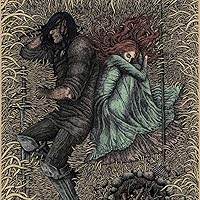
Winnie and Wolf is the story of the extraordinary friendship between Winifred Wagner and Adolf Hitler in the Years between the First and Second World Wars. The girl who would become Winifred Wagner was raised in an orphanage and married, at the age of eighteen, to the gay son of composer Richard Wagner. As heiress to the country's most august cultural legacy, she grows up in the Wagner family compound, surrounded by the philosophers and composers who would define western European culture in the mid-twentieth century. In 1923, the Wagners met the man who would be their hero and hope for the a wild-eyed Viennese opera fanatic named Adolf Hitler. Almost immediately Winnie and Wolf struck up an intimate friendship. In A. N. Wilson's most bold and ambitious novel yet, the world of the Weimar Republic comes to vivid life as the backdrop to this strange and powerful kinship.
Andrew Norman Wilson is an English writer and newspaper columnist, known for his critical biographies, novels, works of popular history and religious views. He is an occasional columnist for the Daily Mail and former columnist for the London Evening Standard, and has been an occasional contributor to the Times Literary Supplement, New Statesman, The Spectator and The Observer.
Objectively, this probably deserves more like ***1/2 stars. But I am rounding it up this time, because the elements of this book that were good were so satisfying that they outweigh the not so good.
Winnie & Wolf is an ambitious attempt to show both how the German composer Richard Wagner's work was co-opted by the Nazis and how Wagner's daughter-in-law, Winifred, could have possibly maintained her long-term friendship with Hitler as the more heinous elements of the Third Reich's power played out. Wilson suggests that Hitler and Winnie had an affair that resulted in a child, and it is for the sake of their having had a child together and for the sake of Hitler's uncle-like relationship with Winnie & Siegfried Wagner's four children that she blinds herself to what he is doing. (Other reviewers seem to think that Winnie & Hitler having a sexual relationship is ludicrous. I can't comment on that, except to say that even if it is, this is a work of fiction and for that reason, Wilson can infer as he wishes.)
The major strength of this book is how incredibly well Wilson evokes the broken Germany in the wake of World War I, susceptible to the nationalist speechifying of a figure like Hitler. Wilson's narrator, an unnamed assistant to Siegfried Wagner who spent time in the family's household around Winnie & Hitler and who then adopted their lovechild, describes how he himself was enticed by the message of the Nazis. We see his evolution from hopeful believer to disillusionment, providing a plausible framework for the evolution of the ordinary German.
Wilson's writing style, though sometimes difficult to navigate, serves his narrator's voice well. Towards the beginning of the book, the narrator describes the German people as a whole as quiet, upright -- and above all, rational -- people. In my experience, this is accurate, and the narrator's voice reflected these qualities, giving the book a feeling of authenticity.
The biggest stumbling block of this book is in connecting Wagner to the present story of Winnie & Hitler and the Third Reich's rise to power. It is clear that Wilson reveres Richard Wagner, which is why he can't seem to resist sharing every single detail of the man's life with us in order to free him from history's misunderstanding. At times, the narrator will interrupt interesting sections of plot with a few pages of biographical Wagner information, bringing everything to a grinding halt.
Wilson also gives complete summaries of each of his operas, which I suppose is wonderful if you already love Wagner or are interested in making connections between the operatic figures and Hitler's aims. I was interested in the beginning of the book, but let's be real:
a.) It's 360 pages long, which tends towards the long side. Given that there's not much of a structured plot to the book, unnecessary information becomes tedious.
b.) All of this information about particular operas is unnecessary at the end because Hitler's no longer justifying and strategizing. The war, for Germany, is over. The connection has been made.
Even though I think some editing could have been done to make this less of a slog at points and to organize the story in a more coherent way, I would still highly recommend this book to anyone who enjoys historical fiction, evocation of place, and character studies. Wilson's Hitler is unsettling in his humanity. In a moment of self-consciousness that I liked very much, the narrator remarks that in light of all of the suffering the Third Reich caused, talking about Hitler as a man rather than as the Führer is probably extraneous. This is true. But it's also an important part of realizing why so many ordinary Germans remained loyal to him for as long as they did.
Winnie and Wolf[return]by A.N.Wilson[return][return]A novel with much hype but no punch. I was disappointed from the beginning of this novel. I love Wagner, and was expecting much more in this novel. This is a non-fiction like read that has no flow. Way too many details that make this an awkward laborious read. I was hoping for a good story but alas no luck. Read a non-fiction book of the period instead.
This is a gorgeously written book that I could not put down. It is absolutely not for everyone. But if you are interested in the life and music of Richard Wagner and/or the strange story of how the Nazis co-opted his works and perverted their meaning, or if you are interested in Germany's bizarre path from tentative democracy following the Great War to becoming the evil empire under Hitler, and why the German people surrendered their critical facilities and allowed Hitlerism to bring them, and much of the world, to the brink of destruction - if you are interested in these things, you will savor every page of Winnie and Wolf.
The premise, that Winifred carried on an affair with Hitler and bore his child, is absurd, but it doesn't matter. The author's observations about life in Bayreuth after it was usurped by Hitler is accurate to the finest detail. I strongly recommend reading it after you've finished Brigitte Hamann's suberb Winifred Wagner: A Life at the Heart of Hitler's Bayreuth. You will see how faithful the novel is to history, and you will have more context to understand the cast of characters such as Hans Tietjen, Houston Stewart Chamberlain, Friedelind Wagner, etc.
Mesmerizing, hypnotic, touching and ripe with keen insights into German history and philosophy and music, not to mention human nature.... Well, what more can we ask for? As I headed into the last 50 pages or so I started to read it more slowly, sometimes reading only one or two pages a night before bedtime, because I didn't want it to end. A book to cherish.
To enjoy this book it is essential to be fluent in the works of Richard Wagner. A.N. Wilson titles each of the sections of the book after one of Wagner's music dramas. The person story of the narrator, the Wagner family and the rise of Nazism in 1930s German are underscored by the themes of the music drama in the title. It is a very ambitious book in this regard. Wilson stretches this ambitiousness by having the book narrated by N- , an ironically drawn character whose telling of the story seems to echo the self-delusion that many average Germans practicedduring the rise of the Third Reich.
The multiple time periods (the 'present' day 1960s Leipzig in whose dreary Communist world the narrator is writing this story, the biography of Winifred Wagner and her relationship with Wolf, more commonly known as Hitler, as well as glimpses from the life of Wagner himself, as well as his wife Cosima) are all deftly intermingled and comment on each other like a house of mirrors.
In his attempt to extricate Winnie from Wolf and Wolf from Wagner, N- makes them even more indispensible to each other than we had thought.
I found this meticulously researched novel engrossing. It tells the story of the relationship between Winifred Wagner, wife of Richard Wagner's son, and Adolf Hitler, but it's also the story of the relationship between Nazism and the German people. It brought home to me something I knew intellectually but failed to grasp emotionally; how absolutely desperate the economic meltdown was in Germany between the first and second wars, and how the seeds of Nazi ideology took root and flourished in this mix of humiliation, economic chaos and widespread longing for rescue, order and strong leadership, whatever the cost. I also learned a great deal about Wagner, his family, his music and the phenomenon of Bayreuth.
Very much an apology and reclamation of Wagner from the Nazis. I've read other Wilson works of non-fiction and I know that there are problems with his conclusions (Lewis and sex, for example), so there's a slight sense of "hmmm... is this really what's going on or ???" while you read. However, I did learn a lot about pre-Nazi Germany, and the explication for the so-called Good German does tie in with other sources I've read.
I liked the subject matter (Germany, 11800-1960's) and it was really interesting to see the "other" side of what Hitler was like, the side that the whole world never would have thought was possible, as he acted towards children, theatre and friends. The author easily flows time frames together, and it never was confusing. The overall story, though, wasn't very exciting. I'm not sure if it was a true account, or fictional.
I found this a very tough read. Perhaps I would have enjoyed it more if I had known more about opera, or about Wagner in particular. I read this as part of my (self-inflicted!) project of reading all 13 novels on the Mann Booker Prize long list for 2007. This was the one I struggled with the most, I think.
Hated it. Unreliable loser narrator. Hitler as an opera loving romantic - I'm not buying it. Winnie is a self-absorbed, self-serving bitch. Ridiculous premise. Long and windy. Not an enjoyable read. What a waste of time.
But I can see why it was long listed for the booker. Wilson has good writing, but the book feels like it has two personalities, like Wilson couldn't figure out extactly where she wante to go.
I just can't do it. I quit on page 37. I won this from goodreads, but after reading other reviews, it helps to be an Opera fan and Wagner buff to get through this book.
I hate titles and summaries that mislead you about the contents of a book!!! Winifred Wagner and Adolf Hitler are actually in the same building on about 3 pages of this 363 page work. They interact via telephone when Jewish members of the opera are arrested. 80% of the book is the history of Richard Wagner, his family, and his operas and their staging and conductors. 10% is a meandering history of the narrator / letter writer to his adopted daughter. 10% is the "history" of the Nazi party and Hitler's rise to power. I say "history" in the case of WWII because, I believe the author probably correctly wrote history regarding Wagner, his family, and the operas - I have no means of judging accurately - while many of the supposed facts about WWII and Hitler are false. Mr. Wilson states that Hitler himself shot Ernst Röhm. As a reader of WWII history I knew this was patently false, but even a cursory reader of the nature of Adolf Hitler would know that he never "got his hands dirty" and had henchmen carry out his murders. Hitler was hesitant in ordering Röhm's execution, perhaps because of loyalty or embarrassment about the execution of an important lieutenant; he eventually did so, and agreed that Röhm should have the option of suicide. On 1 July, SS-Brigadeführer Theodor Eicke (later Kommandant of the Dachau concentration camp) and SS-Obersturmbannführer Michael Lippert visited Röhm. Once inside Röhm's cell, they handed him a Browning pistol loaded with a single cartridge and told him he had ten minutes to kill himself or they would do it for him. Röhm demurred, telling them, "If I am to be killed, let Adolf do it himself. Eicke and Lippert returned to Röhm's cell at 14:50 to find him standing, with his bare chest puffed out in a gesture of defiance. They then shot and killied him. Evans, Richard (2005). The Third Reich in Power. New York: Penguin Group. Kershaw, Ian (2008). Hitler: A Biography. W. W. Norton & Company. He goes on to state that the 18th Air Force bombed Beyreuth to destory the opera house. First of all the author states: "We were in Munich.. when "the raid" on Beyreuth began." page 352. First of all there was more than one raid. Bayreuth was heavily bombed at the very end of World War II by the United States Air Corps. On the 5th of April 1945 the first bombs fell destroying the area around the railway station and, in a second attack, whole rows of houses in the town. Villa Wahnfried was also hit, destroying one side and the cellar which was full of people. ( Wagner home ) On the 8th April the American planes returned. The "most terrible day in the history of Bayreuth" was 11th April, when the American bombers made a large-scale air-raid. Thirty-five percent of the city was destroyed and about a thousand people died. During World War II, a small subcamp of Flossenburg concentration camp was located outside the city. It was bombed by the Americans and sixty-one inmates were marched to Flossenburg itself on 14th April, 1945, the day the Americans arrived in Bayreuth. Although of little military significance, by this time in the war, the Americans who had started out doing only daylight precision bombing runs ( losing many more planes and crew than the British RAF which bombed at night ) had begun to bomb less strategic cites to attempting to cause German surrender. The book states that "the raid" was carried out by the 18th Air Force. I could find no documentation of the role of the 18th, but on the supposed date there was no "Air Force" The Air Corps remained as one of the combat arms of the Army until 1947, when it was legally abolished by legislation establishing the Department of the Air Force. Records of the Army Air Forces - National Archives. If I had wanted to read a history of Wagner, I would have chosen such a book. Since this is supposedly equally about Wolf and Winnie, the author demonstrates little proficiency in WWII history and I do not regard 3 pages of direct interaction as worthy the title. Kristi & Abby Tabby
Not an opera buff, Wagner fan or expert on Nazi Germany? You probably match the profile of the average reader of this slightly patchy account of the British daughter-in-law of the stellar composer, and her relationship with Hitler. If only because Wagner's son Siegfried really preferred men, he was romantically matched with an orphaned girl from Hastings who'd been adopted by a German family with fanatical anti-Semitic views. Early sections of the book seem over long and lacking in coherence. I found myself re-reading sections to find out who "he" referred to. Author, AN Wilson, wrote a biography of Hitler and there's a sense that the quality of the narrative was lost at points beneath the weight of the writer's scholarship. It was certainly bizarre and awkward reading at times, unfamiliar as we are to seeing sympathetic portraits of Hitler and accounts of his genial, avuncular puppeteering prankster alter ego. There were points where the narrator, the Wagner family's secretary, who secretly carries a torch for Winnie himself and must endure witnessing her deepening attachment to our moustachioed Fuhrer, seemed less of an unreliable witness than an apologist for the Nazi creed. The book certainly trod a fine line in that respect and gave the impression that Wilson felt obliged to insert periodic references to evil-doing and mass murder as his true views were really beyond the pale of modern historical interpretation outside that of fanatical right-wingers yearning for their lost golden age. As the novel moves to its conclusion and the scales have fallen away from the eyes of our protagonist, military defeat is imminent and the pace, the precision of the prose and our experience of the devastation inflicted on ordinary Germans by the vindictive allied bombing spree makes for a genuinely enlightening and moving read. Fans of Wagner will also relish the descriptions of life in Bayreuth and the staging of the early festivals, which, of course, continue to this day. I didn't research him too deeply but felt that Wilson's politics may well be right of Attila the Hun. The greatest tragedy in his world-view seems to be that our unwary and naïve secretary, as a result of a chance decision to head for Leipzig rather than Munich is destined to live out the remainder of his prime years in East, rather than West, Germany but there really was something refreshing about reading from a perspective very far removed from one's own and the writing was crisp, precise and emotionally-insightful in a mannered, early twentieth century way. If you can plough through the early chapters and find a sense of direction, the book certainly rewards the effort. Had there been a stronger narrative direction from the start of the book it would have warranted an easy four stars in my book.
While this is fiction, it certainly gives you a real insight into what was going on in Germany under Hitler. The background on Wagner is interesting too.
A bit confusing at first but once you get into it, it is quite gripping.
Wanted to read this, I was familiar with A.N. Wilson as a biographer, wasn’t disappointed. This novel enjoyment will be directly proportional to your knowledge of a)Germany in between wars and b)Wagner’s operas, if you know little log both, the prose is easy on the reader.
I was so excited about this; my dissertation was all about the Wagners and Hitler. After nearly 3 months of trying to love it, I had to admit defeat. It’s rare that I do that and I feel like I’ve let myself down.
2.5. not sure what it is trying to be - history or story. title is misleading- less about Winnie and Wolf than the Wagner family, opera, or history of the rise of Hitler. Really quite ponderous.
another that's a 3.5 rounded up. JEEZ, people...can we please get the 1/2 star thing???????
rant over.
I do have to admit to finishing this book in one sitting. I liked it, didn't love it, although there was something about it that really intrigued me and kept me reading. What I did like was its warning about the folly of a person's (or put in much wider perspective, a nation's) admiration for charismatic individuals leading to blindness, gullibility, and outright denial of said charismatic individual's ulterior motives and nefarious methodology. This is a topic that is current and should be heeded.
For this purpose, the author weaves a tale around the relationship between the daughter-in-law of Richard Wagner (Winifred Wagner, married to Siegfried Wagner) and Adolph Hitler, known to Wagner's children as Uncle Wolf. The narrator, a secretary in the Wagner household in Beyreuth, relates how Winnifred became smitten with Hitler, and how after her husband's death, became sexually involved with him. Even after such events as Krystallnacht, the Night of the Long Knives, the harassment of ordinary people by Hitler Youth brownshirt thugs, etc., Winnifred is still so taken by Hitler that she absolutely refuses to see the truth about him and his policies. Wilson notes through his narrator, Mr. N___, that it wasn't just Winifred -- many intellectual and well-educated Germans at the time were happy with the results of Hitler's economic programs (less unemployment, an economy that was starting to pick up), and had believed that harsh, authoritarian policies as a short-term solution were what Germany needed in the aftermath of the reparations demanded by the Treaty of Versailles and in the aftermath of the Great Depression. The belief was that after the economy was flourishing again, the need for such rigid measures would disappear. Yeah, uh-huh. Right. Hitler swept in, played on feelings of German nationalism, and bolstered it with the use of the mythology behind Wagner's operas, following all of that up with his understanding of crowd psychology, also noted by Mr. N___. Fascinating stuff.
But there are a couple of putoffs in this book. First of all, I'm not a huge opera fan and have never really pictured Wagner as a likely candidate for my own personal historical study, so the amount of history and personal quirks about the famous composer thrown in by the author made it feel sometimes like I was getting lectured. However, to be fair, I think that through the narrator, the author was trying to show that even though Wagner was fascinated with the Germanic mythologies and philosophers like Schopenhauer, what he loved most was music and dogs -- and probably would not have approved of Hitler's hijacking of his work. It seems to me that it was not Richard Wagner so much as Winifred Wagner who made this possible. Second, I didn't think the author needed to resort to Hitler and Winnifred Wagner having a (and I hate this phrase) "love child" as the basis of the story, although from what I have read, this was definitely a rumor that actually took on some credence in many circles. The story would have been better had the author just used the narrator as an observer of what went on at Beyreuth with the Wagner family and Hitler. There's really no point to it, except to use it as a device around which the narrator tells the story. Third -- this is Hitler we're talking about here and a man who planned genocide on such an epic scale had no soul -- maybe a desire not to lose loyal followers and their friends in the upper echelons of the social world, but that's probably about it.
I didn't much care for any of the characters in the book except for maybe Friedelind Wagner, the daughter who couldn't take any more of "Uncle Wolf" and his raving and decided to leave Germany. You can't help but wonder if she was just as disgusted with her mother.
This is a book that is definitely not for mainstream readers -- there's so much history and information in here that it can be a little tedious at times. I think if you're a reader interested in the rise of National Socialism, or the perils of blind acceptance of someone who is touted as being a savior, then you might like it.
A reader that does not know the significance of Houston Stewart Chamberlain or Bayreuth (or even know what they are) should probably steer clear of A. N. Wilson’s novel “Winnie and Wolf”. I have done some deep reading into Nazi Germany over the past six years or so and am familiar with most of what Wilson is writing about.
That being said, “Winnie and Wolf” gave me invaluable insight into the Germany of the ‘20s and ‘30s as well as insight into Adolf Hitler’s artistic and racial preoccupations and their ramifications. In one brilliantly rendered scene, a young, destitute Hitler is employed to sweep snow to make a path for the well-heeled pedestrians, he comes across an old acquaintance, Ludwig Wittgenstein, an old school friend, “coming out the grandest hotel in Vienna. So I swept the snow from under their feet and his father tipped me – he gave me a few thalers.” The humiliated Hitler remembers the young Wittgenstein as a “lofty Jew” and goes unrecognized. “Look, it’s me! I was at school with Ludwig and then (like him) I fought in the war, and look where it has got me – help, please help!” (162)
This resentment to Jewish wealth and privilege and an all-encompassing devotion to the mythic operatic works of Richard Wagner (of which most of this book is concerned) propelled Hitler to a position of power that was to prove cataclysmic to the whole world.
“It is not to our credit that we failed to notice the evil things that were there from the beginning,” the narrator of the book says at one point. “But the truth is that most Europeans say (and think) unpleasant things about the Jews. Although H(itler), like Mr. Chamberlain, took this to truly manic extremes both in what he said and what he wrote, it wasn’t the anti-Semitism that made him distinctive. Most public figures had that. What made him special was his mesmeric qualities of hope, his hypnotic faith in the future.” (61)
Hitler is an intimate to the characters of this novel. He is their house guest and their famous politician friend, their fellow devotee of Wagner whose opinions of Wagner’s operas and their performances figure largely in this novel. But even Hitler’s friends experience misgivings from time to time, especially after Hitler’s niece, Geli, commits suicide (in 1931).
“It was not the suspicion of murder, nor even the suspicion of improper relations with his niece, which were damaging to H at this time. It was something much less specific and much deeper. It was a generalized association between H and death, H and disaster, calamity.” (152)
I have read a number of other books by A. N. Wilson, among them “The Victorians,” “After the Victorians” and his short biography of Hitler. Not for beginners, but “Winnie and Wolf” (Winnie being the wife of Siegfried, Wagner’s son) is an extraordinary read, although at times feeling like a slog. (So much about Wagner and his dog!) As one character says about Wagner’s operas – half hours of dullness followed by minutes of brilliance – the same could be said of this, otherwise, insightful examination of the beginning of the end of Europe.
One critic described Winnie and Wolf as a philosophically "thorny" novel, and it is most certainly that: a fiction of enormous cognitive breadth, as at home exploring the tangles of reconciling belief in Christ with a world in which the Holocaust is both possible and thought an acceptable trade by people (i.e. Germans rejoicing in Hitler's brutally assertive renunciation of the terms of surrender of WWI) merely thrilled to have their dignity back as with themes as far-flung as marital discord, the purpose of art, the tug-of-war between Nature and Nurture in the eventual fate of a child. Wilson, at times, might bite off more than he can chew -- the liquid narrative movement between Wagner's 19th-century, Hitler's 20th century and the later Eastern Bloc existence feels too often, toward the end of the novel, pieced together in a rush -- but its faults spring from its ambition, not its writer's weaknesses. I was most fascinated by how given human beings seem to be to wholesale belief in cults of charisma -- people worshiped Hitler (whether they knew it or not) in large part because he worshiped Wagner. And it cannot but amaze -- the horrors one will endorse, or to which one will turn a blind eye, when one is made to feel coddled, secured, sheltered.
I thought there were lots of strange little flaws in this book: the frame story, for instance, I found fairly unconvincing, didn't think it worked very well, and in fact thought it was entirely unnecessary. I think I also missed references to Wagner's personal history and musical career, which form a backdrop to the story as it progresses. Although the author strains to portray the familial, gentle and complex character of Adolf Hitler, I think - despite some fantastic early portrayals - he ultimately degenerates into the larger-than-myth cliché so familiar to us.
Where the author excels is his spellbinding and heartfelt portrait of a family torn in the dying days of the Weimer Republic and twisted by the rise of Nazism and the coming of War. The puppy-love which forms the central relationship of the book is also told wonderfully. The stories of Wagner's life, which I couldn't directly connect to the rest of the story, form an engrossing and enlightening read, and perfectly dovetail into the finale. The author and his family are immediately sympathetic characters, and it is a pleasure to share in their joys and sorrows.
Not a great book, in my opinion, but definitely a fine read. I'd rate this a 3.5 out of 5.
The Wagners and Hitler and sex, oh my! This was my first A.N.Wilson read, and I found it odd, unsettling somehow and yet riveting. It actually made Hitler into a human being (whether or not that is a good idea) and filled out the Wagner ideal as being much more than a Nazi apologist. Granted, I'm no opera fan and have little personal experience with Wagner's music, but just a little familiarity with the Teutonic legends on which his operas are based is very helpful. I would recommend this to anyone who likes historical fiction.
It was an interesting read. The novel is about Richard Wagner’s daughter-in-law, Winnie, who has an affair with Adolf Hitler (“Wolf”). Her long friendship with Wolf is told from the perspective of the secretary to the family, who marries and ends up adopting the illegitimate child of Wolf and Winnie. The story is masterfully and entertainingly told - as he weaves the operas of Wagner and life in the Third Reich together in a way that gives an interesting perspective on the divisions and character of Germany and its personalities in that day and age. I’m glad I read it.
I thought this was a weird and fascinating, um, meditation on Wagner's oeuvre and Nazism and small-town Bavarian Germany; now, I'm crazy about Germany and history, and German history, and I've started to really love the opera, so the elements of this story are like magnets to me. I couldn't not read the book. And it was a little sloppy, a little bit overambitious, but overall a really good piece of historical fiction, an enveloping story, and I wished it had been longer.
I don’t usually read historical fiction and this book reminded me why. The author had a unique voice and a way of capturing the reader’s attention but overall the story was… odd. Humanizing Hitler is certainly a daring exploit but I still found myself disliking him and most every character in the novel. I don’t know that much about Opera or music and felt a lot of things went over my head. This isn’t something I’d ever pick up again, but not necessarily something I regret reading.
A complex novel in which the intrigue and intricacies of Adolf Hitler's relationship with Richard Wagner's daughter-in-law Winifred serves as the backdrop to the politics surrounding the Third Reich. The juxtaposition of Richard Wagner's music and family life and Hitler's emerging evil is fascinating. It has led to my decision to see Parsifal at the ENO in a few weeks' time.
Absolutely fantastic. The best of the booker prize books for that year (even though it was only long listed). Quite tough going (though that's not surprising considering the subject. Shows a different view to Hitler to start with - someone who wants to be loved, but who then just becomes evil. I loved it.
Very erudite and well researched, but less than gripping. Long and interesting discussions of Wagner's operas, which may exhaust those readers who are not committed opera "buffs". Nevertheless, an important book, full of colourful period details about the Weimar Republic and its artistic circles.