
Jump to ratings and reviews
Rate this book

Don't Tell Anybody the Secrets I Told You: A Memoir

Rate this book
The beloved and iconic singer-songwriter and three-time Grammy winner opens up about her traumatic childhood in the Deep South, her years of being overlooked in the music industry, and the stories that inspired her enduring songs. 

Lucinda Williams’s rise to fame was anything but easy. Raised in a working-class family in the Deep South, she moved from town to town each time her father—a poet, a textbook salesman, a professor, a lover of parties—got a new job, totalling twelve different places by the time she was 18. Her mother suffered from severe mental illness and was in and out of hospitals. And when Williams was about a year old she had to have an emergency tracheotomy—an inauspicious start for a singing career.
 
But she was also born a fighter, and she would develop a voice that has captivated millions.
 
Lucinda Williams takes readers through the events that shaped her music—from performing for family friends in her living room to singing at local high schools and colleges, to recording her first album and headlining a sold-out show at Radio City Music Hall. She reveals the inspirations for her unforgettable lyrics, including the doomed love affairs with ‘poets on motorcycles’, and the gothic Southern landscapes of the many different towns of her youth. Williams spent years working at health food stores and record stores during the day so she could play her music at night, and faced record companies who told her that her music was ‘too unfinished’, ‘too country for rock and too rock for country’, and criticism that she didn’t have the right voice for radio or TV. But her fighting spirit persevered, leading to a hard-won success that spans 17 Grammy nominations and a legacy as one of the greatest and most influential songwriters of our time.
 
Raw, intimate and honest, Don’t Tell Anybody the Secrets I Told You is an evocative reflection on an extraordinary woman’s life journey.
 

262 pages, Kindle Edition

First published April 25, 2023

398 people are currently reading
9583 people want to read

About the author

Lucinda Williams

16 books47 followers

Ratings & Reviews

What do you think?
Rate this book

Friends & Following

Create a free account to discover what your friends think of this book!

Community Reviews

5 stars
1,189 (30%)
4 stars
1,598 (40%)
3 stars
961 (24%)
2 stars
150 (3%)
1 star
39 (<1%)
Displaying 1 - 30 of 545 reviews
Profile Image for Jeff Swartz.
105 reviews14 followers
April 14, 2023
It’s Lucinda Williams. If she ain’t 5 stars, what is?
Profile Image for Elizabeth Chadsey.
216 reviews9 followers
April 26, 2023
Lucinda Williams for me, is dad’s CD in the 5-disk-shuffle lineup, the album Car Wheels on a Gravel Road is part of the soundtrack of my childhood, Joy is the song my little sister loved the most, Drunken Angel is one of the many (too mature for kids under 10) sing-a-longs we’d perform in our sunny living room. Lots of ‘dads music’ came and went but at 30, I continue to love her music (who’s genre she adamantly resists defining) and am glad that that cracked plastic CD case made it into our little kid karaoke regulars.
Lucinda is a poet who has always stayed true to herself and trusted that hard work will eventually pay off - she was right. While working on this memoir, she received unsolicited advice from a man to just write about the music, not to write about her childhood, that people don’t want to read that. I’m glad that, as she often does, she ignored the advice and proceeded to write what she wanted to; reading about her formative years was interesting and definitely added more depth to the stories she tells and the music she makes.
Profile Image for Ian "Marvin" Graye.
952 reviews2,795 followers
November 5, 2023
CRITIQUE:

"Metal Firecracker"

I first encountered Lucinda Williams' music some time in 1988, when she had released her third, eponymous album and the single, "Passionate Kisses".

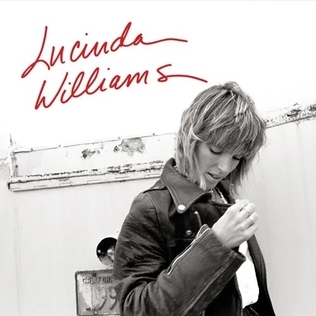
At the same time, a friend of mine called La opened a restaurant in New Farm. On the side wall of the restaurant, she had hung a large album poster of Lucinda Williams, which always reminded me of La herself.

Apart from "Passionate Kisses", I didn't really seek out or hear any more of her music, until the album, "Car Wheels on a Gravel Road" (her fifth), was released in 1998.

At the time, I subscribed to the monthly magazine "Uncut", which published a free compilation CD with every issue. The February 1, 1999 issue contained two songs which I love to this day. One was Lucinda's "Metal Firecracker", and the other was Cotton Mather's "My Before and After" (see and listen to the soundtrack below).

"Metal Firecracker" led me to the "Car Wheels" album, with which I'm still obsessed. So, it was inevitable that I would want to read this memoir, the name of which derives from the lyrics for "Metal Firecracker".

"Did You Have a Rough Childhood?"

Before Lucinda started writing her memoir, an older gentleman in a bar in New York advised her, "Don't write about your childhood. Nobody wants to read about that. Just write about your music. Just pick a part of your career to write about."

In contrast, after a show in Minneapolis, a woman asked her, "Did you have a rough childhood?" She nodded her head. The woman replied, "I thought so."

The second line of enquiry proved to be the more compelling foundation of her memoir, although in reality she pursued both lines.

The memoir is more or less chronological, starting with her birth on January 26, 1953 in Lake Charles, Louisiana. There are thumbnail sketches of her parents and grand-parents, whom she describes as working class:

"My mother told me that when she was a kid, her family didn't have plumbing and they used newspapers for wallpaper and insulation. They were all working-class and didn't care about school or going to college."

Nevertheless, both of her parents found their way to college, partly because of their respect for words and writing.

Both of her grandfathers were Methodist preachers, who moved from church to church, and community to community. This was the beginning of an itinerant lifestyle.

Her paternal grandfather, Ernest, was "a progressive minister, a social democrat...He became a radical Christian, in favour of unions and supporting the poor as much as possible." She describes him as "a Christian liberal badass kid living in the country".

Her father, Miller Williams, was first a scientist and then a poet, who was "always scrambling around for teaching jobs". He eventually became "a poet and a beatnik college professor", who co-founded and taught an MFA program at the University of Arkansas in Fayetteville. He would become a mentor for Lu, and a major influence on her song-writing.

Lu's mother suffered from mental illness, which destabilised and inevitably split their family:

"Yes, my family was dysfunctional, fucked up. But that's not what matters to me. What matters is that I inherited my musical talent from my mother and my writing ability from my father."
description
Source:

"Something About What Happens When We Talk"

Lu also name-checks her literary and musical influences:

"Sometimes I wish I could be more intellectually savvy in my songwriting, the way Bob Dylan is. But all I can do is write about my feelings and the world's feelings, and I think maybe this is what makes my music unique. It borrows from southern gothic elements and blues and folk and rock."

Lu explains her relationships and the source of her lyrics like this:

"I've been called an 'erotic' writer. I don't disagree, but even though I had plenty of sex when I was younger, I was never promiscuous. I always had partners. Some of them didn't last that long, but I wasn't sleeping around willy-nilly. The brain is the real erogenous zone, at least for me, so I have to connect with somebody intellectually and almost spiritually, and that rarely happens immediately...Very often a good conversation is more memorable than fucking...

"As I was growing into a fully-fledged woman, I began to be attracted to a certain kind of man, and I would maintain that kind of attraction for the rest of my adult life. The way I've often described this kind of man is that he would be a 'poet on a motorcycle'. These were men who could think very deeply and could have very deep feelings, but there was also a kind of blue-collar roughneck quality to them."


"Right in Time"

Lu recounts her dealings with record company executives who declined to sign her up, because her music was supposedly "too country for rock, and too rock for country". Although she doesn't like the term, she was a natural fit for the alt-country, Americana genre, which was emerging at the same time. It took the British punk label, Rough Trade, to give her a record deal.

Later, her A&R person at RCA asked her who she would like to produce her next album. When she replied "Bob Johnston" (the producer of Bob Dylan's album, "Blonde on Blonde"), he asked, "Who is Bob Johnston?" When she mentioned that he produced "Blonde on Blonde", he responded, "What's 'Blonde on Blonde'? Is that a new band?"

Needless to say, that relationship didn't last long.

Production also became a divisive issue with respect to the next album, which was to be "Car Wheels on a Gravel Road". Lu completed the mix of a full album with her long-time guitarist and producer, Gurf Morlix, only to speculate about recording alternative versions of a couple of songs at another studio. Gurf took offence at this suggestion. When it became apparent from the sessions that all of the songs were going to be recut, Gurf walked out of the project and his business relationship with Lu. Lu deals sensitively with the end of this relationship, as she does with the many relationships mentioned in the memoir.

"Car Wheels" was eventually released in 1998, six years after Lu's previous album, "Sweet Old World". It won a Grammy for Best Contemporary Folk Album. Bootlegs of the Gurf Morlix version are available, but I haven't been able to track one down yet.

"2 Kool 2 Be 4-Gotten"

Throughout the memoir, Lu reveals the extent to which various songs were based on actual relationships. However, she also divulges details of her song-writing process, part of which involves an element of fictionalisation of her relationships:

"When I'm writing a song, I let my head go where it wants to go. Much of the process is stream of consciousness. I don't want to say I don't know how it happens, but it's almost impossible to put into words my process for writing songs. I don't always know where the songs come from and I almost never know where they are going. I put a tremendous amount of rigour into my work and then I let instinct make the decisions.

"I don't just sit down with a blank sheet of paper and start at the beginning. I have all these references and notes that I carry around with me all the time, in a briefcase, and I might use them at any time. So something that might have gone into one song can end up in another song. Little snippets of things mix together in what becomes a song. I still carry this briefcase with me everywhere I go."

"Trying to Prove That My Conclusions Should (Not) Be More Drastic"

This memoir is a must-read for any fans of Lucinda Williams' music or anybody who's interested in learning more about the inspiration behind it.

If you're not sure, listen to the soundtrack below, or get a copy of "Car Wheels". Sometimes, she sounds like a cross between "Broken English"-era Marianne Faithfull and Chrissy Hynde.


SOUNDTRACK:
Profile Image for Amy White.
49 reviews1 follower
March 24, 2023
In no-nonsense straightforward prose Lucinda Williams shares the details of her life. Her story begins with a difficult, often uprooted, childhood that took her family to places like Baton Rouge, Mexico City, New Orleans, Jackson and Fayetteville, Arkansas. It's hard not to get the feeling that Williams pretty much raised herself while her father, the acclaimed poet Miller Williams, pursued his career and hosted parties for the literati and her mother struggled with mental illness. What's striking is the gentleness that Williams approaches the subject of those tumultuous years that left her without even a high school diploma. There is no bitterness or blame that she lays at anyone's feet and instead she makes clear how hard she has worked to live her life and create her music on her own terms.

It is a story of tenacity and complete dedication to her music. Williams did not "make it" in music until she was over forty years old. I'm sure those preceding twenty years would have broken almost any other musician. Instead she is very matter of fact about the struggle:

The fact that I was still working at taco joints and record stores well into my thirties didn't bother me at all. My parents had flaws but they allowed me to persevere and grow. I grew up believing I could do anything if I was determined enough, even though I didn't even have a high school degree.

There is no pretentiousness or name dropping in this book, just grit. I was happy to learn that two songs I really like: "Righteously" which I discovered through an Anna Ash cover and "Passionate Kisses" that earned Mary Chapin Carpenter a Grammy award for performance and Williams a Grammy for songwriting, were both written by Lucinda Williams. I enjoyed reading this book that I received through a Goodreads giveaway and then diving into her discography on Spotify with a deeper appreciation for the meaning behind the lyrics.
Profile Image for Karyn.
294 reviews
May 15, 2023
A good memoir by Lucinda Williams, but her music is really her medium for revealing herself.
By the way, I do love her music.
Profile Image for Kristine .
1,003 reviews326 followers
December 17, 2023
I recently discovered Lucinda Williams Music and have really been drawn to it. She has a unique style of country, folk, and Rock. Her heart is really in her songs, so was interested to hear her memoir. It was a bit of a letdown for me. It covers her difficult childhood, as her Mom was mentally ill, but also stifled with her creative endeavors. She also moved a tremendous amount. So, hearing about the background of some of the songs was interesting, but wish there was more there. I think Lucinda Williams talent lies in telling her truth through her songs. Those are more powerful to me.
Profile Image for Moony Eliver.
434 reviews232 followers
January 5, 2024
I'm an ardent fan of Lucinda Williams' music, and I loved getting insight into the progression of her life/career, as well as into the stories and meaning behind a lot of her songs. Additionally, there was a handful of food-for-thought moments that resonated for me personally. Tbh I've come to expect this from a memoir that's well written, by someone who's examined their own experiences, strengths, flaws, beliefs, and reactions. (And if someone hasn't done this reflection, no one should publish their book because it'll be shit.)

It's nearly ubiquitous in celebrity memoirs to have a few indulgent passages. It's evidently difficult to adhere to an arc or theme, without pauses for the desultory journal-entry-but-make-it-public, and this one wasn't an exception. There were a few times I thought, "You're talking to X, knowing full well he'll read it, do I really have to be here for this." I'm not going to say those aren't voyeuristically appealing sometimes, but objectively they don't make it a better book. Thanks for coming to my TED talk.

So, if you are familiar with and fond of Lucinda's work, you'll find a lot to like here. But my rec becomes more dubious if you like your memoirs to be literary works of art that stand on their own.
3+ stars.

Profile Image for Becky.
749 reviews154 followers
April 25, 2023
This was a short, straight forward & at times very emotional memoir by Lucinda & also narrated by her, which was awesome.
She covers a lot of her early childhood, some of her parent's upbringings & her mother's mental health issues & also some parts of various forms of abuse.
Told in a very straight forward way, but yet under that demeanor & with her own words we get glimpses of the woman who is funny & sensitive & intelligent & of course an amazing songwriter.
She also touches on how record industry people treat female artists compared to male artists- seems to be a little better ( maybe) but a continuing issue & lack of respect.
There were moments where I choked up a little as some parts hit close to home for me & other parts made me laugh or smile.

I am so glad we have seen her perform live & hope to so so again.

Can't wait for her new music to come out in June 2023.
Profile Image for Deborah.
1,622 reviews83 followers
May 3, 2023
I’m a big fan of Lucinda Williams’ music (her Car Wheels on a Gravel Road was the first CD I ever owned) but I knew relatively little about her life. This book filled me in for sure. Williams talks candidly about her mother’s mental illness, her family’s bouncing from pillar to post (12 moves in 18 years) as her writer father tried to make his way in academia. She talks about her musical influences and, most interestingly for a fan, what went on in her life that inspired the lyrics in her songs. I had no idea that she spent decades working in music, starting as a high school dropout, busking, singing in tiny places for maybe $10 or $15 a night, but supported herself well into her 30s working retail in places like health food stores and record shops and, one of the jobs she spends time describing, doling out gourmet sausage on toothpicks in grocery stores, until she had her breakthrough in her 40s and could finally make a living from music alone. One of the reasons she struggled so to get major labels interested in her music was because she was hard to categorize; her music was over and over again called “too rock for country” or “too country for rock.” I listened to Williams’ own narration of this memoir and developed a lot of affection for her southern but hard-to-pin-down accent (remember all those places she grew up in). And of course I was inspired to once again spend a lot of time listening to her music, with a new appreciation for what drove her to write the songs. Sheer pleasure.
Profile Image for Ed.
Author 68 books2,712 followers
November 6, 2023
I enjoyed seeing Lucinda Williams play as the opening act for Tom Petty in 1999 or 2000. Her gnarly, entertaining memoir is a short read. The best parts are where she writes about her music, friends, and father, the poet Miller Williams. She's written powerful song lyrics and given us her honest singing. How can you not admire and like her?
Profile Image for Jennifer.
235 reviews27 followers
March 9, 2023
I received this as an eGalley from NetGalley.

I love a memoir- even better when the memoir is actually well written and full of lots of interesting details and heart. ❤️
Profile Image for Karyn.
48 reviews29 followers
July 28, 2023
I am a huge fan of Lucinda Williams and I loved this, the best memoir I've read so far this year!
Profile Image for Kat Saunders.
311 reviews13 followers
May 17, 2023
I've been a fan of Lucinda's since my dad took me to see her play a solo acoustic show at Stuart's Opera House in Nelsonville, Ohio, in February 2011. It was a life-changing night--one of the most fun nights I've ever had with my dad, actually--so it seems fitting that one of the main currents grounding Williams's long-awaited memoir is her relationship with her father, the late poet laureate Miller Williams. She acknowledges that he was not a perfect man (and a reasonable reader should squirm when you learn that Lucinda's "Momma J" was her father's former student, just a few years older than Lucinda when she married Miller). Still, Lucinda allows her father to be a complicated man, acknowledging that despite their close, loving relationship, aspects of her childhood continue to haunt into her seventies, and her mother is not solely to blame.

There's a certain one-star review on here, and frankly, I can't imagine how someone who actually read this book could have arrived at the same conclusions. People are free to like/dislike books, but when a critique isn't actually based on the text, then a review becomes misleading (and frankly, this person seems to have some sort of "personal" issue with Lucinda). Let's break it down a little.

"Lucinda casts her mother as the villain in this story." It's clear--and Lucinda says it outright--that she was much closer to her father. For all his own faults (although I'm not sure how the term pseudointellectual applies to him, as this reviewer writes), it's a simple fact that he's the more stable parent, which is not the same thing as a perfect parent. In fact, I see Lucinda writing about her mother with a lot of compassion and empathy. She draws a stark comparison to intentionally point out just what a difference it makes when a child grows up in a home where creativity and artistic pursuits are encouraged. She discusses the horrific sexual abuse her mother endured (but never confided to Lucinda), and connects her mother's upbringing to her mental health issues, self-medication with alcohol, and emotional unavailability. Lucinda might not have understood this all at the time, but she has these insights now.

I don't see any resentment. In fact, toward the end of the book, she describes doing therapy, specifically a visualization exercise designed to help heal the inner child. Lucinda might be in her seventies--still impacted by childhood trauma--but she also recognizes the ways in which her mother was dealt an absolute shitty hand during a time when people didn't know enough about how to treat survivors of abuse who struggled with mental illness, especially when admitting sexual abuse would have been completely taboo in her mother's community.

From the way this reviewer writes, you'd almost expect this to be a take-down of her mother. The reality is very different; once we move beyond Lucinda's adolescence, her mother sort of haunts the rest of the pages, which feels apt. We move throughout time, to various places, to various love affairs, stopping to describe how her experiences shaped her songs and motivated her to craft her sound. I appreciated learning about the origins of some of my favorite songs, and her analysis of how women are labeled "difficult" or "crazy" while men get to be quirky geniuses.

Many will praise this book for its loose, conversational style. I was honestly a little disappointed that the poetry I expect to see in her writing was toned down. She's a great storyteller, but I was hoping for more lyrical writing. I suppose she wanted to create a contrast between her prose and her songs, but she's clearly a more comfortable, stronger songwriter--which, to be fair, is exactly what I'd expect.

I was disappointed to see her let Ryan Adams off the hook. Why go there at all if you're not going to make a strong statement? There are a couple of other instances where I found her stances on things to be slightly wishy-washy, or like they came off as a little . . . "well-meaning, 70-something, Progressive white lady," but there's nothing offensive in these pages, and the post-script reveals that she is still continuing to work to improve herself and understand where she came from.

I probably would not recommend this to people who aren't interested in her music, but it was a fast, enjoyable read.
Profile Image for Jan.
1,330 reviews29 followers
October 28, 2024
I like some of Williams’ songs but am by no means a super fan…to the point that I didn’t realize that the book’s title is also the name of one of her songs. Still, I loved this memoir, particularly her stories of growing up with a mentally ill mother and poet/professor father, and of fiercely honoring her musical vision in an industry that has frequently been hostile to iconoclastic female artists. Williams’ distinctive voice and accent make for a standout audiobook.
Profile Image for Monica.
Author 6 books36 followers
May 17, 2023
SO GOOD. In fact, the more I read this book, the less I liked Viv Albertine’s book in comparison. Williams’s memoir is engaging to read, telling the stories that inspired her songs. I’ve lived several of the places that she has, which made much of this especially resonate. But what I most appreciate is how self-reflecting this book is (which is in stark contrast to Albertine’s book, which is a big part of what makes her book so pale in comparison to this one).
41 reviews
April 27, 2023
Lucinda Williams’ mother lived in the very worst environment for an intelligent girl and woman: trapped in an ignorant, poor, violent, and religious fundamentalist “family”, trapped in a pre-women’s rights and pre-disability rights America, and trapped in a marriage to a pseudointellectual “professor” who was unwilling to understand and, I suspect, incapable of understanding what his wife had endured, what she needed from him, and what she would have to do for herself in order to survive a life that would always endanger her. Despite all of that, Lucinda Williams has cast her mother as the villain in this story. The scope and depth of Williams’ cruelty, self-absorption, and detachment from common sense was no surprise, since she has unleashed much of it already in interviews about her background and “art”. But, this book, published near the end of her life and career, was Williams’ chance to provide a comprehensive and final account of her life and life history, and she’s blown it. Unlike her mother, who merely wanted to create art, not harness its utility as a weapon, Williams finds no intrinsic joy in performing nor appreciates how human suffering and injustice may be transformed by the act of performing. I doubt a more soulless, pitiful, or unimaginative memoir has ever been written by a highly celebrated musician. That said, it drove home two points often missing from discussions about the value of monetized creative work:

1) Depending on what your creative work does - which people, ideas, and systems it promotes - the creator can go very, very far on little or no talent.

2) The creator who “succeeds” - whose creations make a lot of money and garner a lot of prestige and attention - can be MORE vindictive and self-limiting than the creators who “fail” or who, like Williams’ mother, never had the chance to strive for success.
Profile Image for Steve.
904 reviews280 followers
May 20, 2023
Pretty good rock autobiography by an artist who seems to be incapable of producing a bad or even mediocre album. To anyone who has listened to Williams, it probably comes as no surprise that her songs are about her or people she knows. Her composition method is interesting in that it might take her 10 to 15 years to complete a song. That said, she can sure write a good one. Overall Williams strikes this reader as someone who, until recently anyway, has led a sad life. The daughter of a poetry professor and a mentally ill alcoholic mother, Williams had little in the way of parental supervision. She was always a bit of a rebel, but still, "do whatever" seems like a form of child abuse. But, after years of therapy, Williams doesn't seem bitter. She loved her father, and felt mostly sorry for her mother (a victim of sexual abuse). Williams having zero interest in having kids doesn't come as a surprise. Her love life has been mostly a series of wrecks on the highway, with Williams' penchant for bad boy (often considerably younger) "poets on motorcycles." She does eventually find stability in her marriage to Tom Overby, a music executive for Best Buy, and eventual manager for Williams. As is usually the case, you can only so far with bones of one's life before hitting the substance of those remarkable songs and albums. But Williams does a good job taking you through their evolution without ever boring and weighed down my musical shop-talk. On several occasions throughout the book she provides context and background, and then the entire lyrics of the song. I thought that very effective, making you want to go listen the song again. She's one of our greatest songwriters, so this book is something of a gift to her fans, and probably a bit more therapy for Lucinda.
Profile Image for Bryn Lerud.
840 reviews27 followers
November 30, 2023
This is such a beautiful book. Lucinda is a poet. Her songs tell the story of her life. She moved around as a child, her father trying to be a professor of poetry and her mentally ill mother. She is a southerner and works to combat the image of the dumb, racist southerner. She talks about her friends whose lives have been destroyed by alcohol and sexual abuse. You can tell she’s been in therapy her whole life. The book is very psychological. It’s also full of love and forgiveness. Really beautiful.
Profile Image for Bruce Raterink.
847 reviews32 followers
April 19, 2023
Already a big fan of her music, now Lucinda Williams has helped me understand the woman behind the songs. Wonderfully detailed, and evenly split between what was going on in her life, her creative process, and her struggle to finally be heard. Highly recommended

Thank you to NetGalley and Crown publishing for an advanced reader copy.
Profile Image for Nina.
Author 13 books83 followers
Read
December 18, 2023
A thoroughly engaging read, and a trip down memory lane.
Profile Image for Erik.
983 reviews9 followers
June 6, 2023
Lucinda Williams is as interesting of a person as she is as a musician. What a life! So very glad I read this one!
13 reviews
April 25, 2023
More more more!

I could read Lucinda’s work, on the page or on stereo, for the rest of my life. I can’t wait to hear or read what’s next.
122 reviews2 followers
October 5, 2023
I liked this book - but wouldn’t put it in my list of best rock autobiographies. Three stars out of 5 on the Keith Richards scale. It holds your attention, she’s a great singer/songwriter and is very honest but at the end of the day perhaps not all lives - even those of outlaw musicians - don’t make for gripping tales.
Profile Image for Mark Lieberman.
Author 3 books10 followers
November 8, 2023
When I saw this book as an upcoming release a few weeks ago, I immediately threw it in my Amazon Wishlist (I use it to keep track of books I want to read). I do have a few of her songs on my iPhone playlist. One of them is called Are You Alright, and one day a long time ago, I was driving, and the road was slick due to rain and the car in front of me stopped at a green light. I ended up sliding and facing the wrong way on the other side of the street, and guess what song came on just then? Yes, it was indeed, Are You Alright! I was like, yes Lucinda, I am OK!

I didn’t realize that she didn’t hit it big time till her 40’s; it shows that her tenacity to keep on playing despite no record contracts paid off. A lot of people helped her along the way.

I also didn’t know anything about her family; like her father was a poet and a writer, and her paternal grandfather was a minister. You can kind of see from that where she gets her songwriting influence from.

Unlike a lot of the books I have read this year, where the person telling the story has been raised by their mother, Lucinda was raised by her father as her mother was in the picture, but had a lot of mental health issues.
Profile Image for Gary Anderson.
Author 0 books102 followers
Read
April 28, 2023
Although I respect Lucinda Williams, I came to this book mostly because I was privileged to spend some time with her dad, poet Miller Williams. (He was the presidential inauguration poet for Bill Clinton’s second swearing-in.) I wasn’t disappointed because Miller is a significant presence in this memoir. Lucinda Williams tells the story of her fractured childhood with honesty and insights, and her dad is definitely a part of all that went down. As Lucinda pursues her art, she brings the same candor to how she lived her life and developed relationships. There isn’t as much about her songwriting here as I hoped would be discussed. The songs just seem to appear, and maybe that’s how it feels to her. It’s good to read about someone who lived a hard life but in her later years seems to have found ways to be at peace. Still, my favorite parts were when Miller Williams poked his head into Lucinda’s narrative.
Profile Image for Gina.
2,077 reviews72 followers
December 12, 2023
Lucinda Williams and her father Miller Williams play a side character role at two very important times in my life. For example, I saw LW at the House of Blues in New Orleans on the weekend I met my husband. So, of course I read this. This book reads like the punchline to a story without the details. This happened, this happened, this happened, and then this happened. For a memoir, 272 pages for 70 years, it feels like a lot of important details are missing. I liked some of the brief insight into where a few of her songs come from, but if you really want to know more about her, listen to her music.
Displaying 1 - 30 of 545 reviews

Can't find what you're looking for?

Get help and learn more about the design.