Learn to cook authentic Japanese food from scratch at home, with step by step recipes for the traditional classics like ramen noodles, broth, sushi rice or homemade tofu as well as recipes for more contemporary fusion dishes. Maori takes you to the heart of today's Japanese family home cooking, sharing the recipes she learned while she watched her own mother and grandmother cook.
Maori Murota grew up in Tokyo and was inspired to write this book by her mother’s cooking and memories of growing up in Tokyo, cooking at home, eating out. Her mission is to demystify Japanese food, to make it accessible and understood by anyone and everyone interested in learning about a food culture and eating well. Maori left Japan when she was 17 to live in New York, and also spent time in Indonesia. In 2003 she settled in Paris, where she worked as a stylist, before exchanging the world of fashion for food in 2009. Completely self-taught, Maori became chef at Parisian restaurants D\o and Bento at La Conserverie. Now an event caterer and private chef, she also gives classes in authentic Japanese home cooking.
This cookbook looks most promising. Most promising.
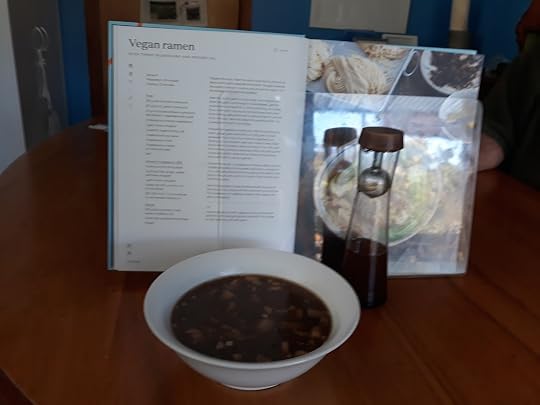
Last night I made a variation of the Vegan Ramen. I used chicken stock (because that is what I had) & only one kind of mushroom. The flavour was so good & intense that next time I will make an effort to get hold of dried shitake mushrooms to deepen the flavour further.
But I followed the recipe exactly for the Negiabura (Infused Oil) It was perfect. Very spicy & full of flavour. We have plenty left over, so we may buy tofu today & use it as a marinade.
And last night we had another superb meal inspired by this book! Soba Salad (pg 36)We had a few differences. A basic one is that we couldn't get soba noodles in our little town. Or Jerusalaem artichokes. But I made the sauce exactly. The base ingredient was peanut butter & the depth of flavour was astounding! My husband has used the leftover sauce as a marinade for pork burgers tonight - & the aromas are making me drool!
Last night I made Mabo-Doufu (Tofu in a Spicy Sauce) Pg 360
It was spicy alright! It was right on the edge of what my husband could tolerate, so when I make it again I will halve the Szechuan peppers. Also my hand slipped when adding the mirin, so the balance was wrong. (my husband disagrees - other than the meal was too spicy he loved it) As a side note, the silken tofu was a revelation - far nicer than the grim blocks we usually buy that are inedible without a marinade. & it was my first time eating Shitake mushrooms. They had an interesting texture - slightly rubbery.
One of my sisters & her partner came for the weekend. They are near vegetarians, so this was the perfect cookbook to turn to.
I made Eggplant & Capsicum Spaghetti with Miso Paste Sauce Pg 114
This would have been beautiful but I cooked too much spaghetti, so it diluted the sauce! The next day, I made a second lot of sauce & it was way nicer.
This was accompanied by Avocado & Nori salad with Sesame Oil Pg 155
This is my new favourite avocado salad - nori & avocado complement each other perfectly! I loved it so much I made it again the next day. The only (accidental) improvement I made the first time was added the toasted sesame seeds to the salad rather than to the dressing - much easier!
& I have just finished making up a Japanese ingredients shopping list for the next time I am in a larger town!
I loved everything about this book. (ok, the cover I only liked. Other editions have a cover that appeals to me more.) But I loved the photos, the layout, the translation, &, above all, the recipes I tried. The biggest surprise is how much my husband has enjoyed the cuisine - once he got to try something other than sushi!(which he has always hated)
I'm taking it back to the library, but I will certainly be borrowing this book again many, many times!
If you are fond of Japanese food and are keen on preparing dishes from scratch, this is a perfect cookbook for you. This would also be a book I'd want in my arsenal in the unlikely event there's an apocalypse. I'd barter for ingredients I didn't grow myself to make all these delicious foods that would no longer be readily available (who else thinks about stuff like this? I doubt I am alone...).
Kudos to whomever made the decision to have this volume by Maori Murota, which was originally published in French, translated into English. I adored so much about this book: how the recipes showcase shapes and textures; the abundance of color photos of finished dishes; the warm, conspicuous elegance of the design and layout; the pictorials showing the steps to make tofu, onigiri, futomaki, udon, ramen, buns and gyoza wrappers; the inclusion of instructions for how to make vegan versions of many of the dishes, like sashimi salad, kara-age and mabo-doufu; and the super cool chapter on deserts.
There were helpful tips following recipes sprinkled throughout but no headers for recipes, perhaps that is common in French cookbooks, but unless you already know the dish by it's Japanese name, you'll have to figure it out by reading the recipe or checking google. This recipe book is best for cooks with some experience but it'd also be great for Japanophiles who want to learn about Japanese cuisine.
This is one of several Japanese cook books my husband and I are trying out to expand our Japanese home cooking skills. So far we have tried seven recipes. I would say that three were very good: chimaki, ikameshi (these first two were the big successes as far as expanding our repertoire), and pork gyoza (this was very similar to the recipe my husband's family uses); three were pretty good or fine: chestnut & ginger rice (wasn't bad but probably won't make again), curry (my husband says he still prefers the blocks...but it was good to see that we could make it on our own too! haha), and the steamed nut cake (I didn't have the correct sugar on hand, and I think that affected my final results, and vinegar in cake is new to me too...it was interesting but not bad! Will try making it again.); and one recipe that really missed the mark for us: mabo-doufu (this is another one that my husband usually uses the "semi-homemade" method for making, and the book's version was unrecognizable as a home-cooked version of that dish.) Overall, we were pleased with what we've been able to take away from this cookbook. The recipes are generally straightforward, and the skill level was a gentle stretch from our usual Japanese cooking. We did already have the majority of the more speciality pantry ingredients on hand, though it did introduce us to a couple new ones too (dried shiitake!). The book is beautiful to look at too, though I did notice a handful of translation and/or editing errors (it was originally published in French), where the type of pot being used changed mid-recipe or an ingredient name wasn't quite right. A major one was a recipe calling for cornflour which clearly meant cornstarch. I guess cornflour in the UK = cornstarch in the US, but since the publisher is based in the US, I think it was probably an error. Anyway, just keep an eye out for that!
As someone who is an eager consumer of a variety of world cuisines but a somewhat cautious cook, I’ve been looking for ways to gradually expand my culinary repertoire outside of my kitchen comfort zone.
Maori Murota’s Japanese Home Cooking (published in the US as Simply Japanese) promises to ‘demystify Japanese food, to make it accessible and understood by anyone and everyone’. With 100 step-by-step recipes, many of which are plant-based and vegan friendly, Murota’s latest book offers to teach readers how to cook authentic Japanese food from scratch at home. From classics such as donburi and miso soup, to more unfamiliar and elaborate dishes such as oyaki (grilled vegetable dumplings) and dorayaki (red bean pancakes), Murota shares the recipes she learned while watching her own mother and grandmother cook.
My husband and I decided to have a go at ganmodoki (fried tofu dumplings). Like many people who live outside of a city, we don’t have a handy Asian supermarket just down the road, which can make following some recipes a bit of a challenge. If the local Tesco doesn’t have it, we struggle to get it! So, when I read that the ganmodoki required both dried seaweed and mirin, I was a little worried. Fortunately, Tesco came up trumps on both, although some tips on alternatives for these more unusual or hard-to-find ingredients would have been helpful.
The ganmodoki recipe was easy to follow and we were aided by nice clear colour photography (there’s photographs accompanying all of the recipes) and step-by-step instructions. Although our ganmodoki didn’t come out quite as elegant as in the picture (tip: when it says you need ‘firm tofu’, it really does mean firm so make sure it’s thoroughly drained before using), they tasted great, and we got the satisfaction of making and eating something at home that we’d only previously encountered in a restaurant. And whilst they did take a little longer than the suggested 15 minutes prep time and 7 minutes cook time, this was mainly because we’d forgotten to drain our tofu before beginning.
Although we’ve not yet had the opportunity to try out any of the other recipes in Japanese Home Cooking, there are lots of dishes that I’m eager to have a go at. Nikuman and yasaiman (pork buns and vegetable buns) are amongst my favourite dishes but I’ve never had the courage to give them a go at home. With Murota’s clear instructions, however, I think they might make for some fun weekend cooking.
Murota also includes recipes that, although they might seem like a palaver to begin with, will save you time in the long run such as mentsuyu (homemade noodle sauce), as well as advice on choosing between different types of miso paste, filleting fish for some of the recipes, and preparing Japanese tea. There’s also a handy section at the back on utensils and ingredients.
As you might expect, some specialist equipment is required for some of the recipes (such as bamboo steamer for the nikuman and yasaiman, and a makisu for making maki) but you can get by with a few basics. We managed fine cooking the ganmondoki in a sauté pan. The same goes for ingredients. As with any new cuisine, there are some basic stocks, sauces, and herbs that are essential so there will be an initial cost to preparing your cupboard for Japanese Home Cooking. Cook Japanese cuisine often, however, and you’ll find many of the same ingredients listed again and again. Plus, as Murota notes, many of the same staple ingredients are used in Chinese and Korean food.
Overall Japanese Home Cooking does exactly what it says on the tin. If you’re already familiar with Japanese food – and cooking it regularly at home – then you might not find much here that you don’t already know about. For those who have previously only ever eaten Japanese cuisine as pre-prepared meals or at restaurants, however, this is a great introduction to Japanese home cooking, with a range of recipes to suit every taste. I’ll definitely be adding it to my cookbook shelf and slotting some of these recipes into my repertoire going forwards!
NB: This review appears on my blog at https://theshelfofunreadbooks.wordpre... as part of the blog tour for the book. My thanks go to the publisher for providing a copy in return for an honest and unbiased review.
If you’ve ever wanted to recreate the flavors of Japanese cuisine in your own kitchen, this book is your gateway to success.
In her stunning hardcover cookbook, Maori Murota shares an array of “everyday” recipes that range from iconic dishes like sushi and ramen to her own unique creations. The collection also explores the art of Japanese tea and sweets.
Murota thoughtfully breaks down fundamental techniques and staples, ensuring even beginners can confidently prepare dishes from scratch. You’ll master essentials like cooking rice, making miso paste, preparing dashi stock, crafting udon noodles, fermenting vegetables, and even creating gyoza dough.
While many recipes focus on fish or meat, vegetarians will also find options to enjoy.
The book skips lengthy introductions and dives straight into the recipes, presented in a simple, easy-to-follow format. With gorgeous photography, including step-by-step visuals for certain techniques, this book is both inspiring and practical.
A perfect gift for Japanese food lovers and home cooks alike, this cookbook is a celebration of tradition and flavor
Authentic Japanese dishes remain somewhat hard to find and the Americanized versions are, well Americanized. This book has delightful dishes with regional Japanese flavors. Lots for vegetarians to enjoy.
Probably not one of my favourite Japanese cook books (mainly because there is a lot of fish and we are a fish free household) but still good stuff in here. I did love was the tea section!
The photos are beautiful, the recipes are interesting. I haven't heard of many of them, (aside from ramen :) ) I am eager to try my hand at these though, so all around this one's a winner.
Visually this is a beautiful book. The photographs are wonderful and it's beautifully set out. Unfortunately I only had access to the e-book which wasn't very user friendly for a cook book but I did my best!
I was really keen to read this book as I have recently started getting into Japanese food. We often cook with many of the ingredients in the book like shiitake, tofu, seaweed and miso, but don't tend to follow recipes so I was keen to see some authentic recipes and learn more about the techniques. Me and Mr GRB are keen and confident cooks and we are vegan, so it was great to see a book with so many vegan recipes and options.
Sadly, I haven't had the time to be able to try out any of the recipes yet due to life becoming very hectic, but I have had a good look at them. Some of the recipes are quite involved and have several steps including overnight marinating, but others are quick and easy, so there is a good range and something for everyone. I think it's probably aimed more at people who are relatively confident cooks as it might be a bit daunting for a novice. There are recipes for making things from scratch such as noodles, gyoza, condiments and miso. There are sections on seaweed, utensils, fermenting and preserving and some lovely snapshots of the author's life. I enjoyed reading about her time in France and Japan and exploring the markets and learning about seaweed.
There are some really tasty sounding vegan recipes like vegan ramen with three mushrooms and infused oil, Japanese risotto with miso paste and tofu with spicy sauce. I will definitely be trying these and more as soon as possible. I am definitely keen to try making my own miso paste and it was really interesting to read about the different types and their uses.
I highly recommend this book to anyone with a taste for Japanese food who wants to learn more and pick up some useful tips and techniques. It's high quality with a fabulous range of recipes.
This book has opened a whole new world of food for me and left me wanting to try so many of the recipes.
Each recipe is accompanied by a tasty looking image of the finished product. I have always wanted to try making a Bento box. I also love the idea the Japanese have of waste not, want not, so if it can be used or incorporated into a meal they will use it.
Easy to understand with vegan options available.
Many thanks to Random Things Tours for my tour spot.