

What do you think?

Bliss Montage
What happens when fantasy tears through the screen of the everyday to wake us up? Could that waking be our end?
In Bliss Montage, Ling Ma brings us eight wildly different tales of people making their way through the madness and reality of our collective delusions: love and loneliness, connection and possession, friendship, motherhood, the idea of home. From a woman who lives in a house with all of her ex-boyfriends, to a toxic friendship built around a drug that makes you invisible, to an ancient ritual that might heal you of anything if you bury yourself alive, these and other scenarios reveal that the outlandish and the everyday are shockingly, deceptively, heartbreakingly similar.
In Bliss Montage, Ling Ma brings us eight wildly different tales of people making their way through the madness and reality of our collective delusions: love and loneliness, connection and possession, friendship, motherhood, the idea of home. From a woman who lives in a house with all of her ex-boyfriends, to a toxic friendship built around a drug that makes you invisible, to an ancient ritual that might heal you of anything if you bury yourself alive, these and other scenarios reveal that the outlandish and the everyday are shockingly, deceptively, heartbreakingly similar.
240 pages, Paperback
First published September 13, 2022
About the author
Ling Ma
2 books3,558 followersLing Ma is a writer hailing from Fujian, Utah, and Kansas. She is author of the novel SEVERANCE, and the story collection BLISS MONTAGE. She lives in Chicago with her family.
Ratings & Reviews
Friends & Following
Create a free account to discover what your friends think of this book!
Community Reviews
Displaying 1 - 30 of 5,401 reviews

July 7, 2022
i love ling ma and i want to kiss her on the face but that seems like a pretty major overstep so instead i'll just read everything she writes.
mini reviews for each story like i always do for collections when my weary brain allows me!
STORY 1: LOS ANGELES
immediately i don't think i can review every one of these. this was too one of a kind, too striking, i'm speechless, and i have to do this EVERY TIME?!
about to give up already.
rating: 4.25
STORY 2: ORANGES
cover story. basically.
this doesn't have the same fervent originality as the first one but it's even more immersive and suffocating.
rating: 4
STORY 3: G
this allegory is so satisfying (if a little clichéd) it's like having a treat.
rating: 4
STORY 4: YETI LOVEMAKING
HELLO ANOTHER BEAUTIFUL METAPHOR THIS ONE NOT CLICHED AT ALL!!!!!
rating: 4.25
STORY 5: RETURNING
AHHHHHHHHHHH!!!
i don't want this book to end ever.
a story about books and the themes of books and it has the themes and also more themes and also also also...
rating: 4.5
STORY 6: UNIVERSITY
hmmmmmm.
fun recurring theme becoming apparent of the complexity of desire (i.e., a sense of dissatisfaction too elaborate to pin on any one thing) making happiness impossible in modern life.
rating: 4
STORY 8: PEKING DUCK
these are just so rich.
rating: 4
STORY 9: TOMORROW
whoa.
rating: 4
OVERALL
brilliant and incisive, more knowing and intuitive on the subject of being young and getting older in the 21st century than just about anything i've ever read. i know i'm going to return to this one, countless times mentally and more than once for a reread.
significantly better than the sum of its parts, and the parts are damn good.
rating: 5
--------------------
tbr review
things i am willing to do in order to receive this book:
- be nice (or try to be)
- think about it a lot
- ...
- say please and thank you?
it worked. thanks to netgalley for the copy.
mini reviews for each story like i always do for collections when my weary brain allows me!
STORY 1: LOS ANGELES
immediately i don't think i can review every one of these. this was too one of a kind, too striking, i'm speechless, and i have to do this EVERY TIME?!
about to give up already.
rating: 4.25
STORY 2: ORANGES
cover story. basically.
this doesn't have the same fervent originality as the first one but it's even more immersive and suffocating.
rating: 4
STORY 3: G
this allegory is so satisfying (if a little clichéd) it's like having a treat.
rating: 4
STORY 4: YETI LOVEMAKING
HELLO ANOTHER BEAUTIFUL METAPHOR THIS ONE NOT CLICHED AT ALL!!!!!
rating: 4.25
STORY 5: RETURNING
AHHHHHHHHHHH!!!
i don't want this book to end ever.
a story about books and the themes of books and it has the themes and also more themes and also also also...
rating: 4.5
STORY 6: UNIVERSITY
hmmmmmm.
fun recurring theme becoming apparent of the complexity of desire (i.e., a sense of dissatisfaction too elaborate to pin on any one thing) making happiness impossible in modern life.
rating: 4
STORY 8: PEKING DUCK
these are just so rich.
rating: 4
STORY 9: TOMORROW
whoa.
rating: 4
OVERALL
brilliant and incisive, more knowing and intuitive on the subject of being young and getting older in the 21st century than just about anything i've ever read. i know i'm going to return to this one, countless times mentally and more than once for a reread.
significantly better than the sum of its parts, and the parts are damn good.
rating: 5
--------------------
tbr review
things i am willing to do in order to receive this book:
- be nice (or try to be)
- think about it a lot
- ...
- say please and thank you?
it worked. thanks to netgalley for the copy.
![Profile Image for s.penkevich [hiatus-will return-miss you all].](https://i.gr-assets.com/images/S/compressed.photo.goodreads.com/users/1735525095i/6431467._UX200_CR0,11,200,200_.jpg)
September 23, 2022
‘It is in the most surreal situations that a person feels the most present, the closest to reality.’
I’m still uncertain if I exist in the same reality as I did before reading these stories but, if not, I don’t want to go back. A surreal and startling collection, Bliss Montage by Ling Ma is a true treat of small, claustrophobic tales that exist like liminal spaces. Populated by lonely protagonists, there are drugs that make you invisible, a sexual romp with a yeti who wears human skin as a disguise and is an avid record collector and chain smoker, a woman lives with her husband and 100 ex-boyfriends, passages into mysterious worlds and so much more that one can never be sure what surprise awaits at the flip of a page. As a character remarks, ‘It is in the most surreal situations that a person feels the most present, the closest to reality, ’ and Ma excels at embedding social investigations into the strangest of spaces. Through distorting reality into the weird and wild, Ma looks at the ways we navigate relationships, dislocation, family, loss and love while examining aspects of immigrant culture and storytelling itself across eight stories that will leave you haunted yet delighted.
Ling Ma returns here after her widely loved Severance, a novel that seemed to eerily predict the pandemic, and leans into offkilter realities that so succinctly reflect ourselves back to us through her distortions. They exist in the real world, occasionally ‘a different, if not inevitable, time’ in the near future, but most quickly morph into the fantastical. These stories thrive on vibes and often leave the reader to piece things together themselves, though readers who tend to want a sense of resolution may find the stories stopping too soon for their tastes. Ma is interested less in the aftermath and more in the tension that builds, her stories are like watching the strain on the strings of a slingshot as it pulls back its projectile towards inevitable release rather than the target it may or may not hit. Her prose is fluid and fun, handling bizarre situations with the same calm as the mundane and her marvelous imagination is on full display to enjoy.
The women in Bliss Montage, predominantly Asian American women, tend to exist in a state of loneliness. Married, unmarried, or following their violent ex-boyfriend to tell his current girlfriend the dangerous truth about him, they find themselves removed from those around them and are often just trying to get by and unsure how to navigate that as time seems to be slipping past them. In stories such as G, in which a drug makes the user invisible (there is a great aspect about vulnerability here, as they must be fully nude while taking it), the narrator remarks ‘my adult sense of self formed in the complete absence of my reflection,’ and the idea that the sense of self is often imposed by the world around them is a prevailing theme.
‘Look, we’re not like Americans, we don’t need to talk about everything that gives us a negative feeling.’
It is less society and more the mother figures that impact the sense of self most in these stories, such as the narrator resisting her mother so much in G as to make her teenage persona a complete negation of what her mother wants her to be. In Peking Duck, a story within a story dealing with an Chinese immigrant mother and a discussion on who a story belongs to, the mother resents her daughter using her personal struggles as part of her own identity and stories. One of the more disturbing stories, Tomorrow, centers on a mother who’s unborn child is already sticking his arm outside her body, a reminder that becoming a mother can be a literal nightmare, not just a nightmare for those they raise.
Much of this plays into Ma expressing ideas on Asian American culture and unique expectations on daughters within it. The friction in G is created by the mothers of the narrator and her friend, but the friends perpetuate into another generation these expectations imposed on them onto each other, such as judging one another’s weight and beauty. ‘The immigrant imperative was to buy property and to propagate,’ the narrator writes in Returning, a story about feeling caught in expectations and either resisting or engaging in transformations. This was one of my favorite pieces, feeling Jorge Luis Borges-esque with the plots of several fictional novels (written by the characters) being important to the message, each focusing on ideas of immigrant identity or marriage. There is also frequent insight into the ways Asian Americans are Othered in society, such as a doctor assuming a woman didn’t grow up in America (‘why wouldn’t he assume that she was a second- or third-generation immigrant?’), or the incident at the heart of Peking Duck where an assumption of a Chinese mother as subservient and that a man ‘can tell you don’t belong here,’ leads to him becoming aggressive and demanding in a string of incidents leading to her being fired.
Peking Duck is easily one of the most powerful stories in the collection and is one of several stories where conversations on authenticity come into play. The narrator is told by another Asian American classmate that her MFA assignment story is ‘unrealistic,’ and ‘a kind of Asian minstrelsy,’ that engages in stereotypes that makes her story offensive to Asian Americans, though the story is biographical about the aforementioned firing incident. In Office Space, a surreal academic drama with large nods to The Lion, the Witch and the Wardrobe, the narrator’s film class discusses Ghost World and interrogates if it is possible to truly escape to an authentic place for her class titled Disappearing Women, foreshadowing a truly bizarre space she will come to occupy.
While much of the content in Bliss Montage is humorous and whimsical (the husband in Los Angeles only speaks in dollar symbols, literally with ‘$$$$ $$$ $$$$$’ written in place of dialogue), there is a real heavy grounding that reminds us so much of how women are pushed from the frame such as in the films in the academic story. The two opening stories deal with domestic violence and assault (the recurring name of the abuser is a curious choice) and Yeti Lovemaking is a comic look at the mistakes one makes post-break-up, quite literally sleeping with a monster. Combine this with the frequent examinations of body image, alienation and family dynamics and Bliss Montage is quite a powerful punch delivered in a sweet satirical coating.
Ling Ma is such a gem and Bliss Montage is quite the experience. From literary discussions to insights into identity, Ma charms with her fascinating imagination in stories that are as fantastic as they are fantastical.
4.5/5
I’m still uncertain if I exist in the same reality as I did before reading these stories but, if not, I don’t want to go back. A surreal and startling collection, Bliss Montage by Ling Ma is a true treat of small, claustrophobic tales that exist like liminal spaces. Populated by lonely protagonists, there are drugs that make you invisible, a sexual romp with a yeti who wears human skin as a disguise and is an avid record collector and chain smoker, a woman lives with her husband and 100 ex-boyfriends, passages into mysterious worlds and so much more that one can never be sure what surprise awaits at the flip of a page. As a character remarks, ‘It is in the most surreal situations that a person feels the most present, the closest to reality, ’ and Ma excels at embedding social investigations into the strangest of spaces. Through distorting reality into the weird and wild, Ma looks at the ways we navigate relationships, dislocation, family, loss and love while examining aspects of immigrant culture and storytelling itself across eight stories that will leave you haunted yet delighted.
Ling Ma returns here after her widely loved Severance, a novel that seemed to eerily predict the pandemic, and leans into offkilter realities that so succinctly reflect ourselves back to us through her distortions. They exist in the real world, occasionally ‘a different, if not inevitable, time’ in the near future, but most quickly morph into the fantastical. These stories thrive on vibes and often leave the reader to piece things together themselves, though readers who tend to want a sense of resolution may find the stories stopping too soon for their tastes. Ma is interested less in the aftermath and more in the tension that builds, her stories are like watching the strain on the strings of a slingshot as it pulls back its projectile towards inevitable release rather than the target it may or may not hit. Her prose is fluid and fun, handling bizarre situations with the same calm as the mundane and her marvelous imagination is on full display to enjoy.
The women in Bliss Montage, predominantly Asian American women, tend to exist in a state of loneliness. Married, unmarried, or following their violent ex-boyfriend to tell his current girlfriend the dangerous truth about him, they find themselves removed from those around them and are often just trying to get by and unsure how to navigate that as time seems to be slipping past them. In stories such as G, in which a drug makes the user invisible (there is a great aspect about vulnerability here, as they must be fully nude while taking it), the narrator remarks ‘my adult sense of self formed in the complete absence of my reflection,’ and the idea that the sense of self is often imposed by the world around them is a prevailing theme.
‘Look, we’re not like Americans, we don’t need to talk about everything that gives us a negative feeling.’
It is less society and more the mother figures that impact the sense of self most in these stories, such as the narrator resisting her mother so much in G as to make her teenage persona a complete negation of what her mother wants her to be. In Peking Duck, a story within a story dealing with an Chinese immigrant mother and a discussion on who a story belongs to, the mother resents her daughter using her personal struggles as part of her own identity and stories. One of the more disturbing stories, Tomorrow, centers on a mother who’s unborn child is already sticking his arm outside her body, a reminder that becoming a mother can be a literal nightmare, not just a nightmare for those they raise.
Much of this plays into Ma expressing ideas on Asian American culture and unique expectations on daughters within it. The friction in G is created by the mothers of the narrator and her friend, but the friends perpetuate into another generation these expectations imposed on them onto each other, such as judging one another’s weight and beauty. ‘The immigrant imperative was to buy property and to propagate,’ the narrator writes in Returning, a story about feeling caught in expectations and either resisting or engaging in transformations. This was one of my favorite pieces, feeling Jorge Luis Borges-esque with the plots of several fictional novels (written by the characters) being important to the message, each focusing on ideas of immigrant identity or marriage. There is also frequent insight into the ways Asian Americans are Othered in society, such as a doctor assuming a woman didn’t grow up in America (‘why wouldn’t he assume that she was a second- or third-generation immigrant?’), or the incident at the heart of Peking Duck where an assumption of a Chinese mother as subservient and that a man ‘can tell you don’t belong here,’ leads to him becoming aggressive and demanding in a string of incidents leading to her being fired.
Peking Duck is easily one of the most powerful stories in the collection and is one of several stories where conversations on authenticity come into play. The narrator is told by another Asian American classmate that her MFA assignment story is ‘unrealistic,’ and ‘a kind of Asian minstrelsy,’ that engages in stereotypes that makes her story offensive to Asian Americans, though the story is biographical about the aforementioned firing incident. In Office Space, a surreal academic drama with large nods to The Lion, the Witch and the Wardrobe, the narrator’s film class discusses Ghost World and interrogates if it is possible to truly escape to an authentic place for her class titled Disappearing Women, foreshadowing a truly bizarre space she will come to occupy.
While much of the content in Bliss Montage is humorous and whimsical (the husband in Los Angeles only speaks in dollar symbols, literally with ‘$$$$ $$$ $$$$$’ written in place of dialogue), there is a real heavy grounding that reminds us so much of how women are pushed from the frame such as in the films in the academic story. The two opening stories deal with domestic violence and assault (the recurring name of the abuser is a curious choice) and Yeti Lovemaking is a comic look at the mistakes one makes post-break-up, quite literally sleeping with a monster. Combine this with the frequent examinations of body image, alienation and family dynamics and Bliss Montage is quite a powerful punch delivered in a sweet satirical coating.
Ling Ma is such a gem and Bliss Montage is quite the experience. From literary discussions to insights into identity, Ma charms with her fascinating imagination in stories that are as fantastic as they are fantastical.
4.5/5
April 13, 2024
‘I really, really want to catch him. I want to masticate him with my teeth. I want to barf on him and coat him in my stinging acids. I want to unleash a million babies inside him and burden him with their upbringing.’
Prepare to be whisked away on a rollercoaster of imagination with Ling Ma's Bliss Montage! If you're in the market for a wild, wacky, and wonderfully weird collection of tales, then look no further. Ma serves up a smorgasbord of storytelling delights that will have you laughing, gasping, and scratching your head in amazement.
Ma's knack for blending the surreal with the everyday creates a reading experience that is as unpredictable as it is enjoyable.
Whether exploring themes of love, loss, or the absurdity of modern life, Ma's stories are as thought provoking as they are entertaining.
Get ready to embark on a journey into the weird and wonderful world of Bliss Montage.
I Highly Recommend.
4.5⭐️
Prepare to be whisked away on a rollercoaster of imagination with Ling Ma's Bliss Montage! If you're in the market for a wild, wacky, and wonderfully weird collection of tales, then look no further. Ma serves up a smorgasbord of storytelling delights that will have you laughing, gasping, and scratching your head in amazement.
Ma's knack for blending the surreal with the everyday creates a reading experience that is as unpredictable as it is enjoyable.
Whether exploring themes of love, loss, or the absurdity of modern life, Ma's stories are as thought provoking as they are entertaining.
Get ready to embark on a journey into the weird and wonderful world of Bliss Montage.
I Highly Recommend.
4.5⭐️

May 8, 2022
2.5 stars
Sad to say this was a total flop for me.
I read Ling Ma's Severance a couple of years ago and while, admittedly, it was not my favourite book ever, I still remember thinking that it had a lot of potential, and that it boded well for Ma's future releases. For that reason, I went into Bliss Montage cautiously optimistic, hoping that maybe what didn't work for me in a novel would work better in a short story collection. Needless to say, my hopes did not pan out.
I'm tempted to say I had two "issues" with Bliss Montage--one with its narrative voice, and one with its storytelling--but really these are less "issues" and more fundamental problems with the collection's writing as a whole. First, Ma's stories are all almost tonally identical; there is so little variety in their narrative voices. It feels like every story more or less has the same melancholic, impassive narrator: lost women who are Going Through It to various degrees but whose dry, flat narration makes you feel like they're all responding to their particular issues in the same way. On principle, I don't mind more distant or inscrutable narrators, but when every single story feels like it's a slight variation on one kind of narrator, then the collection starts to feel very one-note, and the stories start to blur together. This type of narrator might work in a novel with one POV because you have no other narrator to compare them to, but when I read a short story collection, I'm evaluating it on different terms than I would a novel: every story needs to distinguish itself, to stand on its own two feet. Narrative voice is one very noticeable way to do this--it's great when it's done well, but when it's not, as was the case here, it becomes very obvious very quickly.
So much for tone; where I run into issues next is in the actual storytelling: I found the stories of Bliss Montage to be opaque and just really unsatisfying. I've liked collections with more elusive short stories before (Meng Jin's Self-Portait with Ghost is one recent example that comes to mind); when done well, I think their opacity makes you gravitate towards them all the more, motivated in your attempts to try to see them more clearly. Bliss Montage's stories, though, shut me out rather than drew me in. I just couldn't for the life of me figure out what these stories were trying to say. I would start a story, and it would feel like it was going somewhere interesting, and then it would just end. The parts were somewhere in there, but the execution of the whole pretty much always fell flat for me.
Thematically, I'm not sure what this collection was going for. The synopsis says these stories are "eight wildly different tales," and I'm inclined to agree with that, though not really in a positive sense. I don't need every short story collection I read to be thematically cohesive--in a way, one of the attractions of short story collections is precisely the fact that they don't need to be thematically cohesive as a novel would; they give you the latitude to dip in and out of very different narratives without the investment that a longer piece of writing would ask from you. But even with all this in mind, the stories of Bliss Montage felt so disparate to me--a fact that was made even worse by the tonal similarity issue. So the stories all read like they're coming from the same narrator--or same kind of narrator--but the narratives themselves all feel so random. It was like I was reading random stories that were all being filtered through the same subjectivity, so even though the stories themselves were very different, they still ended up feeling very similar. Everything stood out, but also nothing stood out. It was a real lose-lose situation.
One last thing: I was so frustrated by how these stories' endings almost always left me hanging. Again, I don't categorically dislike vague or open-ended stories, but when every story ends right in the middle of things, it starts getting very annoying. It felt like these stories ratcheted up the tension, and then just went nowhere with it--the narrative equivalent of going up a rollercoaster without any of the emotional release of the actual going down part.
I wouldn't say I enjoyed this collection, but I'm also not discounting it as a whole because there were some glimmers here and there of things that I liked, or at least found interesting. The writing, for one, is occasionally sharp and perceptive, and I did end up highlighting a few passages that I thought were well written or insightful. There were also two stories that I think had some compelling themes, specifically "G" (about how women relate to their bodies, especially as those relationships tie into family, friendships, and culture) and "Pecking Duck" (about mother-daughter relationships and how they're [mis]translated in fiction). That's about all I have to say in terms of positives, though.
Anyway, I was really looking forward to this. It sounded so cool, and then I read the first story and was like "ok this is weird, but let's see where the collection is going," and then...it never went anywhere.
Thanks so much to FSG for providing me with an eARC of this via NetGalley!
Sad to say this was a total flop for me.
I read Ling Ma's Severance a couple of years ago and while, admittedly, it was not my favourite book ever, I still remember thinking that it had a lot of potential, and that it boded well for Ma's future releases. For that reason, I went into Bliss Montage cautiously optimistic, hoping that maybe what didn't work for me in a novel would work better in a short story collection. Needless to say, my hopes did not pan out.
I'm tempted to say I had two "issues" with Bliss Montage--one with its narrative voice, and one with its storytelling--but really these are less "issues" and more fundamental problems with the collection's writing as a whole. First, Ma's stories are all almost tonally identical; there is so little variety in their narrative voices. It feels like every story more or less has the same melancholic, impassive narrator: lost women who are Going Through It to various degrees but whose dry, flat narration makes you feel like they're all responding to their particular issues in the same way. On principle, I don't mind more distant or inscrutable narrators, but when every single story feels like it's a slight variation on one kind of narrator, then the collection starts to feel very one-note, and the stories start to blur together. This type of narrator might work in a novel with one POV because you have no other narrator to compare them to, but when I read a short story collection, I'm evaluating it on different terms than I would a novel: every story needs to distinguish itself, to stand on its own two feet. Narrative voice is one very noticeable way to do this--it's great when it's done well, but when it's not, as was the case here, it becomes very obvious very quickly.
So much for tone; where I run into issues next is in the actual storytelling: I found the stories of Bliss Montage to be opaque and just really unsatisfying. I've liked collections with more elusive short stories before (Meng Jin's Self-Portait with Ghost is one recent example that comes to mind); when done well, I think their opacity makes you gravitate towards them all the more, motivated in your attempts to try to see them more clearly. Bliss Montage's stories, though, shut me out rather than drew me in. I just couldn't for the life of me figure out what these stories were trying to say. I would start a story, and it would feel like it was going somewhere interesting, and then it would just end. The parts were somewhere in there, but the execution of the whole pretty much always fell flat for me.
Thematically, I'm not sure what this collection was going for. The synopsis says these stories are "eight wildly different tales," and I'm inclined to agree with that, though not really in a positive sense. I don't need every short story collection I read to be thematically cohesive--in a way, one of the attractions of short story collections is precisely the fact that they don't need to be thematically cohesive as a novel would; they give you the latitude to dip in and out of very different narratives without the investment that a longer piece of writing would ask from you. But even with all this in mind, the stories of Bliss Montage felt so disparate to me--a fact that was made even worse by the tonal similarity issue. So the stories all read like they're coming from the same narrator--or same kind of narrator--but the narratives themselves all feel so random. It was like I was reading random stories that were all being filtered through the same subjectivity, so even though the stories themselves were very different, they still ended up feeling very similar. Everything stood out, but also nothing stood out. It was a real lose-lose situation.
One last thing: I was so frustrated by how these stories' endings almost always left me hanging. Again, I don't categorically dislike vague or open-ended stories, but when every story ends right in the middle of things, it starts getting very annoying. It felt like these stories ratcheted up the tension, and then just went nowhere with it--the narrative equivalent of going up a rollercoaster without any of the emotional release of the actual going down part.
I wouldn't say I enjoyed this collection, but I'm also not discounting it as a whole because there were some glimmers here and there of things that I liked, or at least found interesting. The writing, for one, is occasionally sharp and perceptive, and I did end up highlighting a few passages that I thought were well written or insightful. There were also two stories that I think had some compelling themes, specifically "G" (about how women relate to their bodies, especially as those relationships tie into family, friendships, and culture) and "Pecking Duck" (about mother-daughter relationships and how they're [mis]translated in fiction). That's about all I have to say in terms of positives, though.
Anyway, I was really looking forward to this. It sounded so cool, and then I read the first story and was like "ok this is weird, but let's see where the collection is going," and then...it never went anywhere.
Thanks so much to FSG for providing me with an eARC of this via NetGalley!

August 10, 2022
HAPPY PUB DAY TO THIS NICHE BANGER!!!🎉
Thank you Farrar, Straus, and Giroux and NetGalley for an ARC in exchange for an honest review.
SYNOPSIS
An anthology of short stories set in the future covering intergenerational trauma, race, sexuality, and relationships (platonic and romantic).
MY OPINION
What a quirky lil collection of short stories. Let me be clear: THIS IS NOT FOR EVERYONE. If you enjoy literary fiction that explores heavy topics and having your mind folded like a fortune teller, grab this. If you're more a thrillerhead or a romcom reader or a regular of the smut saloon, do not pick this up. You will despise it.
Okay, now back to this gem. I honestly don't know how to describe some of the elements of this story so I'm just going to call it "make believe" LOL. Some of it was just wild... like the baby arm hanging out her pucci while pregnito in Returning. Some of it was beyond my understanding, like Yeti Lovemaking and Office Hours. Some of it was funny, like the husband only speaking in $$$$$$ in Los Angeles. All of it was unique.
Beware, the narrator's voice doesn't change across the different stories, so it might all get mushed together if you read it in one go. I love that type of disinterested, dispassionate, detached voice, so I was vibing heavily the entire time. Others might want some more variety.
Like Bad Fruit, Ling Ma deftly tells the age-old tales of how East Asian values impact family dynamics, specifically, how women show love and how they navigate traumatic events.
LET ME GET PERSONAL REAL QUICK: Reading books like Bliss Montage and Bad Fruit always makes me feel closer to my mother who emigrated from the Philippines to Canada; I understand why she acts the way she does. And I understand that there will always be a chasm between us given her background, her journey, her perspective on life.
All in all, a beautiful and thought-provoking read. If you are of East Asian (including Filipinos in here... controversial, I know) I think this will resonate with you on a different level. Still a good read for anyone of any ethnicity.
PROS AND CONS
Pros: wonderfully written, extremely creative and unique, powerful storytelling, nailed how cultural values impact relationships
Cons: some stories were beyond my understanding but that's on me bc I'm a dummy
BTW if anyone read this and knows what the fk was happening in Yeti Lovemaking, pls slide through my DMs lmao.
Thank you Farrar, Straus, and Giroux and NetGalley for an ARC in exchange for an honest review.
SYNOPSIS
An anthology of short stories set in the future covering intergenerational trauma, race, sexuality, and relationships (platonic and romantic).
MY OPINION
What a quirky lil collection of short stories. Let me be clear: THIS IS NOT FOR EVERYONE. If you enjoy literary fiction that explores heavy topics and having your mind folded like a fortune teller, grab this. If you're more a thrillerhead or a romcom reader or a regular of the smut saloon, do not pick this up. You will despise it.
Okay, now back to this gem. I honestly don't know how to describe some of the elements of this story so I'm just going to call it "make believe" LOL. Some of it was just wild... like the baby arm hanging out her pucci while pregnito in Returning. Some of it was beyond my understanding, like Yeti Lovemaking and Office Hours. Some of it was funny, like the husband only speaking in $$$$$$ in Los Angeles. All of it was unique.
Beware, the narrator's voice doesn't change across the different stories, so it might all get mushed together if you read it in one go. I love that type of disinterested, dispassionate, detached voice, so I was vibing heavily the entire time. Others might want some more variety.
Like Bad Fruit, Ling Ma deftly tells the age-old tales of how East Asian values impact family dynamics, specifically, how women show love and how they navigate traumatic events.
LET ME GET PERSONAL REAL QUICK: Reading books like Bliss Montage and Bad Fruit always makes me feel closer to my mother who emigrated from the Philippines to Canada; I understand why she acts the way she does. And I understand that there will always be a chasm between us given her background, her journey, her perspective on life.
All in all, a beautiful and thought-provoking read. If you are of East Asian (including Filipinos in here... controversial, I know) I think this will resonate with you on a different level. Still a good read for anyone of any ethnicity.
PROS AND CONS
Pros: wonderfully written, extremely creative and unique, powerful storytelling, nailed how cultural values impact relationships
Cons: some stories were beyond my understanding but that's on me bc I'm a dummy
BTW if anyone read this and knows what the fk was happening in Yeti Lovemaking, pls slide through my DMs lmao.

August 6, 2022
Very very good, with two GREAT stories: The cerebral Peking Duck, and the extraordinary Returning. These stories thrum with oddities and surprises, slightly uneven in the manner of a first collection, and further evidence that SEVERANCE was the start of something important.

May 1, 2022
The author of Severance is back with a collection of eight stories, and her best entries are the extremely weird ones, starting with the opening text about a woman living with her husband and her 100 ex-boyfriends. Ling Ma's world is haunted by all kinds of ghosts, many of them prompted by the immigrant experience and female realities, and it's her witty, often dark playfulness that make her angle so absorbing: From a young wife who joins her husband in his journey to his home country of Garboza (outside the novel non-existent, but somehow pointing to...Star Wars?) where she gets abandoned at the airport to old frenemies taking a rather unusual drug.
More conventional tales like "Peking Duck"about the intergenerational effects of migration aren't bad, but Ling Ma shines when she goes all out, intersecting the underlying grimness of her themes with humorous remarks and small tidbits that throw readers off.
A fun collection, but I can't wait for this author's next novel.
More conventional tales like "Peking Duck"about the intergenerational effects of migration aren't bad, but Ling Ma shines when she goes all out, intersecting the underlying grimness of her themes with humorous remarks and small tidbits that throw readers off.
A fun collection, but I can't wait for this author's next novel.

October 18, 2022
Loved Ling Ma’s
Severance
back in 2018 though I unfortunately did not enjoy Bliss Montage nearly as much. I think I felt most disappointed by how a lot of these stories featured an interesting concept, though they didn’t have a fleshed-out character arc or plot arc. The majority of these stories felt more like statement pieces to me – a woman who lives in a house with all of her ex-boyfriends, a toxic friendship built around a drug that makes you invisible – without a more tangible protagonist or storyline to hold onto or invest in.
The one story I enjoyed, “Peking Duck,” saved this collection from a two-star rating. This story follows a Chinese American woman who, as a girl, followed her mom to her job as a nanny for a wealthy white family and one day observes a stranger force his way into the home where her mother works. The Chinese American woman writes about this incident for a writing class and gets roasted by the only other Asian person in the room. I feel like “Peking Duck” raised thought-provoking questions about authorial authenticity and ethics, and the complex dynamic between the main character and her mother made my heart ache in a bittersweet way by the end of the story. I’d recommend checking Bliss Montage out from the library to read “Peking Duck” though I wouldn’t rush to read the other stories in this collection.
The one story I enjoyed, “Peking Duck,” saved this collection from a two-star rating. This story follows a Chinese American woman who, as a girl, followed her mom to her job as a nanny for a wealthy white family and one day observes a stranger force his way into the home where her mother works. The Chinese American woman writes about this incident for a writing class and gets roasted by the only other Asian person in the room. I feel like “Peking Duck” raised thought-provoking questions about authorial authenticity and ethics, and the complex dynamic between the main character and her mother made my heart ache in a bittersweet way by the end of the story. I’d recommend checking Bliss Montage out from the library to read “Peking Duck” though I wouldn’t rush to read the other stories in this collection.
October 16, 2022
Ling Ma's BLISS MONTAGE is a completely brilliant collection of short fiction. Not only is each piece its own unique, challenging, sometimes bizarre concept which Ma builds around the reader, sentence by sentence, but the pieces connect to each other within a bizarre framework that almost resembles time. This collection almost resembles a narrative. This form creates a curious and compelling reading experience that I can only urge you to try for yourself.
Some of the brilliant fun: One story picks up at the conclusion of a character's blackout, induced by taking drugs in another story. One story (one guess which) is the extramarital affair discovered in another story. My favorite? One story starts outside the bounds of the fiction, with Ma narrating the creation process.
I am so taken with the cleverness and style Ma displays in BLISS that I intend to add it to my library, as well as her other major work, SEVERANCE.
Stories included:
Los Angeles
Oranges
G
Yeti Lovemaking
Returning
Two Weeks
Office Hourse
Peking Duck
Tomorrow
Ma's stories are beautiful and strange, dealing with what it means to be an immigrant, to be from more than one place, to always search for home. She writes about universal themes such as love, relationships, loneliness, and ambition. In every story, I found an odd shaped glob and then felt surprised when it fit perfectly in a hole hiding inside me.
Thank you so much to NetGalley, Ling Ma, and MacMillan Audio for this brilliant audio ARC. I really loved it. I listened to it twice!
Rating there aren't enough stars
Finished October 2022
Recommended for fans of contemporary literary short fiction, abstract or surreal fiction, experimental form in serial fiction, immigrant voices and stories, contemporary literary romance
*Follow my Instagram book blog for all my reviews, challenges, and book lists! http://www.instagram.com/donasbooks *

Some of the brilliant fun: One story picks up at the conclusion of a character's blackout, induced by taking drugs in another story. One story (one guess which) is the extramarital affair discovered in another story. My favorite? One story starts outside the bounds of the fiction, with Ma narrating the creation process.
I am so taken with the cleverness and style Ma displays in BLISS that I intend to add it to my library, as well as her other major work, SEVERANCE.
Stories included:
Los Angeles
Oranges
G
Yeti Lovemaking
Returning
Two Weeks
Office Hourse
Peking Duck
Tomorrow
Ma's stories are beautiful and strange, dealing with what it means to be an immigrant, to be from more than one place, to always search for home. She writes about universal themes such as love, relationships, loneliness, and ambition. In every story, I found an odd shaped glob and then felt surprised when it fit perfectly in a hole hiding inside me.
Thank you so much to NetGalley, Ling Ma, and MacMillan Audio for this brilliant audio ARC. I really loved it. I listened to it twice!
Rating there aren't enough stars
Finished October 2022
Recommended for fans of contemporary literary short fiction, abstract or surreal fiction, experimental form in serial fiction, immigrant voices and stories, contemporary literary romance
*Follow my Instagram book blog for all my reviews, challenges, and book lists! http://www.instagram.com/donasbooks *

October 1, 2022
The following stories:
…Bliss Montage
…Los Angeles
…Oranges
…G
…Yeti Lovemaking
…Office Hours
…Peking Duck
and
…Tomorrow
…….had my head spinning at times.
I wasn’t fully sure of what to make of these stories.
They ‘were’ engaging — artful and strange.
But I’m not sure I understood them fully.
I take that back — I’m ‘sure’ I didn’t understand everything!!!
The 100 ex-boyfriends in “Los Angeles” - with contemplation about ex-boyfriends Adam
and Aaron ….. had me shaking my head while thinking:
The moral of the story is…..
if you are sexually or physically assaulted - slapped around - punched in the face - and other devastating horrors, report immediately. Do not wait ten years!!!
In “G” …. just taking a pill might actually manifest the way one really feels: invisible!
In “Oranges” …. a single Orange that cost $2.98 — that got loss —also had me thinking ….
And the moral of this story? ….
Do not have lunch with an ex-abusive boyfriend.
Themes of women, mothers, daughters, ex-lovers, pregnancies, abuse, Chinese immigrants, dis-connections, dis-locations etc…
…..these stories felt more sad than funny -
…more realistic than fantasy -
…more important than frivolous and satire-ish.
This was my first time experiencing Li Ma.
I’d like to read her book, “Severance”. Perhaps it’s better? (on sale for the cost of an orange 🍊)
These stories need to be read with pauses - slowly -
and only when more in the mood for an orange 🍊 than an apple🍏
Peel the layers attentively!
…..and you just ‘might’ find these stories as deliciously odd — juicy- beautiful as the book cover. 🍊🍊🍊🍊
3.5 rating up - feeling generous and I must take into account my old school brain.
…Bliss Montage
…Los Angeles
…Oranges
…G
…Yeti Lovemaking
…Office Hours
…Peking Duck
and
…Tomorrow
…….had my head spinning at times.
I wasn’t fully sure of what to make of these stories.
They ‘were’ engaging — artful and strange.
But I’m not sure I understood them fully.
I take that back — I’m ‘sure’ I didn’t understand everything!!!
The 100 ex-boyfriends in “Los Angeles” - with contemplation about ex-boyfriends Adam
and Aaron ….. had me shaking my head while thinking:
The moral of the story is…..
if you are sexually or physically assaulted - slapped around - punched in the face - and other devastating horrors, report immediately. Do not wait ten years!!!
In “G” …. just taking a pill might actually manifest the way one really feels: invisible!
In “Oranges” …. a single Orange that cost $2.98 — that got loss —also had me thinking ….
And the moral of this story? ….
Do not have lunch with an ex-abusive boyfriend.
Themes of women, mothers, daughters, ex-lovers, pregnancies, abuse, Chinese immigrants, dis-connections, dis-locations etc…
…..these stories felt more sad than funny -
…more realistic than fantasy -
…more important than frivolous and satire-ish.
This was my first time experiencing Li Ma.
I’d like to read her book, “Severance”. Perhaps it’s better? (on sale for the cost of an orange 🍊)
These stories need to be read with pauses - slowly -
and only when more in the mood for an orange 🍊 than an apple🍏
Peel the layers attentively!
…..and you just ‘might’ find these stories as deliciously odd — juicy- beautiful as the book cover. 🍊🍊🍊🍊
3.5 rating up - feeling generous and I must take into account my old school brain.

June 12, 2023
really vibed with the first half of this, then my interest started flagging. "g" is undeniably the strongest piece in the collection and i'd recommend bliss montage to most people purely for the gorgeous speculative execution of that short story in particular.
i think if you're into absurd, sometimes hyperrealistic, sometimes slightly fantastical writing, you should give this a try. ling ma does have a problem with setting her worlds apart from those previous, and i think that is in some part due to her limited stylistic ability (she can only be so weird with such clean, straight-forward prose), but her brain is SOOO fascinating to me, so despite the collection's linked theme (unofficially) being asian women dating / desiring strange white men, i overall enjoyed this enough to round up to four stars. 3.6/5.
i think if you're into absurd, sometimes hyperrealistic, sometimes slightly fantastical writing, you should give this a try. ling ma does have a problem with setting her worlds apart from those previous, and i think that is in some part due to her limited stylistic ability (she can only be so weird with such clean, straight-forward prose), but her brain is SOOO fascinating to me, so despite the collection's linked theme (unofficially) being asian women dating / desiring strange white men, i overall enjoyed this enough to round up to four stars. 3.6/5.

September 20, 2022
An ingenious and effervescent collection of surreal stories that will definitely appeal to fans of Kevin Wilson, Helen Oyeyemi, and Hiroko Oyamada. Ling Ma has a knack for blending realistic dynamics and issues with absurdist ones, and, in doing so, for subverting our expectations. Ma’s storytelling is playfully irreverent and I was captivated by the fantastical scenarios she presents us with in this collection. In the first story, 'Los Angeles', which very much reminded me of Hilary Leichter's Temporary, our protagonist shares a house with her many ex-boyfriends. Her current partner seems to accept the arrangement but when the exes start to find new places to live our protagonist struggles to adjust. The second story, 'Orange', which actually features a character from the previous story, sees a woman reflecting on a past abusive relationship and sees her determined to find where her ex, who now stands accused by many women of abuse, has gone into hiding. There is a short story that explores a friendship which includes a fantastical drug that can make you invisible. Another short story sees a professor discover a passageway to someplace else in her office’s closet. In yet another, we follow a writer who is in an MFA program and is writing about her mother’s early days as an immigrant in the US. Ma imbues real-life scenarios and issues with a dose of the surreal, making for some incredibly extraordinary and engaging stories that explore the absurdities of modern life and interrogate notions of identity, connection, and belonging.
I found Ma’s style deeply engaging and the direction of her stories surprising. I look forward to re-reading this collection soon!
I found Ma’s style deeply engaging and the direction of her stories surprising. I look forward to re-reading this collection soon!

July 9, 2023
ling ma i'm begging you to please write more books
December 28, 2023
stopped after “yeti love making”

March 28, 2025
miss ma i love you and ur writing…. pls….. more books im begging…..
favs were office hours, g and peking duck :)
favs were office hours, g and peking duck :)
January 25, 2026
Reading this felt like reading Satyajit Ray, and that's genuinely the highest compliment I can give to any short story collection. This was so good!! I'm in awe.

May 21, 2023
A beautiful cover, a promising title, good reviews; I thought I was in for a treat!
Nope. Not even close. It was so weird and chaotic and not in a good way.
I could see the author was going for something with all the metaphors and allegories (or idk what they're called) but I just couldn't get it! Maybe it's me! Maybe I'm not smart enough for this book, idk! All I know is that I did not like it. It was boring for the most part.
I was supposed to buddy read it, but then Yeti Lovemaking happened 🙃 and here's what my friend said when I was trying to convince him to keep reading with me:
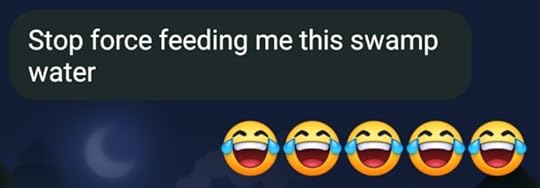
This book in two words: swamp water 😂😂😂
My thoughts on each story:
1. Los Angeles ★☆☆☆☆
A woman lives in LA with her husband, kids, and 100 EX-BOYFRIENDS (!!!) Like, literally but not really 🥴 This one gave me a headache. Of all the stories, it was definitely the worst.
2. Oranges ★★★☆☆
Another story about an ex-boyfriend, are u okay Ling Ma??
But hey, I actually liked this one! It was a bit boring at first and we don't exactly understand what's going on, but then it starts to make sense and I really liked how it played out.
3. G ★☆☆☆☆
A jealous best friend and a drug that makes you disappear. We all know how this is going to end.
4. Yeti Lovemaking ★☆☆☆☆
This was W I L D. Both literally and metaphorically.
Also, writing bullshit about evolution theory for the sake of prose? Seriously? 😑
5. Returning ★☆☆☆☆
A portion of this story takes place in a completely made-up country, which had me wondering how many people fell for it 😆 Anyway, it was chaotic and all over the place (which is the case for all the stories). There were some good ideas, though. Well, maybe too many ideas for a 50 page story.
6. Office Hours ★☆☆☆☆
Not even a hint of magical realism could make this better. Literally NOTHING happens.
7. Peking Duck ★★★☆☆
A glimpse into the life of a Chinese immigrant family in the US. A good story about an interesting topic I haven't read about before. I liked it!
8. Tomorrow ★☆☆☆☆
Another ex and a pregnant woman whose baby's arm is sticking out of her. Need I say more?
2 stars for the 2 stories I enjoyed.
Nope. Not even close. It was so weird and chaotic and not in a good way.
I could see the author was going for something with all the metaphors and allegories (or idk what they're called) but I just couldn't get it! Maybe it's me! Maybe I'm not smart enough for this book, idk! All I know is that I did not like it. It was boring for the most part.
I was supposed to buddy read it, but then Yeti Lovemaking happened 🙃 and here's what my friend said when I was trying to convince him to keep reading with me:
This book in two words: swamp water 😂😂😂
My thoughts on each story:
1. Los Angeles ★☆☆☆☆
A woman lives in LA with her husband, kids, and 100 EX-BOYFRIENDS (!!!) Like, literally but not really 🥴 This one gave me a headache. Of all the stories, it was definitely the worst.
2. Oranges ★★★☆☆
Another story about an ex-boyfriend, are u okay Ling Ma??
But hey, I actually liked this one! It was a bit boring at first and we don't exactly understand what's going on, but then it starts to make sense and I really liked how it played out.
3. G ★☆☆☆☆
A jealous best friend and a drug that makes you disappear. We all know how this is going to end.
4. Yeti Lovemaking ★☆☆☆☆
This was W I L D. Both literally and metaphorically.
Also, writing bullshit about evolution theory for the sake of prose? Seriously? 😑
5. Returning ★☆☆☆☆
A portion of this story takes place in a completely made-up country, which had me wondering how many people fell for it 😆 Anyway, it was chaotic and all over the place (which is the case for all the stories). There were some good ideas, though. Well, maybe too many ideas for a 50 page story.
6. Office Hours ★☆☆☆☆
Not even a hint of magical realism could make this better. Literally NOTHING happens.
7. Peking Duck ★★★☆☆
A glimpse into the life of a Chinese immigrant family in the US. A good story about an interesting topic I haven't read about before. I liked it!
8. Tomorrow ★☆☆☆☆
Another ex and a pregnant woman whose baby's arm is sticking out of her. Need I say more?
2 stars for the 2 stories I enjoyed.

August 18, 2022
Bliss Montage was a fascinatingly disturbing, A24esque exploration of toxic relationships and friendships, a failing marriage, bizarre rituals, academia, escapism, and more with a languid pace that allows each story to breathe on its own while intertwining with each other.
I’m not the biggest fan of short story collections because I tend to have such drastic opinions about one story to the next, some I greatly enjoy and others deeply disinterest me— I did skim two stories in this collection because of this reason— but Bliss Montage such a pleasant surprise because it maintained a consistent tone and theme to each story that kept me interested to see how they will all unfurl, similar to that of an A24 film that starts out seemingly normal but unravels to share a disturbing tale that will live in your mind for weeks to come.
Greatly enjoyed it!
I’m not the biggest fan of short story collections because I tend to have such drastic opinions about one story to the next, some I greatly enjoy and others deeply disinterest me— I did skim two stories in this collection because of this reason— but Bliss Montage such a pleasant surprise because it maintained a consistent tone and theme to each story that kept me interested to see how they will all unfurl, similar to that of an A24 film that starts out seemingly normal but unravels to share a disturbing tale that will live in your mind for weeks to come.
Greatly enjoyed it!

July 7, 2022
First time reading Ling Ma, and this is certain: No one writes like Ling Ma. These stories speak to the most helpless, lonesome, and injured of us who feel sundered by the world. As someone who has also been abused and traumatized by racist wm whose kindness I misinterpreted as an invitation of intimacy, I was rapt by the observations made by the recurring Chinese female protagonist’s survivor-abuser confrontations; it really demonstrated how such violent incidents, however minor, really stain a person’s entire life. I savored these stories, my dearest among them “Los Angeles,” “Oranges,” “Yeti Lovemaking,” “Returning,” and “Office Hours.” I’ll write more someday, but frankly, this book was a blessing. A balm for the bruised.

September 14, 2022
a breathtaking collection!!! i’ve never before read a short story collection in two sittings which speaks to how captivating this was. my favorite essays: G, Peking Duck, Returning, Office Hours — i enjoyed every minute of this reading experience.
thank you for an arc fsg <3
thank you for an arc fsg <3

May 15, 2023
A wildly imaginative short story collection centered around Asian women, There's something in Ling Ma's writing that possesses a quality that feels both strange yet comforting, unsettling yet familiar. The collection features some odd yet funny stories that went from the chronicles of ex-boyfriends to having sex with a yeti to a baby arm protruding from a mother's belly. Some stories explore themes of family, relationships, and life contentment, leaving some deep cuts. Most of the stories shaped up quite nicely, while others left me unsure if I had understood them correctly. But, one thing's for sure—from now on if I see oranges anywhere, my mind will automatically associate them with this book. I enjoyed the experience overall.

September 5, 2025
I am confusion.
These were some weird stories. Some were relatable with a surreal spin. Some were just too bizarre.
I appreciate the author's writing. It was beautifully descriptive and moody. There was great cultural commentary on being Asian in America.
But I didn't connect with all the stories as much as I wanted to. I fairness, only two of the stories in the collection got 4⭐️ so the average came to a 3⭐️.
These were some weird stories. Some were relatable with a surreal spin. Some were just too bizarre.
I appreciate the author's writing. It was beautifully descriptive and moody. There was great cultural commentary on being Asian in America.
But I didn't connect with all the stories as much as I wanted to. I fairness, only two of the stories in the collection got 4⭐️ so the average came to a 3⭐️.

February 17, 2023
Bliss Montage is a series of unsettling and surreal short stories highlighting the small, heavy moments. They are about people and relationships falling apart, the slow progression of small cracks building into the inevitable crumbling. They highlight pain and grief and the myriad ways people can hurt each other.
While some of the stories fell flat to my taste, many were strange and fascinating, pulling me along as if in a trance. Returning and Office Hours are the stories that have stayed with me the most.
I am very impressed with Ling Ma’s cadence and style. I plan to read more of their work soon!
Thank you to Netgalley and Macmillan Audio for providing an ALC in exchange for an honest review.
Trigger/Content Warnings: domestic violence/abuse, drug use, eating disorders, neglect, abusive friendship
You can find me on...
Youtube | Instagram | TikTok
You can join our book club over on Patreon...
PBB Book Club
While some of the stories fell flat to my taste, many were strange and fascinating, pulling me along as if in a trance. Returning and Office Hours are the stories that have stayed with me the most.
I am very impressed with Ling Ma’s cadence and style. I plan to read more of their work soon!
Thank you to Netgalley and Macmillan Audio for providing an ALC in exchange for an honest review.
Trigger/Content Warnings: domestic violence/abuse, drug use, eating disorders, neglect, abusive friendship
You can find me on...
Youtube | Instagram | TikTok
You can join our book club over on Patreon...
PBB Book Club
September 19, 2022
This was such a great collection. There is something so quietly devastating about Ling Ma’s prose. Her stories are SO effective. Nothing like a bit of surreal and weird fiction that matches the mood of our current moment.

July 20, 2022
This is not your average collection of short stories.
*First, round of applause for the cover*
‘Bliss Montage’ by Ling Ma is a collection that is odd and fantastical with depth.
The stories are distinct and centered around different versions of relationships but the mindset you should go into all of them should be the same — an open mind, where anything is possible.
Through the stories, we explore drug use, toxic friendships, abusive relationships,
motherhood, the idea of home, and more.
‘Los Angeles’ starts us off with a woman who lives in a home with 100 of her ex-boyfriends that hooked me from the start and might be the most normal story. ‘Oranges’ follows a woman who is traumatized by her previous abusive relationship.
The more strange and unsettling stories are ‘G’ where two friends take a drug that makes you invisible and plays with the idea of self-erasure. ‘Tomorrow’ where a woman who goes through pregnancy with her baby’s arm sticking out of her and ‘Yeti Lovemaking’ is a story about lovemaking with a yeti 🤨 …
I can’t lie, I’m still processing some of the stories and I do think some might have gone over my head (Yeti Lovemaking). This collection might not be for everyone but I enjoyed the bizarre ride — it's very different than the short stories I normally read and I am looking forward to reading ‘Severance’ by Ling.
Some of my personal favorites were
Los Angeles
Oranges
G
Peking Duck
Thank you so much FSG for the gifted copy. If you want something unique, bizarre, and outlandish, give this one a try! A24 film fans will love this one.
*First, round of applause for the cover*
‘Bliss Montage’ by Ling Ma is a collection that is odd and fantastical with depth.
The stories are distinct and centered around different versions of relationships but the mindset you should go into all of them should be the same — an open mind, where anything is possible.
Through the stories, we explore drug use, toxic friendships, abusive relationships,
motherhood, the idea of home, and more.
‘Los Angeles’ starts us off with a woman who lives in a home with 100 of her ex-boyfriends that hooked me from the start and might be the most normal story. ‘Oranges’ follows a woman who is traumatized by her previous abusive relationship.
The more strange and unsettling stories are ‘G’ where two friends take a drug that makes you invisible and plays with the idea of self-erasure. ‘Tomorrow’ where a woman who goes through pregnancy with her baby’s arm sticking out of her and ‘Yeti Lovemaking’ is a story about lovemaking with a yeti 🤨 …
I can’t lie, I’m still processing some of the stories and I do think some might have gone over my head (Yeti Lovemaking). This collection might not be for everyone but I enjoyed the bizarre ride — it's very different than the short stories I normally read and I am looking forward to reading ‘Severance’ by Ling.
Some of my personal favorites were
Los Angeles
Oranges
G
Peking Duck
Thank you so much FSG for the gifted copy. If you want something unique, bizarre, and outlandish, give this one a try! A24 film fans will love this one.

May 21, 2023
'An ideology defined only by what it opposes is doomed to be defined by that exact thing.'
These tantalisingly ambiguous stories contain multitudes.
Review to follow.
These tantalisingly ambiguous stories contain multitudes.
Review to follow.

December 31, 2023
Always inventive and sharply observant, often witty, each of these stories is told in the same neurotic, emotionally detached, first-person voice. The dust flap says that this book “crashes through our carefully built mirages”. While I don’t feel it accomplishes this, it is often interesting and thought-provoking, and one of the stories ("Peking Duck") I have ranked among my top ten reads of the year!
Though each story is presumably told by a different character, the protagonists all feel the same. All are unhappy: unhappy with their romantic relationships, unhappy with their families, unhappy with where they live, unhappy with where they used to live, unhappy with their present, unhappy with their past. They tend to see everyone else as abusive to them, physically and/or emotionally. Sometimes this is clearly true, e.g., the ex-boyfriend who beat up one of the narrators, although it also sometimes feels like the result of just habitually looking for abuse wherever it can actually or allegedly be found, not hanging around where it cannot, and clinging to it once located, defining their lives by it, returning to it again and again.
That being said, I did enjoy aspects of most of the stories, and one in particular is worth reading even if you skip the rest of it.
Below is how I’d rank each of the individual stories:
"Los Angeles" 3/5 stars - clever magic-realism scenario (the woman’s 100 ex-boyfriends live with her and her family); witty; unsatisfying conclusion
"Oranges" 3/5 stars - great premise (a woman follows home the man who once beat her up); unsatisfying conclusion.
"G" 2/5 stars The most blatantly George Saunders-esque; includes clever riffs on the “what if” (“What if a drug could make one invisible?”); unsatisfying conclusion.
"Yeti Lovemaking" 3/5–witty; clever premise; some laugh-out-loud moments; insubstantially developed; unsatisfying conclusion.
"Returning" 3/5 a complex story in search of direction; the opening scenario of a husband abandoning his wife on a plane is intriguing; unsatisfying conclusion.
"Office Hours" 1/5: a tedious story of unhappy people in academia; Stephen King-esque magic-realism element that seems important but ultimately contributes nothing to the story; unsatisfying conclusion.
"Peking Duck" 4.5/5 Peking Duck is by far the most successful of the stories. Poignant. Complex. Multiply and importantly self-referential. At first it seems like the meta references are just going to be intellectually playful and show-offy, but in the end they turn out to be very important and profound. I’m glad the author doesn’t draw any conclusions about cliche vs lived reality in stories, or about appropriation, or about the efficacy of first-person narration, but they are topics worthy of being mentioned and reflected upon both in general and in reference to this story.
Note: Here, I believe we learn why I find each of the other stories has an “unsatisfying conclusion.” The narrator labels one of her grad student peers a “Plot Nazi” –suggesting perhaps that Ma does not like storylines; I do. Never the twain shall meet. Oddly, this is the story with the most satisfying plot.
"Tomorrow": 1/5: Disturbing, full-of-potential premise of a fetus’s arm that starts hanging out in the open early in a pregnancy; includes the other usual Ma-ian tropes: bad boyfriends, bad family, bad U.S.; storyline fails to pan out (no surprise now); unsatisfying conclusion.
Though each story is presumably told by a different character, the protagonists all feel the same. All are unhappy: unhappy with their romantic relationships, unhappy with their families, unhappy with where they live, unhappy with where they used to live, unhappy with their present, unhappy with their past. They tend to see everyone else as abusive to them, physically and/or emotionally. Sometimes this is clearly true, e.g., the ex-boyfriend who beat up one of the narrators, although it also sometimes feels like the result of just habitually looking for abuse wherever it can actually or allegedly be found, not hanging around where it cannot, and clinging to it once located, defining their lives by it, returning to it again and again.
That being said, I did enjoy aspects of most of the stories, and one in particular is worth reading even if you skip the rest of it.
Below is how I’d rank each of the individual stories:
"Los Angeles" 3/5 stars - clever magic-realism scenario (the woman’s 100 ex-boyfriends live with her and her family); witty; unsatisfying conclusion
"Oranges" 3/5 stars - great premise (a woman follows home the man who once beat her up); unsatisfying conclusion.
"G" 2/5 stars The most blatantly George Saunders-esque; includes clever riffs on the “what if” (“What if a drug could make one invisible?”); unsatisfying conclusion.
"Yeti Lovemaking" 3/5–witty; clever premise; some laugh-out-loud moments; insubstantially developed; unsatisfying conclusion.
"Returning" 3/5 a complex story in search of direction; the opening scenario of a husband abandoning his wife on a plane is intriguing; unsatisfying conclusion.
"Office Hours" 1/5: a tedious story of unhappy people in academia; Stephen King-esque magic-realism element that seems important but ultimately contributes nothing to the story; unsatisfying conclusion.
"Peking Duck" 4.5/5 Peking Duck is by far the most successful of the stories. Poignant. Complex. Multiply and importantly self-referential. At first it seems like the meta references are just going to be intellectually playful and show-offy, but in the end they turn out to be very important and profound. I’m glad the author doesn’t draw any conclusions about cliche vs lived reality in stories, or about appropriation, or about the efficacy of first-person narration, but they are topics worthy of being mentioned and reflected upon both in general and in reference to this story.
Note: Here, I believe we learn why I find each of the other stories has an “unsatisfying conclusion.” The narrator labels one of her grad student peers a “Plot Nazi” –suggesting perhaps that Ma does not like storylines; I do. Never the twain shall meet. Oddly, this is the story with the most satisfying plot.
"Tomorrow": 1/5: Disturbing, full-of-potential premise of a fetus’s arm that starts hanging out in the open early in a pregnancy; includes the other usual Ma-ian tropes: bad boyfriends, bad family, bad U.S.; storyline fails to pan out (no surprise now); unsatisfying conclusion.

October 26, 2022
Ling Ma's Bliss Montage is a spectacular collection of short stories. The author, who also wrote Severance, demonstrates her talent for portraying the anxieties of contemporary life. Each story (except the Yeti one - that one was just plain confusing honestly) is brilliantly written and captures the reader's attention from beginning to end.
The characters in Bliss Montage are all struggling with different versions of the same thing: the search for understanding in a world that often seems incomprehensible. Whether it's a woman who is haunted by her past relationships, or a group of friends who become addicted to a drug that makes them invisible, these characters are all searching for ways to make sense of their lives.
What makes Bliss Montage so powerful is the way that Ma exposes the hidden truths behind our carefully constructed mirages. She shows us that the line between reality and fantasy can be blurry, and that sometimes what we think is true may not be. This makes for an unforgettable reading experience.
Bliss Montage is a must-read for anyone who wants to explore the dark underbelly of contemporary life. The stories are beautifully written, thought-provoking, and hauntingly effective. I highly recommend this collection to anyone who enjoys excellent writing and provocative stories.
𝙏𝙝𝙖𝙣𝙠 𝙮𝙤𝙪 𝙩𝙤 𝘽𝙤𝙤𝙠𝙨𝙥𝙖𝙧𝙠𝙨 𝙛𝙤𝙧 𝙖 𝙘𝙤𝙥𝙮 𝙤𝙛 𝙩𝙝𝙞𝙨 𝙗𝙤𝙤𝙠 𝙞𝙣 𝙚𝙭𝙘𝙝𝙖𝙣𝙜𝙚 𝙛𝙤𝙧 𝙢𝙮 𝙝𝙤𝙣𝙚𝙨𝙩 𝙧𝙚𝙫𝙞𝙚𝙬.
The characters in Bliss Montage are all struggling with different versions of the same thing: the search for understanding in a world that often seems incomprehensible. Whether it's a woman who is haunted by her past relationships, or a group of friends who become addicted to a drug that makes them invisible, these characters are all searching for ways to make sense of their lives.
What makes Bliss Montage so powerful is the way that Ma exposes the hidden truths behind our carefully constructed mirages. She shows us that the line between reality and fantasy can be blurry, and that sometimes what we think is true may not be. This makes for an unforgettable reading experience.
Bliss Montage is a must-read for anyone who wants to explore the dark underbelly of contemporary life. The stories are beautifully written, thought-provoking, and hauntingly effective. I highly recommend this collection to anyone who enjoys excellent writing and provocative stories.
𝙏𝙝𝙖𝙣𝙠 𝙮𝙤𝙪 𝙩𝙤 𝘽𝙤𝙤𝙠𝙨𝙥𝙖𝙧𝙠𝙨 𝙛𝙤𝙧 𝙖 𝙘𝙤𝙥𝙮 𝙤𝙛 𝙩𝙝𝙞𝙨 𝙗𝙤𝙤𝙠 𝙞𝙣 𝙚𝙭𝙘𝙝𝙖𝙣𝙜𝙚 𝙛𝙤𝙧 𝙢𝙮 𝙝𝙤𝙣𝙚𝙨𝙩 𝙧𝙚𝙫𝙞𝙚𝙬.
May 28, 2025
reading one short story a day
to live is to exist within time. to remember is to negate time.
very escapist, very surreal. a woman living with her 100 ex-boyfriends as a profound metaphor for a woman who never gets over anything. she keeps her memories close and lives there. it deals with domestic abuse and trying to escape to a different reality to escape your situation. it was only 20-something pages, but still managed to leave a very good impression.
sometimes i have a hard time believing what happened to me. what he did. and seeing him again makes me realize that it happened. it actually happened.
i like how it continues on with the theme of never forgetting your abuser. however, despite being connected to the first short story, it lost a bit of the surrealism that "los angeles" had. it wasn't bad, i just prefer the first story to this one.
i'm doing this for us. and i think, if you search yourself, you'll know you want this too.
this is one of the longer short stories, but somehow managed to be very boring. a story on toxic friendships and addiction. i didn't care for this one much.
do you know what it's like to have to hide your true nature at all times?
think catfishing but the man is actually a yeti!
i tried to read the other short stories but they started to bore me. however, i still really like yeti lovemaking and los angeles!
los angelesㆍ4 stars
to live is to exist within time. to remember is to negate time.
very escapist, very surreal. a woman living with her 100 ex-boyfriends as a profound metaphor for a woman who never gets over anything. she keeps her memories close and lives there. it deals with domestic abuse and trying to escape to a different reality to escape your situation. it was only 20-something pages, but still managed to leave a very good impression.
orangesㆍ3 stars
sometimes i have a hard time believing what happened to me. what he did. and seeing him again makes me realize that it happened. it actually happened.
i like how it continues on with the theme of never forgetting your abuser. however, despite being connected to the first short story, it lost a bit of the surrealism that "los angeles" had. it wasn't bad, i just prefer the first story to this one.
Gㆍ1.5 stars
i'm doing this for us. and i think, if you search yourself, you'll know you want this too.
this is one of the longer short stories, but somehow managed to be very boring. a story on toxic friendships and addiction. i didn't care for this one much.
yeti lovemakingㆍ4 stars
do you know what it's like to have to hide your true nature at all times?
think catfishing but the man is actually a yeti!
i tried to read the other short stories but they started to bore me. however, i still really like yeti lovemaking and los angeles!

September 13, 2022
Definitely an uneven collection for me, but those stories that shone, really did so. Usually I prefer more grounding in my fiction, but chose this book upon learning that Ling Ma was responsible for the astounding Severance, which has lingered with me months later. Some of the stories are jarring in that after a beginning seemingly rooted in reality, there is a sharp turn into the surreal. I believe the point being made here, since the protagonists are Chinese American women, is the search for identity, recognition, and attempt to remain visible.
Displaying 1 - 30 of 5,401 reviews