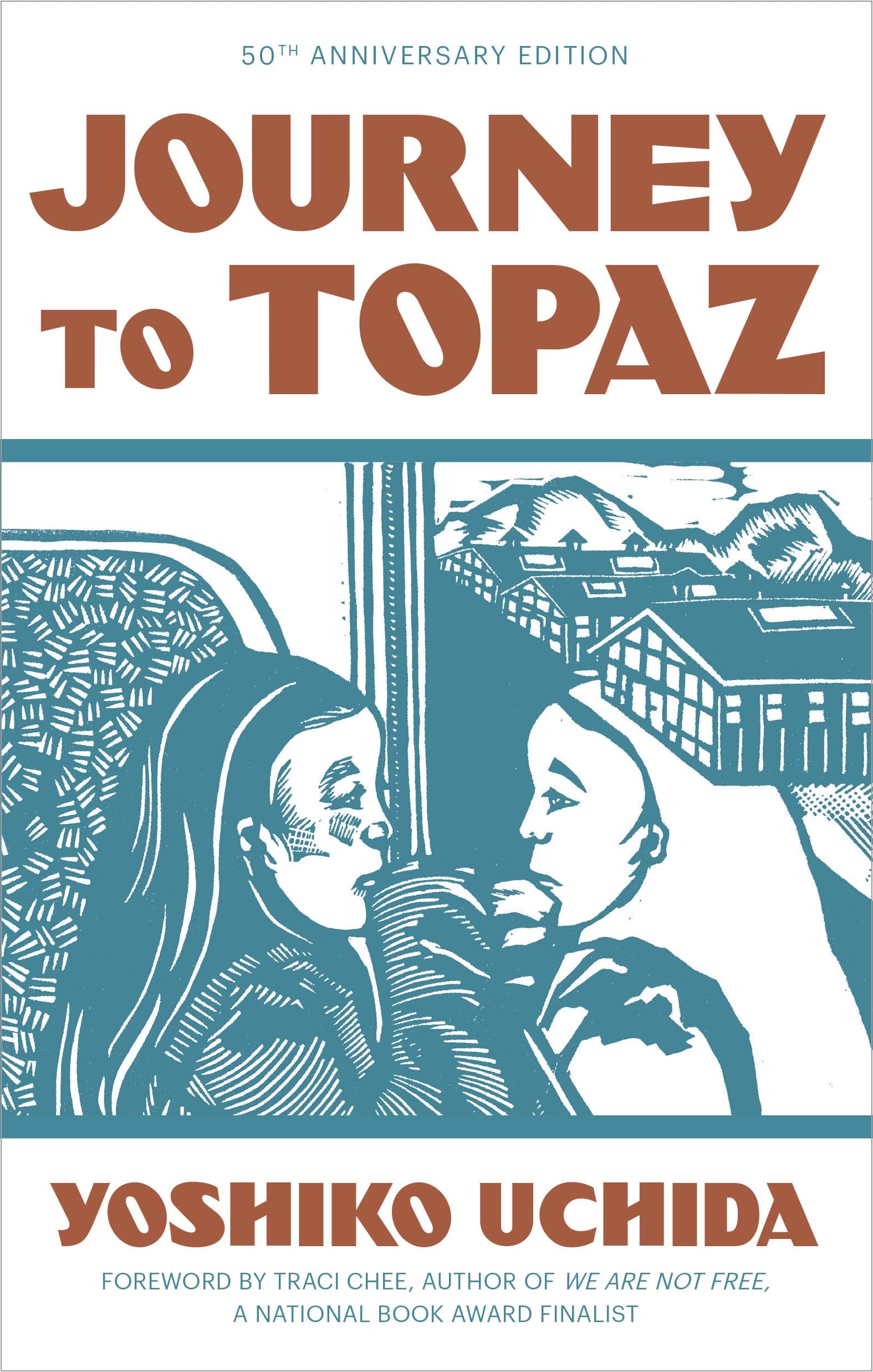
Celebrating the 50th anniversary of a landmark work of juvenile fiction. This much-loved and widely read classic is the moving story of one girl’s struggle to remain brave during the World War II incarceration of Japanese Americans. In 1941, eleven-year-old Yuki is looking forward to Christmas when disaster she and her family, along with everyone of Japanese descent on the West Coast, are labeled enemy aliens. The FBI arrests her father, and she, her mother, and her brother are imprisoned in a bleak and dusty camp surrounded by barbed wire in the Utah desert. There, she and her family experience both true friendship and heart-wrenching tragedy. Journey to Topaz explores the consequences of prejudice and the capacities of the human spirit. First published in 1971, this novel was the first children’s book about the wartime incarceration written by a Japanese American. This fiftieth anniversary edition features new cover art, a refreshed design, and a new foreword by Traci Chee.
Yoshiko, born on November 24, 1921, was the second daughter of Japanese immigrant parents Takashi and Iku. Her father worked as a businessman for Mitsui and Company in San Francisco, and Iku wrote poetry, passing along her love of literature to her girls. Though the Great Depression raged, the Uchida family enjoyed comforts because of Takashi's well-paying job and their own frugality. Yoshiko loved to write, and her stories played out on pieces of brown wrapping paper. She also kept a journal to record her thoughts and events.
Enveloped in love and tradition at home, Yoshiko weathered the prejudice she sometimes faced. Many white students at University High School in Oakland didn't invite her to their parties and wouldn't socialize with her, deeming her a foreigner. Even while attending the University of California at Berkley, Yoshiko often faced the same dilemma of being ostracized. She found friendships with other Japanese American students and was preparing to graduate when Pearl Harbor was bombed, changing her life.
The United States government rounded up 120,000 people of Japanese descent and put them into camps. The Uchida family first resided in a horse stall at a racetrack in California, surrounded by barbed wire and armed guards. Though difficult to endure, the next move was worse. Almost 8,000 Japanese were sent to a relocation concentration camp called Topaz in the Utah desert. The detainees suffered from violent dust storms, scorpions, snakes, and exceedingly poor living conditions. Yoshiko taught second grade children there until she received a fellowship from Smith College to earn a master's degree in education.
Yoshiko and her sister both left the camp in May of 1943, with their parents gaining release later that year. Teaching for several years in a Quaker school outside of Philadelphia, Yoshiko decided to quit teaching and find work that allowed more time for writing. She moved to New York City and began as a secretary, penning stories in the evenings. Asked to contribute to a book about Japanese folk tales, Yoshiko discovered that though the book didn't come to be, with time she could create a full collection of folk tales. Writing a few pieces for adults, Yoshiko realized she was better suited for children's books.
A Ford Foundation fellowship sent her to Japan to research the culture and their stories. Spending two years, Yoshiko found her time to be healing as she learned about her own ancestry. The pain of the concentration camps lessened, and she began writing about the experiences in fictional books such as Journey to Topaz and Journey Home. Her career as an author soared as people regarded her as a pioneer in Japanese American children's literature. The author of almost forty works, including Japanese folk tales and stories of Japanese American children making their way in the world, Yoshiko traveled extensively, lectured, and wrote. After suffering from a stroke, Yoshiko passed away on June 25, 1992, in Berkeley, California.
“There is so little here to comfort the eye or the heart, and people grow quarrelsome and sullen when they are unhappy.”
In the spring of 1942, following the Japanese bombing of Pearl Harbor, the U.S. Government mandated the evacuation of some 120,000 Japanese Americans from the West coast of the country.
Families lost their homes and businesses and were swept away to live in these military camps anywhere from months to years, depending upon the circumstances of their internment.
I knew very little about this chapter in American history until my daughters and I set out to have more Asian-American reads under our belts. Much of this was happenstance, to be honest.
This particular selection is a story centered around a family called the Sakanes who are evacuated from their lovely home in Berkeley, California and taken to the internment camp in Topaz, Utah. Journey to Topaz was published in 1971 by Japanese-American author, Yoshiko Uchida and Ms. Uchida writes in her Prologue:
Although the characters are fictional, the events are based on actual fact, and most of what happened to the Sakane family also happened to my own.
The narrative here is excellent, and Ms. Uchida did an effective job of teaching both the young readers at my house and their mother what daily life was like at this camp. (As far as we could tell, worse than how life was at the Manzanar internment camp in California, according to Paper Wishes, and better than life for the evacuated Aleuts, according to Aleutian Sparrow).
My girls and I cringed at some of the cultural differences in this patriarchal-based Asian-American family in the early 1940s. Little sister Yuki puckers her lips in the mirror and wonders if her older brother will ever want to date her, instead of the girl he likes at school, and when the father is ushered away by the authorities, he asks his son to be a “substitute” for him, with his wife.
My daughters, who have a much older brother like Yuki, got a little green during the “mirror scene” and my 12-year-old grimaced in disgust and said, “Eww. You don't date your brother, dude!” (Damn straight, daughter, unless you're a character in a John Irving novel).
This weird quirk aside, we all found this to be an interesting and occasionally upsetting read, but nothing a preteen can't handle.
It was good for us to be reminded, especially right now, that the human spirit is resilient, and “When you do what you know is right, you find a dignity in yourself that makes you a happy person.”
My son was reading this as an assignment in his 5th grade class. The description caught my attention since I know very little about Japanese-Americans being sent to internment camps, and I wanted to be more informed so I could discuss the book with my son. We both enjoyed the book and had some great discussions about it. We felt connected to the characters and felt compassion and sympathy for what they were experiencing. There were sad parts, but they were not too overwhelming or intense for my son (who will not sleep if anything is too scary or worrisome). An excellent book!
I wish there were more books about this disaster of American policy. Yuki and her family and friends were brave and kind. I wondered what happened next...
I read this book looking for books presenting a variety of perspectives on World War II to pitch to my students who will be reading The Book Thief. To my knowledge, there aren't a lot of books that deal with the evacuation of Japanese Americans from the West Coast, so I was excited to see what Journey to Topaz had to offer.
This book does a pretty good job of laying out basic factual information about what the average Japanese American living in California might have experienced at the outbreak of WWII. If nothing else, readers will go away knowing the basic facts. This book does not do a great job of giving the reader much to invest in beyond whatever curiosity drove him or her to pick the book up in the first place. There's not much character depth and even the most compelling or unjust events aren't conveyed in a way that arouses much emotion. Presenting the story through the eyes of a girl was a step up from a dry recitation of the facts, but only a small step.
I heard that we were going to be reading this book for learning about the Japanese Internment Camps, part of our WWll study. And I thought that this just might be a boring book with history included but when I read this book. It was more than I thought. It was so good and I wish there was a Journey To Topaz 2. I was truly an awesome and amazing book. And I learned a great deal of knowledge delivered in such a great way.
Great read aloud for our American history! Introduced hard topics in an approachable way for elementary/middle kids that is uncomfortable but not overly depressing or agenda full. Recommend!
This is a fictional account of a family evacuated from Berkeley to Tanforan, then Topaz in Utah. It's based on the author's life & is told in a touching manner that puts the reader in the steps of the young girl, Yuki, who is experiencing these frightening & unexplainable events. As she is torn from her home & faced with leaving her home, plus having her father interned in an enemy alien camp in Montana, she looks for hope & tiny bits of happiness. It's a heartbreaking story & yet the author manages to make it life-affirming. I loved it.
I haven't read all that much fiction where the relocation and internment of Japanese Americans during WWII takes center stage, but this children's/ middle grade title is a good place to start as it is the fictionalized account of a woman who experienced it first hand when she was young. If this isn't required reading for 5th or 6th graders it really should be.
This book is all about a chines family living in the US in during WWI. They were living a normal day and the FBI comes to their door and takes their father away right after the attack of Perl Harbor. They send them all to camps down in the east. They live in hoarded conditions and little space. They meet wonderful classmates and people but unfortunately they have to move camps after reviving a letter from father saying he was OK they got their hopes up and now you will have to read to see what happens next. Hope this was helpful and it's a wonderful story for all ages.
Read for children’s lit class. 4.5. I really liked it. It’s a really interesting, child-appropriate look at ww2 Japanese concentration (not really internment) camps. The characters are lovely and sweet. It ended quite abruptly but anything to get the family out of there is good by me.
This is a children's book about the incarceration of West Coast Japanese after the 1941 attack on Pearl Harbor. I have lived in Utah for a total of 30+ year, yet I didn't know there had been a Japanese detention camp only 20 miles west of Delta, Utah. Recently I visited the Topaz Delta museum. This book was one of those mentioned in the museum that I could find from my library. The writer's family was detained in Topaz. Even though it is a children's book, I learned a lot of history and about the living conditions in Topaz. It was eye-opening, and very sad what the US government did to these Japanese families.
A few of my classmates read this book in fifth grade for the pre-Humanities requirements. This was the only one I didn't read, but after my teacher assigned us to read and review book about intolerance, I remembered this one and decided to finally read it.
Yuki lives a perfectly normal life, surrounded by friends and family. But after Pearl Harbor is bombed by the Japanese in the midst of World War II, she starts to see her world fall apart. Soon after this, Yuki, her family, and thousands of other Japanese-Americans from the West-Coast are taken to internment camps far from their homes, and imprisoned for an undetermined amount of time.
I was... "eh" with this book. It was a good story, all in all, but I got bored of it in some parts and had to really try to get into it. The Japanese Internment itself is an interesting topic, and is largely overshadowed by other atrocities occurring at that time such as the Holocaust. "Journey to Topaz" just wasn't the best book to describe it. Yuki herself isn't a very deep character, although she displays real and relatable emotions to what's happening, it's hard to get into her mind. On the other hand, as I mentioned above, the story was an interesting one, I simply think I'd be able to get more into it if I had read it in fifth grade instead of now.
All in all, I'd recommend this book to students or kids being introduced to this topic, as it's fairly short and plenty informative.
I bought dozens of books in grade school from the little Scholastic Books newsletter that was passed out in class every month (Mom had to have some serious budgetary talks with me to explain why no, I could not order ALL THE BOOKS). Of these, decades and many moves later, I still have five of them that I couldn't let go. This story of a young Japanese-American girl interned by the U.S. government during World War II is one. (If you're curious, the others include Freedom for a cheetah and Mr. Mysterious & Company).
The child narrator's voice is beautifully done -- straightforward but at the same time innocently accepting of whatever life sends -- and perhaps for that very reason highlights as an older voice could not the the shameful nature of the government's treatment of its own citizens. A wonderful book that combines great storytelling with historical fact.
Read this book. Read it as an adult. Read it with your middle schooler or high schooler. Just read it.
It's not perfect, but it's important. I was in my mid-thirties before I knew anything about this part of American history - an unforgivable gap, given that my grandparents were adults when it all went down - my uncles and dad had been born, even! - and this book was published four years before I was born.
The details of Japanese-American processing are striking and uncomfortable for an American to read, but delivered without gory detail and from the sheltered and fairly immature point of view: our main character, a middle school girl. There are many open questions suddenly abandoned, and many unacceptable situations are accepted - but that, too, is part of that age in life.
Perhaps someday I'll find a more compelling and thorough story set here and also geared for middle school ages. Meantime, this one stands as the must read.
So just read it.
Discovered via the Mensa for Kids book list for 7th & 8th grade.
Journey to Topaz by Yoshiko Uchida is a good book. In the beginning of the book The Yuki Chan and her family is at their house. Then later they hear about the bombing of pearl harbor. They think that the Japanese really didn’t bomb pearl harbor but when the FBI comes and takes Yuki’s father away they know that it really did happen. Then they have ten days to pack to go to camp. Their camp is at an old horse race track and they live in a horse stable. They become friends with their neighbors the Kuriharas. Their dad is in a different camp and Yuki's older brother ken has to look after Yuki and their mom. But then ken gets a letter from his college saying that they can take him out of camp to finish school. But he decides not to go when they hear that they are changing camps and going to topaz Utah. It was worse living in Utah but they got used to it. This book is valuable because it teaches people about what happened to the Japanese Americans during world war two and how hard it was for them. The parts about the book that I found slow and unnecessary was the part where they were packing and waiting to hear about their father. I do agree with the author's perspective on how it was wrong to put all of the Japanese Americans in camps. The book makes me feel bad for all of the Japanese who had to leave their homes and go to camp. Sometimes the book was boring but it is a good book. The theme was people shouldn’t be judged by the color of their skin. I chose that because all the Japanese had to leave their homes and go to camp. They even made them go to camp even if they were good people who born in america just because there parents were Japanese. Journey to topaz is a good book because it teaches people about how hard it was for the Japanese Americans in world war 2.
This entire review has been hidden because of spoilers.
A book read by my brother’s fifth grade class in the early 2000s, Journey to Topaz is children’s historical fiction detailing a young Japanese-American girl’s experiences as her family is forced into an internment camp during World War II. Uchida’s main character, Yuki, is not a character who meaningfully develops: she is a lens through which the reader can see and feel the experience of being suddenly uprooted and trying to stay positive while the world crumbles under the actions of a different nation. Parts of the story were moving, particularly at the many goodbyes the Sakane family must say, and I appreciate the young narrator’s perspective making the story of Japanese-American internment accessible and urgent to young readers—this was instructive historical fiction. At the same time, so much of the righteous anger of those interned is softened by Yuki’s innocent perspective; adult characters are upset and speak about torn loyalties, but there are only rare moments when a flame of indignation is hinted toward. With Yuki fairly static as a character, I wish there could have been stronger voices around her leading to greater internal conflicts—I’d like to think young readers could handle the larger questions begged but the unjust internment camps. (I also wish the book hadn’t ended so suddenly and abruptly, but I suppose a story titled Journey to Topaz must end when the setting shifts.
Totally by coincidence, two different groups that I am affiliated with selected books for their reading clubs that deal with the Japanese internment during World War II. The first book only mentioned the internment in one chapter, while this entire children's book deals with what happens on December 7, 1941 and in the year that follows the Japanese attack on Pearl Harbor.
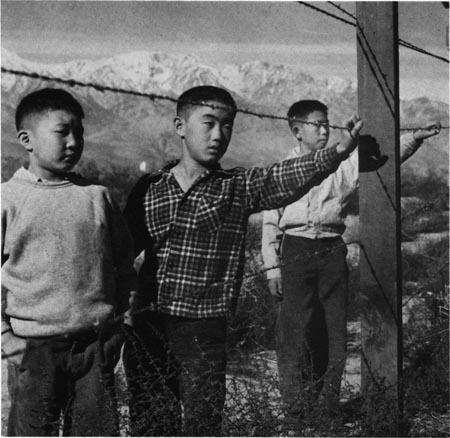
Yuki's life change on December 7. Her father is immediately arrested for no crime other than he was Japanese. He is eventually sent to Montana. The rest of the family, along with all Japanese on the West Coast, are sent to internment camps to wait out the war. Topaz was hastily built in the desert of Utah. Sand get everywhere. There are dust storms. Yuki's friend gets TB and the grandfather of this friend is shot and killed because he got too close to the wire fencing.
All is not terrible at camp. Children are resilient and Yuki has good days and bad days. There is school to attend and activities for everyone, but there is no freedom to leave Topaz for about six months. Yuki's family was an exception since her father was able move to Salt Lake City and take his family with him.
The description are wonderful and are based on the author's own experience at Topaz.
This short historical fiction depicts the life of a Japanese American family, and the turmoil that ensued following the bombing of Pearl Harbor. Forced from their home in Berkley, California, to two different concentration camps that interred Japanese American families, Yuki and her family endured the imprisonment of her father, the separation from home and friends, and an uprooting from the life they held dear. Two major themes manifest throughout this beautifully written story. First, fear is rarely a reliable factor in decision making. Generally, panic and fear cause hasty and unwise choices, as seen as Japanese Americans, some American born, were evacuated from their homes in the Western Unites States. Second, I was impressed by the willingness of many to let go of bitterness and anger, despite being treated as enemy aliens, and suffering considerable injustices. Definitely a worthwhile read, both informationally and inspirationally.
This entire review has been hidden because of spoilers.
This is a short chapter book about a Japanese-American girl who was incarcerated at Topaz during WWII. I started doing some work on the Topaz Wikipedia page for work--mostly putting in citations. I hope to work on it more, but this book conveyed more information than what I learned doing fact-checking. It helped me understand the emotional impact of how Japanese-Americans were uprooted from the homes and not allowed to return. Families were split up and vulnerable populations got sick or died from the poor living conditions. I think the book did a good job showing how Yuki, the main character, was not only an American citizen but also culturally American. The book also showed how internment affected many age groups, especially college-aged young people who weren't able to finish their educations.
I was expected to read this book many years ago, so I figured now could be the time. In summary, this book is about a little girl, Yuki Sakane, who is taken from her home in California and placed in a Japanese internment camp in Topaz, Utah after the attacks on Pearl Harbor. The book goes on to explain the daily life of a person taken to an internment camp, and how it would impact the prisoners for the rest of their lives. I enjoy reading books of this kind. I am a cis, white female living in America, I can safely say that I have never experienced anything remotely close to this in my life. After reading this book I did my own research as to what these internment camps were really like, especially the ones here in Utah. This was a very eye-opening book as a whole. I am very glad I had the chance to read it.
I liked this book. It takes a really tough subject and makes it manageable for middle grade readers. I liked that it presented many of the varied reactions of the Japanese Americans interned during WWII, and also that it evoked compassion for their situation while steadfastly but gently maintaining the point that their own government did this to these people. I’m not a fan of many books for the middle grades because they tend to fail to hold my interest, but this was a quick and compelling read that kept me coming back for more. I would have loved to hear more of the family’s experiences after leaving Topaz. The ending felt a bit abrupt.
As an adult I’ve had vague memories of reading a book about a Japanese girl and her family being sent to an internment camp in the desert. I google many times and nothing jumped out at me, as I couldn’t remember any details. Well, turns out it was this book, which is based on the real events that happened to the author’s family.
It is so unfathomably wrong what our country did to people of Japanese descent during WWII. So sad. But I will, without a doubt, be reading this to my children when the time comes, because if we don’t learn from the past, we are bound to repeat it.
Journey to topaz was a funny, touching and a poignant read.
To me, Yuki's story was a little too naïve, as she seems to be blundering through everything in a bit of a babyish tone. However, the story falls together to be sad, sweet and relatively funny.
This book also made me research the Japanese evacuation that this book was set in. While this incident was well covered up, the truth was only recently uncovered, which makes this story all the more important, as it gives you an inside view on the cruel and unusual treatment put on these citizens.
This book shows the journey of a young girl who had to go through hard times and obstacles every step of the way. She was living a normal life but soon because of the attack on Pearl Harbor her life changed. As they were evacuated from their home, possessions and memories were all left behind. This book was a touching fact-filled novel and poignant read. Uchida shows how a 11 year old's world falls apart because of the mistake by her native country. Her father is taken away and soon they all land up in a camp with inadequacies.
A good introduction for young readers to the internment of Japanese in America after the bombing of Pearl Harbor. Raises questions and issues surrounding morality, race, citizenship, etc without answering these questions. Yuki is a fun sweet character, lively, outspoken and emotional. Though it is fiction, Uchida explains in the forward that much of it is written from her experience or experiences of families she knew, with the hope that, “people everywhere will realize what once took place in this country and will determine never to permit such a travesty of justice to occur again.”
A story of the Japanese internment, told from the perspective of 11-year old Yuki, whose entire life is uprooted when she and her family are forced to leave their home and are imprisoned in a camp at the behest of the United States government. The story is quite gently told, almost too much so, and some of the trauma and the absolute injustice of it all don't come through as strongly as they might. But it is an excellent introduction to an event that is not talked about enough and should be an utter embarrassment to those who perpetrated it.
This year we've been learning about Utah history as well as WW2, so this book was a good fit. I read it before having my middle schooler read it, and found it perfect for that age. It is difficult to understand how this could happen in the freedom-loving USA, but I guess war can cause people to become paranoid and do horrible things out of fear. I hope to visit Topaz once the museum is opened up again (currently closed due to the pandemic). The ending was a little abrupt, and I hope to learn more about what happened next when I read Desert Exile by the same author.