Jump to ratings and reviews
Rate this book

The House in Norham Gardens

Rate this book
No.40 Norham Gardens, Oxford, is the home of Clare Mayfield, her two aged aunts and two lodgers. The house is a huge Victorian monstrosity, with rooms all full of old furniture, old papers, old clothes, memorabilia - it is like a living museum.Clare discovers in a junk room the vividly painted shield which her great-grandfather, an eminent anthropologist, had brought back from New Guinea. She becomes obsessed with its past and determined to find out more about its strange tribal origins.Dreams begin to haunt her - dreams of another country, another culture, another time, and of shadowy people whom she feels are watching her. Who are they, and what do they want?

ebook

First published January 1, 1974

29 people are currently reading
705 people want to read

About the author

Penelope Lively

132 books947 followers
Penelope Lively is the author of many prize-winning novels and short-story collections for both adults and children. She has twice been shortlisted for the Booker Prize: once in 1977 for her first novel, The Road to Lichfield, and again in 1984 for According to Mark. She later won the 1987 Booker Prize for her highly acclaimed novel Moon Tiger.

Her other books include Going Back; Judgement Day; Next to Nature, Art; Perfect Happiness; Passing On; City of the Mind; Cleopatra’s Sister; Heat Wave; Beyond the Blue Mountains, a collection of short stories; Oleander, Jacaranda, a memoir of her childhood days in Egypt; Spiderweb; her autobiographical work, A House Unlocked; The Photograph; Making It Up; Consequences; Family Album, which was shortlisted for the 2009 Costa Novel Award, and How It All Began.

She is a popular writer for children and has won both the Carnegie Medal and the Whitbread Award. She was appointed CBE in the 2001 New Year’s Honours List, and DBE in 2012.

Penelope Lively lives in London. She was married to Jack Lively, who died in 1998.

Ratings & Reviews

What do you think?
Rate this book

Friends & Following

Create a free account to discover what your friends think of this book!

Community Reviews

5 stars
118 (27%)
4 stars
179 (41%)
3 stars
99 (22%)
2 stars
35 (8%)
1 star
3 (<1%)
Displaying 1 - 30 of 61 reviews
Profile Image for Hilary .
2,294 reviews489 followers
January 8, 2022
We were surprised how much we enjoyed this wonderful story about a young girl called Clare who has lost her parents and is living with her elderly aunts in a Victorian house in Oxford. Penelope Lively does a great job of getting across the feeling of being in between childhood and adulthood and the feeling of uncertainty having suffered loss.

We also enjoyed the subplot of the story, Clare reading about her anthropologist Grandfather's expedition. We appreciated the way that Lively considers how change and so called improvements were brought to the people of Papua New Guinea, as not necessarily a good thing but a change that is unavoidable in some ways. I enjoyed the way the book suggested things never stay the same and that rather than worry about holding on to physical objects we keep people and places that are precious to us in our memories. We enjoyed the intergenerational relationships, Clare's friendships and the glimpse we got into a grey 1970s January.

We thought this was a well written and enjoyable story, it made a good read aloud and particularly enjoyable for those who love old houses, old things and museums.
Profile Image for Mariel.
667 reviews1,218 followers
January 6, 2015
Clare, her hands in the pockets of her school coat, her face stinging from the cold, moved slowly round the church, staring at one inscription after another, giving her attention to the whole chronicle of wood merchants, burghers and benefactors of the poor, of husbands and fathers, wives, mothers and children. She felt an obligation to listen. It would be nice, she thought, to be a person living in this place and sit every Sunday beside these names, especially if maybe they were the same as your own name, or people you knew. You would feel settled, if you were a person who did that.


Clare is fourteen. She dreams of the summer when the snow is blank. Her friend from school, Liz, wishes she could be nineteen already. They are lying back on Liz's bed, having done so all the Saturday. Clare had spent the week pining for this Saturday, despite that she doesn't do anything when it is there, or at least Liz accuses her of not doing anything. (I think there's something to be said for doing nothing on a Saturday.) Clare knows better, says that Liz would go crazy not knowing what happened between fourteen and nineteen. She needs all of that in-between rattling in her head. I loved that Clare knew this about Liz but inside it takes more than quiet acceptance to feel at home in her young skin. It is still winter, still indoors, time running away and time not doing anything at all.

Clare has lived with her great-aunts Susan and Anne since she was nine. Her parents died when she was six and she hasn't let go of the memories of them she had, or of the early years of family who lived like strangers. Holidays with cousins who speak in code. The six year-olds smile at her in condescension. Not one of them. Clare wonders about how they cope in the outside world of unfamilial languages. Aunt Anne is eighty-one. Aunt Susan is seventy-eight. They are vague about today and yesterdays of decades past are closer to them. Their lease for their great house with the ecclesiastical windows and porches in Norham Gardens is up in fifteen years. Heads together trying to manage the money they don't have, housekeeper Mrs Hedges (she's more a friend to them. The heads in the clouds don't pay her much, if at all, so it can only be friendship that she takes care of them as she does) lets in reality too much considering the house not a problem. Clare can't admit to herself that the Aunts, who with greater frequency cannot do what they once could, will not be around in fifteen years. Another night that one of them stays in bed. Blame the cold. Clare is impatient for right now, yet estranged from any visions of a future self. Schools and other well meaning relatives want her to think of tomorrow. The youth magazines of the day haunt her with their promises of brand new transformations. Wear this shampoo, smile with these young men while you are still young enough to do so! I loved the quiet pacing in the fear of change. If you came out and admitted that you were afraid of how old the Aunts are..... Liz is always telling her to go some place with her. When she's cycling with the other kids she's free. The school days are euphoria and despair. Forget your today in the history on the chalkboard. I think my very favorite part is when their boarder Maureen says to Claire "It's never just you!" Clare is marveling that she had thought it was just her. That only she had to run home to make sure that home was still there as she left it. Maureen is thirty, works in an office, makes disparaging remarks about herself, usually her weight. She always lets the truth slip in offhand remarks. How she isn't so very jealous about her younger and prettier friend getting married and she is not. It's more a worrying always in the back of her mind. I don't know if she did it on purpose or not but I liked Maureen a lot. There's something comforting about people who are always themselves like the Aunts, but Maureen has this way of giving herself away that's just as good. She is right that nothing is ever just you. Someone has always felt that same way as you had. I liked everybody in this book a lot. Like during the school production of Macbeth when the audience extra Clare ruins the scene by talking about seeing Banquo's ghost. They've already forgotten it when she goes back to school. That was great. 'Norham Gardens' is so perfect for stuff like that. For being happy in today, real miseries, small ones, for being worried, and how Clare could have thought it was just her.

Another set of thoughts, and experiences, and attitudes had joined all the others whose misty imprint surely still lingered somehow behind the yellow brick and gothic windows. Yearnings of late Victorian housemaids, boredom of the aunts, cloistered in the schoolroom, the despondency of governesses... Great-grandmother's busy pursuit of an appropriate and well-ordered life, the heady breeze of the aunts' resolution to determine their own futures... Friends, relations, students... And, faintest of all, the alien flavour of remote, half-understood things known only to great-grandmother. The shadows of another world and another time.


There's this chest in their attic (the Aunts keep everything) with something their father brought back from an expedition in New Guinea. It's a piece of wood. It has a picture on it. It's art, it's a anthropomorphized know-it-all. It's black, red and yellow. Stripes and war paint and forgotten ancient. They want it back in her dreams. Every night Clare visits the edges of forests. The edges of people circles and intent. She knows it is a dream and wakes up, only remembering that she dreamed. Clare is reading one of her great-grandfather's books on New Guinea. The book is quoted in the start of every chapter. I loved this. She's concerned that they can't remember why they needed things like the tamburans. Tamburans aren't really shields but they are, the belief that their fathers and grandfathers protect them from the mysteries of the world. They no longer make them because they can't remember why they needed them. I don't know if the tamburan, or the spirits of the New Guineans, is communicating with Clare in her dreams. It's the fear of forgetting herself like they did that gets to me. It could be an obvious connection, look at these guys. They were overtaken by the outside. But where would they be? Killing each other? People need people, people are just people. Yesterday is history, an hour ago is history. I loved that Clare could sit there and live all of how it could be beyond the making connections part. How can you forget it it isn't ever just you? Could be a slab of wood or it could be mystery that follows you with its eyes. I loved how she's thinking about them just like she's thinking about stories from her Aunts. They tell her stuff like why the butcher is such a creep. During the war and rations people would put up with any humiliation to get a choice piece.

Visiting the New Guinea collection in the museum Clare meets a new friend John. John is from Uganda and in England to study. He becomes part of her life like Maureen. Maybe he won't always be there (I think he'll have to go back to the family he misses). Clare feels like he had always been there. This is what made 'Norham' so special, I think. It was a great idea to haunt Clare with the shield. I loved that the yellow, black and red are more vivid than the similar pieces in the museum. They are more vivid each time she dares to think about it. But the symbolism aside, the concentrating, it's the every day in spite that works so well. Clare goes touring London with John on one of those days she feels like she doesn't know what to do with time. (I forget which Aunt had the idea to get out of herself this way. I loved them for it, anyway.) They go to the zoo. Clare thinks it is awful and odd how the Orang seems to see in all directions at once. But the elephant she likes best. The people aren't laughing (John says that people aren't laughing because they think the monkeys are funny. John also laughs a lot. He laughs when he doesn't think things are funny. Sometimes Clare can tell which is which, sometimes she can't. He has his own way of giving himself away, just like Maureen. They have their own secrets, it's just a way of paying attention to people so you're not the jerk that calls other people fake for how they have to live inside and outside themselves. Anyway, Lively has a light touch this way that I appreciated a lot). She has a name, Samantha, and was born in captivity. I didn't like that Clare preferred the elephant for reaching out with her trunk. I think it's like the conversations John and Clare have about how some people are comfortable with the expected, and how you can forget how to not live that way. Things like people not coming right out and asking if Clare can remember her parents. I wanted to be in the book and talk to Clare about the orangs and the elephants, really. What if you met them in the wild, took away the people and their reactions that don't have anything to do with how they are their own animal alone. What if you saw them on different days? When a bad day felt like it would never end? Maybe their best friend in the neighboring exhibit was hibernating and maybe.... Sighs. I really loved The House in Norham Gardens. I didn't like that the pacing sped up in the end, when Clare finally knows what she already knew to tell Liz, that you need the rattling in your head. She really already knew she would have to memorize her Aunts for one day too. That she wouldn't forget why she needed them like the New Guineas forgot why they needed their magical ancestors. But really I think I just didn't want the book to end and that's all. The pacing was so perfect, scary faces in blank wallpaper and snow squares, it's exactly like a Saturday of doing nothing and a London trip of forgetting yourself, and dreams you can't remember and people giving themselves away. It's never just you. A self consciousness kind of time obsession behind the walls....

I bought this book not too long ago in one of my "I'm going to stockpile books for a day I feel bad and that book will take the place of the edges!" It really did do that. There's nothing that beats that.

I wonder how her great-grandfather wrote in his paper on New Guinea that they were forced to walk in rivers with alligators in them. Really, alligators? Since when are there gators in New Guinea?
Profile Image for Caren.
493 reviews116 followers
June 8, 2014
While idly reading sections of the book, "Four British Fantasists: Place and Culture in the Children's Fantasies of Penelope Lively, Alan Garner, Diana Wynne Jones, and Susan Cooper" by Charles Butler, I became intrigued with his account of Penelope Lively's interest in how layers of peoples and ages appear in the landscape, and of interpreting the past through examination of these layers. Butler calls this "applied archeology". Here is Butler's comment on Lively's "The House in Norham Gardens":

"The sense of the past's irrecoverability permeates Penelope Lively's work, although the solutions she offers are partial, and often more concerned with acquiring the wisdom to cope with the inexorability of time than with successfully opposing its march. Clare in 'The House in Norham Gardens', for example, is well aware that her frail and aged aunts will die quite soon...Clare can do no more than pay them the fragile tribute of a faithful remembrance, and this is the resolution with which the book concludes: "I'm learning them by heart, she thought, that's what I'm doing, that's all I can do, only that." Through such acts the human mind itself becomes a museum, or a time capsule...This is applied archeology indeed, an offering to time both defiant and propitiatory." (p. 60-61)

So, that is the statement that interested me in reading this older novel, which is ostensibly for children. It was published in 1974 and although I was not a young child then, I was only just past childhood, so the feel of the time period was rather nostalgic for me. I think if I had read this book as a child, I would have liked it, but for different reasons than those that appealed to me now. Clare, the fourteen-year-old protagonist, has been orphaned and lives with her two great-aunts (aged 78 and 80) in a three-story rambling Victorian house in England. Servants no longer help maintain its many rooms and it is settling and crumbling around its occupants. Other similar houses in the neighborhood have been turned into apartments. You learn that, even though the house has been in the family for many years, it is only held under a long-term lease, so when the aunts are gone, the house will probably leave the family as well. The two aunts had never married and were sharp, intellectual women, although now frail and rarely able to leave their house or wander from their routine. There is a woman hired to help clean and cook, but Clare herself must take on responsibilities beyond her years. She exhibits a rare maturity. To make ends meet, Clare and her aunts take in two boarders, who add interest to the story. One is a twenty-something working girl, the other an African grad student. Clare's great-grandparents (the parents of her aunts) had been anthropologists who had studied the people of New Guinea. Along with the layers of family history in the attic are items her great-grandfather brought back from New Guinea, including a ceremonial, painted shield. This shield figures large in the storyline and in Clare's interest in working through the changes time brings, both to her and to the objects in her life. For me, some of the best British children's books are set in large, atmospheric old houses, and this book follows that pattern. The shield adds a very slight bit of a supernatural mystery. The real interest for me though (at this point in my life), was how the author addressed the passage of time and the questions that confront us all when we realize that, as my father pointed out to me long ago, "this is not a permanent arrangement". Clare is precocious for her years in the way she grapples with this life-problem. This book is peopled with interesting, well-drawn characters and with lots to think about. I very much enjoyed it.
Profile Image for Mathew.
1,560 reviews220 followers
May 6, 2018
Only the second Lively book that I have read (everyone's probably read The Ghost of Thomas Kempe) and yet another author who I am ashamed to have allowed to pass through my literary net. Extremely powerful, ahead of its time in relation to sensitively tackling the problems of British Imperialism and race, Lively sets her story in central Oxford where Clare, a young teenager, lives with her elderly aunts. Not only is it the absolute clarity in her depiction of everyday life and the people in it or her incredible grasp of language and deftness of dialogue but, in Clare, she has created a strong, independent-minded teenage girl whose focus is on knowledge and recognising the strengths in everyone. We speak about how the prevalence of girls in literature as independent is on the rise but this book was published in 1974. Perhaps it's more a case of culture and publishers caring more and wanting to display it more. You want a powerful image of an independent, intelligent, real teenager; then Clare Mayfield could be one of them.
Profile Image for Rosamund Taylor.
Author 2 books205 followers
January 4, 2026
Reread 2026: My earlier review of this book is accurate, and yet I was drawn to reread this book, partly because its snowy atmosphere makes it a wonderful read in January, and partly because its themes around ageing and loss are so subtle, yet so evocative. I'm right to complain about Lively's depiction of New Guinea, but I think this book does many excellent things, and the inclusion of a Ugandan character goes some way to balance its colonial attitude.

Read 2022: An atmospheric and vivid book, this captures a few months in the life of Clare, when she is 14. It's a bleak January in Oxford in the early 1970s, and Clare lives with her two great-aunts who are both around 80 years old. They were dynamic and imaginative women from a wealthy background, but are now living in a quiet twilight, where the past seems more important than the present. At its heart, this story is about how Clare reconciles her aunts' ageing, and the knowledge that they will one day die. An orphan, Clare knows about loss, and tries to make the possessions within the old house at Norham Gardens root her to the present. Penelope Lively is wonderful at writing about the passing of time, and the loss of the past, and the way the present cannot be recaptured. Her portrait of Clare, the snowy winter, and the lives of Clare's aunts, is beautifully evoked, and I was very moved.

I'd known about this book for a long time, and I had decided not to read it because of the initial paragraph, which describes a man in New Guinea around the turn of the century, including this sentence, "The man is remote from England in distance by half the circumference of the world: in understanding, by five thousand years." I knew I would be annoyed by the assumption that indigenous people are "primitive" and that Western Europe is the pinnacle of all knowledge, and I was repeatedly frustrated and angered by Lively's depictions of New Guinea throughout the book. In the strand of the book in 1970, Clare needs to let go of some aspects of the past, beautiful as it is, so she can fully live her life. Thematically, this is compared to tribes within New Guinea, who give up a traditional way of life in order to live in the modern world. But these two things are in no way comparable. The destruction and desecration of indigenous people and their lands continues to this day, and there is no excuse for the ways these people were and are denied agency, respect, or the right to keep their own lands. Lively is making excuses for imperialism and colonialism, and trying to erase violence.

So while I found many aspects of this book really enjoyable, I can't rate it highly, because it's another story trying to make the British empire sound cosy and positive, and to make excuses for the destruction of people's lives.
Profile Image for Alwynne.
947 reviews1,655 followers
August 16, 2020
Centred on a young, bookish girl Clare who lives with her aged aunts in a crumbling Oxford house, full of ancient, mysterious artefacts. A wonderfully atmospheric children's book, well-written and surprisingly complex in plot and themes.
Profile Image for Beth Bonini.
1,418 reviews324 followers
August 11, 2011
I'd love to give this to a test group of 13-15 year olds in order to discover whether any of them like it or not. Maybe there is a sensitive, thoughtful girl who would respond to this book, but my hunch is that adult readers will like it much more than the adolescent audience it was written for.

Phillip Pullman wrote the intriguing forward to my edition, and his comments about "time" being the invisible character in this book struck me as very apt. There is a time-travel element to the plot, and I still can't decide if it adds anything or not, but "time" does play the central role not only in the plot -- but in the entire philosophical underpinning of the book.

I really enjoyed Lively's writing style. After reading this book, I made a visit to Norham Gardens in North Oxford and bought several more of Lively's books at Blackwell's, the venerable Oxford bookstore. The Pitt-River Museum also plays an important role in the book, and I hope to visit that, too, in the not too distant future.
Profile Image for Jayaprakash Satyamurthy.
Author 43 books518 followers
May 30, 2023
Stunning.

A young girl who lives with aged aunts in a rambling Victorian pile is haunted by an artifact her great grandfather brought back from Papua New Guinea.

Coming to terms with change and valuing different perspectives are throughlines in this fine, wise, lived-in novel.

I loved it.
Profile Image for Capn.
1,385 reviews
February 17, 2022
I debated giving this book 5 stars, as I felt the messages it carried were supremely important in an era of fast (and fake) news, endless and instantaneously accessible TikTok videos, and a self-centred "now" that has almost completely forgotten the vast history that preceded it, even a worse pandemic than Covid just 100 years before (an invisible demarcation on the geological timescale - it is, effectively, our "now", only we've somehow become blind to even that).

While this book was, plot-wise, an indefinite and somewhat unsatisfying grey zone, I found the rest of it (after it got to speed) rather good and of great social and emotional import, covering topics that I have rarely seen covered, especially in the middle grade age range.

One of the (if not THE) central theme is 14 year old Clare's relationships to her guardians, great aunts Anne and Susan (78 and 81 years of age). Apart from Mrs. Hedges, a housekeeper who comes in to cook and clean for part of the day, there is no one else in the vast, draughty, disintegrating 19-room Victorian mansion. It is filled with the past - Clare's great great grandfather's anthropological acquistions and vast records of expeditions around the world (and, in particular, (Papua) New Guinea, to meet an untouched lost tribe), her great great grandmother's trunks of exceedingly fine antique clothing and accessories, and furniture predating even her great Aunts, who had grown up in the house and were educated in its own school room by a governess, before they, in turn, stuffed more books and scholarship into the overflowing library.

Orphaned Clare has assumed a more mature role in her family as a result of her eccentric, Oxford-educated spinster aunts being completely in the dark over decimalised currency (this story takes place in the 1970s) and showing no head for practical household affairs. The aunts are, in spite of this, incredible ladies of erudition, worthy of much respect, and with engaging and lively personalities I immediately loved. Clare does too, and fears the impending end of the aunt's existence here on earth.

Clare clings to the past, wise beyond her years in this regard, and understands the immense importance of personal and familial history. Which is odd in a 14 year old, leading to some great conversations, especially with Maureen, the somewhat vapid, workaday lodger Clare takes in to fund necessary repairs to the roofing and gutters, and also Cousin Margaret ("You make her sound as if she's a disease!", "She might be."). Maureen is a marvellous source of comic relief, but not exclusively - she is also used to demonstrate xenophobia and the underlying causes of it very aptly, when another lodger of colour and advanced education joins the home.
John said sadly, "I'm afraid Miss Cooper doesn't like me."
"No," said Clare, "it's that she doesn't know how to arrange you in her mind. You know how Librarians put books under History or Poetry or Gardening? She doesn't know where to put you, so she's in a fuss." Having said that, she was amazed. How do I know that? Maureen's nearly thirty. But it's true.
"You may be right," said John. "I've interfered with her social perspectives."
"I wish you wouldn't use words like that."
"Sorry. I've upset her cataloguing system."
"That's better, I suppose."
"I'm a book about electrical engineering, but written in blank verse."
"Actually," said Clare, "she feels you're probably cleverer than she is, and you're a man, so that puts you in one kind of order, but then you're black, and foreign, so that puts you in another, which gets her all muddled."
"You are a very odd girl - did you know that?"
"Yes."
"You don't need to look as if you'd done something wrong. Personally I think people are better if they are odd. Your aunts are odd, too. You're rather like them, in fact."
"Am I?" said Clare, delighted. "Honestly?"
"Of course. You have the same way of going to the middle of things. Not bothering about pretences."


The other big theme is, and I suppose this could be viewed as a mild and vague spoiler, that you can't go back in time and put things right or undo 'progress', which may not ultimately be bad in and of itself (penicillin and maternal and infant mortality rates come to mind), but has certainly been abrupt and damaging wherever the Empire spread, even when it was, truthfully, done with as many or more good intentions than exploitational ones. Many people nowadays choose to see such things as all bad, and for very good reasons I readily sympathise with and which give me the horrors. But it is vital, vital, vital to remember that people are not all bad. Aunt Susan says it so well in the last few pages:
...(Clare) "Why am I benevolent?"
"Finding people kind."
"Aren't they?"
"Individually, yes," said Aunt Susan. "Collectively, seldom."

We need to remember this before we attack others and assign motivations to them without intimately knowing them individually. NOTHING IS BLACK OR WHITE. NOTHING. GROUP THINK IS BAD. It's been said before. Needs to be repeated, often.
..."What you need, you will find you already have to hand - of that I've not the slightest doubt. You are a listener. It is only those who have never listened who find themselves in trouble eventually."
"Why?"
"Because it is extremely dull," said Aunt Susan tartly, "to grow old with nothing inside your head but your own voice. Tedious, to put it mildly."
emphasis mine

Another key theme is that of 'cultural disintegration', a term I had never heard before but which makes perfect, tragic sense. This book doesn't take the all-or-nothing extreme views we find fashionable to take today, mercifully, and instead leaves room for realistic hope and reflection and of cultures coming back to reclaim and revalue both what was taken from them and what they willingly gave up of their own volition in the process of assimilation with 'the modern world'. I had never thought of that. It's not blaming the victims - it is very important to differentiate this - but by placing some complicity, some responsibility on them, you also empower the people to assert themselves, to define themselves (rather than being defined by those external to them), to envisage their peoplehood and to have pride in it once more. To write for themselves a future of their own making, one that encompasses the cultural facets they had forgotten and missed, and one that includes their own agenda going forward. Every 'people' is owed the right to define themselves, and to create new customs and traditions, and to take up those which still have a place within their culture today, as decided by them.

I realise my review is going to come off as preachy, but this book really didn't. One of my constant irritation with new books coming out today, unless Margaret Atwood wrote them, is that most of them are really pounding an attractive drum beat loudly that we all want to rush and join along with. And that beat is one of self-righteousness, and reckless self-confidence. It's the sound of a pendulum swinging wildly to the left, which is where I am, I must say, but like a wrecking ball and too quickly. This is GROUP THINK, even well-intentioned group think, and it's always so vital to keep yourselves rooted in the LONG HISTORY of humanity that lead us here before you start knocking things down you'll (collectively) later wish you hadn't. TREAD SOFTLY. Make sure progress really is measured and weighed and not overly hasty - we need real, sensitive progress. A scalpel, not a sledgehammer. We'll probably still make mistakes (again, see human history again, and again, and again - there is nothing new under the sun, as it says in Ecclesiastes. "It's all been done," sang The Bare Naked Ladies, a band name built on the innocence of giggling youth that would never be permitted nowadays! Take care you don't become the Puritans people you despise!)

Again, the book isn't preachy - I am. But I really liked it for providing a sensitive, well-rounded view on several crucial social commentaries that arguably need to be reexamined, or at least remembered and noticed, in a world that currently values Candy Crush Saga and Netflix and can't get it's head out of its own bottom long enough to ask, "Wait, have we been here before?!" (Yes. You have. Read about it, or be doomed to repeat it, you puffed up, self-assured twits!). ;)

A few miscellaneous parts of the story I found dated and highly amusing:

- the art teacher smokes while she wanders between desks, offering feedback on works in progress, and gesturing with the cigarette while she does so. (This I cannot even envisage! Ha!)

- Clare goes to the doctor, and reluctantly confesses that she isn't sleeping very well at all, "sometimes hears things that aren't there", and "sees things that aren't there". The doctor checks her ears and eyes and advises her to do some light reading and relaxation. "I expect it's stress from exams," he dismisses. (Did schizophrenia not get diagnosed in the 1970s?! Was there no follow up questions? "Are you hearing voices? What do they say to you?", for example! "Is there a family history of mental health problems?", or "Here's the number for a psychologist in the area,.." Nope!).

- (the description of the London Zoo just further cemented my hatred of animals in captivity).
Profile Image for Alex Brightsmith.
Author 14 books27 followers
September 16, 2012
It's a long time since I read this book, so long that I'm not even going to make my usual inaccurate stab at a guess. That doesn't matter; I remember this book glowingly, searingly, this is a wonderful book.
Why? The writing? It's been so long I couldn't say for sure, except that I know I loved it from the first, and it's usually the writing that seduces me, but I don't think it was the writing that lodged it in my mind.
It might have been Clare and her aunts, of course, the idea of a girl growing up normal in a household that would have blown the minds of many of my schoolfriends.
It might have been the counterpoint of their exotic lodger against the grey realities of England.
It might have been the story of the tambouran itself, woven in so skillfully, the little glimpses at each chapter heading gradually taking their place in main narrative, the exploration of the somethings lost in progress, of the delicate balance between undoubted improvements in health and opportunity, and the loss of diversity.
It might be that it was one of the first books I read that forced me to recognise the impossibility of a perfectly happy ending.

Or it could just be that it prompted me to visit the Pitt Rivers Museum, which is an entirely worthwhile outcome in its own right.
Profile Image for Hally.
281 reviews113 followers
January 6, 2014
This is such an interesting book. I love books with strange settings like crumbling mansions/castles and the characters were wonderful too. I think adults would actually like it more than children.
Profile Image for Katy Wheatley.
1,420 reviews59 followers
September 18, 2021
This was a strange and rather unsettling book in many ways. It has some of the classic elements of the time slip novel, but where, in say, Tom's Midnight Garden, Tom is aware of moving between times and takes an active part in what happens, Clare is a more passive participant. In some ways this is more like a ghost story than anything else, except there is no ghost. Like Tom's Midnight Garden, it deals with a child's sense of their own mortality and what time and ageing mean both to themselves and to those around them. Set in North Oxford in a freezing winter where everything seems to stand still and summer feels like it will never come again, this is an atmospheric and haunting novel.
Profile Image for Brian.
Author 50 books145 followers
February 4, 2011
'The House in Norham Garden was published in 1974 and in many ways it now seems very dated, set as it is in an educational landscape of O Levels, and Latin translations and taking place against a backdrop in which black people are still something of a novelty in British society.

Its central character, fourteen year old Clare, lives in a huge, rambling old Victorian house in North Oxford with her two great aunts who were, in their time a pair of blue-stockings and who now live as much in the past as in the present. Their father, Clare's great-grandfather, was a Victorian anthropologist and the attic is filled with objects he collected during a trip to New Guinea, including a beautifully decorated shield known as a tamburan, which fulfilled a ritual function in the tribe from whom it was taken, connecting them with the spirits of their ancestors.

Clare becomes pre-occupied with the tamburan which seems to draw her back to the life of the village in which it was created. In emotionally charged dreams, which begin to intrude more and more upon her waking life, she struggles to return the shield to its rightful owners. She is only released from her obsession when she comes to accept the impossibility of preserving the past, except in memory.

It’s a beautifully written and extremely subtle book, full of meditations upon the subject of time, history, change and death but the sensibility is very adult and I feel it is much more likely to be appreciated by adults looking back upon their childhoods than by contemporary juvenile readers.
Profile Image for Gail Gauthier.
Author 16 books16 followers
June 27, 2013
"This may be the most literary book for young people I've ever read. Most definitely, the plot is interior. Nearly everything that happens, happens in Clare's mind. She is changed as a result of the incidents in the book, but they almost all involve her own thoughts. The exterior events that are described are almost all of a very mundane, daily-life variety. The writing is very lush and detailed and focuses on life.

The House in Norham Gardens was originally published in 1974. (The edition I read is not the one pictured here. I couldn't even find mine on the Internet.) As I was reading it, I kept wondering if it would be published today. I don't think it would. We're in love with the first-person narrator now (she said, almost always using a first-person narrator herself), and a "YA voice" that is nowhere near as introspective as it thinks it is. Perhaps A Certain Slant of Light could be described as literary. Maybe The Book Thief. But I can't think of anything I've read that comes close to The House in Norham Gardens in the literary with a big L category."

Excerpt from Original Content.
Profile Image for Emily Osborne.
68 reviews6 followers
December 31, 2016
3.5 Stars

I had mixed feelings about this book. As it's not heavy on plot, I struggled to get into it, but found I enjoyed it more as I went along. Great descriptions throughout though, especially about streets in Oxford and explorations in the Natural History and Pitt Rivers Museums.

I especially like this paragraph from the beginning of the first chapter:

"Belbroughton Road. Linton Road. Bardwell Road. The houses there are quite normal. They are ordinary sizes and have ordinary chimneys and roofs and gardens with laburnum and flowering cherry. Park Town. As you go south they are growing. Getting higher and odder. By the time you get to Norham Gardens they have tottered over the edge into madness: these are not houses but flights of fancy. They are three stories high and disguise themselves as churches. They have ecclesiastical porches instead of front doors and round normal windows or pointed gothic ones, neatly grouped in threes with flaring brick to set them off. They reek of hymns and the Empire, Mafeking and the Khyber Pass, Mr Gladstone and Our Dear Queen. They have nineteen rooms and half a dozen chimneys and iron fire escapes. A bomb couldn't blow them up, and the privet in their gardens has survived two World Wars. People live in these houses."
Profile Image for Rosemary.
2,210 reviews100 followers
October 10, 2016
14-year-old orphan Clare lives with two elderly great-aunts in a large house in North Oxford in the mid 1970s. Her great-grandfather, the aunts' father, was a Victorian explorer who brought artefacts back for museums - some of which are still in the attic, giving Clare strange dreams. The aunts are stuck in the 1930s, the house in Victorian times, and the artefacts are older still - and Clare, who is mostly refreshingly angst-free, has to find her own way in all this, and build her own life.

I loved this, but it is probably partly because Clare is close to my own age so I remember being that age at that time, and I know all the places she goes to including having been inside one house in Norham Gardens - they are still there, although I don't suppose many (if any) are single family homes any more.

I'm not sure if teenagers these days (or ever) would love it. It isn't the exciting adventure one might expect from some of the blurbs about ghosts and ancestral shields. It's more a coming-of-age book with a level-headed main character in unusual but privileged circumstances.
Profile Image for Dave Morris.
Author 203 books156 followers
February 18, 2020
I found a copy of this while staying at the Steward's House in Oxford, and was hooked by the first page. Even so, I read it with trepidation, expecting one of those kids' books where an initially magical (in the broadest sense) concept crystallizes into thunking reality. Faeries, gods, and spirits are interesting when they are entirely in the mind, very dull when they are made real in the same sense that a Ford Pinto is real.

But Lively is too good a writer to fall into that trap. Things remain ambiguous, the setting and characters are vivid, and the writing is beautiful. And this isn't really "a kids' book" at all.
1 review
January 14, 2014
I love this gentle and delicate story and have just got it out the library for the third time! I work in the street next to Norham Gardens and, walking down it in the January twilight, I can almost see Clare arriving home from school on her bike. It captures the melancholy and introspective atmosphere of North Oxford perfectly. Nothing very much happens - but a great deal happens, too. All I can say is you will not be disappointed if you read this.
Profile Image for Ygraine.
652 reviews
December 11, 2021
i never came across this book when i was little, not among the penelope lively paperbacks we gathered at home & not at either of the libraries i used to borrow from; i'm sort of curious as to why, but mostly am glad that i read it as an adult. v interesting on houses, time & memory, on imperialism & anthropology and on growing up !
Profile Image for Valeria NM.
78 reviews50 followers
February 2, 2024
When I hurriedly chose this book to receive as a present after having seen it around on the app, I never expected it to touch my heart so much.

Clare’s relationship with the world around her and specially with her great aunts spoke to me deeply and made me reflect my own life and experiences. Even as I approach my 25th birthday I still feel exactly like Clare does, and struggle just the same.

I loved this so much that I shed a couple of tears because I finished it.

Thank you to my friend Seb ♡
If you read this, this book was a wonderful present, and it was exactly what I needed to read right now ♡ ♡

I’m literally writing this review with still very watery eyes, so that’s my letter of recommendation for anyone that needs exactly that.
Profile Image for Alex Hobson.
22 reviews
November 5, 2023
A really touching and enjoyable story of a girl engaging in her own peculiar way with the contemporary world and the world of her family’s past, through an enigmatic artefact. Great stuff.
Profile Image for Danefarm.
6 reviews
January 13, 2019
If all young adult books were written like this I suppose they'd be more actively picked up and loved. Not sure why I picked up this discarded library book in the first place but so glad I did. Captivating, real, open-minded, and engaging characters kept the mysterious plot humming throughout the book. I am eager to search out more of this authors writings to see if they follow in great story telling. A favorite passage of mine is...
"Lying in bed that night, in the hinterland between being awake and asleep, when things slide agreeably from what is real to what is not, it seemed to her that the house itself, silent around her, was a huge head, packed with events and experiences and conversations. And she was part of them, something the house was storing up, like people store each other up. Drifting into sleep, she imagined words lying around the place like bricks, all the things people had said to each other here, piled up in the rooms like the columns of books and papers in the library, and she wandered around among them, pushing through them, jostled by them."
And then of course the last 3 paragraphs of the book.
Profile Image for Cathy.
192 reviews14 followers
May 9, 2021
Highly enjoyable. So much to appreciate in this book written for a younger audience - as an adult. If i had read this at fourteen or younger I may have liked and got something out of it, but now as an adult I can admire the way Lively writes about the nebulous discomfort of adolescence.

The main attraction for me was the mention of eccentric aunts in an old house. Whilst Aunts Susan and Jane are lovely and fascinating, they do not dominate. This is really Clare's story and the story of how time shifts, cultures collide and people grow.

Really this is a book an adult might get more from than a child, but does that matter? I also enjoyed the early 70's setting, something I could relate to (though I am ten years younger than Clare).

Glad I have my own secondhand copy as will no doubt re-read. Am now investing in more Penelope Lively books to read - both her children's and adult books.
Profile Image for Sara.
86 reviews
June 29, 2020
Deeply satisfying read, taking me back to Oxford, the feeling of being a teenager on the cusp of life, grappling with my place in the world. Clare is an unusually contemplative 14 year old, and I loved her life with her great-aunts in an old rambling house full of history and some ghosts, grappling with the concept of time and what it means for us.
Highly recommend; beautifully written.
Profile Image for Sonia Gensler.
Author 6 books244 followers
Read
August 14, 2014
Another beautifully written book from Lively. Loved the Oxford setting, particularly the rambling old house. Connected deeply with Clare's angst. This didn't resonate quite as much with me as STITCH IN TIME, but I still loved it.
Profile Image for DoctorM.
842 reviews2 followers
April 14, 2014
Lovely writing, lovely evocations of lost times and places, lovely characters. A gentle, clever, thoughtful tale that's a delight to read.
Profile Image for Amber.
111 reviews1 follower
February 12, 2025
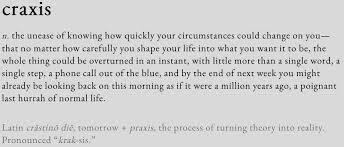
Craxis [n.], Dictionary of Obscure Sorrows
Craxis n. the unease of knowing how quickly your circumstances could change on you—that no matter how carefully you shape your life into what you want it to be, the whole thing could be overturned in an instant, with little more than a single word, a single step, a phone call out of the blue, and by the end of next week you might already be looking back on this morning as if it were a million years ago, a poignant last hurrah of normal life. Latin crāstinō diē, tomorrow + praxis, the process of turning theory into reality. Pronounced “krak-sis.”

Intro

The House in Norham Gardens is the kind of book that gives you the uncomfortable feeling of being too old, too young, too conservative, too radical, too... everything. It's like a refreshing cup of mocha: warm-hearted, following Claire, a fourteen-year-old girl navigating her responsibilities, school and history, full of comforting afternoons with rich familial bonding and un-normal normals. At the same time, warm-heartedness is juggled with a sense of infinity, infinite history stretching in both directions, varying from heavy colonial implications to modern-day preservation of past occurences. The book, somehow, also juggles issues of growing up and social expectation.


[Main]Cast of Characters

Claire Mayfield
Aunt Anne
Aunt Susan
Mrs Hedges
John Sempebwa
Maureen
Liz
Cousin Margaret

General Thoughts

The House in Norham Gardens is stuffed with antiques and blurred boundaries.

For me, it was just the perfect read to both soothe and tear open my existential wounds. At one point, Claire's 'visions' (of tribal peoples carving shields and living their lives, along with her final hallucination (?) this isn't clarified at the end) stand in for a direct statement of her uncertainty, both about growing up, her family's past and her loved ones. The entire book is a masterwork of indirect, semi-stream-of-consciousness and semi-direct reportage, from dialogue to character description.

There was a strong sense of vicarious life in the house mentioned in the title - an extravagant shell that represents the past, but which need not be an anchor to the past, as the Aunts remind Claire.

Made me want to sit down with a good ol' English cup of tea and wait for the sky pour with rain just for aesthetic effect.

5 stars! Absolutely!

Favourite Quotes

Presently the thoughts lost their insistence and the words
won : a strange and distant world moved into the library at Norham Gardens, a world of forests and birds of paradise and
inscrutable beliefs.
~Chapter 3

'I shouldn't think so. There is a rather regrettable tendency
nowadays to fence people off according to age. The "young"—as though they were some particular breed. A misleading idea, on the
whole. Perhaps you are just not good at being fenced off.'
'Oh. I see.'
'The same is done to us, of course. The old. This medicine is quite remarkably nasty.'
'Have a cup of tea, quick. Do you feel fenced off?'
~Chapter 3

She spun, and the bubble spun and the featureless sky spun
around it, and she could not get out, and it would not stop.
~Chapter 10

(I feel kinda bad for condensing my reading into those quotes... There's much more in between, from immigrant elephants, school play jitters, existential dread, absolutely delightful interactions etcetera.)
Profile Image for cara.
55 reviews46 followers
May 6, 2023
In 1970s North Oxford, where we lay our scene:

“Belbroughton Road. Linton Road. Bardwell Road. The houses there are quite normal. They are ordinary sizes and have ordinary chimneys and roofs and gardens with laburnum and flowering cherry. Park Town. As you go south they are growing. Getting higher and odder. By the time you get to Norham Gardens they have tottered over the edge into madness: these are not houses but flights of fancy. They are three stories high and disguise themselves as churches. They have ecclesiastical porches instead of front doors and round norman windows or pointed gothic ones, neatly grouped in threes with flaring brick to set them off. They reek of hymns and the Empire, Mafeking and the Khyber Pass, Mr Gladstone and Our Dear Queen. They have nineteen rooms and half a dozen chimneys and iron fire escapes. A bomb couldn’t blow them up, and the privet in their gardens has survived two World Wars.”

Norham Gardens amounts to a meditation on the passage of time. It’s a unique entry in the genre of philosophical YA fiction, complex and far from faultless. I can’t *recommend* it; see Rosamund Taylor’s review (I think a major issue is that Lively’s approach to the imperial past/present is more sardonic than apologetic, which of course doesn’t work either when we’re talking about real people, real lives, altered by dispossession and genocide), but I commend Lively for the quality of the prose, so startling in its vibrancy and force that I had to pause my reading a couple times, bowled over as I was.
Profile Image for Roz Morris.
Author 26 books374 followers
April 26, 2020
Clare lives with her two aunts in a ramshackle house in Oxford. It's like a living museum to her family, stuffed with photos, books, trunks of fabulous old clothes and jewellery, artefacts collected from foreign travels by adventuring relatives. Clare discovers a painted shield in the attic, brought from the South Seas by her great-grandfather, and it starts to exert an influence on her. At this point, I might have stopped reading as there are a great many stories about a haunted item in the attic, and they tend to be predictable, but Penelope Lively avoids this completely and creates a subtle and poignant magic. Clare is growing up and becoming aware of grown-up concerns, but again this is an unusual take on theme that has been well explored in YA literature. She isn't a rebel, though she's no sap either; she becomes progressively aware of time accelerating around her, of the people who have gone and the fragility of the two family members who remain. Delicately and beautifully done.
This entire review has been hidden because of spoilers.
Displaying 1 - 30 of 61 reviews

Can't find what you're looking for?

Get help and learn more about the design.