Jump to ratings and reviews
Rate this book

The Swan Thieves

Rate this book
Psychiatrist Andrew Marlowe, devoted to his profession and the painting hobby he loves, has a solitary but ordered life. When renowned painter Robert Oliver attacks a canvas in the National Gallery of Art and becomes his patient, Marlow finds that order destroyed. Desperate to understand the secret that torments the genius, he embarks on a journey that leads him into the lives of the women closest to Oliver and a tragedy at the heart of French Impressionism.

Kostova's masterful new novel travels from American cities to the coast of Normandy, from the late 19th century to the late 20th, from young love to last love. The Swan Thieves is a story of obsession, history's losses, and the power of art to preserve human hope.

565 pages, Hardcover

First published January 12, 2010

1226 people are currently reading
27442 people want to read

About the author

Elizabeth Kostova

16 books5,021 followers
Elizabeth Kostova was born Elizabeth Z. Johnson in New London, Connecticut and raised in Knoxville, Tennessee where she graduated from the Webb School of Knoxville. She received her undergraduate degree from Yale University and a Master of Fine Arts from the University of Michigan, where she won the 2003 Hopwood Award for her Novel-in-Progress. She is married to a Bulgarian scholar and has taken his family name.

Her first novel, The Historian, was published in 2005 and it has become a best-seller.

In May 2007, the Elizabeth Kostova Foundation was created. The Foundation helps support Bulgarian creative writing, the translation of contemporary Bulgarian literature into English, and friendship between Bulgarian authors and American and British authors.

Kostova released her second novel The Swan Thieves on January 12, 2010. Her third novel, The Shadow Land, was released in 2017.

Ratings & Reviews

What do you think?
Rate this book

Friends & Following

Create a free account to discover what your friends think of this book!

Community Reviews

5 stars
7,630 (21%)
4 stars
12,059 (33%)
3 stars
10,387 (29%)
2 stars
3,975 (11%)
1 star
1,422 (4%)
Displaying 1 - 30 of 4,670 reviews
Profile Image for Greg.
1,128 reviews2,147 followers
January 26, 2010
I'm sorry Goodreads First Reads program. First I win a book I only entered to win to tear it apart, and then I win this book which I also didn't like. But please believe me that I didn't go into this book hating it, I had an open mind. Please take this into account and send me more books for free please!!

A whole lot of my friends here on Goodreads.com seemed to really like Kostova's first novel, The Historian (with the exception of Kasia, who seemed to feel about the same way that I feel about this book). I don't really know how much all these people and me are really compatible when it comes to reading tastes, but Karen gave it four stars and gave a not so insightful, "yeah it was good", when I tried to question her about it last week (of course I decided to ask her this when she was in the middle of a bunch of other things, just because like a kitten the thought popped into my head and I have to act on the thought immediately before something else shiny distracts me from what I was just thinking).

I want to say that Kostova is a shitty writer, another big time author who is little more than a hack; but I'm going to be nice and not say those things and instead believe that this book is just a sophomore slump (sort of like Zadie Smith's Autograph Man).

I have many problems with the book. I'm going to split them into two groups. Those that don't ruin the reading experience and those that might. In the middle of these two groups there will be a bunch of pictures of things I like better than this book, and following those pictures there will be spoilers. Just a warning.

1) The book feels like something thought up and designed by a marketing team. I imagine the meeting sounding something like this. "People like secret histories, and they like those books to be fat so that it feels like a smart book. We need a book about a secret history that's about 600 pages, but people don't like long chapters so the chapters cant' be longer than 7 pages. Yeah, and didn't that Girl with the Pearl Earring? It's been a while since we had an artist secret history, so lets go with that theme-how many more Boleyn girl histories will these suckers be willing to read?"

Maybe the meeting wasn't so cynical. But I know that the marketing people had their hand on this one.

Gripe one: The super short chapters. Short chapters are fine, but when you start noticing chapters just stop for no reason over and over again in the middle of a narrative, you realize that something is going on here. This annoyed me.

2) Creative Writing 101. Show don't tell. Great the main character is a gifted psychiatrist who can 'make a stone talk'. Why not show the reader this at least once in the book, instead of just returning to this phrase anytime one might forget that this sad-sack is supposed to be a man of talent.

3) Redundancy. Kostova must love some of her words. We are told over and over again that Marlow (that's the main character) can make a stone talk. We can't come across an elderly character without hearing how his (this is always used for men, there aren't old ladies in this book really) skin is transparent. Noses are transparent. Hands are transparent. Foreheads are transparent and I'm sure other body parts too that I'm just forgetting that were mentioned. Find another word.

4) But isn't transparent a great descriptive word for the fragility and ephemeral quality of ones life and the aging process? No, actually it isn't, and this is why I'm now in number 4. Besides being redundantly used, it's also a very bad descriptive word. Skin on old people isn't transparent. You can't really see through it. Transparent means "allowing light to pass through so that objects behind can be distinctly seen." You can't really see through old peoples skin. The skin could be described as translucent, compared to onion skin parchment or thin vellum, but not as transparent. If she had used this description once it would have been fine, but since it was used to describe every single elderly character in someway I started to get really irked at the lazy use of language. And this leads to...

5) If one is going to write a book in multiple first person voices then maybe the author should try their hand at making at least one of those voices distinct from the others. To be fair there are two distinct voices in the book, one for any first person character in the present day, and one for any letter being written in the 19th century; but every voice in their respective eras sounds exactly alike. Is a young women or an elderly man writing this letter? Who can tell except for the salutations. I'm chalking this up to lazy writing. Other similar annoyances on this general idea are having characters say and think things that are just not appropriate for what that particular type of person would say or think. But that's a risk you run when every character is basically the same voice.

6) Show don't tell redux. Kostova I think loves her characters, but she doesn't show the reader any reason to give a shit about any of them. One would think that a 600 page book would be rich with description, but one would be wrong. I think a couple of hundred pages of this book might be taken up with dead space because of the abrupt chapter splices and requisite third of an empty page at the start of each chapter.

Part 1 conclusion: Criticism aside this book isn't really that bad. It's more just inoffensively blah. I can't think of what kind of reader would enjoy this, it's just not that interesting. The only thing going for it is the short chapters that make a reader who has mistakenly begun reading this novel, probably keep reading just out of a basic human curiosity of finding out what happens next, but it's an almost animal curiosity and one devoid of any real care.

Now for an intermission of baby animal pictures.

Baby Chinchillas:

[image error]

Baby Hedgehog:

[image error]

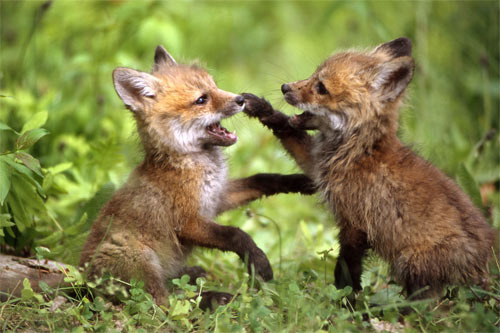
Baby Foxes:


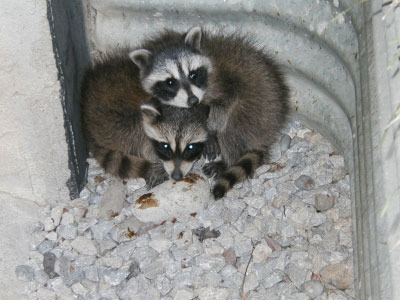
and finally Baby Raccoons:


Now back to the review with spoilers.

The worst thing about this book is that there is no point to it. The big mystery any attentive reader would figure out in the first hundred or so pages. I figured out what the big mystery was, but still felt like, 'no that can't be it, there has to be something more to all of this'. Why the painter main character would go all quiet all because some dude blackmailed a woman makes no sense, maybe if Kostova would have added some kind of magical element to the story then one could believe in the painters condition; but instead with the realism of the book one has to just go with the idea that the painter guys kind of an asshole, and uses this wronged woman painter of a hundred years ago as a tool to avoid having to deal with the real shit going on around him, like his family and other people. This isn't really explored. Instead once the other main character, the psychiatrist, solves the 'mystery' the painter main character all of a sudden decides to speak, he says 'thank you' and miraculously he is cured and let out of the psychiatric hospital he's been staying in. I'm not sure if Kostova has much of a realistic grasp on what exactly psychiatrists do or how they think. She probably does since she went to Yale, but the way she treats the mental health profession in the book would be more welcome in a children's book than in a novel that probably thinks of itself as psychological.

I meant to write more, but when I wrote the pre-baby animal pictures part of the review I had energy. Now I don't. Damn internet for going down once again on me when I started to look for pictures of baby chinchillas. I wouldn't recommend anyone wasting their time reading this book. It's not that it's terrible, it's just so blah and unspectacular.


Profile Image for Candi.
707 reviews5,513 followers
September 14, 2016
4.5 stars

I am by no means artistic or creative, but this seductively written book immersed me in the world of art in a way that left me simply aching for more. I wanted to jump in the car, take a trip to the Metropolitan Museum of Art or the National Gallery, and sit quietly with the beauty of the paintings all around me. The world and the mind of the artist appealed to me in a way that pleasantly surprised me and wholly captivated me.

Robert Oliver, a notable artist, has attempted to attack a painting in the National Gallery and is now consigned to the psychiatric care of Dr. Andrew Marlow. What would drive a man to commit such an act – in particular a man that lives and breathes art himself? An obsession is soon revealed; an obsession that mystifies and leaves both reader and physician thoroughly intrigued. We learn much of this story with alternate first-person narratives, Dr. Marlow’s among them. Marlow is a caring and gentle middle-aged man, a bit of an amateur painter himself. He is determined to unravel the mystery surrounding this complicated and silent new patient; he is a dedicated physician who enjoys the simple pleasures in life.

"Now when I dream big, it’s for my patients, that they may eventually feel that ordinary cheerfulness of kitchen and orange, of putting their feet up in front of a television documentary, or the even bigger pleasures I imagine for them of holding down a job, coming home sane to their families, seeing the realities of a room instead of a terrible panorama of faces. For myself, I have learned to dream small – a leaf, a new paintbrush, the flesh of an orange, and the details of my wife’s beauty, a glistening at the corners of her eyes, the soft hair of her arms in our living room’s lamplight when she sits reading."

We hear from two women that know Robert quite intimately and the character development is superb – an element that is essential to my enjoyment of most any book. A dual storyline of a nineteenth century female Impressionist painter is also introduced very slowly, first by a series of letters interspersed in the main narrative and later by chapters devoted to this portion of the plot. A forbidden love is both haunting and tender. The mystery surrounding this account may be the key to unlocking the mind of Marlow’s gifted and troubled patient.

Initially, I wished that we had a bit from Robert’s point of view, but that desire was quickly subdued when I realized that his narrative would have lessened much of the slow-building suspense. The shifts in narrator and in time in no way confused me and were done seamlessly and with purpose. Elizabeth Kostova’s love for and knowledge of art shines through in this novel and may very well make you enthralled by the magic of the brush as well. If you are accustomed to a fast-paced mystery, then this may not be a book for you. But if you delight in a well-crafted plot that is peeled away layer by layer, then this makes the grade for sure. Exquisite prose and a dose of romance without being overly sentimental furthered my overall enjoyment. I have read Kostova’s The Historian, which I liked though a bit less than this, and I really wish she would write another!

"The painter shows muscles through skin, through clothing, but he or she depicts something else as well, something both elusive and immutable: the warmth of the body, its heat and pulsing reality, life. And, by extension, its movements, its soft sounds, the tide of feeling that rises and floods us when we are loved enough to forget ourselves."
171 reviews13 followers
June 30, 2010
I think the reason that this book seems to polarise opinion is because nothing much happens in it. Psychologist Robert Marlowe acquires the renowned painter Robert Oliver as his patient, and subsequently travels around meeting people who might be able to shed some light on the reasons behind Oliver's breakdown. The majority of the book comprises the memories and insights of these people told in the voice of that particular individual, and so takes place outside the narrative which is really a convenient framework for these first person interludes. This apparently frustrates a lot of people, but it's what made the book so appealing to me.

'The Swan Thieves' is not a book that is driven by action but by a gradual development of the characters encountered, all of whom are vivid and fascinating. I thought the author used different points of view and writing styles well, blending first person narratives in the past and present tenses, third person narratives in the present tense and letters to create an elaborate whole piece by piece. Usually this sort of switching irritates me, so it's a mark of the author's skill that in this case I thought it perfectly suited the book. Each different bit of the writing told me more about the characters and it was this gradual revelation and exploration which made this book such a pleasure to read.
Profile Image for Elizabeth (Miss Eliza).
2,736 reviews171 followers
November 3, 2009
About 20 pages in I thought, this is crap, but I kept reading because I loved The Historian. In retrospect, I should have stopped because this book was so badly written and just such a waste of time it made the Da Vinci Code look wonderful by comparison. Every single character was an annoying pompous jackass and I hope they all die horribly.

A better, more thoughtful review as to the multitude of reasons behind my hating this book will be forthcoming. And they are legion! From glaring continuity errors to just the depiction of artists....blurgh!

When the psychiatrist Andrew Marlowe admits the famous painter Robert Oliver to his care at Goldengrove, he doesn't expect that one patient to change everything about his own life, even his ethics and morals. Robert was arrested while trying to attack a painting by Gilbert Thomas based on the myth of Leda in the National Portrait Gallery. Unable to break Robert's imposed vow of silence, he must try to find the impetus for Robert's breakdown and why he felt he had to destroy that painting by conversing with those willing to talk, primarily Robert's ex-wife, Kate, and mysterious Mary. But more importantly, Marlowe needs to find out the identity of the striking woman Robert draws over and over again...is she the woman who wrote the letters that Robert covets and rereads ad infinitum? Is the woman his wife or perhaps Mary? The deeper in he gets the more Marlowe wonders if he is really doing this for his patient or for himself and he begins to unravel a mystery that has haunted many lives for over a century. The narrative temporally flows between Marlow's search, Robert's past and 19th century Paris. All leading to one revelation...the secret that haunts Robert Olliver.

I have long been hoping for a new Elizabeth Kostova book. I adored The Historian and could not wait to see what story she set pen to next. After reading The Swan Thieves my desire for a new book was sated...but not in a good way. I must honestly say that I am surprised I made it through this book, twenty pages in I really thought it was bad but was willing to give her the benefit of the doubt. With one hundred pages left I almost gave up because I really hated the book. I finished... there was no great revelation, no fixing of all that I hated, but I was one with my dislike. I had simmered from total hatred to strong dislike. But truly I cannot in good conscious recommend this book to anyone, unless you like badly written prose with stupidly florid dialogue, simplistic plotting disguised and drawn out as a mystery with unlikable and unrealistic characters. There is so much wrong with it, but let me just illuminate a few of the key problems I had so that I don't sound like some bitter harpy just venting against a book that obviously took a long time to write.

The characters. The main character, Robert Olliver, seems rather intriguing, but we never actually hear him speak for himself we only hear about him through those he surrounded himself with. So he's the focal point but almost a non character because he is never a narrator, and these narrators... oh, they got on my nerves. Andrew Marlowe is a self centered self impressed psychiatrist with delusions of being an artist himself. He thinks he's so wonderful that the young women around him must feel his longing gazes and return them in kind. He has dubious skills as a psychiatrist, how could someone be a doctor, an "educated man," and not figure out what was going on in the first five minutes. Plus he breaks all manners of ethical codes in the end. I personally like to call this the Robert Langdon effect. Know it all older men who really couldn't find a door right in front of their noses. Then there's Kate, Robert's ex, who is so weak and is just there for exposition of Robert's past and for Marlowe to fantasize about. Mary though is the worst of the modern narrators. I kept going reading the book because I noticed Marlowe narrated less so the book might get better. Wrong! Mary is a nubile young student who lusts after her own teacher. But really how can she spare time for others when she loves herself so much... Eventually she ensnares Robert just as she later ensnares Marlowe who seems to have no ethical qualms about getting involved in his patients recent ex. The two people in fin-de-siecle France are just as bad, with the young Beatrice lusting after her husband's uncle who is a far older man.

You might have caught one of my problems. All the women are lusting after older men. Some men are twenty years their senior, some more. What is with that? It's like some male fantasy that all young women want them and their "experience." I understand if it's driven by plot or character development, but here it just seemed a given that in this world the author has created all young women want older men. I would say that the author was a middle aged man if I didn't know better.

Onto other character flaws. The artists. I have been around artists my entire life. My parents ran a publishing company which published books as well as fine art prints. My mother was an artist. I am an artist. I went to school for a Bachelor's Degree in art. I am currently back in school getting a degree in Graphic Design. There is one thing I can say with 100% certainty. ARTISTS DON'T BEHAVE LIKE THIS! Yes they can be self impressed, self centered and messed up. But all different in their own quirky way. I think Kostova captured what an artist embodies most with Robert in the miasma of his presence...but all the other artists. I'm sorry but they don't spend every second of every day thinking about how they would capture the light, what brush they would use, what exact tube of paint...on and on about this minutiae that, yes, artists do think about, but not only that. The bizarre hyper real artists that she has created live in a little art bubble where there's only art. That's not how life works. If she was trying to show that little has changed over time, how things repeat themselves and how art has basically not changed, she has failed and also annoyed me in the process. Some people have said that this book inspired them to paint and go out and be an artist. If they think that this is what it's like being an artist they are deluded.

But all that is secondary to the predictable plot and the bad writing. This book was in desperate need of culling. A couple hundred pages could have been trimmed. All the time wasted setting up reflections and echos of the past in the present just seemed bogged down with all the unnecessary ephemera thrown in. I was able to figure out "the twist" fairly quickly. There was no big surprise. I think this also has to do with how conventions have changed over time. When you read Bleak House by Charles Dickens, or even Lady Audley's Secret by Mary Elizabeth Braddon the Victorian morals make the secrets not that big a deal to us living in the 21st Century. There was so many ways she could have pushed it or tied it together. I kept thinking about how Robert's obsession with the painting could be pushed in a Hitchcockian direction a la Vertigo and Madeline's obsession with the painting at the Palace of the Legion of Honor. But no... just more young women and old men. There was one line that was so bad I laughed out loud because a trashy romance novel would not have even published it. (I would quote it here but reviewers are requested to not quote from the reader copies...one can hope it will be out by then, but I doubt it). But overall what got to me was her sentence structure is often fragmented and contradictory. Like she's stringing together adjectives, often with words that are polar opposites. Oh, and on a final note...continuity errors! If someone is born in 1947 they couldn't be a small child going to the Rockefeller Christmas show that same year! This isn't The Time Traveler's Wife!

This book was a major disappointment and I really wonder how it will do. Maybe the people who liked The Da Vinci Code can pick this up. Simplistic mystery, not well written, with an aging hero who thinks he's hot shit... yeah, it might yet be a best seller, but those who loved The Historian are warned to stay away.
Profile Image for KatieDMD.
51 reviews6 followers
December 5, 2013

It has been a long time since I've read a book that made me hungry for the next word, whose 400 pages (or so) flew by in an instant, and that after finishing it, I could scarcely breathe and think about anything else for the next few hours. Even the day after, I find my mind drifting to the complex plot, the inscrutable and complicated characters and mulling over the series of events, to see if there could have been any other way the story could have ended, or even begun. I decided that no, the ending was as perfect as the beginning and the middle. It came out of nowhere and slapped you across the face with exquisite timing and impeccable, seamless diction. Every instant of the story was wrapped up in the end, but still lent a little mystery to the characters, still leaving you to think afterwards.

My only critique is the relationship between Marlow and Mary - should there have been romance? Is it ethical, considering that Mary recently broke up with Robert Oliver, Marlow's patient? Or is this not a case of sloppy plotting, but shrewd planning to bind each of the characters to each other and weave them in the fabric of the story? I do not know.

I highly recommend to anyone who loves art, psychology and family. Especially to anyone who loves beautifully written books and who is looking for something to catch their eye and make them think afterwards.
Profile Image for Susan Sherwin.
770 reviews
March 29, 2010
There were things I enjoyed in this novel including some of the writing with its descriptions of art, although, all in all, it was much about nothing. It took too long for the parallel stories to merge and to be connected, and by the time it was done, I was fed up and just wanted to be done with it. I would probably not recommend it to my friends.
Profile Image for Nicole.
212 reviews
January 19, 2011
I can’t believe that the average rating on this book is only 3.41! I think because of that lowish average I went in to this book expecting a little less…but I thought this book was amazing. The whole time I was reading it, I thought, if I was to ever write a book, this is what I would want the voice to sound like. I absolutely loved her use of language, her writing style--great detail, but not overdone, beautiful character development with just enough left to the imagination. Robert was for the reader just as he was for each of the characters who knew him. He was a huge presence without really doing a whole lot to contribute. Dominate, yet absent. Hard to condemn, but hard to like. I came to adore Beatrice de Clerval, as did everyone else apparently. Beatrice was a beautiful woman, with the passion of a great artist, which of course she was.
I enjoyed the pace of this book. This tale was a mystery, but realistic. No explosive Hollywood-style occurrences, but a slow unfolding of suspicions that are later confirmed. I liked the parallels to the Greek myth of Leda and the Swan.
My cousin Krystle let me borrow this book, and when she gave it to me she described it as sad but so lovely. I couldn’t put it in better terms. I love this author, I can’t wait read her other book.
Profile Image for Lorna.
1,051 reviews734 followers
April 24, 2023
LEDA AND THE SWAN - WILLIAM BUTLER YEATS

A sudden blow; the great wings beating still
Above the staggering girl, her thighs caressed
By the dark webs, her nape caught in his bill,
He holds her helpless breast upon his breast.

How can those terrified vague fingers push
The feathered glory from her loosening thighs?
And how can any body, laid in that white rush,
But feel the strange heart beating where it lies?

A shudder in the loins engenders there
The broken wall, the burning roof and tower
And Agamemnon dead.

Being so caught up,
So mastered by the brute blood of the air,
Did she put on his knowledge with his power
Before the indifferent beak could let her drop?


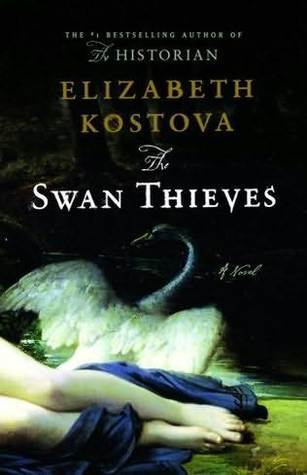
Leda and the Swan is an adaptation of a classical Greek myth that has remained a popular theme for artists and writers over many centuries with various interpretations. And this is the sonnet by William Butler Yeats that comes to mind when one begins to read the beautiful novel by Elizabeth Kostova with the alluring and mysterious cover of the painting Leda and the Swan. In Greek mythology, Leda was the queen of Sparta and the swan was Zeus, the supreme god of Greek mythology. Myth has it that Zeus came to Leda in the form of a swan and raping Leda. Nine months later Leda gave birth to two daughters, Helen who would precipitate the Trojan War, and Clytemnestra who would marry and murder Agamemnon.

This is a powerful story of love and obsession, and one of painting and art, taking place over a span of several centuries with two separate storylines converging in surprising and unique ways. At the heart of the story is a middle-aged psychiatrist, Andrew Marlow, who loves to paint in his free time. Dr. Marlowe is asked to assume the care of a well-known artist, Robert Oliver, after being apprehended just before attempting to destroy a renowned work of art with a knife in the National Gallery in Washington, D.C. Questions abound as to the motivation of this artist threatening to destroy a beloved work of art. However, Robert Oliver has refused to speak and continues to maintain his silence forcing Dr. Marlow to pursue other avenues and perhaps practicing a little out of the bounds as he explores the lives of women previously involved with Robert Oliver. What transpires is journey of love, betrayal, and artistic obsession. When Oliver is apprehended at The National Gallery, in his possession he has a packet of love letters telling a story of heartbreaking treachery as the France of the 1800s is vividly brought to life from Paris to Etretat and the beautiful cliffs of Normandy. And the blurb from my book cover says it best:

"Richly told, beautifully imagined, 'The Swan Thieves' takes us across centuries, from American cities to the coast of Normandy, from young love to last love. Elizabeth Kostova deftly explores the painter's universe--passion, creativity, secrets, madness--and, with the gift for storytelling that made 'The Historian' an international sensation, conjures a world that lingers long after the final page has turned."
Profile Image for Emily.
933 reviews115 followers
February 13, 2010
After loving The Historian I was looking forward to reading Ms. Kostova's sophomore effort. I really couldn't have been more thrilled when I won it from a Goodreads First Reads giveaway. So the disappointment I felt when The Swan Thieves just didn't live up to my hopes was that much keener.

The main character, Dr. Marlow is an amateur painter and a psychiatrist, who throughout the book shows little regard for the ethical standards of that profession. I can't say I disliked him, though, because he simply didn't engender any kind of emotional response from me; I found him very blah and unsympathetic. His patient, Robert Oliver, is a painter who was arrested for trying to damage a painting at the National Gallery, and I didn't find him particularly sympathetic either. I think Ms. Kostova was going for the tortured artist type, but it didn't work for me. Anyway, after a single short conversation with Dr. Marlow, Robert lapses into complete silence. But he draws and paints a single woman over and over and over - he is absolutely obsessed with her. So, logically, in order to solve the mystery of his patient's silence, Dr. Marlow becomes obsessed as well.

Ignoring any other patients he might have had, Dr. Marlow takes weeks off work to track down Robert's acquaintances, poses as a reporter to get information out of Robert's previous co-workers, interviews Robert's ex-wife and ex-girlfriend extensively, steals his patient's property (yes, it was originally stolen by his patient and Marlow returned it to its rightful owner, but still), and flies to both Acapulco and Paris to figure out what's going on. After all of this footwork and research and delving into Impressionist painters' lives, Dr. Marlow puts the pieces together, discovers the firsthand account of what happened to the woman Robert is obsessed with and relays the information to Robert. Who, as it turns out, actually already knows pretty much the whole story, but decides to start talking again because...well, I'm not really sure. So Dr. Marlow tells him he'll need to stay on his medication and give him a call before he does anything rash again, and he's free to go. Interesting treatment plan. Dr. Marlow doesn't mention of course, that he's gotten his patient's ex-girlfriend pregnant (while on that trip to Acapulco) and they're getting married.

The story was lacked credibility, the relationships were unconvincing, the characters uninteresting. A very disappointing second book from Ms. Kostova. Lucky for her, I reserve one-star ratings for the absolute dregs of the literary barrel. But giving it two stars is a stretch.

For more book reviews, come visit my blog, Build Enough Bookshelves.
This entire review has been hidden because of spoilers.
Profile Image for Brooke.
562 reviews362 followers
March 1, 2010
The Swan Thieves, Elizabeth Kostova's sophomore effort after The Historian, is altogether a very satisfying experience from beginning to end. It's nearly 600 pages long, and luckily it uses the pages well. It doesn't lag or become dull in places; instead, it moves forward at a slow but steady pace and reveals secrets bit by bit. Kostova lays out the pieces quite clearly so that even a half-attentive reader will figure out the secrets before they're explicitly confirmed. Some reviews have suggested this is a flaw, but I'm not convinced that the author was trying to make any of the revelations shocking. Just from the way she chose to reveal bits here and there, I think that the reader is supposed to make these connections along with the main character. After all, the main character says more than once that he suspected certain truths long before he finds his proof, and so should the reader.

I was genuinely interested in all the characters and their stories, and just like in The Historian, Kostova used her powerful descriptive ability to bring things to life - rather than the Eastern European cities that popped out of The Historian's pages, The Swan Thieves is full of descriptions of paintings and sketches that don't need any visual illustration for me to picture them in my mind.

The author could have fleshed out the ending encounter between the main character and his patient a bit more; endings seem to be Kostova's weakness, but this book's ending was far and away much better than the strange letdown of The Historian's closure.

Definitely recommended, and I already look forward to the author's next book.
Profile Image for Katie.
298 reviews503 followers
March 29, 2023
Chief crime is the ridiculously bloated length. It's a catastrophically undisciplined novel. The material of this book should constitute no more than a 250 page novel. But it's over 600 pages long. The author seems to write without any filter, without any sense of what constitutes artistry in a novel. It's not just that she loads it with incidental detail; she even crams it with wholly irrelevant and even distracting detail. I guess her editor needs to take a lot of the blame. At the heart of the book is the mystery of why an artist has attacked a painting in a museum. His psychiatrist, who I frequently had to remind myself was a man and not a woman, does a lot of the narration. It's not the most sustainable of mysteries. I had ceased to care by about page fifty. There's a lot of romantic mush. There's the cliché of an undiscovered female artist. All the male characters champion women which I'm afraid made them appear like fantasy figures. In fact the men seemed like women dressed up as men. This book, inexplicably, is way more read than a lot of my favourite authors. There's no justice in the world.
Profile Image for Cheryl.
524 reviews844 followers
August 29, 2016
I want to watch an artist paint, to smell the fumes emanating from the paint brush, to see the forms take shape on the once-blank canvas. I want to feel the intensity of an artist's focus.

Maybe this is why this book captured my reading sensibility and transported me to Robert Oliver's world of impressionism and mystique. I didn't quite grasp the intruding figure that shackled this painter's mind and left him a bit unhinged, but the sanity of the artist has never been mine to understand. I choose instead to bask in the visceral, in the ebb and flow of the life on the canvas.

If art is a feeling, then painting is that feeling expressed in shapes and colors:
The painter shows muscles through skin, through clothing, but he or she depicts something else as well, something both elusive and immutable: the warmth of the body, its heat and pulsing reality, life. And, by extension, its movements, its soft sounds, the tide of feeling that rises and floods us when we are loved enough to forget ourselves.

After revisiting my review of The Historian, I realized that I'm not convinced by Kostova's mystery--there is not the expected crescendo that leaves me spellbound. However, I don't read too many contemporary five-hundred-page novels these days, unless from authors I trust. And I've always loved and trusted the graceful simplicity of Kostova's writing, the way her words glide across the page with a rhythm that advances plot, dialogue, and exposition in integrated fashion.

I was lured by the story of the painter, Robert Oliver, and the women and psychiatrist who circled his life: his wife, his lover, the mysterious Beatrice, and Dr. Marlow. Oliver lives in a world of MFAs and art shows, a world of art professors and great collegiate art programs, a world that most artists and writers dream of, and yet even the celebrity artist and professor has inner turmoil.
How could I become an artist like Professor Oliver unless I could lose myself in front of a whole group of people, lose myself like that to everything but the problem at hand, the sound of my pencil on the page and the flow of line emerging from it?

There is love and heartbreak, partnership and betrayal, but passion is elucidated--passion and the treachery of purpose. The narrative induces the elegance of 1800 France, while still placing the reader carefully back into the modern era. If you appreciate art, or art history, you will love the beautiful evocation of French Impressionism as well as the ride you take with art across centuries, with a few love stories as your anchor, of course.
Profile Image for Sarah Ryburn.
681 reviews35 followers
August 27, 2016
My goodness, this was engrossing. I heard Elizabeth Kostova read from the novel at Lemuria earlier this month, and I have been happily giving over my lunch breaks and evenings to it ever since. A long novel, but thoroughly engrossing––that's twice I've used this word. Fitting.

There were moments in the narrative when I couldn't quite shake the sense of the author's being female, a problem when the protagonist is male. Then again, large passages of plot are narrated through letters written by female characters––no such problem in these. Overall, the characters, plot, and narrative structure are so successful that I am prepared to forgive the author's shadow over Dr. Marlow. Perhaps my seeing and hearing Ms. Kostova read, watching her sign my book with a distinctly feminine hand, in some way colored the novel's voice for me. I do wonder if male readers have sensed the same shadow, found the voice of Dr. Marlow, at least at moments, unconvincing as a 52 year old bachelor... It's actually something about the way he notices women that reminds me quite frankly of how I notice other women. It seems somehow not quite sexual enough, to put it baldly; his manner of noting a beautiful woman seems remarkably like how I might notice her, with admiration rather than attraction, or with a faint note of envy, of silently measuring her attractiveness against an internal standard of beauty and personal style.

Back to the novel's successes... at the reading the author discussed, among other things, the creative birth pangs of a really long work of fiction (her two novels are 560 and 690 pages respectively). A woman in the audience noted that novels seem to be getting shorter and shorter, although we pay the same price whether for 150 pages or 600, and that readers often excuse this brevity particularly if the writer is considered "really quite literary after all." Perhaps even fiction, literary and otherwise, has made its attempted accomodation to the increasingly rapid pace of modern American life. Whatever. This is a book to sit with patiently and perhaps with a pillow in one's lap for extra support, and I say well done.

I savored this one, going back into chapters I'd read three or four days before, lingering over words, phrases, entire paragraphs, and the quintessential delight of letting those words come together as pictures in my mind. The reader's delight and totally unavailable through any other entertainment medium. Flashbacks to 19th century characters (subplot) reminded me a good bit of Possession, a novel the author referenced at the reading. I do love period pieces (both film and writing), and thanks to The Swan Thieves I've discovered a burgeoning interest in that period's art, painting particularly. Wouldn't it be fun to follow up this lovely fiction piece with a collection of 19th century letters? Perhaps the love letters of a famed impressionist painter to his (or her) muse? A romantic novel, indeed, to spark such a romance of ideas.
Profile Image for Michelle.
498 reviews16 followers
July 27, 2012
This was, in a word, disappointing. The attempted narrative structure just really didn't work for me. The story is told from the perspective of three different narrators, along with letters from the past interspersed throughout. I think the structure was problematic simply because the main character - Robert Oliver - was less than interesting. Each of the narrators was telling a story about Robert's life as it related to them, but I never really felt like I knew him. I knew the other characters, I suppose, but then what is the point of having Oliver in the story at all? Aren't I supposed to feel something for him or care about what happens to him?

I suppose that Robert was intended to be egnimatic. This successful, dramatic, tortured artist. But the problem with creating a character that is hard to relate to is that he is hard to relate to. And so I just didn't like him or feel any sympathy for his condition. And then each character that narrated focused on their own feelings about Oliver instead of him. So that just muddied the water. Perhaps there should have been a "Robert" section - one in which he told his story.

And then he has this obsession with an artist from the late 19th century - a French woman. I never understood what it was that made him feel so compelled by her work or her story. He goes to great lengths to paint her, learn about her, etc. And yet...I don't know why. So the "mysterious" aspect of his love for her fell flat in the end.

I really liked Kostova's The Historian, at least the first 450 pages. I think she's talented, and she has a great voice. But the way this story was structured took away from the focus of the main character and so it wasn't great.
Profile Image for Pat.
1,086 reviews48 followers
August 7, 2011
Elizabeth Kostova accomplishes something in The Swan Thieves that no one whose review I've read has mentioned: a true feeling of what it is to be an artist, both young and struggling or older and proficient..she helps those of us who are "wannabee' painters see thru the eyes of a real painter...the importance of light, shadow, a flicker of color added, the emotion tendered in a few brush stokes.She also summons the living presence of the Impressionist movement with a vividness that reminds us why the alleged modern generation is still drawn to Monet, Morrisot, Manet, Sisley et alia.
In addition, she creates dimensional characters (Marlow, Kate, Mary, Henri Robinson), whose "little" struggles, sufferings and unexpected joys reflect ordinary,flawed, believable human beings. Marlow's evolution from someone, who elected(perhaps involuntarily) not to be part of the passions and sorrows of life and become a detached observer, into a person who discovers (my favorite phrase) the mitosis of love, is gratifying.This novel is a genuine romance of spirit, flesh and emotion, neither cloying, nor salacious.It satisfies both intellect and heart. I highly recommend this especially to anyone who still feels that the Impressionists caught the essence of being alive.
Profile Image for Annelies.
165 reviews3 followers
July 15, 2017
I love reading about painting. This was fiction, though Berthe Morisot has existed, but it was for me still worth reading. I could smell the oil paint, see the strokes and the composition. These fictional painting became real for me. I also liked the different points of view, the layers in the book. But most of all, it brought me back to painting myself, a hobby I neglected for a while. And I love it!
Profile Image for Shelah.
171 reviews36 followers
May 4, 2010
I just headed over to amazon to pick up a picture for this review, and I was dreading the act of clicking on The Swan Thieves link, because I didn't want to see how many stars readers had given the book. You see, The Swan Thieves (like her previous book, The Historian) is one of those novels that is so gripping that I want to stand on street corners and press copies of it into the hands of passersby. It's 600 pages long. I started the book on Sunday morning and finished it this afternoon. I know now that many Amazon readers considered it "boring" and "plodding" and "painful" but I found the novel as entertaining as John Grisham and as smart as Ian McEwan, with a liberal sprinkling of French Impressionism thrown in for good measure.

Robert Oliver, a renowned painter, ends up in a mental hospital after trying to destroy a painting in Washington DC's National Gallery. Andrew Marlowe, the psychiatrist assigned to Oliver's care, also happens to be a painter, and although he has a reputation for being able to "make a stone talk" he can't get Oliver to talk about why he landed in the hospital, so he has to do detective work, which leads him to North Carolina, Mexico, New York City and France, and into relationships with the women, living and long-dead, who shaped Oliver's consciousness.

Every few months, I come across a book that's so entertaining I don't want to put it down. Every few months I come across a book that's so smart, I'm impressed by the author's skills as a researcher and writer and want to soak up more of her genius. It's rare that the smart and the entertaining come together in the same book, but (for me, at least) The Swan Thieves is the best of both worlds.
207 reviews1 follower
February 24, 2010
First let me say that I have had this book on at the library since the fall of 2009 and just recieved and read it. I was so so so excited to dive into it.

Secondly, I was and am still an absolute fan of the author's first novel THE HISTORIAN. i recommend to anyone and everyone.

Thirdly!!! What a gynormous waste!!! I so so so wanted to Love this novel. At this point I would just wish I could like this novel. the art genre novel has now been passe for sometime. The author chose such an enthralling subject for her first book. I found the characters to be completely loved by the author, yet I could not find a place in my heart for them. Too many answers left unanswered. I had read others reviews before I delved into the book myself and I find that i agree with many that you keep pressing into the story hoping for a payoff. There is NO NO NO PAYOFF. You also may read the end of the book and ask yourself "Is That IT??" Then you might drop your head in your hand and feel sorrow that you have been duped into reading a bland book from an author that showed such promise in THE HISTORIAN.

Reader beware...
Profile Image for Donna Craig.
1,114 reviews49 followers
June 11, 2021
Elizabeth Kostova writes very slowly, very few books. Much to my dismay. Luckily, the books are really long, so I get to spend some serious time with them.

I guess Kostova’s style could be called slow-burn. The tension builds with agonizing gradualness. I love it! I’m thinking, “this is a little slow....” then, suddenly, I’m completely immersed.

This particular story is about art, artists, a psychologist, and a mysterious crime. Which, like the best stories, involves a mysterious woman. And a doctor who plays a detective. And crosses some lines. Is he confusing his life with his patient’s?

So good! Her books enthrall me. Smart and deep.
Profile Image for Joy D.
3,128 reviews329 followers
April 11, 2020
The setup and first half of this book is reasonably good mystery. An artist stabs a painting and is assigned to a mental hospital. His psychiatrist, Marlow, searches for a motive, since his patient, Robert Oliver, will not speak to him, except briefly at the beginning to give him permission to speak to others about his case. Marlow interviews Robert’s friends and relatives, going to extraordinary lengths and likely breaching professional ethics in the process. A series of 19th century letters plays a role in understanding Robert’s obsession with a particular artist.

Unfortunately, the execution falls down at about the half-way point. This book is slow in developing. There are long stretches of narration where nothing pertinent to the mystery occurs. Superfluous sex scenes are inserted for no apparent reason. Once the letters are finished, the 19th century characters act like they live in the present. And suffice it to say the reveal is a bit of a letdown.

I appreciated the sections on the artistic process, which are detailed and interesting if you are an art enthusiast. I also enjoyed listening to the audiobook, read by a cast. This was my first exposure to multiple readers, and I enjoyed hearing the different voices and accents. This method was a good choice for this book, as various characters narrate long passages in first person. Overall, it is a mixed bag: not bad, but not particularly memorable.
Profile Image for Rosanne.
Author 53 books84 followers
December 25, 2010
This is an exquisitely written art history mystery with a difference: it is elegant. Crafted with poise and knowledge of the art period that is arguably the most eventful, The Swan Thieves enthralls on three levels, and is written from a range of perspectives that ring utterly true.

The reader wishes for the book never to end, because the atmosphere is mesmerising and totally engaging. One never doubts the ability of the author, and trust is never a question: the mystery unfolds and the reader goes willingly onward, hoping the ending will satisfy as much as the rest. It does.

Elizabeth Kostova reveals her fascination with the act of painting on her website. In this book she revels in the ability of art to create shifts and changes in the mind and life of the artist. But not only that: the shifts and changes affect also those most intimate with the artist, and they are changed too.

Perhaps the reader is changed as well after reading such a book: certainly the understanding of what moves an artist possessed by obsession - even though it is love - does make one look at paintings a bit differently.

The Swan Thieves is the kind of book that has the reader desire to start right over when the end is reached. A rare feeling: a rare book.
Profile Image for Kelly.
956 reviews135 followers
September 17, 2019
4.5 stars

This book got under my skin. It was beautifully written, with echoes between past and present rendered delicately, wonderfully, throughout the story. Obsession, theft, possession, and then the eyebrow-raising love between Impressionist artists Olivier and Beatrice echoed in the spring-autumn love of and even, to some degree, between Henri and Aude.

It's a very slow burn, but I had the time to read it for hours on end across several days and to immerse myself in each narrative. Reading through these pages was like watching a painting slowly emerge on a canvas. Kostova strokes, with intelligence and patience, delicate brushes of enlightenment across the centuries of this mystery. She is a master and this is a masterpiece.

I also loved the immensely talented Kostova's first book, The Historian. Both stories are unforgettable. Like The Historian, this book is also meandering, but perhaps more measured and mature.
Profile Image for Vonia.
613 reviews102 followers
February 4, 2019
An affinity, even a love affair with an author begins with the innocent intimation, that feeling that you have discovered something extraordinary. Like the painters in the novel here, it is an innate talent; something that can be quite ineffable. As the emerging painter may say when his/her motives are questioned, "I am simply... into it."

A specific work, painting may not be great, but one can see the talent that lies behind the flaws. And this is not something that can be taught. In this way, it is actually more important than the work itself being great. That can come in time.

Kostova's writing is like this. Although this novel is not necessarily an all time favorite, I am thrilled at the prospect of reading many more of her works. Her words weave together in such a way that I can find myself lost in a simple description of a scene; transported by her interpretation conveyed of a conversation, the thoughts hidden behind an individual's day. Specifically in this novel, her understanding of the artist's world is remarkable. Her descriptions of paintings reflect the learnings of an art historian.

The synopsis as well as the marketing for this focuses on Robert Oliver's incident at The National Gallery of Art in which he tries to slash a painting, Leda, by a Gilbert Thomas. However, this is not an important part of the novel at all really. It serves as a beginning point, yes, but not much else. A little deceiving, as it can barely be said to be the tip of the iceberg. There is much, much more going on in this interwoven tale of two different time periods, spanning countries.

Elizabeth Kostova definitely did her research. Apparently, this novel took her over four years to write. Not surprising, the depth of detail on varying fields of interest, from art history to European cities, to nineteenth century daily lives, New York City to Ann Arbor, Michigan, manic-depression and psychiatry to museums, art education and art retreats, art collectors and auctions.

The focus is primarily on The Impressionists, but pointillism, landscapes, Cubism, abstract, still life painting is also referenced. The other theme that is addressed in more than one storyline is that of love overcoming age barriers. All four of the main romantic relationships feature significant age differences, a few being more than two decades. One is with her husband's uncle. Another is a psychiatrist with his patient's former lover.

This all being said, more is not always better. At over five hundred pages, more than one hundred chapters, this is quite a read. I have read many great lengthy novels where, turning the last page, I wanted more. This was definitely not one of those. Several times I was about to give up. After about one third of the book, the ending was already pretty predictable. So the remainder of the reading was about getting there and how Kostova took her readers there. And what that seemed to equate to was her lamenting on all sorts of things in which her conscientious research was exhibited without adding anything worthwhile to the novel. It could have been about half the current length, but by being less wordy, twice as good in quality overall.

The story is told by three different narrators: Andrew Marlow, the psychiatrist under whose care painter Robert Oliver falls at the residential treatment center Goldengrove, Kate Oliver, the ex-wife of the painter in question, & Mary Bertison, Robert Oliver's lover. Interestingly, this is his story. At least, all the other characters' stories revolve around him; he is the common denominator. He has but a few lines of dialogue, taking a vow of silence for almost two years, thus allowing his story to be told through these other individuals. His true obsession, accurately labeled the love of his life, is a woman dead long before he was even born, Beatrice De Clerval, whom also has no direct narration, her story being told through Marlow's imagination & letters between her and her lover (Oliver).

As for the concluding third of this novel (To which I have to say was really trying... not that is was not a pleasure to read, with Kostova's eloquent prose and insight on emotional complexities, but I found myself waiting some few hundred pages for the conclusion I had already accurately predicted for the most part), there were several things that I found that did not support a great novel. First, the love triangle, which I disliked for its unethical roots, but more so for how conveniently it all worked out, so suddenly.


After all the lengthy story detours and overly wordy chapters, unnecessary in my book (pun intended), the ending was anticlimactic. It seemed Kostova had finished with the heavily researched intrigue and wanted to, finally, tie a pretty bow on it all. The result was this sudden, unfulfilling ending, leaving me saying "Finally!" on the one hand, "That is all? Really? After all that?" on the other.

Kotova's prose; her uniquely masterful insight into emotional complexities, are what save this novel despite all these negatives. Some of my favorite examples:
“I believe in walking out of a museum before the paintings you've seen begin to run together. How else can you carry anything away with you in your mind's eye?”

“Then draw everything. Do a hundred drawings a day,' he said fiercely. 'And remember that it's a hellish life.”

“Marriages are like certain books, a story where you turn the last page and you think it's over and then there's an epilogue, and after that you're inclined to go on wondering about the characters or imagining that their lives continue without you, dear reader. Until you forget most of that book, you're stuck puzzling over what happened to them after you closed it.”

“I don't think painters have the answers about a painting except the painting itself. Anyway, a painting has to have some kind of mystery to it to make it work.”

“The problem is simply finding the right person. Ask Plato. Just make sure she finishes your thoughts and you finish hers. That's all you need.”

“It's funny; in this era of e-mail and voice mail and all those things that even I did not grow up with, a plain old paper letter takes on amazing intimacy.”

"Pushing out through the doors, I experienced that mingled relief and disappointment one feels on departure from a great museum—relief at being returned to the familiar, less intense, more manageable world, and disappointment at that world’s lack of mystery."
Profile Image for Suzy.
825 reviews377 followers
August 28, 2017
A story of obsession, art, (fictional) artists past and present, mental illness and longing for love. At least I think there's a story somewhere buried in the incredible avalanche of detail. At the end I went "what?!!!". Such a weak payoff for 18 hours of listening (500+ pages). 3 stars for the story, at times engaging and tender, but 1 star for the writing, averaging out to 2 stars. I should have trusted my gut about half-way through to abandon.
Profile Image for Cathal Kenneally.
448 reviews12 followers
September 8, 2018
I read The Historian by the same author and enjoyed it. Unfortunately this book didn't live up to expectations. When you enjoy a book by one author you have high hopes for their next book. In the case , it wasn't to be
Profile Image for Jo.
17 reviews1 follower
July 18, 2011
If readers pick up this book, hoping for a story similar to "The Historian," they will be disappointed. Personally, I am disappointed by the number of readers criticizing this book for such reasons. In "The Swan Thieves," Kostova steps away from 'another person's' story and builds a mesmerizing foundation of mystery and breath-taking narrative(s) for her readers.

The story is a number of character developments amidst an intricate storyline, one filled with historical fact and fiction. A fourth of the way into the book, I knew this was a story I couldn't wait to finish and yet knew I would dread finishing. Kostova's inclusion of individual stories, separated - as in "The Historian" - by individual narratives, maintains a tension within the book and expands my curiosity. Her depth of detail is, again as in "The Historian," astonishing: Kostova has a way of writing that is as close to the way we picture life as anyone I have read. Consider the following: "... her perfectly limp, still warm hand...", "It was a vague dream, but it had grown while I wasn't looking, like a dragon under my bed...", "She put her head to one side and touched her mouth with her fingertips as if surprised to find a bit of smile still there," "... their skirts upended as they leaned over, like the feathers of swans fishing underwater...", "... or like my college orientation, where you realize that you know no one at all and therefore no one there cares about you, and you're going to have to do something about it."

Readers who love Kostova love her for her rhetoric, her sense of seeing, and they will not be disappointed in "The Swan Thieves."
Profile Image for Gigi.
650 reviews13 followers
November 21, 2014
Wait, what? 500+ pages of NO TALKING by the crazy artist, he just crazily sketches the same picture over and over, and his psychiatrist is busy running all over the world, and lusting after said artist's exes, until the doc finds a letter that tells the reader nothing new, and the doc asks, "are you in your right mind now?" And the crazy silent patient says, "yes, I have been."

Then they have a quick little chat and all is well.

The end.


Here is my real review:
This book was such a disappointment. We are introduced to questions, why did Robert the talented artist try to slash a painting, who is the woman in the letters from 1879? What is the meaning of Leda and the Swan.

And, why won't Robert talk after his first declaration to his psychiatrist, “you can talk to anyone, even Mary”. (The author reminds us over and over, that almost Robert’s only words to his psychiatrist, Marlow, were those very words. That is apparently an attempt to make the reader forget that psychiatrists don't go around discussing their patients with everyone, and even sleeping with their exes!)

Marlow's childhood.......yawn.....

Then we are treated to pages and pages of the ex-wife talking about her life with the crazy artist, who comes across as someone you would tell your daughters to AVOID AT ALL COSTS! He is a narcissist, selfish, and apt to disappear without warning.

Oh, and a long segue about the wonderful salmon lunch she served the psychiatrist. I imagine it was wonderful because we have many paragraphs describing how he eats soup almost every meal he is at home listening to his classical music. And then more mystery from the wife: Robert received letters from a mystery woman, a mystery woman named Mary…..how does Mary tie in? The psychiatrist goes back wondering, and then gets a letter saying, “ha ha fooled you, I knew her name the whole time, here it is” from the ex-wife.

So, pages 69-239 are the ex-wife.

Then, page 243- we meet Mary. AND Mary “can’t talk” about her life with Robert, but she can write it down.

So on page 243 we start Mary’s story, which starts, "I was born in Philadelphia...." OMG!!! This is where I started skimming. The only reason we are reading the book is to see who the Swan Thieves are, why Robert the talented artist tried to attack a painting, why is he so obsessed, and how does the past influence the present. Why on earth do we need to know where his little mistress was born???? And, get this, pages 243 – 450 are all Mary’s boring story, she a student who sleeps with her married art teacher. This Robert just sounds worse and worse. There are a few chapters interspersed with letters from the 1870’s….and anyone can see what is going to happen THERE!

Then, of course, Mary and Marlow begin their love affair. And they jet all over to solve the mystery of Robert/The 1870’s artist/Leda and the Swan painting.

Oh, and Marlow makes an amazing discovery about the identity of the mystery woman Robert keeps sketching! But then Mary says, “ha ha fooled you, I knew her name the whole time!”

So we finally find out the complete story of the mystery woman/painter from the past. What took so long? A LETTER WRITTEN TO HER WENT MISSING AND WAS OPENED BY SOMEONE ELSE. That old chestnut of a plot device. And, a few pages later, another missing letter is found. See how handy that plot device comes in.

So the psychiatrist shows his OBSESSED COMPLETELY CRAZY “I am NOT going to TALK for a year” patient the letter, this psychiatrist who basically has never done anything with Robert to cure him, he shows him the letter, and Robert is all, “ha ha fooled you, I knew that the whole time, but had no proof, so now I am cured.”

What a happy ending.

To summarize, I was disappointed, the book promises mystery, but does not deliver:

Mystery: Why is Robert so obsessed with this past woman and her life story?


MYSTERY: What is the meaning of this clue: "It said '1879'. After that, two words: 'Etretat. Joy.'....Why would a grown man, a tower of a man, lie down and write something on the wall of his office?"


Mystery: How does the present tie in with the past?


*Sigh*
Profile Image for Sheila.
1,139 reviews113 followers
July 9, 2019
5 stars--amazing.

Reviews for this book are mixed, and I understand why--there's not much plot. This is a dual-timeline historical novel with emphasis on characterization. Not a lot happens, and if you're expecting a thriller, 500+ pages of non-action would seem dull. I greatly enjoyed Kostova's first book (The Historian) as well, though the same complaints ("slow," "boring") are also (understandably!) leveled at it.

I, however, loved the quietness of the characters, the exquisite writing, and the slow reveal of the historical mystery. I really love plots that contain mysterious notes and hidden secrets, and the French art-world setting was perfect. My one wish is for more of Beatrice, whose life was central to the whole book, but who remained mysterious, despite her point-of-view chapters.
Profile Image for Emmy Hermina Nathasia.
530 reviews
August 24, 2017
This is a beautiful, flowy read. I get it that there is no action. That the storyline is rathet flat, its more towards uncovering of past mystery (that is why it's not a thriller). And yet, despite critics hating this book, I became enraptured with the storyline more and more as I go deeper. I am no arts major, a painter of any kind, but the little passion I have for paintings and its beauty makes me appreciate this novel. The ending delivers a sense of satisfying closure, an abrupt if I might say. This book is not for everyone, but for the few that can appreciate this, its a gem.
37 reviews3 followers
September 3, 2012
When I started this book I was enjoying it. About half way through, for various reasons, I had to put the book down for almost a week. When I picked it back up I just could not get back into the story. I found I really didn't much care about the characters or what happened to them. And the plot, such as it is, also had me unmoved. Which pretty much sums up my review.

Displaying 1 - 30 of 4,670 reviews

Can't find what you're looking for?

Get help and learn more about the design.