Jump to ratings and reviews
Rate this book

The Habsburgs: To Rule the World

Rate this book
The definitive history of the dynasty that dominated Europe for centuries

In The Habsburgs, Martyn Rady tells the epic story of a dynasty and the world they built -- and then lost -- over nearly a millennium. From modest origins, the Habsburgs gained control of the Holy Roman Empire in the fifteenth century. Then, in just a few decades, their possessions rapidly expanded to take in a large part of Europe, stretching from Hungary to Spain, and parts of the New World and the Far East. The Habsburgs continued to dominate Central Europe through the First World War.

Historians often depict the Habsburgs as leaders of a ramshackle empire. But Rady reveals their enduring power, driven by the belief that they were destined to rule the world as defenders of the Roman Catholic Church, guarantors of peace, and patrons of learning. The Habsburgs is the definitive history of a remarkable dynasty that forever changed Europe and the world.

416 pages, Hardcover

First published August 25, 2020

723 people are currently reading
7084 people want to read

About the author

Martyn Rady

39 books58 followers

Ratings & Reviews

What do you think?
Rate this book

Friends & Following

Create a free account to discover what your friends think of this book!

Community Reviews

5 stars
651 (21%)
4 stars
1,488 (48%)
3 stars
808 (26%)
2 stars
127 (4%)
1 star
15 (<1%)
Displaying 1 - 30 of 366 reviews
Profile Image for Matt.
1,052 reviews31.1k followers
January 23, 2021
“The Habsburg Empire collapsed in 1918, but the Habsburg idea was always about more than territory and politics. The Habsburg idea was complex. At its heart lay the inheritance of Rome and of the Roman Empire, renewed by Charlemagne and the Staufen emperors, whose heirs the first Habsburg rulers imagined themselves to be. The Holy Roman Empire embodied one aspect of this idea, hence the Habsburg ambition to fill the supreme office of emperor. So too did Austria, which under the Babenbergs had developed its own myth of exceptionalism. Over almost seven hundred years, impulses and emphases changed – service to the Catholic faith and leading the struggle against heresy and the Turks were the most consistent. But the Habsburgs also stood for the grand eloquence of the international Baroque, bringing enlightenment and care to subjects, empowering the state, making Europe safe from revolution, cultivating an architectural style as a universal idiom, and pursuing a civilizing mission within or beyond the territorial limits of its power…Their legacy survives not only in architecture and great collections of art and natural history, but also as a vision that combined power, destiny, and knowledge, and blended earthly and heavenly realms in a universal enterprise that touched every aspect of humanity’s temporal and spiritual existence…”
- Martyn Rady, The Habsburgs: To Rule the World

Frankly, my interest in the Habsburg Dynasty stems from its concluding chapter, in which they played a major role in the beginning, losing, and ending of World War I. In particular, the precipitating event of the war occurred on June 28, 1914, when the heir presumptive to the Austro-Hungarian Empire, Franz Ferdinand, was killed by a young Bosnian Serb gunman. On November 11, 1918, the final day of the war, the last Habsburg Emperor, Charles (the First of Austria, and Fourth of Hungary), formally dissolved the dynasty, though chunks of the Empire had already seceded.

Knowing some little bit about their inglorious flameout, I sought out Martyn Rady’s The Habsburgs: To Rule the World to get a better idea of where the Habsburgs started, what they achieved, and how they came to their bitter – though relative to the Romanovs, less violent – end.

This was a book I found frustratingly inconsistent, with my attention waxing and waning from the first page to the last. In some parts, I would read thirty pages without looking up; in other places, though, I would read the same page three times without remembering to go onto the next.

My issue, I suppose, is with Rady’s scope and structure. The Habsburgs has ambitions towards comprehensiveness, beginning in the 10th century and following the dynasty all the way to 1918. Yet, at 329-pages of text, Rady has no choice but to be extremely superficial in his coverage, it being impossible to cover so much material at any depth in so few pages. As such – and I say this having brought little foreknowledge to this subject – I often missed the connection as one emperor transitioned to the next, or failed to grasp an individual’s importance, having spent so little time with him or her. This confusion is compounded by Rady’s attempt to intersperse the narrative flow with thematic discourses on a variety of subtopics, some of them a bit idiosyncratic. These include long musings on Baroque art and architecture, freemasonry, and even vampirism.

In 1755, with the agreement of church authorities, the body of a woman [in Moravia] was exhumed, decapitated, and burnt on the grounds that her corpse had been attacking villagers at night. This was the fourth time in three decades that the diocese of Olomouc had sanctioned exhumation, including in 1731 the disinterment of seven children, whose bodies had all been burnt. On news of this latest episode, [Empress] Maria Theresa sent two doctors to investigate, but the terms of their commission left in no doubt what the empress expected of them. As she explained, it would be of “great service to mankind” if their report could wean “credulous people” from their misbelief.

To be sure, these diversions can be quite a bit of fun, but this enjoyment was lessened as I sensed that I had not yet grasped the underlying history.

Rady’s hybrid, somewhat scattershot approach is all the more unfortunate because the Habsburg story is pretty tangled and complex. They first appeared out of the mists of time as a powerful family that – for reasons impossible to fathom – people jointly decided were heaven-sent rulers. Their domains were scattered across Europe and the New World, not a contiguous kingdom but a patchwork of locations that no longer appear on the map. Just to make things even harder to follow, the Habsburgs were entangled in the Holy Roman Empire, and also – for a time – had two branches, one in Central Europe, the other in Spain.

Personally, to keep all this straight, I would have needed a book and author far more focused and methodical. Yet I also acknowledge that I probably would have appreciated this more, if I knew more to begin. This is probably not the best place for beginners.

The Habsburgs gets better as it goes along, from the distant to the less-distant past. This is a function of the Habsburgs’ empire contracting, and the Spanish branch falling away. Rady does more when he tries to do less.

The tale ends, as it must, with the poorly-stitched Austro-Hungarian Empire falling to pieces during World War I, a war that began in no small part because of the Empire’s weakness. This momentous endgame, from the death of Franz Ferdinand to the formal dissolution in 1918, is covered in roughly twenty-five pages. Such a cursory retelling is unfortunately free of any keen insights.

Rady is a historian who is clearly enamored with the Habsburgs, and demonstrates his love with undeniable enthusiasm. In his conclusion, especially, he waxes eloquent about the dynasty’s high points, and discusses the life of Otto Von Habsburg, the last Austro-Hungarian Crown Prince, who lived long enough to become a member of the European Parliament. While I did not get as much out of this as I hoped, Rady’s passion is infectious. Though I intend to look elsewhere, The Habsburgs, for all its flaws, certainly made the case that this extinguished house deserves the attention.
Profile Image for Anthony.
375 reviews153 followers
October 19, 2025
Blood Runs Thick

The Habsburgs are one of the most important dynasties in world history. Dominating Europe and America from their birth in the 900s until its collapse in 1918. Even then Otto von Habsburg, the last Crown Prince was a central figure in a post war world. The family took its name from Habichtsburg, aka ‘Hawks Castle’ and in the late 1400s began to become consistently elected Holy Roman Emperors, perhaps the most famous and powerful being Charles V, elected in 1519, who was also King of Spain in 1516. They were able to check the power of France, the largest state in Europe. Charles famously had a life long tussle with Francis I. With the founding of the New World further, their influence delved into Peru, Mexico, the Philippines and even Taiwan. Even as the line ran out in Spain in 1700, power in Central Europe continued for another 218 years.

The Habsburgs were famous for their large lower jaws, a result of inbreeding, between 1450-1750 Rady notes a huge amount of uncle-niece marriages, first cousin marriages and first cousin once removed marriages. This created genetic defects, epilepsy and explained why the Spanish line became defunct. There was power and there was grief. By the 1850s times were changing. Emperor Maximilian of Mexico would be executed. Crown Prince Rudolph would commit suicide and Archduke Franz Ferdinand would famously be assassinated causing the First World War. Emperor Karl I would inherited and unable to save a crumbling state. He would also be unsuccessful with his attempts to restore himself to the throne, tragically dying at a young age. In such the dynasty would whimper to an end, treated badly by the socialists and later the Nazis alike.

The Habsburgs: The Rise and Fall of a World Power is good in parts and has a general overview of the Habsburg dynasty from its foundation to collapse and beyond. I found some parts really engaging and enjoyable such as Charles V, Phillip II, Archduchesses and Franz Ferdinand. Others I found simply boring and had to driver through them to carry out. The introduction is slow, I didn't get it or the message and found the conclusion not sufficient enough, the family today is glossed over. A paragraph of Otto von Habsburg is given, but nothing of his son and the head of the family today Karl von Habsburg. It is a useful read and Rady offers a fair view. The end is poignant and I feel the regret like so many others of the empire being completely gone and insignificant today.
Profile Image for Mircea Petcu.
211 reviews40 followers
August 4, 2024
Casa de Habsburg are originea în nordul Elveției, în Aargau. Chiar și după ce au intrat în posesia ducatului Austriei, habsburgii au considerat că e doar un pas spre revendicarea mult mai bogatului regat al Boemiei. Abia în secolul XIV, Rudolf "Întemeietorul" a dat habsburgilor o conștiință istorică ce va transforma Austria și dinastia.

Denumirea dinastiei vine probabil de la castelel Habichtburg (în germana veche, "Habicht" înseamnă șoim) de lângă râul Aare din Elveția.

Întinzându-se pe aproape o mie de ani, durata dinastiei este remarcabilă. Pe când multe dinastii s-au stins, habsburgii au avut, în ciuda consangvinizării, aproape întotdeauna moștenitori de sex masculin, și când nu au avut au apelat la veri și nepoți.

Recomand
Profile Image for K.J. Charles.
Author 65 books12.1k followers
Read
December 15, 2021
A single volume history of the Habsburgs, which is impressive. Thank god for e readers. It's something of a gallop, given the scope, which can make it a bit dry at points, but plenty of good asides and interesting snippets, and it's helpful to have the whole story told together to stitch up my knowledge of the disparate parts.
Profile Image for Kuszma.
2,849 reviews285 followers
April 2, 2023
Azért ezek a Habsburgok tényleg nem semmi figurák. Valami fatornyos faluból kiindulva eljutottak odáig, hogy övék lett komplett Dél-Amerika, és pluszban még a Fülöp-szigetek, hogy az európai területekről ne is beszéljünk. Persze aztán szétmállott az egész a kezükben, Ferenc Jóska első világháborús kalandja betette a kaput, de azért mindent összevetve nem semmi. A rossz nyelvek, igaz, azt mondják, az egész sikertörténet nem köszönhető másnak, mint a család kreatív házasodási gyakorlatának - de gondoljunk bele, mennyivel nemesebb nászokkal világbirodalmat építeni, mint pallosokkal. Rady amúgy a Habsburgok felemelkedését az ún. "Fortinbras-pillanatok" felismerésének tudja be. Ezek a csávók ugyanis kifejlesztették az érzéket, hogy rendszerint a legjobb pillanatban toppantak be egy szomszédos birtokra: akkor, amikor minden számba jöhető közvetlen örökös holtan hevert a padlón. És akkor előrántottak egy másodunokatestvért vagy egy elfeledett nagybácsit, aki történetesen épp össze volt házasodva egy Habsburggal, majd erre hivatkozva bejelentették az igényt a területre. Ennek köszönhetően pedig csak gyarapodtak és gyarapodtak, amíg más vérzett helyettük.

description
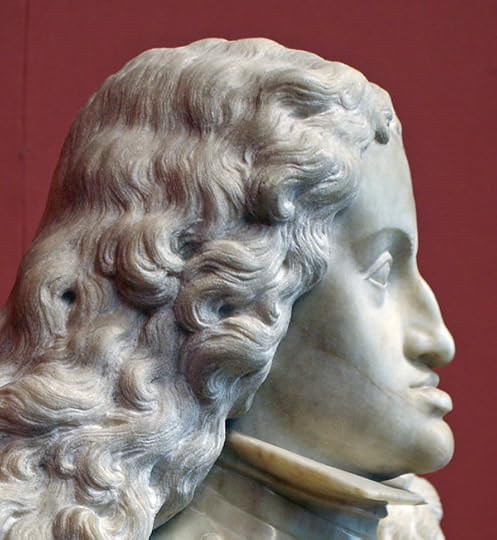
(A híres Habsburg-áll, avagy a beltenyészet gyümölcse. A képen a spanyol II. Károly. Ha egyáltalán látszódik az álltól.)

Mostanában amúgy lányom vérre menő küzdelmet vív a történelem tantárggyal, amit unalmasnak és száraznak tart - hát persze, hogy az, ha évszámokat és nyers, egymástól független adatokat akarunk a gyerek fejébe tömni*. Holott itt van például Rady, aki tökéletesen illusztrálja, mit is kell csinálni a történelemmel, hogy vagány legyen. Itt van például a kötet struktúrája, ami egyszerűségében bámulatos, a világos tagolás iskolapéldája. A szerző úgy bontja fejezetekre a témát, hogy minden fejezet a Habsburg klán egy-egy tagját veszi tollhegyre, de nem kezeli ezt túl mereven, mert a fontosabb eseményekre, jelenségekre (pl. Dél-Amerikára vagy a barokkra) külön egységet szán. Ettől az egész szöveg átlátható lesz, kirajzolódik a folyamatok egymásra rétegződése. Hogy a történelmi figurák nem a kozmikus űrben lebegnek saját akaratukba és gyarlóságaikba kapaszkodva, hanem igenis bele vannak ágyazódva a globális környezetbe, és úgy függenek elődeik döntésein, mint a marionettfigurák.

Másfelől Rady képes megragadni ezeknek az alakoknak az emberi voltát - nem kis részben a humor segítségével. Elképesztő érzékkel szedi össze azokat a fun facteket**, amelyektől az egész szöveg eleven és pezsgő lesz, a humornak köszönhetően a Habsburgok nem ércszobrok lesznek, hanem emberek, akiket bátran meg is mosolyoghatunk. Mert mosolyogni van min, hisz a Habsburgok tényleg eredeti figurák. Van közöttük vallási fanatikus, mint a spanyol Fülöp, aki úgy gyűjtötte a mumifikálódott őskeresztényeket, mint más a porcelán nippeket. Vagy ott van a Felvilágosodás bajnoka, II. József, aki szentül hitte, hogy a népet tanítani kell, ha beledöglik is***. Színes társaság ez, bölcsek és ostobák, ravaszok és őrültek, rendes csávók és utolsó gazemberek évszázados keringője. De egyvalamiben mindannyian hasonlítanak: az uralkodást hivatásnak tekintették, olyan tehernek, amelynek elviselésére ők és csakis ők alkalmasak. Nem tartoták magukat németnek, tirolinak vagy bármely más népcsoport tagjának - identitásuk leginkább római és katolikus volt, mindenesetre valami, ami független a lokális önazonosságtól, azok fölött lebeg. Pont ez tette alkalmassá őket arra, hogy évszázadokig uralkodjanak olyan területek fölött, ahol az emberek ezerféle nyelven beszéltek, és ezerféle identitást alakítottak ki maguknak. Amikor a nemzetállamok sorra formálták a maguk képére az uralkodócsaládokat, a Habsburgok akkor is megőrizték nemzetek fölöttiségüket - ami a nacionalizmusok korában valóban anakronizmusnak tűnt. De ha egy nacionalizmusok utáni kort akarunk elképzelni, akkor talán nem hiábavaló elmélkedni azon, mit is tudtak a Habsburgok, amit mi elfelejtettünk. Jó, hát őskeresztény múmiákat ne gyűjtsünk, mert az hülyeség.

* Speciel azzal sem értek egyet, hogy a honi történelemoktatás a történelem egészét mereven szétbontja magyar és világtörténelemre. Ez a kettéválasztás ugyanis merőben mesterséges, a valóságban nem létezik. A magyar történelem mindig a világtörténelem része, és amikor ezt perifériára szorítjuk, akkor olyan összefüggések felismerésétől fosztjuk meg a diákokat, amelyek elengedhetetlenek a folyamatok átlátásához.
** Amikor Rady előadja, hogy a kokaint először az osztrák Novara fregatt által begyűjtött kokaincserjéből állították elő, az első kokainisták egyike pedig egy Habsburg főhercegnő volt, az nem csak arról szól, hogy van egy jópofa apróság, ami színezi a főszöveget. Hanem az egészben megvillan, a szerző mennyire behatóan ismeri a témáját - tulajdonképpen nincs olyan pitiáner adat, ami elkerülte volna a figyelmét. Az pedig, hogy ezekből a pitiáner adatokból biztos kézzel választja ki azokat, amelyek végig stimulálják az olvasót, Rady sziporkázó tehetségét bizonyítják.
*** Bár a Felvilágosodást hajlamosak vagyunk valami alulról jövő forradalmi gondolatnak tartani, Közép-Európában inkább volt felülről irányított kényszer, amit magukat "jó pásztornak" kikiáltó uralkodók igyekeztek kínnal-keservvel a nép fejébe verni.
Profile Image for Hagar.
189 reviews45 followers
April 4, 2025
Great overview of the Habsburg dynasty. Usually, history books cover the family's influence during the 19th and 20th centuries. But this one goes all the way back to the 10th century, beginning in Switzerland and the Habsburgs' role in the Holy Roman Empire. The author adds breadth, but of course, such a long timeline is inevitably going to lack in depth. I still found it quite good. The gaps can be filled with more focused studies of certain eras. Recommended.
Profile Image for Obsidian.
3,230 reviews1,145 followers
August 7, 2020
Please note that I received this book via NetGalley. This did not affect my rating or review.

Not too much to say here, this was a solid historical nonfiction book about the Habsburgs. It was dry in a few places, but most historical books are to people. Even though I have a history degree, I still get bored reading certain things. I thought that Rady did a great job of taking a really in depth look into the beginnings of the Habsburgs and to the end of that dynasty. For those who don't know, the Habsburgs officially were over when on November 11, 1918, a proclamation was issued marking the formal dissolution of the Habsburg monarchy. I found it interesting that the "last emperor" was Karl I and how he refused to abdicate and went into exile after the 1918 proclamation. Also going to add until this book, I had no idea how long lived this dynasty was and how much reach they really had. I can see someone turning this into a very impressive series someday on HBO. Forget dragons and incest (looking at you Game of Thrones) but bring on no dragons and incest (look this made me laugh, I had a hard week).

"The Habsburgs" itself gives you a pretty big overview of this dynasty that spanned several hundred years and had a lot of fame and infamy among its family members. Due to this book of course I got nosy and found some great resources online to read up more about the historical figures that are discussed in this book. And honestly, I do recall reading about the Habsburgs during college, but my school tended to consolidate major historical events and focus more on wars. The book has a nice flow I thought, though at times I did get bored here and there (why the 4 stars).

Book kicks things off and goes into Rudolf I, the first king of the Romans of the Habsburg dynasty (his reign started in 1273). Things that I found interesting though were reading about Charles V, the Holy Roman Emperor and the first who was the ruler of so many countries, they said the sun did not set on his empire. Rady goes into the fact though that they realized that the empire was going to have to be broken up cause you know, rebellions and all that. And then we get into the squicky part of the book (to me at least) when Rady relays facts about the intermarriages that went on in order to keep the land/countries in the family. Of course, nothing good comes from interbreeding (see Romanovs and Queen Victoria) and soon the babies born to these marriages kept dying and any infants that lived had some deformities.

What I thought was a bit weird though (in a history way) was that once the empire split it seemed like bad things seem to befall the descendants. Rady goes into Marie Antoinette, Mary Louise, Franz Joseph, Emperor Maximilian, and of course Franz Ferdinand.

This book includes maps and photos which were much appreciated. I think this would make a fine coffee table book for those out there who want to know more about The Habsburgs and also are historical buffs.
3,537 reviews183 followers
May 11, 2025
Absolutely marvelous book, readable, informative, enjoyable, if you are in any doubt about this book then read the Guardian review, easily available on Google or see the link below, and I see no reason to repeat what it say. If in doubt just read and enjoy.

The Guardian review can be found at: https://www.theguardian.com/books/202....
Profile Image for Ian K.
11 reviews2 followers
March 29, 2021
I enjoyed this book simply because I like the subject matter. It took an embarrassingly long time to finish because of its sometimes idiosyncratic structure and tedious style. However, I did learn a lot from this book. I liked how it interweaved different cultural aspects of the empire along with the rulers. I particularly enjoyed the second half of the book where it began to pick up the pace.
Profile Image for David.
733 reviews366 followers
May 27, 2020
Austria is a bloc of different nations and different races under a united rule … and it is an idea of enormous importance to the civilization of the world. Because the present execution of this idea is, to put it diplomatically, not altogether harmonious, it does not mean that the idea itself is wrong. – Rudolf, Crown Prince of Austria (1889, found in this book at Kindle location 5187)
This book is an enjoyable easy read and I hope that the above quote makes it clear that the fate of the Habsburgs and their lands is not totally irrelevant today.

The author also wrote The Habsburg Empire: A Very Short Introduction. I believe I read somewhere that, in order to meet the implicit promise of the title, the author felt that he had to rush through a lot of stuff in a manner which left him unsatisfied. Hence this book. I can understand the author’s feeling (if indeed he actually had this feeling) because the Hapsburgs zigged and zagged all over European history, starting as an unpromising group of aristos around the Germany-Switzerland border, and getting progressively more inbred and odd as they played key roles in the Protestant reformation, the Battle of Lepanto, the exploitation of the New World, the age of alchemy, the scientific revolution, the rise of freemasonry, and so forth, all of this long before lighting the match on the first genuinely world-wide war. That’s a lot of madness to fit into a Very Short Introduction.

The author doesn’t seem to have any particular historical ax to grind, but those who feel that all history should be examined through current historical values may feel the need to pummel the author with an unabridged dictionary.

For example, the author’s failure to excoriate the ill-fated Maximilian for being an agent of European imperialism in Mexico will surely unhinge those who feel that the rest of us are idiots who need to be regularly reminded that colonialism did far more harm than good. I’m of a milder opinion than some about this, but I think this author went pretty easy on Maximilian, who seemed more interested in seating protocol and the arrangement of place settings than seems wise for someone thrust into such clearly unstable circumstances. Of course, for most people, poor judgment doesn’t end up with you in front of a firing squad, but that’s a drawback of setting yourself up as a monarch.

Another great character who gets a little more room in this book is Albreach Vaclav Eusebuis v Valdstejna, known to history as “Wallenstein” in part because his real name wouldn’t easily fit on the boardgame that bears his name and therefore guarantees a strange sort of notoriety. Here’s a sentence I enjoyed:
He [Wallenstein] had his horoscope cast several times by Kepler, but Kepler made several miscalculations so his lucubrations on Wallenstein’s character (agile, active, merciless, and so forth) may be safely disregarded.
As happy as I am to see the word “lucubrations” given a solid airing, I have to say I really wished for more detail. But I guess that even a book which is an expansion of a Very Short Introduction has to draw the line somewhere.

All of the above is even before the last generation of galloping madness, pointless suicide, mindless militarism, petty hairsplitting snobbery, spiteful nationalism, and lust for power, all of which seem in retrospect to be specifically designed to place Franz Ferdinand in the path of the assassin’s bullet.

I guess all of this is not everybody’s idea of fun leisure reading, but I enjoyed this book greatly and recommend it.

Thank you to Netgalley and Penguin for the free advance egalley copy of this book.
Profile Image for Pia G..
437 reviews145 followers
January 13, 2025
rady, habsburgların yüzyıllar boyunca farklı bölgelerdeki yönetimlerini ve uyum sağlama yeteneklerini çok anlaşılır bir şekilde sunmuş. kitabın habsburg ailesini derinlemesine anlatmadığını söylemek zorundayım. evet, dönem ve genel tarihsel bağlam hakkında harika bilgiler edindim ancak ben habsburg ailesinin kişisel yaşamları, yönetim stratejileri ve iç dinamikleri hakkında daha ayrıntılı bilgiler edinmeyi umuyordum. yine de habsburglar ve avrupa tarihini şekillendiren rollere dair kapsamlı bir giriş kitabı olduğunu düşünüyorum.
Profile Image for Jordan.
5 reviews11 followers
May 28, 2020
As someone that is doing a PhD on the 15th Century Netherlands, where the Habsburgs achieve power in Brabant, Netherlands and Spain after the Dukes of Burgundy, this was an interesting read. It was useful in giving me some peripheral knowledge for my studies while also being extremely readable and not as dry as much of the academic articles and books I read on a daily basis.

This book tracks the Habsburgs, a fascinating family that grew to be one of the most powerful dynasties in the world for centuries: from controlling the Holy Roman Empire in the 15th century, gaining control of most of Europe (including the Netherlands and Spain as previously mentioned) and beyond. Although I had heard their name mentioned in regard to different periods in history, this book meant that, for the first time, I realised just how long this dynasty was in power. Martyn Rady is clearly very knowledgable on the subject, a professor of Central European History. However, unlike many professors, he is able to convey his erudite wisdom in accessible and readable way. I also appreciated the breadth of scholarship that he incorporates from so many languages, and not necessarily from a Eurocentric perspective, meaning the reader is allowed a much wider image.

This is one of those great history books that spans multiple time periods, so you are able to peripherally get a bigger picture of the historical context of multiple generations. The only issue I found, as a medievalist, was that the Renaissance was noted as a “time of learning” in contrast to the medieval period in the introduction. Having studied the Medieval period for almost 10 years, I know that the middle ages was a time full of learning and the search for knowledge. But this was a very minor detail, and, given the Habsburg’s grew in power with the advent of the Renaissance, did not become an issue for me.
Profile Image for Arianne X.
Author 5 books91 followers
November 17, 2025
The Giddying Exhilaration of Power

I am waiting for Trump to claim descent from fictitious Old Testament prophets as did the emperor Maximilian I, or perhaps a fake genealogy linking Trump to the Habsburgs as Phillip II of Spain had done to link himself with the priest-kings of the Old Testament. We are getting close with the AI superhero memes and with Christians already styling Trump as chosen by their fictitious God, i.e., the divine right to rule as a cooky king. The giddying exhilaration of power is drawing in right-wing idealists, religious fanatics, malcontents and opportunists.

There are many valid and accurate parallels of the Trump regime with the Nazis, the fascists, and the Bolsheviks, I have made many of them myself, but I am finding that the strongest and most relevant parallel to be with the Middle Ages and in the conduct of Medieval rulers and the attitudes of people where it could be said “what pleases the prince has the force of law”, irrespective of legal constraints. Add to this parallel of religious belief with credulous and gullible Christians in the Middle ages and the Americans of the twenty-first century credulously accepting the same the religious attitudes, beliefs and values when it comes to governance. The Christian belief parallel is missing for the Nazi, fascist and Bolshevik comparisons. But people who think they have a special channel to God are always the most dangerous.

In many respects, the U.S. is reverting to the mean of human governance patterns, viz., dictatorship and authoritarianism, the brief flirtation with a constitutional republic and representative democracy being an exception. Constitutions are easily overthrown; the Holy Roman Emperor Ferdinand II easily overthrow the Bohemia’s historic constitution in 1620 just as Trump is easily overthrowing the America’s ‘historic’ constitution. Ferdinand II reserved to himself and his heirs the power to enact laws and decrees. Does this sound familiar? In the second half of the seventeenth century when the doctrine of monarchal absolutism was developed such that “His Majesty is absolute master and may order as he wish, without excuse or delay.” Sound familiar? Then as now, a withering of the legislature enables executive power. In place of the equality of all before the law, we now have the non-equity of all beneath the ruler. At least by the eighteenth century, monarchs such as Maria Theresa of Austria came to see their divine right to rule as something to be done for the common welfare, not personal benefit.

We are reverting to the governing paradigms of the Middle Ages. The Habsburgs learned that they needed to build private wealth in order to wield public power in the Medieval Holy Roman Empire. In our time, we can see how Trump is exercising public authority based on private wealth, real or perceived, and how he is escalating public power by expanding public corruption to enlarge his private wealth in a continuous viscous cycle of wealth, power, class, corruption, and capitalism, by which Trump is building his own personal power base at the expense of public needs. Just as Medieval monarchs could make a private profit from minting coins, so Trump profits from minting meme coins. But at least in the case of the Medieval monarchs, the coins had real value and use in commerce. In both cases, the best interests of the ruler and the best interests of the state are often not the same. In these cases, the authority and influence of the state is a direct challenge to the authority and influence of the ruler.

The Eighteenth Brumaire of Donald Trump

The entire justification for government, or theory of the state, is that individuals owe deference to some sort of public good or common authority for the benefit of all individuals. One model prioritizes personal liberty to achieve the best outcome for individuals; the other prioritizes the public good to achieve the best outcome for individuals. The issue is that a strong state can become the vehicle for a liberal program of reform (individual empowerment, progress, rule of law, press freedom) or the means by which to impose authoritarianism through a dictator assisted by accomplices with their own agendas. The U.S. is obviously transitioning from the former to the later. A strong state can provide stability, routine certainty, and predictability or arbitrary and capricious despotism. This is all to say that the institutions of the state are of less importance than the staffing of the state.

Just as Marx saw how the intersection of capitalism and class struggle brought Louis-Napoleon Bonaparte to power as emperor of France in 1851 to make France great again, after the revolution of 1848, we can now see how the same confluence of capitalism and class struggle brought Donald Trump to power after the era of civil right expansion and civil liberty guarantees to make America great again.

The instability and chaos ensuing from the Trump regime is being caused by plunder and harassment of the unprotected people. Just as the Habsburgs issued decrees disguised to look like acts of the imperial diet, Trump issues executive orders disguised to look like acts of Congress. Just as the Habsburgs used vague laws for treason to cast a wide net to capture any protest so too the Trump regime uses expansive yet vague definitions for terrorism to cast a wide net to capture any protest. Then as now, martial fervor and war fever are driven by apocalyptic Bible reading. The erratic behavior of the Trump reign will be described as one of American domestic political instability and increasing international tension and isolation.

Endemic corruption, terrorism and widespread banditry were the strategy used to bring nonconforming religious minorities to heel in the sixteenth century. For this, the regiments of soldiers most experienced in robbing, looting and fighting were employed just as today ICE recruits and employs domestic terrorists to bring nondocumented minorities to heel in twenty-first century America. Historically, secret police act under secret decrees, I wonder what secret orders have been given to ICE.

The Fate that Awaits

Just as the Habsburg Empire (The Austro-Hungarian Empire or the Dual Monarchy as it was also known in late nineteenth and early twentieth century) was plagued by the dueling forces of imperial unity and national sovereignty, so too the U.S. of the early twenty-first century is becoming increasing plagued by the dueling forces of national unity and state/regional sovereignty. So much so that one can argue that the U.S. is already in a low level asymmetrical slow civil war and headed toward spheres of increasing regional autonomy. For example, the ‘deep’ south of the old Confederacy has very little in common (socially, culturally, economically, politically, with the west coast or the northeast. These differences have been papered over with appeals to national unity that were effective during the Cold War and even in the so-called war on terrorism but are now wearing thin. Increasingly, people are also identifying by characteristics other than those of national unity and forming new communities of identity and social bonds based on ethnicity, religion, political party, region, etc., much like the late Austro-Hungarian Empire.

No Need to Read the Following

The author talks about the state of the growing, assimilating, enlightening and flourishing secular Jewish population at the turn of the nineteenth century and the fate that awaited them in central Europe. This too is something that I have thought and wrote about. The following is a direct quote from one of my books (published in 2021) but since this is not an effort to promote my own books, I will not provide the book title or refence here. This is why one needs to read no further, this is outside the scope of the book.

“There was also the downfall of progress itself. Who were the victims of the atavistic blood magic and soil fetish of the Nazis? The Jews of course. Why the Jews? Because a humanist reform Judaism burst upon nineteenth century Europe in a flourish of scientific advancement and social progress that astounded the world with an awakening that threatened the primitive modern racial tribes of a moribund Europe. In the minds of the reformers, Judaism was a non-ethnic based and non-geographical benefit to all humanity. Reform Judaism brought a new cadence of advance; it enlarged knowledge and gave western civilization a second wind of progress. They represented a new path to human universality and for this they were despised and hated out of envy. They were hated by the peoples with no such path. One could characterize the Jews as a people at once cursed and blessed. They have been described as a people with too much calling. A people who have had to develop both instinct and intelligence to survive, but who were not allowed to thrive for long in any adopted nation or place of exile. Condemned to be expatriates everywhere, in whatever nation the Jewish diaspora found itself, they became the leading intellectual light and awoke the darkest counter antipathies. The racial prejudices of Europe were alarmed and set into motion. Too much consciousness raising progress too fast is overwhelming and too threatening. The Jews injected rapid, overwhelming, and soon to be unwelcome progress into every subdivision of knowledge and division of commerce. They brought a perplexing combination of fascination and discomfort to a civilization prepared for neither. Perhaps we need more lessons in perplexity? The Jews transformed the world metaphysically, but the madman monster could not abide this harmony and instead pursed the blood soil struggle to the death, his as well as that of many innocents. The madman stood against such progress and advancement as it was a threat to his poisonous notion of nation. The pathological and cold madman, choked by his own mythology, warmed only by his own ideological hatred, could not remain neutral. Steps were taken to derail the advancing and threatening progress and bring about the end of the disconcerting human advancement perpetrated upon western civilization by the Jews. Western civilization wrapped itself in the fatality of downfall. Those complicit in the Holocaust were those who went as low as they could go in the age where the ideological hatred possessed by the leaders was converted into a sociological pathology of the masses. Ironic how the Jews, starting with an exclusive angry, vengeful, jealous tribal volcano god and an even more exclusive identity, became the cosmopolitan elite who became the victims of identity politics and tribal passions in the modern world. The Nazis invented modern identity politics and with it a continuity of hatred raging from extreme anti-Semitism to the racism and misogyny now seen in right-wing American Christian Fundamentalism. Soon to be Christian Fascism. Christian Fascism is stealth fascism. It comes about with the claims made by the Christian majority in the U.S. that it is a persecuted minority. In reality, it is the Christians who persecute anyone who disagrees with them. They are the bullies of belief claiming to be the persecuted. In a classic example of projection, the persecution they claim to be victims of is the persecution they would like to inflict upon others. This is the world turned upside down which is the Christian worldview.”
Profile Image for Ilia Markov.
337 reviews22 followers
May 31, 2025
The history of the Habsburgs spans over 1000 years; It's no small feat to write a history that feels both interesting to read and covers all the significant events to help you understand the story of the dynasty.
Profile Image for Boudewijn.
846 reviews205 followers
July 4, 2021
This was a bit of a dissapointment. It took me quite some effort to get my way through - the thematic structure of this book didn't help as well. No doubt the book is well-researched and factually correct, but the writing style is rather tiresome.
Profile Image for Benny.
678 reviews114 followers
September 25, 2020
De Habsburgers wordt in Vlaanderen een beetje op de markt gezet als de sequel van Bart Van Loo’s De Bourgondiërs. Deels terecht, beide boeken gaan over een historische dynastie, over het ontstaan (en vergaan) van een in Europa gewortelde identiteit.

Maar Rady is geen Van Loo. Van Loo is een bevlogen Vlaamse verteller, Rady is een ernstige Engelse historicus. Dat scheelt al snel een pak op de borrel.

De Habsburgers bevat (te) veel details en (te) weinig leven. Rady schetst een breed verhaal, maar zijn historische figuren worden nooit echt boeiende personages. Uit het kluwen van Karels, Maximilianen en Ferdinands geraak je nooit helemaal wijs en op den duur kan het je zelfs niet zo veel meer schelen.

De Habsburgers is een nuttig academisch naslagwerk, leerzaam maar niet echt boeiend. Het is fijn dit doorworsteld te hebben, maar toch ook een beetje een gemiste kans.

Rady krijgt wel een extra ster voor de extra leestips die achteraan in het boek opgenomen zijn!
Profile Image for Eleanor.
1,131 reviews232 followers
August 10, 2020
I read this in proof so unfortunately did not get to glory in the finished edition’s excellent front cover. It’s also not necessarily my usual bag, but I picked it up because I knew a lot of my customers would be keen and I wanted to make up my own mind. And it’s excellent! Rady has about nine hundred years of history to distill into <350 pages, and does so masterfully; the occasional confusion about dynasties (so many Ferdinands!), genealogies, and religious affiliations were mostly easily resolved by consulting the multi-century family trees in the front of the book. (A lot of family-tree typos in the proof copy, though; more “Emporers” than you can shake a stick at. Presumably these have been dealt with in the finished version.)

The chapters are a perfect length: long enough to provide an overview of a topic or period, short enough to feel manageable and give a pleasing sense of progress. And although Rady is a historian, not a comedian, he clearly has a keen sense of the ridiculous (such as the attempts to cure a particularly mad scion by forcing him to sleep with the mummified corpse of a saint, which–surprise–did not work). His style is light but not lightweight, witty but not intrusive, and intelligent but highly readable. The topic is also less Eurocentric than I’d imagined: the Habsburgs presided over the first genuinely global empire, with outposts in Latin America thanks to their Spanish connection as well as the occasional foray into Southeast Asia (who knew?!) and Africa (likewise). Highly, highly recommended.
Profile Image for Olaf Koopmans.
116 reviews9 followers
May 11, 2025
This is a disapointing read considering the remarkable position the Habsburgs took in the European History of the last 5 to 6 Centuries.
Given that the book contains just a bit over 300 pages, you start to wonder if it's possible to contain so much personal, cultural, military and religious history of the Habsburg Dynasty in such a constrained amount of pages. And the conclusion is, you can not.
Jumping through ages, themes, rulers, conflicts and social developments, Rady tries to tell it all and ends up telling not a lot.
But then again, you really wonder, while reading, if he really is interested in all these aspects of Habsburg rule.
It’s already clear from the start that Rady definitly has a preference for the cultural, symbolic, mythical and mystical side of the Habsburg History. Especially in the first part of the book, he glosses over a lot of complicated political and religious struggles. Almost like he wants to get that out of the way for the things he really wants to talk about, being it burial tombes, libraries or architecture. But unfortunately also more obscure stuff like Vampires, botanical gardens, Freemasons or religious processions.
All good and well if you're writing an extensive 1000 of pages or more history about the Habsburg period. But if the subtitle of the book is 'The rise and fall of a world power' and then you only treat the Reformation superficialy (Luther for instance is only mentioned a couple of times in passing) then you know that something went wrong.
Rady uses a popular style of writing, frivilous at times, going on the ironic. That probably would have suited a book about just Habsburg culture, with all it strange perks that their rulers and families produced. But if you seriously want to tell the the story of one of the important Dynasties of Europe, ruling in the middle of the Bloodsheds of the Thirty Year War up till the WO 1, then such a style just isn't right.
Rady better sticks to writing about Barok and Biedermeier. That's were he is at his most comfortable. That's were he can do little harm.
Profile Image for Justin.
54 reviews52 followers
August 28, 2020
***I was granted ARC of this via Netgalley from the publisher.***

There have been many ruling dynasties in Europe but none so interesting, for me at least, than the Habsburgs. In the book, The Habsburgs: To Rule the World by Martyn Rady, the author explores the history of the family as they go from a small noble family to becoming the leaders of the Holy Roman Empire thru to its evolution into the Austro-Hungarian Empire to its final dissolution of the empire in the early 20th century. Rady provides an intriguing look at the interworkings of the family and how political acumen, marriages, and luck helped keep the family in power when at times it looked like their hold on the throne was precarious. But the author just doesn't focus on the military and political and achievements and failures of the family but also looks at their cultural achievements as well in the sciences and the arts. I liked this because it helped make for more interesting reading and gave context to the wider influence of the Habsburg family. I would recommend this book to anyone interested in European history as it is a fascinating read.

Rating: 4/5 stars. Would recommend to a friend.
Profile Image for Kristy.
1,427 reviews181 followers
May 15, 2025
Compact and chock full of fascinating European history, Rady writes in a way that’s easily understandable and engaging even for non-history buffs. As I read, lessons from school came back to me while other information was new to me. There is so much information pact into less than 500 pages that I wish I would have taken notes or done better at absorbing some of it. A great read for both the armchair historian and a curious mind.

I received an advanced copy through Netgalley in return for an honest review.
Profile Image for Erica.
68 reviews
September 22, 2024
Mostly engaging with the exception of a couple of chapters. This book explains the Habsburg dynasty very well. I also enjoyed reading about the European history I already knew from the perspective of the empire. Grateful I went on a walking tour in Madrid last year where I learned about the Spanish Habsburg’s and was like “that last name is NOT Spanish and I must know more”
Profile Image for Scarlett.
151 reviews60 followers
August 1, 2022
This is one comprehensive chronicle about the rise and fall of the Habsburg dynasty! This family has a history of over nearly a millennium, so I imagine that several tomes wouldn't manage to cover everything. If you are looking for concise narrative packed in one book, this is it. Personally, when I am choosing a topic from history that I want to read about, I prefer it to be as detailed as possible, no matter the number of pages, so I found this book to be lacking some information. Other than that, it's a page turner (again, page turner for history buffs who are pumped up about stuff like Holy Roman Empire, Diet of Worms, primogeniture or colonialism).

This book spans from the first Habsburg, Radbot of Klettgau (who named his Swiss castle Habsburg) to the last ruler, Charles I of Austria (dethroned by the Austrian Parliament after World War I). This family is so huge, that even today, there are so many descendants that are alive that it's hard to count. Chapters are dedicated to the most famous Habsburgs and the biggest events during their reign, but a lot of minor characters peek here and there. Not all of those people are interesting, though. I guess that author and I disagree on which Medieval Habsburg should get the most coverage.

My biggest problem with this book is that it doesn't have equal account of each period. For example, Medieval period barely takes 1/4 of the book. In my eyes, Charles V lived in the most interesting period and he got only one chapter. On the other hand, Maria Theresa and Joseph II part went on and on and on. I don't know if this was author's personal preference, but I am pretty sure that it is. Maybe it was the error in editing, but retelling of Mozart's "The Magic Flute" went on for pages. When he started describing Baroque art and architecture, I was baffled. Why include art history now when you didn't before?

I can only imagine how difficult it is to approach writing about history. What do you include - facts only, rulers only, military strategies, social politics, everyday life? What about art, economy, foreign relations? It's truly hard because, after all, everything is history. That being said, I only wish that author analysed Medieval part as much as he did everything else. That could have given a book a more rounded feeling.

Thanks to Hachette Book Group, I got my ARC through Edelweiss.
Profile Image for Moniek Bloks.
Author 8 books55 followers
January 22, 2021
The Habsburgs now live in people's imagination as those rulers with the large jaw who eventually were so inbred that they died out. Now, this is not entirely true, and their legacy deserves more than that. They once ruled large parts of Europe and even of the New World and the Far East. 

I imagined it would be quite difficult to fit all of this in one book, and it turns out... it was. Naturally, the book focuses heavily on the male side of things - they were the actual rulers, after all. I did find it rather disappointing that - especially in the first part of the book - very few women even receive a name, and when one finally did... it failed to mention that she was actually England's first undisputed Queen Regnant. Poor Queen Mary I just can't catch a break.

I also did not find the tiny jabs at women funny. Sophie of Bavaria, the mother of Emperor Franz Joseph I of Austria, is described as "tiresome," but why exactly was she tiresome? We'll never know. All in all, these moments made for very exasperated reading for me. I don't know if this was intentional on the author's part, but the lack of women in the story of the Habsburgs just simply didn't do it for me. Of course, there's Empress Maria Theresa as one of the main figures, but even her story does not seem to do her justice. 

Overall, the book is well-researched and factually correct, and the writing style is quite pleasant if you can overlook the "tiresome" Sophie. It will serve well as an introduction into the Habsburg empire, but if you're looking for the women, you won't find many of them here.
Profile Image for Elma Voogdt.
874 reviews15 followers
August 2, 2020
Het boek De Habsburgs vertelt het verhaal van de Habsburgse dynastie door de eeuwen heen. Het richt zich op alle grote leiders in Europa die deel uitmaakten van de Habsburgse dynastie.

Het huis Habsburg was een belangrijk Europees geslacht, vernoemd naar het stamslot Habichtsburg in Aargau. Van 1438 tot 1806 behoorden bijna alle keizers van het Heilige Roomse Rijk tot het huis Habsburg. Leden regeerden daarnaast eeuwenlang over Oostenrijk, Bohemen en Hongarije. In de 16e en 17e eeuw heerste het geslacht over Spanje en Portugal en in de 19e eeuw over het groothertogdom Toscane en andere delen van noordelijk Italië. Van 1482 tot 1581 regeerden de Habsburgers ook over de Nederlanden en tot 1795 over de Zuidelijke Nederlanden.

Zeer gedetailleerde geschiedenis van de familie, interessant om te lezen, maar het nam een tijdje om er doorheen te komen. Het boek las niet erg vlot vanwege alle details. Het is duidelijk dat dit een boek is van een serieuze historicus die jarenlang intensief heeft gezocht naar informatie en details over de Habsburgers.

Als u op zoek bent naar een boek over Habsburgers met een geloofwaardige en solide historische basis, dan is dit het wel. Het is zeker geen boek voor beginners op royalty gebied, je hebt als lezer toch wel enige kennis van de geschiedenis van de Habsburgers nodig.
Profile Image for Lee Butterfield.
90 reviews
July 19, 2022
An amazing synthesis of 900 years of history. Frequently witty and a joy to read.
Profile Image for Romulus.
966 reviews57 followers
July 24, 2022
Piąta gwiazdka za przystępność. Doskonale się ją czyta. Autor prowadzi czytelników przez całą historię rodu nie popadając w przytłaczające detale. A mimo to w historii tej jest tak wiele treści, że może mimo to przytłoczyć. Historia tej dynastii jest bogata, obfitująca w kłamstwa i legendy a przez to też fascynująca. Zresztą, kłamstwa i legendy na swój temat tworzyli sami Habsburgowie (ale jaki ród nie tworzył - nawet polska szlachta in gremio wierzyła w sarmackie bajki, aby odróżnić się od swoich niewolników). Głównie po to, aby dodać sobie splendoru, kiedy wspinali się na szczyt. A zaczynali jako skromny ród na terenie dzisiejszej Szwajcarii (bliżej im było do tzw. baronów rozbójników). Zaczynali brutalnie, od zwykłego, bezwzględnego rabowania - także kościołów i klasztorów - i stopniowo wspinali się po drabinie dynastycznej postfrankijskiej Europy. Trochę szczęścia plus żywotność rodu sprawiło, że ze wygrali bo byli ostatnimi spośród rywali, którzy trzymali się na nogach. :)

Można napisać, że po pierwszym upadku w średniowieczu dalej mieli z górki. Choć ich upadek z dzisiejszej perspektywy zaczął się wcześnie. Ale był rozłożony na lata, tak jak upadek imperium, które stworzyli na dwóch kontynentach. Najpierw upadła gałąź hiszpańska - najszybciej degenerując się intelektualnie i genetycznie. Środkowoeuropejska przetrwała jako znacząca siła do końca I wojny światowej.

Chyba żaden panujący ród nie odcisnął większego piętna na historii Europy. Dla mnie zawsze kojarzyli się z katolickim fanatyzmem i religijnym monolitem. A to nieprawda. Było wśród licznych władców kilka łebskich jednostek, w tym kobiet (fascynująca cesarzowa Maria Teresa), które wybijały się ponad takie proste etykiety. O ile hiszpańską gałąź arcykatolickich władców pokonała głównie genetyka z powodu kazirodczych związków, tak tych z Europy Środkowej - pokonała historia. Tak czy siak, dzieje mieli imponujące i czytanie o tym sprawiło mi sporo frajdy.
31 reviews
February 11, 2025
Enjoyable enough as an audiobook. Broad strokes and narrative heavy (as you’d expect given the period covered) but with the odd sprinkling of social/cultural history here and there to break up the monotony of x Habsburg conquered/lost y region of Central Europe ad infinitum.

Some fun sassy historiographical jabs at other (unnamed) historians whom the author feels have been unjustly harsh on specific Habsburgs - love a bit of obscure academic drama I have absolutely zero stake in whatsoever.
Profile Image for Noah Weiser.
40 reviews
May 24, 2025
Honestly I was surprised by how good this book was. I had wanted to brush up on my Habsburg history since watching Die Kaiserin over winter break. This book did a really good job of capturing 700 years of Habsburg history from their humble beginnings in Switzerland their position as the most powerful empire in the world because of the Spanish Habsburgs and then their ultimate downfall after World War I. Honestly I would read another Habsburg book again especially because there are so many people and places relevant it was hard to keep track of things not in Vienna (Wein).
Profile Image for Марія Мигалевич.
5 reviews
July 18, 2025
Це найкраща книжка цього року😎

Дуже цікаво і легко написано, багато ідеталей, поданих з гумором. Такий баланс важко витримати, для цього потрібно не лише блискуче знати тему, а й бути чудовим письменником.

Дозволяє зрозуміти роль Габсбургів у загальноєвропейських процесах, а поки Карл ІІ не помер, то й загальносвітових.

І текст придатний для читання непідготовленою аудиторією, тож рекомендую.

О, і якщо хтось хоче поговорити про Габсів, то запрошую. Династії це мій гіпефікс з дитинства, а Габси чи не улюблена з них після Рюриковичів.
Displaying 1 - 30 of 366 reviews

Can't find what you're looking for?

Get help and learn more about the design.