Clive Barker was born in Liverpool, England, the son of Joan Rubie (née Revill), a painter and school welfare officer, and Leonard Barker, a personnel director for an industrial relations firm. Educated at Dovedale Primary School and Quarry Bank High School, he studied English and Philosophy at Liverpool University and his picture now hangs in the entrance hallway to the Philosophy Department. It was in Liverpool in 1975 that he met his first partner, John Gregson, with whom he lived until 1986. Barker's second long-term relationship, with photographer David Armstrong, ended in 2009.
In 2003, Clive Barker received The Davidson/Valentini Award at the 15th GLAAD Media Awards. This award is presented "to an openly lesbian, gay, bisexual or transgender individual who has made a significant difference in promoting equal rights for any of those communities". While Barker is critical of organized religion, he has stated that he is a believer in both God and the afterlife, and that the Bible influences his work.
Fans have noticed of late that Barker's voice has become gravelly and coarse. He says in a December 2008 online interview that this is due to polyps in his throat which were so severe that a doctor told him he was taking in ten percent of the air he was supposed to have been getting. He has had two surgeries to remove them and believes his resultant voice is an improvement over how it was prior to the surgeries. He said he did not have cancer and has given up cigars. On August 27, 2010, Barker underwent surgery yet again to remove new polyp growths from his throat. In early February 2012 Barker fell into a coma after a dentist visit led to blood poisoning. Barker remained in a coma for eleven days but eventually came out of it. Fans were notified on his Twitter page about some of the experience and that Barker was recovering after the ordeal, but left with many strange visions.
Barker is one of the leading authors of contemporary horror/fantasy, writing in the horror genre early in his career, mostly in the form of short stories (collected in Books of Blood 1 – 6), and the Faustian novel The Damnation Game (1985). Later he moved towards modern-day fantasy and urban fantasy with horror elements in Weaveworld (1987), The Great and Secret Show (1989), the world-spanning Imajica (1991) and Sacrament (1996), bringing in the deeper, richer concepts of reality, the nature of the mind and dreams, and the power of words and memories.
Barker has a keen interest in movie production, although his films have received mixed receptions. He wrote the screenplays for Underworld (aka Transmutations – 1985) and Rawhead Rex (1986), both directed by George Pavlou. Displeased by how his material was handled, he moved to directing with Hellraiser (1987), based on his novella The Hellbound Heart. His early movies, the shorts The Forbidden and Salome, are experimental art movies with surrealist elements, which have been re-released together to moderate critical acclaim. After his film Nightbreed (Cabal), which was widely considered to be a flop, Barker returned to write and direct Lord of Illusions. Barker was an executive producer of the film Gods and Monsters, which received major critical acclaim.
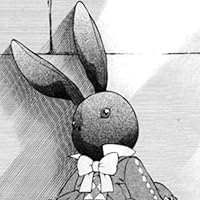
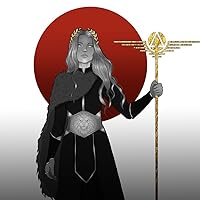
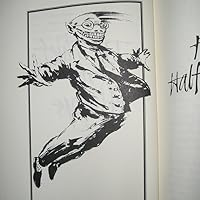
Barker is a prolific visual artist working in a variety of media, often illustrating his own books. His paintings have been seen first on the covers of his official fan club magazine, Dread, published by Fantaco in the early Nineties, as well on the covers of the collections of his plays, Incarnations (1995) and Forms of Heaven (1996), as well as on the second printing of the original UK publications of his Books of Blood series.
A longtime comics fan, Barker achieved his dream of publishing his own superhero books when Marvel Comics launched the Razorline imprint in 1993. Based on detailed premises, titles and lead characters he created specifically for this, the four interrelated titles — set outside the Marvel universe — were Ectokid,
I finished reading "Imajica" for the third time recently, and regretted that there had been so many years between this and my last reading.
The first time I picked it up I only got to read the first volume, through absolutely no fault of my own. The first actual, full reading was a couple years later, and by that time, Clive Barker was my favorite author. I was familiar with his horror stories and novels, and had read some of his more fantasy-oriented books, but "Imajica" truly stands on top of everything else he's done. His newest series, "Abarat," offers a scope and story that's perhaps as ambitious as "Imajica" (it's too early to tell; there are three out of five books remaining to be published in that series); "Everville" and "The Great and Secret Show," both excellent books, also concern other worlds being discovered by regular people on Earth. But this is his best.
As Barker states in the foreword, "Imajica" is an attempt at exploring ideas of theology, psychology, geography, through storytelling--and this even is an understatement. The themes that Barker takes on in this book are each enough for their own novel, and yet, it never feels too long, never gets tedious, and is always exciting.
Una novela realmente excepcional y un final que se anhela durante toda esta segunda parte. Un desarrollo de los personajes que hace imposible no involucrarse con ellos y una evolución de la historia en que cada pasaje, por más breve que sea, tiene un sentido en la obra total. Una prosa exquisita y contundente en un mundo imaginario que no dejará indiferente a ningún lector.
Gentle is a man who makes his living forging paintings and has his fun womanizing and generally doing whatever feels right at the time. He has no past and no real direction. Then he discovers his sometime lover, Jude, is being hunted by a hired killer. Oh yeah, and there are other dimensions and magic and all sorts of things that blow his mind.
My Thoughts
So here’s my story with Imajica. I bought this as a duology in paperback form. So I read part one a while ago. And I only recently finished part two. This wasn’t wise, I know, because said duology is meant to be read as one, long book. It is one long book. I knew that. I did what I did anyway. I wanted to preface everything with that, because this is going to try and be a review of the entire experience, but clearly mine was a little… extended.
Reading this in two parts with time between gave me a unique perspective, I think, on the pacing of this story. The first half felt overly long, and I found myself frustrated at times with the hiccups the characters faced. Barker likes to have his character face trials and obstacles, like any author, but in this case, many of them in the first half felt like they halted the progression of the story for too long. It made me feel like I was pushing through, whereas the second half covers so much ground that it feels kinetic and keeps you reading with an anxiety to know what happens next. I wish the whole thing could’ve been like the second half.
The world building here is immense, which is probably why that first half felt bogged down to me. Barker had his work cut out for him, because he clearly set out to make this journey ambitious as hell. There’s so much to know, so much terminology and history and back story, and I felt it enriched the experience when I got a chance to step back and take it in as a whole. Especially considering that this is a far cry from your typical fantasy. I see so many authors who just plunk elves and orcs into their version of Middle Earth, and this was so apart from that, but it takes a lot of work to get there. For Barker and for us as readers. You better want to learn about this world, and if you do, you’ll be rewarded.
The character development is the sort you hope for in a book this long. It seems like it’d be a given that characters are going to be different by the end, but there were some scary moments when I feared Gentle, our protagonist, was going to continue on as if he’d learned nothing. Still Barker didn’t let me down. To the point that I wonder why I doubted.
Here’s something that’s more on a personal preference note: I don’t like the way that Barker introduces two characters, goes out of his way to tell us over and over and over that they are soul mates and can’t stay away from each other and have this amazing rapport, but whenever they’re together they fight. They argue. They can’t stand each other. So of course, they part ways. It sometimes feels like he has these dreams and wishes for characters that can never come true, because he has no control over their choices. It’s baffling, and it always leaves me feeling kind of empty. Because why tell me one thing and then show me another?
It has to be mentioned at the last that this book is gorgeously written. What will always bring me around to Barker is his writing style. His words, the way he chooses them, and how I’ve never read anyone who writes the way he does. He can capture the beauty in absolutely anything.
So if you’re interested in a fantasy story with a world you’ve never seen before, whole new territories to explore, definitely read this.
* I take my writing seriously and consider comments the reward. Please do not leave “like button” clicks, until you are accompanying them with remarks for me. *
I paused “Imajica” for two years and it feels good to finish it! Borrowed from a friend, I was game to accept his suggestion of a horror author I would not otherwise read. The first novel contained revolting, needless violence and was lucky to receive three stars. That half, called “The Fifth Dominion”, was bleak and dirty. A review reassured me that this story requires one-hundred pages to grasp a foothold. I persevered, as I in turn urge future readers to do! This second part, called “The Reconciliation”, grows unforgettably magnificent. Its point at last captivates us and it is enthralling to watch the principal characters move towards it, now that we know who they are. By rote, not only is the second portion clear and less despairing: it focuses on the magic inner workings of Clive Barker’s saga.
Our Earth is “dominion” number five of a universe called “Imajica”. Four are “reconciled”, traversable on foot or by vehicle; simple border crossings, with exception of the “First”. This is God’s country, in recent centuries. No one treads there, fearing it is Heaven itself and that doing so might equate death. Venturing to and from Earth requires transporters, with some risk. Trips pass, for a few seconds, through a perilous plane that approximates hell. Goddesses were exiled long ago, subject to surprisingly encouraging commentaries on Clive’s part. The visually glorious message is that if the feminine of God and females of our world took charge: there would be harmony and plenty, instead of greed.
Our heroes are: Pie, a “mystif” born in the First dominion and Londoners, John and Judith. These two solely recall about fifteen years of their lives and only now question why. Who they are and what they are each meant to do, with the help of special family and friends, bring this juggernaut saga its sympathy. A multitude of complex and bizarre workings, that I’m amazed a sole writer invented, manages to fuse together. I can’t believe I have emerged with this feeling but will tell the truth: I wish I could read of their third journey!
Clive Barker's imagination is a thing of greatness. For the first time in recent memory I was unable to predict where a narrative would take me and I enjoyed the ride thoroughly.
The only thing keeping this ending from 5 stars is the amount of unanswered questions bouncing in my skull: Why did Judith end up loving Sartori with no real motivation other than he said he loved her (and knocked her up when she thought he was someone else)? She'd heard that from COUNTLESS men over the course of the entire book but one faker who'd tricked his way into sleeping with her says it and suddenly she's ready to follow him to the ends of the earth? It seemed out of character--I found her very difficult to empathize with by the end, and her sudden (highly annoying) switch to "I don't need a man, I'll just hook up with one of the fish people to help raise God's granddaughter." lost me completely. Jude was so headstrong and determined before and the switch to cooing, bouncing-baby-on-lap mother seemed wrong for her.
Why was the Tabula Rosa introduced if they were only going to be slaughtered like cattle and put up no real resistance or create any sort of true conflict? If the Reconciliation was so important, why did the death of about *5* people cause Gentle to quit, run, and hide for 200+ years? I was expecting something on the scale of mass genocide, not a handful of people dead in a small house in London.
And most of all, with all the talk of completing the circle and that Creation was both male and female, isn't killing off the masculine God tipping the scales in the other direction? What about balance?
But despite these criticisms, this was a fantastic journey and I'm so happy to have finally read it.
This entire review has been hidden because of spoilers.
Avoir les poches profondes je te financerais un beau p'tit film avec ça. Mais bon, ce n'est pas le cas pis anyway qui veut financer un film en 2020 ? C'est un peu comme si t'avais décidé d'investir dans Nortel en 2007.
Sinon, j'viens peut-être de trouver, dans la phrase "like its maker, the map was flawed but, he hoped, redeemable: a rudimentary thing that might see finer versions in the fullness of time; be made and remade and made again, perhaps forever" l'incipit d'un des chapitres de ma thèse. C'est cool.
FINALLY finished with this. I have to point out that Clive Barker is a good writer and that Imajica might deserve more stars. For me however, no entertainment value, the imagery does nothing for me and I don't care about the characters at all. Ot took me two hours to read the last 20 pages simply because everything else seemed more interesting at the time. Will now have to go back and rerate part 1 from 3 to 2 stars.
A bloated and tiresome read. It was a chore to finish. Though lingering questions from the first section were answered, the answers, the dialogue, and the narrative in general are unsatisfying. The writing is hurried and pedestrian at its best. Let us not mention the larger questions of spiritually and their supposed implications the book meekly presents. Overall, a poor book with poor writing.
Excellent Book. I loved it. Also, I liked that all the loose ends were tied up at the end. Even if the book didn't go into detail about everyone you at least knew what most of them got up to after the big event. I wish I could say more. I loved this book. It was magical.
Imajica es una obra total. Una de esas novelas que justifican la existencia de la literatura como arte mayor. No es sólo una historia monumental, es un tratado narrativo sobre la vida y la muerte, el alma, el cuerpo, el deseo, el tiempo, la divinidad, la identidad, el amor, el exilio, la reconciliación. Y no fracasa al intentarlo. Barker se atreve con los grandes temas y no decepciona.
La novela habla de qué es ser hombre, qué es ser mujer, qué significa nacer, y qué significa ser. Se mete con Dios (con varios dioses, en realidad) y los arrastra a través del fango, de lo humano, de lo posible y de lo monstruoso. Lo que emerge no es una burla ni un culto, sino una comprensión radical del ciclo vital, de la imperfección, de lo que podría ser una existencia reconciliada.
La escala de este libro es brutal. Pero también es íntimo, desgarrador, profundamente emocional. Lo cósmico no anula lo humano. Lo metafísico no borra el dolor. Imajica abraza la contradicción como si fuera su materia prima.
Es uno de esos libros que no se leen, se viven. Que no se pueden contar con facilidad, porque hablan de todo sin perderse. Y cuando terminas, sabes que algo dentro de ti también atravesó un umbral.
Un viaje que me alegra haber hecho. Y que me reafirma que la literatura, cuando se escribe con este nivel de ambición y corazón, no tiene límites. Para terminar una cita resonante con esto y extraída de la misma obra:
"La primera vez que había hecho esta expedición había viajado sin saber quién era y sin llegar a comprender la importancia de las personas que conocía y los lugares que veía. La segunda vez había sido un fantasma que volaba la velocidad del pensamiento [...]. Pero ahora por fin tenía tanto el tiempo como el entendimiento necesario para encontrarle sentido a esta peregrinación".
I think maybe 2.5 stars is more accurate. Occationally this was a good book, but I have too many things I disliked. I hated that the interesting characters (such as Pie, Dowd, Oscar, the Queen,...) were killed off. I found the arcs of Jude and especially Gentle confusing. It is early established that Hapexamendios is evil, and yet Gentle tries his best to follow His plan, to reconcile the Imajica... It just didnt work for me. Sartori said he loved Jude and that they needed to die together because the reconcilliation would kill them, and then immidiatly after fighting Gentle makes the reconcilliation happen??? What?? When Sartori and Gentle fought, neither of them used any magic. Why not?? Sartori disarmed Gentle and it was written as Gentle ran out of options and that just wasnt true at all. Why did Jude name her kid Huzzah? She never even met her. She could have went with Celestine, who sacrificed herself to save the world and kill Him.
....But there were good parts too. I like Barker's vocabulary and ability to describe situations. Jude going through the bird-filled forest was really cool. Little Ease's introduction was PEAK, and the first chapter was so awesome. Quasoir being blinded, Quasoir v Dowd, it felt major.
This book was too long for me and left me confused. Maybe some of the larger ideas went over my head, but it felt underwhelming and confusing. I would've DNFed if I wasnt too stubborn.
This entire review has been hidden because of spoilers.
El libro no está mal , pero a diferencia de la primera parte, tiene partes que se me han hecho muy largas y un poco aburridas. Personajes yendo de un lado a otro sin mucho sentido, dando vueltas a una trama que avanza poco para un libro de 650 páginas.
En resumen, el mundo de Imajica es genial, la parte del libro que es un viaje de descubrimiento de este mundo la he disfrutado mucho, incluso el "lore" de la parte del Quinto Dominio, sociedades secretas, la tabula rasa, etc. Pero la parte de la reconciliación me ha parecido demasiado larga, pesada e incluso incongruente a ratos.
Equivalencia de puntuación en una escala de 10: (5 estrellas) Excelente, una puta obra maestra. (equivale a un 10 sobre 10) (4 estrellas) Libro muy bueno, lectura muy recomendada. (8.5-9 sobre 10) (3 estrellas) Buen libro, me ha gustado. (7-8 sobre 10) (2 estrellas) Normal, no es una mala lectura pero o tiene defectos relevantes o no he encontrado nada especial. (4-6 sobre 10) (1 estrella) El libro no me ha gustado. (0-4 sobre 10)
The second half of this book is just as fantastic and imersive as the first. Clive Barkers imagination goes beyond our world, yet somehow manages to incorporate the transition, relations, complexities of our reality and his universe into one work. Thinking back to how the book started, I am truly left speechless as to the journey all characters and the reader take on. The premise started off so simply yet intriguing and brought us all into another dimension, crossing boundaries between life and death, the duality of sex, war, individuality, utopia, famine, betrayal and repressed desires. Overall, this is hard to compare to what I have been reading as of late and am excited to read more of Clive Barkers works. 5/5
I think dividing Imajica into two books was probably a really excellent idea, but it also has made the structural flaws in the book much more clear. In the first volume, I found myself buoyed along for the ride by the rich madness of the world and the characters, and the towering, lush ambition of the concept.
This second volume pretty quickly became a hard slog--lots of meandery drivel, some of the best characters in the first bit killed off or otherwise incapacitated/withdrawn from the story and really not much put into what came to take their places. No more of the ambitiously weird sex of the first volume, and not actually much of the fascinating yet repellant horror either.
I wish the author had...i dunno, sat on the book for a while, taken more time away from it, or put more ruthlessness into its revisions. You could probably excise half or more of the second volume, and greatly improve the entirety of Imajica.
So, the final verdict on rereading it (since my first time through, ten years ago, i loved it to distraction, categorically, because there just weren't many other books i'd read at the time that had much space or time for complicated women, goddesses, people of nonbinary gender as more than freaky set-dressing, etc.) is that i did enjoy the overall experience of the reread, and where Imajica succeeds, it succeeds so, so fantastically. But i can see it with a more critical eye now, and it--like perhaps everything worthwhile and genuine--is nevertheless a flawed thing.
I knew it would be hard to wrap the story up as it is truly on a HUGE scale. Barker did a good job getting all the threads and plots to come to a point. I was a little disappointed by the ending and the way some of the plot works out but I can't complain too much. The themese are great still and it's 'worth the shoe leather' as barker puts it to see these characters through the end. I was very happy to have read the whole book and I'd place it highly in my list.
I'll be rereading this one in a few years for sure and looking to it for inspiration on my writing.
I don't honestly understand why this isn't a movie or a TV show or at the very least an active comic book universe.
HBO should get this started up once they finish Westoworld haha. If you read the first one then you must read this one as well.
I read Imajica as one book before it had been divided into two and fell in love with Clive's storytelling all over again. Clive Barker is by far my most favorite author. His writing style is eloquent and seductive, his words pulled me into the story. His characters are rich and come to life off the page. I recommend you read both books back to back in order to maintain the story structure and rhythm. This book is rich and bold and will have you in its grip. I was devoured as I read and it was beautiful and breathtaking. Imajica left me enchanted. Any book of Barker's is a MUST read.
(This review is for the whole of Imajica, since it really is a single story.)
I liked this book tremendously. It has a very unusual take on the messiah story, and many likable characters. The language is absolutely inspired in places. It does sprawl a lot, which counts against it, but I didn't mind too much.
This book is deep and imaginative beyond anything I'm capable of. Clive Barker creates such a rich mythology here, all while touching upon themes of religion and gender roles, and he manages to make it extremely passionate and sexy at the same time. A great read but it is one that you must slowly digest, one word at a time.
Very good book! I was very pleasently surprised by how much I enjoyed the whole story. Very interesting and creative. The author has a really great imagination and makes person drawn into the plot. In this, second, book some parts were maybe too long and pointless so that´s the only reason I didn´t give it 5 stars.
Not particularly great; not particularly horrible. The book never seemed to end and the continued over use of sex leaves a dry taste in your mouth. At the same time, there is enough substance and attachment to the character that you do not but the book back on the shelf.
Wow!! such an fantastic read, I'm a big fan of Barker's Weaveworld but this was even better, compelling characters woven in to a stunning plot. Excellent!!