Jump to ratings and reviews
Rate this book

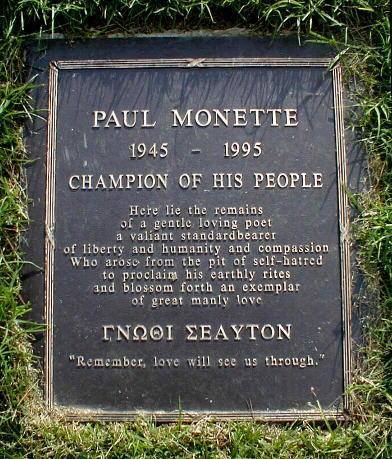
Borrowed Time: An AIDS Memoir

Rate this book
This "tender and lyrical" memoir (New York Times Book Review) remains one of the most compelling documents of the AIDS era-"searing, shattering, ultimately hope inspiring account of a great love story" (San Francisco Examiner). A National Book Critics Circle Award finalist and the winner of the PEN Center West literary award.

340 pages, Paperback

First published January 1, 1988

201 people are currently reading
7942 people want to read

About the author

Paul Monette

43 books152 followers


Online Guide to Paul Monette's papers at UCLA:
http://findaid.oac.cdlib.org/findaid/...

In novels, poetry, and a memoir, Paul Monette wrote about gay men striving to fashion personal identities and, later, coping with the loss of a lover to AIDS.

Monette was born in Lawrence, Massachusetts, in 1945. He was educated at prestigious schools in New England: Phillips Andover Academy and Yale University, where he received his B.A. in 1967. He began his prolific writing career soon after graduating from Yale. For eight years, he wrote poetry exclusively.

After coming out in his late twenties, he met Roger Horwitz, who was to be his lover for over twenty years. Also during his late twenties, he grew disillusioned with poetry and shifted his interest to the novel, not to return to poetry until the 1980s.

In 1977, Monette and Horwitz moved to Los Angeles. Once in Hollywood, Monette wrote a number of screenplays that, though never produced, provided him the means to be a writer. Monette published four novels between 1978 and 1982. These novels were enormously successful and established his career as a writer of popular fiction. He also wrote several novelizations of films.

Monette's life changed dramatically when Roger Horwitz was diagnosed with AIDS in the early 1980s. After Horwitz's death in 1986, Monette wrote extensively about the years of their battles with AIDS (Borrowed Time, 1988) and how he himself coped with losing a lover to AIDS (Love Alone, 1988). These works are two of the most powerful accounts written about AIDS thus far.

Their publication catapulted Monette into the national arena as a spokesperson for AIDS. Along with fellow writer Larry Kramer, he emerged as one of the most familiar and outspoken AIDS activists of our time. Since very few out gay men have had the opportunity to address national issues in mainstream venues at any previous time in U.S. history, Monette's high-visibility profile was one of his most significant achievements. He went on to write two important novels about AIDS, Afterlife (1990) and Halfway Home (1991). He himself died of AIDS-related complications in 1995.

In his fiction, Monette unabashedly depicts gay men who strive to fashion personal identities that lead them to love, friendship, and self-fulfillment. His early novels generally begin where most coming-out novels end; his protagonists have already come to terms with their sexuality long before the novels' projected time frames. Monette has his characters negotiate family relations, societal expectations, and personal desires in light of their decisions to lead lives as openly gay men.

Two major motifs emerge in these novels: the spark of gay male relations and the dynamic alternative family structures that gay men create for themselves within a homophobic society. These themes are placed in literary forms that rely on the structures of romance, melodrama, and fantasy.

Monette's finest novel, Afterlife, combines the elements of traditional comedy and the resistance novel; it is the first gay novel written about AIDS that fuses personal love interests with political activism.

Monette's harrowing collection of deeply personal poems, Love Alone: 18 Elegies for Rog, conveys both the horrors of AIDS and the inconsolable pain of love lost. The elegies are an invaluable companion to Borrowed Time.

Before the publication and success of his memoir, Becoming a Man, it seemed inevitable that Monette would be remembered most for his writings on AIDS. Becoming a Man, however, focuses on the dilemmas of growing up gay. It provides at once an unsparing account of the nightmare of the closet and a moving and often humorous depiction of the struggle to come out. Becoming a Man won the 1992 National Book Award for nonfiction, a historical moment in the history

Ratings & Reviews

What do you think?
Rate this book

Friends & Following

Create a free account to discover what your friends think of this book!

Community Reviews

5 stars
1,635 (56%)
4 stars
878 (30%)
3 stars
302 (10%)
2 stars
69 (2%)
1 star
35 (1%)
Displaying 1 - 30 of 291 reviews
Profile Image for Ivan.
799 reviews15 followers
December 5, 2009
I don't know how this book didn't win every award the publishing world has to offer. Quite simply, this one volume is the most emotionally devastating work I've ever read. I've read about hate crimes, political assassination and Nazi persecution, but none touch this. Several times I had to set the book down because I was no longer able to read through great, racking sobs and eyes nearly swollen shut. I grieved.

Paul Monette, author of the the award winning memoir "Becoming a Man: Half a Life Story," died of AIDS not too long after losing his beloved companion Roger to the disease. That he was able to focus so much energy on chronicling the events of Roger's death in this memoir, was a mircle - and indeed this book is a miraclous gift. "Borrowed Time" is a story of pain, suffering, hope, strength and courage. However, and more importantly, it is a love story - the greatest I've ever read.
Profile Image for LenaRibka.
1,463 reviews433 followers
May 23, 2015

"What am I going to do without him?" I asked in a hollow voice, and Cope replied immediately, with great force and conviction. "Write about him, Paul," he said. "That's what you have to do."

It's a book about LIFE and LOVE, not about death, emotional lines full of overwhelming sadness and grief and painful lost and regret and beautiful lyric and heartbreaking tenderness and touching memories...and LOVE, REAL LOVE.

...we never talked about dying because we were fighting so hard to stay alive.
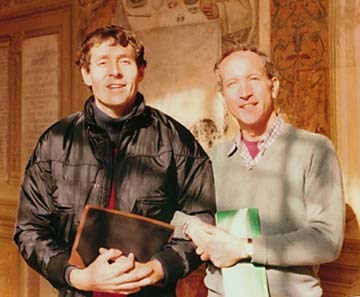


Paul Monette and Roger Horwitz


No Goodbyes
by Paul Monette

for hours at the end I kissed your temple stroked
your hair and sniffed it it smelled so clean we'd
washed it Saturday night when the fever broke
as if there was always the perfect thing to do
to be alive for years I'd breathe your hair
when I came to bed late it was such pure you
why I nuzzle your brush every morning because
you're in there just like the dog the night
we unpacked the hospital bag and he skipped
and whimpered when Dad put on the red
sweater Cover my bald spot will you
you'd say and tilt your head like a parrot
so I could fix you up always always
till this one night when I was reduced to
I love you little friend here I am my
sweetest pea over and over spending all our
endearments like stray coins at a border
but wouldn't cry then no choked it because
they all said hearing was the last to go
the ear is like a wolf's till the very end
straining to hear a whole forest and I
wanted you loping off whatever you could
still dream to the sound of me at 3 P.M.
you were stable still our favorite word
at 4 you took the turn WAIT WAIT I AM
THE SENTRY HERE nothing passes as long as
I'm where I am we go on death is
a lonely hole two can leap it or else
or else there is nothing this man is mine
he's an ancient Greek like me I do
all the negotiating while he does battle
we are war and peace in a single bed
we wear the same size shirt it can't it can't
be yet not this just let me brush his hair
it's only Tuesday there's chicken in the fridge
from Sunday night he ate he slept oh why
don't all these kisses rouse you I won't won't
say it all I will say is goodnight patting
a few last strands in place you're covered now
my darling one last graze in the meadow
of you and please let your final dream be
a man not quite your size losing the whole
world but still here combing combing
singing your secret names till the night's gone


Profile Image for Ije the Devourer of Books.
1,965 reviews58 followers
November 7, 2014
People seem to think the 'war' against AIDS is over, done and dusted.

But it isn't.

We are not yet free.

All these years after Paul and Roger passed away the battle is still being fought in different places and in different ways. The war that Paul Monette and Roger Horwitz fought is far from over and their story is a reminder that we shouldn't give up because we still have a long way to go. One of the things that challenges me about this story is the way in which it has become in part my story, my life. A part of my life which is very painful for all kinds of reasons and yet also a part of my life in which there is hope.

I was a young girl in the early days of the Aids pandemic when Roger and Paul were fighting the 'war'. I was stuck in a boarding school in the middle of nowhere in Africa. I went through University not hearing anything about Aids or HIV either. In fact it wasn't until the late 80's when I returned Europe that I began to hear about HIV and AIDS but it didn't loom large on my horizon even then because I had 'wars' of my own.

I was caught up in a very difficult marriage, child birth and then divorce. It wasn't until the mid-nineties that HIV and Aids began to hit my radar and even then it was something distant, something that I didn't understand. I couldn't understand how the same disease was cutting down gay men in the global North and cutting down Africans in the global South especially African women, my beautiful, beautiful sisters who died in their millions, leaving millions of children behind. I couldn't yet join the dots and I had far too many difficulties in my own life to stop, to pause and to try to understand the bigger picture.

But HIV and Aids was there, reaping havoc, destroying families, devastating lives.

It wasn't until 2003 that I really began to understand and personally experience the devastation that is Aids. I did research into HIV services in London and I had the privilege of meeting many people living with HIV and the sterling organisations working for prevention, treatment and seeking to address HIV related stigma and discrimination.

I was divorced, free and able to pause and finally able to listen to the lives of others and to hold my beautiful sisters and brothers and work alongside them. I was appalled to hear what people had gone through in the early days of the pandemic. I was appalled by the initial silence and condemnation of many churches. I was appalled by the complacency of certain Governments and the ignorance and myths that still abounded. I was appalled by the numbers of people who had died.

I began to involve myself in the response and I opened my heart to my African sisters and gay brothers and I became a soldier just like Paul and Roger. Now years later responding to HIV and Aids is a major part of my life. I am grateful that I had a chance to put my own shoulder to the wheel and join the millions of people who are pushing against the injustice that lies at the heart of the HIV and Aids pandemic but there is a big part of me that regrets not being there at the beginning. There is a big part of me that still experiences pain when I read about the loss from the early years and the losses that still happen because it isn't over yet.

This book is a testament to the early days of the Aids pandemic: the ignorance, the fear, the denial, the stigma and the suffering. It is easy to look back and lament over what should have been done but this book should serve as a reminder about what is still to be done. There is still ignorance in our world today about the HIV and AIDS pandemic. There is still fear, denial and now much more complacency.

There is still injustice.

Paul Monette and his beloved partner Roger Horwitz are gone along with 36 million others but 35 million are still alive and living with HIV, and the millions that are dead should spur us to keep alive the millions who are still with us.

This book serves as a prophetic voice calling us to remember and not forget. Calling us to act in whatever way is possible for us and it has called me to keep acting and praying.

Some of this story makes me angry. Paul and Roger were privileged and well-educated. They were able to access drug trials and push for treatment. They were able to spread the word and help others and in this way they contributed to the progress of the development of the treatment that keeps people alive today, but thirty years on we are still fighting the 'war' for access to treatment and so many people in countries with weak health systems are still dying.

We still fight 'wars' about prevention strategies. We know how to prevent the transmission of HIV but utterly stupid debates about condoms and promiscuity have overshadowed the urgency of saving lives. Religious and political ideologies have become more important than saving lives and finding ways to help people who have limited choices and limited access to economic and health stability.

We still fight 'wars' about stigma, discrimination and human rights as so many Governments criminalise HIV transmission and criminalise homosexuality. Imprisoning people and silencing them, eroding their human rights is simply waging war against the people not the virus. Blind and stupid leaders, rotten in their hatred and complacency they are paralysed by their ideologies and fail to hear the cries and struggles of the millions of people in need. Thirty something years on the 'war' that Paul and Roger fought continues along different perhaps more subtle and less visible battle lines.

But along with sadness and pain and anger, as I read this story I am grateful. There is gratitude, gratitude that Roger and Paul were able to find love and create family with each other, gratitude that they had the love of their families and friends, gratitude that these two beautiful men were able to live their lives to the fullest despite the fact that Aids cut both of them down in such an untimely way. I am grateful that they did not die alone and that they were able to gain access to the limited treatments available at the time.

I want to remember those many people who died and who were affected and the many still living with the virus. In this way I can enter into the frustration and the fear of the early days of the pandemic and I can use this to continue to work for a future hope.

So this is my small response to this beautiful and yet challenging testimony. The author is no longer with us but his words remain and his story remains. It is a privilege to read his words.

I am privileged to be able to hug and encourage the many positive people who are living and who are now my family and I am hugged and loved by them. They enrich my life today and the words of Paul Monette enrich my understanding of our journey and 'wars' together.

His words awaken an ever deepening thirst in me for justice and a desire that everyone may have abundant life and not be excluded because they are positive, or gay or female or African. This is my dream and I hope the words from the battle front, the words from Paul Monette will continue to give me the energy and courage to dream and to write, to speak and to pray and to act.
Profile Image for Lisa O.
146 reviews121 followers
February 22, 2022
This is the most amazingly beautiful and completely heartbreaking memoir I’ve ever read. While the storyline chronicles Roger Horwitz’s tragic fight against AIDS, this book is really a passionate love letter from Paul Monette about his relationship with Roger, their affection for one another, and the many wonderful moments they shared during their decade together. As you can imagine, the book is dense with emotion and Paul Monette’s writing makes you feel it all – grief, fear, loss, pain, hope, compassion, joy…and the list goes on.

I want to thank my GR friend Bonnie for recommending this one. I recently read And the Band Played On: Politics, People, and the AIDS Epidemic, an amazing piece of investigative reporting about the early years of the AIDS epidemic (highly recommended!). Bonnie suggested this memoir as a more personal account of the epidemic, and she was spot on - the two books ended up being great complements to one another.

I still get a little teary-eyed thinking about parts of the book, and I can only hope that my last days are filled with the amount of love and affection that Paul Monette poured into this book. It’s a devastating and heartfelt account of the deeply personal toll of the AIDS epidemic, and it’s a must-read.
Profile Image for Terry.
53 reviews39 followers
October 27, 2012
I loved anything Paul Monette wrote during his short lifetime, but Borrowed Time was so deeply personal, so painful, and so sadly mournful that I always come back to this one for a reread. As a nurse who cared for AIDS patients during the 80s and at the height of the experience,too many times I saw Paul's story in my patients and my friends. The chilling pages where Roger begins to become ill to the final pages of his death left me reminded of my own experiences with lost friends. Sadly, Paul Monette's experience (and his own eventual death from HIV a few years later) are reflected in the experiences of millions of us. Imagine two infected men taking care of each other - both sick, both frightened, but both strong in their desire to live while they still could.

Maybe you had to be old enough to have lived through the 80s and the early years of the epidemic to fully appreciate how frightening those years were. Monette wrote of the experience and his many losses with such simple dignity and such love that it brought tears to my eyes.

There is a renewal of interest in what is now called "The Early Years" of AIDS and the death of a generation of innocent victims -- victims of the disease, of apathy, of political apathy and murder. Regardless of your own perceptions of the AIDS experience, this book is not to be missed if you want to know how it really was during a decade when there was no hope.
Profile Image for Mel Bossa.
Author 31 books219 followers
July 13, 2016
I'll never forget the two days I spent reading Paul and Roger's story.
Life beautiful. Love, even more so.
I cried a lot, but now I'm going to move on and try to celebrate the little victories.
I wish I could have read this book in 1999, when my mother was dying of leukemia. The similarities between AIDS and Leukemia--at least the kind she had--are staggering.
Some years leave a dent in the bark of your soul. 1999 was one of them.
To love is to stand a chance of losing.

I think of Paul Monette's reference to A Christmas Carol, the movie, when Scrooge opens the window and yells out, "What day is it?"

"Christmas!" a boy returns from the street.

There's still time.
96 reviews1 follower
May 4, 2011
Perhaps the most poignant, soul-stirring, achingly beautiful piece of writing I have read. It is so humbling to realize that if I had been born twenty years earlier, I would probably have had to watch many friends and lovers pass away -- if, that is, I had survived myself. Monette's depiction of the ravages of HIV cuts straight to the soul. And more than a polemic account of the Reagan administration's criminal, abhorrent neglect (for that, of course, it would be hard if not impossible to outdo Randy Shilts), it is a compelling and heartbreakingly tender love story. Monette's partner and best friend, Roger Horwitz, had to suffer a most undignified end, but in this superbly crafted, loving eulogy, his memory is exalted and imbued with utmost dignity. It is truly remarkable how little Monette focuses on his own HIV diagnosis; his slowly but surely failing health is a mere afterthought when the love of his life is in danger.

I am usually able to intellectualize what I am reading, to separate myself from the text and to pause when the going gets rough. With this book, I was paralyzed with dread and could not tear my eyes away, and during the last chapters I literally wept. This is a sobering portrait of the horrors of the disease, relegated to the back pages until it had reached pandemic proportions, and still allowed to run rampant by profit-driven pharmaceutical companies today. It is one of the most horrific scourges our species has faced. This book takes us away from the figures and statistics that are too big to comprehend, and shows us what happens to individual lives caught up in the tide of war against an invisible and insidious enemy. It is stunning, harrowing, by turns lyrical and unbearable, and absolutely unforgettable.
Profile Image for Amber.
224 reviews19 followers
June 15, 2009
Not a book for the faint of heart. This is a lyrical, heartbreaking and powerful look at one couple's battle and one half's eventual demise from AIDS as it was just coming into the national conscious. The amount of suffering and loss Paul and Roger experienced both personally and among friends and family during the early-mid 80s is astounding, especially when it's remembered that at the time, this was still a disease that was not acknowledged by the government.

My office was heavily involved with reporting of the first AIDS cases (though I was only a child when all this was happening), so it was interesting to read the stories presented in this memoir and relate them back to tales that I've heard from my co-workers from that time. Even though this is one man's account of the suffering, he did an excellent job of describing the dichotomy of terror and "head in the sand" mentality that could be seen in the gay community and eventually on the national stage.

Be sure to have tissues handy, if not during the book, definitely at the end.
Profile Image for Sam.
419 reviews17 followers
June 2, 2010
One of the best memoirs I've ever read.

It seems to be an easy thing for memoirists to descend into either whining, boasting, or self-righteousness. Paul Monette avoids any of these traps, and simply tells the truth with devestating clarity. He does not spare himself; his human frailty is on full view here, but he shows how his love for his friend redeems him, and makes it possible for him to rise above their difficulties.

Their personal story helps put the emergent AIDS crisis in perpective: Paul & Roger were educated, wealthy, & connected. How much more difficult would it have been had they been ignorant, poor, or isolated?
Profile Image for Smiley938.
354 reviews
March 31, 2016
I just could not connect with the author at all. I'm sorry for his loss and ultimately, his own untimely passing, but he did not come across as a likable person at all. He comes across as a very privileged person who only understands suffering because he's suffering. If he or his partner or his friends didn't get AIDS, it sounded like he would have been just as happy ignoring everyone else who got AIDS. In fact, he said somewhere (I skimmed because I couldn't finish reading) that once his partner got sick, he didn't care much about his friends who were also suffering. I mean... gosh.

"That is something very important to understand about those on the moon of AIDS. Anything offered in comparison is a mockery to us. If hunger compares, or Hamburger Hill or the carnal dying of Calcutta, that is for us to say." -p83

Taking his personality out of the picture, I just didn't think the writing was even that good. I'm confused about why this book is so well-reviewed. I only made it to page ~85.
Profile Image for audrey.
695 reviews74 followers
March 2, 2024
If we all died and all our books were burned, then a hundred years from now no one would ever know.

It hasn't been a hundred years since the AIDS crisis began, but there's something about this modern online world that make everything feel so sped up and blown up that it's starting to feel long ago indeed. Maybe it's because I don't remember AIDS ever being mentioned in school (which for me was California during the late 80s / early 90s, so pretty much right smack in the middle of the crisis), and I don't know that it's being widely studied today, even as we watch hundreds of thousands of people die from another public health crisis.

Did you know that as of 2018, 700,000 Americans have died from AIDS?[1]

This book is the story of two of them.

Paul Monette has written a memoir of the nineteen months he spent trying to keep his husband, Roger Horwitz, alive despite the AIDS virus. Written in 1987, it is an exhaustively documented tale of fighting for AIDS treatments, wrestling with homophobia and the stigma of AIDS.

Monette was an L.A.-based screenwriter, and Horwitz a successful lawyer in Los Angeles at the beginning of the 1980s. At the start of the book, they've been together for 10 years, and both find out they're HIV-positive. As Horwitz develops AIDS, Monette devotes himself to fighting the disease, refusing to be turned away from experimental treatments (all of which were at that time unproven) and leaving no stone unturned in trying to save Horwitz. Monette cannot accept that the person he loves most in the world has been given this death sentence, and he turns his panic into a continued, nearly frenzied fight.

In the early 80s, there was no cure for AIDS; barely anything was known about the disease. As is documented exhaustively in Let the Record Show: A Political History of ACT UP New York, 1987-1993 there was an ongoing governmental refusal to devote resources to treatments or cure.

Monette describes turning into a spy of sorts, using all his connections and social capital in Los Angeles to access a network of whispers, everyone in the network teaching and learning about AIDS while the government refused to speak the name aloud.

As a result of this work, Horwitz eventually became the first person on the West Coast to access AZT. Even that treatment required subterfuge and pretense, clandestine meetups and codewords within and without hospital pharmacies.

Reading this book after Let the Record Show was so interesting because of the contrast between the group action and momentum in New York, and the clearly patchwork, individual efforts of people in L.A. trying to achieve similar aims. While NYC was home to demonstrations, die-ins, and political funerals, Monette describes L.A. as being largely still in the closet, and as the book progresses, it turns into a ghost town for gay men.

Monette's prose is nearly stream-of-conscious throughout the book, though he draws largely from the journals he kept at the time. It's a testament to the strength of his writing that that style works well and keeps the reader engaged, even as Roger's decline gets harder and harder to witness.

I took two big things away from this book.

One was the power of staying present in small moments, even while things around you fall apart. Monette stresses over and over again that this is his coping strategy. It is in fact the only thing that makes life at all bearable as Roger gets sicker and sicker.

Lying next to Rog in the guest bedroom. We sent out for supper to Cock and Bull and took a walk down Cory St. I never thought I'd write in here again, I never thought I'd do anything again, but I record with gratitude and a sense of calm that we stepped out tonight for a plate of prime rib.


The second was that this is in large part a memoir of being a caregiver. The whole story is told from Paul's perspective, and he doesn't shy away from how many times he cried, how many times he fell apart, or got so frustrated he had to walk away or give Roger's care over to someone else while he regained his equilibrium. I don't know that I've read a story quite like that, before.

And then the third was simply the enormity of the stigma of being gay in the 1980s. Even in L.A., this supposed bastion of liberalism, Monette describes how much homosexuality was still whispered about, and how many people felt they had to remain closeted, even while they were dying. And how many families felt like having a gay child was some kind of wild crisis. There's a whole interesting sub-plot of the book dealing with Paul's arguments with Roger's brother, who is himself also gay, but wants to keep Roger's AIDS diagnosis a secret from the entire world, but especially their parents and immediate family.

At one point, Monette writes, "Someday the [coming-out] process will be more human, perhaps, because we are open forever now, and people can't hate their children or themselves for that long."

I look at all the anti-LGBTQIA+ legislation being proposed around the country 40 years later, and wonder whether Monette was simply naive, or it's just that too many people haven't read stories like this one.

Above all else, this is a grand and tragic love story, and one that deserves to be shared more widely.


[1] https://www.kff.org/hivaids/fact-shee...
Profile Image for Paula´s  Brief Review.
1,171 reviews16 followers
October 4, 2021
No soy lectora habitual de memorias porque dudo que sean muy objetivas y que el que escribe sea un egocéntrico que todo lo engrandezca para darle vistosidad a su historia (casi nadie quiere pasar por este mundo inadvertido y sin dejar huella) pero me encanta el estilo lírico de la prosa de Paul Monette por lo que me atreví con éste y no me arrepiento nada.
Brillantemente narrado te pones en la piel del narrador enseguida.
Es triste porque el escritor, la historia y la forma de escritura lo son, pero es un bellísimo libro para cuando estás de ánimo para algo así.
Profile Image for K.D. Absolutely.
1,820 reviews
August 10, 2014
By far, the most memorable memoir that I've read this year, 2014.

It's about being gay in the early 80's when AIDS awareness was just starting. It's like being helpless and clueless amidst a medical catastrophe. Especially if you are part of the marginalized group and in the 80's even in America, some people still thought that being gay was a disorder or a disease and that AIDS was God's punishment to them.

I was in college during those years and being a medical technology student, we had to make ourselves familiar with what was going on regarding that newly-discovered viral sickness that was said to come from monkey and seemed to have been targeting gay men. Of course, our laboratories here in Manila were not yet equipped to study it but our professors thought that some questions about it could come out in the national board exams so we researched everything we could get via published medical/laboratory studies.

Paul Monette (1945-1995) is now dead from AIDS-related sickness. He wrote this book "Borrowed Time: An AIDS Memoir" in 1988 telling about his relationship with his lover Roger Horwitz who died of AIDS in 1985. At some point when the couple was in the hospital at the early part of their lives fighting AIDS, one of their doctors said to Monette: "You're a writer?" he (the doctor) asked with skeptical air, "Why don't you write about this. Nobody does."

So, this book, this brave book, came about and it is disquieting. It put the much needed literary face to a disease that nobody wanted to hear or talked about then. For example at that time here in the Philippines, if somebody died mysteriously you would hear whispers that probably the person (especially unattached men) was gay and he died of AIDS and people would cower in fear to the extent of not going near his deathbed or even his sealed coffin. That was in the 80's when this book came out.

Things have changed a lot now but still this book's message rings true: AIDS is a disease and we, regardless of our sexual preference, need to protect ourselves at all times. I always believe that married (or committed) people should practice monogamy as it is part of their vows made in God's presence. That's just about the best way to combat this disease.

My heart wept for the couples in this book who had the right love at the wrong time. They were the intelligent gays: successful artists, writers, playwrights, businessmen, professionals. They are falling like good old soldiers one by one to AIDS. It's pitying. Total waste of precious lives.

Gay love at the time of AIDS.

Profile Image for David.
638 reviews129 followers
October 28, 2017
“Whenever we’d visited Madeleine in Paris she always took us the first night to her favorite restaurant du quartier, which no outsider could possibly know about.”

My HIV/AIDS season continues ...

I must admit that I twice stopped reading this because Paul's somewhat ... as the quote above is intended to demonstrate ... well.... there's three eyerolls there, isn't there?: 1) "Whenever we'd visited Paris" 2) "restaurant du quartier" 3) "no outsider could possibly know about". Oh, fuck off.

Let's break this down. It's not that he's a bit pretentious. I'm a bit pretentious. But I have no cash and I like to pretend I believe it's "better old poor than new rich". Paul can be as artsy-fartsy and as pretentious as he likes ... but he's not really allowed to talk about having lots of money. And Paul can't help himself. He even tells us which class he flys!

This is all very shallow of me. I'm not a very nice person.

But it gets annoying.

Poor people die of AIDS too!

Bits:
“‘If you don’t like AIDS get out of medicine, because this is where it is.’”

“Those were the days when the Hollywood Hills were known as the Swish Alps.”

“The shock of the sudden deaths is still disorientating, especially among the celebrated. It’s like they’re snatched out of a chorus line with a hook.”

On the de-brief: “Whenever Cesar was down, we’d always say we couldn’t wait for the parties we gave to be over. At midnight Cesar would murmur about the guests who had settled in: ‘Don’t they understand we have to analyze all of this?’”

“Now we know that stride could have been made in ‘82 or ‘83 if the government hadn’t been playing ostrich. Spilled milk, people tell me; you can’t undo the past. But can’t we measure the spill?”

“‘Look, Rog, the worst that can happen is both of us will die,”

“It’s common among gay friends now to say we’re all eighty years old, our friends dying off like Florida pensioners.”

“‘The cure for metaphysical pain is physical pain.’”

“‘Does it all go too fast?’
‘You mean life? Just the summers.’”

“The indifference of the press remained deafening; AIDS activists liked to talk about the occasion when the New York Times devoted front-page space to a disease that felled seventeen Lippizaner stallions in Europe, when no story about AIDS had ever appeared on page one.”
Profile Image for Skip.
162 reviews18 followers
June 18, 2007
For so many, the AIDS crisis and epidemic has become a footnote in gay history. Thank God, folks are living mostly normal lives today.

But what Monette's writing so eloquently reveals is the way the community fought, struggled and in the end – suffered.

What was also so beautiful was that this was as much a story about the incredible love between Paul and Roger....In fact, that may have been – at the core – its most central message.
Profile Image for Maggie Shepherd.
38 reviews
March 15, 2022
Typically I burn through books, but this one took months for me to read because of how emotionally heavy it is. Nevertheless, how grateful I am for Paul’s words and for providing a perspective into a community blindly ignored amidst the grueling battle against AIDS. Tragic yet full of so much love, this memoir could not have been more poetic and moving (which doesn’t even come close to doing it justice).
Profile Image for Mandy.
61 reviews1 follower
September 22, 2007
One of the best memoirs I have ever read. I wept, openly wept like my heart was being ripped out of my chest -- as I read this. God, this man can write. He writes so beautifully and tells such a heartbreaking story -- you will weep at both the beauty of his words and the loss of his friend and love. Go read this book. Now.
Profile Image for Liván.
283 reviews70 followers
February 25, 2024
Me atreví a seguir este libro hasta el final a pesar de que fuera denso, triste, devastador desde el comienzo. Lloré empezando el primer capítulo y supe que sería difícil este viaje de lectura, pero valió la pena en cada página.
Paul Monette escribe la memoria de quien amó durante décadas sufriendo las consecuencias del sida hasta morir, con la honestidad que abarca desde la nobleza del compañerismo hasta la frustración de ver a alguien decaer. Este libro es un recuerdo de las miles de muertes sin justicia que vinieron antes de nosotros, de todos aquellos hombres ignorados por el gobierno aún al morir en masa, todo por su orientación sexual. Es incluso una demanda incesante a recordar sus nombres, sus historias, su dolor, para que las nuevas generaciones tengan en solemnidad la lucha que ha significado la reivindicación homosexual en la sociedad.
'Perhaps the young can live in the magic circle, but only if those of us who are ticking will tell our story.'

Me dolió mucho el corazón y lo terminé llorando a mares, pero por eso mismo es uno de mis libros favoritos. No se mucho necesita más que amar y recordar.
'All that will matter to you when you're old is how much you've loved.'
Profile Image for H.
143 reviews
October 2, 2025
Utterly devastating and searingly beautiful. I cried basically every 15 pages and it took me so long to finish because I didn’t want Rodger to die. A book everyone should read.
Profile Image for Lisa.
221 reviews1 follower
January 18, 2011
This is a hard read. It's about a tough subject matter, and it's also now a book that is of a somewhat historical nature.

I loved it and found it touching and it was enlightening in that it really gives an accurate and detailed portrayal of a gay relationship, the begining of the AIDS crisis and what it was like then to try and survive the disease.

The author is now himself passed in 1995- it is amazing to have this account of one couple's fight at a time when social services were non-existant and the stigma about HIV was perhaps at it's height. Still the couple is quite lucky to have two sets of surviving and enlightened parents and family and friends to rely on. i can't imagine the person, and there were are are many, who had no support system at at time like this. The writer also admits freely they were privileged to have connections to drugs and doctors and resources because of their friendships and their positions. Which again, makes it all more clear why even today we need to have social services available for those who are not that lucky.

My only complaints about this book was the level of detail about things like what they were reading and the smart-snobery of the couple-but that is just a matter of my taste, and really also helps flesh out who they were- intellectuals, educated at harvard and yale, and living in a insular world they had created with intelligent and creative friends.

Overall- if you are looking for a history of the epidemic told through memoir this is as good as it gets. The shock is not so much about what they endured for me, but what people living with HIV are still enduring over 20 years later.
Profile Image for Bethany Hall.
1,050 reviews38 followers
June 5, 2024
“How do I speak of the person who was my life’s best reason? The most completely unpretentious man I ever met, modest and decent to such a degree that he seemed to release what was most real in everyone he knew.”

This is one of the most devastating memoirs I have ever read. Paul’s partner Roger is diagnosed with AIDS, and this memoir follows the 19 months where the two of them fought together.

Their love was so strong and so pure. I felt like they were such good balances of each other. I loved how open this memoir was and how it didn’t shy away from the horrors of what these men went through. God, some of the passages had tears streaming down my face.

If you have access to this memoir - please read it. Read it and remember. Learn about the AIDS epidemic and remind yourself that people with AIDS are not just numbers. There are millions around the world with HIV and AIDS is still a debilitating medical condition.
Profile Image for Addicted to Books .
273 reviews116 followers
May 30, 2016
5 heartbreakingly beautiful Poignant Stars. Paul Monette, your book will always stay with me forever.

This is one of the most beautiful books I have read this year.

A Very emotional and great reading experience. I teared up and cried numerous times. Rest In Peace Paul Monette. Your heart has been immortalized through your book.

The pain of dying from a disease which was not understood much(back in the 80s), struggling with
losing your passionate life and the man you love so much to that same disease and facing all of it dignity and beauty and a whole lot more was discussed very piganantly oberserved and discussed very poignantly.

This might be the greatest memoir written by a man losing someone he loves.

I will be back with a review. Gonna let it all sink in!
Profile Image for Emma.
1,614 reviews
January 4, 2021
This was nearly unbearable to read. I loved it, I couldn't let go of it and yet it took me forever to finish it because I had to take regular breaks, it was just that sad.

Borrowed Time won't spare you any excruciating detail about Roger Horwitz's battle with AIDS and yet it totally respects Roger's dignity, I don't really know how Paul Monette managed to do that. Borrowed Time is not ONLY sad, it's also a beautifully written love story and a vivid picture of that special period in time, the early years of AIDS. Reading this in the middle of another pandemic was especially striking. It's all so different and yet there are aspects of this memoir that wouldn't have resonated with me that much if I had read it before 2020.
Profile Image for Romana.
5 reviews
February 18, 2022
It somehow feels bad rating a book with 2 stars, which is memoir of a person who‘s lost their partner in a fight against AIDS.
But I just couldn‘t finish it - in my opinion this book contains way too many unnecessary details about characters that add no value to the story at all.

If the same story was written in half the length, I probably would‘ve finished it as the theme itself speaks to me. But if you, like me, ask yourself after the first chapter if something is actually going to happen soon or whether you‘ll be able to connect emotionally with the author - do yourself a favour and just pick another book 😅
Profile Image for Sarah Jane.
121 reviews21 followers
June 12, 2009
How can I not give this book 5 stars? This is probably the most well-written memoir I have ever encountered. It reads like the most painful of poems, and I was entranced and horrified and saddened all at the same time.
Profile Image for Anthony.
387 reviews3 followers
March 6, 2023
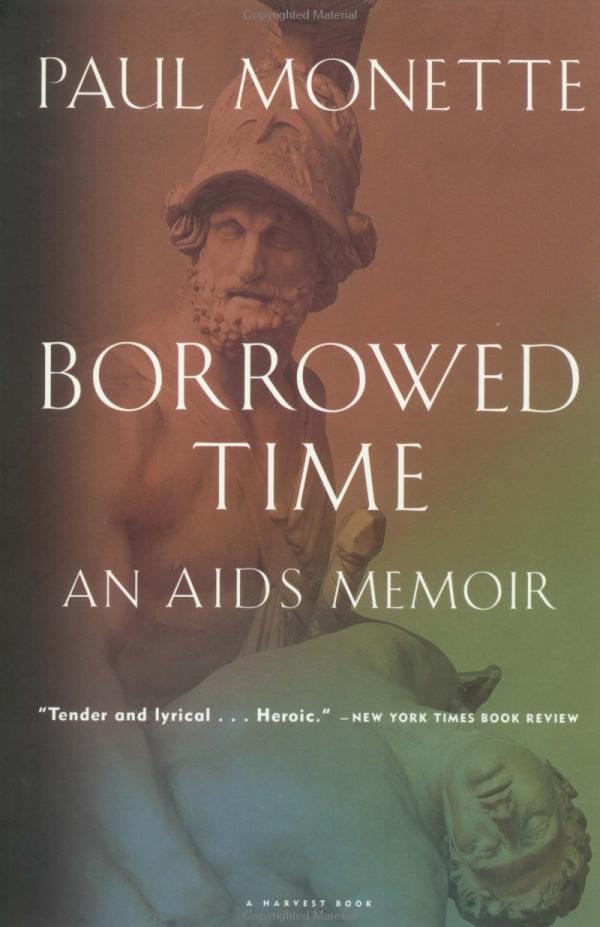
"And yet, I never felt quite comfortable calling Rog my lover. To me, Friend always seemed more intimate to me, more flush with feeling. Ten years after we met, there would still be occasions when we'd find ourselves among strangers of the straight persuasion, and one of us would say, "This is my friend." It never failed to quicken my heart, to say it or overhead it. Little friend with the diminutive form that we used in private, the phase that is fired in the bronze beneath his name on the hill.

As I begin writing this review, I'm realizing that I seldom ever read memoirs. Or at least, if i do, I simply don't remember them. The only other memoir that's been cemented into my head was Paul Kalaninthi's When Breath Becomes Air.

Paul Monette's Borrowed Time is one of the greatest love stories I've had the opportunity to ever read. The number one review of this book yells why this book didn't receive every award possible and I have to agree. This is not only a beautiful and lyrical memoir of Paul and Roger's relationship but of human empathy and care.

"It's just an unavoidable mess, this coming out business, and there don't appear to be any shortcuts through the emotions, through we try to make it easier for those who come after. Someday the process will be more human, perhaps, because we are open forever now, and people can't hate their children or hate themselves forever.

Profile Image for Ronald Wilcox.
865 reviews18 followers
May 17, 2023
Wow, what a book. I am an HIV care physician and highly recommend reading this book if you want to know what it was like at the beginning of the HIV epidemic and all the various ways unchecked HIV and it’s comorbidities can devastate the body as well as understand the desperation people felt when the disease had no treatments. This is also a love story of the author for his partner as his partner learns of his AIDS diagnosis to the moment of his death. Very touching
Profile Image for gaby :-).
84 reviews1 follower
March 16, 2025
jesus fucking christ almighty (4.5 stars)

to be loved & surrounded by love in this way. the absolute FIGHT of both paul & roger is phenomenally written. my “issue” was that paul was sometimes a very unreliable narrator but who wouldn’t be in his situation

unsure what else to say. fuck the us gov during this time, & i guess now for how they treat aids / hiv i hope you rot in hell
Profile Image for Vin.
57 reviews1 follower
February 27, 2025
I’ve got one thing to say: Got me on an intermittent PrEP-prescription.
Profile Image for t.
417 reviews5 followers
August 17, 2023
just absolutely heartbreaking. full of the everyday commonplace beauty and love and suffering that makes life so hard to let go of.
Displaying 1 - 30 of 291 reviews

Join the discussion

Can't find what you're looking for?

Get help and learn more about the design.