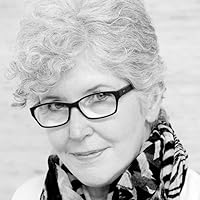
Rachel Henning (1826–1914) was born in England. In 1854, she went to Australia but returned to England in 1856 due to homesickness and the hot climate. However, in 1861, she returned to Australia, where she settled permanently. She first lived with her brother and sister on their property in Queensland, but married in 1866 and later moved to a property near the New South Wales south coast.
Rachel's descriptive letters, mainly addressed to her sister in England, provide a detailed account of nearly 30 years of pioneering life in Australia. The letters were first published by The Bulletin in 1951 and 1952; in 1963, they were collected in book form and published by Angus and Robertson, with a foreword and illustrations by Norman Lindsay. Literary critic Debra Adelaide writes that "they are valued for their vivid portrayal of station life in the second half of the nineteenth century and for her own humour and frankness about the life she led".
I stumbled across this book in a secondhand store when I first starting working on my novel. It just happened to have been pulled out of a shelf by someone and left sitting on a bench by itself, waiting to be put away. It was the perfect book for me as it was written in the same time (late 1850s) as the story I'm writing on.
It shares many things any Australian historical writer would be thrilled to know!
Fascinating look at early Australian history (and how terrified everyone was of being killed by Aborigines!) - it's interesting to compare to Nevil Shute's post-war Australia, which is my main subconscious source of imagery about the country. Life in the outback didn't actually seem to have changed all that much, 'modern' technology aside...
It's slightly frustrating that, for understandable reasons, the letters are not contiguous, and chunks of vital context have to be added via editorial notes to explain major changes in Rachel Henning's life that never made it into the post... but real-life correspondences are like that, as I was reminded when rereading my own (and feeling obliged to add brief notes for the benefit of the College historians by whom the letters were being archived!)
Posterity can be very grateful that Miss Henning was such an acute observer, and so lively a correspondent.
A fantastic work, and perhaps the earliest Australian piece of writing that I find truly engaging. Henning was a British woman who lived in the Australian outback, and then the city, during the mid-19th century: a time when Australia was still defining itself as separate from the motherland, and when of course the role of women was still incredibly confining. Her writing is fascinating both for what she observes deliberately, and for the everyday touches that would have meant little to her, but give us an insight into the world at the time. Of course, being a woman also plays an important role in Henning's legacy: despite their underclass status, Australian women provide much of the fascinating writing between the 1850s and WWII, in part because of that status. They are able to observe, they write from a place of difference, and the story of how women survived is a powerful and poignant one.
These letters were published almost a century after being written, and were never intended for such publication, so they're inherently "natural" and not polished. This isn't a slight against them, but be aware. Still, in the fairly small ranks of important works of Aussie writing pre-Federation, this very much makes the cut.
I loved this book, written by a very adventurous, resourceful and intelligent woman. It is full of surprises. The author arrived in Australia in 1854, scornful of her new environment, which she didn't think was a patch on England. She went home in 1856 but for family reasons returned to settle permanently in Australia in 1861. Her letters home describe her life in Australia in absorbing detail.
It was a delight to see her overcoming her prejudices and her gradual awakening to the beauty and terror of the Australian landscape. She even learned to stop hankering for primroses and love Australian flora. She deserves much more credit than she has received for the influence of her interesting, well-written letters. They contain many gems of genuine resource material which seem to have been incorporated into their own works by many of today's novelists writing about Australia in the 1860s, 70s and 80s.
Having just been immersed in Tasmanians history and seeing the old farm houses, this book was a wonderful description of life for early Australian well to do settlers.
"certainly the way to be valued and missed is to go to Australia"
It felt very apt to read this as someone in the same situation (an English woman in Australia writing letters home), only about 170 years later. A lot of it was quite repetitive but it had some really interesting and humorous moments. I loved to imagine the situations she described actually happening (like the parrot eating sugar out of her mouth) and see how much things have changed since she came here!