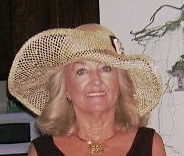
Greg King (born 1964) is an American author, best known for his biographies of prominent historical figures.
He is the author of eleven internationally published works of royal and social history, specializing in late Imperial Russia and Edwardian-era royalty, including The Fate of the Romanovs, The Court of the Last Tsar, and the UK bestseller The Duchess of Windsor. A frequent onscreen expert and commentator for historical documentaries, his work has appeared in Majesty Magazine, Royalty Magazine, Royalty Digest, and Atlantis Magazine.
I have read Nicholas and Alexandra by the talented Robert K. Massie and felt that I would like to know a little more about Alexandra and her role in the fall of the Romanov dynasty. This book filled the bill and provided an in-depth understanding of who she was and why she was the way she was.
A princess of Hesse and grand daughter of Queen Victoria, Alexandra's early life and the personality of her mother shaped her attitudes....overly sensitive, moody, and melancholy.....these characteristics which later made her cold, introspective, and haughty. She spent much of her childhood in England with Queen Victoria whose regal and domineering attitude further set her personality.
When she married the heir to the Russian throne, religion became an issue but she finally agreed to convert to Russian Orthodoxy. She threw herself into the religion with fervor and was convinced that, as the future Romanov tsarina, she and her husband were destined by God to be total and complete rulers of the huge country and its people. It was a lifestyle that demanded her constant appearance before the people which she never appreciated or enjoyed and her distaste was constantly displayed to the public. It became a clearly delineated line of "us" and "them" and she knew nothing of the poverty and misery of millions of the population.
Tsar Nicholas was a weak man and, although they truly loved each other, she ruled him with an "iron fist in a velvet glove" and felt she should guide him in the execution of his duties. Her subjects slowly but surely turned against her.
The author gives the reader some understanding of her relationship with Rasputin but questions will always remain about his "powers" of healing and relieving the pain that her only son suffered from the dreaded "royal" disease of hemophilia.
WWI came and the Tsar left for the front to lead the armies, leaving Alexandra in charge, another huge mistake. And the sun began to set for the Romanovs. She made poor decisions which eventually led to the Revolution and the horrific massacre of the Tsar, Tsarina, and their children.
This is a well researched biography of a very complicated and tragic woman. I would highly recommend it to one and all.
Me acabo de dar cuenta que nunca guardé este libro acá. Una buena biografía de la desafortunada Alexandra Feodorovna, Alix para los amigos. Que ganas de decirle "amiga, date cuenta [de que el avance de las clase trabajadora es imparable, el antiguo régimen está muriendo, y aferrarse al absolutismo los alienara completamente del pueblo y terminará destruyéndolos]".
This is my 3rd attempt to right a review and no, it is not because the writer did a poor job for Greg King is a master when it comes to Imperial Russia, the problem here lies with the subject of the book. The czarevna Alexandra Feodorovna, née Princess Alix of Hesse-Darmstadt and by Rhein is a complex character to say the least. With King's book, I pretty much read everything written on her and unless some new evidence comes up, it is safe to say I really cannot find any redeeming feature on this woman. Even when I have to admit she loved both her husband and children, that love was a sick one at times, how she treated their daughters, clinged to his sick boy and try to both dominate her husband and undermined him at the same time because "she knew best". Well, she did most certainly not.
At times, it really made me angry when she made the same mistake over and over again, how she failed after 20 years in Russia to see danger coming her way, and in the end, she did not only pay the price but dragged their children with her. When you read about her daughters horrible deaths, how much they suffered... anyway, it is perfectly written if only a bit outdated, Alexis remains and another of the missing sisters (possible Marie or Anastasia) have been found so no, Anna Anderson was not a Grand Duchess of Russia.
Could all this have been avoided? Oh yes, and that is the most awful part of it. She was really unsuited to the role she played and almost everyone saw that, it is such a shame that Queen Victoria did not manage to stop that but we can say for certain that the British were luck, had she managed to marry Prince Albert Victor and became queen of Great Britain and Empress of India... well, I shriver at the thought. They dogded a bullet.
A very good read, well researched and well written. I expected a little more about Alexandra's relationship with her daughters and those girls themselves. Instead, they are barely mentioned and Alix's motherhood seems to start only with Alexei's birth...a lot is told about him, almost nothing about his sisters, which felt a bit unfair. I liked King's being hard on Alix because usually there's a tendence to justify her because this and that, or blame exclusively Nicholas - though he was undoubtedly usuited for the role of tsar. Thanks to the fact that all of her errors are strongly pointed at and judged, once the revolution reaches Tsarkoe, the reader can enjoy how Alix started to question her position, her choices and ultimately falling into depression and this is where King, between the lines, draws a comparison between her and Marie Antoinette, who instead rose to high moral grounds once her hardships began. Although the book came out before the discovery of the second burial site -hence exploring the possibilities of Anastasia's surving the shooting, it never feels outdated, so rich as it is with details. Missing two bodies gives an interesting turn, treating the reader into a series of speculations, analyses of the official and unofficial documents, drawing hypoteses about how and who could have survived, a piece of reading obviously absent in the more recent biographies.
I've been fascinated with the Romanovs for decades. This book gave me new insights into what made Alexandra the woman she was... I had not realized just how close she was to Queen Victoria growing up... and into the reasons she in essence took over the ruling of the country while Nicholas was at the front. I also was struck anew by the tragedy that she thought she was protecting herself and her family by decamping to the Alexander Palace when in fact isolating them from St. Petersburg was the worst thing she could have done. One quibble... the final few chapters were more standard fare end-of-the-Romanovs' lives and not as specific to Alix as the rest of the book. There were some diary entries, such as from the final day, that I was surprised not to find in this book. Overall, however, definitely worth a read.
Yes, I admit it, I am a little obsessed with the Romanovs but it is all so fascinating to me. This was an excellent book written by Greg King although it is a bit dated. Some of his theories about one of the daughters and/or Alexei surviving the basment shooting were tantalizing back in the mid-90's when he wrote this biography but sitting here in 2012 we know that all bodies of the family have been found and identified. But the general information about Alexandra, her background, her family, her children, all of that was beautifully presented. I especially loved looking at all the old family photos. For those interested in Nicholas and Alexandra, Greg King also wrote an excellent book about their family called The Fate of the Romanovs which is more up to date.
This one gets five stars from me because Mr. King offered an interpretation of Alexandra Feoderovna that was balanced and insightful. Many historians simply savage her by blaming her for single-handedly bringing down Imperial Russia. Mr. King’s presentation is more nuanced and I appreciate that.
He also offered a way of looking at the relationship between the Empress and Rasputin that made more sense to me than anything I had read before - that Rasputin merely gave Alexandra the excuse she needed to proceed with her own ideas by echoing what he knew she wanted to hear, and coming from Rasputin, in Alexandra’s eyes, which now bore the word and will of God himself.
This was my first real shove into Russian history, and I am now hooked. Greg King presents a look into the Alexandra, and her family Romanov, and does it in such a way that one can really grasp the rawness of every aspect...the details, the solemnity of their last year, and so on...if you want to read about the Romanovs, Greg King has it.
Alexandra Feodorovna, also known as Alix of Hesse, was the granddaughter of Queen Victoria and Prince Albert. She is most well known for being the wife of Czar Nicholas II, a mother (and carrier) of a child with hemophilia. Alexandra was very religious, though she did fall into the trap of mysticism that Rasputin offered. There has been a lot of debate about how much political sway that Rasputin had over Alexandra, and how much sway she had over her husband. This book really take a deep look into her childhood, which gives evidence of why her personality and behavior was what it was. It also examines her relationship with Rasputin and with Nicholas II. Of particular interest to me, the book discussed her dramatic decline in popularity and the reasons for that.
I have often though that Alexandra was misunderstood in several ways. I think that her stuffy personality did not do her any favors when she moved into a culture that was quite different than what she was raised in. I do not claim to be a religious expert, but I do believe that some of the information put forth about the Russian Orthodox religion was incorrect, or could have been expounded on. I think religious indoctrination played a large part in her life and how people viewed her. Overall, I thought this book was really valuable for the deeper look into her childhood and her correspondence. If you are interested in the Russian royals, this might be a good one to add to your collection.
An extremely readable history of Alexandra Feodorovna and her part in Russian history. This book really digs in deep and touches on what got the ball rolling the way it did, and how some of the actions Alexandra took or did not take (or had her husband do/not do) paved the way for the Russian Revolution. This book did not solely focus on Alexandra, but took the time to delve into what was going on outside the palace as well, and why it was important, or ended up impacting the Romanovs.
I will agree with other commenters that this book did not go into much detail into Alexandra's relationships with her daughters, but it does put to rest what her relationship with Rasputin truly was, and explores the love she had for Nicholas.
Perhaps the most heartbreaking thing about the whole story is that Alexandra held such misguided beliefs and really, truly believed she was doing the right thing to help her country and her family. She was not intentionally cruel and did not take pleasure in suffering, but believed that she was protecting her family when she was in fact, doing the exact opposite. What a heavy, heavy burden to carry once she found out.
The Last Empress was a powerful, immersive read that pulled me into a world of ambition, survival, and quiet strength. From the very beginning, the story carries a sense of weight—every decision feels meaningful, and every choice comes with consequences.
What really worked for me was the portrayal of the main character. She’s complex, flawed, and incredibly resilient, navigating a world that constantly tries to limit her power. I loved watching her grow into herself, learning when to bend, when to fight, and when to simply endure. The atmosphere and historical backdrop were rich and well done, making it easy to get lost in the setting.
The reason this isn’t a full five stars? There were moments where the pacing slowed a bit, and a few sections felt heavier than they needed to be. Not bad—just dense at times.
Overall, this was a compelling and thoughtfully written story that stayed with me after I finished. If you enjoy strong female leads, political intrigue, and emotionally layered storytelling, this one is definitely worth the read.
Biografia accurata dell'ultima zarina, attraverso la quale vengono dipanati gli ultimi anni del potere imperiale russo, le scelte infelici e sbagliate che hanno portato allo scoppio della prima guerra mondiale, la visione miope in campo politico, l'arrivo a corte di Rasputin, l'avvento del bolscevismo, ma anche i drammi familiari di Alessandra, il grande amore verso il marito e verso i figli e la tragica fine di tutta la famiglia. Insomma, malgrado l'influenza negativa che questa donna ha avuto nelle scelte scellerate del marito, l'autore ha avuto il gran merito di fare emergere la sua umanità, e pur non concedendo sconti alle sue colpe, riesce a rappresentarla nella sua interezza umana, con le sue fragilità e debolezze. Una biografia che si legge come un romanzo.
An accurate cover of this book would have Times in giant letters while everything else is so tiny you can barely see it. It feels like a book that started about the end of the Romanov's reign and then was reworked into a biography of Alexandra Feodorovna by adding bits about her life here and there. Also, for some reason the author chose to use anglicized names and imperial measurements which made the book very hard to read. I made it till the start of WWI and felt that I would just waste my time by continuing to read this book.
Moc zajímavá knížka, i když od roku 1994 došlo k jistému posunu. Chvílemi je zbytečně patetický a používá matoucí formulace. A překlad tomu taky nepřidal. s. 295 Nejmladší Boris se ucházel o roku mladé velkokněžny Olgy (...) třicetiletý muž k čisté dívce plné života a o osmnáct let mladší než on... To by jí muselo být v té době dvanáct. man of thirty-eight to a pure, fresh girl of eighteen years his junior
s. 127 Mezi prostými lidmi vešla brzy ve známost jako Němka - německá mrcha. To the common people she soon became known as Nemka-the German bitch. To mi přijde trochu zavádějící.
s. 260 Nebude-li Alexandr schopen pevně stát, Alexandra schopna bude. Bezpochyby se cítila silnější a schopnější než její manžel. Alexandr? Ne Mikuláš?
s. 331 Když o tom v roce 1971 promluvil zesnulý lord Mountbatten Hm.
s. 345 Syn Jiřího V., zesnulý vévoda windsorský, vzpomínal: s. 368 Pobočník Felixe Dzeržinského, zakladatele Čeky, později řekl: To by ho zabilo uvést jména?
A good biography for its time, though a bit outdated now. I enjoyed the unbiased way it presented its subject, although in later chapters it seemed to focus more on Russia as a whole than on Alexandra herself. A bit dry in parts, but exhaustively researched. Interesting to read now with the benefit of hindsight and the find of the last bodies.
This book is a very well researched, and well written biography. It never got dull. Most other ‘cast-members’ are well introduced also. The only persons sorely missing in that respect are Alexandra’s daughters. The relationship with these four daughters is completely ignored in this otherwise very extensive biography.
A lot of information from the unreliable source of Marfa Mouchanow. Although King states he will focus on Alexandra's formative years to understand her character better, by the end of the book I still did not feel as if I understood Alexandra, or why she acted as she did. It's a solid book, but a far cry from his later work with Penny Wilson.
A very interesting book that gives some background to the Tsarina and it seems like most of the Royals related to Queen Victoria, there seems to be an underlying issue with Queen Victoria or that is the impression I get from most of the books I read. I, of course, take this as a personal view and may in time change my thoughts on it, but if you are interested in the Russian Imperial Royal Family then this one for your collection. It is somewhat of an accident I started reading this on the 100th anniversary of Nicholas II abdicating from the throne in favour of his son who then abdicated the throne on his son's behalf, many believe that Alexandra was to blame for this but the question is was she?
That, however, is for you to decide and form your own opinion.
I've always been interested in the family of Nicholas II, Russia's last tsar. Greg King has written what was for me, the best biography so far about her. He doesn't sugar coat anything either, which is a relief. The reader may not agree with everything that he has to say here, but he does make a very convincing argument for his conclusion. Recommended.
I am half way through this book! Very interesting, and well written. Historical detail seem very accurate- once again learning more about this time in Russia. Fascinating!
Have finished this book! Extremely well written. I have been reading all I can about the Romanof and the Revolution before I visit St. Petersburg during the summer. There is so much History, and this book really explains the inter connectivity of the Monarchies in Europe.
it's sad because of the decisions Alexandra made in favor of Rasputin she could may have avoided the deaths of her family and herself. As a reader i can see how it was evident she was digging herself into a hole, but she did what she thought was right because she placed so much faith in Rasputin, so sad.
This book was pretty easy to read for a historical biography - I appreciated the short chapters. It would be easier to understand if it included some kind of family tree showing all the complicated relationships within Queen Victoria's family. A map would have helped also.
This book seemed very balanced in its view of this complicated time in Russian history.
I enjoyed reading about Empress Alexandra, although as you read further into her life you can't help but get a little frustrated with her ultra-religious sensibilities and her convictions. Still, she was a product of her times and it ultimately lead to her downfall and the downfall of tsarist Russia. A great read.
Most of the biographies written about this era in Russia are about Nicholas and Alexandra and the Romanov family. Greg King concentrates on Alexandra, her upbringing and her extensive influence on Nicholas which led to some very damaging political decisions. It gives us a good look into the times and the actions which led the country ultimately into violent revolution.