

What do you think?

The Celestial Railroad and Other Stories (Signet Classics) by Hawthorne, Nathaniel Reissue edition published by Signet Classics (2006) [Mass Market Pa
Of Nathaniel Hawthorne’s insight into the Puritan’s simultaneous need for fulfillment and self-destruction, D. H. Lawrence wrote, “Nathaniel knew disagreeable things in his inner soul. He was careful to send them out in disguise.” By means of artfully crafted and compelling tales, Hawthorne explored the destinies and concerns of early American settlers and citizens. In several of the stories in this collection, characters who hold themselves apart from their fellow man fall prey to the corroding desires of lust for perfection. Then they unwittingly commit evils—against themselves and others—in the name of pride. Edgar Allan Poe noted of Hawthorne’s writing: “Every word tells, and there is not a word which does not tell.”
297 pages, Paperback
First published January 1, 1864
About the author
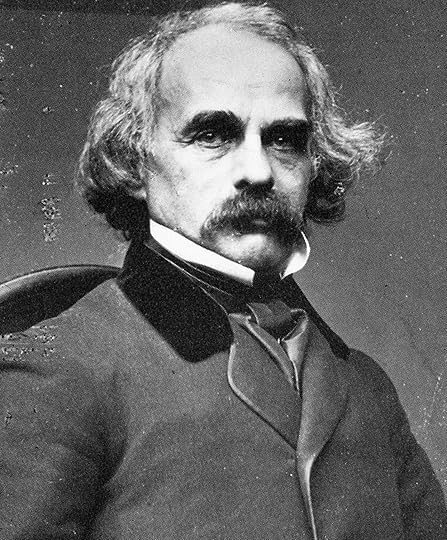
Nathaniel Hawthorne
5,604 books3,715 followersNathaniel Hawthorne was a 19th century American novelist and short story writer. He is seen as a key figure in the development of American literature for his tales of the nation's colonial history.
Shortly after graduating from Bowdoin College, Hathorne changed his name to Hawthorne. Hawthorne anonymously published his first work, a novel titled Fanshawe, in 1828. In 1837, he published Twice-Told Tales and became engaged to painter and illustrator Sophia Peabody the next year. He worked at a Custom House and joined a Transcendentalist Utopian community, before marrying Peabody in 1842. The couple moved to The Old Manse in Concord, Massachusetts, later moving to Salem, the Berkshires, then to The Wayside in Concord. The Scarlet Letter was published in 1850, followed by a succession of other novels. A political appointment took Hawthorne and family to Europe before returning to The Wayside in 1860. Hawthorne died on May 19, 1864, leaving behind his wife and their three children.
Much of Hawthorne's writing centers around New England and many feature moral allegories with a Puritan inspiration. His work is considered part of the Romantic movement and includes novels, short stories, and a biography of his friend, the United States President Franklin Pierce.
Shortly after graduating from Bowdoin College, Hathorne changed his name to Hawthorne. Hawthorne anonymously published his first work, a novel titled Fanshawe, in 1828. In 1837, he published Twice-Told Tales and became engaged to painter and illustrator Sophia Peabody the next year. He worked at a Custom House and joined a Transcendentalist Utopian community, before marrying Peabody in 1842. The couple moved to The Old Manse in Concord, Massachusetts, later moving to Salem, the Berkshires, then to The Wayside in Concord. The Scarlet Letter was published in 1850, followed by a succession of other novels. A political appointment took Hawthorne and family to Europe before returning to The Wayside in 1860. Hawthorne died on May 19, 1864, leaving behind his wife and their three children.
Much of Hawthorne's writing centers around New England and many feature moral allegories with a Puritan inspiration. His work is considered part of the Romantic movement and includes novels, short stories, and a biography of his friend, the United States President Franklin Pierce.
Ratings & Reviews
Friends & Following
Create a free account to discover what your friends think of this book!
Community Reviews
Displaying 1 - 30 of 36 reviews

January 17, 2009
Most of the best stories in this collection ("My Kinsman Major Molineux," "Young Goodman Brown," "The Minister's Black Veil," "Lady Eleanore's Mantle," "Egotism, or the Bosom Serpent," "The Birthmark" and "Rappacini's Daughter") unite--for the first and perhaps only time--the extravagance of the gothic romantic tale and the moral complexity of multilevel allegory with the forceful impact of the modern short story.
Some of the less successful tales are equally interesting. For example, in "Wakefield"--a tale that reminds me more of Kafka than Hoffmann--an upright middle-class man refuses to go home for no good reason and then watches his wife for twenty years from self-imposed isolation one street away. "The Celestial Railroad" takes us on a steam locomotive journey toward Bunyan's Heavenly City, applying nineteenth century realism to Reformation allegory, and in the process criticizing not only the arrogance of the industrial age but also the shallowness of Transcendentalism and other "advanced" forms of 19th century religion.
Sure, Some stories are weaker than others, but the overall quality of the collection is high and the best stories here are masterpieces of the form.
Taken together, these stories become even more powerful because of their recurrent imagery: many of the characters bear either inward or outward signs of isolation--birthmarks, pockmarks, veils, indwelling snakes, obsessive searches for theological or scientific knowledge, voluntary separation from the community--and it is precisely these characters who, through suffering, achieve some form of self-recognition.

May 11, 2021
With the help of a GR friend I was turned on to the podcast You're Wrong About, particularly the episodes about the seminal Satanic Panic "true crime" novel
Michelle Remembers
. Whether or not this subconsciously affected my decision at the library to pick up this collection of short stories by Hawthorne, I dunno, but I can tell you one thing: reading "Young Goodman Brown" after diving deep into the lore of Satanism in America was chilling.

In this one example alone Hawthorne's writing had immediate relevance. His prose style is not always my favorite, and it is antiquated beyond recognition for most of today's readers, and we can debate what that means; ultimately I don't think people are any less civilized than they were in the 19th century, and more likely than not the same number of people were open to the experience of Romanticism back then as now.
What is undoubtedly unfortunate, however, is his current reputation for being punishingly boring, when in fact he was the champion of the spirit that ultimately spawned such timeless tales as Are You Afraid of the Dark, to name but one. The aesthetic of American Halloween, the spooky ghost stories, the witches' covens, the pumpkin spice latte obsessions (of which I am a year-round believer): all have their spiritual ancestor in the Scion of Salem. For people growing up before TV and the internet, some of whom, like Henry James, Borges, and Poe, became literary geniuses in their own right, Hawthorne was pure entertainment porn. There's a reason for this: Hawthorne was an overt proponent of Romance literature, back when that meant a heightened state of realism and not actual porn. Whatever literature's state in current culture, there are few media that can channel the occult forces like language transcribed for the eye to read, for the hand to pen.
 "/>
"/>
Hawthorne, overtly straight, and male (which won't win him much favor today, but what about tomorrow?) lives in the center of a debate in America that is no less relevant today than it was back then, at the supposed dawn of history, a mere century and a half ago. That debate concerns puritanism, Good & Evil, lust, guilt, the quest for self-perfection, fashion, Satanism. Hawthorne's true genius (doubtfully on purpose) was to position himself ambiguously on that spectrum. Sometimes we feel he is the patriarchical puritan (his ancestors were, witch-hunters even, anti-feminist to the core) while at other times his mere wanting to express these things puts him on the side of good, that is, the side that believes in freedom of expression, in the equality of the sexes, in the heresies of peace & love in a land built on blood. We don't know where his inner self resides, but we sympathize with his passion, with his obsession with the dark and mysterious arts, in the fragrant flowers, the mists at eventide.
It is wrong to place a judgment on Hawthorne, whatever his inclinations were as a man. He illustrates the American paradox like few others; he gives us a heritage of beauty we can be proud of, and points out problems that persist even today for which one might need to dawn the unholy cloak in order to take psychic arms against evil and fight for what is right.
x X In Darkness Together... We WaLk hand in HaNd X x
In this one example alone Hawthorne's writing had immediate relevance. His prose style is not always my favorite, and it is antiquated beyond recognition for most of today's readers, and we can debate what that means; ultimately I don't think people are any less civilized than they were in the 19th century, and more likely than not the same number of people were open to the experience of Romanticism back then as now.
What is undoubtedly unfortunate, however, is his current reputation for being punishingly boring, when in fact he was the champion of the spirit that ultimately spawned such timeless tales as Are You Afraid of the Dark, to name but one. The aesthetic of American Halloween, the spooky ghost stories, the witches' covens, the pumpkin spice latte obsessions (of which I am a year-round believer): all have their spiritual ancestor in the Scion of Salem. For people growing up before TV and the internet, some of whom, like Henry James, Borges, and Poe, became literary geniuses in their own right, Hawthorne was pure entertainment porn. There's a reason for this: Hawthorne was an overt proponent of Romance literature, back when that meant a heightened state of realism and not actual porn. Whatever literature's state in current culture, there are few media that can channel the occult forces like language transcribed for the eye to read, for the hand to pen.
"/>Hawthorne, overtly straight, and male (which won't win him much favor today, but what about tomorrow?) lives in the center of a debate in America that is no less relevant today than it was back then, at the supposed dawn of history, a mere century and a half ago. That debate concerns puritanism, Good & Evil, lust, guilt, the quest for self-perfection, fashion, Satanism. Hawthorne's true genius (doubtfully on purpose) was to position himself ambiguously on that spectrum. Sometimes we feel he is the patriarchical puritan (his ancestors were, witch-hunters even, anti-feminist to the core) while at other times his mere wanting to express these things puts him on the side of good, that is, the side that believes in freedom of expression, in the equality of the sexes, in the heresies of peace & love in a land built on blood. We don't know where his inner self resides, but we sympathize with his passion, with his obsession with the dark and mysterious arts, in the fragrant flowers, the mists at eventide.
It is wrong to place a judgment on Hawthorne, whatever his inclinations were as a man. He illustrates the American paradox like few others; he gives us a heritage of beauty we can be proud of, and points out problems that persist even today for which one might need to dawn the unholy cloak in order to take psychic arms against evil and fight for what is right.
x X In Darkness Together... We WaLk hand in HaNd X x

January 1, 2021
This is a fabulous collection of short stories by Hawthorne. I wish I’d had my high schoolers read this instead of The Scarlet Letter. The stories are all allegorical moral tales of one sort or another.
My favorites were “The Birthmark” which speaks to perfectionism, “The Celestial Railroad” which in the style of Bunyan’s Pilgrim Progress presents a shortcut to The Celestial City. “The Minister’s Black Veil” speaks to the masks we all wear and “Roger Malvin’s Burial” reminds us of what we lose when we live a lie.
Definitely the reoccurring theme seems to be the fight the inward man has with sin and disbelief.
But the stories are also just well-written and delightful to read. I highly recommend.
My favorites were “The Birthmark” which speaks to perfectionism, “The Celestial Railroad” which in the style of Bunyan’s Pilgrim Progress presents a shortcut to The Celestial City. “The Minister’s Black Veil” speaks to the masks we all wear and “Roger Malvin’s Burial” reminds us of what we lose when we live a lie.
Definitely the reoccurring theme seems to be the fight the inward man has with sin and disbelief.
But the stories are also just well-written and delightful to read. I highly recommend.

April 12, 2014
I tried to (or was made to try to) read The Scarlet Letter in high school. All I remember is I thought Hawthorne was dull,and I did not like the book. I have been reading Ordeal of the Union by Allan Nevins, and one chapter dealt with the development of American writers prior to the war. Hawthorne was among the writers included in this discussion. This inspired me to dig out this book (I was given as a present years ago) and see what I thought. Hawthorne is not dull and I enjoyed his stories. Some are better than others. Some are intriguing,I like the idea of Wakefield, but wished he had fleshed it out more. Hawthorne nicely captures the human fear of things/people we don't understand in The Minister's Black Veil. In the end, a pleasant surprise. It makes me want to give The Scarlet Letter another try.

February 12, 2009
One interesting feature of Hawthorne's stories - at least some of them - is the questions left unanswered, or the ambiguity. It allows the reader to extract his own meaning, and when we do that, often we see ourselves or our own experience in the story of one of his characters. And, since Hawthorne writes about evil and good, the nature of men (The Bosom Serpent), of their inner thoughts and heart, then it's not hard to find one's own experience in his stories. So, now, the reader has a vivid, physical image of his own inside - in the remarkable experience of Hawthorne's characters.
Take Wakefield, the odd man who steps out of his home for a couple of days, to return 20 years later. Leaving his wife puzzled, then distressed to sickness, then resigned to a lonely life. How easy it would be to find oneself in this story, in a marriage but emotionally, or spiritually remote from his spouse. But so close as well.
Take Wakefield, the odd man who steps out of his home for a couple of days, to return 20 years later. Leaving his wife puzzled, then distressed to sickness, then resigned to a lonely life. How easy it would be to find oneself in this story, in a marriage but emotionally, or spiritually remote from his spouse. But so close as well.

August 21, 2017
3.5
Hawthorne is brilliant in short story writing.
Of his novels I only read The Scarlet
Hawthorne is brilliant in short story writing.
Of his novels I only read The Scarlet

January 17, 2024
Every story better than the one before it. Amazing. Style, allegory, theme, plot, story, you name it, all of it perfectly crafted. Why people aren’t reading him and talking about his stories every day is beyond me.

April 11, 2012
Hawthorne is a good writer. Out of the 18 short stories included in this collection, I had read (or at least heard of) 7 of them, so it was good exposure to new writings by Hawthorne. Of his novels, I've read only The Scarlet Letter.
Here is a blog post based on a note he included with "Dr. Heidegger's Experiment": http://www.themundanemuse.blogspot.co...
Here is a blog post based on a note he included with "Dr. Heidegger's Experiment": http://www.themundanemuse.blogspot.co...

March 31, 2011
Good stories, albeit slightly heavy-handed on the moralizing. But it's Hawthorne, so we would expect that.

September 7, 2026
One of my favorite collections of short stories. Probably been 35 years or so since I last read it. So many of the stories now conjure up a reckoning with the dual legacies of depression and moral oppression brought to the North American shores by the Puritan ancestors. Few stories better capture this than "The Maypole at Merry Mount." Ethan Brand's "unpardonable sin" crops up repeatedly here in tales in which the overwhelming mindcast of doubt, suspicion, and again, depression cloud the protagonists' ability to navigate through a world of potential, but ultimately failed, connection with others through empathy and love. Standout tales here are "Roger Malvin's Burial" (a bit obvious and over-the-top by the end, but still a stunner); "Wakefield" (this tale of inaction anticipates the gradual, entropic decay of Kafka's odd protagonists); "Young Goodman Brown" (perhaps my favorite story here); "The Minister's Black Veil" (akin to "Wakefield," with its singular moment of transformative inaction); "The Birthmark" and "Rappaccini's Daughter" (both early science fiction about science's tragic devastation of love). With only a few hints of the Gothic literature that Poe would mine to great effect, and much less of the mystery, these tales suggest a form of magic realism, allegorical fairy tales put so close into contact with the "more lifelike warmth" of an actual reality that, like the stoves that prove the undoing of both the Snow Image and Ethan Brand, destroys fancy and takes love with it.

August 13, 2024
Decent collection of short stories from Hawthorne. He comes close to the kind of creepy weirdness and suspense Poe is known for, but never quite gets there. Not enough creepy weirdness, I guess.
Some of these stories are (were?) fairly famous, from Twice-Told Tales (which I remember mainly from the old card game Authors) and those are probably the best.
The corny allegory "The Celestial Railroad" is a little too in-your-face obvious, as Hawthorne doesn't always have the sneaky subtlety you need to make stories like this work (at least for 2020s audiences, I guess).
I did occasionally get into the flow of this sort of old school writing (1830s mostly) but then Hawthorne busts out an awkward framing device broadcasting that this is just the narrator telling someone else's story, which, I don't know, seems to take away from the immediacy you need to make a story creepy and weird or at least odd enough to be memorable.
He's also missing the big Poe-like twist at the end (or elsewhere) that also grabs a reader and won't let go even when you really, really want to be let go (the way Poe or Stephen King do).
The stories are interesting, and a nice peek at how stories were written back then (and how people lived, which I always like). But ultimately I'll just say he was better at novels and leave it at that.
Some of these stories are (were?) fairly famous, from Twice-Told Tales (which I remember mainly from the old card game Authors) and those are probably the best.
The corny allegory "The Celestial Railroad" is a little too in-your-face obvious, as Hawthorne doesn't always have the sneaky subtlety you need to make stories like this work (at least for 2020s audiences, I guess).
I did occasionally get into the flow of this sort of old school writing (1830s mostly) but then Hawthorne busts out an awkward framing device broadcasting that this is just the narrator telling someone else's story, which, I don't know, seems to take away from the immediacy you need to make a story creepy and weird or at least odd enough to be memorable.
He's also missing the big Poe-like twist at the end (or elsewhere) that also grabs a reader and won't let go even when you really, really want to be let go (the way Poe or Stephen King do).
The stories are interesting, and a nice peek at how stories were written back then (and how people lived, which I always like). But ultimately I'll just say he was better at novels and leave it at that.

June 22, 2015
TL; DR: Hawthorne is often overshadowed by others, but his work—even the minor stories—illustrate the complexities of human nature and invite us to more deeply think about our own lives and values.
When I decide to review a work, I generally do so because I feel that my thoughts can be of benefit to others. I therefore have several misgivings about reviewing Hawthorne’s The Celestial Railroad because I’m not sure what I can add to over one hundred years of scholarship, debate, and reader feedback. Reviewing his work is, for me, akin to reviewing the Bible; it is, after all, a significant cultural document that has been a part of the American genome for so long that anything else I can add will have little to no impact upon those who are debating whether or not to read it.
I will try to say something of substance though, if only because Hawthorne is far and above the rest my favorite author of the 19th century from America. If my review can get even one person to read his work and appreciate it, I feel I have accomplished something positive.
Hawthorne is my favorite American from the time period because I think he has a rare and complete grasp of the early American psyche. His work demonstrates the hubris of many of the earliest colonialists, yet he also captures universals in his work. If you, the potential reader, are trying to decide which book to read that illustrates the burgeoning American literature of the new nation, and if you also wish to take a long, hard look into the seething soul of humankind, Hawthorne is your man.
Without ruining too much of the plot of these short stories, and without touching too much upon the ones most of us have read before—works like “The Minister’s Black Veil” and “Rappaccini’s Daughter”—I want to discuss some of the other stories in brief detail to perhaps entice you to read this book. Again, since my purpose is to get you to read this book, I believe that by offering a few thoughts on some of the stories it may encourage you to read them. In no order or importance, here are some ‘back matter’ bits with commentary (and fair warning, though I have tried to avoid doing so, there are some light SPOILERS ahead):
“The Wives of the Dead” – Two sisters-in-law are horrified to discover their husbands have been killed in combat. Each is overcome with grief, though separate travelers tell them uplifting news, unbeknownst to one another. Though this story seems too open-ended on the surface—it is a kind of sister to “Wakefield” and may endure the same ‘Well, okay, so what happens?’ criticism—it is, in fact, not. Hawthorne illustrates the time period in his writing, but he also invites you, his reader, to see your own reactions in each of the sisters-in-law. For instance, when you reach the end of the story, you will have either a cynical reaction (“They didn’t bother to talk about it”) or a more uplifting reaction (“They immediately knew and celebrated”). Hawthorne asks here, as in so many of his stories, that you see yourself in the characters and that you weigh your own mindset against these living, breathing beings. By leaving the work open-ended, he forces you to imagine the rest; your evaluation of the story says as much about you as it does the characters. Few writers have the guts to do this even once; Hawthorne does it repeatedly, and each time is unique and different in its own way.
“The Great Carbuncle” – I want to avoid the titular namesake of the book to illustrate another of Hawthorne’s recurrent styles. Rather than having an open-ended story, Hawthorne in this version teaches lessons about human nature through powerful parables. In “The Great Carbuncle,” Hawthorne uses the simple story of a group of distinct characters who are all in pursuit of a mysterious gem of some brilliant power. Though only a handful find this gem, it is the reaction to finding it that is most important in the story. Hawthorne asks that you think about which reaction is the most valuable; he also asks that you think about which of the characters you feel the closest affinity for. Is it the man seeking riches? Is it the happy couple? Is it the wild man who has degenerated because he spent so much of his life chasing one idea with no success? As you read and project your own thoughts into the story, Hawthorne draws you in, inviting you to explore your own values. As I said at the start, there is something universal in this presentation, for we have all pursued some goal in our lives which has consumed or liberated us.
“The Ambitious Guest” – Finally, there is the kind of story which illustrates a deep character flaw present in one of the central characters which causes that character’s (or an entire group’s) downfall. Though again I could have chosen one of the better known stories (“The Birthmark” is a great example), “The Ambitious Guest” is a short, succinct tale that embodies this idea as well. Here a family is gathered around a fire when a guest comes in upon them. His musings get the family to think in turn about their own value to the world, and each becomes so caught in his or her own thoughts that they all miss the ominous portents just outside the door. The story touches upon supernatural elements, though it never forces them upon the reader; Hawthorne is a master of strongly implying a spiritual element in his characters’ lives, thereby adeptly bridging the gap between religion and rationality, as was the tendency of his day. Spirituality, character flaws, and the image of rustic country living all combine as one total, producing an final image which will stay with you.
Though Poe gets the limelight, I am more convinced than ever that Hawthorne deserves it more. Poe sought to achieve a singular vision in each of his stories, but Hawthorne truly did so. As I said at the beginning, if you are on the fence about which 19th century book to read (maybe you are taking a class on it…), this is a great place to start.
When I decide to review a work, I generally do so because I feel that my thoughts can be of benefit to others. I therefore have several misgivings about reviewing Hawthorne’s The Celestial Railroad because I’m not sure what I can add to over one hundred years of scholarship, debate, and reader feedback. Reviewing his work is, for me, akin to reviewing the Bible; it is, after all, a significant cultural document that has been a part of the American genome for so long that anything else I can add will have little to no impact upon those who are debating whether or not to read it.
I will try to say something of substance though, if only because Hawthorne is far and above the rest my favorite author of the 19th century from America. If my review can get even one person to read his work and appreciate it, I feel I have accomplished something positive.
Hawthorne is my favorite American from the time period because I think he has a rare and complete grasp of the early American psyche. His work demonstrates the hubris of many of the earliest colonialists, yet he also captures universals in his work. If you, the potential reader, are trying to decide which book to read that illustrates the burgeoning American literature of the new nation, and if you also wish to take a long, hard look into the seething soul of humankind, Hawthorne is your man.
Without ruining too much of the plot of these short stories, and without touching too much upon the ones most of us have read before—works like “The Minister’s Black Veil” and “Rappaccini’s Daughter”—I want to discuss some of the other stories in brief detail to perhaps entice you to read this book. Again, since my purpose is to get you to read this book, I believe that by offering a few thoughts on some of the stories it may encourage you to read them. In no order or importance, here are some ‘back matter’ bits with commentary (and fair warning, though I have tried to avoid doing so, there are some light SPOILERS ahead):
“The Wives of the Dead” – Two sisters-in-law are horrified to discover their husbands have been killed in combat. Each is overcome with grief, though separate travelers tell them uplifting news, unbeknownst to one another. Though this story seems too open-ended on the surface—it is a kind of sister to “Wakefield” and may endure the same ‘Well, okay, so what happens?’ criticism—it is, in fact, not. Hawthorne illustrates the time period in his writing, but he also invites you, his reader, to see your own reactions in each of the sisters-in-law. For instance, when you reach the end of the story, you will have either a cynical reaction (“They didn’t bother to talk about it”) or a more uplifting reaction (“They immediately knew and celebrated”). Hawthorne asks here, as in so many of his stories, that you see yourself in the characters and that you weigh your own mindset against these living, breathing beings. By leaving the work open-ended, he forces you to imagine the rest; your evaluation of the story says as much about you as it does the characters. Few writers have the guts to do this even once; Hawthorne does it repeatedly, and each time is unique and different in its own way.
“The Great Carbuncle” – I want to avoid the titular namesake of the book to illustrate another of Hawthorne’s recurrent styles. Rather than having an open-ended story, Hawthorne in this version teaches lessons about human nature through powerful parables. In “The Great Carbuncle,” Hawthorne uses the simple story of a group of distinct characters who are all in pursuit of a mysterious gem of some brilliant power. Though only a handful find this gem, it is the reaction to finding it that is most important in the story. Hawthorne asks that you think about which reaction is the most valuable; he also asks that you think about which of the characters you feel the closest affinity for. Is it the man seeking riches? Is it the happy couple? Is it the wild man who has degenerated because he spent so much of his life chasing one idea with no success? As you read and project your own thoughts into the story, Hawthorne draws you in, inviting you to explore your own values. As I said at the start, there is something universal in this presentation, for we have all pursued some goal in our lives which has consumed or liberated us.
“The Ambitious Guest” – Finally, there is the kind of story which illustrates a deep character flaw present in one of the central characters which causes that character’s (or an entire group’s) downfall. Though again I could have chosen one of the better known stories (“The Birthmark” is a great example), “The Ambitious Guest” is a short, succinct tale that embodies this idea as well. Here a family is gathered around a fire when a guest comes in upon them. His musings get the family to think in turn about their own value to the world, and each becomes so caught in his or her own thoughts that they all miss the ominous portents just outside the door. The story touches upon supernatural elements, though it never forces them upon the reader; Hawthorne is a master of strongly implying a spiritual element in his characters’ lives, thereby adeptly bridging the gap between religion and rationality, as was the tendency of his day. Spirituality, character flaws, and the image of rustic country living all combine as one total, producing an final image which will stay with you.
Though Poe gets the limelight, I am more convinced than ever that Hawthorne deserves it more. Poe sought to achieve a singular vision in each of his stories, but Hawthorne truly did so. As I said at the beginning, if you are on the fence about which 19th century book to read (maybe you are taking a class on it…), this is a great place to start.
Read
October 15, 2025favorites: Dr. Heidegger's Experiment, Egotism (The Bosom Serpent), The Celestial Railroad; honorable mentions: Rappaccini's Daughter, Ethan Brand, and My Kinsman, Major Molineux
Always interesting to read older works of fiction that are historical fiction. Several of these short stories take place in the 17th or 18th centuries, and are specifically framed as taking place in a bygone era. So you find out the Puritans got their severe legalistic reputation even by Hawthorne's time, and you discover that early-ish 19th century people also share in your horror that tar and feathering was a thing.
I skipped one of the short stories that I thought would make me too uneasy, and my normally completionist self just has to be okay with that lol
Always interesting to read older works of fiction that are historical fiction. Several of these short stories take place in the 17th or 18th centuries, and are specifically framed as taking place in a bygone era. So you find out the Puritans got their severe legalistic reputation even by Hawthorne's time, and you discover that early-ish 19th century people also share in your horror that tar and feathering was a thing.
I skipped one of the short stories that I thought would make me too uneasy, and my normally completionist self just has to be okay with that lol

July 24, 2021
I don't really think Hawthrne is really my thing. For the few stories that I really liked, there were more that I disliked.
If anything, I think it was the flowy prose that he was writing in. I sort of wanted the point made without the excess.
I will say that out of the entire story collection, I really enjoyed the story called "The birthmark." One of the few stories in this book that I enjoyed and could relate to.
If anything, I think it was the flowy prose that he was writing in. I sort of wanted the point made without the excess.
I will say that out of the entire story collection, I really enjoyed the story called "The birthmark." One of the few stories in this book that I enjoyed and could relate to.

Read
January 2, 2021I am fond of the short story format, and this was a good collection from an author I really ought to have read before. I had heard such awful things about The Scarlett Letter, but these were clever and appropriately open-ended stories. Really, much more enjoyable than I had expected with a strong dose of fantasy in places.

October 24, 2020
A few of my favorite stories from this collection:
Roger Malvin's Burial
The Ambitious Guest
The Snow Image: A Childish Miracle
Wakefield
Ethan Brand
It's difficult to pick favorites because they are all so good!
Roger Malvin's Burial
The Ambitious Guest
The Snow Image: A Childish Miracle
Wakefield
Ethan Brand
It's difficult to pick favorites because they are all so good!

Did Not Finish
April 30, 2022I tried, I really did. I just couldn’t get through his verbiage to enjoy the short stories in this book.

October 26, 2022
Very interesting to say the least.
Read
November 20, 2024okay

December 18, 2024
Archbishop Chaput, OFM Cap cites this work in his 'Strangers in a Strange Land'. An interesting spoof on John Bunyan's work 'Pilgrim's Progress'.

November 8, 2019
Some really great short stories here. Personal favorites are Young Goodman Brown, The Gray Champion, Dr. Heidegger’s Experiment, and The Celestial Railroad.

January 4, 2008
Hawthorne's talent lies in short story writing. The Celestial Railroad and Other Stories is a fine collection of his stories, though I also recommend Twice Told Tales, which contains a number of stories not in this volume. One of Hawthorne's lesser known works was chosen as the namesake of this volume. "The Celestial Railroad" is not considered to be particularly profound, but I thought it was an extremely clever parody on Pilgrim's Progress. The story dealt with a very serious temptation for Christians: the temptation to believe that there is such a thing as an easy road to Heaven. I think my favorite story in this volume is "Wakefield," simply because it is so unusual and bizarre. (It reminded me, in a manner, of another favorite short story, Herman Melville's "Bartleby the Scrivener.") I also recommend "The Minister's Black Veil" and "Egotism, or the Bosom Serpent."
"The Celestial Railroad" is not generally considered one of Hawthorne's more profound works, but I think it is a brilliant and often humorous parody which at the same time issues a serious warning to Christians who would like to pretend that there is a broad and comfortable way to heaven.
"The Celestial Railroad" is not generally considered one of Hawthorne's more profound works, but I think it is a brilliant and often humorous parody which at the same time issues a serious warning to Christians who would like to pretend that there is a broad and comfortable way to heaven.

December 4, 2008
This group of short stories is superb. Hawthorne's dark, Puritanical sensibilities can be overwhelming in large doses, but they add power to his short fiction. Celestial Railroad showcases some of Hawthorne's finest works.
"My Kinsman, Major Molineaux" is a tale with a central mystery that's not revealed until the end. "The Ambitious Guest" is haunting. "Young Goodman Brown" is one of NH's most famous works and is frequently anthologized. The title story is a parody of The Pilgrim's Progress and is excellent.
I have yet to read all of the stories here, but I look forward to it.
"My Kinsman, Major Molineaux" is a tale with a central mystery that's not revealed until the end. "The Ambitious Guest" is haunting. "Young Goodman Brown" is one of NH's most famous works and is frequently anthologized. The title story is a parody of The Pilgrim's Progress and is excellent.
I have yet to read all of the stories here, but I look forward to it.

May 23, 2013
I picked this paperback book up some time after being assigned to read Hawthorne's story "Young Goodman Brown" - included here - for 10th Grade English, I believe, whilst my former classmates were assigned to read The Scarlet Letter... which I've still never read.
Hawthorne impressed me, though I didn't read this cover-to-cover. He impresses me more after reading a history of Salem, Massachusetts in his era.
Recommended.
Hawthorne impressed me, though I didn't read this cover-to-cover. He impresses me more after reading a history of Salem, Massachusetts in his era.
Recommended.

September 11, 2007
A terrific collection of Nathaniel Hawthorne's short stories. My favorite stories within this compilation were: The Birthmark, The Maypole of Merry Mount, and The Snow Image. The afterword mentions the fact that these stories were inspired by Hawthorne's own interest in fairy lore.
All and all, a worthwhile read.
All and all, a worthwhile read.

February 13, 2015
The stories in this slim volume successfully coalesce in a portrait of a moral and insightful writer, deeply aware of human foibles and the role of forgiveness and compassion. What I didn't expect, but ended up enjoying the most about them, was his sly, sometimes subtle humor which threads through all the stories.

July 21, 2007
Hawthorne packs his short stories with symbolism, allusion, and meaning. Each tale resounds with the reader as Hawthorne grapples with those Puritan values, human nature, and faith. These stories definitely don't deserve to be overlooked by high school classrooms.
October 26, 2007
I thought this story (The Celestial Railroad) was very good.
Sort of a take off of Pilgrims Progress.
If you want to read it you can find the whole story online at:
http://www.wsu.edu/~campbelld/amlit/c...
Sort of a take off of Pilgrims Progress.
If you want to read it you can find the whole story online at:
http://www.wsu.edu/~campbelld/amlit/c...

January 12, 2008
An excellent collection of short stories. I read this book when I was in college and liked them even better than The Scarlett Letter.
Each story examines the sins that we try to hide from the rest of the world. Being true to yourself in a Puritan world is no easy task...
Each story examines the sins that we try to hide from the rest of the world. Being true to yourself in a Puritan world is no easy task...

February 11, 2009
Among the books I was forced to read in high school, this is one I didn't mind reading and actually liked. It's a collection of Nathaniel Hawthorne's short stories. The ones that made an impression back in the tenth grade were My Kinsman, Major Molineux and Young Goodman Brown.
Displaying 1 - 30 of 36 reviews