

What do you think?

The Hero: The Enduring Myth That Makes Us Human
In his first work of nonfiction, the creator of the multimillion-selling Jack Reacher series explores the endurance of heroes from Achilles to Bond, showing us how this age-old myth is a fundamental part of what makes us human. He demonstrates how hero stories continue to shape our world – arguing that we need them now more than ever.
From the Stone Age to the Greek Tragedies, from Shakespeare to Robin Hood, we have always had our heroes. The hero is at the centre of formative myths in every culture and persists to this day in world-conquering books, films and TV shows. But why do these characters continue to inspire us, and why are they so central to storytelling?
Scalpel-sharp on the roots of storytelling and enlightening on the history and science of myth, The Hero is essential reading for anyone trying to write or understand fiction. Child teaches us how these stories still shape our minds and behaviour in an increasingly confusing modern world, and with his trademark concision and wit, demonstrates that however civilised we get, we’ll always need heroes.
From the Stone Age to the Greek Tragedies, from Shakespeare to Robin Hood, we have always had our heroes. The hero is at the centre of formative myths in every culture and persists to this day in world-conquering books, films and TV shows. But why do these characters continue to inspire us, and why are they so central to storytelling?
Scalpel-sharp on the roots of storytelling and enlightening on the history and science of myth, The Hero is essential reading for anyone trying to write or understand fiction. Child teaches us how these stories still shape our minds and behaviour in an increasingly confusing modern world, and with his trademark concision and wit, demonstrates that however civilised we get, we’ll always need heroes.
96 pages, Kindle Edition
First published November 26, 2019
About the author
Lee Child
448 books35.5k followersLee Child was born October 29th, 1954 in Coventry, England, but spent his formative years in the nearby city of Birmingham. By coincidence he won a scholarship to the same high school that JRR Tolkien had attended. He went to law school in Sheffield, England, and after part-time work in the theater he joined Granada Television in Manchester for what turned out to be an eighteen-year career as a presentation director during British TV's "golden age." During his tenure his company made Brideshead Revisited, The Jewel in the Crown, Prime Suspect, and Cracker. But he was fired in 1995 at the age of 40 as a result of corporate restructuring. Always a voracious reader, he decided to see an opportunity where others might have seen a crisis and bought six dollars' worth of paper and pencils and sat down to write a book, Killing Floor, the first in the Jack Reacher series.
Killing Floor was an immediate success and launched the series which has grown in sales and impact with every new installment. The first Jack Reacher movie, based on the novel One Shot and starring Tom Cruise and Rosamund Pike, was released in December 2012.
Lee has three homes—an apartment in Manhattan, a country house in the south of France, and whatever airplane cabin he happens to be in while traveling between the two. In the US he drives a supercharged Jaguar, which was built in Jaguar's Browns Lane plant, thirty yards from the hospital in which he was born.
Lee spends his spare time reading, listening to music, and watching the Yankees, Aston Villa, or Marseilles soccer. He is married with a grown-up daughter. He is tall and slim, despite an appalling diet and a refusal to exercise.
Killing Floor was an immediate success and launched the series which has grown in sales and impact with every new installment. The first Jack Reacher movie, based on the novel One Shot and starring Tom Cruise and Rosamund Pike, was released in December 2012.
Lee has three homes—an apartment in Manhattan, a country house in the south of France, and whatever airplane cabin he happens to be in while traveling between the two. In the US he drives a supercharged Jaguar, which was built in Jaguar's Browns Lane plant, thirty yards from the hospital in which he was born.
Lee spends his spare time reading, listening to music, and watching the Yankees, Aston Villa, or Marseilles soccer. He is married with a grown-up daughter. He is tall and slim, despite an appalling diet and a refusal to exercise.
Ratings & Reviews
Friends & Following
Create a free account to discover what your friends think of this book!
Community Reviews
Displaying 1 - 30 of 430 reviews

November 26, 2019
The hero trap
I am a bit disappointed and dissatisfied with this book. I will be the first to admit I bought this because it was written by Lee Childs. It is probably my own fault for not finding out what the book was about.
The first half of the book is about the progression of language and creating words. This part of the book feels like Childs is given a topic, and he and he let's rip for that chapter. For example, the first chapter starts from a poppy to heroine. I still do not understand why this chapter was there.
The only reason I actually gave this book two stars is just past the middle couple of chapters. Lee Childs talks about how stories come together. He talks about a couple of well-known heroes and, of course, Jack. This is the strongest part of the book for me. He finishes the book with a rant about how the word "hero" is overused.
I respect Lee Childs for putting in his hand at something new, but this book is definitely not to his strengths or my taste. The parts of this book that are are good, but it could be the case that the rest of the book made those parts seem better than they were. This is a reminder not to judge a book by the name on the cover.
I am a bit disappointed and dissatisfied with this book. I will be the first to admit I bought this because it was written by Lee Childs. It is probably my own fault for not finding out what the book was about.
The first half of the book is about the progression of language and creating words. This part of the book feels like Childs is given a topic, and he and he let's rip for that chapter. For example, the first chapter starts from a poppy to heroine. I still do not understand why this chapter was there.
The only reason I actually gave this book two stars is just past the middle couple of chapters. Lee Childs talks about how stories come together. He talks about a couple of well-known heroes and, of course, Jack. This is the strongest part of the book for me. He finishes the book with a rant about how the word "hero" is overused.
I respect Lee Childs for putting in his hand at something new, but this book is definitely not to his strengths or my taste. The parts of this book that are are good, but it could be the case that the rest of the book made those parts seem better than they were. This is a reminder not to judge a book by the name on the cover.

November 26, 2021
"Even before I learned it was so, I always vaguely assumed 'hero' was ancient Greek. It just sounded right . . . the concept behind it must have been shaped by - indeed, subliminally specified in great detail by - that ancient culture's needs, concerns, desires, prejudices, aspirations and fears." -- pages 15-16
Author Lee Child (a.k.a. James Dover Grant, the veddy British man responsible for the all-American Jack Reacher man-of-action character) breezily delves into the origin / definition of 'hero' and then how dramatic storytelling developed as a primal and still-relevant source of popular entertainment in this brief series of essays. Basically, it's like listening to one of your particularly verbose and witty friends during an engrossing conversation, or maybe even a favorite university professor who waxed poetically for an hour during an especially interesting class segment. Child pinballs from the probable genesis of the story genres ("A girl left a cave and met a saber-toothed tiger, but she had an axe with her and killed the tiger with a single blow! That's the birth of a thriller right there."), those original epic adventure tales like The Odyssey and The Illiad, then on to discussing the more modern action-oriented protagonists like Robin Hood, James Bond, and of course Jack Reacher. The Hero reads quickly enough that you'll likely finish it while downing a single cup of coffee, but yet you could also come away with possibly having learned something, too. I call that a 'win-win' all around.
Author Lee Child (a.k.a. James Dover Grant, the veddy British man responsible for the all-American Jack Reacher man-of-action character) breezily delves into the origin / definition of 'hero' and then how dramatic storytelling developed as a primal and still-relevant source of popular entertainment in this brief series of essays. Basically, it's like listening to one of your particularly verbose and witty friends during an engrossing conversation, or maybe even a favorite university professor who waxed poetically for an hour during an especially interesting class segment. Child pinballs from the probable genesis of the story genres ("A girl left a cave and met a saber-toothed tiger, but she had an axe with her and killed the tiger with a single blow! That's the birth of a thriller right there."), those original epic adventure tales like The Odyssey and The Illiad, then on to discussing the more modern action-oriented protagonists like Robin Hood, James Bond, and of course Jack Reacher. The Hero reads quickly enough that you'll likely finish it while downing a single cup of coffee, but yet you could also come away with possibly having learned something, too. I call that a 'win-win' all around.

December 18, 2019
If you have ever been on public transportation or sat in a location frequented by many you do not know, you will have discovered there is always someone who wants to share their story. Be it a tale from their youth or an anecdote that ties in nicely with what you are doing/reading at that moment, those people exist the world over. The person means well and seems to have something to say they feel will be of upmost importance to you, but all you can do is nod and hope to return to your previously scheduled solo activity. Since I began reading Lee Child novels, I often thought of that person as a personified Jack Reacher. He’s there, does his thing, shares a few stories, and then is out of your life again. Child offers up a book version of the Reacher persona with this publication, wherein he rambles for pages and pages about countless items, with a ‘hero’ theme threading its way from beginning to end and imploring that we, the reader/listener, hark to what is being said. While I love to learn and take great pride in deferring to those who hold the knowledge I desire, this seemed to be a long and meandering discussion that needed proper classification. Child is a masterful writer and knows his stuff (even with this piece), but I wanted something more organized and whose theses could be clearly delineated as I moved from opium to the emergence of Robin Hood as folklore hero. Some will love this publication and others will dislike it to the nth degree. It does not taint my admiration for all things Reacher, but leaves to to wonder what Child did not take all this trivial knowledge and let his well-known protagonist espouse it before wooing his next lady friend!
Kudos, Mr. Child, for an interesting branch-off from your usual fare.
Love/hate the review? An ever-growing collection of others appears at:
http://pecheyponderings.wordpress.com/
A Book for All Seasons, a different sort of Book Challenge: https://www.goodreads.com/group/show/...
Kudos, Mr. Child, for an interesting branch-off from your usual fare.
Love/hate the review? An ever-growing collection of others appears at:
http://pecheyponderings.wordpress.com/
A Book for All Seasons, a different sort of Book Challenge: https://www.goodreads.com/group/show/...

February 21, 2020
What an odd little book about words and storytelling. I guess when you have a hero like Jack Reacher, you need to ponder, a lot!, about what it means to have written a hero that causes more homicide during each novel, than the actual villain(s).

January 14, 2020
The creator of, possibly, the most unique modern example of this enduring character, takes a look at the possible genesis and evolution of the mythology centered around the hero.
The opening sentence is delightfully quirky - “Let’s start with opium”. In many ways the entire first chapter is typical of Child’s best fiction writing, as he draws the reader gently but inexorably into the narrative, only to finish with an unexpected sucker punch. How, for many thousand years, humans knew of the relaxing effects of this poppy extract. Then, at the start of the 19th century, a German chemist managed to extract its active compound, which he named “morphine” after the Greek god of dreams. Then, at the end of that century, another German chemist managed to infuse morphine with hydrochloric acid to create the most infamous of painkillers, to which he gave the German word for heroic – heroin. The chapter ends with the sentence “Why that word?”. Why, indeed?
As humans are the only terrestrial species to have evolved a syntactical language, this has undoubtedly played a crucial role in their survival and dominance over more powerful species. However, in order for it to be effective, the language needs to be accurate and honest. So where did the idea of made-up stories about non-existent people play its role?
Child then goes on to explain how the concept of the hero changed (often, not for the better) as humans went from being hunter-gatherers to farmers, through the Bronze and Iron Ages, medieval and Victorian times to the present day. He is particularly scathing about how the term (along with that annoying modern cliché “legend”) has been debased in the 20th century, largely by politicians and the gutter press.
A very short book, but an extremely original, informative and thought-provoking one, nevertheless.
The opening sentence is delightfully quirky - “Let’s start with opium”. In many ways the entire first chapter is typical of Child’s best fiction writing, as he draws the reader gently but inexorably into the narrative, only to finish with an unexpected sucker punch. How, for many thousand years, humans knew of the relaxing effects of this poppy extract. Then, at the start of the 19th century, a German chemist managed to extract its active compound, which he named “morphine” after the Greek god of dreams. Then, at the end of that century, another German chemist managed to infuse morphine with hydrochloric acid to create the most infamous of painkillers, to which he gave the German word for heroic – heroin. The chapter ends with the sentence “Why that word?”. Why, indeed?
As humans are the only terrestrial species to have evolved a syntactical language, this has undoubtedly played a crucial role in their survival and dominance over more powerful species. However, in order for it to be effective, the language needs to be accurate and honest. So where did the idea of made-up stories about non-existent people play its role?
Child then goes on to explain how the concept of the hero changed (often, not for the better) as humans went from being hunter-gatherers to farmers, through the Bronze and Iron Ages, medieval and Victorian times to the present day. He is particularly scathing about how the term (along with that annoying modern cliché “legend”) has been debased in the 20th century, largely by politicians and the gutter press.
A very short book, but an extremely original, informative and thought-provoking one, nevertheless.

November 30, 2019
The Hero is a short non-fiction work by Lee Child which ought to have been even shorter.
At the outset, let me say that I would have probably read this book even if it wasn't authored by Lee Child due to its core question - what is a Hero? The icing on the cake is that it is authored by Lee Child whose books I loved.
Unfortunately, this book has few high notes and a lot of rambling around.
He starts with explaining the origin of the word - nothing wrong with that - except that it is boring an re-treading ground that we have better works on. He seems to think that the simplistic metaphors that work in the context of an action-thriller like Jack Reacher, will work in a non-fiction context. It doesn't and it puts whatever research he has done in a poor light.
The best part is when he talks about Jack Reacher in the context of a hero. Lee Child's thought process at this point is great to see and I absolutely would have loved to see much more of it. Alas, this comes towards the end of the book is probably less than 3-4 pages long.
In conclusion, you will not miss much by skipping this book.
At the outset, let me say that I would have probably read this book even if it wasn't authored by Lee Child due to its core question - what is a Hero? The icing on the cake is that it is authored by Lee Child whose books I loved.
Unfortunately, this book has few high notes and a lot of rambling around.
He starts with explaining the origin of the word - nothing wrong with that - except that it is boring an re-treading ground that we have better works on. He seems to think that the simplistic metaphors that work in the context of an action-thriller like Jack Reacher, will work in a non-fiction context. It doesn't and it puts whatever research he has done in a poor light.
The best part is when he talks about Jack Reacher in the context of a hero. Lee Child's thought process at this point is great to see and I absolutely would have loved to see much more of it. Alas, this comes towards the end of the book is probably less than 3-4 pages long.
In conclusion, you will not miss much by skipping this book.

December 24, 2019
What did I just read?? uhhh 2.5 stars
This book appears to be about human evolution. It also explore the word "hero". I am not sure the introduction with poppy>morphine>heroin fits. Okay....it's heroic.
Lee Child has a quirky way to demonstrate evolution timeline. He uses his grandma and women before her until he gets to Lucy. Like 4,998 woman behind his grandmother or 2,998 or 1,800, or 500 behind her...and I am not sure if I picture that, but it's interesting nonetheless.
There is 2% about Jack Reacher, the character, and the rest was why there's fiction.
This book appears to be about human evolution. It also explore the word "hero". I am not sure the introduction with poppy>morphine>heroin fits. Okay....it's heroic.
Lee Child has a quirky way to demonstrate evolution timeline. He uses his grandma and women before her until he gets to Lucy. Like 4,998 woman behind his grandmother or 2,998 or 1,800, or 500 behind her...and I am not sure if I picture that, but it's interesting nonetheless.
There is 2% about Jack Reacher, the character, and the rest was why there's fiction.

November 27, 2019
So I guess I have to read a Jack Reacher now.
This is an eloquent, well-argued treatise that somehow manages to be a big history of the world, a literary examination of storytelling, and an examination of political rhetoric in just 70-odd pages. It’s kind of brilliant.
This is an eloquent, well-argued treatise that somehow manages to be a big history of the world, a literary examination of storytelling, and an examination of political rhetoric in just 70-odd pages. It’s kind of brilliant.

December 13, 2019
Compact,brilliant.

June 25, 2022
When I paid NZ$17 for this in paperback I thought I'd be getting a lot more than a short large-print essay published in a book only a tiny bit bigger than A6. It's interesting and thought-provoking, but it read like a commencement speech. I do recommend this, but as a book you check out from your library, not one your fork over your cash for.

February 23, 2020
This is an intriguing little book - which looking at a number of reviews has divided peoples opinions.
Yes this is Lee Childs first work of non-fiction (well apart from if you do not consider Reachers Rules) and is also being used as a bit of a poster book for the Times Literary Supplement (TLS).
Okay that aside this is quite an interesting read. You have Child review the history (in his mind at least) of the concept of the "hero" yes there is a bit of word entomology both from the wisdom of Child and reference to his daughter - but mainly it is the idea or concept of the hero and not only where it came from but more importantly why.
Now I can imagine Reacher fans may be a little confused from reading this book but to me really this is more a peek inside the mind that created Reacher and where and how he came about the character and the world he lives in. this is one of those books which tells you as much if not more than the words on the page. It is an interesting start and I for one think that Lee Child has a way worth words that make his books fascinating be they fiction or none.
Yes this is Lee Childs first work of non-fiction (well apart from if you do not consider Reachers Rules) and is also being used as a bit of a poster book for the Times Literary Supplement (TLS).
Okay that aside this is quite an interesting read. You have Child review the history (in his mind at least) of the concept of the "hero" yes there is a bit of word entomology both from the wisdom of Child and reference to his daughter - but mainly it is the idea or concept of the hero and not only where it came from but more importantly why.
Now I can imagine Reacher fans may be a little confused from reading this book but to me really this is more a peek inside the mind that created Reacher and where and how he came about the character and the world he lives in. this is one of those books which tells you as much if not more than the words on the page. It is an interesting start and I for one think that Lee Child has a way worth words that make his books fascinating be they fiction or none.

June 16, 2020
According to the blurb this is Child's first foray into non-fiction and overall its alright although it does have the sense of a meandering side-journey rather than a passion project or significant work.
I confess I was expecting a more reflective piece on modern fiction, but Child dives quite deep (very deep in fact) into the past, and rather unexpectedly into the link between heroin and the word hero!
So definitely interesting from a very evolutionary perspective, but perhaps disappointing if you are hoping for more analysis on the likes of Reacher - I think in total there were only a couple of pages on Child's own hero.
I confess I was expecting a more reflective piece on modern fiction, but Child dives quite deep (very deep in fact) into the past, and rather unexpectedly into the link between heroin and the word hero!
So definitely interesting from a very evolutionary perspective, but perhaps disappointing if you are hoping for more analysis on the likes of Reacher - I think in total there were only a couple of pages on Child's own hero.

September 28, 2023
Is a hero one who suffers, endures, survives dangers and perils and is altruistic? Or is a hero one who is savage, cunning and feral, with a ferocious will to live? A short quick read. Love it!

December 6, 2019
"This was a radical mental jump in a completely different direction, never before attempted. This was imagining a parallel or theoretical universe where things could happen based on experience, but not constrained by fact. In other words, they invented fiction". (43%- Kindle edition)
Lee Child is one of the most popular contemporary American crime fiction writers, widely known for his hugely successful Jack Reacher series which were adapted for the big screen, starring Tom Cruise in the protagonistic role. Thus, it was weird to see that he decided to do something entirely different with this short-length book which is basically an essay on the genealogy of the word "Hero" in a historical-anthropological context, using also many elements from the science of language, linguistics.
Child begins his essay from primitive societies and proceeds by examining the use of the word "Hero" in the stories that shaped its meaning. He traces the roots of storytelling which are older than those of other human art forms such as music, and moreover he stresses the importance of storytelling for humans as something that empowers them as well as consoles them when needed. He writes: "Our official name is Homo Sapiens sapiens, but some say it should be Pan Narrans, the storytelling ape". According to Child, every storyteller has certain aims while every listener has certain needs. The first "Heroes" were nothing more than "idealized examples of desired behaviors". The listener wanted to see his best self in the central characters of many epics, thus creating a fictional, mythologized persona who knew right from wrong, was brave and kept his honor intact under any circumstances.
The importance of honor in the archaic representation of the hero is evident in two of the oldest works of Western literature, Homer's Iliad and Odyssey. Achilles, the main protagonist in Iliad, and Odysseus are the two archetypal heroes who even though they have flaws, never seize to be honorable even when all the odds are against them. For Child, this is a reflection of the peoples' needs at the time, a much-desired self-portrait that they could never be able to approach.
Child also writes about the main influences that led him to create his main protagonist, Jack Reacher, the Japanese Ronin myths and the Knight Errant myth. He then concludes by observing the developments in the use of the word "Hero" in the contemporary environment of mass communications, trying to explore its political dimension and the link between war soldiers and heroism, a strong connection that prevailed throughout the twentieth century.
"The Hero: The Enduring Myth That Makes Us Human" is a short text that the reader can complete in just one sitting, it is truly packed with information, and those who are interested in the subject should keep a pen in hand in order to keep notes of the most crucial arguments and facts. Overall, it was a nice surprise to read such a book by an author who, as far as I know, hadn't tried writing non-fiction until now and it proves that Lee Child is much more than a commercially successful artist. I am hoping for some more soon.
Lee Child is one of the most popular contemporary American crime fiction writers, widely known for his hugely successful Jack Reacher series which were adapted for the big screen, starring Tom Cruise in the protagonistic role. Thus, it was weird to see that he decided to do something entirely different with this short-length book which is basically an essay on the genealogy of the word "Hero" in a historical-anthropological context, using also many elements from the science of language, linguistics.
Child begins his essay from primitive societies and proceeds by examining the use of the word "Hero" in the stories that shaped its meaning. He traces the roots of storytelling which are older than those of other human art forms such as music, and moreover he stresses the importance of storytelling for humans as something that empowers them as well as consoles them when needed. He writes: "Our official name is Homo Sapiens sapiens, but some say it should be Pan Narrans, the storytelling ape". According to Child, every storyteller has certain aims while every listener has certain needs. The first "Heroes" were nothing more than "idealized examples of desired behaviors". The listener wanted to see his best self in the central characters of many epics, thus creating a fictional, mythologized persona who knew right from wrong, was brave and kept his honor intact under any circumstances.
The importance of honor in the archaic representation of the hero is evident in two of the oldest works of Western literature, Homer's Iliad and Odyssey. Achilles, the main protagonist in Iliad, and Odysseus are the two archetypal heroes who even though they have flaws, never seize to be honorable even when all the odds are against them. For Child, this is a reflection of the peoples' needs at the time, a much-desired self-portrait that they could never be able to approach.
Child also writes about the main influences that led him to create his main protagonist, Jack Reacher, the Japanese Ronin myths and the Knight Errant myth. He then concludes by observing the developments in the use of the word "Hero" in the contemporary environment of mass communications, trying to explore its political dimension and the link between war soldiers and heroism, a strong connection that prevailed throughout the twentieth century.
"The Hero: The Enduring Myth That Makes Us Human" is a short text that the reader can complete in just one sitting, it is truly packed with information, and those who are interested in the subject should keep a pen in hand in order to keep notes of the most crucial arguments and facts. Overall, it was a nice surprise to read such a book by an author who, as far as I know, hadn't tried writing non-fiction until now and it proves that Lee Child is much more than a commercially successful artist. I am hoping for some more soon.

November 30, 2019
I really had looked forward to this book.
Lee Child had been one of my inspirations as a writer. His Jack Reacher character has become a heroic cultural icon, and with good reason. Reacher is extraordinarily tough, resourceful, brilliant, and relentless in his pursuit of vigilante justice for victims of powerful predators. Child's personal example, as an unemployed TV director who turned to writing thrillers in mid-life -- encouraged me (then pushing 60) to finally get around to writing my own thriller series. In fact, my Dylan Hunter vigilante hero, though in many respects different from Reacher, is drawn from the same basic mythological archetype: the knight errant with a passion for justice.
Having interviewed Child in 2007 for a magazine I edited at the time, I came away believing that his fictional hero was the product of deep-rooted conviction, not of commercially motivated artifice. Which is why I so eagerly anticipated "The Hero," Child's first work of nonfiction. I hoped it would offer unique insights into the nature of fictional and cultural heroes, from the perspective of an author who had created his own contemporary folk hero. The promotional material for this book certainly promised as much.
But perhaps I should have paid closer attention during that interview, when Child told me he'd never really aspired to become a writer; that he only wanted to be an entertainer. It hinted that Reacher might have been less the product of burning inner passion than of cool market calculation. So did Child's willingness, much later, to allow the diminutive-but-bankable Tom Cruise to portray his crusading Goliath on screen, despite the fact Cruise's stature clashed laughably with the long-established public image of the giant character -- which ignited an angry rebellion among Reacher's most devoted fans. So did my uncomfortable impression, shared by some exceptional fellow-authors, that in several recent books Child has been "mailing it in" (as one of them put it).
Still, I pre-ordered "The Hero" and read it as soon as it arrived. Finishing it, I was more than disappointed.
I was angry.
First of all, I have invested more time in long yawns than it took me to read this trifle masquerading as a "book." Even so, an essay can condense powerful insights in few words. Here, though, there were few insights to speak of -- unless you think stuff like the following qualifies: "What is the purpose of fiction? I think it can be summed up in a simple phrase: To give people what they don't get in real life."
Well...duh.
That profundity appears not at the beginning of the "book," but 75% of the way through it. En route, we are taken upon a long and winding anthropological and archaeological expedition filled with the author's speculations, such as why homo sapiens survived while Neanderthals did not, and much else that had little discernible relationship to the "book's" title and (I therefore foolishly assumed) subject.
In fact, even for an exposition this slight, Child doesn't really dive down into the topic of "story" until two-thirds of the way in, when he proclaims that "The entire purpose of story is to manipulate." Leaving aside that dubious proposition, he opines that centuries ago there developed a division between the "official heroes" pushed by governing elites, and "folk heroes." He uses the evolution of the Robin Hood myth as an example of how the "establishment's" need for social control competed with deep-rooted emotional needs of the public to shape a given myth to serve its time and place.
Then we encounter my second disappointment, besides the trifling length of the "book": a shocking descent into cynicism. Cynicism about heroes, particularly.
Child begins by sneering at the politically manipulative use of the term "hero" to describe most soldiers, who never see combat. All right, point taken. Then he decries the promiscuous application of the "hero" label in everyday life, to many other undeserving recipients. Sure; it devalues the concept; so who would argue with that?
But then he leaps from attacking the wrongful use of the concept "hero," to attacking the concept per se. This is from the close of the "book":
"For these reasons and more I avoid the word, and distrust the concept. I have no heroes and recognize none. 'The main character in a popular book' is good enough for me, especially if that character lights up the circuits that evolution has wired inside me. I need encouraging, empowering, emboldening and consoling, the same as anyone else. Happily there are a lot of writers who know that...All good. Except not really...There's an unthinking assumption that evolution is always progress...Who are we descended from?...The nice guys died out. By the end the human population was reduced to the nastiest handful...They would kill you as soon as look at you. My ancestors. Hopefully diluted by subsequent random mutations, but to at least some degree, and always, a part of me, and of the characters I like to read, and the characters I like to write."
Now here is Lee Child, inventor of an iconic folk hero, writing a "book" purporting to tell us all about "The Hero" -- but instead informing us, in his closing sentences, not only that the "hero" concept is applied too promiscuously, but that it is a bogus concept to be discarded.
The sheer cynicism is breathtaking. Child has become extraordinarily famous and wealthy by creating a fictional role model whose courage and ingenuity in pursuit of justice, and in the face of great risks and obstacles, are "encouraging, empowering, emboldening and consoling" millions of readers. Yet now he's telling those very fans, who elevated him to his lofty social status, that the real purpose of stories like his is to "manipulate" -- and worse: that he doesn't really find his creation to be a "hero," but some "nasty" descendant from our savage evolutionary past.
This disrespects his readers and trivializes their need -- especially at times like these -- for inspiring heroes like Jack Reacher. When that popular hero's creator writes a book titled "The Hero," then ends it by attacking the very concept, that's called "bait and switch." I'm sure a lot of Reacher fans will rightly view it that way.
I have made it a point of honor never to publicly criticize other fiction writers. I know, first-hand, how tough and challenging this gig is. But I am making my first exception. A writer engages in a transaction with his readers, and there's an implied contract involved. He should respect his creation, especially one beloved by so many; and he should respect what they are seeking and finding in his creation. If he loses that respect, then at very least he owes it to his readers to keep his dispiriting cynicism to himself.
In writing this critique, I take nothing away from Lee Child's storytelling skills, or the merits of his thrillers. They stand as terrific tales of suspense, and Jack Reacher remains a towering hero to me, as he does to millions.
It pains me deeply that I can no longer say the same for his creator.
Lee Child had been one of my inspirations as a writer. His Jack Reacher character has become a heroic cultural icon, and with good reason. Reacher is extraordinarily tough, resourceful, brilliant, and relentless in his pursuit of vigilante justice for victims of powerful predators. Child's personal example, as an unemployed TV director who turned to writing thrillers in mid-life -- encouraged me (then pushing 60) to finally get around to writing my own thriller series. In fact, my Dylan Hunter vigilante hero, though in many respects different from Reacher, is drawn from the same basic mythological archetype: the knight errant with a passion for justice.
Having interviewed Child in 2007 for a magazine I edited at the time, I came away believing that his fictional hero was the product of deep-rooted conviction, not of commercially motivated artifice. Which is why I so eagerly anticipated "The Hero," Child's first work of nonfiction. I hoped it would offer unique insights into the nature of fictional and cultural heroes, from the perspective of an author who had created his own contemporary folk hero. The promotional material for this book certainly promised as much.
But perhaps I should have paid closer attention during that interview, when Child told me he'd never really aspired to become a writer; that he only wanted to be an entertainer. It hinted that Reacher might have been less the product of burning inner passion than of cool market calculation. So did Child's willingness, much later, to allow the diminutive-but-bankable Tom Cruise to portray his crusading Goliath on screen, despite the fact Cruise's stature clashed laughably with the long-established public image of the giant character -- which ignited an angry rebellion among Reacher's most devoted fans. So did my uncomfortable impression, shared by some exceptional fellow-authors, that in several recent books Child has been "mailing it in" (as one of them put it).
Still, I pre-ordered "The Hero" and read it as soon as it arrived. Finishing it, I was more than disappointed.
I was angry.
First of all, I have invested more time in long yawns than it took me to read this trifle masquerading as a "book." Even so, an essay can condense powerful insights in few words. Here, though, there were few insights to speak of -- unless you think stuff like the following qualifies: "What is the purpose of fiction? I think it can be summed up in a simple phrase: To give people what they don't get in real life."
Well...duh.
That profundity appears not at the beginning of the "book," but 75% of the way through it. En route, we are taken upon a long and winding anthropological and archaeological expedition filled with the author's speculations, such as why homo sapiens survived while Neanderthals did not, and much else that had little discernible relationship to the "book's" title and (I therefore foolishly assumed) subject.
In fact, even for an exposition this slight, Child doesn't really dive down into the topic of "story" until two-thirds of the way in, when he proclaims that "The entire purpose of story is to manipulate." Leaving aside that dubious proposition, he opines that centuries ago there developed a division between the "official heroes" pushed by governing elites, and "folk heroes." He uses the evolution of the Robin Hood myth as an example of how the "establishment's" need for social control competed with deep-rooted emotional needs of the public to shape a given myth to serve its time and place.
Then we encounter my second disappointment, besides the trifling length of the "book": a shocking descent into cynicism. Cynicism about heroes, particularly.
Child begins by sneering at the politically manipulative use of the term "hero" to describe most soldiers, who never see combat. All right, point taken. Then he decries the promiscuous application of the "hero" label in everyday life, to many other undeserving recipients. Sure; it devalues the concept; so who would argue with that?
But then he leaps from attacking the wrongful use of the concept "hero," to attacking the concept per se. This is from the close of the "book":
"For these reasons and more I avoid the word, and distrust the concept. I have no heroes and recognize none. 'The main character in a popular book' is good enough for me, especially if that character lights up the circuits that evolution has wired inside me. I need encouraging, empowering, emboldening and consoling, the same as anyone else. Happily there are a lot of writers who know that...All good. Except not really...There's an unthinking assumption that evolution is always progress...Who are we descended from?...The nice guys died out. By the end the human population was reduced to the nastiest handful...They would kill you as soon as look at you. My ancestors. Hopefully diluted by subsequent random mutations, but to at least some degree, and always, a part of me, and of the characters I like to read, and the characters I like to write."
Now here is Lee Child, inventor of an iconic folk hero, writing a "book" purporting to tell us all about "The Hero" -- but instead informing us, in his closing sentences, not only that the "hero" concept is applied too promiscuously, but that it is a bogus concept to be discarded.
The sheer cynicism is breathtaking. Child has become extraordinarily famous and wealthy by creating a fictional role model whose courage and ingenuity in pursuit of justice, and in the face of great risks and obstacles, are "encouraging, empowering, emboldening and consoling" millions of readers. Yet now he's telling those very fans, who elevated him to his lofty social status, that the real purpose of stories like his is to "manipulate" -- and worse: that he doesn't really find his creation to be a "hero," but some "nasty" descendant from our savage evolutionary past.
This disrespects his readers and trivializes their need -- especially at times like these -- for inspiring heroes like Jack Reacher. When that popular hero's creator writes a book titled "The Hero," then ends it by attacking the very concept, that's called "bait and switch." I'm sure a lot of Reacher fans will rightly view it that way.
I have made it a point of honor never to publicly criticize other fiction writers. I know, first-hand, how tough and challenging this gig is. But I am making my first exception. A writer engages in a transaction with his readers, and there's an implied contract involved. He should respect his creation, especially one beloved by so many; and he should respect what they are seeking and finding in his creation. If he loses that respect, then at very least he owes it to his readers to keep his dispiriting cynicism to himself.
In writing this critique, I take nothing away from Lee Child's storytelling skills, or the merits of his thrillers. They stand as terrific tales of suspense, and Jack Reacher remains a towering hero to me, as he does to millions.
It pains me deeply that I can no longer say the same for his creator.
August 8, 2026
Hero was published in 2019. In a short, non-fiction essay, Child explores the history and enduring need for the archetype of the hero—tracing the concept from ancient myths like Achilles and Homer's epics to modern folk heroes like James Bond and his own Jack Reacher.
Five stars for introducing the word hero in an obtuse way by discussing linguistics, ways in which words change, and the drug heroin.
Five stars for unearthing and summarizing one of my all-time favorite books. In 1974 I discovered the Descent of Woman by Elaine Morgan in a bookshop. I brought it home and read it with fascination. I have kept that book on my shelf ever since as one of my all-time favorite reads. It was a delight to hear Lee Child summarize the thesis of Morgan’s book.
Five stars for the adorable description of what characterizes Neanderthals.
Five stars for characterizing human beings as being bat shit crazy.
Five stars for writing: “By the end, the human population was reduced to the nastiest handful… a savage, feral, cunning bunch. They would kill you as soon as look at you.”
Five stars for introducing the word hero in an obtuse way by discussing linguistics, ways in which words change, and the drug heroin.
Five stars for unearthing and summarizing one of my all-time favorite books. In 1974 I discovered the Descent of Woman by Elaine Morgan in a bookshop. I brought it home and read it with fascination. I have kept that book on my shelf ever since as one of my all-time favorite reads. It was a delight to hear Lee Child summarize the thesis of Morgan’s book.
Five stars for the adorable description of what characterizes Neanderthals.
Five stars for characterizing human beings as being bat shit crazy.
Five stars for writing: “By the end, the human population was reduced to the nastiest handful… a savage, feral, cunning bunch. They would kill you as soon as look at you.”
January 7, 2020
I read this book in one sitting this evening. I would say it is an appropriate way to read this book. It is a non fiction piece by the author of the Jack Reacher novels, and that comes across in the writing style and attitude of the book. This book is what it is any doesn't try to be anything more. It is a reflection, almost a discourse on the 'hero', the entomology, origin, and classical use in storytelling. It is also somewhat a commentary on our history, which in an indirect way, gives an indication as to why 'heroes' emerged (in stories of the stuff that did really happen to people that don't actually exist).
For potential readers I would say expect to read a well thought out and informed contemplation on human history, origins of language and storytelling and the focal point of stories: the hero.
It's not a history book or a language book so to expect a comprehensively researched and referenced book is unfair, and would be missing the intention of the book. It is only like 75 pages.
But it is thought provoking and enjoyable, and ultimately that's what makes this a 5 star book for me. It has left me satisfied with the content but wanting more. So chances are I will use this to build further discussion with friends.
PS. I have noted that previous reviews have criticized parts of this book, stated that sections in the middle trail off or they failed to see the significance of the Opium history at the beginning. I did not find the book large enough for it to trail off. And as for the relevance of opium, aside from its frequent use in the Reacher novels (notably Midnight Line and Never Go Back) that convey the authors knowledge of the substance and fascinating with its use by humans (their motivations for using it, what they do to get or control it, and the effect it has on them), I would have said the book itself made opiums inclusion pretty clear. The first chapter essentially outlined the books intention - exploring this notion of 'hero' that exists today: there is this thing we have, where did it come from? Who was the first person to use it? How/why? It then breaks it down, shows what people used it for, how it pleased the masses and therefore became widely popular, and addictive. How it can take different forms (manipulated by humans) and how these different forms can cause on one side immense relief and satisfaction, but on the other side pain and death. These musings and questions can apply to both Heros and Opium. Which brings us to what Child noted, that a byproduct of opium was named heroine, which comes from the German Hero. In a way, this book mirrors this exploration of the history of opium, and the etomology of its byproducts in the nature of 'the hero' in storytelling. This left me questioning what it means to be a hero, and how this reflects the complexity and ambiguity of our ethics and morals in light of our contextual intentions that we imbue in the figures we admire and what this says about human history and ourselves.
For potential readers I would say expect to read a well thought out and informed contemplation on human history, origins of language and storytelling and the focal point of stories: the hero.
It's not a history book or a language book so to expect a comprehensively researched and referenced book is unfair, and would be missing the intention of the book. It is only like 75 pages.
But it is thought provoking and enjoyable, and ultimately that's what makes this a 5 star book for me. It has left me satisfied with the content but wanting more. So chances are I will use this to build further discussion with friends.
PS. I have noted that previous reviews have criticized parts of this book, stated that sections in the middle trail off or they failed to see the significance of the Opium history at the beginning. I did not find the book large enough for it to trail off. And as for the relevance of opium, aside from its frequent use in the Reacher novels (notably Midnight Line and Never Go Back) that convey the authors knowledge of the substance and fascinating with its use by humans (their motivations for using it, what they do to get or control it, and the effect it has on them), I would have said the book itself made opiums inclusion pretty clear. The first chapter essentially outlined the books intention - exploring this notion of 'hero' that exists today: there is this thing we have, where did it come from? Who was the first person to use it? How/why? It then breaks it down, shows what people used it for, how it pleased the masses and therefore became widely popular, and addictive. How it can take different forms (manipulated by humans) and how these different forms can cause on one side immense relief and satisfaction, but on the other side pain and death. These musings and questions can apply to both Heros and Opium. Which brings us to what Child noted, that a byproduct of opium was named heroine, which comes from the German Hero. In a way, this book mirrors this exploration of the history of opium, and the etomology of its byproducts in the nature of 'the hero' in storytelling. This left me questioning what it means to be a hero, and how this reflects the complexity and ambiguity of our ethics and morals in light of our contextual intentions that we imbue in the figures we admire and what this says about human history and ourselves.

December 1, 2019
Interesting but no where near what I expected. Full review below.
...
This book was not exactly what I was expecting when I picked it up. I cannot put into words what I was expected, I had been thinking along the lines of Joseph Campbell’s The Hero with A Thousand Faces. Or even more something along the lines of Reacher’s enduring appeal. Instead I got something along a more philosophical lines of a broad outtake of How To Think Like A Neandertal by Thomas Wynn & Frederick L. Coolidge. Or an undated twist on Hominids by Robert J. Sawyer. But maybe written after much of the poppy was consumed.
The book begins with a history of the TLS:
“The Times Literary Supplement was born in January 1902. Its first ever front page bashfully stated that ‘during the Parliamentary session Literary Supplements to “The Times” will appear as often as may be necessary in order to keep abreast with the more important publications of the day’. Fortunately, the question of necessity was not left in the hands of literary journalists (who, we can imagine, might occasionally push for a holiday or two), and the title became a weekly one. A few years later, the TLS split entirely from The Times.
Since then, we have prided ourselves on being the world’s leading magazine for culture and ideas. Our guiding principle for the selection of pieces remains the same as it ever has been: is it interesting; and is it beautifully written? Over the years, our contributors have included the very best writers and thinkers in the world: from Virginia Woolf to Seamus Heaney, Sylvia Plath to Susan Sontag, Milan Kundera to Christopher Hitchens, Patricia Highsmith to Martin Scorsese.”
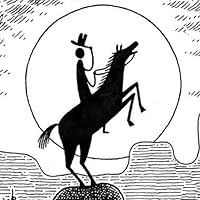
There are no named chapters in this volume. Or even numbered but the book is clearly divided into sections each beginning with a brilliant black and white sketch. There are seven such illustrations that seem to demark clear sections in Lee Child’s thought and progression of ideas. Special of sections the first section of the book is a history of the poppy and opioids. While reading that first section I almost gave up on the book. But because it was by Child I persisted and I am glad that I did. The story does come full circle and return to that first section, but in a rather roundabout way.
It was intriguing to follow some of the migrations of word meanings, those that make sense and are approved of by Child. And some that He obviously does not. Over all it is an interesting read, and for the price of the eBook worth it.
Read the review on my blog Book Reviews and More and reviews of other books by Lee Child.
...
This book was not exactly what I was expecting when I picked it up. I cannot put into words what I was expected, I had been thinking along the lines of Joseph Campbell’s The Hero with A Thousand Faces. Or even more something along the lines of Reacher’s enduring appeal. Instead I got something along a more philosophical lines of a broad outtake of How To Think Like A Neandertal by Thomas Wynn & Frederick L. Coolidge. Or an undated twist on Hominids by Robert J. Sawyer. But maybe written after much of the poppy was consumed.
The book begins with a history of the TLS:
“The Times Literary Supplement was born in January 1902. Its first ever front page bashfully stated that ‘during the Parliamentary session Literary Supplements to “The Times” will appear as often as may be necessary in order to keep abreast with the more important publications of the day’. Fortunately, the question of necessity was not left in the hands of literary journalists (who, we can imagine, might occasionally push for a holiday or two), and the title became a weekly one. A few years later, the TLS split entirely from The Times.
Since then, we have prided ourselves on being the world’s leading magazine for culture and ideas. Our guiding principle for the selection of pieces remains the same as it ever has been: is it interesting; and is it beautifully written? Over the years, our contributors have included the very best writers and thinkers in the world: from Virginia Woolf to Seamus Heaney, Sylvia Plath to Susan Sontag, Milan Kundera to Christopher Hitchens, Patricia Highsmith to Martin Scorsese.”
There are no named chapters in this volume. Or even numbered but the book is clearly divided into sections each beginning with a brilliant black and white sketch. There are seven such illustrations that seem to demark clear sections in Lee Child’s thought and progression of ideas. Special of sections the first section of the book is a history of the poppy and opioids. While reading that first section I almost gave up on the book. But because it was by Child I persisted and I am glad that I did. The story does come full circle and return to that first section, but in a rather roundabout way.
It was intriguing to follow some of the migrations of word meanings, those that make sense and are approved of by Child. And some that He obviously does not. Over all it is an interesting read, and for the price of the eBook worth it.
Read the review on my blog Book Reviews and More and reviews of other books by Lee Child.

December 29, 2019
A fascinating glimpse into the evolution of the word 'hero' and the ancestors of Lee Child. With a nod to historic works such as Robin Hood and Homer's The Iliad. A short listen, at just over an hour, I listened while I was waiting for lunch to cook.

January 1, 2020
This is Lee Child's first non-fiction book. It is an enjoyable short read. If your a Lee Child/Jack Reacher fan (which I am), it gets three stars. If not then two stars because it does not have the depth of of its title unless it relates to the Jack Reacher character.
November 27, 2019
Not a Reacher Short Story, more of a quirky History Essay
Review of the Audible Audio audiobook edition (Nov. 26, 2019)
Lee Child eventually gets around to explaining the template for his iconic wandering vigilante character Reacher by tracing the story back to Ovid's Theseus in Metamorphoses and then through to Ian Fleming's James Bond in Doctor No:
Before we get there we have to listen to (I read the audiobook) a lecture on various arcane items such as the invention and naming of various opioids, the evolution of the Robin Hood myth, etc. All of this filtered through Child's irritating timeline where everything is located in history according to how many generations before Child's grandmother that it occurred. e.g. It is not the mid-Upper Paleolithic Age of 25,000 years ago, but rather 1,198 generations before Child's grandmother.
The narration by Jeff Harding in the audiobook was excellent throughout. If you closed your eyes you could imagine it was Reacher himself telling tales around the fire before heading off into the dark to "get his retribution in first."
Link
To disentangle Child's timeline you may find this Timeline of Human Prehistory to be useful.
Review of the Audible Audio audiobook edition (Nov. 26, 2019)
Lee Child eventually gets around to explaining the template for his iconic wandering vigilante character Reacher by tracing the story back to Ovid's Theseus in Metamorphoses and then through to Ian Fleming's James Bond in Doctor No:
A man of rank, a prince, a commander of the royal navy, not exactly cast out but disapproved of and barely tolerated, fights an opponent of a grotesque nature with the help of a woman from the other side.
Before we get there we have to listen to (I read the audiobook) a lecture on various arcane items such as the invention and naming of various opioids, the evolution of the Robin Hood myth, etc. All of this filtered through Child's irritating timeline where everything is located in history according to how many generations before Child's grandmother that it occurred. e.g. It is not the mid-Upper Paleolithic Age of 25,000 years ago, but rather 1,198 generations before Child's grandmother.
The narration by Jeff Harding in the audiobook was excellent throughout. If you closed your eyes you could imagine it was Reacher himself telling tales around the fire before heading off into the dark to "get his retribution in first."
Link
To disentangle Child's timeline you may find this Timeline of Human Prehistory to be useful.

April 29, 2020
“There are only two real people in fiction – the storyteller and the listener. The story proceeds based on teller’s aims and the listener’s needs. If the listener needs light entertainment, and the teller aims to be loved, then light entertainment is what the listener will get. But if the listener needs reassurance of some kind, or consolation, and the teller aims to better equip her family for future trials, then the story will likely be suspenseful in nature, replete with dangers and perils, over which a memorable character will eventually triumph in a decisive manner, such that the listener finishes the tale with a tight and determined smile, with moist eyes fixed on the distant horizon.”
What is the purpose of fiction? I think it can be summed up in a simple phrase: To give people what they don’t get in real life. Originally it was courage and a sense of security; now it’s a whole host of things. Basically readers need an antidote to an unsatisfactory. “
A decent novella for weekend read.
November 26, 2019
What the hell is this book?.....
Nothing remotely like his other books but amazon pushed it to me. No jack reacher. A tiny book on etymology?....how about a heads up before you ask me to buy it.
Nothing remotely like his other books but amazon pushed it to me. No jack reacher. A tiny book on etymology?....how about a heads up before you ask me to buy it.

July 31, 2021
Short, disappointing, hoped for more from Lee Child and from the new TLS Books imprint.

December 21, 2019
Given the author, the Jack Reacher saga's Lee Child, I thought this was going to be a short treatise on the use of "the hero" as a literary archetype. Instead, I got old man Child sitting in his big, comfy armchair telling me about the etymology of and conceptual origin of "hero."
Layered into this interesting essay is a small amount of biological and archaeological anthropology. It was unexpected, but not as unexpected as the sudden insertion of the "aquatic ape hypothesis"--a pseudoscientific hypothesis with scant evidence and even more counter-evidence, yet one that Child describes as having "some acceptance." Sure. The same way there is "some acceptance" of a flat Earth.
Beyond that though is a short description of early humans' struggle for survival intertwined with time traveling armchair guesses about language development and the origins of storytelling. Child believes stories were all originally 100% non-fiction works of truth-telling. It was only after the last ice age came that that changed, so says Child. He gives his short argument behind these deductions, and he even admits this is just his mind's interpretation, but as the short book comes to a close, all I wonder is, "Why?"
Why did he write this? It ends with him saying the word "hero" is basically meaningless. We call soccer players and war veterans heroes, even before the latter have finished basic training. We call posthumously donating organs a "heroic" act, even though the supposed hero is dead. Like calling a slaughtered steer heroic for his donation of steak and rib meat. It was a long journey to get there (a heroic journey? an odyssey, maybe?) given the book's starting point: the invention of heroin.
Wait, what? Heroin? Yes. Child begins this whole essay describing the historic use of opium and its development into morphine then heroin. Why? Because calling concentrated opioids heroin makes as much sense as calling the NBA MVP the "hero of the game." Which is to say, the whole concept is a convoluted, useless mess. Just like this book.
So why 2 stars? This is my first exposure to Child's writing, and I actually like his style. He made me laugh a couple of times, and I appreciate his effort to share his ideas here, even if I ultimately find it mostly useless.
Layered into this interesting essay is a small amount of biological and archaeological anthropology. It was unexpected, but not as unexpected as the sudden insertion of the "aquatic ape hypothesis"--a pseudoscientific hypothesis with scant evidence and even more counter-evidence, yet one that Child describes as having "some acceptance." Sure. The same way there is "some acceptance" of a flat Earth.
Beyond that though is a short description of early humans' struggle for survival intertwined with time traveling armchair guesses about language development and the origins of storytelling. Child believes stories were all originally 100% non-fiction works of truth-telling. It was only after the last ice age came that that changed, so says Child. He gives his short argument behind these deductions, and he even admits this is just his mind's interpretation, but as the short book comes to a close, all I wonder is, "Why?"
Why did he write this? It ends with him saying the word "hero" is basically meaningless. We call soccer players and war veterans heroes, even before the latter have finished basic training. We call posthumously donating organs a "heroic" act, even though the supposed hero is dead. Like calling a slaughtered steer heroic for his donation of steak and rib meat. It was a long journey to get there (a heroic journey? an odyssey, maybe?) given the book's starting point: the invention of heroin.
Wait, what? Heroin? Yes. Child begins this whole essay describing the historic use of opium and its development into morphine then heroin. Why? Because calling concentrated opioids heroin makes as much sense as calling the NBA MVP the "hero of the game." Which is to say, the whole concept is a convoluted, useless mess. Just like this book.
So why 2 stars? This is my first exposure to Child's writing, and I actually like his style. He made me laugh a couple of times, and I appreciate his effort to share his ideas here, even if I ultimately find it mostly useless.

March 8, 2021
I had been ignoring this book because Lee Child’s fiction isn’t something that I’ve ever been interested in. However, I recently read David Baddiel’s Jews Don’t Count, published by TLS and realised that this book was published in the same line.
Lee Child attempts to discuss the theme of ‘the hero’ throughout history. He largely focuses on etymology and the history of storytelling which was interesting but I found that this book was just too short for the topic. This is the type of topic that could span a 400 page non-fiction text, something that could really go into depth of the development of the hero figure over time. However, this under 100 page essay feels jumbled and full of half-thoughts, ideas that are intriguing but don’t have the space to be fully developed.
Overall, this isn’t something that I particularly enjoyed and I wouldn’t recommend it unfortunately. I would be interested in another book that discusses similar themes but this was too short to really dive into the topic.
1 out of 5 stars!
Lee Child attempts to discuss the theme of ‘the hero’ throughout history. He largely focuses on etymology and the history of storytelling which was interesting but I found that this book was just too short for the topic. This is the type of topic that could span a 400 page non-fiction text, something that could really go into depth of the development of the hero figure over time. However, this under 100 page essay feels jumbled and full of half-thoughts, ideas that are intriguing but don’t have the space to be fully developed.
Overall, this isn’t something that I particularly enjoyed and I wouldn’t recommend it unfortunately. I would be interested in another book that discusses similar themes but this was too short to really dive into the topic.
1 out of 5 stars!

November 27, 2019
Hero defined
Lee Child? Get it. Interesting read and plausible definition of a hero. You have to be in the mood for information and not pure entertainment, but it is a great read. I "love" anything Robin Hood, and here is a satisfying explanation of various iterations through which one of my favorites characters has evolved. Enjoyed it. When people ask me what I read anymore I tend to tell them I don't read what is supposedly good for me, but what I enjoy, as twisted and weird as it might be. This was both good for exercising my brain and making me think, as well as an entertaining read.
Lee Child? Get it. Interesting read and plausible definition of a hero. You have to be in the mood for information and not pure entertainment, but it is a great read. I "love" anything Robin Hood, and here is a satisfying explanation of various iterations through which one of my favorites characters has evolved. Enjoyed it. When people ask me what I read anymore I tend to tell them I don't read what is supposedly good for me, but what I enjoy, as twisted and weird as it might be. This was both good for exercising my brain and making me think, as well as an entertaining read.

August 14, 2020
A quite short meditation on story-telling (barely a book!) — interesting enough, full of evo-psych conjecture on the evolution of language, nothing I haven't heard before. I really liked some of the imagery though and Child's main idea seems prima facie sound enough!

July 28, 2023
This was a short book that I wish had been even shorter. The first half, Child details ad nauseam the origin of the word "hero". The second half, Child goes into what qualities make a hero. This felt like an extra long collegiate essay, and I am far too removed from academia to have enjoyed it.

March 9, 2020
Interesting look on the idea of the hero - thought provoking.
Displaying 1 - 30 of 430 reviews