Jump to ratings and reviews
Rate this book

Двайсетте дни в Торино

Rate this book
В празното крило на санаториум за душевноболни под крилото на църквата, фанатизирани младежи създават Библиотеката – място, където самотни граждани могат да четат взаимно личните си дневници и да се свързват със сродни души за „разговори в ефира“. Писанията им обаче бързо се превръщат в страховити и противни изповеди, а читателите в Библиотеката твърде късно научават, че зла сила е нахлула в личното пространство и в здравомислието им. Когато за двайсет дни град Торино изпада в колективна психоза, достигнала кулминацията си в среднощни кланета, необясними за стотици очевидци, Библиотеката затваря врати и бива заличена от историята. Докато обикновен самотен служител не решава да проучи загадъчните събития, които жителите на Торино се страхуват дори да споменават. Неизбежно въвлечен в окултната мрежа на града, той стига до сърцевината на кошмарите на съвременния човек: веднъж споделено, интимното става всеобщо.

Алегория, вдъхновена от зловещите неофашистки кампании на епохата, романът „Двайсетте дни в Торино“ вече четиресет години има своите ревностни почитатели. В напрегнатата съвременна епоха на терористи единаци, насъсквани от социалните медии, тревожно резонира масовата паника, обрисувана от Джорджо де Мария: ням, пулсиращ ужас, сковал всеки миг от ежедневието на хората. С изумителното си предусещане за глобалната мрежа – интернет – и за апокалиптичните последици от прекомерното споделяне този мрачен и далновиден роман днес е по-стряскащо актуален от всякога.

Романът отрежда на Де Мария достойно място до автори като Итало Калвино и редом до майстори на класическия хорър като Едгар Алан По и Х. Ф. Лъвкрафт. Натрапчиво изобретателна и интуитивна проза, която смразява до мозъка на костите, злокобно пророчески опус, отдавна чакан и винаги навременен.

220 pages, Paperback

First published January 1, 1977

199 people are currently reading
9496 people want to read

About the author

Giorgio De Maria

6 books27 followers
Giorgio De Maria (1924–2009) was an Italian writer, playwright, and musician, best known for his eerie and enigmatic novel The Twenty Days of Turin. Born in Turin, Italy, De Maria initially pursued studies in music before transitioning to writing. His literary career began in the post-war period, a time when Italian literature was grappling with the traumas of fascism and war, and De Maria’s works reflect this dark, introspective tone.

De Maria was associated with the Gruppo 63, an avant-garde literary movement in Italy that sought to challenge conventional narrative forms and experiment with new literary techniques. His early works, including essays and short stories, were published in various Italian literary magazines, establishing him as a distinctive voice in the Italian literary scene.

However, it was his 1977 novel Le venti giornate di Torino (The Twenty Days of Turin) that would become his most famous work, though it went largely unnoticed at the time of its publication. The novel is a chilling and surreal exploration of paranoia, collective memory, and the impact of authoritarianism on society, set in a fictionalized version of De Maria’s hometown of Turin. The book remained obscure for decades but gained a cult following after its translation into English in 2016, introducing De Maria’s work to a broader audience.

Beyond writing, De Maria was a talented musician and was involved in the Turin cultural scene, collaborating with various artists and intellectuals. Despite his contributions, De Maria largely lived in obscurity, and his later years were marked by a withdrawal from public life. He passed away in 2009, leaving behind a legacy that has been increasingly recognized for its haunting relevance to contemporary issues.

Ratings & Reviews

What do you think?
Rate this book

Friends & Following

Create a free account to discover what your friends think of this book!

Community Reviews

5 stars
604 (21%)
4 stars
1,119 (39%)
3 stars
778 (27%)
2 stars
253 (8%)
1 star
62 (2%)
Displaying 1 - 30 of 460 reviews
Profile Image for Vit Babenco.
1,787 reviews5,800 followers
March 14, 2024
The narrator of the story investigates a series of sinister and enigmatic events that took place ten years ago…
…the “Twenty Days of Turin” were neither a war nor a revolution, but, as it’s claimed, “a phenomenon of collective psychosis” – with much of that definition implying an epidemic.

There was a smell of vinegar in the air… Many were suffering from insomnia… And many were brutally murdered – it was a real massacre… And there was a mysterious library full of intimate manuscripts…
Was this library a cause or an effect of the eerie phenomenon? Everything is a mystery.
The Twenty Days of Turin is a weird spoof of the supernatural horror inspired by the stone guest fom the opera Don Giovanni
Now picture him in front of the statue of the Commendatore under a beautiful full moon. Right then, the statue starts to talk – and his Don Giovanni, instead of shitting himself, invites it straight over for dinner. When you’ve got statues that can talk and move around, it’s no laughing matter!
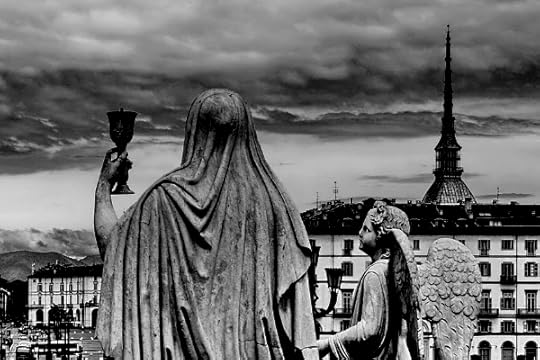
Even the supernatural phenomena may turn into ludicrous mishaps.
Profile Image for Orsodimondo.
2,460 reviews2,432 followers
June 18, 2025
IL DIAVOLO È NEI DETTAGLI


Sono approdato a questo libro incuriosito dal caso editoriale. Altrimenti la sua appartenenza al genere fantascienza mi avrebbe bloccato.
Il caso editoriale è presto riassunto: pubblicato nel 1977 dal Formichiere, ha dovuto aspettare quarant’anni per essere scoperto da Ramon Glazov, un traduttore australiano, che fu capace di trovare un editore americano (Norton Liveright). Dopo la pubblicazione in lingua inglese, nello stesso anno (2017) è ritornato in Italia con altro editore (Frassinelli). E a questo punto se n’è parlato anche in patria, sono uscite recensioni, commenti, articoli. Tutte sull’onda della riscoperta.
Anche l’autore ha la sua storia fascinosa: sono quattro i suoi romanzi, ma rimasti tutti nell’ombra, nessun successo; musicista, scriveva testi per canzoni, commedie, sceneggiatore per la televisione, traduttore, insegnante di lettere, impiegato alla FIAT e alla RAI, prima anticlericale e poi convertito a un fervente cattolicesimo, muore a ottantatre anni in povertà, quasi barbone e forse pazzo (nel 2009).

Se non altro, questa è la ragione per cui lo avevo nel mio kindle: la spinta per leggerlo è stata la vacanza al mare e l’aver esaurito più o meno tutto quello che potevo leggere. A quel punto, diciamo che non potevo sottrarmi.


Mi è piaciuto, l’ho letto volentieri. E concordo che per diversi aspetti appaia anticipatore.
Per esempio, del self publishing, visto che nel romanzo esiste una Biblioteca dove chiunque può depositare la propria autobiografia, leggere quella altrui, entrare in contatto con gli ‘autori’ (e qui, volendo, anticipa Facebook e i social in genere). Per la cronaca, De Maria colloca questa Biblioteca all’interno del Cottolengo di Torino.
I fantasmi si comportano come pazzi omicidi, uccidono senza (apparente) motivo, un po’ come quelli che imbracciano un’arma e sparano sulla folla. Episodi che sono a lungo parsi appannaggio esclusivo degli Stati Uniti, ma poi sono accaduti un po’ ovunque.
Le statue diventano personaggi: prendono vita, si spostano, e viene da pensare all’attuale movimento che ne vuole eliminare parecchie in nome di una riscrittura della storia (personalmente, non sono poi tanto contrario).
L’eco degli italici anni Settanta, che a Torino furono particolarmente sentiti, qui evidenziata da scoppi e boati che lasciano pensare a bombe e stragismo.


Le influenze sono evidenti, ma ben gestite. Qualcuno ha detto che i bravi artisti copiano, quelli grandi rubano. Chi è stato, il solito Oscar Wilde?
E quindi, volendo De Maria ‘ruba’ a Borges, Kafka, Lovecraft, al Morselli di Dissipatio H.G., ma anche a Dario Argento (per esempio, l’ambientazione torinese), Polanski, volendo perfino l’Avati regista horror (La casa dalle finestre che ridono è il primo che mi viene in mente). I fantasmi assassini ricordano gli zombi…
Ciò nonostante, o forse proprio in forza di queste ragioni, il breve romanzo di De Maria risulta insolito, anomalo, fuori dal mainstream, e secondo me lascia il segno. A me basta pensare all’aspetto ‘sonoro’ di queste pagine, l’ascolto delle registrazioni su nastro di suoni inspiegabili e indubbiamente spettrali, per avere la pelle d’oca.

PS
Il diavolo è nei dettagli: La storia de “Le venti giornata di Torino” scritto da Giovanni Arduino – nel mio ebook autore di una postfazione – è un’indagine e un racconto della storia intorno e dentro questo romanzo, considerato maledetto.

Profile Image for Luca Signorelli.
23 reviews30 followers
November 24, 2020
Full disclosure here – I'm the person who originally referred this book to Ramon Glazov (the translator), suggesting he should try to have it published.

"The Twenty Days of Turin” is a novel about fictional darkness, terror, and moral confusion, written in a moment (1977) when the real Turin was beginning to live its most traumatic moment since the darkest days of the Nazi occupation (1943-1945), sliding into the grip of an escalation of real-life daily political and everyday violence, in the context of a nationwide emergency, the bloody and murky Years of Lead, the still mostly undocumented rise of Italian right- and left-wing domestic terrorism. The terrors and horrors of the book are not overtly related to politics. But not seeing the apparent parallels would be dumb.

Set “sometimes around the turn of the XXI century,” in a Turin wrecked by climatic change (one of the many prophetic bits of this book) and the depopulated by the departure of most of the immigrant population, the story is told by a nameless narrator who almost on a whim begins to investigate the “Twenty Days,” a series of grisly murders plus mass psychosis which troubled the city ten years before. The killings, all done with the same bloody modus operandi, happened in some of the city's best-known spots, often in full view of hundreds of people. As a wave of mass insomnia also plagued the city, its streets roamed by people trying to “find some rest.” Still, no one could really remember anything, except for vague hints of shadows sliding among the almost catatonic crowds and the echoes of metallic, grey, and threatening cries.

All the while, in the corner of the Piccola Casa della Divina Provvidenza (or Cottolengo, a real-life Turinese religious institution-cum-hospital), a group of mysterious, good-mannered young people, created “the Library,” the book's most brilliant and creepy invention. It's a paper version of Facebook, where lonely citizens left their diaries, notes, and even random thoughts, open for reading to anyone who fancies it. Beginning as a service for lonely people, the Library quickly becomes an unsavory obsession and is daily frequented by hundreds of patrons. As the Library's content becomes more and more troubling and its influence on Turin's inhabitants more sinister, at the height of the “Twenty Days,” authorities decided to close it, and soon no one admitted to having even used it. Who were the killers? What was the link between the murders, insomnia, and the Library? Soon our investigator begins to sense his own research may lead to trouble. And trouble – of a terrifying sort – of course, happens.

It's difficult to overstate how surprising and even unsettling it is to see “The Twenty Days Of Turin” back in print, at least for one of the few people who first read it 40 years ago in the first (and thus far only) Italian release. For 40 years, we thought we were the only ones knowing about it, to discover we were part of a small but ferociously dedicated cult. I know people obsessed enough by this book to make some life choices inspired by it. Some things are difficult to keep down forever. Was it inevitable? When “Twenty Days of Turin” is involved, some question is less silly than they appear.

Turin is one of the most rapidly growing Italian tourist spots, a process beginning after the Winter Olympics of 2006. But for decades, despite its considerable wealth of baroque treasures and important museums (and its closeness to the Alps), it was by far the less known and most enigmatic of all major Italian cities. Curiously, no one of the locals (from old-time “true” Turinese to the children of the one million immigrants who arrived here between 1955-1965) ever really complained. Turin was also the Great Italian Incubator, where essential ideas were born and nurtured before being exported elsewhere. Commonly cited examples are fashion and the automotive industry, the first synthetic filament lamp, or the MPEG audio/video standard. But Turin has been, more than anything else, an incubator of opposing ideologies. The modern worker unions vs. ruthless modern capitalism, left-wing vs. right-wing radicalism. Nietzsche, Togliatti, Gramsci, Turati, Gobineau, and De Maistre all gravitated here. And while the Years of Lead, the era of Italian domestic terrorism, was a nationwide emergency, few would deny Turin was the place that cradles it. By 1977, when the book was released, politically related attacks and even murders were daily. Two of them – the grim killing of “La Stampa” deputy editor Carlo Casalegno (first journalist murdered by terrorist for his writings) and the death of Roberto Crescenzio, a young man torched alive during a mass demonstration – haunts the book, despite having happened AFTER the book was written. But with De Maria, prophecy seems the norm, not the exception. In an unproduced short television play, he wrote in 1969 for Italian national broadcasting (RAI), people condemned to death can escape their fate if they can demonstrate their charm and personal popularity to a TV jury. RAI was horrified and never produced it, and few suspected what De Maria hinted at (the modern reality show) would become the norm 40 years later.

And, of course, the physical and metaphysical darkness. I can't remember one day of that era with a “real” sun shining. Besides industrial pollution (back then a real issue), Turin in 1977 was a city without a real nightlife. As most of the population worked into the industrial and automotive business, nightfall streets were empty, a sort of self-imposed curfew heightened by the de facto embargo on Italy's music events because of terrorism. And the lack of people just made Turin's curious geometry more obvious. The city was almost entirely rebuilt in the Baroque era as a “planned” city following rational considerations, and its grid still nowadays is orthogonal and following the old Roman plan.

De Maria's real stroke of genius was to project all this at the “turn of the century” in a Turin depopulated by an interminable drought and by the collapse of trade and the manufacturing economy. The southern immigrants are gone, and the “true” Turinese are left alone to confront their complicated character and ghosts. “Turin is a dead city,” says one of the characters. But it's not dead. As usual, it's an incubator, the site of something that may be an experiment. Or something much worse than that.

The other asset of “Twenty Days” is De Maria's writing, which shines in Glazov's skillful translation. De Maria was a master of concise prose, and “Twenty Days” - which at heart is truly a horror story – works because of its immensely expert prose. Never too obvious, never too overstated, its ironic and often semi-comedic tone lures you into a false comfort zone, where you will find yourself trapped beyond all help. As I always say, “Twenty Days of Turin” is a cursed book, in the best sense of the word maybe. But still cursed. It may be an elegant, well-written horror story. But yet a horror story is, and the names of Lovecraft, Poe, and Borges have not been uttered in vain by another reviewer.

“Twenty Days” was De Maria's last book, and shortly after finishing, he began a long slide into a severe mental illness, which plagued him (and his family) for the rest of his life. There's much more to say, particularly about the story behind the book's genesis and its eventual rediscovery, almost as creepy and unsettling as the book itself, and only partially covered by Ramon's own informative and exhaustive introduction to this edition. It may be a story for another book. Should “Twenty Days” re-release be a success – a new Italian edition and much else is being prepared – it's not unthinkable this story may be told one day.
Profile Image for Jack Tripper.
532 reviews351 followers
February 12, 2017
Definitely one of the freakiest and most unsettling novels I've read in a while. Originally published in 1977 by a small Italian publisher and, though a cult classic in Italy, is only just now being released to English-speaking readers.

Turin (in the novel) has a history that its citizens would all like to forget. 10 years ago, the entire city was tormented by twenty sleepless nights, during which incredible, seemingly impossible nighttime murders took place. Throughout this time of widespread insomnia, a secret "library" was created in the basement of a sanatorium, a place where people could write "true accounts" of their lives and exchange them with others, for a small fee. It provided the unsociable with a way to be social--sort of a precursor to what social media is today. All that was shut down once the city seemed to go batshit crazy.

But a decade later, one man is determined to get to the bottom of the inexplicable (yet somehow mostly forgotten) phenomena that had all of Turin wracked with terror for weeks, but he finds he has few allies, and there are some shady characters who would rather he'd stop digging around for the truth, one which seems to get stranger and more fantastic the deeper he digs. And he thinks it may be starting to happen again.

The Twenty Days of Turin's non-stop eerieness held me in its grip the entire time, and De Maria's (and the translator's I guess) writing style was an excellent mix of literary and pulp. The slowly unraveling mystery was masterfully executed, imo. I hope you don't mind lots of exclamation marks, though. I don't know if that's the author's pulpier influences shining through, or an Italian thing in general, but I'm used to that sort of thing in classic horror so it didn't bother me.

The entire novel is actually only 144 pages long; the rest is taken up by a short story about Lord Byron, an essay on Italian pop music in the 60s, and a translator's introduction. I haven't gotten to all the extras yet, but will be sure to update this review once I have (I started reading the intro until it seemed to get a little spoilery).

A must for fans of horror and the weird, with some of the creepiest and most disturbing imagery (and "sounds") I've experienced in ages.

5.0 Stars
Profile Image for Ines.
322 reviews264 followers
November 28, 2022
I have no idea what it is about this book, but I think it's the most gripping and disturbing book I've ever read. The story is so peculiar that it immediately manages to make so unconfort and cought in anxiety while reading. Such uneasiness and eeriness, I have never experienced with any horror book I have read so far. The plot is not scary and there is nothing earth-shattering but it is distressing at the highest levels.
The plot is not very consistent and in some sections I struggled even to understand the exact point of the author, but knowing before the reding, how how Turin is a city so deelply connected to the world of Spiritism and mother of the very famous Gustavo Rol, considered the greatest psychic who ever existed in the world, well, I closed the book with a knot in my stomach and goose bumps.


Non so cosa abbia questo libro, ma penso sia il più aggiacciante che abbia mai letto. La storia è così particolare che riesce subito a farti crescere un' ansia pazzesca durante la lettura. Un disagio così non l' ho mai provato con nessun libro horror che ho letto sino ad ora. La trama non fa paura e non vi è nulla di terrificante ma è angosciante ai livelli massimi.
La trama non è poi così consistente, in alcuni tratti si fa fatica anche a capire l' esatta esposizione dell' autore, sapendo poi noi italiani come Torino sia in qualche modo molto collegata allo Spiritismo e madre del famosissimo Gustavo Rol, considerato il più grande sensitivo mai esistito al mondo, ecco, io ho chiuso il libro con un nodo allo stomaco e la pelle d' oca.
Profile Image for Nancy Oakes.
2,019 reviews919 followers
December 12, 2017
By the time I'd put this book down, I was actually shaking. Not so much for the horror elements here, but more because of the feeling that this book, while written in the late 1970s, has a certain timeliness about it that terrifies me, one that is more frightening than the contents of any horror novel.

Our guide through this book of strange events in the city of Turin both past and present is an unnamed man who has decided to write a book about the "Twenty Days of Turin

...neither a war nor a revolution, but as it's claimed, 'a phenomenon of collective psychosis' - with much of that definition implying an epidemic"

and actually, the word "epidemic" seems an appropriate description for what follows as the twenty days are recounted through interviews and other media uncovered by our narrator. It was a time of drought, a time when men and women struggled with a strange insomnia that prompted them to "shamble" through the streets and plazas of Turin during the night. Some witnesses reported strange smells in the air; others were disturbed by unworldly noises, screams that seemed to relay "some kind of message," with "always something gray and metallic deep behind it," ... conveying the "intonation of war cries...virulent and hostile." And then, of course, there were the strange murders that took place during this time, and witnesses who "made certain they didn't see anything." It was as if the city was in the grip of unknown dark forces unleashed by the cosmos itself, blanketing Turin's citizens in terror to the point where, as our narrator discovers, people are still reluctant to discuss their experiences some ten years later. And it is to get "behind that silence" that the narrator seeks to understand exactly who it is that is "hiding the mystery of the Twenty Days."

I see this book in part as an allegory of the fear and upheaval that resulted from Italy's tumultuous "Years of Lead" when, as the translator notes in an interview at Weird Fiction Review

"People were scared of being killed as soon as they stepped out of their houses and also scared that the government wouldn't be on their side,"

and which also became a "taboo-ish topic to speculate about too loudly." On the other hand, I can't get out of my head that since the narrator's real quest is, as he stated, to discover who (or what) it is that is "hiding the mystery of the Twenty Days," it seems to me that a very big part of this book reveals that those strange dark forces responsible for that dark time haven't disappeared, but are still there, lurking and hiding in the shadows, unseen and unknown, but still in control.

De Maria used the stuff and the language of horror fiction to tell an horrific story here, and it works, especially upon reaching the ending which seriously chilled me to the bone. One more thing -- there's been a lot said about this novel's prescience in De Maria's early vision of social media, and it is a big part of this story but don't let that be the only thing you get out of it. There's much, more here -- as just one example, people turning to spirituality (including strange cults) as a sort of bulwark against the darkness, and the translator in his introduction spends a great amount of time helping the reader to understand how the novel can be viewed as an artistic expression of the turmoil of an Italy in its years of great upheaval. But skip the intro until you've finished the novel, so you can experience the chills without any hints first.

I can see why this book is considered a cult classic, and while it may not be for everyone, I thought it was brilliant.

http://www.oddlyweirdfiction.com/2017...
Profile Image for Zuky the BookBum.
622 reviews434 followers
March 21, 2017
This may seem like an unfair review but I can only give this 3 stars because I didn’t exactly understand it. I think that’s mainly because I’m a little slow to the mark sometimes and because I read this in a distracting environment, but this disappointed me and didn’t scare me like I hoped it would.

It was well written, especially since it’s a translation, but parts of it felt disjointed and I found it hard to follow the uncovering of the Library’s secrets and the cause of the disturbing and brutal murders. There was well built tension in this and the white-as-a-sheet nun was pretty terrifying to imagine, but in general, I missed a whole lot of the horror in this.

Reading the translator's introduction (after I had finished the book) definitely helped me “get it” a bit more. Maybe if I had known more about Turin’s history to begin with, I could have connected to the story on a deeper level, but since I had no idea about Turin’s unrest in the 1970’s, that whole subplot went completely over my head.

I hate giving such a little known book a very average review, I like supporting small time authors, but I can’t say much about this author and his work when I have no idea what the hell went on. (OK, that’s an over exaggeration, I half got it).
Profile Image for Cosimo.
443 reviews
February 23, 2019
Le insistenze del caso

“Tu, potrai collaborare frequentandola per leggere, oppure portando dei tuoi manoscritti che saranno archiviati e numerati e che verranno a costituire a loro volta il materiale di lettura. A noi non interessano la carta stampata, i libri, c’è troppa finzione nella letteratura, anche in quella cosiddetta spontanea… noi siamo alla ricerca di documenti veri, autentici, che rispecchino l’animo reale della gente, che possano, insomma, considerarsi per davvero dei soggetti popolari… possibile che tu non abbia mai scritto un diario, un’autobiografia, una confessione di qualche problema che ti turba?”

Una volta restituito il libro in biblioteca, la sensazione che ho provato è stata di aver commesso un errore: avrei dovuto rileggere il testo, mi sembra di aver costeggiato un incubo caotico e spaventoso senza averne compreso il senso. Non sono certo di poter raccontare di cosa tratti il racconto lungo di Giorgio De Maria, ambientato in una Torino gotica e fantastica e pubblicato in origine nel 1977. Il romanzo breve è ora riproposto nel mercato editoriale italiano per Frassinelli, grazie a una riscoperta collettiva tenace e innovativa. Quando uscì questo libro non ebbe successo e De Maria smise di scrivere, per poi eclissarsi nella solitudine (per saperne di più, leggere l'articolo dell'autrice e critica letteraria su NotNero). Certo, era stato un investigatore scettico e sincero sulle tracce di Kafka, Landolfi e Lovecraft, incontri non certo ordinari e semplici da elaborare. Poi il libro descrive un orrore, di questo si può avere fervente fermezza, e questo orrore ti persuade a cercarne la verità, perché spesso dietro un orrore c'è una verità nascosta, da trovare, che non c'è o non si vede, da indurre all'indagine confidenziale, alla ricerca di fatti che convincano. Ma qui siamo in territori metafisici e irrequieti. Qui c'è appunto uno studioso, che svolge un'inchiesta su strani delitti in un periodo del passato, dieci anni prima, nel quale la città pare essere rimasta vittima di fenomeni misteriosi e inquietanti: un'epidemia di insonnia, l'inaridirsi di un lago, profumi e rumori anomali, la violenza a dilagare tra corpi vuoti e menti infestate, strani giganti mostruosi e fantasmatici, una catena di vittime dilaniate e grida e odor d'aceto e statue. Ecco, c'è poi una Biblioteca, dove il protagonista cerca di fuggire dalla regressione inconscia e delittuosa e trovare risposte, e la biblioteca ha un archivio, e si viene a sapere che i cittadini, uomini e donne, liberi e schiavi, buoni o malvagi, destinavano qui pagine di diario, brani di biografia, confessioni in forma di brevi cronache, memorie e frammenti di storie. Ma non so bene come tutto questo sia composto, è come in uno stato di semiveglia che la lettura ha inseguito la narrazione, che invece è ragionata e costruita ad arte, con tutte le carte in regola. Le metafore si moltiplicano e i significati simbolici sono come i mondi possibili della letteratura enciclopedica. Difficile trovarvi un'interpretazione univoca e insieme esatta. Difficile non restare intrappolati in questa ipnotica e arcana rappresentazione.

Sara Marzullo 13.10.2017 Not Nero Editions Le Venti Giornate di Torino
Profile Image for Theresa (mysteries.and.mayhem).
268 reviews103 followers
February 9, 2025
The Twenty Days of Turin is full of dark atmosphere. Within its pages, an unnamed narrator is attempting to write the history of strange events that happened ten years prior in the streets of Turin. If you decide to read this book, be sure to read the translator's introduction. It helps to add some perspective to the story. It all reads like a bizarre (captivating) dream (nightmare). It had some heavy Lovecraft undertones. It's one of those books that I'll need to sit with for a while to process.

This book is why I want to read all the books! I'm so thankful it was translated to English! I soaked up every word. This is far from what you'll find topping today's best seller charts. It isn't for everyone. I'm just glad I crossed paths with it on my quest to read horror from around the world. Four stars!

Profile Image for Johann (jobis89).
736 reviews4,684 followers
May 5, 2021
I do love my weird fiction. This was challenging but worth it.
Profile Image for Savasandir .
274 reviews
March 19, 2021
È a Torino che Kafka incontra Lovecraft ed insieme si mettono a scampanellare forsennatamente al citofono di Calvino.

Possibile che questa gemma di rara bellezza, data alle stampe una quarantina d'anni fa, sia passata all'epoca completamente inosservata, e solo grazie ad un lancio editoriale d'oltreoceano sia potuta ritornare a noi, in tutto il suo splendore?
Sembrerebbe impossibile, ma è accaduto; così come sembrerebbero impossibili le conclusioni a cui giunge il protagonista del libro, nella sua indagine su quelle venti giornate di dieci anni prima che gettarono i Torinesi nel caos, e su quella Biblioteca, inquietante e perversa, così simile negli intenti ai nostri social network.
Se poi si legge il libro nelle calde nottate estive, le stesse in cui gli abitanti della città furono affetti da un'insonnia collettiva, mentre per i viali alberati del centro storico, fra sontuose dimore e monumenti, una scia di sangue iniziava a scorgersi, allora l'effetto orrorifico raggiungerà il suo apice.

Una Torino incredibilmente reale e tangibile, quella qui narrata, tanto che per chi la conosce un po' sarà facilissimo ritrovarsi a camminare d'un subito nei luoghi descritti, dove però l'assurdo diventa legge, seguendo le trame di poteri talmente occulti e inimmaginabili da non poter nemmeno essere esplicitati a parole.

"Nella nostra città i dèmoni covano sotto la cenere, e non v'è da stupirsi se..."
Profile Image for SCARABOOKS.
292 reviews264 followers
May 14, 2018
Ogni tanto capita di incappare in libri veramente strani. Magari per il contenuto o anche per la storia editoriale. A volte sono romanzi magnifici (come Il Segreto, di Anonimo triestino, per esempio). In altri casi, come in questo, sono libri inquietanti, misteriosamente profetici e con un’atmosfera dentro da “libro maledetto”. L’autore è un intellettuale torinese con una vita (e anche una psiche) parecchio complicata e finita parecchio male. A suo modo, lui stesso “un maledetto”.

Uno di quei libri che seguono percorsi carsici per cui appaiono in circostanze strane e spariscono e ricompaiono più volte nell’arco a volte di decenni. Ignorato per anni in Italia, Le 20 giornate sono state adesso ristampate e persino tradotte e pubblicate negli USA con recensioni autorevolissime ed entusiastiche. A me è riapparso davanti mentre seguivo un dibattito del Salone del libro di Torino. Un centinaio di paginette (molto ben) scritte nella seconda metà degli anni settanta per raccontare fatti immaginati risalenti a dieci anni prima: una Torino spettrale e misteriosissima (ma anche “slabbrata e segretamente febbricitante magica e satanica”), dove si sente costantemente (chissapperchè) puzza di aceto, un’epidemia di insonnia, morti surrealmente violente per mano di ignoti assassini, immondizia che si alza in cumuli nella tromba delle scale e, in un’ala del Cottolengo, la “Biblioteca”. La conclusione è kafkiana e non dico altro, anche perché del libro, insieme con Torino, è la “Biblioteca” la cosa più importante. Di sicuro la più sorprendente (soprattutto, immagino, per gli americani). Ha che fare poco con l’idea che la parola suscita. Ha molto a che fare invece (tuppensaunpo’!) con i moderni social network, con facebook. Che descrive perfettamente in natura ed effetti quindici anni prima che di internet si cominciasse solo a parlare.

La “Biblioteca” viene istituita da ragazzoni sanicci, ben vestiti e ben tosati, vagamente fascistoidi, che sembrano Zuckemberg (incredibile) in contrapposizione con la lettura, con la narrativa, con i libri. Ecco cosa dice uno di loro.
“A noi non interessano la carta stampata, i libri, c’è troppa finzione nella letteratura, anche in quella cosiddetta spontanea... noi siamo alla ricerca di documenti veri, autentici, che rispecchino l’animo reale della gente, che possano, insomma, considerarsi per davvero dei soggetti popolari... possibile che tu non abbia mai scritto un diario, un’autobiografia, una confessione di qualche problema che ti turba?» «Sì, qualcosa avrei scritto, adesso che ci penso.» «Ebbene, perché non ce lo porti? Troverai certo qualcuno che ti leggerà e che si interesserà ai tuoi problemi... noi faremo in modo di metterlo in comunione con te e diverrete amici, vi sentirete più liberi. È una cosa importante quella che facciamo, visto che oggi è diventato così difficile comunicare……La prospettiva d’«esser letti» fluttuava lontana, come un fascinoso miraggio. Miraggio «reale» tuttavia, come «reali» erano le cose che venivan scritte. Io darò me stesso a te, tu darai te stesso a me: su questa umanissima base sarebbe avvenuto il futuro scambio”.

La Biblioteca comincia a raccogliere tutto quello che viene scritto in privato per essere condiviso e scambiato pubblicamente: un pensiero, una paginetta, un opuscolo, un diario. La gente si mette in fila o va in giro a depositare e raccattare notizie e pensieri; i propri e quelli altrui. Si passa il tempo (non potendo dormire) succhiando di nascosto la vita e i pensieri degli altri. L’immagine di un lago che si prosciuga si affaccia negli incubi che ricorrono in tutto il libro. Nel fondo del lago prosciugato si vedono solo bassorilievi. Una virtualizzazione ante-litteram delle persone (oggi li chiamiamo “profili” e tutti veniamo poi profilati). Inopinatamente, al là delle intenzioni dei promotori, questo meccanismo fa venir fuori e moltiplica tutte le malvagità, tutti i demoni; esibisce e mette in circolo tutte le povertà umane; stimola e amplifica con l’esibizionismo tutte le rabbie, le disperazioni, i bisogni di riconoscimento. Le solitudini, anziché lenirle le accentua, le esaspera, le fa esplodere in un rancore esplicitato. Non è un caso se la violenza che si scatena nelle strade e tra i monumenti di Torino e che dura venti giorni, si accompagni con la Biblioteca e finisca con lei. Poi tutto viene rimosso e dimenticato. Finché qualcuno non comincia ad indagare. Dieci anni dopo.

Sarà che il libro in effetti rende benissimo il clima cupo, da “passioni tristi” (anche quello attualissimo). Sarà che ad inquietare non è solo l’intuizione, ma (ancor più) l’analisi di genesi ed effetti del fenomeno “social” senza ancora immaginare la scoperta della dimensione virtuale, senza il web. Fatto sta che a leggere questo romanzo davvero si prova una forma di paura, a tratti raggelante, come credo potrebbe accadere davanti all’apparire di un fantasma mostruoso, di qualcosa di inspiegabile, di un miracolo satanico.
Profile Image for Sofija.
299 reviews9 followers
August 13, 2024
4.5
The Twenty Days of Turin, written by an Italian writer, pianist, and composer Giorgio De Maria, was published in 1977. I stumbled upon this book while looking for an Italian novel to fill my prompt for the Storygraph's Around the World challenge. I skimmed the synopsis, decided it was worth my time, and added it to my TBR. Now that I've finished it, I am beyond happy to have deemed this book interesting at first glance.

The novel starts with the protagonist introducing Giovanni Bergesio, the first victim of Twenty Days of Turin, and describing his interview with Bergesio's sister. Throughout the first half of the novel, our nameless protagonist informs us he is writing a book about Twenty Days of Turin, and he has to interview some people who witnessed the event to better understand what happened. The protagonist is a stand-in for the writer De Maria himself, which gives this book a self-awareness rooting it into reality. He has a boring desk office job and finds his peace and recluse in playing his recorder. As a mellow and unobtrusive person, once he reaches a point in his research that requires him to take action, he cannot do it. Just like the rest of the people he meets, he turns his head the other way, his tail between his legs, and attempts to flee. But nobody escapes terror.

Twenty Days of Turin happened 10 years before the protagonist started his novel. It is an unexpected and disturbing event, never forgotten but never talked about. It represents a collective trauma, permanently scarring the collective memory of Turin's inhabitants. It started innocent enough – a group of fine, good-looking young men founded an institution called The Library in a wing of the city's Sanatorium, run by the Church. The Library did not have ordinary books; they only accepted documents from the average Turinese - „true, authentic documents reflecting the real spirit of the people“. Their goal was to bring people together, and tear down the walls of loneliness and dread in the „stifling atmosphere that held sway over Turin at the time“. What seemed like a noble cause at the time proved to be a breeding ground for the weird and the deranged to let loose, and leave their darkest thoughts on paper for anyone to read. One of the most often quoted sentences perfectly describes the types of documents submitted to the Library: „The range was infinite: it had the variety and at the same time the wretchedness of things that can’t find harmony with Creation, but which still exist, and need someone to observe them, if only to recognize that it was another like himself who’d created them.“

At the time when The Library was open, people started having episodes of insomnia. As we see at the very beginning of the novel, not everyone is affected by insomnia. Bergesio's sister was spared from it, while Bergesio was not that lucky. The insomnia attacks started in early May and lasted until June, culminating in a massacre committed by peculiar perpetrators who were never identified. All massacres happened in the early morning hours, in public places, such as Corso Stati Uniti and Piazza Carlo Felice. The only people targeted by the perpetrators were insomniacs, who gathered in those places during their usual nightly walks. The witnesses to those events are people who were not insomniacs but were awoken by the motions or the screams outside. But people were not the ones who were screaming... it was something else.

The protagonist finds an unlikely acquaintance with an attorney Andrea Segre. Segre gives the protagonist a book to read, hoping he will catch the subtle clue connected to the tragic events 10 years ago. Segre remains one of the few people who encourage the protagonist to continue digging up history. The second person is Paolo Giuffrida, an art critic. The attorney recommends the protagonist should visit Giuffrida, as he could aid him in understanding the events. When the protagonist goes to visit Giuffrida in his house, the art critic plays him a series of recordings of weird sounds, and voices, picked up by a radio transceiver. The descriptions of the sounds still haunt me. Those passages are some of the best depictions of auditory elements I have ever read. Example: „After a long minute of scratchy silence, I became aware of a faint chiseling sound, a deep, rhythmic pitter-patter, close to the sound a workman might produce trying to engrave something onto a rock. It was joined by other chiseling noises, until everything formed a remote but hectic soundscape, like an underground mining operation, accompanied by wheezing and something that resembled a heart pulsating under a stethoscope.“
A few days before our protagonist meets Giuffrida, he is intercepted by a nun, who tells him he ought to be more discreet and respectful towards those who died 10 years ago. He should not be worrying himself about „the unfortunate who have passed on“. She tells him: „If the waters of baptism didn't rinse your forehead in vain, why do you insist on searching where human reason could never find anything but shadows?“ At first, the protagonist takes her advice lightly, but one night there is a loud pounding on his front door, and it does not sound like a human hand. He hides under the covers and does not check who is at the door. Sometime later, that courier of warning comes back smashing his front door, and starts to bang on the door to his room. This frightens him so much that he decides to leave Turin for good.

Soon after that, the novel ends, but the ending strays into surreal territory leaving the reader more baffled than ever. This novel ends so abruptly, at the most inconvenient time, that I was left with my mouth hanging open. The second half of the novel teeters on surrealism and absurdism, but in the end, it plunges in completely. We are not sure if the protagonist is dreaming or did he transcends reality. What is the meaning of all that happens?

Ramon Glazov translated Twenty Days of Turin from Italian to English, and in the introduction, he tells us a little bit about the writer as a person and what inspired The Twenty Days of Turin. Since the novel was published in the late 70s of the last century, Italy's sociopolitical state of the period heavily influenced the story. The Years of Lead (Anni di Piombo) span about 15 years (1969. - 1982.)y. Many different alt-left and alt-right groups were wreaking havoc in the country. One of the more famous alt-left groups was Red Brigades, responsible for the murders of 86 people and Italy's prime minister Aldo Moro. According to the article by Middlebury Institue of International Studies at Monterey: „However, the most notable aspect of the Italian terror wave relative to other global phenomena, given the relatively widespread nature of communist violence, was its neofascist component, which was the most well-developed, active, and malignant manifestation of the radical right among the western democracies of its time. Italian neofascism evolved substantially through the latter half of the 20th century, developing new unifying myths, ideologies, and political goals, and culminating in the terrorist explosion of the Years of Lead.“ The alt-right terrorist groups organized mass bombings, the deadliest being the attack at the Piazza Fontana in December 1969.

Needless to say, this was a terrifying time for Italy and its citizens. De Maria did not have to look far to find inspiration for his horror novel. The dread and the fear caused by real-life terrorist attacks seep into his novel in a transformed version. The perpetrators of the massacres in the novel are never truly revealed. They remain faceless, unidentified; only their war-like cries stay forever trapped in the minds of the witnesses. Reading some parts of the novel, I gathered that the statues might be responsible for the crimes. Glazov describes Turin: „In a far-flung corner of northwestern Italy, girdled by industrial haze, flanked by a crescent of jagged Alps, stands Turin, grandiose necropolis of a town. Baroque palaces, shaded neoclassical arcades, interwar military monuments and diverse hordes of bronze statues recall history as the first capital of modern Italy...“. The statues are corporeal, permanent historical reminders. Twenty Days of Turin is anachronistic, and so are the statues. They would be perfect vessels for something demonic or simply deities looking to exercise their will on people. Those possessed statues represent the higher power, in this case, the terrorists who think they are above the law, whether that be legislatively or divinely.

TL, DR: Read this if you like: weird books that don't make sense at first, brainstorming ideas about what happened in the book, slow pacing, eerie atmosphere, a strong sense of place (Turin, Italy), the protagonist wandering around the city, one-dimensional characters, anachronism, beautiful writing, dream-like quality of the plot, Carlos Ruis Zafon's work, Steppenwolf by Hesse, and Kafka's The Trial
526 reviews19 followers
March 3, 2017
First of all, can we talk about the cover? Go on, Google "Satan sement l'ivraie," by Felician Rops. I'll wait.

Are you back? What did you think?

I KNOW RIGHT?

Who cares if Satan is marching over Paris and not Turin? THIS IS A GOOD BOOK COVER. GOOD JOB, BOOK COVER DESIGNER WHOSE NAME I FAILED TO NOTE (WHICH ACTUALLY I THINK IS A CRIME BECAUSE BOOK COVERS ARE GREAT).

Moving on.

This edition comes with a lengthy introduction by the translator and one extra short story and an essay by De Maria, all of which shed some light on how this book came to be.

Coming on the heels of Stasiland: Stories from Behind the Berlin Wall, which was written by a real journalist about real things, Turin was particularly vibrant in my mind. Once more, a person goes investigating those things from the past most people would rather forget.

I'd like to read it again because I am a slow, slow bug who didn't understand who was doing the murdering until it was more or less spelled out for me at the end in a puppet show for tiny baby children like, apparently, me. And I still don't understand what the purpose of the Library is. I am terribly literal when it comes to these things, which is why I don't read much horror.

Like, every time some ghost goes to murder a dude, I'm like, "Yo, ghost! Why do you want to murder that dude? Can't we have some real talk and sort this out?" Frank and Sadie Doyle of the Thrilling Adventure Hour is about where I want my spooky story level.

So, needless to say, I want to pull the nun aside and ask her, please, what her deal is. I would also like to ask this of Gozer and whatever ninny made that dang puzzle box (which I have read about on Wikipedia because ain't no way I'm going to watch THAT movie).

I used to think Lovecraft was just lazy because he always explains things by describing them as inexplicable, but now I'm thinking this is just how horror works. How frustrating.

Anyway, I love a story where a man marches around quietly demanding answers (if you don't mind) while having a little psychodrama with his tooty-flute.

Is this a favorite? Will it haunt my dreams? Lord, I don't know.

BUT THAT COVER SURE WILL.
Profile Image for Gabriela Kozhuharova.
Author 27 books134 followers
July 16, 2019
„Двайсетте дни в Торино“ за политическия тероризъм, превърнал се в свръхестествен кошмар

„Двайсетте дни в Торино“ (изд. „My Book“) е книга, която на пръв поглед изглежда доста запленяващо. Виждате корица на модерен трилър и анотация на страховит психологически хорър, изпълнена с приковаващи вниманието детайли като фанатични организации, среднощни кланета, зли сили и колективна психоза. Описаните събития са вдъхновени от реален период на политически тероризъм в Италия, а черешката на тортата е обещанието, че ще четете неиздаван досега у нас култов роман от 70-те години на XX век.

До този момент няма изгледи да останете подведени. В крайна сметка получавате нещо доста по-умерено от очакваното и в зависимост от това какъв читател сте, е възможно или да оцените преживяването, или много да се разочаровате. Аз лично клоня по-скоро към втората категория.

В днешно време предговорите са рядко явление и е редно да ги приветстваме, но когато са изпълнени с прекалено задълбочени литературни анализи, по-скоро ме отблъскват. За моя радост, този на английския преводач на романа Реймън Глейзов е перфектно балансиран и интригуващ. Един съветът към онези от вас, които предпочитат да се впуснат в дадена книга без абсолютно никаква предварителна информация за сюжета или героите – прочетете го накрая, а не в началото. В него Глейзов представя личността на Джорджо де Мария, разказва подробно за раждането на творбата и описва историческия контекст, вдъхновил написването ѝ:

"По онова време в Италия има приблизително дванайсет войнствено настроени политически организации: като се започне от марксистките „въоръжени клетки“ и се стигне до тайните неофашистки мрежи. Смята се, че през Оловната година в Италия има четиристотин случая на политическо насилие – някои по-завишени цифри сочат до четиринайсет хиляди – със стотици жертви и хиляди ранени."

В „Двайсетте дни в Торино“ тези събития приемат свръхестествен облик. Мъчително безсъние обзема жителите на италианския град. Жертвите му се скитат безцелно по нощните улици, преследвани от странни, болезнени видения. Мистериозни човекоподобни същества избиват страдащите по жесток начин и никой няма представа какво точно се случва. Единственото свързващо звено е енигматичната Библиотека, разположена в изоставено крило на санаториум за душевноболни. Там се съхраняват най-порочните, отблъскващи и смущаващи изповеди на торинците.

Джорджо де Мария обаче е избрал да не проследи директно тези събития. Когато романът започва, двайсетте дни отдавна са отминали и никой не иска да ги споменава, камо ли да се сеща за тях. Саможивият главен герой, през чийто поглед се води действието, решава да проведе свое собствено разследване, да издири надеждни свидетели и да напише книга, посветена на масовата психоза. Както може да се очаква, стремежът му да разбули мистерията няма да доведе до нищо добро. Разни тайнствени индивиди се стремят да му попречат и заплашват да го подлудят.

Безименният журналист обикаля из Торино и разпитва различни персонажи, засегнати по един или друг начин от феномена, като междувременно споделя късчета от затвореното си и лишено от страсти битие. Тук идва основният проблем, че нито свидетелствата на второстепенните образи, нито личните преживявани на героя са особено вълнуващи. Загадката какво и защо се е случило преди години е морковът, с който Де Мария примамва читателя да продължи да разгръща страниците, но енигмата бързо губи своето обаяние и така и не води до удовлетворяваща развръзка. В резултат на това усещах как първоначалното ми любопитство постепенно замира, докато съвсем не изтля.

Според мен книгата щеше да е в пъти по-интересна, ако Джорджо де Мария ни беше захвърлил в разгара на психозата. Така щяхме да я преживеем сами, вместо да научаваме за нея едва ли не от трети лица. В този си вид историята е безсъбитийна и лишена от емоция. Общо взето тръгва от нищото и свършва в нищото, а най-притегателните елементи, с които анотацията ни изкушава, са орязани или сухо предадени.

Струва ми се, че „Двайсетте дни в Торино“ е от онези литературни творби, които могат да бъдат възприети и осмислени качествено само в рамките на даден контекст. Култовият ѝ статут в Италия вероятно се дължи на факта, че сънародниците на Де Мария са изпитали ужаса и параноята от въпросната Оловна година на гърба си, следователно са способни да доловят по-осезаемо метафорите и символиката на романа. Като оставим всички тези предпоставки настрана, той не ми предложи страхотно читателско преживяване. Ако вкусовете ни се доближават и търсите увлекателен сюжет или стряскащи обрати, няма да ги откриете тук.

Не мога да отрека обаче колко сполучливо отражение на социалните мрежи, интернет и липсата на пълнокръвна човешка комуникация е Библиотеката. Чрез нея Де Мария се е изявил като впечатляващ пророк както за положителните, така и за негативните ефекти на модерната технологична ера върху общуването. Подозирам, че ако книгата може да ви задържи с нещо, то това е именно Библиотеката.

Откъм съдържание ще се насладите на перфектно изпипан превод от страна на Надежда Розова, както и на чудесна редакция. Корицата на Живко Петров е безспорно атрактивна и вярвам, че ще привлече доста хора към изданието, само че като човек, който обича да поддържа книгите си във възможно най-спретнат вид, се намусих при вида на използвания крехък картон, обречен да се намачка и протрие на гръбчето за отрицателно време. Повярвайте ми, знам, че това са first world book problems – споделям с мисълта за читатели със сходно ОКР.

Ще ми се да можех да дам по-положителна оценка на „Двайсетте дни в Торино“, защото уважавам издателския избор да се представи едно толкова специфично и нестандартно заглавие на българската публика. За съжаление, трябва да огранича препоръката си само до най-ревностните ценители на хоръра (макар да ми е трудно да определя книгата като такъв), които не биха изпуснали жанрова класика и не възразяват срещу сдържания ретро стил на Джорджо де Мария. Ако не сте от тях, но пък силно ви влече любопитството, какъвто беше моят случай, надявам се да съм ви предоставила достатъчно полезна информация, за да прецените дали да рискувате.

Линк към ревюто в "Аз чета": https://azcheta.com/dvajsette-dni-v-t...
Profile Image for keikohuchica.
88 reviews25 followers
February 25, 2025
Torino come Arkam o Dumwinch dove maligne presenze sconvolgono ,alterano la città, la popolazione, la natura stessa delle cose. Pochi coraggiosi cercano di far luce su fatti misteriosi e cruenti accaduti anni prima, i cui echi tornano a riverberarsi e concretizzarsi dopo 10 anni. Le atmosfere sono angoscianti, il pericolo si avverte ma è celato, sfuggente e incredibile. Questo è appunto un libro d’atmosfera , cerchiamo insieme ai protagonisti di intuire con pochi indizi ciò che è stato e che potrà essere senza che ci venga data risposta se non che il male avanza.
Profile Image for Flavia.
55 reviews
October 27, 2017
"A lost gem of European weird fiction"

La verità e il futuro sono sempre in agguato, e fanno paura.

Cosa abbiamo qui? Un libro dimenticato, pubblicato negli anni '70 ma caduto presto nel dimenticatoio letterario, che risucchia da sempre i libri fuori posto, senza mai fare discrimine fra quelli che non dovevano essere scritti perchè fanno oggettivamente schifo e quelli che da soli renderebbero una libreria degna di essere chiamata tale. Qualche volta un raro esemplare della seconda specie viene riesumato, in questo caso grazie all'attenzione del giornalista australiano Ramon Glazov. Questi, a conclusione di una sua visita a Torino, si è fatto consigliare da un amico un libro per il viaggio di ritorno; "Le venti giornate di Torino" è così finito nelle sue avide mani di cultore del weird, e Glazov non era ancora sceso dall'aereo che già fremeva per contattare i familiari di de Maria per comunicargli il suo interesse a tradurre l'opera e darla alle stampe. L'editore Norton&Company aveva tradotto fino ad ora solo un altro autore italiano, Primo Levi; (se può interessare, un'intervista a Glazov sull'opera di de Maria http://weirdfictionreview.com/2017/04...).

Libri del genere non finiscono mai ad essere annoverati tra i classici, tra le opere che l'uomo pone nel suo cielo a configurare costellazioni familiari e rassicuranti. E per fortuna, perchè a loro si addice di più l'etichetta di "maledetti", anche se le etichette sono sempre roba rassicurante affibbiata per la smania di dare un nome alle cose e renderle innocue. Ma "Le venti giornate di Torino" di Giorgio de Maria non è un romanzo maledetto. È un sogno lucido di cose che devono restare sepolte, di verità che l'uomo ricerca e insegue fino all'ossessione, salvo rimpiangere amaramente, non appena svoltato l'angolo della rivelazione, l'aver sbirciato nell'abisso. Perchè l'abisso è là fuori, dentro la psiche altrui e nelle scorie che i pensieri, i desideri e le paure più segrete si lasciano dietro, cristallizzando nelle cose, diffondendosi nell'ambiente come un miasma, penetrando nella struttura stessa di un reticolo cittadino tanto ordinato quale quello di Torino. E la luminosa prospettiva di far interagire gli individui ad un livello più profondo, segreto, cela l'insidia di far abbassare le difese della psiche del singolo, facendogli scoprire con sgomento l'abisso che è anche in lui. Con orrore ci si rende conto che l'aver prestato attenzione agli echi altrui ha fatto risuonare qualcosa in risposta anche dentro di sè. Grida di guerra ataviche, cieche, pronte a combattere una guerra di cui si è spettatori più o meno consapevoli. E perchè non citare Nietzsche, e il suo tanto abusato adagio: "Se scruterai a lungo in un abisso anche l'abisso scruterà dentro di te". Perchè la psiche è un comodo dimenticatoio, e qualcosa sul fondo è sempre in attesa di risalire in superficie non appena gli si presta attenzione.

Un passaggio del libro:

"La visione onirica dei bassorilievi mi aveva spaventato. Me li ero visti passare sotto gli occhi a un palmo di distanza; poi, sempre vicinissimi, si erano nascosti dentro di me in modo che non potessi più vederli ma sentirli. La loro presenza interna mi impediva di controllare cosa c'era sotto di essi; erano divenuti il coperchio di un sarcofago nel quale erano nascoste tutte le mie ricchezze; però qualcuno avrebbe potuto benissimo scavarsi un tunnel sotterraneo per venirmele a succhiare."


E se questa disamina pseudo-filosofica non fosse abbastanza per convincervi a recuperare questo gioiellino tutto italiano, qualche considerazione sullo stile farà il resto. I cultori del weird, dell'horror, del macabro (e di tutta quella letteratura strana che da piccolo/a la mamma ti sequestrava chè sennò ti faceva venire strane idee), ci troveranno echi a non finire di tutti gli autori cardine del genere, ma la resa e lo stile sono squisitamente "italiani" (sì, siamo capacissimi di scrivere fiction, e quando vogliamo superiamo anche i grandi della letteratura anglofona). Personalmente ho trovato una sottile analogia con il Leiber di "Nostra Signora delle Tenebre", per il ruolo che l'ambiente urbano svolge nella concezione dell'orrore. La scrittura è eccezionale ed è maledettamente appagante leggere un libro del genere consapevoli che è stato pensato e composto in italiano. Questa lettura vi restituirà fiducia nella capacità tutta nostrana di "narrare" come si deve. Il ritmo è perfetto, serrato; non una parola o una frase di troppo, niente tempi morti. È un libro capace di farti arrivare alla sua fine con l'angoscia di aver letto molto più di quanto sembri, una storia che continua a lavorarti dentro lasciandoti un lieve stordimento, una vaga inquietudine, una strana soddisfazione.
L'abisso non è sempre un brutto posto, basta familiarizzare con le cose che lo abitano. E magari si scopre che quelli che credevamo fantasmi e scorie di cose morte e sepolte sono invece pietre preziose dimenticate per incuria o scarsa fiducia. Come la capacità della letteratura italiana di essere GRANDE.
Profile Image for Dan.
640 reviews53 followers
December 21, 2023
People have trouble classifying this book. Some want to say it's Lovecraftian and therefore weird fiction. Others claim it's surreal, or magical realism. Others classify it as just horror. All three of these categories, its labelers posit, thus give the book permission to not make sense. I like many of the works in these three categories, and most books written in them make sense, at least under the accepted terms of their respective genres. Classifying De Maria's book as one of these genres therefore does that genre a disservice. I therefore classify the book simply as post-modern. Post-modern is a wide enough umbrella of a term to include experimental failures by Calvino, Eco, and Borges, all of which try to build on Kafka but go in the wrong direction, just like De Maria's does.

Time to discuss the plot, such as it is. There are a few bones that have been jumbled together that are trying to coalesce into a skeleton. An unnamed narrator lives alone, plays classical recorder, and is trying to write a book about insomniac massacres that took place ten years ago in Turin. His efforts are met by resistance first from his fellow citizens who for various reasons don't want to talk about it, later by unseen forces trying to suppress the truth for unknown reasons. If the book had stayed on this theme, or ever resolved the questions the theme raises, the book might have been successful in telling a story. But no adequate explanation for the massacres or the oppositional forces is ever discovered, making it obvious these are only secondary concerns. As with other failed post-modern experiments, no other concerns ever come forward to make themselves primary, leaving us with, well, nothing.

I save my one star rating for books that are offensively bad. Two stars means I don't like the book, but that it has some saving graces. This book is well formatted, well-written in terms of word choices for expressing what concepts it chooses to. People who want to vicariously tour Turin and Venice might enjoy aspects of the setting. People who like atmospheric writing and don't demand plot might find reasons to enjoy the book.

The book came close to one star though, meaning there is an aspect of it I found offensive. The book displays in the last third what I think of as a social paranoia of its author's, when he begins correspondences with unknown writers who pass letters under his door and who are so out to threaten him that he ultimately decides to move to Venice. Some authors like Philip K. Dick or Franz Kafka, who share similar societal paranoias, make their paranoia serve them by building a coherent plot around that paranoia and giving it wings. Because De Maria's paranoia never quite coalesces into a coherent plot, it just hangs out there as paranoia. In the society that I currently live in, in which conspiracy theories abound and are repeated in church, around me in grocery store lines, restaurants, and in the editorial columns of my local newspaper, where powerful, elected congressional officials in mine and neighboring states put forth whacky Q-Anon conspiracy theories and are taken seriously, irresponsible paranoia crosses the line from quirky into dangerous. This makes others' paranoia, including De Maria's, more challenging to try to understand, accept, or tolerate.
Profile Image for Cole McCade.
Author 65 books1,531 followers
July 28, 2021
That was...odd. Not what I was expecting, equal parts haunting and absurdist. The absurdism honestly took away from the story quite a bit for me, but I'm not dinging it for that because considering this is more sociopolitical commentary than horror, the absurdism is the point and the horror is just window dressing.

One thing that was frustrating for me, though, was the anachronism of the writing style--this book was written in 1977, but could've been from 50 or even 100 years earlier: a time when men overly burdened themselves with notions of being worldly and interesting in the most deliberately abstract of all possible terms, conflating vagueness and dramatic exclamatories with wit. I do wonder if that's a conceit of the English translator, and it doesn't suffer that way in the original Italian.

All in all, though, the book was jarring in a good way: a glimpse into what mass terror can do to a community mindset, with many bizarre yet effectively evocative descriptions to establish both a sense of place and a physical texture to the terror, while preserving a sense of the unknowability of the human mind throughout while offering no easy answers for these metaphysical and psychological questions--instead, leaving you to ponder them for yourself.

I will say the ending was a bit much, though, and it turned the metaphor of the story quite hamfisted and ludicrous. I get that it's the author's sense of humor, rather like a written version of a political cartoon, but it made the ending a bit flat for me.

Still a really interesting read, especially if you want something different and surreal to shake you out of familiar spaces.
Profile Image for Evi *.
395 reviews308 followers
November 14, 2023
LE VENTI CINQUE GIORNATE...

Ma... storicamente le giornate, se non ricordo male ...erano Cinque ed erano di Milano nel romanzo diventano Venti e di Torino....va be meglio soprassedere perché qui c'è davvero poco da scherzare perché è un libro molto nero nella migliore... ops peggiore tradizione di magia o, meglio, di aurea nera che grava sulla città sabauda.

E lo stesso autore Giorgio De Maria .. . si è abbeverato a queste atmosfere, le ha respirate e assorbite finendo per avere su di lui una eco potente e come incarnato nell'inquietudine metafisica che promana da queste pagine, si è eclissata in solitudine, morto dimenticato.
Non è riuscito a sopravvivere alle sue pagine, come se la maledizione del romanzo si fosse poi rivoltata sul suo autore.
Ed è un vero peccato, per lui innanzitutto, come essere umano, ma anche per noi come lettori perché scriveva davvero bene.

Questo romanzo è un giallo ma non è un giallo, è un noir ma non un noir, certamente non un noir psicologico alla Simenon.
È un libro nero che si potrebbe collocare, dicono, tra Kafka Landolfi e Lovecraft (che non ho ancora mai letto) libro cupo.
Leggendo finisci per guardarti le spalle, finisci per sentirti spiato osservato e seguito, perché nonostante le teorie del complotto fossero ancora ampiamente addivenire (fu scritto nel 1977 e quasi totalmente ignorato in Italia, inspiegabilmente apparso in traduzione inglese negli Stati Uniti per venire poi riproposto da noi nel 2017 con discreto apprezzamento, un davvero anomalo caso editoriale) c'è come una cappa di mistero fatta di una rete di relazioni oscure che grava su Torino, dove nell'arco di venti giorni si compiono cruentissimi delitti, inspiegabili per modalità e possibili moventi.

Massoneria, millenaristi, setta religiosa satanica, un serial killer in azione, un folle?
Non si può dire ma è come se le forze del male si fossero concentrate in alcuni punti nevralgici della città che fungono da catalizzatori captanti un sentimento di solitudine o malessere generalizzato, che trova sfogo in un'idea geniale per il tempo.
Dare vita a una Biblioteca in cui semplici cittadini io - te - me - lui - loro possono in maniera del tutto anonima depositare le proprie velleità autoriali o anche semplicemente i propri pensieri intimi, frange di diari personali, invettive in una potenziale condivisione a cercare di sedare l'isolamento reciproco, una biblioteca che potrebbe rappresentare in nuce o ante litteram i Social che conosciamo e navighiamo oggi, dove la partecipazione con sconosciuti apre e disvela parti di noi.


P.s. dopo averlo letto guarderò, guarderete i cestini della spazzatura pubblici con occhi alquanto diversi ed assai più sospettosi
Profile Image for Savior Sullivan.
Author 1 book96 followers
December 20, 2023
"The Twenty Days of Turin" by Giorgio De Maria is a lesser-known gem of Italian literature, recently gaining more attention outside of Italy. This novel, a blend of horror, mystery, and social commentary, was initially published in 1977 but has themes that resonate eerily with modern times. The story revolves around a series of mysterious events in Turin, involving a bizarre library, nocturnal disturbances, and collective psychosis. Let's delve into this intriguingly dark tale. 🌃📚

Pros: 👍

- Profoundly Atmospheric: De Maria creates a hauntingly oppressive atmosphere that envelops the reader. The sense of dread and unease is palpable throughout the novel. 🌫️

- Prescient Social Commentary: The novel's exploration of mass surveillance, collective madness, and social memory is remarkably prescient, echoing many of today's concerns. 🕵️‍♂️🌐

- Unique Blend of Genres: De Maria seamlessly blends elements of horror, mystery, and speculative fiction, resulting in a novel that defies easy categorization and keeps you guessing. 🔮

Cons: 👎

- Complex Narrative Structure: The story's non-linear narrative and multiple interwoven threads can be challenging to follow, potentially confusing readers. 🔄

- Opaque Character Development: The focus on atmospheric and thematic elements sometimes comes at the expense of character depth, making it hard to connect with the protagonists. 👤

- Unresolved Plot Elements: Some readers may find the novel's conclusion unsatisfying, as not all narrative threads are fully resolved. ❓

Rating:⭐⭐⭐⭐

I’d give "The Twenty Days of Turin" a 4 out of 5 stars. It’s a thought-provoking and atmospherically rich novel that offers insightful social commentary, though its complex narrative and somewhat opaque character development might not appeal to all readers.

Reading Suggestions:

If "The Twenty Days of Turin" intrigued you, consider exploring these titles:

- "House of Leaves" by Mark Z. Danielewski – A novel that combines horror, mystery, and a complex narrative structure.

- "The Trial" by Franz Kafka – For its exploration of surreal, oppressive societal structures and the individual's place within them.

- "Chantilly" by Savior Sullivan – A book that may offer a unique narrative with elements of mystery and speculative fiction.

In "The Twenty Days of Turin," Giorgio De Maria presents a chilling, thought-provoking tale that masterfully intertwines horror with sharp social commentary, making it a compelling read for those who enjoy intellectually stimulating and atmospherically intense stories.
Profile Image for Ajeje Brazov.
951 reviews
January 30, 2022
Definito come il romanzo maledetto per antonomasia e quale aggettivo più calzante non si poteva affibbiargli?
La narrazione è come un vortice irresistibile, che pian piano ti ammanta: con una scrittura così onirica, degna del Lovecraft dei racconti di sogni, con storie di occulti misteri e di avvenimenti che sembrano essere usciti dalla mente di uno schizofrenico, il protagonita cerca di sondarli per carpirne l'essenza o comunque per snodarne i dubbi che gli annebbiano la mente, ma...

Un racconto allucinato ed allucinante sullo sfondo di una città quale è Torino e dove l'autore intesse una trama ricca di atmosfere cupe, oscure e dove la luce in fondo al tunnel, sembra non arrivare mai.
Claustrofobico, profetico e geniale!
Profile Image for ?0?0?0.
727 reviews38 followers
April 16, 2017
Giorgio De Maria wrote this in the late 70's, and now it is presented in English in a slim and pretty unsettling hardcover. The story concerns our unnamed protagonist who is compiling a book on an uncanny event that occurred ten years before. While researching this book, the horrors of the past, that he's studying, begin to manifest around him. He meets some weird blokes, one who has recorded strange sounds on the night, ten years ago, when many were murdered by tall lunatics using other humans to smash into each other while everybody seems to be suffering from insomnia and some truly bizarre shenanigans are happening at a mysterious, now defunct, library. Our unnamed protagonist also forms a relationship with a penpal who lives in some unknown apartment where mundane trash has turned into trash that smells due to the contents being basically nothing save human shit while being harassed by strange individuals including a woman of faith. I'm still trying to piece it all together so if this review, or whatever, reads a mess, you should be assured the book is not. The pacing is taught, the imagery utterly haunting, the sounds somehow distressing, and even a bloody puppet show all add up to a really enjoyable, unnerving ride. However! Was it the translator!? Or the author!? Who insisted on more goddamn exclamation points than a fourth-graders paper on his favourite hockey player? Whoever is responsible for this blight on an otherwise well-written work needs to have their head examined and possibly re-edit this book, sans exclamation points, please!
And so, "The Twenty Days of Turin" should please fans of weird fiction, such a Thomas Ligotti or HP Lovecraft, or who enjoys the movies of someone like Roman Polanski - in fact, this would make a remarkable movie. Paging Robert Eggers!
Profile Image for Korcan Derinsu.
585 reviews411 followers
April 27, 2023
Bazen biraz gerecek, biraz şaşırtacak tuhaf şeyler okumak istiyorum. Korku olur, bilimkurgu olur, polisiye olur tür hiç fark etmiyor. Sık karşılaşmadığım bir evrene dahil olayım bana yeter diyorum. Torino’nun 20 Günü’nü de sırf bu kontenjandan okudum. Sonuç büyük bir hüsran. Aslında hikayenin ciddi bir potansiyeli olmasına rağmen yazar onu o kadar derine gömmüş ki ortada kocaman bir alegori yumağı kalmış. Bir yere kadar alegoriyi seviyorum ama derine inmem için hikayenin birinci katmanının beni çekmesi gerekiyor. Burada o da olmadı. Kitabın evrenine dair bir sürü şey öğrenince (Mussolini’nin sonunu getiren olaylardan 1943 Torino işçi grevi, 1970’ler İtalya’sında yaşanan sağ-sol çatışması vs.) ve İngilizce çevirmeninin röportajını okuyunca (kütüphane-facebook benzerliği) daha bir anlamlandı eser ama bu kadar çabaya daha mı anlamlanmasın zaten. Sevmedim, sevemedim.
Profile Image for DeAnna Knippling.
Author 173 books282 followers
October 12, 2017
WOW.

Umberto Eco and Lovecraft had a baby...*

Ten years ago, the grand old museum town of Turin suffered a mysterious series of events stemming from mass insomnia, a public library filled with only the personal, anonymous musings of strangers, and a breakdown in certain areas of the goverment and that led to a horrific, city-wide slaughter. Now the narrator digs into the past, trying to find out what exactly happened back then.

It's bad. Literally worse than I imagined. Weird horror of the best stripe.

<3 <3 <3

More of a short novel or a longish novella, by the way.

*Actually the author really was in a band with Umberto Eco, which cracks me up. The Italian "Rock Bottom Remainders."
Profile Image for Matt Shaqfan.
440 reviews13 followers
October 28, 2016
Curious, but occasionally disconnected. The town of Turin has a mysterious and horrific past. Lots of weird, strange, and sometimes disgusting tidbits unfold throughout the book, which is fine and interesting, but some of the puzzle pieces didn’t always seem to fit (the pen pal side-story for instance).

The book kept my attention well enough, and the horrors and clues were spaced out in a way that every time one dropped I had to keep reading to see what sort of answer it lead to.

Hard to say much more without giving away plot points.

Based on the description, the book was different than what I was expecting, but still enjoyable. Worth checking out if you want a quick, weird read.
Profile Image for Hil.
490 reviews11 followers
February 19, 2017
Sorry, no. I didn't get it. It wasn't for me. Parts of it were ok, but... No.
Profile Image for Tanabrus.
1,981 reviews199 followers
January 15, 2019
Fa strano pensare che questo libro sia stato scritto a fine anni '70 in Italia.
Fa strano per parecchi motivi: perché era praticamente sconosciuto e introvabile (penso sia un caso più unico che raro, che un libro di questo tipo ottenga una nuova pubblicazione dopo quaranta anni in seguito alla pubblicazione della traduzione in America), perché sembra figlio di Lovecraft e dei suoi indicibili orrori cosmici, perché trasforma Torino in un'ambientazione claustrofobica e opprimente, minacciosa. E per quello che è l'editoria italiana questo libro sembra talmente fuori dal coro, talmente atipico e precursore (in più di un senso: sia perché era in anticipo per l'Italia su questi temi, sia perché, cavolo!, aveva già immaginato una sorta di Social Network e lo aveva declinato verso il Male e l'Assurdo!) che risulta difficile immaginarlo pubblicato nel 1977

E infatti la storia di questo libro è assurda. Pubblicato, caduto nel dimenticatoio mainstream, ormai introvabile. Riscoperto e tradotto in America, e in seguito riportato anche qui, in patria.

La storia comincia con l'indagine di un aspirante scrittore senza nome.
Di giorno lavora in un'azienda, ma fuori orario sta raccogliendo dati e testimonianze per scrivere un libro sugli eventi misteriosi verificatisi a Torino dieci anni prima, in quelle note come "le venti giornate di Torino". Tre settimane torride estive durante le quali tantissimi torinesi hanno sofferto di crisi di insonnia, si sono sentiti rumori strani, e diverse persone sono state ritrovate orrendamente uccise. Senza che nessuno fosse stato in grado di testimoniare al riguardo, malgrado in parecchi si dovessero trovare nei paraggi, in quei frangenti.

Man mano che l'indagine procede, i contorni si sfocano, le ombre si fanno sempre più inquietanti.
Si annusano cospirazioni e orrori tali che la stessa mente dello scrittore si rifiuta categoricamente di scrivere chiaramente quanto le prove suggeriscano.
E poi abbiamo la Biblioteca, precursore dei social network con un suo scopo ben preciso e tutt'altro che illuminato.
Abbiamo la città che capitolo dopo capitolo si fa sempre più piccola e opprimente, pericolosa e inquietante così come i suoi abitanti, dai ragazzi che prendono appunti alla suora spettrale, fino ai Millenaristi con i loro strani culti.

E il finale.

Da leggere.
Profile Image for Vicente Ribes.
909 reviews169 followers
September 27, 2024
Curiosa novela de terror donde se nos cuenta la investigación que lleva a cabo un periodista sobre "Los 20 dias de Turin", un período donde su ciudad se vio sumergida en una vorágine de hechos extraños:
gente sonámbula paseando por la noche, extraños gritos bestiales en la noche, olor a vinagre por doquier, unos gigantes que aparecen y masacran a gente, una extraña biblioteca cuyos libros y manuscritos están hechos por los habitantes de la ciudad que se escriben entre ellos y se cuentan la vida en extrañas misivas y demás hechos extraños.
Cuando más se adentra en el laberinto, más se da cuenta de que hubo alguien detrás de todos esos fenómenos y de que ese alguien ahora está detrás de su pista.
Una obra de horror weird influenciada por Borges, Lovecraft y Calvino que no está mal pero que a mi parecer se queda en relato largo y en algunos tramos pierde fuelle.
Displaying 1 - 30 of 460 reviews

Can't find what you're looking for?

Get help and learn more about the design.