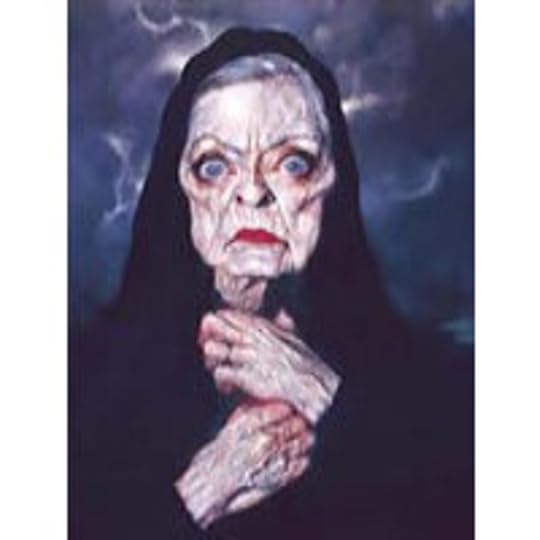
El relato clásico de Pedro Antonio de Alarcón te sumergerá en lo más profundo del horror extranatural. Al más puro estilo de la literatura de terror gótico, y a la altura de autores clásicos como Edgar Allan Poe o Robert Chambers, Alarcón nos narra, a modo de vivencia personal, el terrible encuentro con un ser sobrenatural que le llevará hasta los límites de la locura. ¿O será su mente que está jugando con él llevándole hasta los límites de la cordura?
Pedro Antonio de Alarcón y Ariza was a 19th century Spanish novelist, author of the novel El Sombrero de Tres Picos (The Three-Cornered Hat, 1874). The story is an adaptation of a popular tradition and provides a lively picture of village life in Alarcón's native region of Andalusia. It was the basis for Hugo Wolf's opera Der Corregidor (1897) and Manuel de Falla's ballet The Three-Cornered Hat (1919). Alarcón wrote another popular short novel, El capitán Veneno ('Captain Poison', 1881). He produced four other full-length novels. One of these novels, El escándalo ('The Scandal', 1875), became noted for its keen psychological insights. Alarcón also wrote three travel books and many short stories and essays. Alarcón was born in Guadix, near Granada. In 1859, he served in a Spanish military operation in Morocco. He gained his first literary recognition with A Witness' Diary of the African War (1859-1860), a patriotic account of the campaign.
Update 1: Discussed also with the The Short Story Club Story 14/72 from Black Water 1 (The Anthology of Fantastic Literature)
Review in English/Spanish:
Translated from the Spanish by Rollo Ogden I read this short story from Found in Translation anthology in both English and original Spanish. Pédro Antonio de Alarcón was a nineteenth-century Spanish novelist. He was a radical revolutionary and led an insurrection in Granada against the clergy and army. After his life is spared in a duel he changes his mind and becomes a conservative and a religious man. The Tall Woman is a fantastic tale about omens and supernatural events. The narrator recounts a series of events where the sight of a tall woman walking alone on the street led to catastrophe. The story reminds me of The Dog by Turgenev. I have the feeling both have had a lot more impact at the time they were written than nowadays. Phobia of lonely women walking the streets at night? It does not sound too scary in 2022. I observed that the English translation omitted some paragraphs from the Spanish version. They were not essential to the story but it showed a bit more about the narrator’s character.
Español :
Pédro Antonio de Alarcón fue un novelista español del siglo XIX. Fue un revolucionario radical y lideró una insurrección en Granada contra el clero y el ejército. Después de que le perdonan la vida en un duelo, cambia de opinión y se convierte en un hombre conservador y religioso. La mujer alta es un cuento fantástico sobre presagios y sucesos sobrenaturales. El narrador relata una serie de hechos en los que la visión de una mujer alta caminando sola por la calle condujo a la catástrofe. La historia me recuerda a El perro de Turgenev. Tengo la sensación de que ambos han tenido mucho más impacto en el momento en que se escribieron que ahora. ¿Fobia a las mujeres solitarias que caminan por las calles de noche? No suena demasiado aterrador en 2022. Observé que la traducción al inglés omitió algunos párrafos de la versión en español. No eran esenciales para la historia, pero mostraban un poco más sobre el carácter del narrador.
El mayor miedo que Telesforo siempre ha temido es el de encontrarse con alguna espectral fémina en medio de la noche. Para su mala suerte, esto se le cumplirá y más de una vez; pero dichas apariciones serán para anunciarle la partida de algún ser querido. Así que, al percatarse de que su mayor pesadilla se manifiesta ante él con ese propósito, no le importará en lo más mínimo quedar como loco, con tal de desahogarse por saber que la muerta lo asecha…
Se agradece que La mujer alta no sea la clásica historia sobre fantasmas y que, además, su planteamiento se desarrolle en un ambiente alejado al de las arquetípicas casas encantadas: en esta oportunidad, son las calles españolas. Y en favor de la trama presentada, esta obra podría tener una que sea excelente, al considerar los desencuentros con esta misteriosa figura espectral, ya que el potencial que había en esto era enorme. Es un muy buen concepto basado en las leyendas tradicionales, de cuando se creaban a estos seres para que penetren en el imaginario colectivo, con la intención de que los maridos no regresaran a altas horas de la noche ni borrachos a sus casas. Todo esto que he mencionado, es lo único bueno que le he encontrado a este relato: que sea una historia con elementos del folclore popular; pero, lamentablemente, no fue algo que esté bien ejecutado ni tampoco llevado a cabo.
En la parte negativa, el vocabulario que hay es extremadamente rebuscado y no se siente para nada natural, todo lo contrario. Se nota a leguas como el autor quería destacarse, para verse más culto o con un lenguaje más profundo y/o grandilocuente, ya que lo usa en exceso y de forma innecesaria. No está bien aplicado. Y entiendo que en aquellos tiempos se usaban palabras que ahora ya no, pero es demasiado notorio. Es como decir ósculo en vez de beso (solo es un ejemplo mío, en ninguna parte del relato se usa tal palabra), pero ¿tiene todo esto algún sentido aparte de la presunción? Lo dudo, y más si es para ser empleado en un cuento tan básico y simple. Igualmente, hay bastante jerga y modismos de España; por lo que no es para nada una lectura que sea amigable con quienes somos de Latinoamérica. A todo esto, hay que sumarle que la prosa tiene unos tintes quizá algo líricos de vez en cuando, y que aparte de su tan rebuscado vocabulario, se usan muchas palabras en desuso y conjugaciones con las mismas características; es decir, que están obsoletas. Esto último es lo que más abunda: conjugaciones de tiempos pasados que son raras de leer actualmente. A veces hay gente que lloriquea por las traducciones de las obras clásicas, pero esta que la leí en su idioma original, me hace apreciar como a los clásicos traducidos muchas veces les hacen un favor cuando son títulos con siglos de antigüedad.
Con respecto al final, no tiene absolutamente ningún brillo: concluye abrupta e inauditamente con el autor rompiendo la cuarta pared, para enviar... ¿saludos? ¿Qué clase de chiste tan barato y sin gracia es este? Del mismo modo, quedó en deuda saber qué es lo que era aquel misterioso ser, aunque cuando el protagonista le pregunta, ‘’ella’’ se identificó como . En conclusión, puedo decir que a pesar de todo lo que he mencionado, no se me hizo una tortura el haber leído este cuento, ni tampoco me aburrió (estoy plenamente consciente de lo friki que soy); a pesar de que claramente es una lectura aburrida y floja, junto con su narrativa que le juega totalmente en contra. Mi calificación es de 1.5 estrellas. Sé que este relato forma parte de un recopilatorio llamado Narraciones inverosímiles, de Pedro Antonio de Alarcón; inspirado en las Narraciones extraordinarias, de Edgar Allan Poe. Todo esto lo sé gracias al prólogo de la edición que tengo, lo cual me hizo entusiasmar en un principio por la posible influencia de Poe en este autor; pero tras haber leído su presente relato, ya no me interesa saber más de él. Es por este tipo de lecturas que prácticamente no hay referentes clásicos del horror hispanoparlantes.
Para otras reseñas de la colección Clásicos del terror, de editorial Planeta:
I appreciated this slightly more than I might have done because it followed Dickens’ The Signalman (see my review HERE) in Manguel’s anthology: both feature sightings that seems to predict, or maybe cause, disaster.
This one is set between Madrid and Segovia, and is nested and third-hand (not uncommon with ghost stories), hence an early reference to Hamlet.
“What do we know, my friends?” I liked the symmetry and ambiguity of the opening and closing sentences explicitly inviting the listener or reader to make up their own minds about what really happened and why. “I leave it to the judgment of every one of my readers.”
On the downside, although I realise it was published in 1881, the correlation between ugliness and assumed malign intent, the general misogyny, and his visceral fear of sex and the opposite sex, was unpleasant to the extent the twist and reveal did nothing for me.
Spanish author Pedro Antonio de Alarcon wrote this supernatural story in 1881. Gabriel is telling a group of men about his deceased friend who saw a tall, bony, toothless, old woman walking the streets late at night when he was feeling badly about his evening's behavior. A tragic event occurred after each time he saw the tall woman. When Gabriel attended his friend's funeral, the demonic tall woman was at the cemetery, and she paid special attention to Gabriel.
The author takes his time telling the story which grows increasingly creepy. He leaves us hanging at the end, wondering if Gabriel will encounter the demonic tall woman again and feeling fearful for him. I would have liked the story wrapped up a little more, but it did make me imagine how disturbed Gabriel might be feeling. This story is in the anthology "Black Water" which I'm reading with the Short Story Club.
2.5~3★ “ ‘I do not know if it is a mental twist which I have always had, or if it is the effect of some of those silly tales which old nurses use to frighten children into quiet and obedience, but ever since I was very young nothing has caused me so much fright and horror as the sight, or even the thought, of a woman alone out of doors at a late hour of the night.’ ”
This is a short ‘ghost’ story by a 19th century Spanish author who tells us Gabriel is sitting with five friends, all having ridden mules up into the forest to collect specimens. They have stopped to tuck into their hamper of food and wine, when Gabriel begins to talk about a couple he knew and what happened to them. But first he offers an explanation about himself.
“ ‘You may call me a visionary if you like, but it has been my fortune or misfortune in life that I have always been regarded as a materialist, a man of modern thought, not believing in things unseen. In fact, a positivist. Well, I may be so, but my positivism includes an acknowledgment of the mysterious influences of Nature …’ ”
He says just because we can’t explain these influences doesn’t mean they don’t happen. He says he’ll tell the story – you can decide. It happened in the hot summer of 1875.
“ ‘I was not the hero of the strange occurrence which I'm going to relate to you—but listen, and then tell me what explanation you can give me—natural, physical, scientific, whatever you think will best explain the case, if explanation is at all possible.’”
He carries on with his tale of a friend who was grieving the loss of his sweetheart, and who admits to a terrible fear of seeing a woman walking outdoors alone at night. That is the friend’s remark in the opening quotation.
How he became afraid and what happens to him is the subject of Gabriel’s story to the group of men.
The version I’m reading (not this one) is translated from the Spanish by P.A. Schultz. I don’t see it on Goodreads, but the story in English is only 20 pages or so. This was the shortest edition I could find to select in English.
It may have been more impressive in 1881 in Spanish than it is in translation today, but it’s a curious tale anyway.
“Is she Satan? Is she Death? Is she Life? Is she Antichrist? Who is she? What is she?’”
I love uncanny stories that could be read either way - as products of madness, or as true encounters with the supernatural. This one involves a peculiar villain who captured my imagination (why such a big body and such a little fan? a truly odd visual!) and an antipathy that predated the sufferer's own birth.
La Mujer Alta / The Tall Woman de Alarcón, Pedro Antonio Read with the Short Story Club https://www.goodreads.com/group/show/... Week starting 25th Dec. 2023. - Story 17 from Black Water 1 (The Anthology of Fantastic Literature) Read in Spanish and English
“I became aware that in the doorway, erect and still as a pine tree, stood a very tall, large woman, about sixty years of age, whose bold, malignant, and lashless eyes were fixed on me like two daggers, while her huge toothless mouth grinned at me horribly.”
A slowly-told, creepy story of an engineer--a man who works within the laws of science and nature--who is visited by the supernatural. How afraid we are of omens and portents of evil … as if we could escape it!
You may laugh if you like, but my agony of mind was dreadful;
A man with his friends settles down to tell them an incredible story from his life, rendered in vivid detail (even though it mostly happened to his friend); this manner of tale used to be quite common.
The author intrudes at the end to say that there is no need to relate how the group reacted to the story, for each person will seek their own explanation.
The friend was terrified of solitary women in the night time, seen in public. This fear culminated into his encountered with the "tall woman". The tall woman in described in detail as someone hideous and horrifying — her forehead was said to be "ugly." Imagine that — an ugly forehead!
This story, translated from the Spanish, is better than most supernatural thrillers. I wondered if anything could be read into the names of the streets where the friend encountered the tall woman? {spoiler alert!} The first street, the night of his father's death, was "The Gardens". The second encounter, when he learned of his fiancée's demise, was on the "Street of the Wolf."
Am I trying too hard, peering into corners, struggling to grasp every clue?
Turns out I finished the book yesterday without noticing... That is probably not a good sign. I still liked it because of the formatting and being about to read the Spanish right next to the English sentence. This is really good for learners, it was just too advanced for me... I am an A1/A2 level.
It's a story about a man telling a story to a group of friends, after hunting for beetles and other flora and fauna , one summer evening about his dead friend who told him a story about his phobia of woman walking the streets at night . So a story within a story within a story .The horror of unaccompanied women wasn't the best start , I admit , but we are in Spain and in the nineteenth century so things were different then
The Tall Woman is apparently ugly, persistent and intimidating and our dear dead friend of the narrator is terrified . He is a mining engineer that symbol of logic and progress and unafraid of the depths of the Earth . Whatever next ! Stay indoors woman , where you belong! Of course her presence bodes ill for the dead friend of the narrator as she picks off a couple of his loved ones before he falls ill on a mining trip , where our narrator last saw him , before succumbing too. There is an ambiguous ending at the dead friend's funeral but, by this stage, I was slightly more interested in the outcome of the beetle hunt and the number of speech marks within speech marks within speech marks which is surely a collectors piece of punctuation.
On a more serious point there is the same dichotomy between rationality ( science, mining, cataloguing Nature at the start of the story ) and the emotions (intense fear and foreboding ) that other authors of the period were exploring using the supernatural to explain the inexplicable . Stories are the way we make sense of the world , more powerful than any orderly analysis in the way they penetrate our surface. Women were and are invested with the emotional instability that men were encouraged to disown so a man admitting to extreme phobia when a woman is " out of place " is both admitting emotion as a valid human characteristic and revealing his vulnerability . Our narrator, also a mining engineer , seems to be above all this "silliness" until confronted by the same woman at the end of the story introducing a dark tone to the whole bucolic masculine picnic .
Fobia desde la infancia a ver una mujer vieja que camina sola por las noches? Parece ridículo en el año 2013, ciertamente se ven más cosas extrañas en las calles ahora, pero es lo que atormenta al protagonista. Este cuento no asusta a nadie...
Es la primera vez que escuchó un audiolibro, estaba buscando el cuento y vi el video en YT. Tenía un pensamiento algo arcaico sobre si contarlos como lectura, pero después de mucho analizarlo y escuchar voces de otros autores, decidí que un audiolibro puede tomarse como lectura. "Si Borges viviera, alguien le diría que su reseña no cuenta, porque no leyó el libro con sus ojos".
El cuento es muy aburrido, fue un pobre intento de usar el miedo psicólogo. Una mujer alta, sin dientes, que aparece de la nada y le genera un terror tan atroz que huye despavorido, el personaje no me parece que este bien desarrollado, creo que la idea no se plasmó bien y termino siendo un verdadero bloqueo de cemento.
Es de esperar que actualmente en el siglo 21 no vaya a causar el mismo impacto que cuando fue escrito por el siglo 19. Pero en mi opinion, el sentimiento de miedo irracional logra transmitirse al lector de forma decente, no al punto de causar esa sensación de terror, sino una sensación de interés por el cómo actuará esta mujer alta. No es el mejor libro que he leido pero sin duda se defiende.
De los pocos relatos que me han hecho sentir escalofríos!!!
A pesar de que al inicio me sentí un poco abrumado por la la escritura del autor, o bueno más que eso era por que utilizaba palabras muy desconocidas para mi (claro que es algo obvio si se tiene encuenta la época en que fue concebida), a medida que fui leyendo me vi envuelto en su historia que aunque simple funciona. En cuanto al estilo del autor es verdad que utiliza un modo de escribir anticuado y en desuso, pero claro viéndolo desde los ojos del siglo 21. No me molesto ese hecho la verdad, al contrario me pareció genial, ese estilo con conjugaciones de palabras como "dijome", "contome", etc (se que esa manera de escribir tiene un nombre pero no me acuerdo cual era), me gustó eso, no lo sentí un punto negativo. Pero sin duda por lo que le doi una calificación tan alta al relato es por la figura de la mujer alta, sin duda siendo ahora de los espectros en historias de terror favoritos míos. Su descripción, sus escenas, sus movimientos y diálogos me hicieron sentir escalofrío, algo que cualquiera debería sentir al adentrarse a una historia de terror.
Sin duda un relato, aunque simple, terrorífico con una figura que quedará en las pesadillas de quien lo lea.
..."Los peligros que sueña el pánico no tienen forma ni nombre traducibles"..."Es mucho más fácil pronunciar la palabra locura que hallar explicación a ciertas cosas que pasan en la Tierra"...
En este relato se abarca uno de los temores que muchos o pocos han experimentado a lo largo de su vida. En mi caso, desde muy pequeña me han contado sobre una mujer que llora y vaga llevándose a niños que se portan mal y no obedecen a sus padres. Ahora, tal vez si me ocurriera lo que le sucedió a Telesforo, reviviría aquel temor que de pequeña tenía por la mujer que llora, aún sabiendo que ya no soy una niña y no me he portado mal.
Otro cuento corto que leo y este también me ha gustado. Tiene tintes góticos y tenebroso. Claro si se compara el terror de hace un siglo con lo que tenemos ahora, este cuento no nos dice nada, pero seguro que en aquella época impactó. Se crea una atmósfera asfixiante para el protagonista que la transmite al lector. El protagonista va recorriendo las calles pues "cree" que una mujer alta lo está acechando y él desde muy pequeño tiene fobia a las mujeres que van solas por la calle. Él cree que lo persigue o que le va a echar un mal de ojo pues cada vez que la ve, muere un ser querido. Lo recomiendo. 05/03/2024.
This entire review has been hidden because of spoilers.
La historia es un poco floja, aunque a veces quieres saber más pero tiene descripciones demasiado largas, así que no es una historia emocionante, pero de todas formas no ha estado mal. Yo lo he leído buscando mi primer libro en inglés para practicar el idioma y eso es lo mejor que tiene este libro. Es súper cómodo y rápido de leer porque tienes la traducción en español en cada frase. Lo peor sin duda es que el texto en español está fatal. Se comprende mejor el texto en inglés que en español, pero sirve para encontrar la traducción de ciertas palabras sin apenas interrumpir la lectura.
Some reviewers are saying it was boring but IMO it wasn’t necessarily any worse than other books from the period. It did have a very slow start. It wasn’t scary, just kind of spooky. I was mostly using it for Spanish practice and I learned a lot of new vocabulary. For me it was a worthwhile read.
2'5⭐ Historia corta de terror que se me ha quedado un poco corta. Me ha gustado la idea, la trama, el vocabulario empleado... Pero las descripciones y lo sobrenatural se me ha quedado muy corto, muy escaso. Por lo que ha sido una lectura interesante pero que no pasa de ahí.