7/15/20: Rereading this one in the summer of 2020. In midsummer, actually, in conjunction with Shakespeare's Midsummer Night's Dream, reading it, hearing it, and seeing a filmed production of it (soon). I did this because of the great issue in this volume focused on Midsummer Night's Dream. So it is really good to do this, as the play within a play from Shakespeare extends here to another frame; in other words, Dream watches the play within a play, and they all speak to each other.
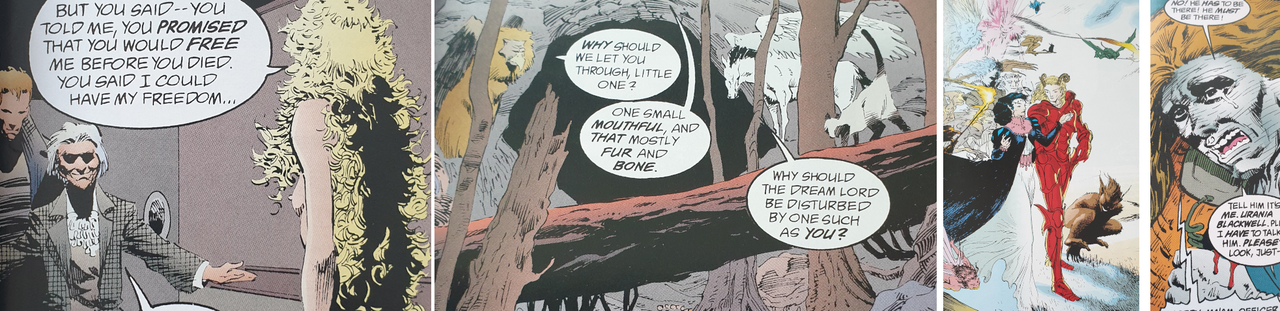
10/17/14: Original review based on a second reading . This is volume three, which features four short stand-alone stories, including "Calliope," which involves the imprisonment of one of the nine muses by a struggling writer; "A Dream of a Thousand Cats," with yes, actual cats who were once ruling the world over humans, who were once larger and more powerful, until humans in kind of romantic Occupy fashion collectively dream to create a reversal of power; "A Midsummer Night's Dream," which deservedly won the World Fantasy Story award, the only graphic story at that point to win, a story of what comes of the deal Dream made with Shakespeare, and as Gaiman has it, Midsummer is one of the two plays Will wrote for Dream, and then "Facade" which is the most horror-connected one, where we, get to meet up with Death again, the delightful Death girl, who is so refreshingly straightforward and not grim in the least. But of the four, the clear masterpiece is Midsummer, really terrific.
Anyway, I though the four stories were linked by themes of disguise/facade and reversals, the exchange and reversal of power and of course dream, the importance of imagination to the production of the human, and also the human cost of that work of imagination. Calliope has that encounter with Death that is moving, and we learn of Shakespeare's young son Hamnet, who dies at an early age, but later Shakespeare writes Hamlet, of course. Midsummer is about disguises and reversals of fortune and facades and love and magic and language and there are elements of all this throughout this volume, which is a kind of tribute to Shakespeare and the imagination and fantasy.
The shady deal Calliope makes to enslave a muse for his own purpose contrasts with the deal Dream makes with Shakespeare to get these amazing plays written. I saw connections weaving their way through all four stories, lovely, layered, ambitious work and not at all in this instance show-offy or pretentious. Classic fantasy, paying tribute to fantasy across the centuries.
Again, I liked this much better than the first times I read it. This is loads better than the average comic work; it is epic in its reach and grasp. We now begin to get the feel of a comics masterwork.