

What do you think?
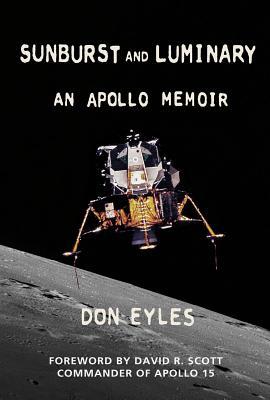
SUNBURST and LUMINARY - An Apollo Memoir
A New Perspective on the Space Program in the 1960s Fresh out of college, the author goes to work for the MIT laboratory that designed the Apollo guidance system. His assignment is to program the complex lunar landing phase in the Lunar Module's onboard computer. As he masters his art the reader learns about the computer, the mission, and a bit about spacecraft navigation and meets a cast of interesting characters along the way.
As Apollo 11 approaches, the author flies lunar landings in simulators and meets the astronauts who will fly the LM for real. He explains the computer alarms that almost prevented Neil Armstrong from landing and describes a narrow escape from another dangerous problem. He helps Pete Conrad achieve a pinpoint landing on Apollo 12, and works with Apollo 16 commander John Young on a technique for landing even more precisely. On Apollo 14 he devises a workaround when a faulty pushbutton threatens Alan Shepard's mission, earning a NASA award, a story in Rolling Stone, and a few lines in the history books.
Along the way the author hits the high points of his eclectic personal life, as he enters adulthood in the 1960s. He writes for students of the Apollo project, for whom the development of the flight software is still largely unexplored territory, but also for the young coders of the current digital culture, who will get the author's observations on the art of programming and who may identify as he explores sex, drugs, and the other excitements of the era. The underlying thesis is that the American space program in the 1960s was successful not in spite of, but in large measure because of the idealism, the freedom of thought, and the sense of exploration, inner and outer, that prevailed in the culture during that period.
The memoir concludes in a party atmosphere at the spectacular night launch of Apollo 17 before a glittery crowd an occasion that marked the high water mark, so far, of human space exploration.
As Apollo 11 approaches, the author flies lunar landings in simulators and meets the astronauts who will fly the LM for real. He explains the computer alarms that almost prevented Neil Armstrong from landing and describes a narrow escape from another dangerous problem. He helps Pete Conrad achieve a pinpoint landing on Apollo 12, and works with Apollo 16 commander John Young on a technique for landing even more precisely. On Apollo 14 he devises a workaround when a faulty pushbutton threatens Alan Shepard's mission, earning a NASA award, a story in Rolling Stone, and a few lines in the history books.
Along the way the author hits the high points of his eclectic personal life, as he enters adulthood in the 1960s. He writes for students of the Apollo project, for whom the development of the flight software is still largely unexplored territory, but also for the young coders of the current digital culture, who will get the author's observations on the art of programming and who may identify as he explores sex, drugs, and the other excitements of the era. The underlying thesis is that the American space program in the 1960s was successful not in spite of, but in large measure because of the idealism, the freedom of thought, and the sense of exploration, inner and outer, that prevailed in the culture during that period.
The memoir concludes in a party atmosphere at the spectacular night launch of Apollo 17 before a glittery crowd an occasion that marked the high water mark, so far, of human space exploration.
357 pages, Hardcover
First published March 1, 2018
Ratings & Reviews
Friends & Following
Create a free account to discover what your friends think of this book!
Community Reviews
Displaying 1 - 28 of 28 reviews
November 24, 2018
Well, it's my book and I think it's terrific. It will interest anyone interested in the history of the Apollo project, and anyone who is part of the contemporary digital culture and wants to know more about its foundation myths.

July 11, 2018
This book covers the nuts and bolts of the guidance software written for the Apollo Lunar Module as told by one of its principal architects, a fresh-out-of-college-graduate by the name of Don Eyles. In the late 1960s, computer memory in a system required to be no more than one cubic foot in volume was extraordinarily valuable, almost as valuable as onboard fuel for a moon mission. Logical acrobatics had to be conducted to save a few bits here and a few bits there to leave enough open registers to hold the latest result of one of several concurrently running routines. The economy with which the landing software was written using the technology available at the time is one of the great technical stories of the Apollo program. Eyles takes a potentially eye-glazing topic and crafts it into an entertaining story of our shared technical heritage. Would make a great companion to David Mindell's "Digital Apollo."
July 14, 2019
I could spend a year and not come up with a title so brilliant and beautiful as Sunburst and Luminary.
Of course, these words are “merely” two of the names given to the Apollo Lunar Guidance Computer software, but considered both within and devoid of that technical context, little changes.
Thankfully, the same can be said for the book itself: at once deemed unsuitable for publication for being too technical and weedy yet full of beautiful bursts of prose and humanity, Sunburst and Luminary integrates narratives of the sixties and seventies that we have been taught are opposing duals, uneasy marriages, unrelated happenings: the atomic age engineering precision required to get us to the Moon, and the great human revolutions and explosions that came in the time of Civil Rights, Vietnam, of the time “post-pill and pre-AIDS.”
Don Eyles’ take on the well-trafficked Apollo memoir subgenre covers many things: the origins of the MIT Instrumentation Lab, the particulars of how Interpretive routines were allocated memory within the AGC, the ins and outs of flight simulation and debugging, and the actual precise problems underpinning popularly discussed but often misunderstood moments of mishap, but it spends equal measure talking through the colorful people and processes behind the code, ideas of elegance in software, the women who filtered through Don’s life, and the music, and trips through Europe, and architecture, and the headlines of many days, and the unshakable, unavoidable sense that all this unrest and humanity and war and exploration of the stars had to be coming to some kind of culmination, some time imminently.
It doesn’t, of course—today we find ourselves in the same place, or worse, but too distracted to care, and too enamored with ideas of glory days past and the promises of rationality and technology to understand our own history. And here it is that Eyles’ book finds a purpose and an importance all to itself, because what Eyles pulls the curtain back on is not some Hollywood picture where perfectly arrayed square nerds in glasses with slide rules and crisp shirts figure guidance equations while outside, elsewhere, on some other planet, the times they were a-changin’.
Because of course that’s not how it happened. We didn’t land on the Moon by way of militaristic discipline, nor crisp sartorial decisions, nor some kind of sterile culture ruled by otherworldly maths and sciences, nor command-and-control management. We got there by exploring the unknown, by challenging existing ideas of the possible, by open minds (opened further with weed if necessary), by minor rebellion, by radical teamwork and self-honesty, by responsibility and by trust. Apollo engineers weren’t some locked-away nerd class oblivious or above or sequestered from the protestors and the hippies, they were the protestors and the hippies.
Of course, all of this is through Eyles’ own lenses and experiences, as part of an isolated team off in Boston and away from watchful eyes, and certainly even that team featured some squares. But by posing these flavors, the culture and the philosophy alongside the technical problems and collaborative solvings thereof, the point is made regardless. There is a different window into our venerated history, and where it perhaps mattered most, at the point of greatest integration where the brains of the spacecraft processed the signals and quirks of the entire operation, here is how we got it done.
I am not certain how to moderate my enthusiasm toward any prescription for anybody else. This is a book written, it seems, just for me: a human researcher and designer who somehow became a software girl along the way, and once accidentally poured five months into deep full-time research and writing on Apollo 13. I’m not sure if the common reader’s eyes will glaze over discussions on asynchronous programming, and I’m certain at least a few Apollo nuts will read this book just for the technical details and skim right over the beating heart that binds this whole story together.
I do know that I adore this piece of writing, and I do hope it is not Don Eyles’ only writing effort. I will leave you with my favourite passage from Sunburst and Luminary in hopes that you (and he) will agree:
Of course, these words are “merely” two of the names given to the Apollo Lunar Guidance Computer software, but considered both within and devoid of that technical context, little changes.
Thankfully, the same can be said for the book itself: at once deemed unsuitable for publication for being too technical and weedy yet full of beautiful bursts of prose and humanity, Sunburst and Luminary integrates narratives of the sixties and seventies that we have been taught are opposing duals, uneasy marriages, unrelated happenings: the atomic age engineering precision required to get us to the Moon, and the great human revolutions and explosions that came in the time of Civil Rights, Vietnam, of the time “post-pill and pre-AIDS.”
Don Eyles’ take on the well-trafficked Apollo memoir subgenre covers many things: the origins of the MIT Instrumentation Lab, the particulars of how Interpretive routines were allocated memory within the AGC, the ins and outs of flight simulation and debugging, and the actual precise problems underpinning popularly discussed but often misunderstood moments of mishap, but it spends equal measure talking through the colorful people and processes behind the code, ideas of elegance in software, the women who filtered through Don’s life, and the music, and trips through Europe, and architecture, and the headlines of many days, and the unshakable, unavoidable sense that all this unrest and humanity and war and exploration of the stars had to be coming to some kind of culmination, some time imminently.
It doesn’t, of course—today we find ourselves in the same place, or worse, but too distracted to care, and too enamored with ideas of glory days past and the promises of rationality and technology to understand our own history. And here it is that Eyles’ book finds a purpose and an importance all to itself, because what Eyles pulls the curtain back on is not some Hollywood picture where perfectly arrayed square nerds in glasses with slide rules and crisp shirts figure guidance equations while outside, elsewhere, on some other planet, the times they were a-changin’.
Because of course that’s not how it happened. We didn’t land on the Moon by way of militaristic discipline, nor crisp sartorial decisions, nor some kind of sterile culture ruled by otherworldly maths and sciences, nor command-and-control management. We got there by exploring the unknown, by challenging existing ideas of the possible, by open minds (opened further with weed if necessary), by minor rebellion, by radical teamwork and self-honesty, by responsibility and by trust. Apollo engineers weren’t some locked-away nerd class oblivious or above or sequestered from the protestors and the hippies, they were the protestors and the hippies.
Of course, all of this is through Eyles’ own lenses and experiences, as part of an isolated team off in Boston and away from watchful eyes, and certainly even that team featured some squares. But by posing these flavors, the culture and the philosophy alongside the technical problems and collaborative solvings thereof, the point is made regardless. There is a different window into our venerated history, and where it perhaps mattered most, at the point of greatest integration where the brains of the spacecraft processed the signals and quirks of the entire operation, here is how we got it done.
I am not certain how to moderate my enthusiasm toward any prescription for anybody else. This is a book written, it seems, just for me: a human researcher and designer who somehow became a software girl along the way, and once accidentally poured five months into deep full-time research and writing on Apollo 13. I’m not sure if the common reader’s eyes will glaze over discussions on asynchronous programming, and I’m certain at least a few Apollo nuts will read this book just for the technical details and skim right over the beating heart that binds this whole story together.
I do know that I adore this piece of writing, and I do hope it is not Don Eyles’ only writing effort. I will leave you with my favourite passage from Sunburst and Luminary in hopes that you (and he) will agree:
For me the Cape contained two pleasures, separated by a security fence. There was warm and disreputable Cocoa Beach with its broad sands and girls and dependable surf and the funky comforts of the Islander Motel—and to the north, wide expanses of tropical scrubland punctuated by enigmatic buildings and distant towers, where the wind blew salty and you sensed in the ragged interface of alligator swamp and oceanic sweep a parallel to this place’s other distinction as the point where our planet reached out to limitless space.

November 30, 2018
This is an incredibly detailed view into the software development process of the Lunar Module landing programs. Code samples and illustrations help supplement the written portion of the book. If you've built software, you'll notice all the same risks and pitfalls existed then just as they do now. (Staging/simulators are never a good substitute for production hardware environments.) Having seen a launch up close, I appreciated the detailed descriptions of driving around the Cape and wandering through and around the VAB.
December 30, 2022
Interesting memoir by Don Eyles, who was a key member of the software development team for the Apollo lunar module descent phase software. He stresses the agility of the software team, where an astronaut could request a feature and the team could have new code ready for a simulator in days or weeks.
Put in today’s terms, the software team embraced a culture of continuous improvement, constantly looking for ways to eliminate nuisance alarms (prominent on Apollo 11), reduce fuel usage, refine navigation, etc. The team also developed EMPs (erasable memory programs) that astronauts could key in to deal with various hardware malfunctions. As part of continuous improvement, the software team developed and tested improvements, even when they knew that the changes would not be implemented by NASA configuration change boards.
To validate his software changes, Don flew many lunar landing simulations, all the way down to a simulated landing on the lunar surface. He continued in the space program after Apollo, developing Timeliner, the user interface language used on the International Space Station.
A couple of interesting quotes from the end of the book:
“Were we lucky or were we good? Both I think. To a point we made our own luck. The main ingredient in that was honesty, with ourselves above all.”
Referring to the o- ring issue that led to the loss of the Challenger space shuttle: “I saw the root cause of the accident in a failure of intellectual honesty.”
Referring to failures on the Hubble space telescope and the loss of the Columbia space shuttle: “those seemed to be further signs of the demise of the culture that had taken us to the Moon and back.”
Referring to the current NASA culture: “so management heavy that a decision that Allan Klump and I could make on our own in an afternoon might require a committee and a month.”
If you’re interested in the space program, engineering, or software, read this book. An interesting account by someone who lived it.
Put in today’s terms, the software team embraced a culture of continuous improvement, constantly looking for ways to eliminate nuisance alarms (prominent on Apollo 11), reduce fuel usage, refine navigation, etc. The team also developed EMPs (erasable memory programs) that astronauts could key in to deal with various hardware malfunctions. As part of continuous improvement, the software team developed and tested improvements, even when they knew that the changes would not be implemented by NASA configuration change boards.
To validate his software changes, Don flew many lunar landing simulations, all the way down to a simulated landing on the lunar surface. He continued in the space program after Apollo, developing Timeliner, the user interface language used on the International Space Station.
A couple of interesting quotes from the end of the book:
“Were we lucky or were we good? Both I think. To a point we made our own luck. The main ingredient in that was honesty, with ourselves above all.”
Referring to the o- ring issue that led to the loss of the Challenger space shuttle: “I saw the root cause of the accident in a failure of intellectual honesty.”
Referring to failures on the Hubble space telescope and the loss of the Columbia space shuttle: “those seemed to be further signs of the demise of the culture that had taken us to the Moon and back.”
Referring to the current NASA culture: “so management heavy that a decision that Allan Klump and I could make on our own in an afternoon might require a committee and a month.”
If you’re interested in the space program, engineering, or software, read this book. An interesting account by someone who lived it.

February 14, 2021
This astounding book retells the Apollo saga from a fresh perspective: that of young software engineer and “long-haired freak” Don Eyles, who was responsible for developing a significant portion of the Lunar Module code. Moon landing aficionados may think they know all about various close shaves involving the cutting edge technology, such as Apollo 11’s program alarms and Apollo 12’s SCE to AUX. Eyles’s intimate expertise with the ship’s computer sheds new light, for me at least, on exactly what caused those problems, what alternative hypotheses were being considered at the time, and how the eventual workarounds worked to solve the problem until it could be fixed in a future “rope”. The design of the Apollo Guidance Computer and the PGNCS operating system is at once fascinating and familiar. In it one can see the germs of modern computers and their operating systems, distilled to an essence limited by nascent technology and required by the laser focus of the mission.
This would be enough, but Eyles takes us to apogee by weaving in his experiences with 60s counterculture: music, drugs, protests, and free love. And beyond that, the sort of idealism that in part propelled the space program: that together, putting aside our differences, forsaking domination over others, we can achieve truly monumental things.
The writing is superb, and Eyles includes ample useful diagrams and illustrations that help with understanding the technical details.
This would be enough, but Eyles takes us to apogee by weaving in his experiences with 60s counterculture: music, drugs, protests, and free love. And beyond that, the sort of idealism that in part propelled the space program: that together, putting aside our differences, forsaking domination over others, we can achieve truly monumental things.
The writing is superb, and Eyles includes ample useful diagrams and illustrations that help with understanding the technical details.

March 24, 2021
Sadly not a purely technical memoir. Perhaps someone, perhaps the author, thought that human interest was needed. It does not. Nor cars, bands, or food.
If you read the classic memoirs of polar exploration they include all the details, how many dogs, weight to sled ratios, food amounts and types, everything. You could plan your own exploration from them. They did not include the author's emotions about this and that.
Especially because it will now be lost in time, all the details that don't make it into official documentation, the failures and wrong turns in the design, coding, and testing, the details that could add to other's expertise will now be lost. Remember that expertise is not a function of time but a function of the mistakes/errors and their corrections which you will avoid or recognize so not to repeat in the future. You can build expertise from the failures of others. Success does not add to expertise, it is the result of expertise. Therefore I was hoping for a complete over-the-shoulder view of what finally created one of the greatest and earliest software successes in history.
If you read the classic memoirs of polar exploration they include all the details, how many dogs, weight to sled ratios, food amounts and types, everything. You could plan your own exploration from them. They did not include the author's emotions about this and that.
Especially because it will now be lost in time, all the details that don't make it into official documentation, the failures and wrong turns in the design, coding, and testing, the details that could add to other's expertise will now be lost. Remember that expertise is not a function of time but a function of the mistakes/errors and their corrections which you will avoid or recognize so not to repeat in the future. You can build expertise from the failures of others. Success does not add to expertise, it is the result of expertise. Therefore I was hoping for a complete over-the-shoulder view of what finally created one of the greatest and earliest software successes in history.

November 17, 2019
Fantastic read! For anyone with an interest in the Moon landings, in the development of computer technology, or in the late 60s culture generally, Eyles tells a story that weaves counterculture into the fabric of the greatest technological achievements of mankind to date.
He manages to tell a very technical story from a very human standpoint, and strengthens the argument that no engineering achievement can be taken in a purely scientific context - the human element is vitally important, for its creativity and its inspiration.
Brilliant.
He manages to tell a very technical story from a very human standpoint, and strengthens the argument that no engineering achievement can be taken in a purely scientific context - the human element is vitally important, for its creativity and its inspiration.
Brilliant.

January 21, 2019
Sunburst and Luminary is a memoir of Don Eyles’ involvement with the development of the Apollo Lunar Modules’ flight control software starting from 1966 on past the end of the last mission to the moon. He was a young 23 year old when he joined and he became the person most responsible for software for the different landing phases.
I really enjoyed reading this book. It appeals to the software designer that I am. I started my software career in the late 80s but I grew up during the Gemini and Apollo missions. The book is a rather technical memoir. Fortunately I understood much that Don describes. I learned about core memory back in my high school computer science class, so I understood the explanation of the women that built the read-only program “ropes” by hand. During the Apollo 14 mission a faulty abort switch threatened the landing. But Don figured out a software patch that the astronauts could manually enter which saved the mission. It wasn’t described as such in the book but that is what it was. It was very similar to patches I did early on in my career but now is rarely done.
Unfortunately there is no way to describe software without going into a lot of excruciating detail and I can see how this would discourage the general reader. I believe that this book would really appeal to old school software developers but that its appeal would be limited. I don’t think this will be a best seller but it should be.
I read this on the airplane going across the country and back. Hours immersed in the software development done at MIT in the 1960’s with some personal aspects of Don’s life added in.
I really enjoyed reading this book. It appeals to the software designer that I am. I started my software career in the late 80s but I grew up during the Gemini and Apollo missions. The book is a rather technical memoir. Fortunately I understood much that Don describes. I learned about core memory back in my high school computer science class, so I understood the explanation of the women that built the read-only program “ropes” by hand. During the Apollo 14 mission a faulty abort switch threatened the landing. But Don figured out a software patch that the astronauts could manually enter which saved the mission. It wasn’t described as such in the book but that is what it was. It was very similar to patches I did early on in my career but now is rarely done.
Unfortunately there is no way to describe software without going into a lot of excruciating detail and I can see how this would discourage the general reader. I believe that this book would really appeal to old school software developers but that its appeal would be limited. I don’t think this will be a best seller but it should be.
I read this on the airplane going across the country and back. Hours immersed in the software development done at MIT in the 1960’s with some personal aspects of Don’s life added in.

January 30, 2021
Sunburst and Luminary: An Apollo Memoir by Don Eyles is the author’s tale of being the right person in the right place at the right time and through pure happenstance ending up with the job of writing the computer programs that landed the Apollo Lunar Module on the surface of the moon. This is a book for NASA geeks: very much an “insiders” account of the Apollo program; I daresay it’s one of the best, if not the best, personal Apollo memoir that I’ve read. Eyles also gives the best and most complete explanation of the Apollo 11 1201/1202 alarms. It wasn’t simply because the rendezvous radar was inadvertently left on.
In general accounts of the Apollo program, the hardware and the astronauts play center stage. In reality, the Apollo Guidance Computer and software ran the show. This book makes it plain how the programs were conceived, written, and evolved – particularly how the organic “organizational structure” (or lack of structure) allowed the astronauts and others to work informally with the programmers and spacecraft interface designers to create a workable & optimized system in the shortest possible time frame, an attribute of the early space program necessary to meet Kennedy’s deadline. Eyles’ story is not all bits & bytes. Bits of his personal life, 1960s counterculture, and astronaut gossip sneak in as reminders that the Apollo program was a human story and not a sterile manufacturing effort populated by robots. Sunburst and Luminary comes as close to can’t-put-it-down as a computer programming book could ever hope to come.
In general accounts of the Apollo program, the hardware and the astronauts play center stage. In reality, the Apollo Guidance Computer and software ran the show. This book makes it plain how the programs were conceived, written, and evolved – particularly how the organic “organizational structure” (or lack of structure) allowed the astronauts and others to work informally with the programmers and spacecraft interface designers to create a workable & optimized system in the shortest possible time frame, an attribute of the early space program necessary to meet Kennedy’s deadline. Eyles’ story is not all bits & bytes. Bits of his personal life, 1960s counterculture, and astronaut gossip sneak in as reminders that the Apollo program was a human story and not a sterile manufacturing effort populated by robots. Sunburst and Luminary comes as close to can’t-put-it-down as a computer programming book could ever hope to come.
June 21, 2022
Fascinating insight into the Apollo space program. It is not light reading and gets a bit technical. But that allows for a great understanding of the 1201 and 1202 alarms with Apollo 11 as well as other hidden gems about the lunar landings. The author will not win any awards for his literary skills yet he does a good job describing his early career, his personal life, his professional interactions, and behind the scenes stories of a historic time. I would have liked the author to describe more about the personalities of astronauts with whom he worked. He alludes for example to Pete Conrad’s unique personality but offers few anecdotes to illustrate. It is only in the last quarter of the book that the author conveys any excitement about the space program; up to then he tells the story much as one talks about any job.
If you have a deep interest in the Apollo landings, this is a must read. If you are only a casual observer, you could pass on this book.
If you have a deep interest in the Apollo landings, this is a must read. If you are only a casual observer, you could pass on this book.

February 18, 2019
Great book for enthusiasts of the Apollo project particularly the development of the Lunar Lander software. The Author explains how the software and systems work with a background the late 1960s culture, of frequent meetings with the Apollo astronauts and other well known characters, details of the development team, his love life and analysis of the software related problems, their fixes and near disasters.
It really brings to life the work of computer programmer, whose first program was the lunar lander software. Just the right level of geekiness and detail and still fun to read.
It really brings to life the work of computer programmer, whose first program was the lunar lander software. Just the right level of geekiness and detail and still fun to read.
May 18, 2020
So much of what has been written about Apollo has been either from the perspective of the astronauts or from the flight controllers, yet Apollo was first and foremost an engineering achievement.
This book provides a fascinating insight into one aspect of that engineering achievement, namely the software that was written to guide the lunar lander to the surface of the moon after it undocked from command module. Anybody interested in the Apollo program or the history of software engineering will not be disappointed by this book.
The author mentions that he struggled to find a publisher for this book as it was deemed too technical. This makes me wonder how many other gems like this are out there sitting on harddrives awaiting a publisher. I can only hope book this inspires other writers to let their work see the light of day in the knowledge that there really is an audience for well written engineering histories.
This book provides a fascinating insight into one aspect of that engineering achievement, namely the software that was written to guide the lunar lander to the surface of the moon after it undocked from command module. Anybody interested in the Apollo program or the history of software engineering will not be disappointed by this book.
The author mentions that he struggled to find a publisher for this book as it was deemed too technical. This makes me wonder how many other gems like this are out there sitting on harddrives awaiting a publisher. I can only hope book this inspires other writers to let their work see the light of day in the knowledge that there really is an audience for well written engineering histories.

February 24, 2024
I found that book quite instructive and astonishing. Given the limited resources developers had at their disposal, the techniques used in that era must have been quite advanced. What an adventure!
I wasn't really bothered by the non-Apollo personal events and even found them somewhat relevant to the general culture surrounding the Apollo programme in that particular period.
I only wish the book had benefited from at least some basic editorial process to improve the general cohesiveness of the narrative and review the punctuation, which were both a little chaotic.
I wasn't really bothered by the non-Apollo personal events and even found them somewhat relevant to the general culture surrounding the Apollo programme in that particular period.
I only wish the book had benefited from at least some basic editorial process to improve the general cohesiveness of the narrative and review the punctuation, which were both a little chaotic.
March 31, 2024
Don implemented the LEM landing guidance algorithms in the Apollo Guidance Computer. His stories capture the artistic and engineering work that turned equations into machine instructions that performed the magic of Apollo. This book is both a historical treasure and provides lessons that are useful to modern day space engineers.

January 20, 2019
An amazing book if you are into computers and space. Very personal and very technical account of one of the lead developers who worked on and wrote most of the software that controlled the lunar lander.
April 14, 2020
Fabulous read
A sometimes difficult read, but it pays off, especially for those of us who watched as the Apollo program blossomed, along with the 1960s counter culture. A must read for nerds and old hippies alike.
A sometimes difficult read, but it pays off, especially for those of us who watched as the Apollo program blossomed, along with the 1960s counter culture. A must read for nerds and old hippies alike.
November 9, 2020
Really great read on history of computing. The hardware limits for the moon landing were truly eye-popping.
The author’s frequent asides about the women he was sleeping with at the time are bizarre, and honestly, a little offputting.
The author’s frequent asides about the women he was sleeping with at the time are bizarre, and honestly, a little offputting.

April 12, 2021
A ton of super interesting technical minutiae about the lunar landings, landers, astronauts and all the technical folks involved. What Eyles and the other programmers did is nothing short of amazing and it is very cool to read about it in such detail.
September 9, 2023
I'm very into technical details, control engineering and software development, but this book is too much even for me.
Instead of being techy and geeky, it is boring and nerdy. "Lets discuss card punching for the next several pages..." No, victorhugossian level of details is not OK.
Instead of being techy and geeky, it is boring and nerdy. "Lets discuss card punching for the next several pages..." No, victorhugossian level of details is not OK.

February 1, 2024
As a young software engineer I absolutely loved this book. The detail and insight that Don provided about the landing software design, implementation and troubleshooting was delightful and eye opening. Not to mention all the more general information about the program as a whole.

October 28, 2024
Captivating
Very well written, easy to read even when I didn’t really understand the details. Gives a fantastically detailed insight to all the efforts and support behind the successful Apollo project.
Very well written, easy to read even when I didn’t really understand the details. Gives a fantastically detailed insight to all the efforts and support behind the successful Apollo project.
January 31, 2026
The Right Time and The Right Place.
Step into an almost Mythical; MIT, Boston, the Sixties, and the Race to the Moon. A Valuable Insider's Journey through One of America's Best Efforts, with All the Hopes, Fears, and Fun. Well Written, Insightful, and an Excellent Read.
Step into an almost Mythical; MIT, Boston, the Sixties, and the Race to the Moon. A Valuable Insider's Journey through One of America's Best Efforts, with All the Hopes, Fears, and Fun. Well Written, Insightful, and an Excellent Read.

February 13, 2019
Neat insight into a revolutionary time and place.
August 30, 2019
Excellent read!
November 12, 2020
Not sure why the author felt the need to brag about his various "conquests" ...they distracted from the story.
NSFW
NSFW

August 10, 2019
Great book true but sad conclusion
Makes one humble to read how little processing power they had for the Apollo. Great read on the technical details of ACG/moonlanding Algorithms. But Don is right: it was the free culture that made it possible to do. Alas no more of that in these days.
Makes one humble to read how little processing power they had for the Apollo. Great read on the technical details of ACG/moonlanding Algorithms. But Don is right: it was the free culture that made it possible to do. Alas no more of that in these days.

July 8, 2020
Loved the mix of technology and thrill of space adventure, wandering into a new frontier. Rarely have I read a book so fast
Displaying 1 - 28 of 28 reviews