

What do you think?

The Wars of Watergate: The Last Crisis of Richard Nixon
This is the first truly comprehensive history of the political explosion that shook America in the 1970s and whose aftereffects are still being felt in public life today. Drawing on contemporary documents, personal interviews, memoirs, and a vast quantity of new material, Stanley Kutler shows how President Nixon's obstruction of justice from the White House capped a pattern of abuse that marked his entire tenure in office. He makes clear how the drama of Watergate is rooted not only in the tumultuous events of the 1960s but also in the personality and history of Richard Nixon.
Kutler examines Nixon's confrontations with the institutions he feared and resented—the Congress, the federal agencies, the news media, the Washington establishment—and how they mobilized to topple the president. He considers the arguments of Nixon's defenders, who insisted that Watergate was a minor affair, and the contention that the President did nothing worse than his predecessors had done. He offers compelling portraits of the President's men—H. R. Haldeman, John Erlichman, John Mitchell, Charles Colson, John Dean; of his adversaries—Judge John Sirica, the U.S. Attorneys, Special Prosecutors, Archibald Cox and Leon Jaworski; and of the legislators who would stand in judgment--Sam Ervin and Peter Rodino.
In the course of his engrossing narrative, Stanley Kutler illuminates the constitutional crisis brought on by Watergate. He shows how Watergate diminished the moral level of American political life, and illustrates its continuing detrimental impact on the credibility, authority, and prestige of the Presidency in particular and the government in general. His book underlines for the American electorate the significance of Watergate for the future of our political ethics and the maintenance of our constitutional system, as well as for the place of Richard Nixon in American history.
Kutler examines Nixon's confrontations with the institutions he feared and resented—the Congress, the federal agencies, the news media, the Washington establishment—and how they mobilized to topple the president. He considers the arguments of Nixon's defenders, who insisted that Watergate was a minor affair, and the contention that the President did nothing worse than his predecessors had done. He offers compelling portraits of the President's men—H. R. Haldeman, John Erlichman, John Mitchell, Charles Colson, John Dean; of his adversaries—Judge John Sirica, the U.S. Attorneys, Special Prosecutors, Archibald Cox and Leon Jaworski; and of the legislators who would stand in judgment--Sam Ervin and Peter Rodino.
In the course of his engrossing narrative, Stanley Kutler illuminates the constitutional crisis brought on by Watergate. He shows how Watergate diminished the moral level of American political life, and illustrates its continuing detrimental impact on the credibility, authority, and prestige of the Presidency in particular and the government in general. His book underlines for the American electorate the significance of Watergate for the future of our political ethics and the maintenance of our constitutional system, as well as for the place of Richard Nixon in American history.
776 pages, Paperback
First published May 19, 1990
About the author
Stanley I. Kutler
35 books8 followersA specialist in 19th and 20th century American constitutional history, Stanley Kutler received his B.A. degree in 1956 from Bowling Green State University and his doctorate from Ohio State University in 1960. He taught at Penn State University from 1960 until 1962, San Diego State College from 1962 until 1980, and the University of Wisconsin from 1980 until his retirement.
Ratings & Reviews
Friends & Following
Create a free account to discover what your friends think of this book!
Community Reviews
Displaying 1 - 20 of 20 reviews

December 7, 2007
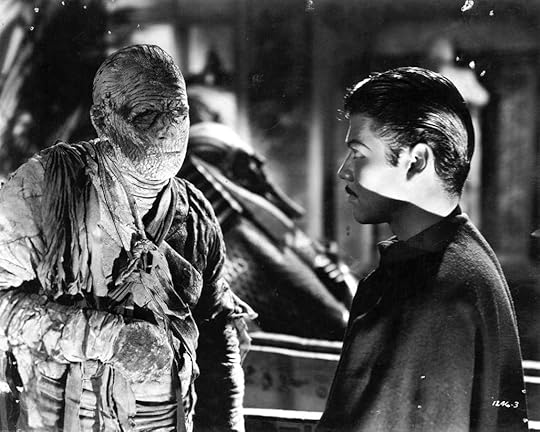
Reading about Nixon's career in the excellent first part of this book has reminded me that he was the earnest drudge imbued with an unyielding desire for various horrible jobs in politics which few sensible people would want. He was willing to drag his ass all over the country relentlessly campaigning for years and years and years. Eight years as Veep didn't put him off. Nope, not at all. Eight years out of politics in 1960-7 didn't put him off. As Paulie Wallnuts in The Sopranos would have said, "I can do that standing on my head". Clearly, Richard Nixon was The Mummy - you run and run and run and you look behind and the damn Mummy is still stomping up, he's gonna get you, you can't get away from him. Run run run - stomp stomp stomp. Richard Nixon was The Mummy.
1972: Nixon confers with Haldeman
A short comparison between two bad presidents - Bush vs Nixon
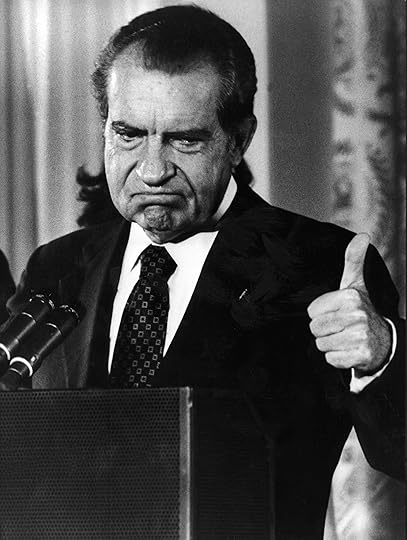
The 1960s were very interesting times. For all his faults, and they were legion, George W Bush did not preside over a situation where the National Guard shoots dead four students because they were in a demonstration. He did invade Iraq but he didn't authorise Agent Orange and napalm to be used against thousands of civilians. He didn't bomb a neighbouring neutral country for months. Vietnam was immeasurably more corrosive in America than Iraq because of its scale and because of the draft. We knew Bush's crimes because we saw them every day on the tv, whereas the faroff days of Nixon are now blurry, so Bush seems much worse and Nixon nearly got rehabilitated. Nixon's problem was that he got caught. So either all the other presidents have done similar illegal stuff and not got caught making Nixon uniquely stupid or they've been reasonably honest. We assume lazily that all politicians are crooked, but Watergate brought the shock of proof. Nixon did it, he okayed a burglary and he paid hush money to the burglars, then he tried to cover it all up and fired anyone who attempted to uncover it. Fantastique!
"You got me fair and square!"
Why I loved Watergate
The enormous thrill of Watergate was in seeing a president who won the biggest ever landslide in 1972 get torn down step by step and ejected from his seemingly impregnable White House fortress by the American constitution and by the judges and senators who believed in it all within the space of 2 years. Sounds like a Frank Capra movie and in some senses it was. Watergate was Shakespearean without the poetry. Nixon was Cassius, Brutus and Caesar at one point or another, and finally he was Lear, raving away, suffering terribly and understanding nothing.
As regards this particular book
I have to remove one star from the rating here because once again he runs into the trap of confusing detail with information, as here:
Dean's recitation began with Haldeman's instruction that he establish "a perfectly legitimate campaign intelligence operation" at CREEP. John Caulfield first developed a plan, but Mitchell and Ehrlichman agreed with Dean that it was not suitable. Dean then suggested that they commission Gordon Liddy for the task. Liddy proposed several hare-brained and expensive schemes which were again were rejected, but he then enlisted Hunt as an ally. The two visited Colson who, in turn, pressed Magruder for action. Meanwhile Haldeman, through his aide, Gordon Strachan, similarly pressured magruder for campaign intelligence. Magruder responded by turning to Mitchell and urging the campaign to authorize Liddy's plan to wiretap the Democratic National Committee. Mitchell agreed, and the fruits of the taps went to Strachan, who gave them to Haldeman.
Zzzzzzzzzzzzzzzzzzzzzzzzzzzzzzzzzzz
So sometimes the stark drama of the events passes through these dense thickets as might a lumbering, dimly perceived but dangerous large beast half a mile away, trumpeting and destroying the next village's huts but leaving your crop of facts and names untouched. Still, a favourite tale well told.
1972: Nixon confers with Haldeman
A short comparison between two bad presidents - Bush vs Nixon
The 1960s were very interesting times. For all his faults, and they were legion, George W Bush did not preside over a situation where the National Guard shoots dead four students because they were in a demonstration. He did invade Iraq but he didn't authorise Agent Orange and napalm to be used against thousands of civilians. He didn't bomb a neighbouring neutral country for months. Vietnam was immeasurably more corrosive in America than Iraq because of its scale and because of the draft. We knew Bush's crimes because we saw them every day on the tv, whereas the faroff days of Nixon are now blurry, so Bush seems much worse and Nixon nearly got rehabilitated. Nixon's problem was that he got caught. So either all the other presidents have done similar illegal stuff and not got caught making Nixon uniquely stupid or they've been reasonably honest. We assume lazily that all politicians are crooked, but Watergate brought the shock of proof. Nixon did it, he okayed a burglary and he paid hush money to the burglars, then he tried to cover it all up and fired anyone who attempted to uncover it. Fantastique!
"You got me fair and square!"
Why I loved Watergate
The enormous thrill of Watergate was in seeing a president who won the biggest ever landslide in 1972 get torn down step by step and ejected from his seemingly impregnable White House fortress by the American constitution and by the judges and senators who believed in it all within the space of 2 years. Sounds like a Frank Capra movie and in some senses it was. Watergate was Shakespearean without the poetry. Nixon was Cassius, Brutus and Caesar at one point or another, and finally he was Lear, raving away, suffering terribly and understanding nothing.
As regards this particular book
I have to remove one star from the rating here because once again he runs into the trap of confusing detail with information, as here:
Dean's recitation began with Haldeman's instruction that he establish "a perfectly legitimate campaign intelligence operation" at CREEP. John Caulfield first developed a plan, but Mitchell and Ehrlichman agreed with Dean that it was not suitable. Dean then suggested that they commission Gordon Liddy for the task. Liddy proposed several hare-brained and expensive schemes which were again were rejected, but he then enlisted Hunt as an ally. The two visited Colson who, in turn, pressed Magruder for action. Meanwhile Haldeman, through his aide, Gordon Strachan, similarly pressured magruder for campaign intelligence. Magruder responded by turning to Mitchell and urging the campaign to authorize Liddy's plan to wiretap the Democratic National Committee. Mitchell agreed, and the fruits of the taps went to Strachan, who gave them to Haldeman.
Zzzzzzzzzzzzzzzzzzzzzzzzzzzzzzzzzzz
So sometimes the stark drama of the events passes through these dense thickets as might a lumbering, dimly perceived but dangerous large beast half a mile away, trumpeting and destroying the next village's huts but leaving your crop of facts and names untouched. Still, a favourite tale well told.

February 2, 2017
Stanley Kutler's The Wars of Watergate was the first serious work on the definitive political scandal written by an historian. Where previous books on Watergate had largely been the province of journalists and political scientists, Kutler made a formidable effort to sift through the contradictory mass of evidence, testimony, memoirs and fragmentary documentation and craft a coherent portrait of Nixon's downfall. Kutler later spent years fighting the Nixon Foundation for release of still-classified White House tapes; his eventual success (compiling many of these tapes into his book Abuse of Power) was a crucial victory for historical freedom, affording us a more complete picture of the 37th President. And Kutler helps us understand that, despite ongoing efforts in some corners to dismiss, downplay or excuse Nixon's misdeeds, there was something all-consuming and singular in Watergate that caused it to resonate more than other presidential scandals.
Notably, Kutler wrote his book in the early '90s when Nixon was still alive and receiving a degree of rehabilitation. No longer a disgraced crook, Nixon had become a respected elder statesman, consulted by presidents, the subject of apologetic biographies that stressed his achievements over his crimes; a handful of revisionist books even suggested that Nixon had been framed by the CIA, liberals, disloyal aides and sundry other enemies for Watergate (thus, even Nixon's "underside" wasn't actually his fault). Certainly there's plenty of equivocation that other presidents had done similarly Bad Things (usually presented in abstract terms, so we can't directly compare, say, Kennedy's IRS auditing Republican taxes to Gordon Liddy plotting a journalist's assassination) and therefore Watergate was an inexplicable, if not hypocritical moral paroxysm. Even later writers like Evan Thomas haven't fully abandoned these ideas; the idea that we must be "fair" to Nixon sometimes translates as over-stressing his positive actions and treating Watergate as, indeed, nothing more than the "third-rate burglary" of legend.
If nothing else, then, Kutler did an invaluable service by placing Nixon at the center of his own downfall. Where many Watergate books focus on the eccentricities of the Plumbers and other players in the drama, Kutler stresses the man who set everything in motion. Here Nixon is little more than a glorified mob boss, using the Presidency not only to achieve his own policy goals but to punish enemies, real and imagined, through all means possible. Nixon, of course, had an all-encompassing definition of "enemies," from political opponents to reporters to antiwar demonstrators and career bureaucrats (his rambling about the latter prefigures modern jabbering about the "Deep State") that transcended any realistic concerns about "national security" and "law and order." If the President didn't explicitly order the Watergate break-in, his winks, rages and encouragements allowed the "healthy right wing exuberants" on his staff (the Liddys, Colsons and Segrettis) to interpret his wishes thus. Something like Watergate, if not Watergate specifically, was probably inevitable on Tricky Dick's watch.
Before plunging into the scandal's details, Kutler ably places it in the broader context of '60s politics. He shows that Watergate came at a crucial point in American history, when people were already disillusioned by the Vietnam War, Civil Rights Movement and chaos of the '60s and inclined to question their government; the election of Nixon, already long disliked for his history of Red baiting and divisive rhetoric, only aggravated these tensions further. Issues about government transparency and presidential power which had been taken for granted since World War II were raised, debated and agonized over; a distrust of authority, sometimes healthy but often corrosive and cynical, seeped into public consciousness. In this sense, Nixon was in the wrong place at the wrong time, and he took advantage of a powerful executive branch that others before him exploited as well. But it's hard to imagine Robert Kennedy or Hubert Humphrey embroiling themselves in a similar scandal as the combative, paranoid Nixon.
Certainly previous presidents abused their power, as Nixon apologists never forget to remind us: Truman and Eisenhower made liberal use of executive orders; Kennedy used the IRS to audit political opponents, Lyndon Johnson used the FBI to harass Civil Rights workers and antiwar activists. Beyond the childish "two wrongs don't make a right" syllogism here, it's hard to equate their occasional misdeeds with Nixon's systematic crimes: the Huston Plan, his proposed purge of Jewish bureaucrats, intimidation of media companies, assassination and kidnapping plots by the Plumbers and the almost-compulsive wiretapping of reporters, activists and his own staff were not unfortunate adjuncts of his presidency but, in a way, embodied its central character. If there's any shortcoming to Kutler's narrative it's that he spends little time on Nixon's most thuggish actions: the ITT imbroglio, where Nixon personally obstructed an antitrust suit and sent goons to intimidate witnesses against a corporate donor, is granted only a few fleeting references; the Chennault Affair, where Nixon sabotaged Vietnam peace talks to win election, none at all. Even so, there's plenty to indict the President as far worse than your average politician.
Kutler is quite adept at showing the paranoid atmosphere of the White House, along with the public reaction to the scandal. He provides skillful mini-disquisitions on the media's investigative role (despite Nixon's self-serving myth of "media bias," the majority of the press ignored Watergate for almost a year), the various congressional investigations and the role of prosecutors in unraveling the conspiracy. He's complementary towards Justice Department officials like Earl Silbert and Henry Petersen as diligent investigators resisting pressure from above, perhaps an overgenerous assessment of their role in the affair (Silbert, in particular, was reluctant to expand his investigation beyond the burglars). He's more persuasive outlining the role of Archibald Cox, the urbane Special Prosecutor who became the scandal's protagonist for a time, and his successor Leon Jaworski. While Cox, a former Solicitor General to JFK, was accused of partisanship (and Jaworski, conversely, of being too friendly to the President) both came to exemplify the notion that no man, even the President, stood above the law.
Kutler is less flattering towards other players in the drama. John Dean, the White House counsel-turned-informant, is shown for the self-serving stool pigeon he was; Elliot Richardson, an ambitious bureaucrat who unwittingly became hero of the Saturday Night Massacre. Judge John Sirica is taken to task for his abuses of judicial authority which kept Watergate alive while most people were happy to dismiss it; Sirica's role, in particular, inspires troubling questions about how much ends justify means in uncovering misdeeds. Certainly few Senators or Congressmen, some flagrantly partisan, others addicted to the spotlight (Howard Baker comes in for rough handling here), others indecisive and obsessed to a fault with "norms," seem especially admirable. Strangely, Kutler devotes a lot of space to disparaging John Doar, the House's special counsel on impeachment, even though Doar comes off to most readers as standing scrupulously above the committee's partisan backbiting.
The Congressional response to the scandal was certainly imperfect, and it seems unlikely that a Republican-controlled Congress would have taken the charges against Nixon seriously. As much as recent scandals have invoked Watergate as a template for congressional action, there's much to criticize here, and for all the eloquent histrionics of Sam Ervin and Barbara Jordan, much of the same self-righteous grandstanding we're all familiar with from Clinton and Trump's brushes with impeachment. But Kutler usefully reminds us that, however high-minded the language, impeachment ultimately is a partisan process; and the players in the Nixon drama were hardly above partisanship. Today, impeachment feels like an imbalanced mutual assured destruction: Republicans ought not be impeached for real crimes, modern logic goes, or they'll retaliate by attacking Democrats for minor peccadilloes. One wonders, indeed, whether impeachment actually has a useful place in a hopelessly polarized country.
Ultimately, Kutler feels, Watergate was both representative of a deeply flawed system, and singular in that its specifics welled from the character of Richard Nixon. The scandal's resolution offered some solace, in that many of Nixon's henchmen went to prison and the President was at least driven from office. But Nixon escaped prosecution through Gerald Ford's pardon, and efforts to restrict presidential power proved short-lived and marginally effective. Contemporaries of Nixon bemoaned the rise of the "Imperial Presidency" but it remains commonplace; few seriously question that a president has the right, if not responsibility to override Congress, the courts and even public opinion to affect their agenda (at least, if the President belongs to their own party). Watergate teaches many lessons but Kutler, writing thirty years ago, saw that many Americans took the wrong ones from it. That an individual bad president could be held accountable, but deeper rot within politics and government needn't be seriously addressed. And so the system lurches on, waiting for the next Nixon or Trump to abuse it in ways that their predecessors couldn't imagine.
Notably, Kutler wrote his book in the early '90s when Nixon was still alive and receiving a degree of rehabilitation. No longer a disgraced crook, Nixon had become a respected elder statesman, consulted by presidents, the subject of apologetic biographies that stressed his achievements over his crimes; a handful of revisionist books even suggested that Nixon had been framed by the CIA, liberals, disloyal aides and sundry other enemies for Watergate (thus, even Nixon's "underside" wasn't actually his fault). Certainly there's plenty of equivocation that other presidents had done similarly Bad Things (usually presented in abstract terms, so we can't directly compare, say, Kennedy's IRS auditing Republican taxes to Gordon Liddy plotting a journalist's assassination) and therefore Watergate was an inexplicable, if not hypocritical moral paroxysm. Even later writers like Evan Thomas haven't fully abandoned these ideas; the idea that we must be "fair" to Nixon sometimes translates as over-stressing his positive actions and treating Watergate as, indeed, nothing more than the "third-rate burglary" of legend.
If nothing else, then, Kutler did an invaluable service by placing Nixon at the center of his own downfall. Where many Watergate books focus on the eccentricities of the Plumbers and other players in the drama, Kutler stresses the man who set everything in motion. Here Nixon is little more than a glorified mob boss, using the Presidency not only to achieve his own policy goals but to punish enemies, real and imagined, through all means possible. Nixon, of course, had an all-encompassing definition of "enemies," from political opponents to reporters to antiwar demonstrators and career bureaucrats (his rambling about the latter prefigures modern jabbering about the "Deep State") that transcended any realistic concerns about "national security" and "law and order." If the President didn't explicitly order the Watergate break-in, his winks, rages and encouragements allowed the "healthy right wing exuberants" on his staff (the Liddys, Colsons and Segrettis) to interpret his wishes thus. Something like Watergate, if not Watergate specifically, was probably inevitable on Tricky Dick's watch.
Before plunging into the scandal's details, Kutler ably places it in the broader context of '60s politics. He shows that Watergate came at a crucial point in American history, when people were already disillusioned by the Vietnam War, Civil Rights Movement and chaos of the '60s and inclined to question their government; the election of Nixon, already long disliked for his history of Red baiting and divisive rhetoric, only aggravated these tensions further. Issues about government transparency and presidential power which had been taken for granted since World War II were raised, debated and agonized over; a distrust of authority, sometimes healthy but often corrosive and cynical, seeped into public consciousness. In this sense, Nixon was in the wrong place at the wrong time, and he took advantage of a powerful executive branch that others before him exploited as well. But it's hard to imagine Robert Kennedy or Hubert Humphrey embroiling themselves in a similar scandal as the combative, paranoid Nixon.
Certainly previous presidents abused their power, as Nixon apologists never forget to remind us: Truman and Eisenhower made liberal use of executive orders; Kennedy used the IRS to audit political opponents, Lyndon Johnson used the FBI to harass Civil Rights workers and antiwar activists. Beyond the childish "two wrongs don't make a right" syllogism here, it's hard to equate their occasional misdeeds with Nixon's systematic crimes: the Huston Plan, his proposed purge of Jewish bureaucrats, intimidation of media companies, assassination and kidnapping plots by the Plumbers and the almost-compulsive wiretapping of reporters, activists and his own staff were not unfortunate adjuncts of his presidency but, in a way, embodied its central character. If there's any shortcoming to Kutler's narrative it's that he spends little time on Nixon's most thuggish actions: the ITT imbroglio, where Nixon personally obstructed an antitrust suit and sent goons to intimidate witnesses against a corporate donor, is granted only a few fleeting references; the Chennault Affair, where Nixon sabotaged Vietnam peace talks to win election, none at all. Even so, there's plenty to indict the President as far worse than your average politician.
Kutler is quite adept at showing the paranoid atmosphere of the White House, along with the public reaction to the scandal. He provides skillful mini-disquisitions on the media's investigative role (despite Nixon's self-serving myth of "media bias," the majority of the press ignored Watergate for almost a year), the various congressional investigations and the role of prosecutors in unraveling the conspiracy. He's complementary towards Justice Department officials like Earl Silbert and Henry Petersen as diligent investigators resisting pressure from above, perhaps an overgenerous assessment of their role in the affair (Silbert, in particular, was reluctant to expand his investigation beyond the burglars). He's more persuasive outlining the role of Archibald Cox, the urbane Special Prosecutor who became the scandal's protagonist for a time, and his successor Leon Jaworski. While Cox, a former Solicitor General to JFK, was accused of partisanship (and Jaworski, conversely, of being too friendly to the President) both came to exemplify the notion that no man, even the President, stood above the law.
Kutler is less flattering towards other players in the drama. John Dean, the White House counsel-turned-informant, is shown for the self-serving stool pigeon he was; Elliot Richardson, an ambitious bureaucrat who unwittingly became hero of the Saturday Night Massacre. Judge John Sirica is taken to task for his abuses of judicial authority which kept Watergate alive while most people were happy to dismiss it; Sirica's role, in particular, inspires troubling questions about how much ends justify means in uncovering misdeeds. Certainly few Senators or Congressmen, some flagrantly partisan, others addicted to the spotlight (Howard Baker comes in for rough handling here), others indecisive and obsessed to a fault with "norms," seem especially admirable. Strangely, Kutler devotes a lot of space to disparaging John Doar, the House's special counsel on impeachment, even though Doar comes off to most readers as standing scrupulously above the committee's partisan backbiting.
The Congressional response to the scandal was certainly imperfect, and it seems unlikely that a Republican-controlled Congress would have taken the charges against Nixon seriously. As much as recent scandals have invoked Watergate as a template for congressional action, there's much to criticize here, and for all the eloquent histrionics of Sam Ervin and Barbara Jordan, much of the same self-righteous grandstanding we're all familiar with from Clinton and Trump's brushes with impeachment. But Kutler usefully reminds us that, however high-minded the language, impeachment ultimately is a partisan process; and the players in the Nixon drama were hardly above partisanship. Today, impeachment feels like an imbalanced mutual assured destruction: Republicans ought not be impeached for real crimes, modern logic goes, or they'll retaliate by attacking Democrats for minor peccadilloes. One wonders, indeed, whether impeachment actually has a useful place in a hopelessly polarized country.
Ultimately, Kutler feels, Watergate was both representative of a deeply flawed system, and singular in that its specifics welled from the character of Richard Nixon. The scandal's resolution offered some solace, in that many of Nixon's henchmen went to prison and the President was at least driven from office. But Nixon escaped prosecution through Gerald Ford's pardon, and efforts to restrict presidential power proved short-lived and marginally effective. Contemporaries of Nixon bemoaned the rise of the "Imperial Presidency" but it remains commonplace; few seriously question that a president has the right, if not responsibility to override Congress, the courts and even public opinion to affect their agenda (at least, if the President belongs to their own party). Watergate teaches many lessons but Kutler, writing thirty years ago, saw that many Americans took the wrong ones from it. That an individual bad president could be held accountable, but deeper rot within politics and government needn't be seriously addressed. And so the system lurches on, waiting for the next Nixon or Trump to abuse it in ways that their predecessors couldn't imagine.

October 13, 2015
This was an excellent history of Watergate. The author traces Nixon's early career in the House, Senate, and as Vice President. Each stage of his career was dogged by events and tactics that raised eyebrows and earned him the moniker "Tricky". When he traces the unfolding of Watergate, the author sets the events in the context of the other happenings at the time. The author shows how the unfolding scandal limited his options in both domestic and foreign affairs.
The author follows Nixon's paranoia, his vindictiveness, and his pursuit of re-election in 1972. The things that stand out the most about the events was that Nixon felt that all the dirty tricks and bugging was necessary. He also based these tactics on the need to stop leaks in the government especially after the release of the Pentagon Papers.
The author gives a detailed chronology of the workings of the House committee set up to investigate Watergate. He describes how the coalition of Republicans and conservative Democrats emerged that would vote for impeachment. The author also gives a good synopsis of how the decision was made by Ford to grant a pardon.
This reader was left with a couple of impressions. Nixon never admitted any guilt for the crimes. He willingly threw his advisors to the wolves. He justified the crimes by saying that everyone does it. The other impression is that Watergate if fading from memory and is becoming trivialized.
The author follows Nixon's paranoia, his vindictiveness, and his pursuit of re-election in 1972. The things that stand out the most about the events was that Nixon felt that all the dirty tricks and bugging was necessary. He also based these tactics on the need to stop leaks in the government especially after the release of the Pentagon Papers.
The author gives a detailed chronology of the workings of the House committee set up to investigate Watergate. He describes how the coalition of Republicans and conservative Democrats emerged that would vote for impeachment. The author also gives a good synopsis of how the decision was made by Ford to grant a pardon.
This reader was left with a couple of impressions. Nixon never admitted any guilt for the crimes. He willingly threw his advisors to the wolves. He justified the crimes by saying that everyone does it. The other impression is that Watergate if fading from memory and is becoming trivialized.

November 28, 2017
This book is a good supplement for someone who wants to know more than the basics about the affairs of Watergate. Beware though, the majority of it is so dry you'll be falling asleep while reading. Plus, it can be an information overload, going into way more info than you ever thought you'd need. But it does have a lot of good information hidden in its pages.
If you don't know much about Watergate and you're hoping to learn, don't pick this up. You at least need the basics to understand whats going on. The book fails to explain the basics of what's happening, and instead focuses on the details of random other stuff, which is interesting but doesn't let you know the underlying timeline.
Also, at one point it spent an entire 3 pages talking about something Jefferson did. Actually, there were a lot of things like that. Very unnecessary.
If you don't know much about Watergate and you're hoping to learn, don't pick this up. You at least need the basics to understand whats going on. The book fails to explain the basics of what's happening, and instead focuses on the details of random other stuff, which is interesting but doesn't let you know the underlying timeline.
Also, at one point it spent an entire 3 pages talking about something Jefferson did. Actually, there were a lot of things like that. Very unnecessary.

March 30, 2012
There is no scholar better versed in the matters of Watergate than Stanley Kutler, and this is his definitive account of the subject. In it he lays out in painstaking detail the course the crisis took, from its origins in the Nixon presidency to its legacy today. I expected such an account to be dull; instead, I found it impossible to put down. No reader can walk away from this book -- with its extensive evidence and clearly-reasoned arguments -- and not have a deeper understanding of what Watergate was and how it effected the nation, both then and now.

December 11, 2018
Comprehensive.

January 3, 2026
This should not be the first book you read about Watergate.
The book is divided into five parts:
Part 1: Historical background
The book kicks off with an opening chapter of the 1960's and LBJ in particular. Let's say that the litany in ex-Nixon staffer Geoff Shepard's hagiography The Nixon Conspiracy, where he goes on and on about how the media scrutinized Republican Nixon in a way they would never do a Democrat president doesn't exactly ring true when you read Kutler's account. There are also two chapters about Nixon's life and career before becoming president.
Part 2: Setting the stage
This part was the strongest one in the book, and it's not even directly about Watergate. It is divided into chapters covering different themes, like Nixon's obsession with image and micromanagement, his relationship with congress, the media and his enemies (of which there are many...) in general.
Part 3: Watergate
And now we get to the actual events in Watergate and the immediate aftermath. They are so poorly described that it's mindboggling. If you haven't previously read other books about Watergate, chances are you will have no idea what the hell is going on. Kutler jumps backwards and forwards in time and seems to assume that you're already quite familiar with the events that took place.
For example, in chapter 8 he mentions in passing "an erased 18½-minute segment of a taped conversation in the Oval Office" but will not explain those circumstances until chapter 16, some two hundred pages later. There are recurring references to earlier historical events, like the Teapot Dome scandal, that gets no explanation - the reader is assumed to already know what they're about.
It was at this point that I came near to giving up on this book which surprised me since part 2 was so good.
Part 4: The legal battle
I can echo the same criticism as in part 3, although part 4 is slightly better. But no detail seems to small to be left out, and it gets pretty tedious after a while. Several times I came quite close to giving up here too.
Part 5: Aftermath
One chapter about Ford's pardon of Nixon, and then a quite superfluous and far too long chapter (the longest one in the book I believe) about the historical aftermath - mostly legislative changes - post-Watergate.
Final words
I'm not sure how to sum up this book. First of all, it was far too long. The main drawback is that the narrative thread is quite weak. The book is peppered with so many details that in the end you're not quite sure which actually matter.
I remember as a student when we were tasked with writing papers or theses and there was a word limit. That was part of the training, to help you focus on what actually matters, to whittle text down to its core. Perhaps a similar limit would be beneficial for professors writing books too.
Two and a half stars.
The book is divided into five parts:
Part 1: Historical background
The book kicks off with an opening chapter of the 1960's and LBJ in particular. Let's say that the litany in ex-Nixon staffer Geoff Shepard's hagiography The Nixon Conspiracy, where he goes on and on about how the media scrutinized Republican Nixon in a way they would never do a Democrat president doesn't exactly ring true when you read Kutler's account. There are also two chapters about Nixon's life and career before becoming president.
Part 2: Setting the stage
This part was the strongest one in the book, and it's not even directly about Watergate. It is divided into chapters covering different themes, like Nixon's obsession with image and micromanagement, his relationship with congress, the media and his enemies (of which there are many...) in general.
Part 3: Watergate
And now we get to the actual events in Watergate and the immediate aftermath. They are so poorly described that it's mindboggling. If you haven't previously read other books about Watergate, chances are you will have no idea what the hell is going on. Kutler jumps backwards and forwards in time and seems to assume that you're already quite familiar with the events that took place.
For example, in chapter 8 he mentions in passing "an erased 18½-minute segment of a taped conversation in the Oval Office" but will not explain those circumstances until chapter 16, some two hundred pages later. There are recurring references to earlier historical events, like the Teapot Dome scandal, that gets no explanation - the reader is assumed to already know what they're about.
It was at this point that I came near to giving up on this book which surprised me since part 2 was so good.
Part 4: The legal battle
I can echo the same criticism as in part 3, although part 4 is slightly better. But no detail seems to small to be left out, and it gets pretty tedious after a while. Several times I came quite close to giving up here too.
Part 5: Aftermath
One chapter about Ford's pardon of Nixon, and then a quite superfluous and far too long chapter (the longest one in the book I believe) about the historical aftermath - mostly legislative changes - post-Watergate.
Final words
I'm not sure how to sum up this book. First of all, it was far too long. The main drawback is that the narrative thread is quite weak. The book is peppered with so many details that in the end you're not quite sure which actually matter.
I remember as a student when we were tasked with writing papers or theses and there was a word limit. That was part of the training, to help you focus on what actually matters, to whittle text down to its core. Perhaps a similar limit would be beneficial for professors writing books too.
Two and a half stars.

February 23, 2021
A detailed behind-the-scenes book. It frequently seemed to be based on the tapes once it got into 1972-3, with specific details about what Nixon said, who else was in each meeting, what they said. Things that actually happened, not guesses based on reporting. The Post reporting is referred to occasionally but isn’t an issue here. This isn’t a mystery unfolding, this is looking back on what actually happened from a few decades on.
It was occasionally confusing; there were times when when the author mentioned things that I wasn’t familiar with. I kept flipping back to see if I’d missed his reference, or wondering if it was something that “everyone knew” or something. I enjoy going to the internet to see what characters looked like or to find out more about them or a situation, but I shouldn’t have to look up basics. For example, he referred to the Huston Plan, and trying to understand what the heck he was talking about was a chore.
What was ASTONISHING was that a book written in 1990 kept freaking me out as to how many sentences and paragraphs seem like they were written about the Trump administration. Not vaguely or describing something similar, but perfectly. History repeats and rhymes? The more I read, the more I see a straight line from 1968 to 2016.
My main conclusion (ok, not main, but not entirely minor): Haig was an a**hole. And it was a very good, very informative book.
It was occasionally confusing; there were times when when the author mentioned things that I wasn’t familiar with. I kept flipping back to see if I’d missed his reference, or wondering if it was something that “everyone knew” or something. I enjoy going to the internet to see what characters looked like or to find out more about them or a situation, but I shouldn’t have to look up basics. For example, he referred to the Huston Plan, and trying to understand what the heck he was talking about was a chore.
What was ASTONISHING was that a book written in 1990 kept freaking me out as to how many sentences and paragraphs seem like they were written about the Trump administration. Not vaguely or describing something similar, but perfectly. History repeats and rhymes? The more I read, the more I see a straight line from 1968 to 2016.
My main conclusion (ok, not main, but not entirely minor): Haig was an a**hole. And it was a very good, very informative book.
March 16, 2018
This is an excellent book on the background to the Watergate crisis and the fall of the Nixon presidency. The author uses the White House tapes effectively and his writing is clear and to the point. The author, for the most part, refrains from editorial comments.
What is striking is how quickly the Watergate scandal overwhelmed the White House. It would appear that it was a constant focus. It is also striking how clumsy the participants were in trying to cover it up.
What this book makes clear is how wrong it is to claim that Watergate would never have resulted in a scandal were it not for the Washington Post. The stories were of value but the scandal broke because of judges, investigative committees, and prosecutors. All of that would have happened without the Washington Post.
What is striking is how quickly the Watergate scandal overwhelmed the White House. It would appear that it was a constant focus. It is also striking how clumsy the participants were in trying to cover it up.
What this book makes clear is how wrong it is to claim that Watergate would never have resulted in a scandal were it not for the Washington Post. The stories were of value but the scandal broke because of judges, investigative committees, and prosecutors. All of that would have happened without the Washington Post.

June 25, 2021
At some point in the process of producing this book, there was a choice between making an argument and being comprehensive. I think the wrong choice was made.
Kuntler tries to cover everything, from the way Lyndon Johnson's presidency prepared the way for Watergate to the way Watergate shaped legal interpretations of executive privilege after Nixon resigned. The problem is, there's always more ground to cover, more questions to follow, more connections to explore, so the more comprehensive the book, the more limited it ends up feeling.
This is a monumental work, a feat of endurance and scholarship, but needed better conceptualization at the front end.
Kuntler tries to cover everything, from the way Lyndon Johnson's presidency prepared the way for Watergate to the way Watergate shaped legal interpretations of executive privilege after Nixon resigned. The problem is, there's always more ground to cover, more questions to follow, more connections to explore, so the more comprehensive the book, the more limited it ends up feeling.
This is a monumental work, a feat of endurance and scholarship, but needed better conceptualization at the front end.
March 20, 2022
This is a master class on Watergate from a perspective pretty soon after the event. Less than 20 years. So there’s a lot more information that still came out later. But this is a great discussion of the legal situation that surrounded Watergate. Got a bit monotonous at the end and I never skip but I have to admit I skipped through a few chapters at the end that were just too much legalese. Lots of interesting information that I did not know. Well written.
July 5, 2017
With the current political climate this book is a reminder of what has happened before. This is superior history written almost like he took the story right from Facebook last night! Very, very good.

November 26, 2020
Read for "History in the Light of Congress" Yale seminar with Prof. David Mayhew.
March 31, 2021
Probably the single best book about Watergate.
April 28, 2021
Very interesting read due to the subject, but can dry at times.

February 4, 2024
Kutler’s analysis and retelling is thorough, astute, and profound. His assessment of Ford’s pardon is particularly enlightening and cuts through a lot of the arguments both for and against.

May 14, 2015
A superb account of the Watergate scandal, one which emphasizes President Nixon's culpability and central involvement in a series of complex, related, and largely unlawful attempts to secure and retain power at the expense of Constitutional, democratic government.
The crimes perpetrated by Nixon and his men are too numerous to recount here, but in the end it was one man--Richard Nixon himself--who should bear the brunt of the blame. The revisionist attempt to rescue Nixon's historical reputation notwithstanding, it's impossible to dance around the stark reality that Nixon clearly obstructed justice--and not merely in the "ordinary" way an average citizen might obstruct justice, but rather, Nixon's crime is compounded by the fact of his authority to impede the very instruments of justice that reported to him (the FBI, Justice Department, U.S. Attorneys, and so forth). Arguably worse, Nixon abused power and subverted the democratic process in a way that few of his predecessors or successors would have imagined attempting.
Writing about Watergate requires any author to choose between two different perspectives: either (1) recount the scandal from the perspective of revelations to the public, as the revelations were made to the pubic at the time, or, (2) recount what Nixon's men were doing as it happened chronologically, and and then mention the later revelations as they came out. Stanley Kutler's book mostly opted for the second choice, which served to improve understanding of the full range of the Nixon White House's illegal activities, and also was like setting a ticking time bomb that heightens the tension for the reader. (In some ways, this book read like a thriller.)
The Wars of Watergate, while lengthy, doesn't feel long. The book provides the reader with a full and complete understanding of the Nixon White House's culture that produced the scandal, the different and complex threads of the many scandals themselves, and of all the many different pieces of this complicated story, from the "White House horrors," the "enemies lists," the "Saturday night massacre," the Fielding and Watergate break-in, the "dirty tricks," "CREEP," the White House tapes and "smoking gun," and, ultimately, the only resignation of a President of the United States.
Interestingly (and tellingly), Woodward and Bernstein show up hardly at all, as their role in the investigation has been overstated, often to the expense of the more crucial investigations conducted by the Justice Department, the FBI, the Special Prosecutor, the Ervin Committee in the Senate, and the House Judiciary Committee.
In the end, this as an excellent account of how a bunch of right-wing zealots tried to subvert the Constitution and lawful government processes in order to secure and maintain political power. Scary stuff. Highly recommmended.
The crimes perpetrated by Nixon and his men are too numerous to recount here, but in the end it was one man--Richard Nixon himself--who should bear the brunt of the blame. The revisionist attempt to rescue Nixon's historical reputation notwithstanding, it's impossible to dance around the stark reality that Nixon clearly obstructed justice--and not merely in the "ordinary" way an average citizen might obstruct justice, but rather, Nixon's crime is compounded by the fact of his authority to impede the very instruments of justice that reported to him (the FBI, Justice Department, U.S. Attorneys, and so forth). Arguably worse, Nixon abused power and subverted the democratic process in a way that few of his predecessors or successors would have imagined attempting.
Writing about Watergate requires any author to choose between two different perspectives: either (1) recount the scandal from the perspective of revelations to the public, as the revelations were made to the pubic at the time, or, (2) recount what Nixon's men were doing as it happened chronologically, and and then mention the later revelations as they came out. Stanley Kutler's book mostly opted for the second choice, which served to improve understanding of the full range of the Nixon White House's illegal activities, and also was like setting a ticking time bomb that heightens the tension for the reader. (In some ways, this book read like a thriller.)
The Wars of Watergate, while lengthy, doesn't feel long. The book provides the reader with a full and complete understanding of the Nixon White House's culture that produced the scandal, the different and complex threads of the many scandals themselves, and of all the many different pieces of this complicated story, from the "White House horrors," the "enemies lists," the "Saturday night massacre," the Fielding and Watergate break-in, the "dirty tricks," "CREEP," the White House tapes and "smoking gun," and, ultimately, the only resignation of a President of the United States.
Interestingly (and tellingly), Woodward and Bernstein show up hardly at all, as their role in the investigation has been overstated, often to the expense of the more crucial investigations conducted by the Justice Department, the FBI, the Special Prosecutor, the Ervin Committee in the Senate, and the House Judiciary Committee.
In the end, this as an excellent account of how a bunch of right-wing zealots tried to subvert the Constitution and lawful government processes in order to secure and maintain political power. Scary stuff. Highly recommmended.

November 23, 2019
An excellent, meticulous, and readable review of the many moving parts that make up the Watergate affair, including relatively detailed timelines of the infamous Nixon tapes, their provenance, Nixon's attempts to suppress them, transcribe them, and otherwise block them from view (Prof. Kutler's lawsuit against the National Archives and Richard Nixon were instrumental in getting the tapes released for public research. This book also includes the fruits of first-hand interviews with significant players like Spirow Agnew who since have passed away.
If you're looking for a place to begin, you certainly could do worse than this book.
Know up front, however, that additional sources have become available since Prof. Kutler published this book in 1990. With the release of significant portions of Bob Haldeman's papers, for instance, we now know with certainty that candidate Nixon did in fact interfere with Pres. Johnson's attempted peace talks in Vietnam in 1968, leading to 7 additional years of war.
Knowing this certainly changes the way I read older accounts of, for instance, the planned firebombing of the Brookings Institution so that Nixon's thieves could pilfer documents "relating to Johnson's cessation of bombing against North Vietnam." I now suspect that he believed Brookings to have documentation of Nixon's own treason, and was prepared to go to greath lengths to get it.
I went back to Kutler's Watergate book in order to prepare for the impeachment trauma we are passing through today with president Trump. It's an excellent primer, and, I found, rhymes in many ways with contemporary events.
If you're looking for a place to begin, you certainly could do worse than this book.
Know up front, however, that additional sources have become available since Prof. Kutler published this book in 1990. With the release of significant portions of Bob Haldeman's papers, for instance, we now know with certainty that candidate Nixon did in fact interfere with Pres. Johnson's attempted peace talks in Vietnam in 1968, leading to 7 additional years of war.
Knowing this certainly changes the way I read older accounts of, for instance, the planned firebombing of the Brookings Institution so that Nixon's thieves could pilfer documents "relating to Johnson's cessation of bombing against North Vietnam." I now suspect that he believed Brookings to have documentation of Nixon's own treason, and was prepared to go to greath lengths to get it.
I went back to Kutler's Watergate book in order to prepare for the impeachment trauma we are passing through today with president Trump. It's an excellent primer, and, I found, rhymes in many ways with contemporary events.

Read
September 30, 2015If you read one book about Nixon and the Watergate scandal, this should be it.

October 19, 2016
Somewhat dry and legally focused, provides a depressing, cynical view into the abuses of power by Nixon and Washington DC which pretty much continue to this day.
Displaying 1 - 20 of 20 reviews