

What do you think?
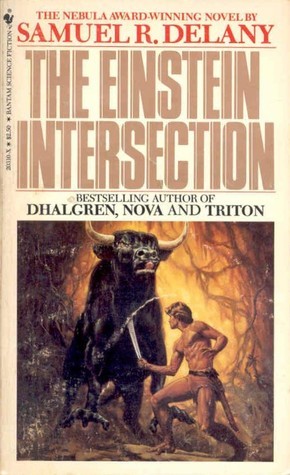
The Einstein Intersection
The intersection of Einsteinian and alien universes brings about dramatic changes for the world
147 pages, Mass Market Paperback
First published January 1, 1967
About the author
Samuel R. Delany
288 books2,332 followersSamuel Ray Delany, also known as "Chip," is an award-winning American science fiction author. He was born to a prominent black family on April 1, 1942, and raised in Harlem. His mother, Margaret Carey Boyd Delany, was a library clerk in the New York Public Library system. His father, Samuel Ray Delany, Senior, ran a successful Harlem undertaking establishment, Levy & Delany Funeral Home, on 7th Avenue, between 1938 and his death in 1960. The family lived in the top two floors of the three-story private house between five- and six-story Harlem apartment buildings. Delany's aunts were Sadie and Bessie Delany; Delany used some of their adventures as the basis for the adventures of his characters Elsie and Corry in the opening novella Atlantis: Model 1924 in his book of largely autobiographical stories Atlantis: Three Tales.
Delany attended the Dalton School and the Bronx High School of Science, during which he was selected to attend Camp Rising Sun, the Louis August Jonas Foundation's international summer scholarship program. Delany and poet Marilyn Hacker met in high school, and were married in 1961. Their marriage lasted nineteen years. They had a daughter, Iva Hacker-Delany (b. 1974), who spent a decade working in theater in New York City.
Delany was a published science fiction author by the age of 20. He published nine well-regarded science fiction novels between 1962 and 1968, as well as several prize-winning short stories (collected in Driftglass [1971] and more recently in Aye, and Gomorrah, and other stories [2002]). His eleventh and most popular novel, Dhalgren, was published in 1975. His main literary project through the late 1970s and 1980s was the Return to Nevèrÿon series, the overall title of the four volumes and also the title of the fourth and final book.
Delany has published several autobiographical/semi-autobiographical accounts of his life as a black, gay, and highly dyslexic writer, including his Hugo award winning autobiography, The Motion of Light in Water.
Since 1988, Delany has been a professor at several universities. This includes eleven years as a professor of comparative literature at the University of Massachusetts at Amherst, a year and a half as an English professor at the University at Buffalo. He then moved to the English Department of Temple University in 2001, where he has been teaching since. He has had several visiting guest professorships before and during these same years. He has also published several books of criticism, interviews, and essays. In one of his non-fiction books, Times Square Red, Times Square Blue (1999), he draws on personal experience to examine the relationship between the effort to redevelop Times Square and the public sex lives of working-class men, gay and straight, in New York City.
In 2007, Delany was the subject of a documentary film, The Polymath, or, The Life and Opinions of Samuel R. Delany, Gentleman. The film debuted on April 25 at the 2007 Tribeca Film Festival.
Delany attended the Dalton School and the Bronx High School of Science, during which he was selected to attend Camp Rising Sun, the Louis August Jonas Foundation's international summer scholarship program. Delany and poet Marilyn Hacker met in high school, and were married in 1961. Their marriage lasted nineteen years. They had a daughter, Iva Hacker-Delany (b. 1974), who spent a decade working in theater in New York City.
Delany was a published science fiction author by the age of 20. He published nine well-regarded science fiction novels between 1962 and 1968, as well as several prize-winning short stories (collected in Driftglass [1971] and more recently in Aye, and Gomorrah, and other stories [2002]). His eleventh and most popular novel, Dhalgren, was published in 1975. His main literary project through the late 1970s and 1980s was the Return to Nevèrÿon series, the overall title of the four volumes and also the title of the fourth and final book.
Delany has published several autobiographical/semi-autobiographical accounts of his life as a black, gay, and highly dyslexic writer, including his Hugo award winning autobiography, The Motion of Light in Water.
Since 1988, Delany has been a professor at several universities. This includes eleven years as a professor of comparative literature at the University of Massachusetts at Amherst, a year and a half as an English professor at the University at Buffalo. He then moved to the English Department of Temple University in 2001, where he has been teaching since. He has had several visiting guest professorships before and during these same years. He has also published several books of criticism, interviews, and essays. In one of his non-fiction books, Times Square Red, Times Square Blue (1999), he draws on personal experience to examine the relationship between the effort to redevelop Times Square and the public sex lives of working-class men, gay and straight, in New York City.
In 2007, Delany was the subject of a documentary film, The Polymath, or, The Life and Opinions of Samuel R. Delany, Gentleman. The film debuted on April 25 at the 2007 Tribeca Film Festival.
Ratings & Reviews
Friends & Following
Create a free account to discover what your friends think of this book!
Community Reviews
Displaying 1 - 30 of 717 reviews

April 29, 2012
Samuel R. Delany: scifi master, queer black boundary-crosser, critic and outsider, beloved cult figure, college professor, poet, genius.
i had a hard time with this one at first, and gave up about a third of the way in. i didn't understand what was happening and i resented the novel - it confused and frustrated me. but then i rallied, mainly due to a flash of shame at thinking that i needed my novels to be spoon-fed to me, with traditional narratives, easy answers and easily digested themes, familiar characters, obvious points to be made, the kind of simplicity that makes a novel a pleasant vacation. that's not me! i want those vacations, but i also want challenging (and ultimately exhilarating) experiences. so i swallowed my boring desire to have things carefully explained to me, and jumped back in. i'm glad i did. The Einstein Intersection is a wonderful and mind-expanding book, well worth the effort a reader puts into it.
there is fun and intrigue in figuring out what is happening, so i will spoilerize most of my synopsis:
far, far, far in the extremely far future, village herder & musician Lobey goes on an Orpheus-like quest for his slain lover...
...along the way he meets the very complicated badass Spider, the sweet and nonchalant prince-in-exile Greeneye, the chameleonic object of everyone's desire Dove, and Lobey's terrible nemesis, architect of his quest: the vicious, scheming, mocking, murderous little red-haired psychic child, Kid Death.
the novel is about identity and difference... music and pop culture... great potential and great change... death and un-death... love and hate... city vs. country... sex and procreation... the author's own story and his personal goals in writing... how myths can control history and how new myths can be made, old myths transformed... it is about a quest to conquer death and to understand the nature of life. Delany's writing takes the jazzy, loose-limbed, seemingly improvisational New Wave SciFi approach as a launching point... and so the language can take the form of flat and resolutely masculine commentary pitched straight down the middle, and then shift effortlessly into iridescent bubbles of delicate prose, blown from a child's toy. Lobey is an appealingly down-to-earth protagonist, a backwoods country hayseed abroad in both open spaces and treacherous city... and he is also a nearly unknowable being, clear in motive yet obscure and mysterious in his strange abilities and potential to change the world around him and perhaps the future itself. the novel manages to be so many things at different times, and sometimes all at once: sardonic, wise, nihilistic, hopeful, ambiguous, concrete... creepily inexplicable and perfectly rational. it is a marvelously unique experience.
i had a hard time with this one at first, and gave up about a third of the way in. i didn't understand what was happening and i resented the novel - it confused and frustrated me. but then i rallied, mainly due to a flash of shame at thinking that i needed my novels to be spoon-fed to me, with traditional narratives, easy answers and easily digested themes, familiar characters, obvious points to be made, the kind of simplicity that makes a novel a pleasant vacation. that's not me! i want those vacations, but i also want challenging (and ultimately exhilarating) experiences. so i swallowed my boring desire to have things carefully explained to me, and jumped back in. i'm glad i did. The Einstein Intersection is a wonderful and mind-expanding book, well worth the effort a reader puts into it.
there is fun and intrigue in figuring out what is happening, so i will spoilerize most of my synopsis:
far, far, far in the extremely far future, village herder & musician Lobey goes on an Orpheus-like quest for his slain lover...
...along the way he meets the very complicated badass Spider, the sweet and nonchalant prince-in-exile Greeneye, the chameleonic object of everyone's desire Dove, and Lobey's terrible nemesis, architect of his quest: the vicious, scheming, mocking, murderous little red-haired psychic child, Kid Death.
the novel is about identity and difference... music and pop culture... great potential and great change... death and un-death... love and hate... city vs. country... sex and procreation... the author's own story and his personal goals in writing... how myths can control history and how new myths can be made, old myths transformed... it is about a quest to conquer death and to understand the nature of life. Delany's writing takes the jazzy, loose-limbed, seemingly improvisational New Wave SciFi approach as a launching point... and so the language can take the form of flat and resolutely masculine commentary pitched straight down the middle, and then shift effortlessly into iridescent bubbles of delicate prose, blown from a child's toy. Lobey is an appealingly down-to-earth protagonist, a backwoods country hayseed abroad in both open spaces and treacherous city... and he is also a nearly unknowable being, clear in motive yet obscure and mysterious in his strange abilities and potential to change the world around him and perhaps the future itself. the novel manages to be so many things at different times, and sometimes all at once: sardonic, wise, nihilistic, hopeful, ambiguous, concrete... creepily inexplicable and perfectly rational. it is a marvelously unique experience.

Read
January 31, 2021
As Tracy Chevalier's Girl with a Pearl Earring is a historical novel, so Samuel R. Delany's The Einstein Intersection is a mythic novel.
This to say, when readers click into the world of Johannes Vermeer and 17th Century Delft, Holland, they are poised to enjoy Girl, so if you can click into the world of myth, you'll definitely take to Delany's Einstein Intersection.
Personally, I felt a deep connection with The Einstein Intersection, which is not too terribly surprising since both Joseph Campbell and Carl Jung are among my all-time favorites. I even purchased the hardback edition with a leather cover to get closer to the powerful mythic vibe.
What particularly struck me is how much mythological material Delany packs into just 150 pages. Most appropriate since, unlike historical novels which nearly always benefit by more history, more facts, more detail, more pages, a mythic novel will be strengthened by compression, by fewer pages. Jumping to a number of the tale's major features and themes, we have:
A Hero's Journey
Our main character is a lad of twenty-three by the name of Lobey, called Lo Lobey in his village to denote both gender (male) and status (functional or "norm"). Lobey tells us he's ugly, has a big nose, gray eyes, spun brass for hair, figure like a bowling pin, toes as long as his fingers. Lobey plays his flute/machete, an instrument with twenty holes (we can infer Lobey plays with both his fingers and toes). The novel is, in effect, what Joseph Campbell termed "The Hero's Journey," as we follow Lobey on his adventures beyond his village to his eventual arrival in the city.
Samuel R. Delany composed this short novel in his early twenties and Lobey's tale is punctuated by Delany's journal entries back in those years when the young author traveled across the islands of Greece and throughout the Middle East.
Humans and Aliens
"We are worn out with trying to be human, Lobey." So speaks an older man. One of the most quizzical aspects of the novel: we're reading the saga of a race of outer space aliens who have traveled to our planet thousands of years after humans have become extinct, probably the consequence of nuclear holocaust. These aliens have taken human form, including taking on the entire range of our human emotions and desires.
Curiously, each time I read the novel, I had the lingering suspicion everyone is, in fact, human, that perhaps the "we're all outer space aliens" was a myth created as a survival technique. However, and this is the important point in my judgement, since we're reading a mythic novel - IT DOESN'T MATTER! That's right, since we're in the world of myth, it doesn't matter one fig if they are humans or aliens.
Greek Mythology, One
"In the older story Ringo was called Orpheus. He too was torn apart by screaming girls." Lobey has lost his beloved Friza. A village elder relates a story mingling elements of the Beatles and the ancient myth of Orpheus. She urges Lobey to take on the role of Orpheus to seek out his Eurydice. And like Orpheus, Lobey is to draw on the power of music as he journeys forth.
Greek Mythology, Two
"The computer whistled a few notes of one of the ancient tunes, some chorus from Carmen. The bull-beast glanced at it uncomprehending." Oh, wow! Lobey is a hunter and one of his encounters is a postmodern reenactment of the myth of Theseus and the Minotaur in the labyrinth. And to add special spice, at the end of one underground tunnel, Lobey also has the opportunity to ask questions of a computer from those ancient human days.

Language, Signs and Symbols
Another intriguing dimension of the story: how words and symbols can remain the same or change over the course of time depending on social and cultural context. Einstein Intersection has a strong 1960s counterculture vibe. Sure, those old myths play themselves out again and again, but each new generation can add zip and sparkle.
Spiderman
In his odyssey, Lobey meets Spider and learns the skills of a dinosaur herdsman, not the least of which is how to ride a dinosaur. For me, this section of the tale takes on the quality of magical mystery tour. Spider assumes the role of a spiritual friend and teacher that each one of us needs as we travel from our village to realms unknown. Is Spider a new variation on comic book hero Spiderman? Such an interesting question I wouldn't want to spoil with an answer.
Juicy Quotes
Love is something which dies and when dead it rots and becomes soil for a new love...Thus in reality there is no death in love. - Par Lagerkvist/The Dwarf
In addition to excepts from his travel journals, Delany sprinkles in delectable quotes like the one above, quotes from James Joyce's Finnegan's Wake to Bob Dylan's Highway 61 Revisited.
Kid Death
What's the difference between Kid Death and Billy the Kid? How will Lobey combat his formidable opponent? For Samuel R. Delany to tell.
Music
"The finger that had pressed my hand now touched my lips. She pouted for silence. With her other hand she lifted my sword. "Play Lobey?""
Music and love, love and music - together forever. Even Spider whistles Kodaly's Sonata for Unaccompanied Cello.
Time for you to join in and read The Einstein Intersection.

Samuel R. Delany, age 23 - photo taken at the time when the author wrote The Einstein Intersection

October 25, 2014
I would be a liar if I said I could map out the plot to this novel in any kind of linear fashion. One read through is definitely not enough. So, is it even permissible to give the book my highest rating when I cannot, admittedly, lay the plot out in a plain diagram for you?
Oh, heck yes!
This book will play tricks with your mind, no doubt. But if you enjoy strange dreams that hold their own internal logic - unexplainable in the waking world, but somehow making perfect sense to your sleeping self - you might just love this novella. When I finished it, I felt like I had just woken up from a very deep, sad, meaningful dream, still slightly intoxicated and a bit confused.
I even struggle to clearly outline who or what the main antagonist, Kid Death, is. I seriously considered the following options as I read . . .
1. Alternate personality of Lobey, the main character
2. Computer generated "being" enabled by ancient humans
3. Supernatural being
4. Result of bad head wound to Lobey
. . . and concluded that none of them were correct, though each of them could have been.
And this seems to be at the heart of what Delany has written here: A Godelian "possibility space" that cannot be deciphered from within, but must be understood on an intuitive, subconscious level by the reader, who is completely outside of the character's possibility space. The reader is, in essence, the "Einstein Intersection," encompassing the possible limits of what the characters, plot, and setting fundamentally are because she or he is beyond the limits of the internal understanding of those in the book. Though this can be the case for just about any book, Delany is particularly deft at getting the reader "into" the book and world, through the use of bread crumbs strung along to pull the reader "out" of their own metafictional reality, convincing the reader that she or he can understand the book's world on its own terms. Again, though, the reader, being a real human being, is, in reality, above all that and is capable of objectifying the text as a piece of fiction. This doesn't mean that the reader will or can fully understand what is "going on," because that would imply that the reader fully encompasses what is in Samuel R. Delany's head. Rather, reading the novel is a lot like having a conversation with a native speaker of a foreign language that one is in the early stages of learning: The reader "understands" some of the vocabulary and the easier stretches of grammar, without knowing the nuances of the language and, most importantly, without knowing what the speaker is feeling or thinking in any meaningful way.
But this does not mean that there aren't connections being made. Some aspects of the conversation are carried from one person to the other by way of the subconscious absorption via context, others by the intuitive reading of body language; communication that is not formally spoken or, in the case of reading Delany's novel, the evocation of feelings and thoughts, some rather complex, that arise from the author's prose. In other words, I can't get into Delany's head, but I can have some notion of what he's getting at, regardless of whether I fully understand the entirety at once or not.
What, then, do I think Delany is getting at with The Einstein Intersection? I think he's getting at the tenderness of human longing and the co-mingled loneliness and pride in being "different". I think he's sharing, on a very visceral level, how lonely one often feels when one is not "in the norm" but acknowledging that walking alone can be, in some small way, a victory march over "normalcy". Lobey, the main character is, if nothing else, vulnerable and, to some extent, innocent. But he is also powerful, able to plunge through death and hell for the sake of (misplaced? spurned?) love.
That's a story worth struggling to understand.
Oh, heck yes!
This book will play tricks with your mind, no doubt. But if you enjoy strange dreams that hold their own internal logic - unexplainable in the waking world, but somehow making perfect sense to your sleeping self - you might just love this novella. When I finished it, I felt like I had just woken up from a very deep, sad, meaningful dream, still slightly intoxicated and a bit confused.
I even struggle to clearly outline who or what the main antagonist, Kid Death, is. I seriously considered the following options as I read . . .
1. Alternate personality of Lobey, the main character
2. Computer generated "being" enabled by ancient humans
3. Supernatural being
4. Result of bad head wound to Lobey
. . . and concluded that none of them were correct, though each of them could have been.
And this seems to be at the heart of what Delany has written here: A Godelian "possibility space" that cannot be deciphered from within, but must be understood on an intuitive, subconscious level by the reader, who is completely outside of the character's possibility space. The reader is, in essence, the "Einstein Intersection," encompassing the possible limits of what the characters, plot, and setting fundamentally are because she or he is beyond the limits of the internal understanding of those in the book. Though this can be the case for just about any book, Delany is particularly deft at getting the reader "into" the book and world, through the use of bread crumbs strung along to pull the reader "out" of their own metafictional reality, convincing the reader that she or he can understand the book's world on its own terms. Again, though, the reader, being a real human being, is, in reality, above all that and is capable of objectifying the text as a piece of fiction. This doesn't mean that the reader will or can fully understand what is "going on," because that would imply that the reader fully encompasses what is in Samuel R. Delany's head. Rather, reading the novel is a lot like having a conversation with a native speaker of a foreign language that one is in the early stages of learning: The reader "understands" some of the vocabulary and the easier stretches of grammar, without knowing the nuances of the language and, most importantly, without knowing what the speaker is feeling or thinking in any meaningful way.
But this does not mean that there aren't connections being made. Some aspects of the conversation are carried from one person to the other by way of the subconscious absorption via context, others by the intuitive reading of body language; communication that is not formally spoken or, in the case of reading Delany's novel, the evocation of feelings and thoughts, some rather complex, that arise from the author's prose. In other words, I can't get into Delany's head, but I can have some notion of what he's getting at, regardless of whether I fully understand the entirety at once or not.
What, then, do I think Delany is getting at with The Einstein Intersection? I think he's getting at the tenderness of human longing and the co-mingled loneliness and pride in being "different". I think he's sharing, on a very visceral level, how lonely one often feels when one is not "in the norm" but acknowledging that walking alone can be, in some small way, a victory march over "normalcy". Lobey, the main character is, if nothing else, vulnerable and, to some extent, innocent. But he is also powerful, able to plunge through death and hell for the sake of (misplaced? spurned?) love.
That's a story worth struggling to understand.

May 16, 2013
The Einstein Intersection: New Wave SF with style but story lacks discipline
Originally posted at Fantasy Literature
It doesn't get any more New Wave SF than this very slim 1968 Nebula-winning novel (157 pages), and it's hard to imagine anything like this being written today. It's a mythical retelling of the Orpheus and Eurydice story in a far-future Earth populated by the mutated remnants of humanity.
Being a Delany book, the writing is disjointed, jazzy, lyrical, playful, and tantalizing. The surface events are fairly obscure, but it's clear that the real narrative is buried beneath, and in case you didn't catch on, every chapter has several obscure (and fairly pretentious) quotes from intellectuals, not least of all the author himself, who inserts between chapters snippets of his journals from his artistic travels in the Mediterranean while writing this book, in classic meta-fiction style. Even in a longer book I’d view this literary device as fairly self-indulgent, but when the entire story is 157 pages, it’s seems downright insulting to the reader. It’s very clear that reader expectations and tastes have changed dramatically in the last half century.
The plot, to be charitable, involves Lo-Lobey, a humanoid mutant in the far future who sounds more like a Neanderthal with great brute strength but limited brain capacity. He is a musician who plays his sword like a flute, and when his love Friza disappears one day, he sets out on a quest to find her. His nemesis is a fearful super-being called Kid Death, a mutant with the power to kill seemingly at will who is intent on wiping out other mutants (which makes you wonder why he doesn’t dispatch them all with a flick of the wrist).
One of the key themes of the book is the mythical overtones of the Lo-Lobey’s Orpheus-like quest into the underworld, and by far the most amazing and intense part of the book is the extended sequence in which Lo-Lobey hunts down a massive minotaur underground and battles him. The writing is fantastic and if the book had been able to sustain more passages like this, I would have liked the novel much more. As it is, I felt that was the high point and the narrative collapsed afterward.
The other major theme is mutation as a metaphor for being “different”, and when we consider that Delany himself was a gay black poet growing up in Harlem, that makes sense. He married high-school classmate poet Marilyn Hacker after high school, but they experimented with polygamy and had affairs with both men and women, and Marilyn later declared herself lesbian after their divorce. So it’s fair to say Delany would consider himself different. The underlying theme of the story also strongly identifies with the mutants, and at the end of the story Lo-Lobey realizes that instead of imitating the traditions of the extinct human race, the aliens (for that is what they are) need to embrace their differences and live on their own terms. This may make sense thematically, but to shoehorn such a complex idea into the fragile vessel of this story is really over-reaching in my opinion.
Nonetheless, it's hard to believe this book won the Nebula and was nominated for the Hugo, since it wouldn't even get a consideration now and might only count as a novella. I wish I could have been in on the award committee deliberations. There must have been an old-guard group supporting Golden Age writers, and a much younger, hipper, coffee-house social activist group on the other side, locked in a deadly struggle for supremacy. Tracking the Hugo and Nebula winners through past decades is a fascinating barometer of the changing times and SF readership, something that an MA thesis could be devoted to.
Originally posted at Fantasy Literature
It doesn't get any more New Wave SF than this very slim 1968 Nebula-winning novel (157 pages), and it's hard to imagine anything like this being written today. It's a mythical retelling of the Orpheus and Eurydice story in a far-future Earth populated by the mutated remnants of humanity.
Being a Delany book, the writing is disjointed, jazzy, lyrical, playful, and tantalizing. The surface events are fairly obscure, but it's clear that the real narrative is buried beneath, and in case you didn't catch on, every chapter has several obscure (and fairly pretentious) quotes from intellectuals, not least of all the author himself, who inserts between chapters snippets of his journals from his artistic travels in the Mediterranean while writing this book, in classic meta-fiction style. Even in a longer book I’d view this literary device as fairly self-indulgent, but when the entire story is 157 pages, it’s seems downright insulting to the reader. It’s very clear that reader expectations and tastes have changed dramatically in the last half century.
The plot, to be charitable, involves Lo-Lobey, a humanoid mutant in the far future who sounds more like a Neanderthal with great brute strength but limited brain capacity. He is a musician who plays his sword like a flute, and when his love Friza disappears one day, he sets out on a quest to find her. His nemesis is a fearful super-being called Kid Death, a mutant with the power to kill seemingly at will who is intent on wiping out other mutants (which makes you wonder why he doesn’t dispatch them all with a flick of the wrist).
One of the key themes of the book is the mythical overtones of the Lo-Lobey’s Orpheus-like quest into the underworld, and by far the most amazing and intense part of the book is the extended sequence in which Lo-Lobey hunts down a massive minotaur underground and battles him. The writing is fantastic and if the book had been able to sustain more passages like this, I would have liked the novel much more. As it is, I felt that was the high point and the narrative collapsed afterward.
The other major theme is mutation as a metaphor for being “different”, and when we consider that Delany himself was a gay black poet growing up in Harlem, that makes sense. He married high-school classmate poet Marilyn Hacker after high school, but they experimented with polygamy and had affairs with both men and women, and Marilyn later declared herself lesbian after their divorce. So it’s fair to say Delany would consider himself different. The underlying theme of the story also strongly identifies with the mutants, and at the end of the story Lo-Lobey realizes that instead of imitating the traditions of the extinct human race, the aliens (for that is what they are) need to embrace their differences and live on their own terms. This may make sense thematically, but to shoehorn such a complex idea into the fragile vessel of this story is really over-reaching in my opinion.
Nonetheless, it's hard to believe this book won the Nebula and was nominated for the Hugo, since it wouldn't even get a consideration now and might only count as a novella. I wish I could have been in on the award committee deliberations. There must have been an old-guard group supporting Golden Age writers, and a much younger, hipper, coffee-house social activist group on the other side, locked in a deadly struggle for supremacy. Tracking the Hugo and Nebula winners through past decades is a fascinating barometer of the changing times and SF readership, something that an MA thesis could be devoted to.

August 31, 2011
I had never read any Samuel R. Delany before, so I wasn't sure what to expect. And I don't think I was expecting this lyrical, mythical, entrancing science fiction. Delany weaves together new and old myths into a science fiction story about a race living in the ruins humans left behind, trying on their lives and living out their stories until they work through them and can finally move on to their own.
Note: The rest of this review has been withdrawn due to the changes in Goodreads policy and enforcement. You can read why I came to this decision here.
In the meantime, you can read the entire review at Smorgasbook
Note: The rest of this review has been withdrawn due to the changes in Goodreads policy and enforcement. You can read why I came to this decision here.
In the meantime, you can read the entire review at Smorgasbook

December 14, 2024
One thing I love about Delany is his refusal to cater to his readers. We are dropped, every single time, into a fully formed world and expected to figure out everything that is going on all by ourselves. We are as clueless as any other character in the story that wanders into a new place with strange customs and a history foreign to our own. Perhaps we will figure it out before they do, or we will accomplish it in tandem. Plot slowly materializes out of the fog of incomprehension. Intriguing in their own right, the chapter epigraphs here include excerpts from Delany's diary from the time he was writing the book. In these we see snatches of his process and parallels to the text manifested in his own life. It is satisfying to find more clues to Delany's personal mythology scattered across his fiction, which also frequently incorporates traditional human myths. In this novel, I saw glimmers of Delany's masterwork Dhalgren sparkling in yet another foreign landscape. Each book is another window into a fertile, untamed mind.

April 6, 2021
Short with a neat central idea. Humans have left Earth and an alien species has settled instead. They think about what humans were like as they live their lives. Not my favorite Delany but there's still plenty of what makes his writing so great. I think this one is worth coming back to later, to focus on the larger idea and not on the plot.

January 2, 2009
Psychedelic 60s SF version of the Orpheus and Eurydice myth, quite nicely done. The Orpheus character is sympathetic and well-realized, as is his demonic opponent, Kid Death. Eurydice is suitably beautiful, tragic and mysterious, but doesn't have much of a personality. Not a serious problem, however, since she's dead for most of the book.

April 6, 2021
“
’There’s just as much suspense today as there was when the first singer woke from his first song to discover the worth of the concomitant sacrifice. You don’t know, Lobey. This all may be a false note, at best a passing dissonance in the harmonies of the great rock and the great roll.’
“I thought for awhile. Then I said, ‘I want to run away.’ ”
A wild romp of a story, replete with humor, love, friendship, villainy, and not a little wisdom, Samuel R. Delany’s The Einstein Intersection is a mad mash-up of myth and mythopoeia. For instance, an entirely new mythos has taken root around none other than those lads from Liverpool, the Fab Four, the Beatles—who are universally revered as semi-legendary keepers of the mystical “great rock and great roll.” (Plus, the underrated and too oft-ignored Ringo is shown a little love here, which I for one very much appreciated).
The other ingredients in this strange brew are elements of Einstein’s special and general theories of relativity and an interesting take on Gödel’s incompleteness theorem.
Delany wrote this novel during a trip abroad in Greece and the Mediterranean when he was just 22 years old. To give some perspective, he published his first novel, The Jewels of Aptor, when he was just 19, and had already finished a full trilogy, The Fall of the Towers, by the time he was 21!
(I know—classic underachiever, right??)
The Einstein Intersection ended up winning the Nebula Award for Best Novel in 1967, deservedly, and has the unmistakable feel of a book written by a young and confident writer already beginning to manifest the creative and cerebral powers for which his later works would be justly celebrated.
The story is set on a far-future, post-apocalyptic Earth, inhabited by a (sort of?) alien species, who have taken on nearly all of the physical and social aspects of their human predecessors, occasionally encountering old but still-functioning human technology and even appropriating for themselves human ideologies, social mores, and myths (and making up some of their own along the way, as with their oddly charming Beatles mythos).
*[nerd sidebar: insofar as the “people” who populate the world of The Einstein Intersection have an almost preternatural ability to mimic human behavior and form, they strongly reminded me of the “Shadow Children” in Gene Wolfe’s classic three-part novella The Fifth Head of Cerberus, in which the Shadow Children could, to some extent, but not wholly (like the characters in The Einstein Intersection), imitate human form.]
Back to Einstein and Gödel for a moment. This is a quote from a dragon-herder (yup, there are dragons, too) named Spider, a self-described mash-up of Judas Iscariot, Pat Garret and King Minos, judging the dead at the gates of Hades and speaking thusly to our hero and narrator Lo Lobey:
“’Wars and chaoses and paradoxes ago, two mathematicians between them ended an age and began another for our hosts, our ghosts called Man. One was Einstein, who with his Theory of Relativity defined the limits of man’s perception by expressing mathematically just how far the condition of the observer influences the things he perceives.’
“‘The other was Goedel [sic], a contemporary of Einstein, who was the first to bring back a mathematically precise statement about the vaster realm beyond the limits Einstein had defined: In any closed mathematical system—you may read ‘the real world with its immutable laws of logic’—there are an infinite number of true theorems—you may read ‘perceivable, measurable phenomena’—which, though contained in the original system, can not be deduced from it—read ‘proven with ordinary or extraordinary logic.’ Which is to say, there are more things in heaven and Earth than are dreamed of in your philosophy, Horatio.’ [big up to another nice reference, this time to Billy Shakespeare, in that last bit.]”
This passage goes on awhile longer, the point being that for a piece of mere handwavium this is not just some hurriedly tossed-together dross. This is Delany spreading his wings and aiming his sights high with some pretty carefully thought-out explication. Not your usual “multiply the gihoxigogen by the ramistam and divide it all by the hapax legomenon” type bullshit.
Obviously in the end it’s all bullshit (the science, I mean, not the deeper truths explored through the fictional story and its characters). This is science fiction, after all. But I, for one, like my handwaving info-dumps given with at least a pretense to the reader’s intelligence.
Through its many twists and turns, ups and downs and in and outs, The Einstein Intersection continuously delivers the goods. And—just to put a little more meta, postmodernist topspin on an already nutty novel—Delany occasionally inserts passages from his own personal diary (although… the integrity of said “diary entries” may or may not be ruse on Delany’s part, inserted only to add further psychological depth. I for one remain unconvinced that these entries are, in fact, “genuine.” And of course, this would only serve to punch up the meta-ness of it all a notch or two (a lá Borges, fittingly), in which Delany reveals to the reader, via his contemporaneous “diary,” his inner thoughts about the book—referred to in the journal entries by its acronym, “TEI” [The Einstein Intersection]. These thoughts are nominally about the novel’s development and eventual denouement, and its protagonist and antagonist, Lo Lobey and Kid Death, respectively. But much of the time these entries are simply Delany’s reflections on the beauty of the places he’s traveling through, in Greece and elsewhere in the eastern Mediterranean; or of attractions he has yet to see; or just random thoughts on life, time, and the joys of travel. These brief sections are even given elaborate sign-offs, e.g. “Author’s Journal/Mykonos, December 1965.”
So, Delany was already dreaming up and deploying literary devices with which he could deconstruct and subvert the sclerosed structures and strictures of the traditional sff novel, shuffling the pieces around and putting them back together in his own new and unique configurations. And people dug it—hell, people are still digging it!
The story dips into Greek mythology a good deal—primarily the Theseus and Orpheus myths—so it’s helpful to have a Bulfinch, Graves, Hamilton, Fry, or (insert your favorite chronicler of Greek mythology here) book lying around. Or, you know, a smartphone.
“ We have taken over their abandoned world, and something new is happening to the fragments, something we can’t even define with mankind’s leftover vocabulary. ”
4.5 stars, only because it was too short, and thus didn’t have room enough to develop its main characters and themes.
I wanted to round down to 4 because I feel like I’ve been giving a lot of 5 star ratings lately, but what are you gonna do—try to pick out books you won’t like as much?
So, 5 stars it is.
“I thought for awhile. Then I said, ‘I want to run away.’ ”
A wild romp of a story, replete with humor, love, friendship, villainy, and not a little wisdom, Samuel R. Delany’s The Einstein Intersection is a mad mash-up of myth and mythopoeia. For instance, an entirely new mythos has taken root around none other than those lads from Liverpool, the Fab Four, the Beatles—who are universally revered as semi-legendary keepers of the mystical “great rock and great roll.” (Plus, the underrated and too oft-ignored Ringo is shown a little love here, which I for one very much appreciated).
The other ingredients in this strange brew are elements of Einstein’s special and general theories of relativity and an interesting take on Gödel’s incompleteness theorem.
Delany wrote this novel during a trip abroad in Greece and the Mediterranean when he was just 22 years old. To give some perspective, he published his first novel, The Jewels of Aptor, when he was just 19, and had already finished a full trilogy, The Fall of the Towers, by the time he was 21!
(I know—classic underachiever, right??)
The Einstein Intersection ended up winning the Nebula Award for Best Novel in 1967, deservedly, and has the unmistakable feel of a book written by a young and confident writer already beginning to manifest the creative and cerebral powers for which his later works would be justly celebrated.
The story is set on a far-future, post-apocalyptic Earth, inhabited by a (sort of?) alien species, who have taken on nearly all of the physical and social aspects of their human predecessors, occasionally encountering old but still-functioning human technology and even appropriating for themselves human ideologies, social mores, and myths (and making up some of their own along the way, as with their oddly charming Beatles mythos).
*[nerd sidebar: insofar as the “people” who populate the world of The Einstein Intersection have an almost preternatural ability to mimic human behavior and form, they strongly reminded me of the “Shadow Children” in Gene Wolfe’s classic three-part novella The Fifth Head of Cerberus, in which the Shadow Children could, to some extent, but not wholly (like the characters in The Einstein Intersection), imitate human form.]
Back to Einstein and Gödel for a moment. This is a quote from a dragon-herder (yup, there are dragons, too) named Spider, a self-described mash-up of Judas Iscariot, Pat Garret and King Minos, judging the dead at the gates of Hades and speaking thusly to our hero and narrator Lo Lobey:
“’Wars and chaoses and paradoxes ago, two mathematicians between them ended an age and began another for our hosts, our ghosts called Man. One was Einstein, who with his Theory of Relativity defined the limits of man’s perception by expressing mathematically just how far the condition of the observer influences the things he perceives.’
“‘The other was Goedel [sic], a contemporary of Einstein, who was the first to bring back a mathematically precise statement about the vaster realm beyond the limits Einstein had defined: In any closed mathematical system—you may read ‘the real world with its immutable laws of logic’—there are an infinite number of true theorems—you may read ‘perceivable, measurable phenomena’—which, though contained in the original system, can not be deduced from it—read ‘proven with ordinary or extraordinary logic.’ Which is to say, there are more things in heaven and Earth than are dreamed of in your philosophy, Horatio.’ [big up to another nice reference, this time to Billy Shakespeare, in that last bit.]”
This passage goes on awhile longer, the point being that for a piece of mere handwavium this is not just some hurriedly tossed-together dross. This is Delany spreading his wings and aiming his sights high with some pretty carefully thought-out explication. Not your usual “multiply the gihoxigogen by the ramistam and divide it all by the hapax legomenon” type bullshit.
Obviously in the end it’s all bullshit (the science, I mean, not the deeper truths explored through the fictional story and its characters). This is science fiction, after all. But I, for one, like my handwaving info-dumps given with at least a pretense to the reader’s intelligence.
Through its many twists and turns, ups and downs and in and outs, The Einstein Intersection continuously delivers the goods. And—just to put a little more meta, postmodernist topspin on an already nutty novel—Delany occasionally inserts passages from his own personal diary (although… the integrity of said “diary entries” may or may not be ruse on Delany’s part, inserted only to add further psychological depth. I for one remain unconvinced that these entries are, in fact, “genuine.” And of course, this would only serve to punch up the meta-ness of it all a notch or two (a lá Borges, fittingly), in which Delany reveals to the reader, via his contemporaneous “diary,” his inner thoughts about the book—referred to in the journal entries by its acronym, “TEI” [The Einstein Intersection]. These thoughts are nominally about the novel’s development and eventual denouement, and its protagonist and antagonist, Lo Lobey and Kid Death, respectively. But much of the time these entries are simply Delany’s reflections on the beauty of the places he’s traveling through, in Greece and elsewhere in the eastern Mediterranean; or of attractions he has yet to see; or just random thoughts on life, time, and the joys of travel. These brief sections are even given elaborate sign-offs, e.g. “Author’s Journal/Mykonos, December 1965.”
So, Delany was already dreaming up and deploying literary devices with which he could deconstruct and subvert the sclerosed structures and strictures of the traditional sff novel, shuffling the pieces around and putting them back together in his own new and unique configurations. And people dug it—hell, people are still digging it!
The story dips into Greek mythology a good deal—primarily the Theseus and Orpheus myths—so it’s helpful to have a Bulfinch, Graves, Hamilton, Fry, or (insert your favorite chronicler of Greek mythology here) book lying around. Or, you know, a smartphone.
“ We have taken over their abandoned world, and something new is happening to the fragments, something we can’t even define with mankind’s leftover vocabulary. ”
4.5 stars, only because it was too short, and thus didn’t have room enough to develop its main characters and themes.
I wanted to round down to 4 because I feel like I’ve been giving a lot of 5 star ratings lately, but what are you gonna do—try to pick out books you won’t like as much?
So, 5 stars it is.

July 28, 2016
As morning branded the sea, darkness fell away at the far side of the beach. I turned to follow it.
So ends The Einstein Intersection. My own interest in Delany may be terminated as well. The novel began as Orpheus and became Red River and ended as David Copperfield. All that without Walter Brennan. Delany lards his fiction with ideas, with theory. Unfortunately he can't stop acknowledging that. A future grimdark place where the humans have left. Mutants remain, clinging to our myths. This novel appeared to be all sprint. I do not wish to end this Delany endeavor. We shall see. 2.3 stars
So ends The Einstein Intersection. My own interest in Delany may be terminated as well. The novel began as Orpheus and became Red River and ended as David Copperfield. All that without Walter Brennan. Delany lards his fiction with ideas, with theory. Unfortunately he can't stop acknowledging that. A future grimdark place where the humans have left. Mutants remain, clinging to our myths. This novel appeared to be all sprint. I do not wish to end this Delany endeavor. We shall see. 2.3 stars

March 25, 2013
After this re-read, I have to say that this is one of the best novellas I've ever read. At least, it's within the top ten. It kept a space in my heart and mind for the last 30 years and I'm sure it'll keep a space there for thirty more. Assuming I live that long.
But being memorable is hardly a claim to true excellence. I could say it's an Orphic western featuring post-human aliens appropriating our culture, riding dragons like horses and living above ancient AI labyrinths. But that's just the spice to the tale. The core is very, very human, full of longing, then revenge, and a youthful quest to do the impossible. Or several impossibles.
And all the while, we, the reader, are balanced on a knife's edge between a deeply literal read and a full-blown metaphorical one. Or we could go the full mythological route, and this novella is full to the brim and overflowing with it.
Or we can read it simply as a fantastical adventure full of music, a psychic devil, and another knife's edge of surviving despite being "different".
No matter how one reads it, it's a rich, rich story and engaging on every level.
Should it be required reading in colleges? Yes! Should it have pride of place in your favorites bookcase? Yes!
Some things are just plain brilliant, and some things are emotionally fulfilling. And sometimes, we get both at once.
But being memorable is hardly a claim to true excellence. I could say it's an Orphic western featuring post-human aliens appropriating our culture, riding dragons like horses and living above ancient AI labyrinths. But that's just the spice to the tale. The core is very, very human, full of longing, then revenge, and a youthful quest to do the impossible. Or several impossibles.
And all the while, we, the reader, are balanced on a knife's edge between a deeply literal read and a full-blown metaphorical one. Or we could go the full mythological route, and this novella is full to the brim and overflowing with it.
Or we can read it simply as a fantastical adventure full of music, a psychic devil, and another knife's edge of surviving despite being "different".
No matter how one reads it, it's a rich, rich story and engaging on every level.
Should it be required reading in colleges? Yes! Should it have pride of place in your favorites bookcase? Yes!
Some things are just plain brilliant, and some things are emotionally fulfilling. And sometimes, we get both at once.
May 28, 2020
…it’s changing, Lobey. It’s not the same. Some people walk under the sun and accept that change, others close their eyes, clap their hands to their ears and deny the world with their tongues. Most snicker, giggle, jeer and point when they think no one else is looking—that is how the humans acted throughout their history. We have taken over their abandoned world, and something new is happening to the fragments, something we can’t even define with mankind’s leftover vocabulary. You must take its importance exactly as that: it is indefinable; you are involved in it; it is wonderful, fearful, deep, ineffable to your explanations, opaque to your efforts to see through it; yet it demands you take journeys, defines your stopping and starting points, can propel you with love and hate…
Mythologies are built on the giant, hairy, gnarled backs of the myths that came before. We live by them, die by them, or make our own.
Lo Lobey lives on radioactive Earth in the far future. Humans no longer exist. The posthuman world is filled with mutations and functionals. A quest opens up when Lobey loses a love. Decisions arise and the myths of the past mark his path through the wounded world.
Delany has a mind all his own. He writes like no one else and does not go easy on the reader. He forces you to think, to fill in the blanks, and to interpret as you will. Delany provides a challenge that alters reality and opens the mind.
Mythologies are built on the giant, hairy, gnarled backs of the myths that came before. We live by them, die by them, or make our own.
Lo Lobey lives on radioactive Earth in the far future. Humans no longer exist. The posthuman world is filled with mutations and functionals. A quest opens up when Lobey loses a love. Decisions arise and the myths of the past mark his path through the wounded world.
Delany has a mind all his own. He writes like no one else and does not go easy on the reader. He forces you to think, to fill in the blanks, and to interpret as you will. Delany provides a challenge that alters reality and opens the mind.

February 1, 2011
if neil stephenson wrote this book, it'd be 157,000,000 pages long. delany does it as a novella and somehow it contains the whole world.
i wish they'd let him keep the original title, though: a fabulous, formless darkness was much better.
i wish they'd let him keep the original title, though: a fabulous, formless darkness was much better.

September 30, 2020
”Mankind had style, baby! You may get it yet, but right now your charm is a very young thing.”
Samuel R. Delany’s Nebula Award winning novel is weird, trippy, and baffling. Delany challenges his readers from the first page, placing them into a seemingly alien environment with just enough tantalizing familiar details to amp up the confusion even more. Like a psychedelic trip, Delany slow-reveals that our protagonist and his fellows are post human, an alien race that has awkwardly inherited the scraps of humanity’s world, mythology, music, and even biological function in a far distant future, post-apocalyptic Earth where humanity long ago vanished.
Lo Lobey, the novel’s protagonist must live out one of humanity’s ancient myths, as he journeys like Orpheus to retrieve his dead lover from Kid Death. (In this, he is following other past mythic avatars of Orpheus, like Ringo Star from the Beatles Cycle.)
Delany makes you work all the way through this short novel to keep up, but rewards your effort along the way with wonderfully weird dollops of blended myth and pop culture filtered through far future, alien eyes. He also shakes things up by occasionally breaking the fourth wall, and his subtext of the persecution of outsider groups and their inherent value is even more powerful than the trippy-strange tale that delivers it.
Samuel R. Delany’s Nebula Award winning novel is weird, trippy, and baffling. Delany challenges his readers from the first page, placing them into a seemingly alien environment with just enough tantalizing familiar details to amp up the confusion even more. Like a psychedelic trip, Delany slow-reveals that our protagonist and his fellows are post human, an alien race that has awkwardly inherited the scraps of humanity’s world, mythology, music, and even biological function in a far distant future, post-apocalyptic Earth where humanity long ago vanished.
Lo Lobey, the novel’s protagonist must live out one of humanity’s ancient myths, as he journeys like Orpheus to retrieve his dead lover from Kid Death. (In this, he is following other past mythic avatars of Orpheus, like Ringo Star from the Beatles Cycle.)
Delany makes you work all the way through this short novel to keep up, but rewards your effort along the way with wonderfully weird dollops of blended myth and pop culture filtered through far future, alien eyes. He also shakes things up by occasionally breaking the fourth wall, and his subtext of the persecution of outsider groups and their inherent value is even more powerful than the trippy-strange tale that delivers it.

do-not-have
June 22, 2007Dude. I was about 3 chapters into this book and some guy flat out stole this book from me.
Nastyguy: 'Do you mind if I read this?'
Me: 'Yes, I'm reading it.'
Nastyguy: 'Can I take a look at it at least.'
Me: 'Ummm, okay. But I'm in the middle of it, so don't leave with it.'
Nastyguy: 'Okay.'
-- About 2 hours later, after Nastyguy leaves ---
Me: (searching all over) Did anybody see the book I was reading?
Sister: I think I saw Nastyguy leaving with it. He said you let him borrow it.
Me: Awwwh, #@*%!
It must be so good it makes people steal. That's what I get for putting it down.
Nastyguy: 'Do you mind if I read this?'
Me: 'Yes, I'm reading it.'
Nastyguy: 'Can I take a look at it at least.'
Me: 'Ummm, okay. But I'm in the middle of it, so don't leave with it.'
Nastyguy: 'Okay.'
-- About 2 hours later, after Nastyguy leaves ---
Me: (searching all over) Did anybody see the book I was reading?
Sister: I think I saw Nastyguy leaving with it. He said you let him borrow it.
Me: Awwwh, #@*%!
It must be so good it makes people steal. That's what I get for putting it down.

June 18, 2021
The Einstein Intersection was one of the most successful New Wave novels, and was awarded the Nebula for the best of the year in 1967. Delany took some of the most common tropes of traditional science fiction (post holocaust mutation, for example), mixed in a healthy dollop of classic mythology (particularly the Orpheus/Eurydice story), broke the fourth wall a bit with notes on writing the book, and ended with a good science fiction story that was really about something else entirely, the feeling of being "the other" and how one can cope with it. It's title is about the intersection of philosophy and science; characters like Kid Death and Lo Lobey were unlike anything that had been seen in the field at the time. It's still a very rich and challenging read.

December 19, 2007
This is the only book by Delany that I've ever cared for & I love it. He blends SF & mythology, a post-apocalyptic world filled with wonders & monsters. Our hero journeys through this world, discovering more about it, himself & the human race. He shows mankind's greatest failures & achievements through the eyes of something else. A very interesting read & re-read.
I read it again & although the words are very familiar after all these years, still they move me in different ways & make me think of different things. Certainly a classic.
I read it again & although the words are very familiar after all these years, still they move me in different ways & make me think of different things. Certainly a classic.

March 5, 2020
There's no denying Delany's enormous influence on the genre, yet I always seem to have trouble connecting to his writing. Perhaps my powers of imagination are lacking, or my ability to see beyond to something deeper, or my skill in piecing together the puzzles he lays out, but reading him always seems like a chore. I find his style irritatingly imprecise, disjointed and illusory, falling short of a compelling narrative. My two cents.
May 9, 2018
This is one of my favorite books of all time, rather odd since I've never cared for anything else that Delany wrote. None of his other books hooked me at all & I've tried several over the decades quite a few times. I've often wondered at his popularity until I found out he's black & gay (Who cares?) so put it down to political correctness especially after attempting to read Through the Valley of the Nest of Spiders which is such gross gay porn that I wonder how anyone could get through more than a few pages.
Well, even a broken clock is right occasionally, but he made a true masterpiece with thisstory book. No, it isn't really a story, so much as a mood piece filled with great imagery and some of the best bits to ponder. I'll never say I understood them, but I enjoy them all the same. It's myth-SF-fantasy. A futuristic Orpheus clashing with wild West & other myths along the way.
While Stefan Rudnicki does a great job narrating this, I don't think audio is the best format for any save a first read. It would be great for that, but it requires subsequent reads in text format. In Fahrenheit 451 a character says that one of the best things about books is that you can shut them when you need to think. True & this book requires that. Sometimes my hands were busy, so I couldn't pause fast enough. Fleeting thoughts & connections are sometimes too fragile to survive even a few seconds more.
Still, I loved it & I think it's a great addition to my audio library. Highly recommended.
Well, even a broken clock is right occasionally, but he made a true masterpiece with this
While Stefan Rudnicki does a great job narrating this, I don't think audio is the best format for any save a first read. It would be great for that, but it requires subsequent reads in text format. In Fahrenheit 451 a character says that one of the best things about books is that you can shut them when you need to think. True & this book requires that. Sometimes my hands were busy, so I couldn't pause fast enough. Fleeting thoughts & connections are sometimes too fragile to survive even a few seconds more.
Still, I loved it & I think it's a great addition to my audio library. Highly recommended.

December 30, 2013
This is a really short book and I didn't really care for it, so I'm forgoing my usual format to just include a few words.
I've never read anything by Mr. Delany before, and if this is an indication of his work, I likely won't read anything else.
My understanding however is that this is one of his earlier works, so maybe I'll like his later works better.
This was the January 2014 pick for Sword & Laser and I've had pretty good luck with the Sci-Fi picks in 2013, sadly the trend hasn't continued to kick off 2014.
I read this all in one sitting in an airport/on the plane to Vegas. I'm now trying to recall what I liked/disliked about this story a long sleep deprived weekend later.
My only recollections were that "thankfully this is short" and "I'm glad I'm done with this." This is really a story about the journey and not the destination I guess, but I just found it strange and mostly pointless. There are universal themes of love and loss in a post-apocalyptic type setting.
The one highlight for me was the ancient lore of "The Beatles". They are one of my favorite bands so the notion of them being used as some kind of parable was amusing to me. I will however point out that Ringo DID sing some Beatles songs albeit much fewer than the other three. I'm not sure if Mr. Delany did that on purpose because of bad information discovered/passed down from generation to generation or if he simply got it wrong. It still irks me though.
Overall I think this is one of those books whose enjoyment will vary largely from person to person. It just really didn't work for me.
I've never read anything by Mr. Delany before, and if this is an indication of his work, I likely won't read anything else.
My understanding however is that this is one of his earlier works, so maybe I'll like his later works better.
This was the January 2014 pick for Sword & Laser and I've had pretty good luck with the Sci-Fi picks in 2013, sadly the trend hasn't continued to kick off 2014.
I read this all in one sitting in an airport/on the plane to Vegas. I'm now trying to recall what I liked/disliked about this story a long sleep deprived weekend later.
My only recollections were that "thankfully this is short" and "I'm glad I'm done with this." This is really a story about the journey and not the destination I guess, but I just found it strange and mostly pointless. There are universal themes of love and loss in a post-apocalyptic type setting.
The one highlight for me was the ancient lore of "The Beatles". They are one of my favorite bands so the notion of them being used as some kind of parable was amusing to me. I will however point out that Ringo DID sing some Beatles songs albeit much fewer than the other three. I'm not sure if Mr. Delany did that on purpose because of bad information discovered/passed down from generation to generation or if he simply got it wrong. It still irks me though.
Overall I think this is one of those books whose enjoyment will vary largely from person to person. It just really didn't work for me.


October 19, 2015
Interesantna postavka, veoma lepa proza na momente i sa finim ritmom price. Ali na zalost meni je sve ovo bilo dosta konfuzno i priznajem da na kraju polovinu stvari najverovatnije nisam skapirao. Ako sam uopste nesto skapirao :P
Moracu kasnije jos jednom da procitam pa mozda bude drugacija ocena.
Moracu kasnije jos jednom da procitam pa mozda bude drugacija ocena.

June 7, 2018
O ciudățenie de carte în stilul new-wave. foarte mainestream. Ca roman sf, nu e mare lucru de capul lui - 2,3 stele. Ca roman de graniță e genial, provocator și cu adevărat speculativ. Amestecând mitul lui Orfeu și diverse trimiteri pop, realitatea din viitorul lui Delany e stranie, poetică și deseori inaccesibilă.
Suntem la multe mii de ani de prezentul nostru, planeta noastră a fost părăsită de oameni sau omenirea a dispărut (nu știm sigur), dar e locuită de o rasă extraterestră mutantă. Comunități mici, unele mai mari, aparent urbane. Însă totul se desfășoară pe ruinele civilizației umane. Lo Lobey (particula lo înseamnă că e un membru funcțional al comunității, altfel ar sta închis într-o Kușcă) cântă la sabia sa și păzește animalele ptr mica lui comunitate. Iubita lui, care simte ca și el că e diferită cumva de ceilalți, moare în mod misterios și Lo Lobey pornește într-o călătorie inițiatică pentru a o răzbuna și poate a o reînvia (nu știm cum, însă trimiterea către Euridice e clară).
Călătoria e presărată cu diverse aventuri (de pildă, înfruntarea minotaurului într-un labirint subteran) și Lo Lobey e nevoit să-și învingă teama, dar și să îl confrunte pe Puștiul Moarte, aparent autor al mai multor crime, a cărui victimă a fost și Friza, iubita lui Lo Lobey. Deși există un fir narativ, miza cărții pare să fie tocmai în a reconstrui miturile omenirii și nu în a da viață unor personaje extraterestre. Miturile și poveștile pop sunt refăcute, dar distorsionat, deformat, asemeni formei mutante a rasei care locuiește planeta.
Clar, roman de recitit.
Suntem la multe mii de ani de prezentul nostru, planeta noastră a fost părăsită de oameni sau omenirea a dispărut (nu știm sigur), dar e locuită de o rasă extraterestră mutantă. Comunități mici, unele mai mari, aparent urbane. Însă totul se desfășoară pe ruinele civilizației umane. Lo Lobey (particula lo înseamnă că e un membru funcțional al comunității, altfel ar sta închis într-o Kușcă) cântă la sabia sa și păzește animalele ptr mica lui comunitate. Iubita lui, care simte ca și el că e diferită cumva de ceilalți, moare în mod misterios și Lo Lobey pornește într-o călătorie inițiatică pentru a o răzbuna și poate a o reînvia (nu știm cum, însă trimiterea către Euridice e clară).
Călătoria e presărată cu diverse aventuri (de pildă, înfruntarea minotaurului într-un labirint subteran) și Lo Lobey e nevoit să-și învingă teama, dar și să îl confrunte pe Puștiul Moarte, aparent autor al mai multor crime, a cărui victimă a fost și Friza, iubita lui Lo Lobey. Deși există un fir narativ, miza cărții pare să fie tocmai în a reconstrui miturile omenirii și nu în a da viață unor personaje extraterestre. Miturile și poveștile pop sunt refăcute, dar distorsionat, deformat, asemeni formei mutante a rasei care locuiește planeta.
Clar, roman de recitit.

July 3, 2023
This is a strange book which I would classify somewhere with Lord of Light as a strange 60s-ish attempt at looking backwards at an extinct earth via mythology. I am not sure it succeeds as I didn't find the characters or the narrative very convincing. I know it convinced the Nebula voters back in the day, but I found it dated and a bit of a slog. There are a few interesting ideas here with an early attempt at AI, but I think there is a lot better sci-fi out there nowadays as this is not an essential book even coming from the legendary Delany.

September 23, 2023
Well, that was definitely trippy.
I went into it with an attitude about all the reviews that complain how hard it is to follow and how the story is ultimately disappointing. I can definitely see that, but for me the weird outweighs the bad.
It's structurally weird---the chapters all start with really lengthy quotes from other works, and then occasionally there is a section of the author's writing journal interspersed breaking the fourth wall in a jarring but interesting way.
The tale itself is a weird sort of future myth built on ancient (to us) human myths and contemporary-to-us-but-ancient-to- them stories. The language is mostly very mytho-poetic and gorgeous, making the occasional reference to Ringo Starr and computers and 45s all the more weird.
And there is a whole cast of weird sci-fi and fantastic characters, laugh out loud funny moments, extremely interesting (and weird!) gender stuff, and....dragons. Our hero spends about a third of the book herding dragons.
This book is like a good acid trip---the best thing to do is drink plenty of water and just accept that this is a different reality from what you are used to. Mostly it's head- spinning and delightful.
The experience of reading it reminded me of watching my favorite animated series, Adventure Time---which I've also likened to a good acid trip. If you can let go of your notions of what sci-fi should be, you will be richly rewarded.
I went into it with an attitude about all the reviews that complain how hard it is to follow and how the story is ultimately disappointing. I can definitely see that, but for me the weird outweighs the bad.
It's structurally weird---the chapters all start with really lengthy quotes from other works, and then occasionally there is a section of the author's writing journal interspersed breaking the fourth wall in a jarring but interesting way.
The tale itself is a weird sort of future myth built on ancient (to us) human myths and contemporary-to-us-but-ancient-to- them stories. The language is mostly very mytho-poetic and gorgeous, making the occasional reference to Ringo Starr and computers and 45s all the more weird.
And there is a whole cast of weird sci-fi and fantastic characters, laugh out loud funny moments, extremely interesting (and weird!) gender stuff, and....dragons. Our hero spends about a third of the book herding dragons.
This book is like a good acid trip---the best thing to do is drink plenty of water and just accept that this is a different reality from what you are used to. Mostly it's head- spinning and delightful.
The experience of reading it reminded me of watching my favorite animated series, Adventure Time---which I've also likened to a good acid trip. If you can let go of your notions of what sci-fi should be, you will be richly rewarded.

January 11, 2014
I don't know what to say about this book. It very obviously wasn't for me. It was obtuse. It regularly put me to sleep, even though it was only ~130 pages long. The best part of the book was the introduction written by Neil Gaiman, and even then....I felt like he set the book up to fail. Because what he painted was not what this book was. It was myth, metaphor, an attempt at telling a story but telling it in a way that was purposely confusing. I dunno, I guess I'm not smart enough to get it. I recognized classic characters from various myths around the world, but I still couldn't wrap my head around it. I hope the next S&L pick is better, this wasn't a great start to 2014.

August 5, 2018
This book wasn’t very interesting to me. I was on the plane coming home and it put me to sleep multiple times. It had a few interesting parts but overall a complete bore.

July 14, 2023
Check out my full, spoiler free, video review HERE. Experimental, new wave sci fi that didn't work for me. I hope I like Chips other works more.

October 15, 2015
Kako dosad nisam čuo za Samuela R. Delanyja?!
Čitao sam Sirijuse, Future, poneki roto (sf) roman, pa čak i Politikin Zabavnik odakle se i danas sjećam dvije priče, jedna o tome kako pakao može biti i previše dobre stvari, gdje glavni lik do vjeke vjekova mora gledati svoj omiljeni film sa Jane Fondom, i druga o prljavoj masnoj krpi koja je stojala dugo iza radijatora i onda oživjela, ta me se priča toliko dojmila da sam odmah potom pospremio sobu.
Gaiman u odličnom predgovoru kaže da je autor roman htio nazvati A Fabulous, Formless Darkness i to bi svakako bilo bolje od ovog pulp naslova. Teško mi je napisati nešto smisleno o ovom originalnom, kratkom, ali kompleksnom i vrlo čudnom romanu.
Uglavnom da krenemo redom...
Sviđa mi se stil pisanja, sa malo riječi kaže puno. Opisi i usporedbe su zanimljivi (npr: "Spider was seven feet of bone slipped into six feet of skin. Tightly."). Sviđa mi se i ubacivanje pop referenci i što je glazba bitan dio i kako je zanimljivo upletena u radnju. Opisi glazbenih improvizacija su majstorski - zamišljao sam si Iana Andersona (iz Jethro Tulla) koji svira i nogama (glavni lik svira flautu i ima i na nogama odvojene palčeve). Neki dijalozi i scene su dobro napisani, a neki zvuče kao da ih izgovaraju likovi na kazališnoj pozornici, zajedno sa prenaglašenim govorom tijela i sa gotovo karikiranim melodramatičnim ispadima.
Autor je dekonstrukcijom mita o Orfeju htio istražiti što su to mitovi, što nam oni znače i zašto nove generacije odbacuju stare mitove i pokušavaju stvoriti nove ili barem stare preoblikovati na način koji se njima sviđa - Mit o Ringu je easter egg za fanove Beatlesa. I nije to loše ispalo, ali moglo je i bolje, jer sama radnja je konfuzna, a i ne dešava se tu baš puno. Također nema baš ni nešto puno znanosti, samo jedno spominjanje Einsteina i Gödela, ali i to samo u službi promoviranja spiritualizma. A tu su i zmajevi. No, svejedno ovo je zanimljiv roman i autor kojeg ću svakako još čitati.
Ocjena je između 3 i 4, ali dajem 4.
Inače, u ovom romanu je vjerovatno i najkraće poglavlje ikad, citiram u cijelosti:
"She is with me evenings.
My ear is funnel for all voice and trill and warble you can conceive this day.
She is with me mornings."

January 11, 2012
Lobey is a herder in a small village. Although they live a simple life, they live atop the ruins of a maze of tunnels filled with abandoned computers. Further, it seems that radiation and limited genetic diversity create so many mutations that the villagers hardly look human. Still, it's a quiet life. He and his childhood friend, Friza, are finally becoming romantic with each other when she apruptly, inexplicably, dies. Unwilling to accept her death, Lobey ventures outside his village and finds that the rest of the world is far stranger than he imagined. He hires on as a dragon-herder and makes his way to the city, where he discovers that Friza was murdered, and that it may be possible to bring her back to life.
The writing is good, but I kept getting sidetracked in my confusion over what exactly was happening. For instance, Lobey creates music with his knife (?) which has holes in it for this purpose (?) which he plays with his feet and fingers (?). Too often, trying to picture what was going on overtook my appreciation of the story itself. And the story is wonderful, and something I've never read before. Lobey's tale is a harsh adventure because of the pressures of societal expectation and assumption--they're trying so hard to be human that any difference is shameful and avoided. And not only is Lobey himself different, but he's seeking a way to tell the tale of Orpheus in a different, not-so-human way. To get Friza back, he has to challenge the archetypes and mythology that his world uses to maintain themselves, and create a new ending. It's pretty fabulous--but also, I'm sad to say, deeply confused me.
(If anyone can explain what Green-Eyes was doing in the comments, I would deeply appreciate it.
The writing is good, but I kept getting sidetracked in my confusion over what exactly was happening. For instance, Lobey creates music with his knife (?) which has holes in it for this purpose (?) which he plays with his feet and fingers (?). Too often, trying to picture what was going on overtook my appreciation of the story itself. And the story is wonderful, and something I've never read before. Lobey's tale is a harsh adventure because of the pressures of societal expectation and assumption--they're trying so hard to be human that any difference is shameful and avoided. And not only is Lobey himself different, but he's seeking a way to tell the tale of Orpheus in a different, not-so-human way. To get Friza back, he has to challenge the archetypes and mythology that his world uses to maintain themselves, and create a new ending. It's pretty fabulous--but also, I'm sad to say, deeply confused me.
(If anyone can explain what Green-Eyes was doing in the comments, I would deeply appreciate it.
Displaying 1 - 30 of 717 reviews