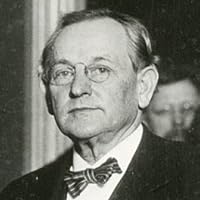
A Pulitzer Prize winner's "magisterial" biography of the Civil War-era Massachusetts senator, a Radical Republican who fought for slavery's abolition (The New York Times).
In his follow-up to Charles Sumner and the Coming of the Civil War, acclaimed historian David Herbert Donald examines the life of the Massachusetts legislator from 1860 to his death in 1874.
As a leader of the Radical Republicans, Sumner made the abolition of slavery his primary legislative focus--yet opposed the Thirteenth, Fourteenth, and Fifteenth Amendments to the US Constitution for not going far enough to guarantee full equality. His struggle to balance power and principle defined his career during the Civil War and Reconstruction, and Donald masterfully charts the senator's wavering path from fiery sectarian leader to responsible party member. In a richly detailed portrait of Sumner's role as chairman of the Senate Committee on Foreign Relations, Donald analyzes how the legislator brought his influence and political acumen to bear on an issue as dear to his heart as equal rights: international peace.
Authoritative and engrossing, Charles Sumner and the Rights of Man captures a fascinating political figure at the height of his powers and brings a tumultuous period in American history to vivid life.
Majoring in history and sociology, Donald earned his bachelor degree from Millsaps College in Jackson, Mississippi. He earned his PhD in 1946 under the eminent, leading Lincoln scholar, James G. Randall at the University of Illinois. Randall as a mentor had a big influence on Donald's life and career, and encouraged his protégé to write his dissertation on Lincoln's law partner, William Herndon. The dissertation eventually became his first book, Lincoln's Herndon, published in 1948. After graduating, he taught at Columbia University, Johns Hopkins and, from 1973, Harvard University. He also taught at Smith College, the University of North Wales, Princeton University, University College London and served as Harmsworth Professor of American History at Oxford University. At Johns Hopkins, Columbia, and Harvard he trained dozens of graduate students including Jean H. Baker, William J. Cooper, Jr., Michael Holt, Irwin Unger, and Ari Hoogenboom.
He received the Pulitzer Prize twice (1961 and 1988), several honorary degrees, and served as president of the Southern Historical Association. Donald also served on the editorial board for the Papers of Abraham Lincoln.
David H. Donald was the Charles Warren Professor of American History (emeritus from 1991) at Harvard University. He wrote over thirty books, including well received biographies of Abraham Lincoln, Thomas Wolfe and Charles Sumner. He specialized in the Civil War and Reconstruction periods, and in the history of the South.
Much better than the first installment, Rights of Man is when Donald drops his disdain for Sumner and gives a more neutral account of his life, and shies away from no aspect of it. Though some of his criticisms of Sumner I think are unfair (of course he didn't write the 14th or 15th Amendments, the Senators wouldn't let him on the committees), none are as glaringly unfair and victim blaming as in Coming of the Civil War.
This book covers the 2nd half of Sumner's life, which is David Donald's follow up to "Charles Sumner and the Coming of The Civil War". Charles Sumner was to the Senate what Thad Stevens was to the House. The leader of radical Republican anti-slavery forces. Thad Stevens was often more effective at legislation, forging compromises where more radical measures fell short. Sumner was more interested in giving rousing speeches to rally the party to support grand ideas. Because Sumner was more of an idea man, he didn't spearhead or even vote for the 13th, 14th or 15th amendments as he felt they fell short of his ideals. He was already thinking beyond them. Reflected in the title of this book, Sumner's greatest cause was first the abolition of slavery and secondly the championing of full equal rights. It's sad that the promises of his civil rights bill, which didn't pass, but would have prohibited segregation, black laws and Jim Crow, didn't become law for another 80 to 90 years.
An even-handed and meticulously researched study of the “statesman doctrinaire.” Although Donald admires Sumner (in the prologue, he contends that the real tragedy of Reconstruction was the nation’s failure to embrace Sumner’s ideals), his coverage of the Senator’s career is remarkably balanced. You get Sumner at his best (e.g., his one-man crusade for equal rights legislation in 1864, his devotion to his unpopular civil rights bill, etc) as well as his worst (e.g., his attempts to turn Hamilton Fish into a proxy of his in Grant’s cabinet, his eventual support for the anti-Reconstruction Liberal Republican Party, etc).
Likewise, though Sumner is most remembered for his advocacy on behalf of the freedmen, this book sheds much focus on his time as Foreign Relations Chairman, with Sumner’s stances on international affairs often being intertwined with his domestic policy positions (e.g., viewing a firm anti-slavery course during the Civil War as the best means of preventing British support of the Confederacy). Furthermore, this volume also devotes ample attention to the thought processes of Sumner’s contemporaries, whether it’s Abraham Lincoln and William Seward or Lyman Trumbull and the previously mentioned Fish.
My only critiques are that I wish Donald had included some sort of epilogue chapter (The Rights of Man abruptly ends with Sumner’s death) and broached a few additional angles to the Santo Domingo debate (e.g., Grant’s belief that the island could serve as a haven for the freedmen, the less-than-noble motivations many Democratic legislators had in opposing annexation, etc).
On the whole, however, a worthy read on a man whose moral vision was often ahead of his time, even when his political judgment and personal relationships left much to be desired.
Donald's Charles Sumner and the Rights of Man is a biography covering the time period of Sumner's life from the beginning of the Civil War until his death in 1874. The first half of the book, describing his actions during the Civil War, is an interesting look into how Sumner became the premier foreign policy expert as head of the Senate Foreign Relations Committee. However, where this book really captivated me is in its second half, where the author describes the clash between Sumner and Grant and the tragedy that followed for the Senator from Massachusetts. While I have certainly heard some reports of Donald's first book on Sumner being biased, this is not the case for the Rights of Man, where Donald shows Sumner is a neutral light, highlighting both his virtuous qualities, and the bad parts of his personality. The prose is also easy to read, and the author also has included a good amount of analysis. The only element that I wish was included was a conclusion giving us the readers an overview of how we should view Sumner.
All in all, a thorough look into a fascinating man.