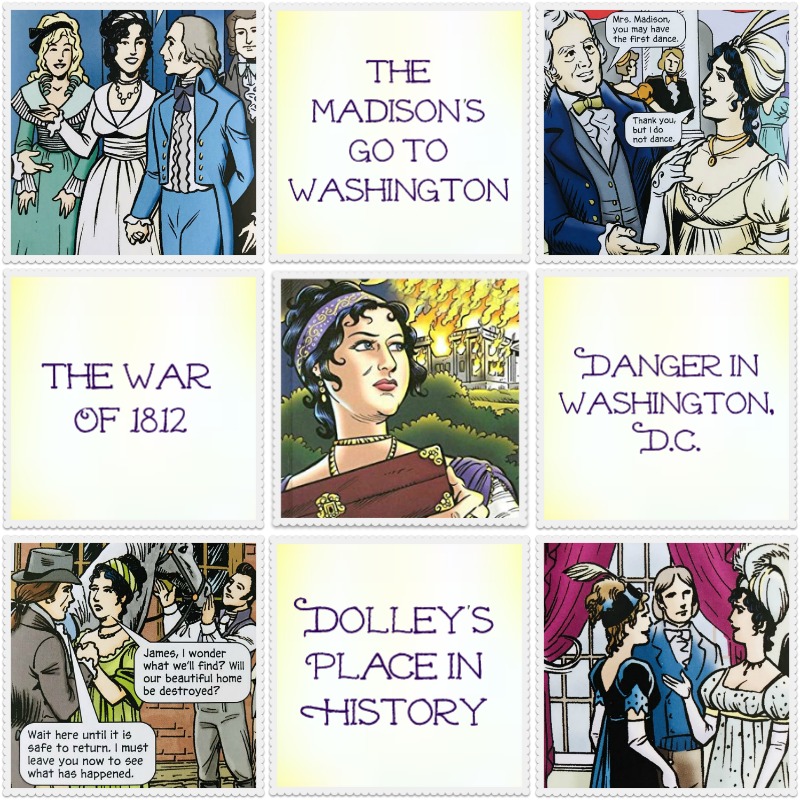
She became the inaugural "First Lady" because she was the magnanimous host of the new White House- the toast of the town! I stress "town" because the District was a swampy locale with a shockingly low population. It needed to become the capital of the burgeoning United States and Dolley designed her new home optimally to function as its hub.
She was a legendary host who dressed in eye-catching fashion without being viewed as sexy scenery- mastering that tenuious balance that's still difficult today with natural grace. She served the exciting dishes of the time and place and made the micro-city seem metropolitan.
She got along with everybody from the "lowly" servants to the upper crust so everyone was happy around her. As the wife of the President she undertook unprecedented political duty for a woman by using her magnetism to facilitate friendships and forge lasting bonds between others- even if it was despite themselves. Politicians NEED that in order to properly run a government so she was just as important as any of them.
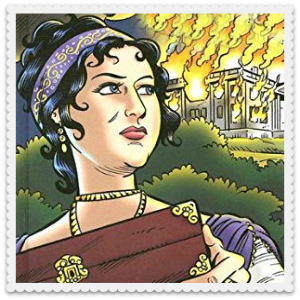
I could go on praising her but this book only covers so much. The highlight is the shocking bravery she displayed when the British were making haste to specifically lay waste to her new place. When James was needed in the field of war next door she stayed home with impressive optimism. Until she was only hours from capture or worse she made sure the house ready for a celebratory dinner but even when she was forced to flee she still made sure to head back for the portrait of her close friend George Washington so that it could go on to be the centerpiece of the next White House instead of ashes under the feet of the enemy.
This graphic novel tells about the efforts Dolley Madison made to save priceless papers, artwork, books and other treasured items from the British Invasion of Washington DC during the war of 1812 (the actual event took place on 24 August 1814). It's a good entry in Graphic Library's Graphic History series.
The story itself is short and does not have a great amount of detail, but the additional information provided in the back of the book about Dolley's life gives readers resources to learn more. It's a decent way to bring history alive and make it more interesting for young readers.
The narrative is very conversational and provides a fictionalized account of the dialogue between the individuals in the story, and is also sprinkled with direct quotations from primary sources. Overall, it's a dramatic tale and helps to show how one woman's bravery and determination preserved history for future generations.
The illustrations are colorful and cartoonish, but seem to represent that period in American history well.