This is overall a very satisfying book. The author, Alison Weir, takes what scraps of information we have about Katherine Swynford and creates what is at least a plausible tale of her life and times. In addition, we get a detailed portrait of her lover and, later, husband--John of Gaunt, son of a king and father of kings. Indeed their liaison produced several lines of rulers--York, Lancaster, Tudor, and Stuart/Stewart. Indeed, the last paragraph of the book notes the even more remarkable descendants of the two focal figures in this book--Queen Elizabeth II, Diana, Princess of Wales, and most monarchs in Europe today, George Washington, Thomas Jefferson, John Quincy Adams, Franklin Roosevelt, George W. Bush, Winston Churchill, Alfred Lord Tennyson, Bertrand Russell, and others.
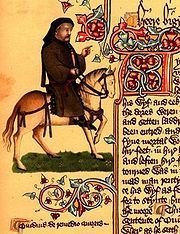
Weir seems careful to separate what is speculation and what is known about Katherine (e.g., she speculates that Katherine might have been in the royal court and might have met some future associates at that time). The context of the times is well described, so that even thought details are scarce on Katherine, the context in which she lives is richly depicted. Katherine herself comes off well as a character. Weir speculates that she might have been the model for one virtuous woman in Chaucer's "The Canterbury Tales" (Chaucer was her brother-in-law). Katherine wed Hugh Swynford, who served as a soldier in the king's army and was often away for long periods of time. As were most marriages of the time, this was more of a business deal than an exemplification of "love." Indeed, the record is unclear as to whether or not Katherine was happy with her husband. After having lived at court for a lengthy time, it must have been disheartening for her when she saw the rather plain housing into which she moved upon marriage.
Then, there is the twinned story of John of Gaunt. He was an important figure in royal circles. He married Blanche of Lancaster, and--odd enough for the time--they were truly in love with one another. His story details his role in English politics and international politics as well as his life with Blanche. One of their sons became Henry IV, succeeded by Henry V and the hapless Henry VI. Upon Blanche's untimely death, he married Constance of Castile; their daughter later married the King of Castile. After his marriage to Constance, and after the death of Hugh Swynford, Katherine became his mistress for some time (they may have separated at one point). She bore him, out of wedlock it goes without saying, four children--from those children came the Stuart kings (Scotland), the House of Tudor, and the Yorkist kings (Plantagenets--Edward IV and Richard III). In an extraordinary twist of history, one of the daughters of Edward IV, Elizabeth, married the first Tudor King, Henry VII.
After Constance's death, Katherine wed John and they lived as husband and wife for the few year together left them.
This is a fast moving story, covering an important part of English history. Weir, as best she can given limited information, brings the different characters to life as much as possible under those circumstances. I found this a fascinating book; it is well sritten. And, the genealogical tables at the end were absolutely vital for keeping the players straight (the notables include: The Roet family (Katherine's ancestors and her siblings), the descendants of Edward III (including John of Gaunt), the House of Lancaster, the Swynford family, the Chaucer family, and the Beauforts (descendants of John and Katherine, including Stuarts, Tudors, and Plantagenets).