

What do you think?

No Wall Too High: One Man's Daring Escape from Mao's Darkest Prison
"A masterpiece." ― The Washington Post "It was impossible. All of China was a prison in those days."
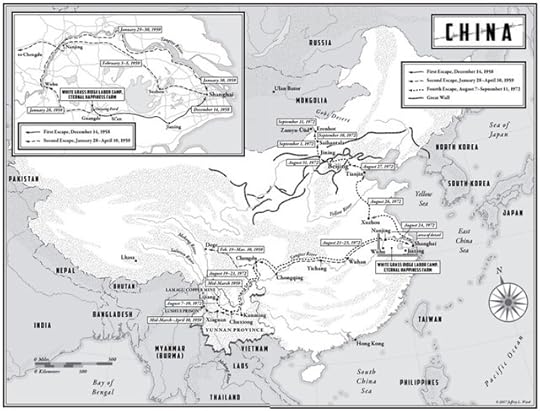
Mao Zedong’s labor reform camps, known as the laogai , were notoriously brutal. Modeled on the Soviet Gulag, they subjected their inmates to backbreaking labor, malnutrition, and vindictive wardens. They were thought to be impossible to escape―but one man did. Xu Hongci was a bright young student at the Shanghai No. 1 Medical College, spending his days studying to be a professor and going to the movies with his girlfriend. He was also an idealistic and loyal member of the Communist Party and was generally liked and well respected. But when Mao delivered his famous February 1957 speech inviting “a hundred schools of thought [to] contend,” an earnest Xu Hongci responded by posting a criticism of the party―a near-fatal misstep. He soon found himself a victim of the Anti-Rightist Campaign, condemned to spend the next fourteen years in the laogai . Xu Hongci became one of the roughly 550,000 Chinese unjustly imprisoned after the spring of 1957, and despite the horrific conditions and terrible odds, he was determined to escape. He failed three times before finally succeeding, in 1972, in what was an amazing and arduous triumph. Originally published in Hong Kong, Xu Hongci’s remarkable memoir recounts his life from childhood through his final prison break. After discovering his story in a Hong Kong library, the journalist Erling Hoh tracked down the original manuscript and compiled this condensed translation, which includes background on this turbulent period, an epilogue that follows Xu Hongci up to his death, and Xu Hongci’s own drawings and maps. Both a historical narrative and an exhilarating prison-break thriller, No Wall Too High tells the unique story of a man who insisted on freedom―even under the most treacherous circumstances.
Mao Zedong’s labor reform camps, known as the laogai , were notoriously brutal. Modeled on the Soviet Gulag, they subjected their inmates to backbreaking labor, malnutrition, and vindictive wardens. They were thought to be impossible to escape―but one man did. Xu Hongci was a bright young student at the Shanghai No. 1 Medical College, spending his days studying to be a professor and going to the movies with his girlfriend. He was also an idealistic and loyal member of the Communist Party and was generally liked and well respected. But when Mao delivered his famous February 1957 speech inviting “a hundred schools of thought [to] contend,” an earnest Xu Hongci responded by posting a criticism of the party―a near-fatal misstep. He soon found himself a victim of the Anti-Rightist Campaign, condemned to spend the next fourteen years in the laogai . Xu Hongci became one of the roughly 550,000 Chinese unjustly imprisoned after the spring of 1957, and despite the horrific conditions and terrible odds, he was determined to escape. He failed three times before finally succeeding, in 1972, in what was an amazing and arduous triumph. Originally published in Hong Kong, Xu Hongci’s remarkable memoir recounts his life from childhood through his final prison break. After discovering his story in a Hong Kong library, the journalist Erling Hoh tracked down the original manuscript and compiled this condensed translation, which includes background on this turbulent period, an epilogue that follows Xu Hongci up to his death, and Xu Hongci’s own drawings and maps. Both a historical narrative and an exhilarating prison-break thriller, No Wall Too High tells the unique story of a man who insisted on freedom―even under the most treacherous circumstances.
336 pages, Hardcover
First published March 1, 2008
Ratings & Reviews
Friends & Following
Create a free account to discover what your friends think of this book!
Community Reviews
Displaying 1 - 30 of 61 reviews
May 13, 2018
Xu Hongci was one the few people able to escape prison AND China during the cultural revolution, and this is his autobiographical account, translated into English and edited down from about 600 pages. The translator also set about verifying much of the tale. The result is a brutal, harrowing page-turner and an exemplary look into the devastation wrought by Mao & Co. from the viewpoint of the persecuted. HIGHLY RECOMMENDED.
June 26, 2017
A memoir about the dangers of unchecked power and ideology. Worth reading.

November 24, 2018
I could have read this is a day. What a masterpiece. For anyone who wants to learn more what living under Mao was like.

February 24, 2017
No Wall Too High was a fantastic book. Xu Hongci’s perspective of life under Mao’s dictatorship was valuable and raw. Despite my liking it, this book contained pervasive violent material. However, I do not see how Hongci could tell his story without the descriptions of violence. There was some profanity and crude language. With its different perspective, this book will make you think. Although it is a longer book, it is worth taking the time to read.
To visit my memoir review blog:
https://memoir.blog/ (home)
https://memoir.blog/no-wall-high/ (this book)
To visit my memoir review blog:
https://memoir.blog/ (home)
https://memoir.blog/no-wall-high/ (this book)

October 24, 2019
Absolutely loved this book! There’s so much to understand from the time to Mao’s terror and Xu Hongci’s story takes you through the better early times to the disaster it came to be.
It’s hard not to wince and take moments to think while reading this book. It truly is a must read.
It’s hard not to wince and take moments to think while reading this book. It truly is a must read.
December 18, 2020
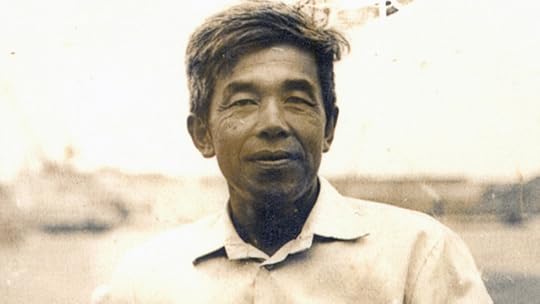
No Wall Too High is the story of one man's life under the rule of the Communist Party of China during the reign of Mao Zedong; Chinese author Xu Hongci. Xu Hongci was an ordinary medical student when he was incarcerated under Mao's regime and forced to spend years of his youth in China's "Laogai" - brutal labour and political re-education camps modeled after the Russian Gulags.
Xu Hongci :
No Wall Too High has great formatting; most chapters begins with a small blurb outlining the period that follows and giving the reader the macro picture for context. The author's first-hand experiences during that time unfold after that.
The author opens the book with this quote, which gives the reader some historical insight into the events that would eventually see China fall to Communism during the Communist Revolution:
The book gets off to a slow start; it details much historical background, beginning in 1931. The author goes into great detail about his personal life and relationships, as well as joining the Communist party at a young age.
While this is no doubt an interesting topic, the author tended to fire off many Chinese names, and I had trouble keeping track of who was who... The writing here was also much drier than I expected, for a book with a title like this.
Critisims of the tone aside, this is an important historical account that allows the reader a glimpse of life under Communist rule. Most of what the author conveys here will read completely foreign to the average reader in the West. The book details killing and suffering on a wholesale level - where starvation, disease, and despair were the only certainties...
Xu Hongci closes the book with these Final Thoughts:
This is an incredible story that I would recommend this one to anyone interested.
4 stars.
Xu Hongci :
No Wall Too High has great formatting; most chapters begins with a small blurb outlining the period that follows and giving the reader the macro picture for context. The author's first-hand experiences during that time unfold after that.
The author opens the book with this quote, which gives the reader some historical insight into the events that would eventually see China fall to Communism during the Communist Revolution:
"In 1931, Japan annexed the vast region abutting the Korean Peninsula known as Manchuria—the first step in its avowed historical mission to liberate China from Western imperialism, establish itself as the hegemon of Asia, and monopolize the continent’s natural resources. The following year, thirty-three days of pitched battles between Japanese and Chinese forces in the streets of Shanghai left 14,000 Chinese and 3,000 Japanese dead. In the summer of 1937, the hostilities escalated into full-scale war as Japan launched a massive invasion of the Chinese heartland. The first major battle stood in Shanghai, where the Chinese generalissimo, Chiang Kai-shek, deployed his best-trained troops to repel the aggressors. From mid-August to late November, fierce fighting raged in the city and its environs, before Chiang, having lost some 190,000 men, ordered a retreat. The Japanese army marched on the capital, Nanjing, and for the next eight years China was engulfed in one of the most lethal conflicts of World War II, with a death toll of up to 18 million people..."
The book gets off to a slow start; it details much historical background, beginning in 1931. The author goes into great detail about his personal life and relationships, as well as joining the Communist party at a young age.
While this is no doubt an interesting topic, the author tended to fire off many Chinese names, and I had trouble keeping track of who was who... The writing here was also much drier than I expected, for a book with a title like this.
Critisims of the tone aside, this is an important historical account that allows the reader a glimpse of life under Communist rule. Most of what the author conveys here will read completely foreign to the average reader in the West. The book details killing and suffering on a wholesale level - where starvation, disease, and despair were the only certainties...
Xu Hongci closes the book with these Final Thoughts:
The Anti-Rightist Campaign was a turning point in modern Chinese history. Ever since then, the Chinese Communist Party has been in steady decline. The main reason for this was the inability of Mao Zedong, steeped in the mentality of ancient China, to listen to dissenting opinions, in particular to correct opposing views. This deprived the party of a mirror capable of reflecting its true nature, as well as the medicine needed to treat its afflictions, and allowed it to fall deeper and deeper into evil ways. Of even graver consequence, the party has wiped out a vast contingent of outstanding comrades and patriots who possessed both mental acuity and a spirit of innovation. Instead, it has made use of yes-men who do not strive for progress, even of toadies with a particular flair for tricks, games, and flattery. Gradually, these people have set the standard for cadres, sapping the party’s strength and will to fight for its ideals. Today’s Communist Party is not the party we knew before 1957. Politically, it is old and feeble, stuck in a rut of ingrained bad habits. I gave everything I had to improve and strengthen it, but all I got in return was calamity. The party’s tragedy lies wholly in its failure to establish a truly democratic system. I am one of the
tens of millions of victims of its countless political campaigns, and an incredibly lucky survivor. Looking back at my bitter experiences, remembering all the tribulations and misfortunes, I can only draw this conclusion: under Mao Zedong’s dictatorship, the Chinese people had no human rights. My history is a good example of this.
XU HONGCI
Jinshan
1993–1995
This is an incredible story that I would recommend this one to anyone interested.
4 stars.

March 10, 2025
作为当年被打倒的55万名右派里可能是唯一一个成功逃脱的案例,徐洪慈的个人经历是无可替代的。在他的故事里,最叫我动容的部分不是四次越狱的过程,甚至也不是那些苦难和暴行,而是他和女友之间的爱情。可这份感情最终也毫不意外地以背叛而告终:“You hated me then. I never told anybody about us. But you told them everything.”这就是他们在26年后再次相见时,徐洪慈想说的一切。
而同为上海人,他的这本回忆录里充斥着我熟悉的地名。但可悲之处在于,如今我依然只能通过一门异国的语言来了解他完整的故事、了解我们沉默的过去。当年的徐洪慈对自己说,中国的悲剧恰恰在于人们不被允许说出真相。这个悲剧延续至今。
而同为上海人,他的这本回忆录里充斥着我熟悉的地名。但可悲之处在于,如今我依然只能通过一门异国的语言来了解他完整的故事、了解我们沉默的过去。当年的徐洪慈对自己说,中国的悲剧恰恰在于人们不被允许说出真相。这个悲剧延续至今。

October 26, 2020
I've read many first-hand accounts of Mao's regime and the suffering that it caused, but this one stands out. Basically, it stands out because the author is very smart. Most authors talk just talk about how they suffered. This author talks about how he suffered, but then also talks about what was going on in his head intellectually, and describes in detail how he eventually used his intellect to bring an end to his suffering.
If you aren't familiar with the 100 flowers campaign, essentially what happened is that after being in power for a few years, Mao invited intellectuals around the country to speak out about what they thought the communist party could be doing better - i.e. to give constructive criticism - assuring them there would be no reprisal. Then, after allowing people to voice their opinions for a time, Mao announced that this was actually a ruse to ferret out "anti-party" elements, and took everyone who had spoken out and either executed them, threw them in prison, or sent them to labour camps. The author was a communist party member caught in Mao's trap and sent to a labour camp (one of an estimated 550,000 people sent to labour camps in this particular campaign). He eventually escapes, and makes it to Mongolia. He is not the only known case of a successful escape from a camp, but he *is* the only known case of a successful escape from a camp that then successfully made it out of the country.
I enjoyed paragraphs like this one, which takes place after he has been labelled a rightist, but prior to being sent to a camp:
[the context is a conversation with a friend who has also been labelled a rightist] We also discussed philosophical matters. The Anti-Rightist Campaign had made us realize that the present conflict was not only between the Communist Party and its opponents but, on a deeper level, between the individual and the collective. Five thousand years of tyranny had endowed the Chinese people with a miserly mentality that strangled individual initiative and creativity. Anybody who did anything unconventional and stood out in any way encountered the wrath of the masses and was destroyed. For the first time, we realized how superficial the Communist revolution had been and that it had barely scratched the surface of our country's real, deep-seated cultural problems.
I like it because it shows that he's not just reporting what happened to him. He's describing how it shaped his perception of his country and of the cause he had once believed in.
What I liked most about the book was reading how he planned and executed his escape. I won't give away details, but it required not only good reasoning skills, but also extreme patience, not to mention courage. I admired how he gradually, over a period of years, analyzed the weak points of the prison and deduced exactly what combination of conditions would be necessary for him to have an opportunity to escape - and then had the patience to wait several more years (after he had worked out how to do it) for that combination of conditions to occur. I admired how he planned out and prepared for the whole journey out of the country while still in prison - not just how to get out of the prison itself - anticipating every eventuality and preparing for it in advance. Reading him actually execute it was thrilling.
Finally, there were a couple of coincidences that occurred as I read the book.
The labour camp he was at is located in Lijiang. I was in Lijiang in 2014, in order to hike "Tiger Leaping Gorge". A photograph from the insert in the book, showing the spot where in 1969 Xu Hongci (the author) was given his 7-year sentence, and where his friend was executed, is the same spot as a spherical panorama I took in Lijiang while I was there.
This is an email I sent my Dad on May 23, 2014, the day I took that panorama:
I generally feel pretty safe in China, but things like this make me feel a little uneasy:
<>
Despite being one of the worst mass murderers in history, in China Mao is (officially at least) still applauded as a hero, with his face on every bill and giant monuments like this all over the country.
I'm currently in Lijiang, a city in Northern Yunnan near the border with Tibet and Sichuan.
Out of Hong Kong, I took the train north to Guangzhou, where I met up with my friends Nono and Serina, whom I met at the Dragon Spine Rice Terraces on my last trip. I hung out with them for a few days before taking a plane to Kunming, the capital of Yunnan.
The main attraction of Kunming was the nearby stone forest I sent pictures of in a previous email. However, due to random chance, I also ended up meeting up with a girl I knew online from the UK, who happened to be in Kunming at the time. She's from Kunming originally but has been studying in the UK for the past four years - however, after completing her studies a couple of months ago she was not allowed to remain in the country. When I met up with her she informed me of the good news that she had been accepted to do a second degree in the UK. Of course, it's the student Visa that she's actually after.
This girl was interesting enough that I'm going to say a little more:
Every day, she splits her time between writing a novel and working on a UK-based start-up. She's hoping that the startup will eventually allow her to get a work visa so that she can remain in the UK without continuously taking more and more university degrees. For the novel, she finds that she has to drink to get into the right frame of mind to write, so every morning after waking up she goes to a different bar, orders a beer, and gets to work.
She was a problem child. She tells me about putting diarrhea pills in her school principal's glass of water. I tell her about egging my principal's house. When we met, we hung out for three hours before we realized we didn't know each other's names.
While she doesn't exactly hate China, she much prefers the UK. At some point, she starts telling me about how the cultural revolution screwed up the previous generation, about the things that her grandparents experienced. I comment that China used to be a scary place. She corrects me by saying that China *is* a scary place.
Which brings me back to the statue of Mao.
I arrive in Lijiang yesterday morning, having taken an overnight sleeper train from Kunming. The town is pretty small, which means I can go everywhere on foot. I like that, and I spend the whole day exploring. The receptionist at my hostel is very helpful, and shows me how to sneak into the nearby Black Dragon Pool park without paying the 80 Yuan entrance fee. Later in the day, I find the statue of Mao in the old town, and I return to the hostel to pick up my 360-degree video camera.
I'm on my way back, thinking about how nice and peaceful Lijiang is compared with Kunming, which was loud and hot and smelly, when I notice a couple of police cars in front of me. I don't think much of this - there are police all over Yunnan.
But then I notice that some of these police have riot shields and clubs. They're marching in two columns down the street towards me. I'm wondering if something is going on but still I don't pay them much heed, and they don't take much notice of me. I can see now that there are three police cars, and in addition to the police in riot gear there is also a cluster of police standing in a circle on the sidewalk in front of me, with another group walking the other way down a nearby lane.
I don't want to cross the street, and the police don't seem to mind that I'm there, so I continue on towards the group huddled together on the sidewalk. I reach them, and they still don't care that I'm there, so I decide to walk right through them instead of going around. That's when I see it.
Blood. A great big pool of thick red blood. That's why the police are huddled in this particular spot. Suddenly Lijiang doesn't feel so nice anymore.
A few more coincidences from the final page of the book:
On the final page, it talks about how after being allowed to return to China, he attempted to publish his book but was not allowed. Eventually, it was published in Hong Kong by "Hong Kong Art and Culture". Then it talks about the erosion of freedom in Hong Kong in recent years and the kidnapping of Hong Kong booksellers. The following sentence is included.
"In the winter of 2015-2016, the publishers Gui Minhai, Lam Wing-kee, Lui, Bo, Cheung Jiping, and Paul Lee disappeared in succession, making headline news around the world as "Hong Kong's missing booksellers".
Lam Wing-kee is 林榮基, the bookseller living in exile here in Taiwan, whom I interviewed a couple of months back. Causeway books - his original Hong Kong bookstore filled with books banned in China - has been reborn here in Taiwan, and it was there that I found him. The book actually contains an error - it says that Lam Wing-kee was "conditionally released by the Chinese authorities" - but this isn't true. I've spoken with 林榮基 about his experiences and I've watched his interviews online. What really happened is that his kidnappers took his Chinese girlfriend hostage and dispatched him to Hong Kong to obtain a computer hard drive filled with information regarding the identities of his customers. After obtaining the hard drive, he was supposed to return to China and hand it over. The purpose of taking his girlfriend hostage was to ensure that he would actually come back. However, 林榮基 instead decided to forsake his girlfriend - something his kidnappers didn't expect. After crossing into Hong Kong, he escaped from his handlers and remained there until the extradition law was proposed, at which point he fled to Taiwan. This is what 林榮基 said to me:
Take my case, because I gave him a charge of wanting me, and my charge was " illegal management of books." The charge has not been cancelled, which means I am a wanted criminal now. At that time, the 2019 Anti-Send China Treaty would come into effect in July. I will leave Hong Kong before July.
Take me for example, I was blacklisted as a wanted man, and my crime was "running an illegal bookshop". The warrant for my arrest has never been cancelled, I am still a fugitive. Back then, in 2019, the proposed extradition law would have taken effect in July. So, I made sure to get out of Hong Kong before then.
This doesn't sound like "conditional release" to me.
Something which is a bit ironic is that the original Chinese language edition of this book - 衝出勞改營 - is now almost impossible to find, whereas the translated English edition you can now find almost anywhere. In the introduction "How this book came to be", it says that only 800 copies of 衝出勞改營 were sold (how many were printed is unclear). It also says that the translator (Erling Hoh) didn't exactly translate 衝出勞改營 - the Chinese original - rather he tracked down Xu Hongci's widow, found the original manuscript, and based his translation on that instead. I can't help wondering why Erling Hoh didn't publish a Chinese language edition at the same time, given that the manuscript he had in front of him was already in that language and given the scarcity of the existing Chinese language edition. There would certainly be plenty of people here in Taiwan interested in reading this story who don't have the language skills to read the English translation. I might write to the translator and point this out.
I'm trying to get my hands on the Chinese language orginal. I figured that if it is to be found anywhere in Taiwan, it is in 林榮基's bookstore. Moreover, I thought that 林榮基 probably knows whoever ran "Hong Kong Arts & Culture" - the original publisher - because I imagine publishing anti-CPP books in Hong Kong is a dangerous line of business and the people engaged in it probably all know each other. So, I went back 林榮基's bookstore and talked to him a second time, to see if he had the book or knew anyone who did. I showed him the English language edition of the book, and a photograph of the cover of the Chinese original (above) as well as the Chinese name of the original publisher, and as expected he knew exactly what I was talking about. He remembered the book being published, and how only a small number of copies were sold. He does indeed know the original publisher. He explained to me the reason why more copies were not sold, but I couldn't understand him through his heavy Cantonese accent.
He said that the book is extremely hard to find and he doesn't personally have any copies. However, he has a friend in Hong Kong who might be able to ship a copy, but that it might be expensive. I said money wasn't an issue and so he called the friend. The friend said he would call back. However, so far no luck.
If you aren't familiar with the 100 flowers campaign, essentially what happened is that after being in power for a few years, Mao invited intellectuals around the country to speak out about what they thought the communist party could be doing better - i.e. to give constructive criticism - assuring them there would be no reprisal. Then, after allowing people to voice their opinions for a time, Mao announced that this was actually a ruse to ferret out "anti-party" elements, and took everyone who had spoken out and either executed them, threw them in prison, or sent them to labour camps. The author was a communist party member caught in Mao's trap and sent to a labour camp (one of an estimated 550,000 people sent to labour camps in this particular campaign). He eventually escapes, and makes it to Mongolia. He is not the only known case of a successful escape from a camp, but he *is* the only known case of a successful escape from a camp that then successfully made it out of the country.
I enjoyed paragraphs like this one, which takes place after he has been labelled a rightist, but prior to being sent to a camp:
[the context is a conversation with a friend who has also been labelled a rightist] We also discussed philosophical matters. The Anti-Rightist Campaign had made us realize that the present conflict was not only between the Communist Party and its opponents but, on a deeper level, between the individual and the collective. Five thousand years of tyranny had endowed the Chinese people with a miserly mentality that strangled individual initiative and creativity. Anybody who did anything unconventional and stood out in any way encountered the wrath of the masses and was destroyed. For the first time, we realized how superficial the Communist revolution had been and that it had barely scratched the surface of our country's real, deep-seated cultural problems.
I like it because it shows that he's not just reporting what happened to him. He's describing how it shaped his perception of his country and of the cause he had once believed in.
What I liked most about the book was reading how he planned and executed his escape. I won't give away details, but it required not only good reasoning skills, but also extreme patience, not to mention courage. I admired how he gradually, over a period of years, analyzed the weak points of the prison and deduced exactly what combination of conditions would be necessary for him to have an opportunity to escape - and then had the patience to wait several more years (after he had worked out how to do it) for that combination of conditions to occur. I admired how he planned out and prepared for the whole journey out of the country while still in prison - not just how to get out of the prison itself - anticipating every eventuality and preparing for it in advance. Reading him actually execute it was thrilling.
Finally, there were a couple of coincidences that occurred as I read the book.
The labour camp he was at is located in Lijiang. I was in Lijiang in 2014, in order to hike "Tiger Leaping Gorge". A photograph from the insert in the book, showing the spot where in 1969 Xu Hongci (the author) was given his 7-year sentence, and where his friend was executed, is the same spot as a spherical panorama I took in Lijiang while I was there.
This is an email I sent my Dad on May 23, 2014, the day I took that panorama:
I generally feel pretty safe in China, but things like this make me feel a little uneasy:
<>
Despite being one of the worst mass murderers in history, in China Mao is (officially at least) still applauded as a hero, with his face on every bill and giant monuments like this all over the country.
I'm currently in Lijiang, a city in Northern Yunnan near the border with Tibet and Sichuan.
Out of Hong Kong, I took the train north to Guangzhou, where I met up with my friends Nono and Serina, whom I met at the Dragon Spine Rice Terraces on my last trip. I hung out with them for a few days before taking a plane to Kunming, the capital of Yunnan.
The main attraction of Kunming was the nearby stone forest I sent pictures of in a previous email. However, due to random chance, I also ended up meeting up with a girl I knew online from the UK, who happened to be in Kunming at the time. She's from Kunming originally but has been studying in the UK for the past four years - however, after completing her studies a couple of months ago she was not allowed to remain in the country. When I met up with her she informed me of the good news that she had been accepted to do a second degree in the UK. Of course, it's the student Visa that she's actually after.
This girl was interesting enough that I'm going to say a little more:
Every day, she splits her time between writing a novel and working on a UK-based start-up. She's hoping that the startup will eventually allow her to get a work visa so that she can remain in the UK without continuously taking more and more university degrees. For the novel, she finds that she has to drink to get into the right frame of mind to write, so every morning after waking up she goes to a different bar, orders a beer, and gets to work.
She was a problem child. She tells me about putting diarrhea pills in her school principal's glass of water. I tell her about egging my principal's house. When we met, we hung out for three hours before we realized we didn't know each other's names.
While she doesn't exactly hate China, she much prefers the UK. At some point, she starts telling me about how the cultural revolution screwed up the previous generation, about the things that her grandparents experienced. I comment that China used to be a scary place. She corrects me by saying that China *is* a scary place.
Which brings me back to the statue of Mao.
I arrive in Lijiang yesterday morning, having taken an overnight sleeper train from Kunming. The town is pretty small, which means I can go everywhere on foot. I like that, and I spend the whole day exploring. The receptionist at my hostel is very helpful, and shows me how to sneak into the nearby Black Dragon Pool park without paying the 80 Yuan entrance fee. Later in the day, I find the statue of Mao in the old town, and I return to the hostel to pick up my 360-degree video camera.
I'm on my way back, thinking about how nice and peaceful Lijiang is compared with Kunming, which was loud and hot and smelly, when I notice a couple of police cars in front of me. I don't think much of this - there are police all over Yunnan.
But then I notice that some of these police have riot shields and clubs. They're marching in two columns down the street towards me. I'm wondering if something is going on but still I don't pay them much heed, and they don't take much notice of me. I can see now that there are three police cars, and in addition to the police in riot gear there is also a cluster of police standing in a circle on the sidewalk in front of me, with another group walking the other way down a nearby lane.
I don't want to cross the street, and the police don't seem to mind that I'm there, so I continue on towards the group huddled together on the sidewalk. I reach them, and they still don't care that I'm there, so I decide to walk right through them instead of going around. That's when I see it.
Blood. A great big pool of thick red blood. That's why the police are huddled in this particular spot. Suddenly Lijiang doesn't feel so nice anymore.
A few more coincidences from the final page of the book:
On the final page, it talks about how after being allowed to return to China, he attempted to publish his book but was not allowed. Eventually, it was published in Hong Kong by "Hong Kong Art and Culture". Then it talks about the erosion of freedom in Hong Kong in recent years and the kidnapping of Hong Kong booksellers. The following sentence is included.
"In the winter of 2015-2016, the publishers Gui Minhai, Lam Wing-kee, Lui, Bo, Cheung Jiping, and Paul Lee disappeared in succession, making headline news around the world as "Hong Kong's missing booksellers".
Lam Wing-kee is 林榮基, the bookseller living in exile here in Taiwan, whom I interviewed a couple of months back. Causeway books - his original Hong Kong bookstore filled with books banned in China - has been reborn here in Taiwan, and it was there that I found him. The book actually contains an error - it says that Lam Wing-kee was "conditionally released by the Chinese authorities" - but this isn't true. I've spoken with 林榮基 about his experiences and I've watched his interviews online. What really happened is that his kidnappers took his Chinese girlfriend hostage and dispatched him to Hong Kong to obtain a computer hard drive filled with information regarding the identities of his customers. After obtaining the hard drive, he was supposed to return to China and hand it over. The purpose of taking his girlfriend hostage was to ensure that he would actually come back. However, 林榮基 instead decided to forsake his girlfriend - something his kidnappers didn't expect. After crossing into Hong Kong, he escaped from his handlers and remained there until the extradition law was proposed, at which point he fled to Taiwan. This is what 林榮基 said to me:
Take my case, because I gave him a charge of wanting me, and my charge was " illegal management of books." The charge has not been cancelled, which means I am a wanted criminal now. At that time, the 2019 Anti-Send China Treaty would come into effect in July. I will leave Hong Kong before July.
Take me for example, I was blacklisted as a wanted man, and my crime was "running an illegal bookshop". The warrant for my arrest has never been cancelled, I am still a fugitive. Back then, in 2019, the proposed extradition law would have taken effect in July. So, I made sure to get out of Hong Kong before then.
This doesn't sound like "conditional release" to me.
Something which is a bit ironic is that the original Chinese language edition of this book - 衝出勞改營 - is now almost impossible to find, whereas the translated English edition you can now find almost anywhere. In the introduction "How this book came to be", it says that only 800 copies of 衝出勞改營 were sold (how many were printed is unclear). It also says that the translator (Erling Hoh) didn't exactly translate 衝出勞改營 - the Chinese original - rather he tracked down Xu Hongci's widow, found the original manuscript, and based his translation on that instead. I can't help wondering why Erling Hoh didn't publish a Chinese language edition at the same time, given that the manuscript he had in front of him was already in that language and given the scarcity of the existing Chinese language edition. There would certainly be plenty of people here in Taiwan interested in reading this story who don't have the language skills to read the English translation. I might write to the translator and point this out.
I'm trying to get my hands on the Chinese language orginal. I figured that if it is to be found anywhere in Taiwan, it is in 林榮基's bookstore. Moreover, I thought that 林榮基 probably knows whoever ran "Hong Kong Arts & Culture" - the original publisher - because I imagine publishing anti-CPP books in Hong Kong is a dangerous line of business and the people engaged in it probably all know each other. So, I went back 林榮基's bookstore and talked to him a second time, to see if he had the book or knew anyone who did. I showed him the English language edition of the book, and a photograph of the cover of the Chinese original (above) as well as the Chinese name of the original publisher, and as expected he knew exactly what I was talking about. He remembered the book being published, and how only a small number of copies were sold. He does indeed know the original publisher. He explained to me the reason why more copies were not sold, but I couldn't understand him through his heavy Cantonese accent.
He said that the book is extremely hard to find and he doesn't personally have any copies. However, he has a friend in Hong Kong who might be able to ship a copy, but that it might be expensive. I said money wasn't an issue and so he called the friend. The friend said he would call back. However, so far no luck.
September 27, 2025
A story about a young communist who, after ridiculous accusations, became an enemy of the state and, after years locked up in a labor camp, managed to escape from China.
A book that makes you want to be a capitalist.
If you thought communism in Europe was bad, wait until you read what Mao did to China. Through sheer incompetence, ignorance, and blind obedience of the Chinese communists, we get a story that feels more like a dystopian novel than a biography.
Even though it was brutal, it also gave important insight into the evolution of Chinese politics and culture, so...
5/5, I think I lost social credit just by touching this book.
A book that makes you want to be a capitalist.
If you thought communism in Europe was bad, wait until you read what Mao did to China. Through sheer incompetence, ignorance, and blind obedience of the Chinese communists, we get a story that feels more like a dystopian novel than a biography.
Even though it was brutal, it also gave important insight into the evolution of Chinese politics and culture, so...
5/5, I think I lost social credit just by touching this book.

September 7, 2021
I found this quite stilted and jumpy and I don’t know if it’s because it’s the way it was originally written or because it’s a translation. Nevertheless, I found this really interesting but sad. An amazing story of how a man escaped the Chinese labour camps but also about everything he had to endure before, during and after his escape.
December 15, 2025
A catching story of a young student of medicin who has fallen for communism which in the end send him to a working camp. We are following him during his escape trials and all the problems he is facing.
In the beggining is, the reading a little bit heavy due to the wide description of political situation and the historical context. This is, however, very useful for people (like me) who are not so well-informed about the history of China. The description of life in work camps and prisons is hard to read, so I think this book is not suitable for sensitive people. The description of the last escape is so catchy that it was hard to stop reading.
In the beggining is, the reading a little bit heavy due to the wide description of political situation and the historical context. This is, however, very useful for people (like me) who are not so well-informed about the history of China. The description of life in work camps and prisons is hard to read, so I think this book is not suitable for sensitive people. The description of the last escape is so catchy that it was hard to stop reading.

December 30, 2024
两天读完,单从阅读体验来说也是非常难得的hooked。
对于右派劳改的回忆录读了好多本了,作为被人民日报点名的右派分子(据称被毛钦点“粉碎”?英文原文Rip Him to Pieces不知道是什么),徐洪慈如何进的劳改营显得不那么关键了,吸引人的自然是徐如何从劳改营中成功逃脱的经验(书里说被官方列为右派并被关押劳改的55万人中可能只有徐这一个人是成功逃脱的。)
主线就是先why后how,目的性非常明确,遇到的人和事无非就是助力或者阻碍(告密出卖、恶意陷害),而遇到后者只需要想办法绕过即可。首先徐的命大,之前尝试过逃跑并失败,虽然刑法变重但依然能够苟活,从失败中总结出的宝贵经验更是重要:
1. 要攒现金、制假证,出示假身份;
2. 要solo不要social,尤其不要向普通人寻求庇护和/或食物。印象很深的是徐讲逃亡睡觉时一定不要奢求在屋檐下酣睡,宁可在大雨中裹着塑料布忍受蚊虫叮咬睡荒郊野岭,哪怕是在城市落脚也要睡在灌木丛中。
3. 要趁夜晚逃亡,这样至少有几个小时的时间暴走避免被发现,间隔时间久了搜查犬就闻不到气味。徐在临睡前夜点名后出逃,连续暴走几十个小时才进行第一次休息。
4. 不能沿着主干道走,避免在汽车站或渡口被抓获。
徐一路逃亡一路辉煌甚至跑回了上海见到了母亲,最后成功走线蒙古时那种成功的释放感恰似肖申克的救赎,只不过Andy爬出水管的时候是抬头拥抱雷雨,徐则是蹲在最后的中国土地上悲恨诅咒毛泽东(72年走线,81年部分平反就返回了上海,不仅争取平反还争取恢复党籍,可见不是反中反党而只是反毛)。
过程中的一些见闻也非常的有价值,包括对苏联教育死记硬背的体验和看法,在劳改营直面早于59年的饥荒,藏区囚犯的遭遇,当劳改营中的赤脚医生反中医,剃须是用指甲尖一根一根拔胡子等……
对于右派劳改的回忆录读了好多本了,作为被人民日报点名的右派分子(据称被毛钦点“粉碎”?英文原文Rip Him to Pieces不知道是什么),徐洪慈如何进的劳改营显得不那么关键了,吸引人的自然是徐如何从劳改营中成功逃脱的经验(书里说被官方列为右派并被关押劳改的55万人中可能只有徐这一个人是成功逃脱的。)
主线就是先why后how,目的性非常明确,遇到的人和事无非就是助力或者阻碍(告密出卖、恶意陷害),而遇到后者只需要想办法绕过即可。首先徐的命大,之前尝试过逃跑并失败,虽然刑法变重但依然能够苟活,从失败中总结出的宝贵经验更是重要:
1. 要攒现金、制假证,出示假身份;
2. 要solo不要social,尤其不要向普通人寻求庇护和/或食物。印象很深的是徐讲逃亡睡觉时一定不要奢求在屋檐下酣睡,宁可在大雨中裹着塑料布忍受蚊虫叮咬睡荒郊野岭,哪怕是在城市落脚也要睡在灌木丛中。
3. 要趁夜晚逃亡,这样至少有几个小时的时间暴走避免被发现,间隔时间久了搜查犬就闻不到气味。徐在临睡前夜点名后出逃,连续暴走几十个小时才进行第一次休息。
4. 不能沿着主干道走,避免在汽车站或渡口被抓获。
徐一路逃亡一路辉煌甚至跑回了上海见到了母亲,最后成功走线蒙古时那种成功的释放感恰似肖申克的救赎,只不过Andy爬出水管的时候是抬头拥抱雷雨,徐则是蹲在最后的中国土地上悲恨诅咒毛泽东(72年走线,81年部分平反就返回了上海,不仅争取平反还争取恢复党籍,可见不是反中反党而只是反毛)。
过程中的一些见闻也非常的有价值,包括对苏联教育死记硬背的体验和看法,在劳改营直面早于59年的饥荒,藏区囚犯的遭遇,当劳改营中的赤脚医生反中医,剃须是用指甲尖一根一根拔胡子等……

May 27, 2017
The fact that this book was published in English at all gives me faith.
Xu Hongci's ordeal and eventual successful escape show triumph of the will.
Xu Hongci's ordeal and eventual successful escape show triumph of the will.

March 20, 2018
Very thorough and illuminating. It does ramble and meander, though.

Read
June 4, 2020America and other parts of the world are on fire right now. Massive protests against the police, racial inequality, and the state involving rioting, looting, and fires have gripped America in a way I've never seen in my life time. In my region alone, major cities and small towns have seen their fair share of rowdy protests and looting. These acts are forcing America to contend with a history of exploitation and violence soaked in the blood of black and brown people, poor people, Native people, working people, women, children, trans people, immigrants, and so on.
It is hard to imagine how the government will rein in this popular fury and festive joy other than with 1.) a massive campaign of pacification and pathetic reforms carried out by a broad coalition of liberals, conservatives, and activists or 2.) very heavy-handed repression from the state and vigilantes. Let us hope they cannot rein in it.
We've already seen elements of both pacification and repression at play, from calls by liberal and conservative politicians, police chiefs, and activists to stop the most meaningful and powerful elements of the uprising that riot and loot to the beating, maiming, teargassing, and killing carried out by the police and National Guard. Within the last few days, police in the Bay Area have killed Sean Monterrosa, while the National Guard in Louisville has killed David McAtee. Groups of mostly white people are cleaning up and hiding the damage of black and underclass rage carried out against businesses, while mobs of white vigilantes are starting to patrol the streets to protect property and enforce law and order from outside of the law.
If the state harming and killing black people and poor people weren't bad enough, sadly, some people seem to be buying the calls from politicians and police, in which they say they care and there are serious problems with policing in America, but that the most severe protesting needs to stop. Where were these politicians and police two weeks ago? Five years ago? 20 or 50 or 500 years ago?
History tells us where they were: they were harming, exploiting, and killing black people and other people to gain power and wealth. The violence and cruelty was necessary to make the America America, to make the rich and powerful rich and powerful. The violence it took is almost unimaginable, and it was carried out and protected by those with badges and uniforms. The police and the state cannot solve this problem, they can only make it worse. They are not our friends or allies. When the police walk hand in hand with protesters, kneel at their feet, cry, or say they care, inside many of them must be thinking, “I can't believe they're buying this.” If they actually cared they would quit their jobs.
Hopefully, the rebellion will continue to spread in intensity across America and the rest of the world. There is a very real potential to expand the struggle to strikes and occupations (the homeless encampment in Minneapolis's Sheraton hotel is an excellent example); to a shift in resource distribution not based in profit but in need and desire; to blockading major streets, highways, railways, bridges, tunnels, and other important infrastructure; and to the targeting of places that repress and confine immigrants. There are unknown possibilities beyond this as well.
If and when things die down, there is the very real possibility that the state will pour unlimited resources into finding and repressing those who participated in the uprising, whether physically or verbally. In the excitement, many protesters are not masking their identity as well as they should, and the police will take advantage of this. The state will not help, it will only make things worse.
The exploitation and violence meted out by America against its own people has been laid bare. The furor against it is palpable and contagious. Politicians on both sides of the aisle will offer solutions—but short of the radical transformation of the world—all other proposals will only pacify the situation, continuing the atrocities of the last centuries in different, perhaps milder or more severe forms.
In an attempt to have moments away from the protests and intensity of media reports, I've been reading No Wall Too High. At first part of me thought it best not to write a review right now. I do not wish to take attention away from conversations around abolishing the police and prisons of the world, nor do I want to take attention away from the protesters who insist on that course of action. But No Wall is a story of resisting confinement. Xu Hongci and I live on opposite sides of the same coin, the coin of the state, which proclaims the will of both communist and capitalist governments. They all must go.
This review is for everyone out their right now struggling against the police and the cruel hierarchy of this world that values some life above others and disregards the rest. It's for everyone past, present, and future who struggles either in isolation, collectively, or en masse against the constraints that keep this sick world functioning. Now is not the time to calm ourselves, but to press on. We can do better, much better, than this world. (A)
* * *
For years I've told myself I need to read about Communist China, but have stalled since most histories and memoirs are labeled either Maoist or capitalist propaganda. Not knowing many details, it's hard to pick a place to begin. So it was with skepticism I started Xu Hongci autobiography, No Wall Too High. Though I'm sure there are some biases in No Wall, the book serves not only as a powerful story against confinement and states of any sort (communist, capitalist, democratic, authoritarian, etc), but also a good overview of the politics of its time. It's hard to imagine how certain details could be taken out of context or exaggerated.
Xu appears to have been an enthusiastic but critical member of the Communist Party who was sentenced to years of hard labor in China's reeducation camps. Xu's repeated escape attempts, which are chronicled in the No Wall, earned him the title of China's Papillion, and his autobiography is on par with Henri Charrière's.
No Wall is significant for a number of reasons alone: a horrific window into Mao's gulags (laogai), an overview of political currents in China from the 1930-1950s (which I greatly appreciate), and a look into the life of a middle class boy growing up during that same time. Xu himself does a good job of giving a basic timeline of events, but Erling Hoh, the translator who stumbled upon Xu's unpublished book buried in a Chinese library, provides many (much appreciated) annotations of names, events, and articles referenced. Erling also prefaces certain chapters to provide historical context, which I also appreciated. Taken as a whole, this book is amazing.
The following is rough overview of Xu's life and the events leading to his imprisonment. If you are already interested in the book, read no further. But note that this book contains graphic descriptions of the violence the government of China committed against prisoners. And at the risk of ruining this review, my distro (aboulder.com) is carrying nice hardback copies of No Wall Too High starting at $5 (the price I paid for them).
* * *
Xu Hongci was born in 1933 two years into the Japanese occupation of Manchuria. Though his family were middle class members of China's emerging industrialists, war and occupation put them under constant financial uncertainty. Those below them suffered even greater. Xu was almost twelve years old by the time the Japanese military left China.
In 1956, the people of Hungary rose up against the Soviet-back communist government. Strikes and protests soon turned into hit and run attacks against Soviet tanks sent to squash the rebellion. The Hungarian uprising was one of the first large scale rejections of Soviet authority during its time. Communist rulers throughout the world feared it would spread opposition to them from below.
The following year, Mao called on the people of China to engage in a period of reflection and criticism against his government. Mao declared, “let a hundred flowers bloom and a hundred schools of thought contend”. Keep in mind, by now the communists had already killed several hundred thousand people. Dubbed the Rectification campaign (zhengfeng), Mao hoped that by letting people vent and complain he could prevent a Hungary type situation.
During this time, local officers of the communist party asked students like Xu to publish broadsheets (dazibao, 'sincere advice') declaring their take on the current situation in China. The communists thought this was good press since the posting of dazibao showed their ability to tolerate dissent, as well as people's willingness to followed their dictates.
Xu and a handful of other students obliged, posting a critique of the government and the administration of his school. They called for the expansion of curriculum (less curtailed to the ideological constraints of the government and the Soviet Union), elections where people could nominate their own candidates, the removal of restraints placed on students and faculty, and an increase in pay for the latter. Xu also took part in mingfang ('airing of views'), meetings arranged by the communists so people could express frustration.
But Mao's plan backfired, and the complaints grew so many that the zhengfeng risked creating another Hungarian uprising. Mao decided to end the period of critique and use people's grievances against the government as proof they were counterrevolutionaries (Rightists), sending 550,000-3,000,000 people to labor camps to undergo reeducation.
Locally, the Communist Party chapter and college administration (which was under the control of the CP) were appalled at how far Xu's critique had gone. Keep in mind, these critiques were pretty standard liberal complaints, nothing too crazy like the complete denouncement of the school or government or the overturning of either. Xu was hauled before a communist-lead meeting (douzhenghui, 'struggle meeting') where he was expected to denounce himself, apologize, and be shamed by loyal members of the party. But Xu would not repent, and instead was treated to struggle meeting after struggle meeting filled with angry boos and denouncements.
Local papers ran stories denouncing Xu as a dangerous Rightist, while the communist party published dazibao of their own slandering Xu and falsely signing the names of classmates to it. Eventually, Xu was sentenced to an unspecified amount of time in the re-education camps.
There, 19 hours of work a day tilling wasteland, a meager portion of rice, and other cruelties awaited Xu. Diseases like dysentery tore through the camps adding to the misery, while a diet of only starch added to constant feelings of hunger. Humiliations, beatings, and disgustingly ingenious forms of corporal and psychological punishments were used as well to try and break Xu and other dissenters.
Shortly after arriving, Xu began his fourteen year mission to escape. I will leave these details to the readers. Overall the story is masterfully told, translated, and annotated. A hidden gem against incarceration and restraint.
It is hard to imagine how the government will rein in this popular fury and festive joy other than with 1.) a massive campaign of pacification and pathetic reforms carried out by a broad coalition of liberals, conservatives, and activists or 2.) very heavy-handed repression from the state and vigilantes. Let us hope they cannot rein in it.
We've already seen elements of both pacification and repression at play, from calls by liberal and conservative politicians, police chiefs, and activists to stop the most meaningful and powerful elements of the uprising that riot and loot to the beating, maiming, teargassing, and killing carried out by the police and National Guard. Within the last few days, police in the Bay Area have killed Sean Monterrosa, while the National Guard in Louisville has killed David McAtee. Groups of mostly white people are cleaning up and hiding the damage of black and underclass rage carried out against businesses, while mobs of white vigilantes are starting to patrol the streets to protect property and enforce law and order from outside of the law.
If the state harming and killing black people and poor people weren't bad enough, sadly, some people seem to be buying the calls from politicians and police, in which they say they care and there are serious problems with policing in America, but that the most severe protesting needs to stop. Where were these politicians and police two weeks ago? Five years ago? 20 or 50 or 500 years ago?
History tells us where they were: they were harming, exploiting, and killing black people and other people to gain power and wealth. The violence and cruelty was necessary to make the America America, to make the rich and powerful rich and powerful. The violence it took is almost unimaginable, and it was carried out and protected by those with badges and uniforms. The police and the state cannot solve this problem, they can only make it worse. They are not our friends or allies. When the police walk hand in hand with protesters, kneel at their feet, cry, or say they care, inside many of them must be thinking, “I can't believe they're buying this.” If they actually cared they would quit their jobs.
Hopefully, the rebellion will continue to spread in intensity across America and the rest of the world. There is a very real potential to expand the struggle to strikes and occupations (the homeless encampment in Minneapolis's Sheraton hotel is an excellent example); to a shift in resource distribution not based in profit but in need and desire; to blockading major streets, highways, railways, bridges, tunnels, and other important infrastructure; and to the targeting of places that repress and confine immigrants. There are unknown possibilities beyond this as well.
If and when things die down, there is the very real possibility that the state will pour unlimited resources into finding and repressing those who participated in the uprising, whether physically or verbally. In the excitement, many protesters are not masking their identity as well as they should, and the police will take advantage of this. The state will not help, it will only make things worse.
The exploitation and violence meted out by America against its own people has been laid bare. The furor against it is palpable and contagious. Politicians on both sides of the aisle will offer solutions—but short of the radical transformation of the world—all other proposals will only pacify the situation, continuing the atrocities of the last centuries in different, perhaps milder or more severe forms.
In an attempt to have moments away from the protests and intensity of media reports, I've been reading No Wall Too High. At first part of me thought it best not to write a review right now. I do not wish to take attention away from conversations around abolishing the police and prisons of the world, nor do I want to take attention away from the protesters who insist on that course of action. But No Wall is a story of resisting confinement. Xu Hongci and I live on opposite sides of the same coin, the coin of the state, which proclaims the will of both communist and capitalist governments. They all must go.
This review is for everyone out their right now struggling against the police and the cruel hierarchy of this world that values some life above others and disregards the rest. It's for everyone past, present, and future who struggles either in isolation, collectively, or en masse against the constraints that keep this sick world functioning. Now is not the time to calm ourselves, but to press on. We can do better, much better, than this world. (A)
* * *
For years I've told myself I need to read about Communist China, but have stalled since most histories and memoirs are labeled either Maoist or capitalist propaganda. Not knowing many details, it's hard to pick a place to begin. So it was with skepticism I started Xu Hongci autobiography, No Wall Too High. Though I'm sure there are some biases in No Wall, the book serves not only as a powerful story against confinement and states of any sort (communist, capitalist, democratic, authoritarian, etc), but also a good overview of the politics of its time. It's hard to imagine how certain details could be taken out of context or exaggerated.
Xu appears to have been an enthusiastic but critical member of the Communist Party who was sentenced to years of hard labor in China's reeducation camps. Xu's repeated escape attempts, which are chronicled in the No Wall, earned him the title of China's Papillion, and his autobiography is on par with Henri Charrière's.
No Wall is significant for a number of reasons alone: a horrific window into Mao's gulags (laogai), an overview of political currents in China from the 1930-1950s (which I greatly appreciate), and a look into the life of a middle class boy growing up during that same time. Xu himself does a good job of giving a basic timeline of events, but Erling Hoh, the translator who stumbled upon Xu's unpublished book buried in a Chinese library, provides many (much appreciated) annotations of names, events, and articles referenced. Erling also prefaces certain chapters to provide historical context, which I also appreciated. Taken as a whole, this book is amazing.
The following is rough overview of Xu's life and the events leading to his imprisonment. If you are already interested in the book, read no further. But note that this book contains graphic descriptions of the violence the government of China committed against prisoners. And at the risk of ruining this review, my distro (aboulder.com) is carrying nice hardback copies of No Wall Too High starting at $5 (the price I paid for them).
* * *
Xu Hongci was born in 1933 two years into the Japanese occupation of Manchuria. Though his family were middle class members of China's emerging industrialists, war and occupation put them under constant financial uncertainty. Those below them suffered even greater. Xu was almost twelve years old by the time the Japanese military left China.
In 1956, the people of Hungary rose up against the Soviet-back communist government. Strikes and protests soon turned into hit and run attacks against Soviet tanks sent to squash the rebellion. The Hungarian uprising was one of the first large scale rejections of Soviet authority during its time. Communist rulers throughout the world feared it would spread opposition to them from below.
The following year, Mao called on the people of China to engage in a period of reflection and criticism against his government. Mao declared, “let a hundred flowers bloom and a hundred schools of thought contend”. Keep in mind, by now the communists had already killed several hundred thousand people. Dubbed the Rectification campaign (zhengfeng), Mao hoped that by letting people vent and complain he could prevent a Hungary type situation.
During this time, local officers of the communist party asked students like Xu to publish broadsheets (dazibao, 'sincere advice') declaring their take on the current situation in China. The communists thought this was good press since the posting of dazibao showed their ability to tolerate dissent, as well as people's willingness to followed their dictates.
Xu and a handful of other students obliged, posting a critique of the government and the administration of his school. They called for the expansion of curriculum (less curtailed to the ideological constraints of the government and the Soviet Union), elections where people could nominate their own candidates, the removal of restraints placed on students and faculty, and an increase in pay for the latter. Xu also took part in mingfang ('airing of views'), meetings arranged by the communists so people could express frustration.
But Mao's plan backfired, and the complaints grew so many that the zhengfeng risked creating another Hungarian uprising. Mao decided to end the period of critique and use people's grievances against the government as proof they were counterrevolutionaries (Rightists), sending 550,000-3,000,000 people to labor camps to undergo reeducation.
Locally, the Communist Party chapter and college administration (which was under the control of the CP) were appalled at how far Xu's critique had gone. Keep in mind, these critiques were pretty standard liberal complaints, nothing too crazy like the complete denouncement of the school or government or the overturning of either. Xu was hauled before a communist-lead meeting (douzhenghui, 'struggle meeting') where he was expected to denounce himself, apologize, and be shamed by loyal members of the party. But Xu would not repent, and instead was treated to struggle meeting after struggle meeting filled with angry boos and denouncements.
Local papers ran stories denouncing Xu as a dangerous Rightist, while the communist party published dazibao of their own slandering Xu and falsely signing the names of classmates to it. Eventually, Xu was sentenced to an unspecified amount of time in the re-education camps.
There, 19 hours of work a day tilling wasteland, a meager portion of rice, and other cruelties awaited Xu. Diseases like dysentery tore through the camps adding to the misery, while a diet of only starch added to constant feelings of hunger. Humiliations, beatings, and disgustingly ingenious forms of corporal and psychological punishments were used as well to try and break Xu and other dissenters.
Shortly after arriving, Xu began his fourteen year mission to escape. I will leave these details to the readers. Overall the story is masterfully told, translated, and annotated. A hidden gem against incarceration and restraint.

January 9, 2025
Monte cristo vibes… Mao was so evil
May 30, 2018
Sometimes you take for granted the ideals of democracy and human rights. This book shows how much gifted it to be living in a democracy which guarantees individual freedom. This book is the account of the escape of Xu Hongci from the brutal dictatorship set up by Mao during the years of Great Leap Forward and the Cultural Revolution. Xu Hongci was a member of the Communist Youth League, a student in Shanghai Medical University when he was branded as rightist by the Communist government and was sentenced in labor camps. His only mistake was to question the brutality of the government, the lack of democratic ideals in China under the communist rule. What follows is such trauma and suffering where Xu Hongci spends around two decades in various labor camps before eventually escaping to Mongolia. Around 3 crore people were killed during this time due to the labor camps, shortage of food due to the great famine etc.
Families were separated, people uprooted from their roots and a brutal system of governance was pushed down the throat of the people top down without any concern for the lives of people. In every page of the book, we see the nakedness of the brutality of the government. It's total callousness and disregard of human right is shocking. It sums up all the problems of communist dictatorship. As it had no democracy or freedom of expression the leaders became unquestionable and created a cult of power. Anyone questioning says, in this case, Chairman Mao is branded as a class enemy or a counter-revolutionary and denounced. Hence there was no guidance or course correction in a communist dictatorship. Even in the erstwhile feudal regimes, we had learned men counseling the kings through which the power of the king is balanced through tradition. Communist dictatorship completely disregards any traditional wisdom or knowledge as meaningless. Communist dictatorship kills individual creativity which is a vital force in the development of a society. But communism completely disregards the aspiration and creativity of the individual thereby have no qualms in crushing the dreams of the individual ostensibly a sacrifice justified in the larger narration of history. Communist dictatorship created a blind worshipping mindset and it prevented any critical questioning of Marx, Lenin's teachings. All other knowledge be it traditional or from other fields of expertise were branded as bourgeois science.
Hence natural science and limitations were thrown out and expertise and experts, in general, were looked upon with suspicion. Like during the great leap forward crops were planted three times closer to improve productivity which resulted in the death of plants due to suffocation. People who raised questions on this folly were branded as rightists and banished.
Communist dictatorship also created its own allies amongst the people, by making them part of the cruelty. People were asked to expose others involved in antirevolutionary activities and made to accept their own mistakes as part of self-criticism. This created a network of spies amongst the common people any morality in the society completely compromised.
This book also signifies the human yearning for freedom which is as important as any of his fundamental needs. And you see the spirit of Xu Hongci finally triumphing amidst the bleak times.
Families were separated, people uprooted from their roots and a brutal system of governance was pushed down the throat of the people top down without any concern for the lives of people. In every page of the book, we see the nakedness of the brutality of the government. It's total callousness and disregard of human right is shocking. It sums up all the problems of communist dictatorship. As it had no democracy or freedom of expression the leaders became unquestionable and created a cult of power. Anyone questioning says, in this case, Chairman Mao is branded as a class enemy or a counter-revolutionary and denounced. Hence there was no guidance or course correction in a communist dictatorship. Even in the erstwhile feudal regimes, we had learned men counseling the kings through which the power of the king is balanced through tradition. Communist dictatorship completely disregards any traditional wisdom or knowledge as meaningless. Communist dictatorship kills individual creativity which is a vital force in the development of a society. But communism completely disregards the aspiration and creativity of the individual thereby have no qualms in crushing the dreams of the individual ostensibly a sacrifice justified in the larger narration of history. Communist dictatorship created a blind worshipping mindset and it prevented any critical questioning of Marx, Lenin's teachings. All other knowledge be it traditional or from other fields of expertise were branded as bourgeois science.
Hence natural science and limitations were thrown out and expertise and experts, in general, were looked upon with suspicion. Like during the great leap forward crops were planted three times closer to improve productivity which resulted in the death of plants due to suffocation. People who raised questions on this folly were branded as rightists and banished.
Communist dictatorship also created its own allies amongst the people, by making them part of the cruelty. People were asked to expose others involved in antirevolutionary activities and made to accept their own mistakes as part of self-criticism. This created a network of spies amongst the common people any morality in the society completely compromised.
This book also signifies the human yearning for freedom which is as important as any of his fundamental needs. And you see the spirit of Xu Hongci finally triumphing amidst the bleak times.
June 17, 2017
Touching but ultimately lost in translation
August 28, 2024
This is an intense book and a crazy story. It exposes a very dark part of China's history that people in my generation (and even my parents' generation) likely have not experienced firsthand. During the Cultural Revolution, free speech was prohibited and no one was safe to voice any contrary opinions to Mao's teachings. People were encouraged to speak their minds for open discussion, but then their political doubts would be used against them for punishments - turns out the whole motion was a trap. Even the smallest, unintentional, careless act can be intentionally interpreted as showing signs of not following Mao's leadership. Under this severe censorship, a lot of violence, killing and imprisonment were encouraged by the government. For his critical thinking, the author was declared guilty, imprisoned and endured extremely harsh and unfair conditions in prison for decades. Even when he finished his sentence, he was not allowed to return to a normal life with full freedom. He plotted multiple escapes throughout the decades, and each one was an extraordinary and heart-gripping story. It is so sad to see not just what he went through, but also how the Cultural Revolution tore his and so many other families apart. The author is an amazingly resilient, courageous and resourceful person who was always determined to escape from prison and never let his spirit be broken by all the setbacks. I'm so glad that he made it to Mongolia, had a wife and children, and even came back to China and reunited with his elderly mom after China returned to normalcy post-Cultural Revolution.
~quotes~
“For the moment, we shall not refute the erroneous criticism of the nonparty people, especially the opinions of the Rightists, but let them speak their minds freely,” Mao told the other leaders.
-----
Among the articles, we criticized the Communist Party’s “general elections” as fake and undemocratic. Denouncing these farcical single-candidate “elections,” we demanded that candidates be nominated by the people, give election speeches, and conduct election activities. We also criticized Mao Zedong for his secretive inspection tours, saying that he should meet with the people. We attacked China’s slavish attachment to the Soviet Union, and we proposed that students be allowed to choose their own foreign language.
-----
The more I thought about it, the more convinced I became that a secret plan lay buried beneath this unprecedented invitation to speak our minds.
-----
The parcel contained canned meat, Corning’s milk powder, ice cream powder, Japanese pork fat, and other delicacies. In her letter, Mother wrote that there was a severe food shortage in Shanghai and that everything in the package came from Uncle Lu in Hong Kong. She hadn’t eaten anything herself but saved it all for me. Tears filled my eyes.
-----
“We cannot develop our country simply by studying the works of Mao Zedong. We have to study mathematics too,” I said to encourage them, unable to foresee that this single utterance would be used by the party to incriminate me during the Cultural Revolution.
-----
With the Cultural Revolution in full swing, the local Public Security Bureau had actually rounded us up in order to prove its fidelity to Chairman Mao, taking aim at detainees who displayed the least bit of independence and ability to think critically. If Li Yuanlin, Commandant Yang, and the others had failed to ferret out an appropriate number of class enemies and bad elements, they would have appeared lacking in the zeal to make revolution and would themselves have been crushed beneath its wheels.
-----
Commandant Yang explained the heinous nature of Shukang’s “crime”: As a local cadre in Jiuhe Township southwest of Lijiang, Shukang had written a letter to the central leadership in Beijing, informing it that two thousand people had starved to death in Jiuhe during the Great Leap Forward. The central leadership had redirected this letter back to Lijiang, where the local authorities, enraged, had promptly sentenced Shukang to fifteen years in prison for “counterrevolutionary” activity. [...]
Shukang was naive to believe that the Communist Party would tolerate, even welcome, anybody who spoke the truth. It would never conduct such a field investigation. On the contrary, it annihilated people like Shukang who bore witness to history. Commandant Yang declared his letter an open challenge to the Communist Party and a counterrevolutionary call to restore the old order and said his arrogance must be punished severely.
-----
Once, he ordered each of us to write a self-criticism. My topic was baizhuan, “white-collar specialism,” a term used during the Cultural Revolution to criticize anybody who cared more for his own profession than for politics: I wanted to return to Shanghai and had neglected my study of Mao Zedong’s thought in favor of science and technology.
-----
The more I read, the more I realized the complete disjunction between our present reality and the socialism they had propounded. Whether this chasm was due to a misunderstanding of Marxism on the part of our Chinese revolutionaries or to the fact that they were actually pursuing their own brand of it is a question worth exploring. In a certain sense, Mao was right when he said, “The more books you read, the more reactionary you become.” Indeed, I had read too many books.
-----
None of us knew which law we had broken. In the past, a crime had been something clearly defined: murder, theft, rape, arson, fraud, and so on. We had done none of these. We hadn’t even committed a political crime, such as organizing a counterrevolutionary uprising or providing intelligence to foreign organizations.
-----
In our discussions, we summarized the lessons and mistakes from previous failed attempts, including my own. First, escapees had lacked money and grain ration coupons, and had not carried authoritative identification and travel documents. Second, they had sought shelter and/or food from ordinary people. Third, the time span between their escape and its discovery had been too short, allowing search dogs to pick up the scent. Fourth, they had kept to main roads, and been caught at bus stations or river crossings.
-----
Having created three official documents with the letterhead “Revolutionary Committee of Yun County, Yunnan Province” (云南省云县革命委员会), I then carved the corresponding official seal and imprinted the seal on the documents. We now had three empty, official documents that we could fill in by hand as the circumstances required. I rolled up the documents and put them into a glass bottle, dug a hole in the dirt floor by my bunk, and buried the bottle there. I also hid the type blocks and my tools but threw the official seal into the fire. Completing this work in one month, I informed Wencan that our protective “talismans” were ready to go.
-----
I was punished for pasting a postage stamp with Mao and Lin Biao on its side. For this, I had to write a several-thousand-character-long self-criticism and endure three days of questioning and denunciation by my team. If I had pasted it upside down, I would have been done for.
-----
One day in August 1970, I made some excuse to take a day’s sick leave and, hiding under my mosquito net, strapped a belt tightly around my calf. Piercing a bulging vein with a knife, I filled a 100-cubic-centimeter bottle half-full with blood, stuffed some rice straw into the bottle, and shook it in order to deactivate the blood-clotting fibrin, then sealed the bottle tightly and dressed my wound.
In the afternoon, I transferred the bottle to Wencan. The next morning, hiding in the latrine, he poured my blood into his mouth and returned to the electric workshop, where he coughed blood in front of everybody, falling onto the ground and rolling his eyes until the whites showed. The team leader had him taken to the infirmary, where the doctor admitted him. I congratulated us on our successful completion of this first step.
~quotes~
“For the moment, we shall not refute the erroneous criticism of the nonparty people, especially the opinions of the Rightists, but let them speak their minds freely,” Mao told the other leaders.
-----
Among the articles, we criticized the Communist Party’s “general elections” as fake and undemocratic. Denouncing these farcical single-candidate “elections,” we demanded that candidates be nominated by the people, give election speeches, and conduct election activities. We also criticized Mao Zedong for his secretive inspection tours, saying that he should meet with the people. We attacked China’s slavish attachment to the Soviet Union, and we proposed that students be allowed to choose their own foreign language.
-----
The more I thought about it, the more convinced I became that a secret plan lay buried beneath this unprecedented invitation to speak our minds.
-----
The parcel contained canned meat, Corning’s milk powder, ice cream powder, Japanese pork fat, and other delicacies. In her letter, Mother wrote that there was a severe food shortage in Shanghai and that everything in the package came from Uncle Lu in Hong Kong. She hadn’t eaten anything herself but saved it all for me. Tears filled my eyes.
-----
“We cannot develop our country simply by studying the works of Mao Zedong. We have to study mathematics too,” I said to encourage them, unable to foresee that this single utterance would be used by the party to incriminate me during the Cultural Revolution.
-----
With the Cultural Revolution in full swing, the local Public Security Bureau had actually rounded us up in order to prove its fidelity to Chairman Mao, taking aim at detainees who displayed the least bit of independence and ability to think critically. If Li Yuanlin, Commandant Yang, and the others had failed to ferret out an appropriate number of class enemies and bad elements, they would have appeared lacking in the zeal to make revolution and would themselves have been crushed beneath its wheels.
-----
Commandant Yang explained the heinous nature of Shukang’s “crime”: As a local cadre in Jiuhe Township southwest of Lijiang, Shukang had written a letter to the central leadership in Beijing, informing it that two thousand people had starved to death in Jiuhe during the Great Leap Forward. The central leadership had redirected this letter back to Lijiang, where the local authorities, enraged, had promptly sentenced Shukang to fifteen years in prison for “counterrevolutionary” activity. [...]
Shukang was naive to believe that the Communist Party would tolerate, even welcome, anybody who spoke the truth. It would never conduct such a field investigation. On the contrary, it annihilated people like Shukang who bore witness to history. Commandant Yang declared his letter an open challenge to the Communist Party and a counterrevolutionary call to restore the old order and said his arrogance must be punished severely.
-----
Once, he ordered each of us to write a self-criticism. My topic was baizhuan, “white-collar specialism,” a term used during the Cultural Revolution to criticize anybody who cared more for his own profession than for politics: I wanted to return to Shanghai and had neglected my study of Mao Zedong’s thought in favor of science and technology.
-----
The more I read, the more I realized the complete disjunction between our present reality and the socialism they had propounded. Whether this chasm was due to a misunderstanding of Marxism on the part of our Chinese revolutionaries or to the fact that they were actually pursuing their own brand of it is a question worth exploring. In a certain sense, Mao was right when he said, “The more books you read, the more reactionary you become.” Indeed, I had read too many books.
-----
None of us knew which law we had broken. In the past, a crime had been something clearly defined: murder, theft, rape, arson, fraud, and so on. We had done none of these. We hadn’t even committed a political crime, such as organizing a counterrevolutionary uprising or providing intelligence to foreign organizations.
-----
In our discussions, we summarized the lessons and mistakes from previous failed attempts, including my own. First, escapees had lacked money and grain ration coupons, and had not carried authoritative identification and travel documents. Second, they had sought shelter and/or food from ordinary people. Third, the time span between their escape and its discovery had been too short, allowing search dogs to pick up the scent. Fourth, they had kept to main roads, and been caught at bus stations or river crossings.
-----
Having created three official documents with the letterhead “Revolutionary Committee of Yun County, Yunnan Province” (云南省云县革命委员会), I then carved the corresponding official seal and imprinted the seal on the documents. We now had three empty, official documents that we could fill in by hand as the circumstances required. I rolled up the documents and put them into a glass bottle, dug a hole in the dirt floor by my bunk, and buried the bottle there. I also hid the type blocks and my tools but threw the official seal into the fire. Completing this work in one month, I informed Wencan that our protective “talismans” were ready to go.
-----
I was punished for pasting a postage stamp with Mao and Lin Biao on its side. For this, I had to write a several-thousand-character-long self-criticism and endure three days of questioning and denunciation by my team. If I had pasted it upside down, I would have been done for.
-----
One day in August 1970, I made some excuse to take a day’s sick leave and, hiding under my mosquito net, strapped a belt tightly around my calf. Piercing a bulging vein with a knife, I filled a 100-cubic-centimeter bottle half-full with blood, stuffed some rice straw into the bottle, and shook it in order to deactivate the blood-clotting fibrin, then sealed the bottle tightly and dressed my wound.
In the afternoon, I transferred the bottle to Wencan. The next morning, hiding in the latrine, he poured my blood into his mouth and returned to the electric workshop, where he coughed blood in front of everybody, falling onto the ground and rolling his eyes until the whites showed. The team leader had him taken to the infirmary, where the doctor admitted him. I congratulated us on our successful completion of this first step.
This entire review has been hidden because of spoilers.

February 16, 2018
An incredible story during a fascinating period of history.
I've read fictional works before which allude to the effects of Mao's regime on the "bourgeoisie", but this is the first real account I've delved into.
Xu's story is broken out into numerous sections, each of which includes a short prelude which sets the context. When paired with Xu's continuous connections between Mao's various reforms and the specific consequences for himself and those around him, it's very insightful. I learnt a lot from this book.
The lengths that people went to at the time to put others in the firing line (both metaphorically and literally) is shocking but somewhat understandable given human's natural desire to survive. What I do find difficult to get my head around is the bizarre nature of the humiliation techniques used (e.g. struggle sessions and dazibao) and how these could lead to such brutality. I don't know if it's a result of the translation, but a lot of such things are made to look really childish in the book. It wouldn't surprise me however if Xu intended for this to come across in his writing - he was clearly an extremely intelligent man and appears to have carried an air of "I'm above all of this nonsense" throughout.
The book description and blurb is actually misleading and downplays the content of the story quite significantly. It's not just an escape book. The story begins from Xu's early teens right through to his eventual escape into Mongolia.
Endless courage and determination can achieve unbelievable feats.
I thoroughly enjoyed reading this. Absolutely brilliant.
I've read fictional works before which allude to the effects of Mao's regime on the "bourgeoisie", but this is the first real account I've delved into.
Xu's story is broken out into numerous sections, each of which includes a short prelude which sets the context. When paired with Xu's continuous connections between Mao's various reforms and the specific consequences for himself and those around him, it's very insightful. I learnt a lot from this book.
The lengths that people went to at the time to put others in the firing line (both metaphorically and literally) is shocking but somewhat understandable given human's natural desire to survive. What I do find difficult to get my head around is the bizarre nature of the humiliation techniques used (e.g. struggle sessions and dazibao) and how these could lead to such brutality. I don't know if it's a result of the translation, but a lot of such things are made to look really childish in the book. It wouldn't surprise me however if Xu intended for this to come across in his writing - he was clearly an extremely intelligent man and appears to have carried an air of "I'm above all of this nonsense" throughout.
The book description and blurb is actually misleading and downplays the content of the story quite significantly. It's not just an escape book. The story begins from Xu's early teens right through to his eventual escape into Mongolia.
Endless courage and determination can achieve unbelievable feats.
I thoroughly enjoyed reading this. Absolutely brilliant.
September 1, 2017
This is book is a primer on authoritarianism. Other books discuss the Great Leap Forward, the Anti-Rightist Campaign, and the Cultural Revolution in China, with the whys and the wherefores, the number of dead and imprisoned. Other books paint portraits of Mao Zedong and his entourage. This book does not. Instead, it portrays, laconically, even pedantically, the results in one man's life of unchallenged authority, rampant, cultivated cronyism, betrayal, and lies and lies and more lies, from the very top down to the lowliest. And its matter-of-factness makes this memoir that much more harrowing. While, amidst his final escape, Hongci acknowledges "...a strong conviction that human nature, in its essence, is good," he maintains that "People become evil at the enticement of others." He is not immune to betrayal, either as its victim or its author. The human essence that Hongci believes is good is only on a personal level. As soon as authority is involved, that goodness degenerates into lying and betrayal, into inordinate fear and its cruel child, the madness of the mob. Authority and the cult of narcissistic personality, surrounded by minions and lackeys who will do and say anything to get and retain their positions, comes off pretty poorly in this memoir. It is a warning, a disturbing lesson for us all. Especially now. Especially here.

June 6, 2025
Harrowing
I normally find it interesting to read about how life differs in other cultures. However, as I began this memoir, I realized that my perspective is such that I read it with "different eyes" than I would have prior to our Presidential inauguration in January. Here in the U.S., freedom is all we have ever known so we tend to treat it as a lifetime guarantee. I would urge that everyone come to the understanding just how precious freedom is! It is a dream for many in other countries that unfortunately will not become reality. In the United States, parents, siblings, friends etc, have nervously and proudly watched their loved ones join the military to sacrifice for the freedoms we enjoy. We must respect it and never take it for granted!
This book describes the harrowing story of Xu Hongci and his family as they live lives that are pretty normal for their country of China. It describes his education, pieces of his home life and growing up years. Abruptly that all stops when he is accused falsely of crimes against the ruling Communist party and is sent to a few different labor camps. Life becomes very difficult and more brutal as he grows and is moved to a prison. He works with no choice of where and must do anything that is assigned for long grueling hours, extreme hunger, primitive filthy conditions and little restorative sleep.
One must always be on guard there for anyone might turn the author or a neighbor or friend into the authorities for real or imagined disobedience or crime. There, one can be arrested for putting a postage stamp of their Leader on its side or upside down. The author saw brutality every day and in fact he and others were gathered together several times to witness a vicious beating or even executions. I would be terrified and unable to survive in an environment like that!
The author, as the title indicates begins planning an escape at tremendous risk. But he fears he will be put to death if he doesn't try and he'd rather die seeking freedom than living under intolerable circumstances...
I found the memoir quite compelling but due to my lack of familiarity with the language, it was difficult to keep track of the names. Likewise with the geography and maps of the area. Because of these limitations, some parts meant nothing to me. However over all, worth reading if this sort of subject interests you.
I normally find it interesting to read about how life differs in other cultures. However, as I began this memoir, I realized that my perspective is such that I read it with "different eyes" than I would have prior to our Presidential inauguration in January. Here in the U.S., freedom is all we have ever known so we tend to treat it as a lifetime guarantee. I would urge that everyone come to the understanding just how precious freedom is! It is a dream for many in other countries that unfortunately will not become reality. In the United States, parents, siblings, friends etc, have nervously and proudly watched their loved ones join the military to sacrifice for the freedoms we enjoy. We must respect it and never take it for granted!
This book describes the harrowing story of Xu Hongci and his family as they live lives that are pretty normal for their country of China. It describes his education, pieces of his home life and growing up years. Abruptly that all stops when he is accused falsely of crimes against the ruling Communist party and is sent to a few different labor camps. Life becomes very difficult and more brutal as he grows and is moved to a prison. He works with no choice of where and must do anything that is assigned for long grueling hours, extreme hunger, primitive filthy conditions and little restorative sleep.
One must always be on guard there for anyone might turn the author or a neighbor or friend into the authorities for real or imagined disobedience or crime. There, one can be arrested for putting a postage stamp of their Leader on its side or upside down. The author saw brutality every day and in fact he and others were gathered together several times to witness a vicious beating or even executions. I would be terrified and unable to survive in an environment like that!
The author, as the title indicates begins planning an escape at tremendous risk. But he fears he will be put to death if he doesn't try and he'd rather die seeking freedom than living under intolerable circumstances...
I found the memoir quite compelling but due to my lack of familiarity with the language, it was difficult to keep track of the names. Likewise with the geography and maps of the area. Because of these limitations, some parts meant nothing to me. However over all, worth reading if this sort of subject interests you.

September 10, 2022
"...while China was doing class war, the West was doing business", just one of many notable quotes in No Wall Too High: One Man's Daring Escape by Xu Hongci. Another: "Study hard. Knowledge is the only thing people can't steal from you" from Wang Jinru, Communist prison detachment leader (a relative good guy). I just finished reading this epic, non-fiction thriller, recommended by another person with whom I participate on a public discussion board. I heartily thank that poster. Xu is one of the few, if not the only, successful escapee from a Maoist Chinese labor camp. The book graphically details his three escape attempts, especially his last, successful one. People whose views are perceived to deviate one jot or tittle from the accepted "thought" are subject to years of brutal torture, public "self-criticism" and sometimes execution or fatal beatings.
Without trumpeting any ideological views itself, the book illustrates why the free West succeeds and almost every other system fails. More information would require a spoiler alert.
Without trumpeting any ideological views itself, the book illustrates why the free West succeeds and almost every other system fails. More information would require a spoiler alert.

January 2, 2019
Xu Hongci escaped not only the labour camp but also escaped from communist China, such was the reach of Mao’s regime. The story begins with an account of life under Japanese occupation and with an idealistic political view. He is then betrayed and branded as a ‘rightist’, despite his commitment to the party and is sentenced to hard labour.
It’s a powerful account and quite short. Xu Hongci did not escape only once from the various camps and some of his escape attempts are described in just a few pages. There is a reason for this, the book is based on an oral telling of his story. It is ultimately a personal story so doesn’t go into the mechanics of the camp or the gears of the regime the way that Solzhenitsyn does.
I felt it needed more historical detail, but I can hardly begrudge the book for what it is.
It’s a powerful account and quite short. Xu Hongci did not escape only once from the various camps and some of his escape attempts are described in just a few pages. There is a reason for this, the book is based on an oral telling of his story. It is ultimately a personal story so doesn’t go into the mechanics of the camp or the gears of the regime the way that Solzhenitsyn does.
I felt it needed more historical detail, but I can hardly begrudge the book for what it is.

January 20, 2021
I could hardly tear myself away from this jaw-dropping memoir of prison life and daring escapes in Maoist China. The writing, and translation, is mostly plain, unadorned prose. But this sense of composure is what gives the book its brutal power, as he matter-of-factly describes life in the camps, friendships, and betrayals, and his three epic fugitive treks across the breadth of China. What this man suffered through in Chinese prison camps for fourteen years as a result of a few youthful words is excruciating. His three daring prison breaks are that much more incredible, considering the malevolence of the Chinese government.
You don't need to be knowledgeable or interested in Communist China to be moved deeply by this man's struggle. You won't be able to put it down. And you won't be able to sleep for a few nights afterward.
You don't need to be knowledgeable or interested in Communist China to be moved deeply by this man's struggle. You won't be able to put it down. And you won't be able to sleep for a few nights afterward.

March 22, 2023
If you want to be more happy and satisfied in Your life, then listen to a book where there is a lot of people locked up in hard prisons for 20 years without any reason - and most of them dying from starvation. You have food? You are lucky. You have freedom? You are more blessed than You can imagine. Did You know about 45 million people died in 1958 - 1962 under Mao Zedong policies? Yet he is not officially known as the biggest disaster next to Stalin and Hitler.
BUT. Criticism about the author - as I see, he brought the “bad luck” on himself. Do not fight authority directly! Do not swim against the current. We can achieve our goals also by seemingly going WITH the current, and doing the little changes that we can. One man alone can not fight the system by himself - be smart about it! I wish he read Machiavelli when he was young :)
BUT. Criticism about the author - as I see, he brought the “bad luck” on himself. Do not fight authority directly! Do not swim against the current. We can achieve our goals also by seemingly going WITH the current, and doing the little changes that we can. One man alone can not fight the system by himself - be smart about it! I wish he read Machiavelli when he was young :)
May 20, 2018
My 5stars rating after 2yrs. Reading through this book made me realize the true meaning of grit & self-confidence. Among 550 000 anti-communist/rightist detainees, Xu Hongci was the only convict who managed to gain freedom by breaking out from prison. He was an aspiring medical student arrested due to false accusations, failed the attempt thrice and succeeded after 3 yrs of planning. In that era, being knowledgable means disloyalty to the ruler. When he walked his freedom from China to Mongolia after being in prison for about 20yrs really reminds me of Shawshank Redemption's final scene, moved me to tears. Amazing read 👏🏽
#1month1bookchallenge2018
#1month1bookchallenge2018
This entire review has been hidden because of spoilers.

September 16, 2017
Good stuff, through and through. A thriller, of course. A coming of age amidst revolution before being cast into the dungeon for keeps because the revolution needs enemies to survive so you might as well try and escape thriller, that is. Oh, did I mention the brilliant descriptions of the human pettiness that can lead to so much inhumanity, and can keep a nation in limbo? Yes, it does remind me of much of the contemporary world, at least politically, at least for the country in which I hold citizenship. Or something like that.
Yes, you should read this book. Of course, you should.
Yes, you should read this book. Of course, you should.

September 28, 2018
Chaotic. A lot of imprisonments until I have lost count with the offence and some of the imprisonments had no reasons at all. I guess if someone committed something which offended their "rules" or Chairman Mao, there was no way out for the rest of his life even if he has served his duration. The higher level will just keep finding something to keep him in the labour camp. Somehow, I feel current North Korea is like a reflection of China back then.
No Wall Too High by Xu Hongci.
No Wall Too High by Xu Hongci.

October 20, 2020
Purchase No Wall Too High here for just $10!
This memoir consisting of a condensed translation of series of manuscripts, tells the very real, and very violent story of a man’s life under Mao and the cultural revolution in China. A very fascinating read that anyone even mildly interested in China’s history should read!
Leea - The Book Grocer
This memoir consisting of a condensed translation of series of manuscripts, tells the very real, and very violent story of a man’s life under Mao and the cultural revolution in China. A very fascinating read that anyone even mildly interested in China’s history should read!
Leea - The Book Grocer
Displaying 1 - 30 of 61 reviews