In this volume of the internationally acclaimed series, master storyteller Stan Sakai treats readers to intriguing tales of Usagi on his own and catches up with a bevy of fan-favorite characters - "whodunit" maestro Inspector Ishida has another puzzling mystery to solve, bounty hunters Gen and Stray Dog are each on the tail of the possessed swordswoman Inazuma, bodyguard Tomoe has a new political rival in Lord Noriyuki's court, and Priest Sanshobo's temple is plagued by a vile demon! Throughout these stories we follow Usagi as he is roped into a covert smuggling operation, escorts a cantankerous old woman through dangerous territory, assists an inventor with a visionary flying machine and once again encounters a vengeful young samurai.
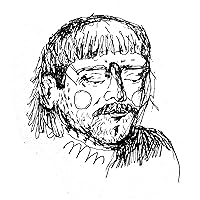
Stan Sakai (Japanese: 坂井 スタンSakai Sutan; born May 25, 1953) is an artist who became known as an Eisner Award-winning comic book originator.
Born in Kyoto, Sakai grew up in Hawaii and studied fine arts at the University of Hawaii. He later attended the Art Center College of Design in Pasadena, California. He and his wife, Sharon, presently reside and work in Pasadena.
He began his career by lettering comic books (notably Groo the Wanderer by Sergio Aragonés and Mark Evanier) and became famous with the production of Usagi Yojimbo, the epic saga of Miyamoto Usagi, a samurai rabbit living in late-sixteenth and early-seventeenth-century Japan. First published in 1984, the comic continues to this day, with Sakai as the lone author and nearly-sole artist (Tom Luth serves as the main colorist on the series, and Sergio Aragonés has made two small contributions to the series: the story "Broken Ritual" is based on an idea by Aragonés, and he served as a guest inker for the black and white version of the story "Return to Adachi Plain" that is featured in the Volume 11 trade paper-back edition of Usagi Yojimbo). He also made a futuristic spin-off series Space Usagi. His favorite movie is Satomi Hakkenden (1959).
(4 z 5 za na poměry série poněkud slabší sbírku střípků ze světa UY) Ano, pořád je to dobré a pořád mám u UY rád kratší příběhy, jenže tady je ta směs různorodá a je tam málo "pojiva", které právě dodává tomuto stylu šmrnc. Takže to hrozně působí jako náhodná směs samostatných sešitů, což vlastně i trochu je. Skoro mám pocit, jako by si Stan chtěl odpočinou od předchozích spletitých sítí a zároveň si odškrtnout pár dobrých nápadů na krátké příběhy, které se mu umně nepodařilo zatím vplést do větších příběhů a už dlouho mu leží v šuplíku. Ty jsou samy o sobě zábavné, ale jak říkám - při čtení v knížce, jakožto celku, tomu chybí to skvělé pojivo, na které jsem zvyklý.
This is a cumulative review of the 35 volumes of collected Usagi Yojimbo stories that have been published to date. They span a 37-year history, across the first seven volumes published by Fantagraphics, across the next 24 volumes published by Dark Horse, and finally across the most recent three volumes published by IDW, bringing us to Usagi Yojimbo v35: Homecoming, published in 2021. This review does not include the volumes Space Usagi, Usagi Yojimbo: Yokai, Usagi Yojimbo: Senso, Usagi Yojimbo/Teenage Mutant Ninja Turtles: The Complete Collection, or Chibi Usagi: Attack of the Heebie Chibis.
In a land very much like Japan, in a time very much like the early days of the Tokugawa Shogunate, when legions of samurai suddenly found themselves out of work in a war-torn land trying to get back to normal, a masterless samurai - a ronin - named Usagi Yojimbo walks the path of a student-warrior. He goes wherever fate takes him, living by his honor, his swordsmanship and by the grace of the friends he makes along the way. On his endless adventures, Usagi confronts wicked bandits, cruel tyrants, sinister assassins, and dire supernatural fiends. He often encounters humble folk plying their trade in an often cruel and harsh world (and along the way, learns a bit about their work, like brewing sake or weaving tatami mats).
Along his way, he builds a vast cast of friends, allies and rivals, including the bounty hunger Gen, fellow samurai )and love interest) Tomoe, the ninja Chizu, the third Kitsune, the noble lord Noriyuki, the stalwart Inspector Ishida, and of course, Usagi’s own son (and chip off the old block), Jotaro. And just as well, he builds no small list of enemies, including the dire Lord Hikiji (the power-hungry lord who is the very reason why Usagi no longer has a master), the Neko and Komori ninja clans, the Koroshi league of assassins, and the demonic ronin Jei. Amid all this, Usagi strives to uphold the warrior ideals of bushido and find a sense of enlightenment on his journey.
The stories are often funny, exciting, smart, sharp, tight, and occasionally touched with tragedy. They offer an informed look at medieval Japan, and pay no small number of homages to all kinds of cultural references both ancient and modern, as a reflect of Sakai’s own journey to connect with his personal heritage and honor it with his stories. They are simultaneously suitable for adults and kids alike - despite all of the carnage, Sakai never descends into gruesome detail, and yet, the many scenes of battle never seem so sanitized that they lost their gravity.
The artwork is distinct and excellent. Sakai’s is a master of sharp lifework (as well as lettering), and since he writes, pencils, inks and letters every issue solo, there is a uniformity and consistency to Usagi Yojimbo that you just don’t find in many other comics or cartoons. Until the last few volumes, it is all B&W, but Sakai’s sense of depth as well as his supremely skilled panel composition, pulls you in so deeply that you forget if it’s in color or not. You are under Usagi’s spell from the first page, and along for the ride, however long it goes.
To get an idea of the length, breadth and depth of how beloved an impactful Stan Sakai’s Usagi Yojimbo series has been, look no further than the introductions to each of the collected volumes published to date. There you will find a dazzling array of some of the finest talents in modern cartooning, who have a seemingly endless variety of ways to say how much they love Usagi Yojimbo, how impactful it has been on their own careers, and how great Stan Sakai has been himself as a goodwill ambassador for both cartooning as well as of the Japanese culture he so masterfully serves throughout his stories.
For those who have not yet enjoyed these stories for the first time, a wonderful journey awaits you. Usagi Yojimbo was created during those days in the 80s when anthropomorphic martial arts characters were all the rage. And yet, Usagi Yojimbo stood apart almost immediately. He might have been a rabbit ronin in a world of talking, walking animals, but he never seemed to be drafting the Teenage Mutant Ninja Turtles or trying to comment on the martial-art zoo comic trend. From the beginning, Usagi Yojimbo, like its titular character, was determined to walk its own path, to be the best it could be, and to celebrate the things in life that are worth celebrating: devotion to one’s craft, honoring one’s family, upholding one’s obligations, serving one’s highest aspirations, accepting one’s limitations, and acknowledging one’s flaws.
The stories are largely episodic varying in length from just a few pages, to an entire collection. They often are self-contained, but just as often reference slowly building meta plots, or serve an entire, novel-length story on their own. Everything is delicately interconnected, and yet, without such a heavy continuity that one can not simply pick up any of these volumes and begin reading without skipping a beat. Such is this series, endlessly accessible and friendly to beginners, and endlessly rewarding to long-time fans for whom earned narrative developments deliver terrific dividends.
As with any series of this length, some moments in it won’t land as well with the reader as others. But there just are not that many lows with this - if you appreciate what Sakai is doing here, you’re likely to enjoy pretty much all of it. There are some volumes that really stand out, largely because they tell the biggest and most epic stories (v04: The Dragon Bellows Conspiracy, v12: Grasscutter, v15: Grasscutter II - Journey to Astuta Shrine, v17: Duel at Kitanoji, v19: Fathers and Sons, v28: Red Scorpion, v32: The Hidden, and v35:Homecoming all come to mind), but really, the entire catalog of worth enjoying on equal terms. It’s saying something indeed that the most recent volume of Usagi Yojimbo tells one of the most compelling and moving stories of the entire series. Some edges dull over time, but as a storyteller, Stan Sakai’s edge never does.
Usagi Yojimbo has been hailed as one of the greatest independent comics ever. And it is. But it is more than that. It is one of the greatest comics, period. Read every volume. You will be glad that you did.
This is actually the second volume I've read of this series. Similar to the last volume, this contains multiple shorter stories, even more than Vol. 19. I didn't realize this series breaks up into side stories featuring different characters, some seemingly new but others presumably were featured in earlier volumes. A couple of the stories feature a little bit more supernatural elements which I wasn't expecting.
Otherwise, both story and art are very consistent. A few stories contain bits of Japanese history, others share bits of life wisdom. The more I read, the more I'm liking it.
More adventures with Usagi, after he left his son...
Cooking Lesson--Young Usagi learns from his sensei a valuable lesson about dealing with hardships by cooking some food. The story is short, whimsical, and insightful.
Contraband--Usagi bumps into a dying man who gives Usagi a package to deliver to his daughter in town. Usagi is a little reluctant to be involved but the guy expires right there so he feels obligated. He's drawn into an adventure as he travels with the unopened package, which draws a lot of attention since it is contraband. The twist at the end was a total surprise and a total delight.
After the Rat--Inspector Ishida (who appeared in a few other earlier tales) investigates The Rat, a local Robin Hood-type thief who is beloved by the poor people of the town but despised by the merchants. The Rat makes the police do a lot of running around, but will he finally be caught when he is accused of murder? The tale goes quickly and has some interesting comments about society.
Samurai for Hire--Usagi gets "hired" by a rude old woman who is on the road and carrying a heavy bag. Well, Usagi carries the bag now that he is her "underling." Usagi goes along with her, putting up with her odd, annoying behavior. The story slowly gets more complicated, but not too much. It's another traveling tale with an odd character at the center.
Dreams and Nightmares--Inazuma (a female friend of Usagi's) has some intense nightmares that come into reality as she is possessed by the spirit of Jei, a particularly nasty character that Usagi killed once, but he's a demon, so he is back again as Inazuma. She is traveling with Keiko, a girl who thinks of her as her "auntie," though Inazuma has become a lot more.
Gen and the Dog--Gen is hunting the bounty on Inazuma and has competition with Stray Dog, another bounty hunter who has been a pain in the butt before. Their separate investigations lead to the same spot, but Inazuma has moved on. This reads like set-up for future story lines.
When Rabbits Fly--A local scientist is trying to get his mechanical wings to work. Ruffians make fun of him but Usagi is at least open to the idea they might work. The story is mostly a comedy with some serious moments and the usual satisfying ending.
Into the Mist--Tomoe is out with her lord's retinue on a falconing hunt. The falcon brings down some prey and the lord sends her and Lord Horikawa to recover it. As she rides out, she is enveloped in mist. Coming out of the mist, she discovers a battlefield with an army approaching. She is confused but issues orders for a tricky tactical move. Things go well until one of the flanks does not attack like it should. The battle gets shrouded in mist again and Tomoe returns to the present, where she discovers Horikawa regaling their lord with a tale about a 200-year old battle their clan lost because of the strategy of Tomoe's ancestor. Tomoe corrects the record but does not resolve her conflict with Horikawa.
Nocturnal--Sanshobo, a priest Usagi knew back in the Grasscutter saga, is head priest of his temple. A man about to take vows comes to him describing nightmares he's had about becoming a monk, specifically about a girl in the local village whom he was supposed to marry but left for the temple. Sanshobo's advice is to go to the village the next day to resolve the issue. The novice passes out, so they summon a doctor. The doctor thinks that more than exhaustion is going on; Sanshobo explains about the soon-to-be monk's guilt. The doctor says it's odd because the girl has been missing for three days. The unhappy truth is soon revealed as Sanshobo discovers the novice has been visited at night by more than nightmares. It's another good tale from Sakai.
Vendetta's End--Matabei, who has been tracking down and killing his father's killers, comes to a town where Usagi is visiting. The new local priest has been doing much good healing people though he becomes the target of Matabei since the priest was formerly part of the gang of killers. Usagi tries to help the situation with an unexpected outcome.
I don't know what it is about Sakai and his storytelling. I just enjoy it so much, I've read almost no bad stories in the entire series. He has a good sense of people and has a wide variety of characters. A lot of people deal with death, either their own coming or another's. Sakai fills the situations with a lot of interesting ideas.
"Glimpses of Death" collects issues #76-82 of Usagi Yojimbo v3 and Stan Sakai's contribution to the Drawing the Line collection. Though an overall enjoyable set of stories about the wandering ronin, this collection is more forgettable than the entries preceding it. Unlike most of the previous volumes, there isn't a central arc here. Instead, each story is a condensed adventure that while fun also don't really stand out much amongst the immense body of work that is the series as a whole.
"Cooking Lesson" is a short little story where Katsuichi teaches a young Usagi about the importance of resilience using boiling hot water to make his analogy.
"Contraband" is another of Sakai's takes on spinning real Japanese history around the Edo Period into an Usagi story. The demonized foreigners from the black ships have brought something of high value to the mainland, which the authorities are desperate to confiscate. Though Usagi wants nothing to do with the contraband, he finds himself moved by the courier's willingness to sacrifice their lives to keep it safe. This was a pretty strong issue and Sakai does a great job contextualizing the history of European arrival in Japan in the afterword.
"After the Rat" features the return of Inspector Ishida who is hunting down an infamous bandit known as Nezumi, who has widespread support from the populace due to his "Robin Hood" stylings. When Nezumi is suspected in the murder of a local merchant, Ishida must navigate his own biases to investigate the crime correctly. A fun little murder mystery with a touch of more historical infusion to spruce the story up a bit.
"Samurai for Hire" has Usagi serving as a hireling for a rude and bitter elderly woman. Though his patience is routinely tested by his new benefactor, Usagi does his best to ensure the job is carried out. Mostly meant to be amusing, the story ends up being a bit more grating due to how infuriating this woman actually is.
"Dreams and Nightmares" teases the return of Jei, though he now possesses the body of the enigmatic warrior, Inazuma (as seen following the events of the "Grasscutter" arc). "Gen and the Dog" follows Gen on the hunt for Inazuma due to the high price on her head, only for Gen to find that his rival bounty hunter Stray Dog is also on the prowl.
In "When Rabbits Fly", Usagi works alongside an inventor who has crafted a set of wings that he hopes will grant him the ability to fly. Though Usagi believes the attempts will be futile, he works to keep the inventor safe from the aggression of the town's bullies. The punchline to this issue was pretty funny, though the story itself doesn't justify the issue long length.
"Into the Mist" follows a hallucinatory trip by Tomoe Ame who sees through the eyes of her ancestor during a pivotal battle. The journey is meant to serve Tomoe a note of caution regarding one of Lord Noriyuki's more sycophantic followers.
"Nocturnals" is a grim little story about a priest in Sanshobo's temple who is crippled by guilt for having betrayed his fiancée. This is perhaps one of the darker stories in the entirety of Usagi Yojimbo comics.
The final story, "Vendetta's End", is the culmination of Koyama Matabei's quest for vengeance for his father's killers (as depicted in the "Duel at Kitanoji" arc). Matabei's final target is a truly reformed man, making the idea of seeking revenge against one who has perhaps paid his debts a bit more complex. This was probably the strongest entry in the bunch of stories collected here.
While not one of the stronger entries to the series, the overall collection of Usagi Yojimbo stories here are still pretty good. Usagi does take a bit of a backseat with this volume, but that does allow for Sakai to flesh out more supplementary characters like Ishida, Tomoe, Inazuma, and others. There's some nice variety of stories here, both in themes and tone.
Stan Sakai is a master storyteller what more is there to say than that?
To begin with, his stories are well researched. Though works of fiction, Sakai takes from history and Japanese culture to enrich his little tales of the ronin rabbit with factual events that happened historically during the era Usagi Yojimbo would have been a wandering samurai in Japan. Not a lot of writers take their work so seriously, but not a lot of writers care for or tend to their own creations and definitely not for twenty years like Stan Sakai has done. The stories printed in this volume cover those written and illustrated on the 20th anniversary of Usagi's birth, and they are no less exciting or adventurous and fun to read than the firsts ones.
In these collection of tales we see glimpses of Usagi's childhood and his training, which I always love. As it shows what a smart mouth little bunny he was before he grew up to be our heroic samurai. More than once, again, our beloved samurai rabbit finds himself dragged into adventures that he probably would rather not have. But his noble spirit always calls for him to help those less fortunate, despite how unfortunately they treat Usagi. Here in particular I am referring to, A samurai for hire, a funny, tragic little story about a rich, elderly, merchant woman, the kind I'm sure we've all had some dealings with. There's also a Robin Hood like character involved in a mystery, showcasing the ongoing battle between Nezumi (the Rat) and Inspector Ishida, a shrewd, intelligent old detective. It's not for nothing this book is titled, Glimpses of Death, because more than once our heroes and villains find themselves at death's door. Gen the bounty hunter rhino makes a very welcome appearance again, in Gen and the Dog, where he squares off against his rival. Things don't end well, and I hope the story will pick up later with those two as they make quite the comical pair. Usagi tries to help an inventor learn to fly, and a few other stories make up this book all of them worth reading, all of them educational as well as entertaining and dramatic in their own way.
Should you wonder about Mr. Sakai's diligent research, you need only to read the story notes that they print at the back of the book, which reference what books he researched for the stories he wrote. Contraband in particular is a story with a surprise ending, and it is interesting to know the historical accuracy of it. There is the usual cover gallery in black and white, and the work here is beautiful to look at. Regardless of how publishers choose to publish his work, I will always appreciate Usagi Yojimbo best in black and white, the way the title was originally published and the way I feel it looks best. And lastly, we get a small page long discussion about San Diego Comic Con's celebration of Usagi Yojimbo. A character we have had for more than 20 years now, coming close to his 30 year celebration soon.
Usagi Yojimbo is worthy of all the praise and hype you may have heard. This cute little rabbit has been having all manner of adventures in his 20 plus years across the comic world, even so far as guest starring THE Teenage Mutant Ninja Turtles, once upon a time, and as they graced his pages, he graced their cartoon shows with appearances. He's a prodigious little bunny who has travelled to space (well, one of his ancestors did) and it's not for nothing that Netflix is giving him a tv show. If you have not yet given Usagi a try you could do no worse than to start with this or any of his books. And if you dislike black and white comics, no excuses because his current publisher, IDW Comics is printing his newest adventures in color.
Yet more brilliant adventures of that honorable and cute wandering samurai. I cannot recommend his books enough.
This entire review has been hidden because of spoilers.
It is rare I rate one of these Usagi volumes less than a 5 but this one was weaker for me. I'll summarize the stories: - One where Usagi has to play bodyguard..this ending fell flat because the object everyone was dying for was a cross. I know I was supposed to go "oh wow!" but, as an atheist I went "oh geesh" - there was a story with a fav character of mine Inspector Ishido...but even he couldn't save The Rat story from really going nowhere - the we have the worst Usagi story I have ever read "Samurai for Hire" in which the rudest lady ever treats Usagi like a slave and...he takes it! And in the end there is no comeuppance for her so I am not sure the point of the story. "Rude people exist?" Hated the story and I have no idea why Usagi let this stranger just order him around and treat him like dirt. - Then we have two stories in a row that don't go anywhere...we check in on the demon possessed Aunty then we check in on Gen and Stray Dog. No real stories but I guess we are reminded of them and might run into them in the future. - Then we get an okay story about a tinkerer who wants to fly - And we end on s story with Tomoe that - by itself - falls flat, but does set up the story for the next volume
Overall - if you gave this volume a miss you would not be missing anything. Truly the first Usagi volume where the quality slipped.
I am so impressed that Stan Sakai continues to come up with new material, fresh storylines, and beautiful illustrations after so many volumes and issues. By this point, Sakai had been creating Usagi Yojimbo content for over 20 years. Nothing can stop this man.
Glimpses of Death is a collection of stories with everything from a young Usagi flashback in "Cooking Lessons" that is incredibly cute to one of the worst stories I've come across in the saga, "Samurai for Hire," which features a miserable old woman who treats Usagi horrendously and he takes it! The highlights, for me, were "Contraband" and the concluding issue, "Vendetta's End," which nicely wrapped up a side story that had been trailing along for a few volumes now.
All in all, there's nothing incredibly missable here. I wouldn't say to skip this one. I'm a completionist after all. But this volume certainly doesn't carry any major story moments that you won't get elsewhere in the series.
While Usagi is on his own again, a lot of friends take the stage as well, and the stories are for the most part very strong. The crotchety old lady story is one of the funnier stories in a while, but also manages to be touching. As well, Sanshobo and the demon touches on a troubling subject in a respectful way, painting all the characters as victims in different fashions. And seeing Gen play off a different foil (with Stray Dog) provides a different kind of energy. While I miss Jotaro's presence, there's a lot of variety here to keep fans of the series entertained.
This was a solid entry that gave us some good stories with the side characters. Maybe it's standing out since it was at the end, but my favorite sorry was the conclusion to the revenge storyline regarding the final killer.
Now that Usagi and Jotaro have parted ways, Usagi is on his own again. The characters that Sakai creates to interact with Usagi each let us see him in a different way. The books are very much about character. Love them.
There's no such thing, as far as I'm concerned, as a bad Usagi Yomjimbo comic. This collection of stories are fairly disposable, but fun yarns with a variety of characters fans of Usagi have grown to love over the years. The most interesting is the story detailing Usagi's movement of an unknown package that turns out to be a for a very small, persecuted group in historical Japan. With the other stories, we see Inspector Ishida search for a historical Robin Hood-esque thief, we briefly see what's become of Jei and Inazuma, and get a glimpse into Tomoe's ancestral past, and even have a rare one shot story starring Sanshobo.
Ultimately, these are a series of short stories that probably lose a lot if you're not familiar with the characters from previous stories, so it's probably not the place to start if you're not into Usagi Yojimbo. For that, I'd recommend volume one, or failing that, volume 6, or perhaps the Grasscutter saga.
I'm a huge fan of Stan Sakai's Usagi Yojimbo series, owning all of the trade paperbacks and most of the other Usagi-related volumes. For some reason, this book just didn't catch me the same way that all the other ones have. Part of it was that, following the two volumes of Usagi and his son Jotaro, this book felt a bit superficial, with very little action of consequence. That's not to say that nothing happens, but it fell short in way of character development and I felt like most of the stories were just trying to get us to the next real storyline. Even so, Usagi Yojimbo tends to be better than the average comic series. Perhaps three stars is a bit harsh relative to the other comic books out there, but compared to other Usagi stories, I feel that this volume is just average.
Stan Sakai is just masterful. Every single page is just perfectly paced and laid out, just pulling you right into the story. The "funny animals" work well to add a sense of lightness, so that the history elements don't overwhelm and the occasional supernatural folklore still seems completely reasonable and believable.
All the characters are extremely well realized, and Sakai moves around to different people and different settings, so you get the sense that he's setting up his players for his next big epic, and it should be a doozy. Stan doesn't put Jei/Inazuma into play unless it's going to be a wild ride!
Dans ce vingtième tome, l'auteur nous montre un peu de la vie de chacun des personnages réguliers de cette saga (et parfois même plusieurs, comme dans l'histoire mettant en scène Gen et le chien). On les retrouve tous avec plaisir, pour ce qui est clairement un album de transition. Mais quelle sera la prochaine histoire ? L'apparition massive du christianisme ? La rébellion de certains seigneurs ? Mystère !
I don't think there's any better example of Stan Sakai's storytelling mastery than "Cooking Lesson," the short story that opens this collection. It immediately became one of my favorites.
Historias dispersas a cada cual mas entretenida: enseñanzas de juventud, madres, ninjas, fantasmas, venganzas y simbolos estraños. Terriblemente entretenido!