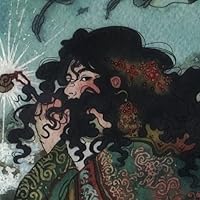
El libro ha sido traducido por Hector Martinez Sanz y cuenta con una extensa introduccion a cargo tambien del traductor, Hector Martinez Sanz SINOPSIS: Carmela Wronski, una anciana hija de un noble polaco, narra en primera persona su recuerdo sobre los acontecimientos que tuvieron lugar en su castillo de Estiria con la llegada del oscuro y siniestro Conde Vardalek, invitado por su padre. Sobre todo, en el caso de su hermano Gabriel. Estos hechos justifican por que a su edad ha fundado un refugio para animales abandonados en memoria de su hermano muerto."
Count Eric Stanislaus (or Stanislaus Eric) Stenbock was a Baltic German poet and writer of macabre fantastic fiction. He was a symbol of his age, poet, decadent, short story writer, a true member of the aristocracy who mixed with the Socialists and radicals of the late Nineteenth Century. In his time he was known as a 'drunkard, poet, pervert, most charming of men' a description which serves to confuse more than illuminate. Stenbock's life in Brighton, London and Estonia gives us a window on to the complicated worlds of literature, art and fashion which characterised the late Nineteenth Century.
Stenbock was the count of Bogesund and the heir to an estate near Kolga in Estonia. He was the son of Lucy Sophia Frerichs, a Manchester cotton heiress, and Count Erich Stenbock, of a distinguished Baltic German noble family with Swedish roots which rose to prominence in the service of Gustav Vasa. Stenbock's great-grandfather was Baron Friedrich von Stuart (1761–1842) from Courland. Immanuel Kant was great-great-granduncle of count Eric Stenbock.
During his lifetime the eccentric Count Eric Stenbock published a single collection of short stories, Studies of Death. These seven tales, at once feverish, morbid, and touching, are a key work of English decadence and the Yellow Nineties.
W.B. Yeats called Stenbock: "Scholar, connoisseur, drunkard, poet, pervert, most charming of men." Arthur Symons saw him as "bizarre, fantastic, feverish, eccentric, extravagant, morbid and perverse."
In a short life - (he died at 36 in 1895) - he so impressed himself upon his contemporaries that the legends they tell of him in memoirs and anecdotes far outstrip the attention given to his writings.
Studies of Death: Romantic Tales appeared in 1894, ornamented with a striking frontispiece by its author. The seven stories reveal an original imagination and a spry, urbane style quite removed from the melancholy murmurings of the Count's verse.
Towards the end, the Count was mentally as well as physically ill. At Withdeane Hall he terrified the domestic staff with his persecution complex and his delirium tremens. On his travels he had been escorted, and with him went a dog, a monkey and a life-size doll. He was convinced that the doll was his son and referred to it as 'le Petit comte'. Every day it had to be brought to him, and when it was not there he would ask for news of its health.
He was buried at the Brighton Catholic Cemetery. Before burial his heart was extracted and sent to Estonia & placed among the Stenbock monuments in the church at Kusal. It was preserved in some fluid in a glass urn in a cupboard built into the wall of the church. At the time of his death, his uncle and heir, far away in Esbia, saw an apparition of his tear-stained face at his study window.
On the day of his death the Count, drunk and furious, had tried to strike someone with a poker and toppled into a grate. -- R. B. Russell
“Historia verdadera de un vampiro” se publicó en 1894, dentro de “Studies of death: romantic tales”. Su autor se refería a sí mismo como más muerto que vivo. “Historia verdadera de un vampiro” es romántico y mórbido y hasta con un humor. Es la historia de un vampiro que se enamora de un joven llamado Gabriel.
Dekadans üstadlardan şair-yazar Kont Stenbock’un tek öykü derlemesi 1894’te yayımlanmış. Bu ufacık kitap, derlemeden alınmış iki hikâye içeriyor (ikisinin de orijinali Project Gutenberg’de bulunabilir). Yayınevinin neden arka kapağa kitapta iki hikâye bulunuyor notu düşmediğini anlamak mümkün değil. Hikâyelerin ikisi de birbirinden tuhaf ve ikisini de çok beğendim – tuhaf kelimesini, bir ustalık ibaresi olarak kullanıyorum. “Bir Vampirin Gerçek Hikâyesi”, bir vampir hikâyesinden başka her şeye benziyor; “Breton Efsanesi” ise, kurtadam folkloruna dayanan, düşteymiş gibi ilerleyen, masalsı bir anlatı. Çeviriler gayet iyi ama tek eleştirim var: İkinci hikâyenin orijinal adı “The Other Side: A Breton Legend” olmasına rağmen bunu “Breton Efsanesi: Bir Kurtadam Hikâyesi” şeklinde çevirmek anlamı katletmek olmuş. Hikâyede “nehrin diğer tarafı” merkezi öneme sahip olduğu için, başlıkta bunu kaybetmemek lazımdı.
Hungarian vampire Count falls for a beautiful young boy in 19th century Styria. Houseguest of the Gothic castle as a vampire, narrator is called Carmella... yes, it´s genderbent Carmilla with touches of La morte amoureuse by Gautier. This is enjoyable, heavy-breathing melodrama.
Excellent and strangely erotic tale of a boy on the cusp of puberty, who is seduced and drained to an early death, by a ghostly effeminate vampire who takes up residence in his home - on the persuasions of the boy's father. The boy communes strangely with nature, and has a vast menagerie of animals in the gardens. The tale is told by his sister, the sole remaining member of the family who has converted the ancestral home into an animal sanctuary. Wondrous and bizarre, and recommended. David Tibet is publishing an anthology of Stenbock's work very soon and I'll be obtaining a copy for sure.
Despite my rating this isn't a bad story exactly, it's just pretty average on the whole. The themes explored and certain details are interesting but it's dryly told, there's nothing to elicit much of anything from a reader, no suspense or urgency, or even pretty prose. It's little more than a curiosity due to its author and the Vampire character, but otherwise it offers little.
Scheinbar hat der Charakter Gabriel der Geschichte autobiographische Züge von Eric Stenbock, der auch sehr schwul war und gerne Tiere im Garten gehalten hat. Der Vampir Charakter wird sehr geliebt von der gesamten Hausgemeinschaft, bleibt jedoch mysteriös und unnahbar für den Hauptcharakter. Sehr empfehlenswert, wenn man Carmilla, der Vampir und/oder Bildnis des Dorian Grey mochte.
Written in 1894, it feels a bit like a genderbent Camilla. The narrator is named Carmella (I think) and relates the story of how an act of generosity by her father led to the loss of her entire family. Father invited Count Vardalek to stay after meeting him at the rail station when they missed a connecting train. He at first appears exhausted and old, but the longer he stays with the family, the healthier he gets and the more ill her young brother becomes. The boy who used to climb a tree to get to his room, sickens and starts to sleep walk.
Interestingly, the Count knows the effect he is having and mourns it, but chooses his own life.
"His figure had something- I cannot say what- serpentine about it. The features were refined; and he had long, slender, subtle, magnetic-looking hands...an attractive smile, which belied the intense sadness of the eyes."
"...and he sat down at the piano. Then he played a Hungarian csardas- wild, rhapsodic, wonderful. That is the music which makes men mad."
Una no disimulada parodia gender-bender y pedófila de Carmilla donde esta vez es un vampiro se alimenta de un niño, con nada sutiles tintes homosexuales. Lo interesante es que el vampiro dice que se sabe que lo que hace está mal, pero que igualmente elige su propia vida sobre la del niño. No sé si será intencional, pero esa es una buena imagen de como suelen pensar los pedófilos: van de víctimas y actúan como si sufrieran mucho por lo que hace pero no tuvieran otra opción, cuando obviamente siguen eligiendo comportarse así y destruyendo las vidas de infancia para su satisfacción y sólo quieren excusarse. Por lo demás, hubiera preferido que el relato fuera mucho más condenatorio con ese comportamiento pedófilo, ya que parece que lo único grave es el vampirismo y no que un señor esté tocando inapropiadamente a un menor, algo de lo que nadie parece darse cuenta.
The True Story of a Vampire (1894), also known as The Sad Story of a Vampire, written by the outrageous Stenbock is obviously inspired by Le Fanu's Carmilla with a big dollop of homosexuality thrown in. The story involves an unexpected stranger who is asked to reside with a family. It is told by the surviving member of the family at the time of her old age. It recounts how a stranger, Count Vardalek, came to stay with her and her family, which included her father and brother, when she was young . Vardalek's obvious obsession with her young brother leads to her ending up as the sole member of the family. This is a creepy good vampire story about a young free spirit who has the life sucked out of him.
Eser iki öyküden oluşuyor. Bunlardan ilki, kitaba adını veren "Bir Vampirin Gerçek Hikâyesi". Diğeri ise "Breton Efsanesi". Toplamda 60 sayfalık bu kitapta anlatılan ilk öykü gizemli bir vampir etrafında dönüyor. Kısa fakat vurucu bir etkisi yok hikâyenin ne yazık ki. Derinliği yok. Diğeri ise kurt adam konulu ve o da ilkinde olduğu gibi yüzeysel kalmış. Okuru düşsel dünyasının içine çekme konusunda yetersiz kalıyor.
I decided to check this story out because I loved Vardalek in Kim Newman's Anno Dracula. This is a pretty simple story. Vardalek is a great character but the story itself is pretty mid. I'm using the term mid with its original meaning not calling the story bad. It's curious to see a vampire Count who becomes younger after feeding, three years before Dracula was published.
Külliyattaki ilk vampir kurt adam hikayelerinden biri olması lazım yoksa bu hikayenin bu şekilde olmasını açıklayamam. Güzel fikir; eksik yazım ve eksik kurgu. Yine de okuyup bitirdim çünkü yayınevi siparişte hediye göndermişti okumamak ayıp olurdu.
Kara mizah dozuyla başlayan ilk vampir hikayesi tadında noktalanırken onu takip eden Kurt Adam öyküsü de içerdiği çiçek detayıyla birlikte korku folklorunun bu kök salmış iki temasını ivedilikle besliyor, kitabımızın ebatıyla da kütüphanemizde muhafaza etmelik bir macera sunuyor bizlere.