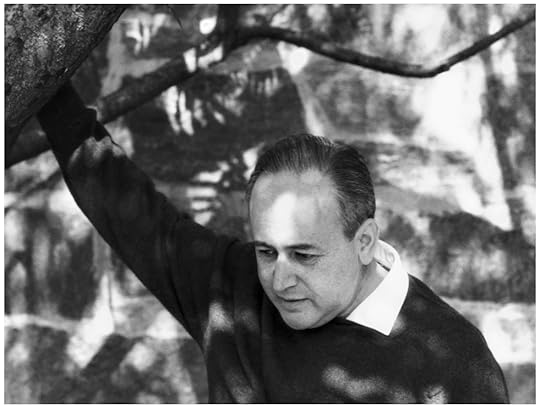
You can get yourself into a lot of trouble, allowing your reading trajectory to be guided by high school English class assignments and highfalutin lists of (supposedly) international repute. Least, that's what I feel after figuring out that a local library had a copy of this and thinking, hell, about time I read what all the fuss is about. See, that long ago assignment was based around Celan's "Death Fugue", and when the poet popped up in this much more holistic edition on various lists with such lofty titles as "The World Library List", I took it in stride, as I have with many a European dude, that this writer was worth devoting a span of attention to. Now, I've managed to stumble my way through much denser and far less Eurocentric texts in recent years, but almost all of these were novels with their typical superfluity of ensconced context, and what wasn't supplemented internally often came with some very helpful foot/endnotes. In contrast, this is a book of poetry, and while a thirty-page introduction is hardly insubstantial, it may have done more work if it had been diffused amongst the poems in a more direct sense, rather than wave abstractedly at the mysticisms of various religions, the translation choices of various bibles, and the ethical confoundments of various thinkers. Celan himself didn't offer anything in the way of notes, but it's been a long while since I interpreted that kind of obfuscation as a sign of greatness, and in a different yet no less significant vein, conflated historical pathos with being behooved to give the absolute benefit of the doubt. As such, I'm not pleased with my first attempt at this poet's works, and I can see myself coming back to it when I've given many other authors their due. But I won't be bending over backwards to gird myself with esoteric knowhow simply because the more popular editions choose not to equip their reader with annotations.
I've never had the best track record with poetry. In the past year alone, I've hurled myself at Eliot, Neruda, Yeats, and my estimations across the board have been middling, at best. Now here I am at the border of Celan and the whole inexorable weight of his context behind him, peering at the stanzas, wondering at the potential metaphors, and thinking about a failure of comprehension meeting an incompatibility of aesthetics. I suppose the other thing is that my willingness to treat with the Holocaust in literature stops short at considering anything put forward by survivors in a reverential light. Part of it is my longstanding disgust with my home country's adulation of military funding and disdain for propagating critical literacy, aka being happy to sell weaponry to certain settler states across the seas but pooh poohing the idea of being able to do anything about antisemitism at home. Another part is, after a while, you have to trust that your critical reading faculties are capable of taking you through texts in a manner that may not be ideal but is reflective of your own personal maturity and adequacy of learning, and if something neither offers up its context without a fight nor appeals much on the surface level beyond the already encountered, much-anthologized representation, well. I'm not about to break my streak of not giving into peer pressure at this moment in time and force myself to pick something slightly maybe promising perhaps out from this collection's crowd, so I'll leave the better review to be written by a future me equipped with an edition that considers itself to be a torch to be handed off rather than an effigy to endure.
Since beginning full time work, I've every so often contemplated not reviewing one work or another. Here was one that I not only considered silently rating and moving on from, but also contemplated whether a blank would be better than this endlessly equivocating mess I've vomited out for the last couple paragraphs. Long story short, I really didn't understand or like this book as much as I would've preferred to, and while literary accessibility is certainly a factor, it makes me think about certain literary swathes I've largely sidestepped due to my insistence on the non-Eurocentric, especially what babies may have been thrown out with said bathwater. Still, whatever my own personal reception, I'm glad I was able to find this work on the shelf of a local public library. In an age where my home country is outlawing teaching about the Holocaust to grade schoolers and kids are graduating high school not knowing who Anne Frank is, the human recollection of history is becoming a playing field for thinktanks and venture capitalists. Considering that, it's probably for the best that Celan remains defiantly esoteric, lest he be dug up and marketed into a desecrated oblivion by the civilization that did its best to wipe him and his people from the face of the earth.