Jump to ratings and reviews
Rate this book

Young Once

Rate this book
Young Once is a crucial book in the career of Nobel laureate Patrick Modiano. It was his breakthrough novel, in which he stripped away the difficulties of his earlier work and found a clear, mysteriously moving voice for his haunting stories of love, nostalgia, and grief. It has also been called “the most gripping Modiano book of all” (Der Spiegel).
 
Odile and Louis are leading a happy, bucolic life with their two children in the French countryside near the Swiss mountains. It is Odile’s thirty-fifth birthday, and Louis’s thirty-fifth birthday is a few weeks away. Then the story shifts back to their early years: Louis, just freed from his military service and at loose ends, taken up by a shady character who brings him to Paris to do some work for a friend who manages a garage; Odile, an aspiring singer, at the mercy of the kindness and unkindness of strangers. They move through a Paris saturated with the crimes and secrets of the past but breathing hopes for the future; they find each other and struggle together to create what, looking back, will have been their youth.

177 pages, Kindle Edition

First published January 1, 1981

77 people are currently reading
2075 people want to read

About the author

Patrick Modiano

139 books2,123 followers
Patrick Modiano is a French-language author and playwright and winner of the 2014 Nobel Prize in Literature.

He is a winner of the 1972 Grand prix du roman de l'Académie française, and the 1978 Prix Goncourt for his novel "Rue des boutiques obscures".

Modiano's parents met in occupied Paris during World War II and began a clandestine relationship. Modiano's childhood took place in a unique atmosphere: with an absent father -- of which he heard troubled stories of dealings with the Vichy regime -- and a Flemish-actress mother who frequently toured. His younger brother's sudden death also greatly influenced his writings.

While he was at Henri-IV lycee, he took geometry lessons from writer Raymond Queneau, who was a friend of Modiano's mother. He entered the Sorbonne, but did not complete his studies.

Queneau, the author of "Zazie dans le métro", introduced Modiano to the literary world via a cocktail party given by publishing house Éditions Gallimard. Modiano published his first novel, "La Place de l’Étoile", with Gallimard in 1968, after having read the manuscript to Raymond Queneau. Starting that year, he did nothing but write.

On September 12, 1970, Modiano married Dominique Zerhfuss. "I have a catastrophic souvenir of the day of our marriage. It rained. A real nightmare. Our groomsmen were Queneau, who had mentored Patrick since his adolescence, and Malraux, a friend of my father. They started to argue about Dubuffet, and it was like we were watching a tennis match! That said, it would have been funny to have some photos, but the only person who had a camera forgot to bring a roll of film. There is only one photo remaining of us, from behind and under an umbrella!" (Interview with Elle, 6 October 2003). From their marriage came two girls, Zina (1974) and Marie (1978).

Modiano has mentioned on Oct 9, 2014, during an interview with La Grande Librairie, that one of the books which had a great impact on his writing life was 'Le cœur est un chasseur solitaire' (The Heart is a Lonely Hunter), the first novel published by Carson McCullers in 1940.

(Arabic: باتريك موديانو)

Ratings & Reviews

What do you think?
Rate this book

Friends & Following

Create a free account to discover what your friends think of this book!

Community Reviews

5 stars
287 (16%)
4 stars
604 (34%)
3 stars
606 (35%)
2 stars
198 (11%)
1 star
32 (1%)
Displaying 1 - 30 of 198 reviews
Profile Image for Jim Fonseca.
1,163 reviews8,488 followers
June 9, 2020
I’ll start this review by talking about the author. He was born in France in 1945 and won the Nobel prize in 2014. I previously reviewed two of his works that I liked; I gave a 5 to Honeymoon and a 4 to The Black Notebook. But this one was lacking. It was one of his earliest novels (1981). He published more than 30 in his career which is still active.

description

Not all of his works have been translated into English and most of those that are in English were not translated until after he won the Nobel prize. When I was looking for information about the author when wrote my earlier reviews I came across a sarcastic comment that said something like when Modiano won the Nobel prize, even people well-versed in French literature started wondering who is he? Have a read anything by him? Clearly Young Once, the book I am reviewing now, is an early work. The author had not heeded Edith Wharton who said something to the effect of only use only use dialogue for critical passages. Much of the dialogue in this book is mundane.

As I went through the book as I often do, pencil in hand, looking for passages that I could use to illustrate good writing, I found none. Now I say all this with a caveat: I am currently reading another one of his that I am enjoying and that I am thinking is truly a good work. Review to come of In the Café of Lost Youth.

Young Once is about a still-young couple; both are 35 years old. We see them first in a rural area of France that seems to be in a ski chalet setting where they had a guest cottage. But now they are thinking about renovating it into a café where people would gather while they wait for the tram. They have two young children and seem happy. The woman wonders can anything new happen at 35? She thinks about how at that age you reach a zone of total calm. That’s a far cry from when they started out in Paris in their twenties.

description

I think of the theme that you never really know who your neighbors are. Because after that brief introduction of current-day bliss, the video rewinds to their early life in Paris. It’s right after the war. The man has just been released from the military and he has no idea of what he is going to do. He ends up running a garage for a mysterious rich man and he works his way up to being a personal courier for his business. The old man is running some type of con or scam (and surprise - it’s not drugs!)

In her early life the woman was an aspiring singer trying to sell records and singing in dives. These were the days when the couch was the most important piece of equipment in the office of a recording studio executive. The two meet and they seem to have a good life. The man basically gets paid vacations with his woman friend when he gets his deliveries through customs. They go to England for a couple of weeks, all expenses paid, and they see how the other half lives. They hang out with rich people and cosmopolitan types.

The ending of the story is a bit predictable.

description

One thing I did like about the book, and something the author is known for, is his local color of Paris. We get street names, plazas, how buildings disappeared or were re-purposed and how neighborhoods have changed or stayed the same.

So I’m giving it a 3 but it’s still a pretty good story that kept my attention. I never thought of not finishing it. But clearly this was a work in progress by an eventual Nobel prize winning author.

Top photo from anncavittfisher.com
Middle photo from nytimes.com
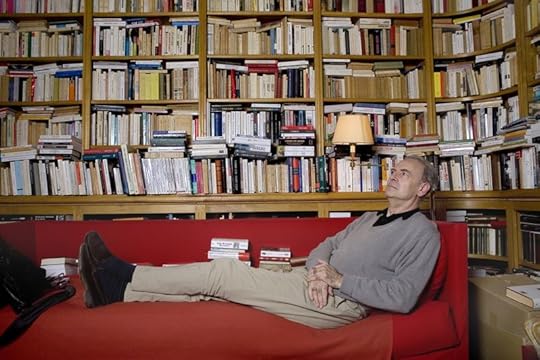
The author from peoplewhowrite.wordpress.com
Profile Image for Katia N.
710 reviews1,110 followers
February 22, 2022
It seems to be a transitional novel between Modiano's early books and his later atmospheric masterpieces. The atmosphere is started to play a big part, but there is too much plot to focus on the atmosphere and too little for it to sustain it as a focus. And lodging, another feature I love about Modiano is very slightly pronounced. Still a poignant story about youth, love and money.
Profile Image for Tony.
1,030 reviews1,912 followers
Read
February 20, 2018
Now I can say I've read Modiano. I enjoyed the story but didn't get any deeper meaning. And I don't have anything else to say.
Profile Image for Dan.
499 reviews4 followers
March 16, 2019
Patrick Modiano typically writes his novels from the vantage point of middle-aged men nostalgically recalling the people, relationships, and places from when they were in their 20s. What’s a Modiano novel without his signature undertone of sadness and regret for lost loves?

In Young Once, Modiano departs from his familiar structure. Young Once starts with Louis and Odile—both almost thirty-five, happily married with a five-year-old son and a thirteen-year-old daughter, settled in a chalet on a French mountainside—and then winds back to when they met as twenty-year-olds living in Paris. Both their lives in their mid-30s and their lives at twenty are told seemingly contemporaneously rather than through the lens of recollections. Modiano provides only a few flashbacks from Louis and Odile’s present to their past. ”They did not know that this was their last walk through Paris. They did not yet exist as individuals at all; they were blended together with the facades of the sidewalks. . . Later, when they remembered this period in their life, they would see these intersections and building entryways again. They had registered every last ray of light coming off of them, every reflection. They themselves had been nothing but bubbles, iridescent with the city’s colors: gray and black.” And ”Later, when the two of them talked about the past—but they did so only on very rare occasions, mostly after the birth of their children—they were surprised to realize that the most decisive time in their lives had lasted barely seven months. It was true: Louis had left the army in December, they had met in early January. . .”

Modiano is as subtle as always in Young Once. When they meet as twenty-year-olds, Louis and Odile are alone, both as individuals and as a couple: ”Louis was seized with a feeling of helplessness. What were they going to do in Paris? He felt the need to confide in these Englishmen, even ask their advice. No one had ever once given him and Odile advice. They were alone in the world .” They’re adrift in post-War France, without opportunities or a future. Louis was recently demobbed from the French army. Odile’s an aspiring singer. An acquaintance asks them ”Tell me, have the two of you ever wanted to be students?” And here’s Odile responding: ”’You mean a student like you are?’ Odile said, bursting out laughing. . . A student. That was something that had never once crossed Louis’ mind, or Odile’s. How could they ever go to university?”

Louis and Odile’s is not a story book romance. Despite other dalliances, they’re bound together as a couple. Lying and willful self-deception about the likely illegal and certainly shady activities of their friends and associates come easily to them, without guilt and recriminations. An older acquaintance employs Louis as a night watchman and ”as he got used to the routine, he stopped asking questions.” Louis and Odile do what’s necessary to survive in post-World War Two Paris. Here’s Odile, as she permits herself to be seduced by a man promising to advance her singing hopes: ”All she had to do was not move and, as Bellune used to say, in an expression that she particularly like, melt into the scenery. . . Well, if this guy could help her.”

Modiano published his first novella in 1968, and Young Once was published in 1981. Depending upon how one counts, Young Once is his sixth novel or novella. While Young Once differs from other Modianos that I’ve read, it still contains his signature tropes: a shadow of nostalgia throughout; lovely portrayal of place; struggling but still resilient characters; a sad search for a disappeared urban address or neighborhood, here the Bal Tabarin cabaret where his mother was a dancer; and an historical character—here, Guy Burgess sending a postcard to an acquaintance in England—seemingly randomly mentioned to provide additional historical context.

Patrick Modiano is among my few very favorite authors. Star ratings don’t do justice to his fiction. I’m giving Young Once 4.5 Modiano stars.
Profile Image for Dave Schaafsma.
Author 6 books32.1k followers
June 23, 2022
My too long return to the work of Nobel-prize winning Patrick Modiano, in what became a very popular novel in France. The book is less about plot, of course, as usual with Modiano, than tone, of creating a sense of what it is like for many people in their late teens and early twenties. Modiano was then a product of a boarding school, a veteran of the Army, was quite independent from his parents, as are the two main characters here. I know a lot of readers in the US seem to find Modiano novels uneventful--nothing dramatic happens--but it is that very thing that attracts me to it, in many ways. Slice of life. Lovely, achingly nostalgic prose.

The story opens in 1980 in eastern France near Switzerland. Odile Memling will be celebrating her 35th birthday. Husband Louis will be turning 35 in a few weeks. They have two kids. They run a children’s academy, but it is going to close and reopen as a restaurant. Then we shift to a decisive period of seventeen months in Paris when they meet and try to figure out what to do with their lives.

Louis at nineteen gets out of the war and goes to Paris and meets also nineteen-year-old Odile. They have no plans, they go from job to job, both used by various shady characters: “They were living through one of those moments when you need to feel the need to grab on to something stable and solid, the longing to ask someone for advice. But there wasn't anyone. Except for the gray silhouettes with their black briefcases crossing rue Réaumur in the rain, coming into the café, having their coffee or drink at the counter, and leaving. Their movements made Odile and Louis feel numb. The ground was shifting under their feet.”

The book shifts from the perspective of Louis and Odile and back, though primarily focuses on Louis:“Louis was seized with a feeling of helplessness. What were they going to do in Paris? He felt the need to confide in these Englishmen, even ask their advice. No one had ever once given him and Odile advice. They were alone in the world.”

Memory is very important in this novel, as it is in most of Modiano's work. They were young once, and they meet people who reflect also on their youths that were so important to them. Most Modiano novels have a character that is modeled on Modiano’s own life. Louis is obsessed with knowing his father, who died years ago with his wife in an automobile crash, neither having been personally involved in Louis's upbringing. In almost all Modiano books a son searches for his father, and this is true here. Parental responsibility is important in this book.

Here’s a bit of what I mean by tone:

“So they wouldn't suffer too much from hunger, they slept and rested in bed for as long as they could. They lost all notion of time, and if Brossier hadn't come back they would never have left that room, not even the bed, where they listened to music and little by little drifted off. The last thing they saw from the outside world were the snowflakes falling all day on the sill of the open window.”

This is more of a conventional novel for Modiano, less dreamlike, though the events still seem to me pretty ethereal, as they did for Louis and Odile in some ways. Both of them have secrets they never reveal to each other that happen to them, but they don’t ever reveal them to each other. That is part of the unsaid mystery in the book. I really love Modiano! He reminds me a bit of the subtle Annie Ernaux’s work, too.
Profile Image for Steve.
441 reviews581 followers
October 9, 2014
C'est un drôle de livre! The book commences with an apparently solidly bourgeois couple, 35 years old, with two children playing outside their chalet in the French Alps. Then it returns 15 years to show the beginnings of this couple and their apparent happiness - no, these beginnings are anything other than what one would expect from the stereotype.

At the age of 19 they both have nothing at all - no education, no possessions, no particular talents - and they are remarkably passive and unreflective (until the very last page of the book). Each is taken in hand by a middle-aged man (for no apparent reason) and guided towards an occupation. They meet each other, fall in love and are henceforth inseparable. The process of falling in love is completely elided in the book; it takes place during a two week span when they nearly starve to death because the young man has omitted to ask his mentor for some more money. (!) These two weeks are alluded to in a single brief paragraph, nothing more. But the reader is told in great detail what certain characters are wearing and which drinks certain other characters are consuming. (!) Not only are Modiano's decisions about which information to communicate and which to withhold very curious, nearly every event in the book is narrated in precisely the same voice and language; only an attempted rape receives a description in a tone which is a bit more tendu . But, as an example, the two times the young woman submits to the sexual advances of a predatory record producer are recorded with the same detached voice as the detailed recounting of the furniture in rooms in which very nearly nothing of significance happens. In other words, almost the entire book is written in the same relatively flat language. When I read literature, I hope for something more.

I'm really not sure what to make of this book. Yes, there do indeed exist such passive, non-selfreflective people; yes, the nearly random way events occur and people move in and out of the lives of the young couple reflects life itself; yes, perhaps the voice and information choices made by the author are meant to reflect the, to me, strange character of the young couple - after all, the reader is only allowed to glimpse the thoughts of the young couple and no other characters. But, in that case, the protagonists would be autistic! On the other hand, I rather doubt that these authorial choices are the result of some tedious meta-fictional considerations... And the "surprise" at the end? Much too late.

There is precious little of interest in this book, and that's not typical of my experience with Modiano's writings. Two stars and no entrance into my permanent library. Sorry, Patrick.
Profile Image for Liviu.
2,518 reviews706 followers
March 15, 2016
While written in 1981, the first English translation of Young Once has just been published in 2016 and it is the first book from the author that captivated me from the first page, so i essentially read it in one sitting (as it is quite short) and then re-read it as by the end, a lot of things are seen better in retrospect, especially that on first read the book is really elusive - which is clearly due to the author's style and the way he keeps the main two characters at a distance, Louis and Odille appearing almost like "puppets" that move mechanically on a string; this until the end when they are shown taking the decision that leads them to where they are now 15 years later (in the late 70's) when the book starts, reasonably prosperous owning a large home and contently running a daycare business in it somewhere in the French Alps and with two children aged 5 and 13 of their own...

But there is a lot of mystery behind the scenes and while everything is very veiled, there is an English postcard that hints at the background story

Anyway, most of the book takes place sometime in the early 60's when Louis Memling, aged 19, son of a formerly famous French cyclist and a cabaret dancer who both died in a car crash some years before, living him destitute and unable to finish his boarding school education, is discharged from his 2 years in the army and is taken under his wing by shady businessman Brossier who may have noted young Louis' polished speech/appearance when they met accidentally in a bar; later Louis becomes a sort of secretary and factotum for Brossier's important associate Roland "de" Bejardy, a former war hero from a noble French family, decorated at 23, but whose life after the war took a wrong turn when he became involved in black market activities in 1945-46; as an admirer of Louis' father, Bejardy hires him despite a somewhat initial reluctance given Louis' lack of credentials, though one is led to wonder if things were actually random and Brossier met Louis by chance...

In the same time, Odille, recently fired for shoplifting from the perfume shop she has worked in (and with a familial history tragic in different ways than of Louis), spends her days in a bar listening to the singers and dreaming of becoming one, when she is "discovered" by a middle aged Viennese exile who was a young up and coming composer in the 1930's when the "Flood" came as one of his former associates puts it later, so now he works a modest job for a record company, going to bars to discover "new talent"...

Brought together by chance Louis and Odille stick together as people on a raft boat in the turbulence that is life for them and so it goes...

Overall, an excellent lyrical and moody novel that convinced me to try more work from the author
Profile Image for Abolfazl Nasri.
304 reviews4 followers
December 4, 2023
و دوباره این سوال پیش اومد: خب که چی؟
Profile Image for Gerhard.
356 reviews30 followers
April 5, 2024
Louis und Odile, jung unbeschwert, 20 Jahre alt. An ihrem 35. Geburtstag erinnern sie sich zurück an diese Zeit. Seine damalige Arbeit als Garagenwächter und nebenbei war er Geldbote für seinen Arbeitgeber. Zwielichte Geschäfte, aber mit der Erkenntnis rechtzeitig damit aufzuhören. So haben sie den Grundstock für ein Kinderheim. Keine tiefgründige Geschichte, ein Roman der für mich die Jugend zum Gegenstand hat.
Profile Image for Meltem Sağlam.
Author 1 book165 followers
August 1, 2022
Zorlu gençlik yılları ve gençliğin masumiyeti. Modiano’nun yine soru işaretleriyle dolu bir romanı. Akıcı ve kolay okunan, ayrıca şaşırtıcı bir anlatım.
Profile Image for Julie.
561 reviews310 followers
Read
February 6, 2023
8/10

I've read 3 of his novels in a row now. Reviews will come, after some reflection. Suffice to say, he's my cup of tea, and I will be reading more of his books.
Profile Image for George Ilsley.
Author 12 books314 followers
April 5, 2022
Viewed as Modiano's "breakthrough novel" Young Once opens with a couple of young parents, both age 35, and their children. This scene only lasts a few pages, and then we skip back in time to their youth.

Separately, and then together, these two 20-year-olds encounter mysterious helpers, selfish abusers, possibly generous teachers, ambiguous mentors. This is a strange novel, shaded and mysterious but more straightforward than the style Modiano was to develop, and pulls the reader along — much as the young people are pulled along by forces they seem to neither understand nor fully appreciate.
Profile Image for Huy.
961 reviews
September 20, 2020
Young Once là câu chuyện hoài niệm về quá khứ của cặp vợ chồng Louis và Odie, trong ngày sinh nhật 35 tuổi bỗng dưng lại nhớ lại những ký ức thời còn trẻ, khi họ 20 tuổi, lang thang vô định giữa một Paris hoang tàn sau chiến tranh thế giới thứ II, không có ai chỉ đường dẫn lối, mãi cảm giác bơ vơ trong đô thị hàng triệu người.
Young Once chẳng phải là một cuốn sách ca ngợi tuổi trẻ đầy hoài bão, hay tạo cảm hứng cho một cuộc sống giàu thành tựu, cuốn tiểu thuyết mỏng (như mọi cuốn tiểu thuyết khác của Patrick Modiano) chứa đựng một nỗi hoài nhớ về thời quá vãng, mà tất cả những sợi dây liên kết của ta với những người xưa cũ đều đã đứt gãy chia lìa, và dù không hẳn là tiếc nuối vì điều đó, ta không khỏi cảm giác thương cảm và xao xuyến về những kỷ niệm mơ hồ, váng vất mà ta không rõ điều nào là thật, điều nào do tâm trí ta tự tạo nên.
Với lối viết dịu dàng và mơ màng như phủ một màn sương mỏng mảnh, Patrick Modiano đưa ta lại những cảm xúc mà có lẽ chỉ có khi 20 tuổi ta mới có được, cảm giác chới với giữa biển người không biết đâu là điểm tựa, mà ta chỉ biết cách bấu víu vào bất cứ chiếc phao nào hứa hẹn sẽ đưa ta đến được bờ, dù ta không chắc rằng, chiếc phao ấy có đủ vững chãi để cứu ta khỏi chết chìm trong những điều bất khả.
Profile Image for Eylül Görmüş.
754 reviews4,669 followers
July 9, 2022
Yani… 3. Modiano’m oldu bu ve sevenleri kızmasın, hala kendisine neden Nobel verilmiş olduğunu çözebilmiş değilim. Bir Gençlik, yazarın görece erken dönem eserlerinden. Daha önce okuduğum iki kitabında da (Karanlık Dükkanlar Sokağı ve En Uzağından Unutuşun) en çok aynı şeyi sevmiştim: yazarın atmosfer yaratma becerisi. Olaylardan çok Modiano’nun mekan kurgulama kabiliyeti ve insanı adeta Paris’e ışınlayan tasvirleri kalmıştı bana. Bu kitapta onun izlerini görüyoruz ama diğer eserlerindeki kadar ustalıklı biçimde yapamamış bence. (Ki aslında Karanlık Dükkanlar Sokağı’nı bundan önce yazmış, ilginç.)

Bir Gençlik, yolları Paris’te kesişen Odile ve Louis’in biraz karanlık işlere bulaşarak hayatta kendilerine yer ve yurt bulmaya çalışma hikâyelerini anlatıyor. Ama bence bu kadar küçük bir kitap için gereksiz sayıda çok olay ve karakter yığmış Modiano esere. Epey akıcı, sürükleyici bir kitap, şıp diye okunuyor ama bana 1 ay sonra sorduğunuzda muhtemelen pek bir şey hatırlamıyor olacağım kendisine dair. Yazar bu hikâyeyi niye yazmış, aralara serpiştirdiği ve pek de açıklığa kavuşmayan gizemler ne işe yarıyor, bu öyküden bize ne kalmalı filan… Bu soruların cevabı bende yok.

Yazarın genel olarak kimlik, hafıza, geçmiş ve benlik meselelerini eserlerinin merkezine koyduğunu biliyorum, burada da yine buralarda dolaşıyor ama bu da Bir Gençlik’i iyi bir kitap yapmaya yetmiyor. Bu defa biraz keyifsiz ayrılıyoruz Modiano. Olur öyle bazen.
Profile Image for Sini.
600 reviews162 followers
February 23, 2022
Toen mijn held Patrick Modiano in 2014 de Nobelprijs won kon ik een juichkreet niet onderdrukken, en ik glimlach er nog steeds om: allerlei ouder werk van hem wordt namelijk opnieuw uitgegeven, of alsnog in vertaling gepubliceerd. Dat laatste gebeurt nu met "Een jeugd", een relatief vroege Modiano uit 1981, nog niet eerder vertaald. Modiano heeft veel verschillende boeken geschreven, steeds ongeveer 150-200 bladzijden dik, die allemaal draaien om ongrijpbare mistige weemoed, om personages met een hooglijk ongedefinieerde identiteit die tastend dolen in onbepaalde werelden zonder ankerpunt, en om vergeefse dromerig- omfloerste verlangens naar een herkenbare oorsprong of een mooie toekomst. Critici vinden dan Modiano zichzelf te veel herhaalt, omdat hij in elk boek weer dezelfde thematiek oppakt en vaak bepaalde motieven of zelfs personages letterlijk herneemt. Maar ik zit daar niet mee, ten eerste omdat Modiano mij elke keer opnieuw meevoert met zijn stijl, en ook omdat de boeken als je goed kijkt onderling toch nog wel de nodige variatie blijken te bevatten.

Nou is "Een jeugd" niet de beste Modiano: latere boeken als "Zondagen in augustus" , "Kleine Bijou", "Een circus gaat voorbij" of "De horizon" zijn naar mijn smaak echt sterker. Trouwens, "Villa Triste" en "De straat van de donkere winkels" zijn dat in mijn beleving ook. Maar het is wel weer een mooie Modiano, die ook weer iets toevoegt aan het rijke totaalbeeld dat ik als verstokte fan toch al had. Eigenlijk is het hele boek een langgerekte flashback, waarin het echtpaar Louis en Odile terugdenkt aan de tijd dat zij nog als 19-jarigen als drijfhout ronddobberden door obscuur Parijs. Hun identiteit was in die jaren nog zeer ongevormd, waardoor hun dromerige dooltochten iets treurigs en onheilspellends en zelfs angstwekkends hebben, maar tegelijk ook een aantrekkelijk soort lichtheid omdat niets nog vastligt. Ze houden zich in leven door onduidelijke en soms behoorlijk illegale opdrachten uit te voeren, die zij dan krijgen van mysterieuze, behoorlijk suspecte en beduidend oudere beschermers. En die beschermers zijn dan weer doordesemd van weemoed, marginaliteit, verloren droom en verloren jeugd. Hun weemoed heeft in mijn beleving niet de lichtheid die nog te zien is bij Louis en Odile; hun weemoed is gedempte treurnis om het onomkeerbare en onherroepelijke verlies.

Het contrast tussen dolende, zoekende en weemoedige jongeren en dolende, weemoedige en gestrande ouderen komt vaker voor bij Modiano, maar is naar mijn idee in dit boek toch wat scherper aangezet dan in zijn meeste andere boeken. Ook de sfeer van criminaliteit, van illegaliteit, van niet inpasbaar zijn in de door wetten en conventies gereguleerde wereld, zie je vaker bij Modiano. Maar hier lijken de randjes wat scherper, bijvoorbeeld door de wijze waarop Odile tot prostitutie wordt gedwongen, iets wat ze dan overigens met een wel heel Modiano-eske gelatenheid ondergaat. En wat overheerst is de droeve weemoed over de vergeefsheid van alle dromen. Zie de volgende passage over de melancholieke talentenjager Bellune, die een aantal musicerende jongeren bekijkt die door hem ontdekt hopen te worden: "En hun droom was zo intens, en zo heftig hun verlangen om door middel van de muziek te ontsnappen aan wat hun vermoedelijk in het leven te wachten stond, dat Bellune dikwijls in de doordringende geluiden van de gitaren en de zich schor zingende stemmen louter hulpgeroep hoorde". Misschien hoort Bellune inderdaad de verborgen noodkreet van de vergeefs naar een muzikale carrière snakkende jongeren. Misschien hoort hij ook zijn eigen noodkreet, want al snel komen we er achter dat hij zelf niet meer tegen het leven is opgewassen. Maar dat die noodkreet wel degelijk OOK bij jongeren hoort, blijkt bladzijden later uit o.a. de volgende passage over Odile: "Haar droom is in rook opgegaan. Het is haar niet gelukt om zich te laten horen, haar stem is er niet in geslaagd boven de mist en het lawaai uit te stijgen, zoals de stem van de zangeres van wie ze het verhaal had gelezen. Ze heeft geen moed meer."

Ja, dit was toch weer een mooie, melancholieke Modiano. Zoals steeds schreef hij allerlei omfloerste treurnis zo mooi op dat hij niet alleen treurnis oproept, maar ook troost. En zoals steeds nam hij mij mee in een mistige, droevige, maar door zijn stijl ook mooie droom. Dat hij nog maar jaren moge leven, en nog vele boekjes moge schrijven. Ik zal ze allemaal lezen.
Profile Image for Esra M..
64 reviews57 followers
March 30, 2015
Kitap ilk başlardaki kuvvetli görsel anlatımıyla okuyucuyu kendine kısa sürede çekiyor. Karakterlerin geçmişten bugüne uzanan yolculuğuna sıra gelince bu görsellikten uzaklaşılsada, yaşanılan olaylar sayesinde insan alternatif gelecekleri sorgulamaya başlıyor. Ancak gerek ana karakterlerin gerekse yan karakterlerin derinine inerek analizinin yapılmayıp, okuyucuya onları tam olarak anlama imkanı verilmemesi, arada sözü geçen olayların tutarlı bir şekilde bağlanılmaması ve hikayeyle bütünlük sağlamayan gereksiz kimi detaylara değinilmesi kitabın güzelliğine gölge düşürüyor. Yine de "Yüzbaşının Kızı" gibi merak ettiğim kitaplardan biri olan "Bir Gençlik" okunmaya değer.
Profile Image for Justin Evans.
1,716 reviews1,133 followers
March 9, 2018
Much better than the early high-school-student-with-a-thesaurus works, but still nothing particularly astonishing. I now think of Modiano as the guy I will read when I want to read Grahame Green, but Grahame Green in which nothing happens and nothing matters; i.e., it's easy, it'll kill a few hours, and you won't have to invest anything at all. Nor will you remember anything about the book an hour after you put it down. There's a place for such books in the world.
Profile Image for Hesam.
156 reviews65 followers
May 1, 2021
کتابهای مودیانو با حس لذتبخش نوستالژی درونش برای من همیشه خوشایند هستند.در "جوانی " کل داستان با یک فلاش بک روایت میشود و دو شخصیت اصلی را به بازبینی "جوانی" آنها میبرد.شیوه روایت جذاب است.
Profile Image for Lautaro.
43 reviews10 followers
June 22, 2024
Linda novelita, aunque si la comparo con otros libros que llevo leídos de Modiano me ha parecido algo inferior. Los temas y el estilo característicos del escritor francés están —en gran medida— presentes, pero se echa un poco en falta la atmósfera brumosa e intrigante de sus demás novelas, es como si por momentos estuviera y poco a poco se va disipando en pos de desarrollar la historia.
La recomendaría principalmente a quienes hayan leído a Modiano y quieran seguir indagando en sus libros; tal vez no sea la mejor puerta de entrada para conocer su obra.
Profile Image for Jim.
2,413 reviews800 followers
May 25, 2017
Patrick Modiano is my favorite living French author, and Young Once is a superb novel. It is the tale of Louis Memling and his wife Odile, whom we find celebrating their thirty-fifth birthdays in the south of France.

Most of the novel is concerned with the devious route they took to get there. When young, and before they met each other, they were under the thumb of various lowlifes who used them. Even after they met, they worked for two dubious bosses who were obviously doing something shady with automobiles and currency.

The France of these Modiano stories is during the 1960s, and in general his novels have a nouvelle vague feel to them, like early Godard and Truffaut. A real danger seemed to surround them, but Louis and Odile played it straight:
They were living through one of those moments when you need to feel the need to grab on to something stable and solid, the longing to ask someone for advice. But there wasn't anyone. Except for the gray silhouettes with their black briefcases crossing rue Réaumur in the rain, coming into the café, having their coffee or drink at the counter, and leaving. Their movements made Odile and Louis feel numb. The ground was shifting under their feet.
Numerous times, the pair is warned to get away from the hoods who are using them. As we can tell from the book's opening, they do.
Profile Image for Marc Lamot.
3,461 reviews1,970 followers
February 15, 2022
My first Modiano, and a very strange reading-experience. Louis and Odile, a young couple of 19, live in Paris and get involved in rather seedy affairs, taken on by moblike characters. They just do what they are told, almost without emotions, although like children they sense something is wrong. The characters Louis and Odile reminded me very much of those in Sartre's Les jeux sont faits: they are like robots with very little will of their own. But in the end there's a denouement (worthy of Sartre) that makes up for the uncomfortable feeling I begot whilst reading.

To me this seems more a kind of writing experiment of Modiano. Also, the continuous naming of streets and housenumbers has a rather strange effect (what's the purpose?). In short, perhaps this was not the best introduction to Modiano, but I confess I kept on reading: his writing has a kind of enchanting quality.
(2.5 stars)
Profile Image for Alireza Staedtlal.
48 reviews6 followers
July 15, 2019
اگر بیست صفحه شروع عالی کتاب نبود احتمالا مجاب نمیشدم که کتاب را تمام کنم. آنچه کتاب بر پایه آن شروع شده بود همچنان نیز بی نهایت برایم جذاب است. زندگی یک زوج ۳۵ ساله در ارتباط با بچه ها و اطرافیانشان و تفکراتشان که به داستان روایت آنچه از ۱۹ سالگی بر آن ها گذشته می پیوست. شرح ۱۹ تا ۱۰ سالگی یا همان جوانی آن ها دل انگیز بود و جالب. اما من خواننده ای هستم بی توجه به نام مکان ها و افراد. کسی که صفحه به صفحه باید اسم تمام شخصیت ها را دوره کند و کسی که توصیفات مکان و اشخاص و موقعیت ها را حتی نمیخواند و از روی آن ها میگریزد! برای من قسمت بزرگی از کتاب بسیار یکنواخت و سخت-خوان شده بود؛ هر چند توانستم تا حدودی با آن خو بگیرم و بتوانم سریع تر بدون آن که رشته داستان در ذهنم بگسلد کتاب را به ۲۰ صفحه انتهایی برسانم که ختام خوبی برای کتاب بود و لذت بخش و معنا بخش به جوانیِ خانم و آقای مملینگ.
Profile Image for Vicente Ribes.
902 reviews169 followers
April 2, 2020
Una grata novela. Modiano tiene una escritura sencilla pero sabe pintar muy bien el Paris de los 60 y al leer el libro te sientes paseando por la ciudad. Louis y Odile son la pareja protagonista. Asistimos a sus difíciles comienzos en la ciudad, él intentando encontrar un trabajo después de acabar la mili y ella intentando ser cantante, actuando en diversos cabarets.
Nuestros dos protagonistas son huérfanos, no han tenido posibilidades de estudiar una carrera universitaria, y tienen que ganarse la vida desde muy jóvenes en un mundo de dudosos referentes.
Estos referentes son el crápula amigo del padre de Louis, Brossier que le consigue un trabajo a Louis. Louis trabajará no sabe muy bien de que para el enigmático Roland de Bejardy.
Nuestros potagonistas flotarán en este mundo, perdiendo su inocencia y tratando de encontrar su lugar. No se si se relaciona a Modiano con el cine de la nouvelle vague pero al leer este libro me sentía como en el argumento de esas mágnificas películas.
Profile Image for Jakob.
108 reviews10 followers
February 16, 2023
A wonderful little book. This was my second taste of Modiano, and I am sure that I will read more. Much like Sundays in August, which was the first I read, this book also focuses on a couple looking back on their shady Parisian past. Highly understated throughout, Modiano doesn't tell or spell things out or provide all too many clarifying details; rather, he suggests, hints, allows certain murky contours develop between the lines, and we are left on our own to search for the missing pieces of the puzzle. Memory and reminiscence are obvious themes here, as he paints a picture of Paris circa 1960 as seen through the haze of memory. It is not overly nostalgic, as such period portraits can be, but he nevertheless paints a mood that is seductive and inviting. The avenues of rememberance that Modiano creates are a nice world to be in.
Profile Image for BabyHarry.
66 reviews1 follower
January 17, 2023
Nachdem Jugend-Luca dieses Buch im Oberstufenkurs Französisch eher verschmäht hatte, wollte Etwas-Erwachsenere-Luca Monsieur Modiano nochmal eine Chance geben. War okay! In seinen besten Momenten fängt das Buch tatsächlich überzeugend eine verträumte Erinnerung an eine vergangene Jugend ein, in anderen ist es leider einfach ein bisschen langweilig. Alles in allem aber schön zu sehen, dass wir wirklich relevante Autor*innen in der Schule gelesen haben - damals hat es mich nicht interessiert, heute jedoch umso mehr. Ob ich damit jetzt auch verträumt auf die Zeit zurückblicke? 💭
Profile Image for Gkcayhan.
18 reviews10 followers
October 16, 2017
Değişik bir anlatım, sessiz, sakin.. sanki olanlar bizim kahramanların başına gelmiyor da dışarıdan bir kişiye olanları izliyorlar gibi.. özellikle kız karakterin yaşadıkları, başına gelen "yem" olayı, Paris gibi bir yerde biraz anlaşılması güç. Ancak hayatını kurma, bir şeylere tutunma çabasından olsa gerek 20 ve 21 yaşlarında olan Louis ve Odile herşeye olur gözüyle bakanlardan. Geçmişe dönük anlatım olduğundan film tadı da yaratıyor. Gençlik böyle bişey işte.. herşey olur, herşey geçer, biz önümüze bakalım... bazı kişisel sorgulamalar açısından güzeldi..
Profile Image for Andy Weston.
3,191 reviews226 followers
October 3, 2019
20-year-olds, Louis and Odile, meet by chance in a Paris train station café in the years just after the war, and begin a quiet romance, both unsure of where they are going, sharing an unfulfilled past, but an exciting and uncertain future. Modiano presents such vivid images of post-war Paris that the reading experience is almost a cinematic one, but it’s the insight into the lives of the young people that really captures the attention. Without full comprehension of the darkness of the city’s recent past, but aware, as Modiano himself said, ‘of the silence of our parents’, this is about youthful but cautious escape into an unknown future. It is as if as each opportunity presents itself, for example to travel to Bournemouth for a Summer School, another sore memory of the Occupation comes to light. There’s a real sense of adventure also, and the book has something I really love, a fantastic last sentence that surprises, and yet explains so much.
Profile Image for Karine.
444 reviews20 followers
August 24, 2018
Like a film noir, Young Once is sleek and atmospheric. The writing is beautiful in its simplicity. With few words, Modiano captures the shadier side of Paris and the isolation of young adults trying to find their place in the world. There is a slight mystery, but this is more about non-romanticized memory than it is about plot.
Profile Image for Mark.
142 reviews
September 3, 2017
I love Modiano, and this book was a big success for him. Not my favorite of his, three stars but the fourth star is given for his prose that reads like a dream...
Displaying 1 - 30 of 198 reviews

Can't find what you're looking for?

Get help and learn more about the design.