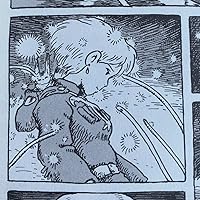
Tituba, the minister's slave, gazed into the stone watering trough. She did not see her own reflection. Instead, she saw a vision of herself, surrounded by angry people. The people were staring at her. Their faces showed fear. That was several years ago. It is now 1692, and there is strange talk in Salem Village. Talk of witches. Several girls have been taken with fits, and there is only one explanation: Someone in the village has been doing the devil's work. All eyes are on Tituba, the one person who can tell fortunes with cards, and who can spin a thread so fine it must be magic. Did Tituba see the future that day at the watering trough? If so, could she actually be hanged for practicing witchcraft?
Ann Petry (October 12, 1908 – April 28, 1997) was an American author who became the first black woman writer with book sales topping a million copies for her novel The Street.
The wish to become a professional writer was raised in Ann for the first time in high school when her English teacher read her essay to the class commenting on it with the words: “I honestly believe that you could be a writer if you wanted to.” The decision to become a pharmacist was her family’s. She turned up in college and graduated with a Ph.G. degree from Connecticut College of Pharmacy in New Haven in 1931 and worked in the family business for several years. She also began to write short stories while she was working at the pharmacy.
On February 22, 1938, she married George D. Petry of New Iberia, Louisiana, which brought Petry to New York. She not only wrote articles for newspapers such as The Amsterdam News, or The People's Voice, and published short stories in The Crisis, but also worked at an after-school program at P.S. 10 in Harlem. It was during this period of her life that she had realized and personally experienced what the majority of the black population of the United States had to go through in their everyday life.
Traversing the streets of Harlem, living for the first time among large numbers of poor black people, seeing neglected children up close – Petry's early years in New York inevitably made impressions on her. Impacted by her Harlem experiences, Ann Petry used her creative writing skills to bring this experience to paper. Her daughter Liz explained to the Washington Post that “her way of dealing with the problem was to write this book, which maybe was something that people who had grown up in Harlem couldn’t do.”
Petry's most popular novel The Street was published in 1946 and won the Houghton Mifflin Literary Fellowship with book sales topping a million copies.
Back in Old Saybrook in 1947, the writer worked on Country Place (1947), The Narrows (1953), other stories, and books for children, but they have never achieved the same success as her first book. Until her death Petry lived in an 18th-century house in her hometown, Old Saybrook. She drew on her personal experiences of the hurricane in Old Saybrook in her 1947 novel, Country Place. Although the novel is set in the immediate aftermath of World War II, Petry identified the 1938 New England huricane as the source for the storm that is at the center of her narrative. Ann Lane Petry died at the age of 88 on April 28, 1997. She was outlived by her husband, George Petry, who died in 2000, and her only daughter, Liz Petry.
"The island of Barbados lay like a jewel sparkling in the sea. It's yellow-white coral-encrusted coastline blazed in the brilliant light".
Tituba of Salem Village (Kindle Edition) by Ann Petry
From Wikpedia:
Tituba was an enslaved woman, owned by Samuel Parris[1] of Danvers, Massachusetts. Although her origins are debated, research has suggested that she was a South American native and sailed from Barbados to New England with Samuel Parris.[2] Tituba was the first to be accused of practicing witchcraft during the 1692 Salem witch trials. ____________________________________________________________ MY REVIEW:
This is the story of Salem from Tituba's point of view.
I've read many a book on the Salem Witch trials. This is neither the best nor the worst. It is however seen through the eyes of Tituba, the enslaved woman from Barbados who was herself accused of Witchcraft.
Much of the book is focused on Tituba's life before such accusations were made. We are first introduced to her while she is still in Barbados (which is described so beautifully it made me want to visit).
When the woman who owns Tituba and her husband John falls victim to a gambling debt she sells both of them to a harsh Preacher who is bound for Boston. He takes Tituba and her husband, John Indian, with him where they are introduced to the sights, sounds and ways of Massachusetts.
This is a good book. It is both educational and interesting. Tituba has shown up in many books about Salem that I've read but always as a peripheral character. It was interesting to read the story from her POV.
It is not perfect. It is a relatively short book but feels longer then it is and the middle part does drag a bit. You should also know that most of this book is not about the actual trials at all. It is more about Tituba and the life she and John Indian make for themselves.
That is not to say the trials do not figure in at all..they do.
SPOILERS:
For anyone who just can not wait to know, she (Tituba) is not murdered.
It is overall a very good read that I would recommend to anyone interested in the subject matter.
I read this for two reasons, one I've been wanting to read Ann Petry for a while, The Street and The Narrows were republished in 2020, so I'm looking forward to reading them, but the main reason I chose this title is because I'm an avid reader of Maryse Condé, who wrote I, Tituba, Black Witch of Salem having been inspired by Ann Petry's book.
I've read nothing about the witch trials before, though I'd heard of them, but I'm glad that this was my introduction, to see this little segment of American history, through the eyes of an innocent black slave, Tituba and her husband John.
As the book opens and Tituba and John are in the kitchen of the Barbados home they live in, the scene is so evocative, you can't imagine how their lives are going to change so abruptly, having been so stable for so long - but then the harsh reality of them being commodities, sold like jewels, to pay a debt, their lives irrevocably changed, within 24 hours they are on a ship heading for the Bay Colony of Boston.
Petry's descriptions of the environment are so evocative, the contrast so great, from the warmth of the island to the damp, unwelcoming cold climate of Massachusetts.
Tituba is a wonderful character, depicted with compassion and understanding, put in a situation where young people are drawn towards her but unable to overcome their own inner hurts, exaggerate and invent scenarios, combining imagination and superstition creating drama that spirals out of control into very real consequences for those accused of "witching", until the farce that it is, becomes all too clear, though not without lives having been lost.
This is one of the earliest books I read while in elementary school, and while it is mainly a children's book, it's a book for adults as well.
Tituba was held up to us kids as a black American historical figure--and the first to be accused of witchcraft during the infamous Salem Witch Trials--much like Crispus Attucks in The Boston Massacre, and the poet Phillis Wheatley confounding American revolutionists.
The truth, as time goes on, is much more complicated to ascertain, with one set of historians (led by Elaine Breslaw) convinced that she was Indian, a survivor of European encroachment, enslavement and disease on the islands. The other set, epitomized by Maryse Conde, who has also written a historical novel about Tituba, who is just as convinced that Tituba was born in Barbados as the daughter of a newly-transported slave.
At any rate, magic, no matter if it was practiced by a black or Indian or white person, was considered a grave threat to the small colony at Salem. That Tituba was not white and a woman added to the hysteria, because voodoo was known to be an instrument of insurrection, and the only way a woman could possess power, as the Puritans saw it, was to summon up the devil.
Unfortunately, we don't know much what happened to Tituba after the trials. At the close of the PBS miniseries, Three Sovereigns for Sarah, it is said that she survived, but with no trace. Ann Petry, however, was among the first--other than Arthur Miller--to give her a personality, an identity, and a context for us to see why and how she--and her legend--survives.
The Witch of Blackbird Pond was my introduction to the Witch Trials of the colonial times. As I grew up and learned more about history, I learned about Salem and its witch issues. I read about Abigail and her cohorts and watched PBS specials about witches in US history. Finally, about three years ago, I heard about a book which presented Tituba's side of the story. I didn't find a copy of the book, though, until last summer.
Titube of Salem Village barely touches on the witch trials. Instead, it tells of Tituba's arrival to the colonies from Barbados, her training as a weaver, medicine woman, and housekeeper. It describes her marriage to John Indian and her life as a slave in Colonial America.
The novel describes conditions that set up the witch trials although it never fully explains why they occurred. Perhaps, that's because we still don't really know why. Abigail is spiteful and full of malice. The other young women are portrayed as bored, overworked, or overly imaginative.
Titube focuses on the first three witches accused. The "witches" are victims of teen malice and malaise. Of the first three witches, two die--one of hanging; the other of illness. Tituba, we finally learn, becomes a slave of the man who paid her jail fees and lives the rest of her life with her husband in Boston.
Tituba of Salem Village reignited my desire to study the witch trials further, on a more adult level. I would recommend this book to anyone who would like to consider a new point of view for an intriguing blip in American history.
Some of my students were doing a web forum on Puritan books they are reading, so I read this one even though none of them are reading it so that I could have something to bring to the discussion. I've heard this is a low reading level, but it didn't seem all that different to A Break with Charity to me. I am strongly considering teaching this book next year, either as a lit circle option or in replacement of Rinadli's, for a change of pace.
I really enjoyed following Tituba through the whole story. The build up to the trails was realistic because we saw all the little things that happened with the girls and that Tituba herself did. I particularly like seeing the small things Tituba did, like talking to the animals, that were then blown out of proportion and used against her. I thought that idea that Betsey Paris was possibly narcoleptic very interesting. My only complaint was the two chapters told from Mercey Lewis's point of view; they didn't seem to fit with the rest of the text.
The story of Tituba was very interesting- although I tend to not dwell into 'witch' related stories, this one kind of made me wonder Why were witches such a big thing back then? Today, to many, such things are thought foolish, but none the less, why where witches such a big thing for the Europeans? Did they think that woman who could swim and had unusual skills subjects to the devil, or does it date back to the crucifixion of Christ when Mary Magdalene fled with her child? (Some people think that Mary was the grail or the bearer of it, and others think that the Grail was a cup, or maybe something else I don't know of.) And if the Holy Grail was Mary Magdalene, and she fled with child, that would mean than Mary's and Christ't decedents would be protectors of the Grail or else. So even after Mary fled and bore her child, who was a girl, the 'enemy' Romans continued to hunt woman who had special powers or skills. So was that why witches were a big thing- because they might be possible descendants from Christ? But then, did the decedents from Christ somehow turn bad? (to the people) Because Christ's descendants would most probably not be bad.
I really don't know. I am not a Christian nor do I study the Bible so I can't say I know a whole lot about the religion and it's history. I'll stop there on that part since I know on social media sites it's not exactly recommended to talk about politics and religion since I could offend someone.
The book in whole was pretty good. The whole 'Pressing Yard' stuff grossed me out soooo much! And I think if you are interested in slave/witch hunts of Salem/Massachusetts history, Tituba is probably worth while reading :)
This is a fictional account of the Salem witches in the late 17th century. Told from the point of view of Tituba, who was a slave in Barbados, sold along with her husband to Reverend Samuel Parris who moved with them to Boston hoping to get a position there, but settled for a position in Salem Village. The Parris’s had two young girls in their care – their only daughter, Betsey, and their niece, Abigail. When the young girls started having fits and blaming it on witches, it was Tituba, along with two others who were first named as the witches causing the fits.
I thought this was good; I liked it. About 2/3 of the book was leading up to the witch accusations, some of which was just them all getting settled first in Boston, then in Salem -- a small village where Tituba and her husband were not used to such cold. In this fictional account, Abigail really comes off as a troublemaker – you can see it coming. (She was the first to start having “fits”.) There was a short point form section at the end that explained some of the things that really did happen.
3.5 Stars. Not the book about the Salem Witch trials that I read as a kid, but definitely an appropriate read for a child and a good introduction to this bit of American history.
“You were my jewels” she said… “Were we her jewels?” Tituba thought. She still wears diamonds on her soft white hands and golden bracelets on her wrists” (page 3). This book didn't really catch my eye, I passed by it at first. But then i spotted the Salem Village in the title and i instantly picked it up. I always love books about the Salem Witch Trials and this historical fiction was no exception. Tituba is a slave who is married to John, another slave. Their original owner; Susanna Endicott sells them off to Minister Samuel Parris because she has a gambling debt. Rushed quickly to a ship to Boston with their new owner and his sickly wife and two kids. The book starts off a little slow, but it picks up the pace when they move to Salem Village, were Samuel got a job as a minister. After that Tituba gets into some trouble that she might have to pay with her life to get out of… This Ann Petry book, a old but surprisingly good book if you're into the Salem Witch Trials. I’ll have to admit it wasn't really interesting in the beginning and I was tempted to put it down, but I continued and it was one of my favorite summer reads.
I read this for character study. I’m playing Tituba in a production of “The Crucible” and it was important to me to find out about her story and background. Reading this book truly broke my heart and gave me the information to challenge the historical record that deems her an instigator when in fact she was a victim and a survivor.
This is a book that is fictional but based on facts about Tituba, the black slave in Salem who was one of the first three to be involved in the witch craze there.
The story starts off by telling how she and her husband, John Indian, were sold by their mistress to Reverend Parris of Salem. This was a time, of course, when there were slaves that could be bought and sold at an owner's whim.
They take up residence in Boston when they arrive from the Barbados. John also sees a witch hanging take place. Parris finally gets a job in Salem Village (no one in Salem Town wanting him), and they move to the parsonage.
In this version of events, Abigail is the troublemaking one of the bunch. Betsey is a girl with some kind of psychological problem or something; she seems to go into trances or blackouts or narcolepsy.
The book then goes through the gradual building of anti-witch hysteria in the village, the arrests, the trials, and the aftermath.
The book is very interesting to read, and gives a person a very realistic view of what actually happened. There is at least one area where something happens that did not really occur, and there is some information on what happened to Tituba after the trials and the hysteria were over which I have not read anywhere else.
Also, most of the book deals with the events prior to the trials; the trials themselves take up only a small portion of the book. It almost seems a little rushed at the end.
I'm surprised this is a children's book because I would have been so bored reading this as kid. Nothing really happens throughout this novel. Tituba is a historical figure because of her role in the Salem witch hunt/witch trials. Unfortunately, nothing eventful, or historically interesting, happens in this book until 155 pages in, and the entire novel is only 250 pages long! A subject rife with intrigue like the Salem witches doesn't need 155 pages of set up to build suspense or interest! The meandering plot doesn't know which way it wants to go, the characters have no character and the writing is not descriptive at all. I would almost prefer Miller's historically inaccurate 'The Crucible' to this story of Tituba.
I have never read this book before this summer (ideas for book club). I remember several of my former students in Peabody loving this tale of the Salem witches and I would love to do a Books and Bites with Salem so I have been acquiring after books about the witchcraft trials. Tibuta of Salem Village will not be that book. The characters and plot as flat as Giles Corey after the press. It took me a while to get through the book- very little action and when there was action it was slow. The trials were a mere ten pages of the two hundred plus page book. So it definitely not something that I truly would consider historical fiction.
This was a particularly good take on the Salem Witch Trails-- following Tituba, this story gives a new perspective on this tragic event.
Whenever I read about these trails, I just can't fathom how people just went with it. That was the time, though. Now a days it would be different, but would it really? We still have jealousy, greed, and spite in this world...
I hope to God something of this mass hysteria doesn't happen again, but if it does, we must remain strong, and not believe the ignorant.
I went through an intense Salem Witch Trials phase, and I always thought this was a really good handling of the events. I haven't read it in years, but I always thought Ann Petry had done a very good job of explaining what happened, and making the people involved people rather than historical figures. I've always thought it would have been an interesting basis for teaching a class on the subject.
If you haven't yet read this, I know you'd love it much as I just did. Is truly on our side kindly told abolition work. Ann Petry is such a good person. Black Pride. Bless
wow omg two weeks to read this. A very important perspective on the Salem witch trials. From the point of view of Tituba, the Black woman from Barbados who was enslaved by samuel parris (rot in piss cunt). This was published in 1964, so like a decade after The Crucible. Ann Petry did a wonderful job encapsulating the hysteric bullshit of the trials and people of Salem village. I really appreciated her descriptions of Massachusetts flora and fauna; so vibrant and true to what new englands like. Tituba in this was such a steadfast, dedicated, and skillful person. I can tell Petry had a lot of love and respect for her.
FUUUUUCK ABIGAIL FOR REAL !!!!!
tw for descriptions of anti Indigenous racism/depictions //
I think the only thing I would criticize, maybe more of a critique slash warning, is the undeniable anti Indigenous racism/sentiments. Likely, Petry was trying to accurately depict settlers view of Indigenous people (extremely nasty y’all obvs) ie; only referring to them as “Indians” (once the Narragansett are mentioned by name, but only to say how the settlers fought a “war” against them to displace the people for their land) and a general sense of miseducation and fear mongering. Tituba would be sympathetic or curious towards Indigenous people one chapter and then the next parrot some trash. I dont know, I just experienced this weird feeling where the depiction of Black people was accurate (1600s colonies) while kind, but then the text would go one about “red devils” like DAMN okay we GET IT.
I understand this was published in the 60s, my print is from the 90s, and that to this day many Indigenous people self identify as Indian, however it made my skin crawl so I’m mentioning it!
This entire review has been hidden because of spoilers.
Tituba, the minister's slave, gazed into the stone watering trough. She did not see her own reflection. Instead, she saw a vision of herself, surrounded by angry people. The people were staring at her. Their faces showed fear. That was several years ago. It is now 1692, and there is strange talk in Salem Village. Talk of witches. Several girls have been taken with fits, and there is only one explanation: Someone in the village has been doing the devil's work. All eyes are on Tituba, the one person who can tell fortunes with cards, and who can spin a thread so fine it must be magic.
Did Tituba see the future that day at the watering trough? If so, Could she actually be hanged for practicing witchcraft?
I thoroughly enjoyed this perspective of the Salem Witch Trials. The veritable history sneaks up on you as you read and remember that though this story was decorated with vivid story telling from Petry, it is rooted in historical fact. As someone who grew up in Massachusetts, the Salem Witch Trials were a part of our history and a fun spooky fun fact. The images it brought to mind were those of young white women wrongly accused due to silly obsolete puritanical sexism. This story, however, reminds us of the deep racial intersection and the patterns of human behavior (specifically of white americans) that drive these atrocious trials. Objectively a great read with lots of exciting plot devices, character development, and artful politicization.
I absolutely loved this version of the Salem witch trials from a black woman's perspective and written for kids. Ann Petry tells the story of the infamous trials through the eyes of Tituba, the enslaved woman who was caught up in the hysteria and accused of being a witch by the family she lovingly cared for, as well as indentured servants who benefited from her generosity and talents. Tituba's perspective, complex and nuanced, is a refreshing take on the outlandish accusations that ended with innocent people being hanged or pressed to death. Tituba's honesty and whole-hearted ability to care about those who enslaved her got her into trouble with the white folks who were not at all concerned with the well being of the community but only their own precarious positions within it.
I had some difficulty getting into this story just because I knew a little about Tituba already and that a lot of bad things happen to her. Tituba was portrayed pretty consistently and relatably. Petry gives readers a good sense of how precarious Tituba's life was as an enslaved woman in Salem. I would have liked Petry to flesh out Tituba's relationship with her husband. Understandably, her relationships with her charges dominate the story, but I would have liked to see more of her life outside of the work she was forced to do. Ending was bittersweet.
I rescued this book at the bottom of McKay's freebie pile, and I'm so glad I did! This is a jewel of a book about the Salem Witch trials that centers on Tituba, the slave from Barbados who was first accused of witchcraft along with Sarah Good and Sarah Osburne. It shows how superstitions, hysteria, and hatred can run amuck among people and how unreasonable and downright senseless people were during this dreadful time of "witch hunting." Yep, I can see myself during these times getting burnt at the stake for my opinionated and unrepentant mouth!
Tituba is a fascinating historical figure, and I never feel as if, in the stories of the witch trials, I ever really get to know her. This book helped change that. What happened to her is horrifying because, as a woman on the margins of society, she was an easy target for a group of girls and young women, themselves normally powerless, wielding the little bit of power all the attention gave them and pointing the finger at easy targets their society would be willing to persecute.
Interesting YA historical novel about the witchcraft hysteria in Salem Village in the 17th century, focusing on Tituba, a slave brought there with her husband, John. It’s a thoughtful look at scapegoating and what it’s like to be an “other” person, not fitting in with the community, and how easy it is to misread events. Hmmm, now that sounds familiar...
Really interesting to see the Salem witch trial story told through a slaves point of view. Plus, the whole incident is bizarre and interesting. And I like stories of historical New England since I'm from Massachusetts.
An excellent story, I enjoyed the characters, and it was an excellent historical fiction, but the story was awfully sad, and only had a moderately happy ending, it was better than many alternatives, and it reflected reality quite a bit, I only wish history hadn't been quite so sad for Tituba.