Jump to ratings and reviews
Rate this book

Anti-Education: On the Future of Our Educational Institutions

Rate this book
In 1869, at the age of twenty-five, the precociously brilliant Friedrich Nietzsche was appointed to a professorship of classical philology at the University of Basel. He seemed marked for a successful and conventional academic career. Then the philosophy of Schopenhauer and the music of Wagner transformed his sense of purpose. The genius of such thinkers and makers—like the genius of the ancient Greeks—was the only touchstone for true understanding. How then was education to answer to such genius? Something more than sturdy scholarship was called for. A new way of teaching and questioning, a new philosophy...
 
What that new way might be was the question Nietzsche broached in five vivid, popular public lectures in Basel in 1872. Composed in emulation (and to some degree as a satire) of a Platonic dialogue, Anti-Education presents a provocative and timely reckoning with what remains one of the great problems of modern societies.

160 pages, Paperback

First published January 1, 1872

153 people are currently reading
1669 people want to read

About the author

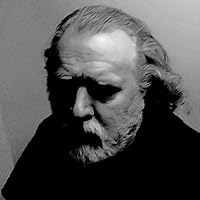
Friedrich Nietzsche

4,326 books25.5k followers
Friedrich Wilhelm Nietzsche was a German classical scholar, philosopher, and critic of culture, who became one of the most influential of all modern thinkers. He began his career as a classical philologist before turning to philosophy. He became the youngest person to hold the Chair of Classical Philology at the University of Basel in 1869 at the age of 24, but resigned in 1879 due to health problems that plagued him most of his life; he completed much of his core writing in the following decade. In 1889, at age 44, he suffered a collapse and afterward a complete loss of his mental faculties, with paralysis and probably vascular dementia. He lived his remaining years in the care of his mother until her death in 1897 and then with his sister Elisabeth Förster-Nietzsche. Nietzsche died in 1900, after experiencing pneumonia and multiple strokes.
Nietzsche's work spans philosophical polemics, poetry, cultural criticism, and fiction while displaying a fondness for aphorism and irony. Prominent elements of his philosophy include his radical critique of truth in favour of perspectivism; a genealogical critique of religion and Christian morality and a related theory of master–slave morality; the aesthetic affirmation of life in response to both the "death of God" and the profound crisis of nihilism; the notion of Apollonian and Dionysian forces; and a characterisation of the human subject as the expression of competing wills, collectively understood as the will to power. He also developed influential concepts such as the Übermensch and his doctrine of eternal return. In his later work, he became increasingly preoccupied with the creative powers of the individual to overcome cultural and moral mores in pursuit of new values and aesthetic health. His body of work touched a wide range of topics, including art, philology, history, music, religion, tragedy, culture, and science, and drew inspiration from Greek tragedy as well as figures such as Zoroaster, Arthur Schopenhauer, Ralph Waldo Emerson, Richard Wagner, Fyodor Dostoevsky, and Johann Wolfgang von Goethe.
After his death, Nietzsche's sister Elisabeth became the curator and editor of his manuscripts. She edited his unpublished writings to fit her German ultranationalist ideology, often contradicting or obfuscating Nietzsche's stated opinions, which were explicitly opposed to antisemitism and nationalism. Through her published editions, Nietzsche's work became associated with fascism and Nazism. 20th-century scholars such as Walter Kaufmann, R.J. Hollingdale, and Georges Bataille defended Nietzsche against this interpretation, and corrected editions of his writings were soon made available. Nietzsche's thought enjoyed renewed popularity in the 1960s and his ideas have since had a profound impact on 20th- and early 21st-century thinkers across philosophy—especially in schools of continental philosophy such as existentialism, postmodernism, and post-structuralism—as well as art, literature, music, poetry, politics, and popular culture.

Ratings & Reviews

What do you think?
Rate this book

Friends & Following

Create a free account to discover what your friends think of this book!

Community Reviews

5 stars
179 (25%)
4 stars
271 (37%)
3 stars
190 (26%)
2 stars
64 (8%)
1 star
11 (1%)
Displaying 1 - 30 of 79 reviews
Profile Image for Fadi.
59 reviews29 followers
February 23, 2020
* Unthinkable: Is ‘higher education for all’ based on a lie?
Nietzsche believed expanding college access peddled the lie that all students were equally capable.

https://www.irishtimes.com/culture/un...

* While Anti-Education is lighter in tone than the shrill later books, there is evidence that Nietzsche’s violently anti-egalitarian attitude is fully formed. “Education for the masses cannot be our goal,” one of his mouthpieces declares: there is, after all, “a natural hierarchy of the intellect.”

https://www.irishtimes.com/culture/bo...

* The fundamental problem, according to the philosopher, is that German secondary schools have expanded too quickly in an attempt to keep pace with the growing demand for state functionaries. They’re trying to educate too many people, rather than the intellectual elite, and this has inevitably led to the emergence of ridiculous, progressive ideas about the intellectual abilities of ordinary students.

https://www.spectator.com.au/2016/03/...

* Nietzsche Lays Out His Philosophy of Education and a Still-Timely Critique of the Modern University (1872).

http://www.openculture.com/2016/01/ni...

* Nietzsche’s achievement was as a genealogist of morality, and his observations on the origins of liberal values are peculiarly resonant today. As a pioneering classical scholar, he knew there was nothing liberal about ancient Greek culture. Emerging in a long and difficult process that included Europe’s wars of religion, a liberal way of life was an offspring from Jewish and Christian monotheism – a fact our “new atheists” prefer to ignore. One can value this way of life without being religious, but that doesn’t mean all human beings want to live it. If people lose interest in free expression – as seems to have happened in some sections of higher education – there is no argument that can persuade them of its importance. What they want may be freedom from the dangerous business of thinking.

https://www.theguardian.com/books/201...
Profile Image for Jay.
24 reviews26 followers
April 22, 2012
If Nietzsche thought things were bad with education in 19th century Germany, he would have loved 21st century America. This piece was not what I thought it would be and the reading was difficult (and monotonous) at times. Nevertheless, I completed the read and gained some insight. Nietzsche constantly praises culture and classical arts and I could not ignore the constant 'old school' versus 'new school' educational theme that was argued (in Nietzsche's probable fictional characters). I am all about education of the masses, and therefore disagree with several of Nietzsche's basic arguments and views. Overall, Nietzsche has a very leftist feel to his views on education and what really irritates me about him is his high views on the philosopher and his disdain toward the common man and worker. People have to work in order to subsist in society. People can not just roam the world writing poetry, philosophizing on matters and seeking Hellenistic culture.

Areas of the book that stuck in my mind:

1) Nietzsche illustrates a gross indifference towards education quite similar to the indifference that exists in the modern U.S. I found that this view is easily comparable to the modern United States.

"We knew this, that, thanks to our little society, no thought of embracing any particular career had ever entered our minds in those days."

"Our little society had sown the seeds of this happy indifference in our souls."

"We wished to attach no importance to anything, to have strong views about nothing, to aim for nothing; we wanted to take no thought for the morrow..."

"Institutions for teaching culture and institutions for teaching how to succeed in life. All our present institutions belong to the second class...."

These quotes remind me very much of our modern United States.

2) Nietzsche had an interesting look on education as a tool for the state. In today's era of capitalism, we not only see system higher education aimed toward the State....but more so toward the private sector.

"The purpose of education, according to this scheme, would be to rear the most 'current' men possible,-'current' being used here in the sense in which it is applied to the coins of the realm."

"According to the morality reigning here, the demands are quite different; what is required above all is 'rapid education' so that a money earning creature may be produced with all speed;"

"...of which they may again recognize the State as the highest goal, as the reward of all their strivings after education."

"And again, that this freedom may be broadened still more, the one may speak what he likes and the other may hear what he likes; except that, behind them both, at a modest distance, stands the State, with all the intentions of a supervisor, to remind the professors and students from time to time that it is the aim, the goal, the be-all and end-all."

3) Nietzsche had a very nationalistic view on things. He is very passionate about the German language and composition. While I can not share this view toward 19th century Germany, I do share it toward the 21st century United States. The only difference is that the U.S. has little rich history of culture compared to the ugliness of slavery and genocide. I believe American education should be aimed heavily on this subjects in order that our youth should be able to understand the economic, social, and political ramifications of those historical atrocities.

"What we should hope for the future is that schools may draw the real school of culture into this struggle, and kindle the flame of enthusiasm in the younger generation, more particularly in public schools, for that which is truly German."

4) A very strong point that Nietzsche makes, which can really be seen in the U.S. today, is the expansion of schools and the number of required teachers. This point is evident in education today just as it was apparently the case in Nietzsche's time and State. This is more than likely true in all areas of skilled occupation.

"Such a large number of higher educational establishments are now to be found everywhere that far more teachers will continue to be required for them than the nature of even a highly-gifted people can produce."

"....surplus of teachers who have really nothing at all to do with education, and who are called into existence and pursue this path solely because there is a demand for them."

"...large body of teachers who have not been endowed with a true gift for culture, and who set up as teachers merely to gain a livelihood from the profession, because there is a demand for them, because a superfluity of schools brings with it a superfluity of teachers?"

5) Nietzsche view on hierarchy and the masses needing a select few leaders and minds to follow was somewhat disturbing to me. The man was obviously disdainful toward the common people and was very arrogant. He also seems to not acknowledge corruption, oppression, and dishonesty in leadership and power. We know these things exist simply by looking at history and at modern political leadership today.

"They were born to serve and to obey...." "The Education of the masses cannot, therefore, be our aim; but rather the education of a few picked men for great and lasting works."

"For what, after all, do we know about the difficult task of governing man, i.e, to keep law, order, quietness, and peace among millions of boundlessly, envious, malignant, and hence very narrow-minded and perverse human beings; and thus to protect the few things that the State has conquered for itself against covetous neighbors and jealous robbers?"

"I now see more clearly than ever the necessity for an institution which will enable us to live and mix freely with the few men of true culture, so that we may have them as our leaders and guiding stars."

"...that great leaders are necessary, and that all culture begins with obedience."

"...with obedience, with subordination, with discipline, with subjection. And as leaders must have followers so also must followers have a leader-here a certain reciprocal predisposition prevails in the hierarchy of spirits: yea, a kind of pre-established harmony."

"...then you too will feel what a pre-established harmony there is between leader and followers, and how in the hierarchy of spirits everything impels us toward the establishment of a like organization."

6) Nietzsche seems to never tire of complaining about the pursuit of culture, but what he failed to understand was that people had to work to live. Life is not free. People must work to survive. Bread is not free now and it was not free it Nietzsche's time. Regardless, here are some of his ramblings against pursuing an education through the institution which he obviously views as conditioning.

"If you take this one, your age will receive you with open arms, you will not find it wanting in honors and decorations: you will form units of an enormous rank and file; and there will be as many people like-minded standing behind you as in front of you. And when the leader gives the word it will be re-echoed from rank to rank."

"There you are servants, retainers, tools, eclipsed by higher natures; your own peculiar characteristics never have free play; you are tied down, chained down, like slaves; yea, like automata...."


Overall, the reading was dry and tedious. Nietzsche makes a few valid points that I have listed, but I find that I hold different and conflicting opinions with him in many areas.
Profile Image for Brett Stevens.
Author 5 books46 followers
May 30, 2021
Ever notice that meritocracy and education produce obedient people who are good at memorizing things for tests, but utterly fail at dealing with situations with unknown variables? Through a series of essays and recollections, Fred "Wild Man" Nietzsche shows us the utter failure of the Prussian model of education i.e. seminars, tests, and grades, and points to where humanity can find a better method of giving its youth the knowledge they need to parse the world around them, analyze it, and make choices that are both realistic and creative.
Profile Image for Hagar.
194 reviews46 followers
January 31, 2025
"Education for the masses cannot be our goal—only the cultivation of the chosen individual, equipped to produce great and lasting works."

"The eternal hierarchy that all things naturally gravitate toward is just what the so-called culture now sitting on the throne of the present aims to overturn and destroy."
Profile Image for A.
445 reviews41 followers
May 28, 2022
7.5/10.

A worthy companion to The Culture of Narcissism by Christopher Lasch, Nietzsche diagnoses the degenerative tendencies of modern education. At the root of this degeneration, there are two mistaken beliefs: (1) a belief in the ability of the masses and (2) a belief in the student's ability.

Firstly, the widening of education leads to a lowering of its quality, simply because of the lack of people who can be educated. For who but noble souls want to be philosophers (not just learn of their ideas), learn from the great masters of art (literary, artistic, sculptural), and have their judgment trained by the shining Greeks and Romans? This sort of education is deemed useless by the state, which wants to create easily programmable machines, ready to clock in eight-hour days, be obedient, and learn practical skills. It is also eager to form children in a matter suitable for itself — they shall not question the Zeitgeist ("racist!", "sexist!", "homophobic!"), but shall instead receive proper ideological training.

And the artistic sense? Or the literary sense? These need not apply, for they can be subsumed under "diversity". Quality does not matter if one wants equal proportions of Africans, Mexicans, and Chinamen in your academic curriculum. Thus the torch-bearers of culture, the Promethean Greeks, that culture which requires so much intellectual struggle to discover and understand, is buried under modern slop. Easy to consume, "correct" to digest — who needs to worry about the rest?

Thus quality and intellectual hierarchy are usurped by decadent multiculturalism. Europeans have their heritage buried under this muck. While enforcing the correct "diversity" gestures and platitudes, schools renounce their role as bearers of Genius. For true education only begins with subservience to the Geniuses who came before us. One must destroy one's individuality and subject it to the high standards of eminent minds in order to learn. In the same way, the child must submit himself to the coach in order to gain discipline and improve at his sport. The revolting child is the pouter par excellence. He cries that he "doesn't want" to do what the coach tells him; the child believes that he knows better.

Such is the modern student, encouraged by the effeminate regime of educators. Taught to "express themselves", they write self-hating blather in creative writing, create their "new and innovative" art (wonderful Pollock-like splotches of paint), and "find their own direction" in life by reading tedious, soppy self-help books. Unconscious of the Tradition of Greats behind them, they forge their own path. And where does it lead? To the dumpster. The Order of the past is replaced by repulsive Chaos, driven by educators and parents who encourage "self-expression". With our society repulsed by its __ist past, and cognizant of infinite consumerist pleasures in the future, it drives forward in a pseudo-optimism that is belied by the ever-increasing rates of depression, anxiety, and suicide. By forgetting its masters, it has forgotten how to live.

How must we respond? We must accept our role as adepts, as students of the Greats of yore. Posterity may not wring true today, but it certainly did until ~1960. So we must return to the Greeks, to the Romans, to the authors of Western literature, and to Christianity. If you see our manifold cultural ills increasing while our society moves away from its past, what is the proper response? Revive the past. Don't just read about the past, don't just file away the Stoics as a group of philosophy. No. Read them and implement their teachings now, for they will be of great assistance.

Run away from the academics! They know everything about nothing — that's called a PhD. Sequestered in an inch-wide section of the library, they spent their time twiddling their thumbs about dust. They never implement what they teach. They dig up the past and regurgitate it into their students' mouths. The students receive information, but no teaching. They become amateur fact-collectors, their minds short-term repositories for the ingredients of elective soup. Do the academics ever actually think? Do they ever forge their own path? No! They spout out the Leftist status quo like mockingbirds. Plato's critique of democracy? — an anachronism. Dante's Heaven and Hell? — a silly imagination. Nietzsche's hatred of the masses? — another "philosopher" to file in the cabinet. They never think about the merits of the arguments themselves, but instead regurgitate them and force their students to regurgitate them secondhandedly.

But regurgitation is not our task. We are not birds. We are higher than that. Our task is to bow our heads down to the Giants who came before us, closely study their work, and then to change ourselves and our beliefs in accordance with their teachings. That is proper learning, as opposed to childish revolt. We must unleash ourselves from the ethical shackles of modernity and rise our minds to a higher moral viewpoint. Higher — meaning more eternal, more stable, more resistant to the ravages of time and fortune. Thus we bring ourselves to the Greeks, the Romans, the Biblical texts, and the centuries-old authors who still remain with us. Their wisdom is a rock — no matter how many waves of fortune and infantile poundings attack them, they remain strong. Such shall be our rock. We must remain high-spirited even in these degenerate times. Learning from and living the wisdom of our eminent ancestors shall be our first step.
Profile Image for Christopher (Donut).
487 reviews15 followers
May 1, 2018
"... Here lies the whole secret of culture—namely, that an innumerable host of men struggle to achieve it and work hard to that end, ostensibly in their own interests, whereas at bottom it is only in order that it may be possible for the few to attain to it."

"That is the principle," said the philosopher,—"and yet you could so far forget yourself as to believe that you are one of the few? This thought has occurred to you—I can see. "


Another early work- recently issued in the NYRB classics with a chic title: Anti-Education: On the Future of Our Educational Institutions (and a new translation, I guess, although this one was very good). To be honest, I did not know of this book's existence until last year.

In form, this seemed more like a work of, say, Herman Hesse's than of Nietzsche's later aphoristic style. The whole imaginary encounter- Nietzsche (the narrator) and a friend go to a wooded bank of the Rhine and there encounter an old philosopher and his disciple- just seemed over-elaborate (but not without charm).

The discussion of Prussian education did not seem outdated at all, but that may be because of a willingness to read these remarks with an eye to the current situation. Here is an example:

"For centuries it has been an understood thing that one alluded to scholars alone when one spoke of cultured men; but experience tells us that it would be difficult to find any necessary relation between the two classes to-day. For at present the exploitation of a man for the purpose of science is accepted everywhere without the slightest scruple. Who still ventures to ask, What may be the value of a science which consumes its minions in this vampire fashion? The division of labour in science is practically struggling towards the same goal which religions in certain parts of the world are consciously striving after,—that is to say, towards the decrease and even the destruction of learning. That, however, which, in the case of certain religions, is a perfectly justifiable aim, both in regard to their origin and their history, can only amount to self-immolation when transferred to the realm of science.
Profile Image for Azzam To'meh.
108 reviews32 followers
May 14, 2016
I so much agree with what is said in this book I found it scary. As I read through, I would be nodding, underlining every few lines, and screaming internally: "Yes! Yes! YES!!". Nietzsche argues that when education is given to everyone, it has to be watered down, and with those having watered down education becoming professors later on, the general level of education goes down. He also argues of the importance of respecting one's heritage, and the centrality of the mother tongue in the creation of the educated individual. A book much needed for many third-world countries today...
Profile Image for Alexander Rabben Mohr.
49 reviews
June 7, 2025
Mitt nye syn, hentet fra denne boken, på utdanning som bortkastet for den store majoriteten kommer nok godt med hos fremtidig arbeidsgiver, norsk offentlig skole 👍
Profile Image for Zahra'a Bin Shaibah.
249 reviews39 followers
September 27, 2020
A primeval form of Nietzsche’s last book “ Thus Spoke Zarathustra”. Its as if Nietzsche has always carried this philosopher with him, added layers of his own philosophy formed over the years, as a raw material. Later, sculpting the character of Zarathustra. The book is a discourse in a debate form, ornamented with poetic depiction carried by an anonymous philosopher.
.
It reflected a lot of Nietzsche’s love and infatuation for poetry, literature and philosophy, and humanities.
.
Nietzsche described the sky of pseudoscience and fake culture, that was created by the process of fragmentation, through professionalism and fake freedom, which limits the contemplative instinct through insularity and immature ego.
.
Several pillars hold this fake sky;
.
Philology and history, the two archeologists that treat language as a dead body, being dissected under their scalpel.
.
Nietzsche acted as prosecutor against them, and defender of language; “Take your language seriously” and he continues: “if you cannot feel a sacred duty here, then you have not even the seed of the higher culture within you. How you handle your mother tongue reveals how much you respect art, or how little; how close and affinity you have for it”.
.
The fragmentation process of narrowly specialized subfield, where one is separated from everything else that helps in forming answers for deep philosophical problems. Eventually, leading them to take the answers from; JOURNALISM, the third pillar, and the “gluey mass that worked its way into and between all the sciences” that emphasizes the two traits of the modern pedagogical system: expansion and dissemination while weakening the educational system.
.
As for the students they are lost for they are lacking a lodestar, an ideal hand for guidance, through the problems which Nietzsche described as “every personal incidents shimmers in a double reflection: as an instance for every day
triviality, and at the same time as exemplifying and internal, mysterious problem that cries out for an answer”.
The lack of guidance could be depicted in the fall of Icarus; those student carried with wings of immature ego, right into the demising sun.
.
Note: If tutoring is your profession, this book will be “ a shinning moment of insight “.
Profile Image for Caroline.
915 reviews312 followers
Read
July 17, 2023
Anti-Education by Nietzsche

I came very close to quitting after the second chapter, but in the end it prompted some reflections. Still, one comes away very unsatisfied. Nietzsche refers (these are lectures) incessantly to true classical education and the hero teacher who the handful of chosen, frustrated students are waiting for, but he never explains very well what he means.

He castigates the philologists who are titular German teachers in gymnasiums but who actually teach the historical philology they learned themselves at university. They don’t teach the highest form of German expression in a masterful way. They do not guide students to the correct interpretation of ancient Greek and Roman literature and philosophy. Instead they allow students to use the language of everyday popular culture and to use their own personal thoughts to shape their essays. Nietzsche has the utmost contempt for journalism and popular culture, arguing that Germans are neglecting their noble, inimitable cultural foundation of myth, music and philosophy. These repeated calls to nationalism are unsettling to say the least. But informative. I hadn’t known of this claim to a special connection between Nietsche’s historical authentic German culture and ancient Greek civilization. It makes the echoes of classical motifs in Nazi architecture and art more understandable.

The second takeaway is Nietzsche’s attack on students’ freedom to study whatever they pleased and to believe all or none of it. He is adamant that in one’s student phase one has to be told what to study and to at least provisionally accept it all. Education must focus on the content of classical Greek writing. Instead students arrive from gymnasium confident that they are already educated and can direct their own way at university. He bemoans the delegations of educators from other countries who arrive to learn the secret of the great German universities, only to be given this model of a system that ultimately leads to either ‘uneducated’ professionals or post-university frustrated truth-seekers who were never guided to the higher culture. In part, he blames this on Prussian pressure to vastly expand higher education in an industrial age; the faculty can’t carry out education for the few who can attain such high levels when they have to process the masses.

This was very reminiscent of the arguments boiling when I started university decades ago. General education requirements were falling by the wayside. The University of California was opening new campuses up and down the state to absorb the Baby Boom generation. Popular culture was exploding in new directions and many faculty reshaped the curriculum. I don’t regret the excitement of that period or my delight in sampling widely via auditing lectures that lay far outside my majors. I have read widely across world cultural heritage ever since in a way that Nietzche never imagined.

But I do think that this approach to education fails students by never requiring them to examine what they are doing. They choose courses but are never asked to integrate their studies, to analyze how one course might illuminate another, to think about what is missing from what they have studied so far. The guidance that Nietzsche pleaded for is useful in pushing students to think hard about what they are doing and how to evaluate what they are hearing. It is essential to deciding what they need to learn in future. Unfortunately, there is no economically feasible way to undertake this intensive tutoring in a mass education setting. Perhaps, though, we could echo Nietzsche in making it available to those who recognize a need for it, just as his handful of young students are searching for a real education, because they sense they aren’t getting it. The trouble is, it may be the ones who don’t ask for it who could benefit the most from being required to reflect.
1,540 reviews21 followers
February 20, 2022
Denna är felbenämnd. Nietzsches bok handlar om varför universiteten i princip automatiskt kommer att misslyckas i sina uppdrag, medan grundskolan är nyckeln för desamma. Den är skriven i form av en platonsk dialog, och precis som alla sådana bör den läsas bakifrån vid genomläsning 2, för att faktiskt förstå argumentet.

I korthet, bakifrån och fram:
1) Utbildning förutsätter självständighet. Universiteten är uppbyggda på ett sätt som undergräver elevernas möjlighet att kontrollera sina liv, och resultaten av sitt arbete. Effekten av det är att göra dem omotiverade.
2) Skälet till detta, är att universiteten är uppbyggda i strid med god Aristotelisk utbildningssed, genom att bara lyssna, istället för att lyssna, verka och skriva. Frånvaron av möjlighet att utöva dödar entusiasmen inför det lärda, och lockar till sofism.
3) Skälet till detta, är att universiteten är offentliga institutioner, som därmed måste rättfärdiga sin existens, i termer av ekonomisk nytta (som direkt går emot långsiktig nytta i form av kreativitet och kapacitetsutveckling).
4) En god grundskola kommer att kompensera för detta. Genom att möjliggöra individuella segrar i småprojekt från tidig ålder, och hårddrillning i utbildningsaspekterna av universiteten.

Som sådan ser det ut som en helt resonabel pragmatisk-didaktisk teori.

Därutöver finns en massa vurmande för Schiller, Weber och andra tyska lyriker. De delarna är ointressanta för argumentet, men säkert viktiga för Nietzsches självbild.

Att kalla detta "mot utbildning" är att identifiera universitetens sätt att utbilda med det enda sättet, och hävda att autodidaktik är omöjligt. Vilket är oerhört oerhört sorgligt, rent bortsett från att det är arrogant OCH världsfrånvänt samtidigt.
Profile Image for Dustin Lovell.
Author 2 books15 followers
August 29, 2019
Nietzsche's early lectures on education are definitely worth reading; however, like everything Nietzsche would eventually write, they're better digested when one withholds immediate judgment. Taking on the mid-19th-century trend in Germany to make education a public (and, therefore, political) enterprise, Nietzsche points out the contradictions and ironies in the mediocritization of the gymnasium, the German pre-college preparatory school. While he agrees that society benefits from everyone reaching a certain standard of learning, Nietzsche ultimately argues that higher education has inherent limits, both in the standards it should maintain and in the individuals able to meet them.

Signs of Nietzsche's later philosophical ideas can be seen in these lectures (namely, his warnings about the threats of blanket egalitarianism, the need to focus resources to foster rare geniuses, the danger to culture of state collectivism and journalistic politicking, and the preference for the ridicule of one's enemies over their praise), though the man who presented these is very different from the man who only a few years later would write Zarathustra and Beyond Good and Evil. Nonetheless, one can easily read "Anti-Education" as the foothills just before the disillusionment that led Nietzsche up the mountain. Nonetheless, Nietzsche's broad allegory of overhearing a conversation between philosopher and student (an uncommon throwback to Plato in Nietzsche's work) lacks the gleeful freedom of his later work, and thus it drags on in spots. However, this is a minor complaint—which would have no doubt been mitigated by listening to the lectures on audiobook.

Nietzsche's argument—that education can either maintain its high standards and have few faculty and students or lower its standards for egalitarian or political reasons—is not limited to 19th century Germany. One can see what politicized higher education did in Germany a generation after Nietzsche's warnings went unheeded—see Kantorek in Erich Remarque's All Quiet on the Western Front. The editors of this book present the footnotes for a modern audience, relating the context of Nietzsche's lectures to modern American college norms.

For more modern perspectives on the topic (at least regarding contemporary American colleges), one can read Brian Caplan's The Case Against Education (wherein Caplan, an economics professor, examines when college is worth the investment and when not, and whether education is improved or devalued by making it cheaper and more accessible) and Heather MacDonald's The Diversity Delusion (wherein an investigative journalist examines the effects of diversity and gender-parity programs on both the economics and the quality of education). Even without these, Nietzsche's lectures are worth considering, especially when considered in the context of Nietzsche's later works.
190 reviews16 followers
July 25, 2021
Read for class "What Is Education For?" Love the narrative story Nietzsche weaves in here, find his points on education compelling. Reminds me of Clement Greenberg's essay on kitsch and avant-garde.
Profile Image for Setaareh.
12 reviews
March 17, 2022
Nietzsche is, in any honest evaluation, a massive loser. His laments that the "German spirit" has been forgotten, his echoing refrains of the "Greek homeland" of true culture, his charge that the German language has not been given its due respect - these are bemusing prescriptions from someone who has so correctly identified a complex of symptoms and so tragically misdiagnosed their cause.

He manages nonetheless to report truths about education which remain as true now as they would have been in mid 19th century Prussia. The material role of education is in many places subservient to economic ends, and the quality of the "education" suffers for this. Educators, for their part, have been industrialized in service of this moneymaking machine. Students graduate so they can serve capital; capital dictates how students may graduate. Nietzsche was right about all this! He just failed rather hilariously to tell us where we should go from here.

"A student's condition is not his fault. The kind of creature you have recognized him to be is merely a silent yet terrible rebuke to those who are truly to blame.

You have to understand the secret language of these innocents weighed down with guilt... Not one of these nobly equipped young men has avoided the unresting, exhausting, confusing, debilitating crisis of education... He feels that he cannot guide himself, cannot help himself - and then he dives hopelessly into the world of everyday life and daily routine. He is immersed in the most trivial possible activity, and his limbs grow weak and weary. Suddenly he pulls himself together - vigorous as ever, he feels the strength that might keep him afloat. Proud and noble resolutions form and grow within him. He is terrified of sinking so soon into the narrow confines of professionalism, and grabs at supports and struts so as not to be swept downstream. But for naught! The supports give way: He has grasped at the wrong thing, tried to hold fast to fragile reeds."
Profile Image for dillon.
91 reviews1 follower
August 29, 2023
I had a whole brilliant thing written out about how this relates to C19 German theories of education, but then the app crashed and I don’t feel like rewriting it. I’ll just say that while I thought the surreal dialogic take on the lecture form was cool, the argument is idiosyncratically both naive and bad. It’s a kind of romantic aristocratic proto-fascism in its approach to culture and philosophy—thoroughly nationalist while outwardly anti-statist. The kind of cultural revanchism that a fascist state would find really useful after tossing aside its anti-statist critiques. We might say here that Nietzsche thinks universities are failed projects because they promote fatherless behavior.
Profile Image for Vytas.
118 reviews2 followers
May 5, 2021
It is only fitting that these five untimely meditations didn't reach conclusions - it took 17 years of other books and a mental breakdown. The first skirmish between this untimely man and his times is an interesting reading exactly because it starts the circle that comes to its closure with "The Will to Power". The passion for the problems of the times, the revolt against mediocrity and the desire for salvation from the moment are shining through.
Profile Image for Petter Gran.
196 reviews
March 18, 2022
Det som har gått tapt i denne nye, påtvungne betraktningsmåten, er ikke noe slikt som en poetisk fantasmagori, men den instinktive, sanne og eneste forståelse av naturen. Kald beregning og listig undertrykkelse har tatt dens plass. Slik besitter bare det sant dannede menneske den uvurderlige gave å kunne forbli sin barndoms kontemplative instinkter tro og slik oppnå en ro og enhet, en sammenheng og harmoni som den som er oppdratt til livskamp, ikke en gang kan se eksistensen av.
Profile Image for Talbot Hook.
638 reviews30 followers
November 25, 2025
"The most universal education of all is barbarism, is it not?"

It is always personally interesting to see how far one can travel on the Nietzsche Express before one has to get off. Being a classically-minded-yet-thoroughly-modern reader in the liberal, democratic West, the tensions I felt reading this book were wild.

Nietzsche gave these flowery lectures to the public of Basel, Switzerland in 1872, but they feel as fresh as though they were cut yesterday from the stem. Framed as a rustic dialogue between a philosopher, his young colleague (an ex-school teacher), and two younger students (there is also a doggy), these five lectures are part disquisition and part travelogue. Through them, Nietzsche points to endemic problems within German education that resonate throughout today’s educational debates. It is both thrilling and sobering that his problems should be so much our own. Let me first put his thesis to you in his own words:
Our educational institutions, originally built upon entirely different foundations, are presently dominated by two tendencies, apparently opposed but equally ruinous in effect and ultimately converging in their end results. One is the drive to expand education as much as possible; the other is the drive to narrow and weaken it. The first pushes to extend education and culture to an ever-wider circle; the second expects education to give up its highest claim to autonomy and submit to serve another form of life, the state.

We can draw two immediate solutions to these issues from their opposing tendencies: We concentrate education and make it self-sufficient. What exactly that means is left largely buried for the reader to uncover; Nietzsche mostly lambasts, eschewing solutions. And there are arguments made in this book other than that education is being spread too thin and made to serve other ends. Nietzsche’s reasoning is winding and disperse, and though he did not frame things in the following way, it is helpful and interesting to lay his qualms atop a series of interrogatives. Doing so allows one to crystallize his somewhat-rambling arguments into a clearer form. In my understanding, there are four major tensions explored in these lectures:

1) The “Who” of Education—How many students should we educate, and which ones?
2) The “What” of Education—What should we teach students?
3) The “How” of Education—How should students be taught?
4) The “Why” of Education—What is the purpose of being or becoming educated?

We should break down each argument piece by piece, and I find that I can accept some lines of thought while rejecting others.

1) The “Who” of Education—How many students should we educate, and which ones?

This tension is tricky and remains unresolved. It is de rigueur to say two things today in modern America: 1) Everyone must be educated; and 2) Everyone is equally educable. The first is a moral claim, whereas the second is empirical. Few people take issue with the former, and many people take issue with the latter, though they would never admit it. In the end, the relationship between curricular rigor and the democratizing of education is unclear. Most education has historically been intensely exclusive, where only the brightest students were taught by the brightest instructors. We have rightly broadened the scope of education, though it is an open question whether or not it can be fully brought to scale without being watered down.

To Nietzsche, however, this question has been answered, and that answer is distinctly negative. He believed firmly that education must be aristocratic to be achievable: “Education for the masses cannot be our goal—only the cultivation of the chosen individual, equipped to produce great and lasting works.” Nietzsche reckoned the number of truly educated people as "infinitely few and far between" and accused society of "democratiz[ing] the rights of genius in order to avoid the true work of culture and demands of education." In short, in his mind, we repeat ad nauseum that universal education is possible and thereby trick ourselves into believing such things only to avoid having to do the necessary work ourselves; after all, if everyone can become educated, it must not be difficult. Though this belief in real education for all is unattainable (and false) in Nietzsche's mind, it is still ultimately helpful, as we need to convince everyone that they are educable, just so that we can separate the sparse wheat from the chaff. This winnowing—where most people come up against real education and are rejected—is what he calls “the real secret of education.” In this line of reasoning, we see the Übermensch of his 1883 Thus Spoke Zarathustra foreshadowed. The few geniuses who sit atop “the natural hierarchy in the empire of the intellect” are destined to rule over a sleepy, meek, obedient servant class. Are you still aboard?

(And just an aside about teachers, lest you think they get off easily. Not only are they a “dull, resistant, leaden mass,” but they feel perfectly at home within an education system wherein their “limited gifts correspond and in a certain sense harmonize with the low level and inadequacy of their students.” Yikes.)

While all four of the tensions overlap, there is an obvious connection between the “Who” and the “Why” questions. After all, where is this dubious push to expand education to the entire populace coming from? Does this desire stem from the moral equality of humankind or the recognition that each person should be liberated through knowledge and understanding? Nay, says Nietzsche. It arises from “the favorite national-economic dogmas of the day.” A government, led by industrial and commercial interests, promotes “education” as the chief societal project, an education “leading to the greatest possible production and demand—leading to the greatest happiness: that’s the formula. Here we have Utility as the goal and purpose of education, or more precisely Gain: the highest possible income.” To grow an economy one must grow wealth, and to industrialize one needs laborers. To compete with other nations, a state needs a pliant workforce and competent bureaucrats. And an expanding bureaucracy of course necessitates expanding the number of schools and students—thus is the chain between education and state forged. “[The state] advances its own aims by forcing every one of its servants to show his face only with the torch of general state education in hand, and by that flickering light he is meant to recognize the state as the highest goal, in fact the reward, of all his educational pursuits.” This line of reasoning is much more familiar to me, and I wholly agree that education’s function is not to fulfill quotas, make ends, or foster nationalist pride. The extent to which education is a handmaiden to the state is a topic that concerns us all deeply. Yet, while I agree with Nietzsche’s prognosis, I balk at his prescribed scope. In short, in terms of Who to educate, Nietzsche thinks that many should be educated, only so that the true geniuses can emerge from the “leaden” masses. Education, in his mind, is exclusive and inaccessible to most.

2) The “What” of Education—What should we teach students?

The second tension is, to me, slightly easier to resolve. It is also intimately related to the question of Why. While I am not totally in alignment with Nietzsche here, I am largely in line with his diagnosis and solution. His analysis of this tension can be broken into two distinct parts: problems with educators and problems with curricula. He believed that students were being made to focus on pedantic, narrow, unimportant content, much of which was pushed by educators who were themselves pedants. I have virtually nothing to say against his thoughts on the reduction of educators "to being mere slaves of academic disciplines, making it a matter of chance, and increasingly unlikely, for any scholar to turn out truly educated." Nietzsche railed against the same thing many of us do today: academic hyperspecialization. He likened this to a factory worker who spends his entire life doing nothing but making a single type of screw. True, this person would be an excellent producer of screws, but such a person would have only a tiny window onto humanity (and very little to teach anyone else). In academia, though, we seem to praise the person that studies only second-century Latin inscriptions, bollweevils, or the neurophysiological basis of finger movements. While these studies are likely fascinating and important in their own spheres, it is odd that we lionize such niche scholarship. Preparing students for hyperspecialization can hardly be said to be the ultimate function of education, at least in my mind, as these studies don't actually bear upon how to live. Plus, this specialization leads to separation between scholars and the public: "[Scholars] have nothing to say about any serious general question, especially the deepest philosophical problems," which leads to journalists stepping in to answer these questions—a shallowing out of thought that Nietzsche abhorred. Indeed, he thought that it was failed academics that became journalists. So, this side of the equation holds educators at fault for being pedantic and myopic: Because they have never been in touch with true education themselves, they have no idea how to prepare students to study things of true importance. And because they view actual education as unattainable or obsolete, they focus in on the one thing they know: their own niche specialties.

Related intimately to the narrowness of educators is the narrowness of the curriculum. Is the highest hope of our educational system to raise budding philologists who are so busy parsing Greek sentence structure that they miss the point of Sophocles's Antigone? For at least a page Nietzsche excoriates these plodders and quibblers for finding “every contradiction, every hint of a contradiction, that Homer is guilty of,” or for spending their entire lives “counting the lines and syllables of the Greek and Roman poets and delighting in the proportion 7:13 = 14:26.” So, in what should Nietzsche’s true education consist? As to the What, he promoted a broad education in the humanities, which explore the fundamental human experience (or set of experiences). He believed that students should be brought up with three things: 1) a need for philosophy; 2) an instinct for art; and 3) an appreciation of antiquity (i.e., the Greek and Roman cultures). In this, he is in clear Classical territory. He thought that true education was an exploration of human culture (though he was more concentrated on the West than I am—I also want to put students in touch with great religious, philosophical, and artistic traditions the world over). So, as to What schools should inculcate, they should engage students in broad learning across human culture (specifically antiquity) led by broad-minded instructors. At least on its face, not many could disagree with that. But the devil’s in the details.

3) The “How” of Education—How should students be taught?

If the goal of education is the birth of genius through the study of antiquity, how can we best lead students along that path? In short, Nietzsche didn’t really differ from how classical education has always viewed things: We should train students to master languages and put them in touch with the greatest works of the past. In his mind, true education is fostered by a masterful use and understanding of one’s mother tongue. This is done through repetition, rigor, and discipline. He wrote that students should be “forcibly placed under a bell jar of good taste and strict linguistic discipline.” Within this bell jar, a good teacher “will force his students to express the same thought over and over again, a little better each time, and will stop at nothing until he has inspired in the less gifted students a pious awe for the language and in the more gifted a noble enthusiasm.” In short: “Real genius and correct practice necessarily go together.” By repetition of form and engagement with great works, students will develop “linguistic self-discipline” that will help them develop a literary sensitivity against modern garbage “to the point of physical nausea.” These skills are driven by rigorous artistic training in the use of one’s mother tongue, but lest one think Nietzsche is beholden to German, he quickly states that students should only rely on classic German writers to bear them aloft to “the land of deepest longing: Greece.” In short, one’s first-language training is merely a vehicle into the distant Hellenic past.

The above is Nietzsche’s ideal, but the first obstacle he saw in the German gymnasium was the abuse of language through a focus on tedium. He wrote that teachers treated German like a “dead language, with no sense of obligation toward its present and its future.” He wrote that instructors and students should not be dissecting their language as would a philologist, chasing down word origins and the morphing of phrases; they should be taught to use the language by taking the classics as their models. This connects back to the narrowness and pedantry discussed above.

A second obstacle to Nietzsche’s true education was the push for student independence and individuality. Instructors in Germany were requiring that essays have a student’s personal stamp, but Nietzsche thought that schools were demanding individuality too soon—that it was immature. Such untimely demands released vanity into language and made students feel as though they had achieved a level of mastery wherein they had something to add to their language and culture. “The topics assigned to [the student] force him, in fact, to cast his vote on works of poetry, or lump together historical figures in a character sketch, or tackle serious ethical problems independently, or even turn the spotlight upon himself and portray his own development, delivering a critical report on his own self. In short, a whole world of deeply intellectual and self-reflective tasks is presented to a surprised young man who has had practically no self-awareness up until that point, and made a matter of his own judgment.” But it is in the response to this that we are really doing the student damage: We either pretend that the student’s work is truly original, expert, or uniquely beautiful, thus growing a sense of undeserved and unreal ego, or we are immediately bored by it, because it has been done a thousand times before and in a thousand better ways. “The essays demand originality, but the only originality possible at that age is then rejected. They presuppose a formal education what only very few people will ever acquire, even in riper years.” The proffered balm to this? To suppress student independence and to impose a “strict obedience to the scepter of the genius.” In fact, “all education begins with obedience . . . it begins in obedience, subordination, discipline, servitude.” And when the genius appears, students will be led to antiquity through devotion to past models and great personages.

In short, we lead students to antiquity through the repetitious and rigorous study of great works—not through narrow linguistic historicism or the fostering of students’ individuality. Those things push education into uselessness and egocentrism. I’m sure the modern American educator has many thoughts on this educational program.

4) The “Why” of Education—What is the purpose of being or becoming educated?

I am largely on the Nietzsche Express for this stretch of the tracks. He viewed then-contemporary education as too focused on being "up to date" with the times (transfixed by “the threshold of the present”), making money, conducting business, and being fashionably modern. We get just enough education, as quickly as possible, so as to ensure our ability to make a living. Fortunately for the state, this is precisely what it wants; it does not want an enlightened civic body in touch with philosophy and governance, it wants a "well-educated civil service or military [to help] it compete against other states" (as has been discussed). However, Nietzsche thinks this is a piteous reason for education—in fact, it is a betrayal of civilization.

Nietzsche's classical education “begins in a layer of the atmosphere far above the world of necessity, scarcity, and struggle.” Or yet more succinctly: “No course of instruction that ends in a career, in breadwinning, leads to culture or true education in our sense; it merely shows how one can save and secure the self in the struggle for survival.” Here we get at what Nietzsche means by a true education. While he acknowledged that trade schools were useful and respectable things in their own rights, he ultimately viewed them as lesser forms of training. I myself am more Adlerian in my curricular beliefs. I do think that one important aspect of modern education is to prepare students to make a living (alongside living a good life and discharging one’s civic duties responsibly). That said, it is not the ultimate goal. So what is the ultimate goal of this true education, per Nietzsche? We cultivate the three aforementioned elements among the student body to provide the necessary milieu for the birth of genius. This atmosphere requires commitment to antiquity, a respect for classicism, and the purging of individual ego, such that a genius can “rise above the ever-changing transience of the age and purely reflect the eternal, unchanging nature of things.” We become educated to produce genius to lead us into the transcendent.

That all sounds wonderful, but it is unfortunately a very limited project. While it may be true that such an education is available to only a select few, that does not make it desirable. I myself want to live in a society wherein each individual is at least allowed to pursue such a thing, should they want it. I also do not view my fellow citizens as mere means to the end of producing genius; they are people with agency, and I wish them the highest education they are capable (and desirous) of attaining. To believe otherwise I would view as a betrayal of my own charge as an educator.

But Nietzsche has forced me upon long-untrodden paths. I have not revisited these issues in a few years, and his was a refreshing (grating and raging) voice to follow into this wilderness. My own views on education remain largely unchanged, but the contours are perhaps clearer—at least in terms of what I don’t believe.
Profile Image for Scott Holstad.
Author 132 books98 followers
August 17, 2020
Well, this was certainly different from all of the other Nietzsche books I've read over the years! And I have to be honest - this book probably deserves an extra star -- 4 in stead of 3. It's just that I A) think it's one of his weaker books and B) find it so trivial compared to his better known and more influential works that I'm largely unimpressed and can't find it in myself to give it more than 3 stars. For those who find this fascinating or incredibly original, I'd encourage them to recall, and if research is necessary then do it, that there were several "schools" of thought, theory and philosophical treatise going on through Germany especially during the century in which this was written and there was a particular school of philosophical thought, which I believe was based in Bavaria, that according to many conspiracy theorists, was believed to have been linked to the then recently banned Illuminati, and moreover the assertions included that later some prominent Americans went over there to study, bringing back belief systems, world views, educational philosophies, psychological agendas, etc., and began to implement such in various points around the country, including some very prominent universities. Some of these were alleged to have included William Russell (of the later Russell Trust), Daniel Gilman (future president of Johns Hopkins University), Alphonzo Taft (a partner to Russell and alleged to have been strongly influenced by Russell's education and networking in Germany, as well as father to a president), and others who went on to become prominent in the country's history as well as those that followed in their steps. If you don't know who I'm referring to, a hint would be "Deer Island."

In any event, while allegedly those educators in the Bavarian part of Germany are thought to have had the most influence on a large scale, others around the country were either discussing, debating and publishing on the topic, or were considered more to be philosophers (in addition to Nietzsche, Hegel is an obvious choice) and Germany was simply the hotbed and world leader in educational theory, pedagogy, and so on. Thus, while this text has its merits, I believe it to be simply one of many texts on such topics which came out at the time, some of lesser merit, some of much greater. Which would point to a "C" grade, or in my case a 3 rating. If you are a fan of the author or interested in this type of topic, I'd recommend it, but for the general lay reader, I'd have to say avoid it.
Profile Image for Shawn.
30 reviews3 followers
July 31, 2008
This book is the text of five public lectures Nietzsche gave at the University of Basel very early in his teaching career. Although definitely not a major Nietzsche work, it offers illuminating insight into Nietzsche's early thinking on the topics of culture and education, similar to what he argues in On the Advantage and Disadvantage of History for Life. These lectures are also particularly noteworthy in that they portray in an original light Nietzsche's own struggle to articulate his early perspectives on culture and education in the midst of trying to be incisive and strident, but also while attempting not to back himself into a corner politically or professionally.

The form of presentation of these lectures is also very remarkable - Nietzsche's presentation is in the form of a narration of a past conversation, something like Plato's Republic or Symposium. I also recommend this book for the quality of its prose - here you will find that Nietzsche writes in a beautiful and elegant poetic style perhaps unmatched anywhere else in his early works. This aspect of the work seems to indicate the young Nietzsche had a thorough appreciation of German romanticism.
Profile Image for Chris Dech.
87 reviews15 followers
August 15, 2024
Ah Nietzsche, you famous individualist and assassin of prevailing institutions. I think you missed on this one.

You had some interesting ideas but the main problem for me is that I don't think you seem to have a solid answer. Plus, you just don't finish the lectures! I think you're just rambling to me and I think you underestimate the importance of at least an elementary and decent education, too.

Even if your main points of education becoming overstretched and simultaneously needlessly pedantic and granular are correct, and while I agree that people need a greater appreciation for the humanities, I just don't think you actually came up with anything besides saying "the system sucks". I love the humanities too, but I think you did a little too much praising of the humanities and not enough application. But maybe I misread you, perhaps I misjudged you.

Either way, you'd probably hate the No Child Left Behind Act.
Profile Image for David Markwell.
299 reviews11 followers
February 8, 2016
This early Nietzschean text is an engagement with the problem of education; who is it for and what is it that education should 'be' for those who seek it. Nietzsche's 'lectures' presented here take the form of a report of a conversation overheard by Nietzsche and a companion. Stylistically this makes the book difficult to engage with as it is often problematic to discern who is speaking, what the ultimately hold is 'proper' for education, and if they are meant to be an authority on the situation or not. Overall I disagree with the premise put forth by the 'philosopher' in Nietzsche's text; that education should be for the elect and should serve to uphold 'culture' narrowly defined. However I am not certain if this is actually Nietzsche's view, or if he is offering up the 'philosopher' as a negative example.
Profile Image for Robert Risher.
144 reviews16 followers
February 28, 2018
Nietzsche had a lot to say about the state of German education in the 19th century that is entirely applicable to the educational system of 21st century America, and I found myself reveling in agreement with many of his descriptions of teaching failures, which I worked hard to combat during my own time as a teacher. In particular, Nietzsche's description of the common educators within the system he knew was a disgustingly accurate interpretation of the same position today. It is disturbing to observe the stagnation of educational attitudes from that time to this, and many new teachers would do well to consult his views before undertaking their new career. Whether educators find themselves in agreement or not, Nietzsche offers a stout contrast to modern practices, and it is enough to broaden one's views.
Profile Image for Bruno Kulić.
728 reviews
November 30, 2015
Nietzche was an elitist dick who stood for restricting the availability of education. According to these lectures, he was one of those annoying pricks who thought the past was brilliant and everything new was shit. But I mean he is my past and he is shit so there, I beat his theory.
For a moment there at the very end it seemed like he would take the opposite stand of everything that had been presented thus far (by the philosopher in the story) and I thought suffering through a 100 pages of this might've been worth it, but no, the fictional Nietzsche agrees and so Nietszche finishes as he began, a dickhead.
Profile Image for Tom.
1,182 reviews
December 22, 2015
Nietzsche was an earnest nerd. Hard working, antic, and intelligent, yet so prone to flights of nuttiness that break off from what often seems to be a solid, promising set of premises. The issues he raises, and his models of education, are issues and models that seem to always being debated, and he stopped short of offering an actual solution. Yeah, proposals for reforming education was beyond Nietzsche's abilities.
Profile Image for Leonard Houx.
130 reviews26 followers
September 9, 2012
Remarkable. Not what I expected at all, but brilliant. And, anyway, it's Nietzsche on education: what more do you want? The only problem is that it is an unfinished work, so it doesn't finish properly, but just suddenly ends.
Profile Image for Sara.
182 reviews10 followers
August 7, 2019
(This is a stub. More to come.) While I am against his recommendations, his criticisms are fascinating and still apply. It's worth walking through his argument if you are in any way involved in education.
Profile Image for Tarun Gidwani.
9 reviews80 followers
July 8, 2012
Brilliant!! How suprisingly fits contemporary state of education philosophy! Must read for education change enthusiasts.
Displaying 1 - 30 of 79 reviews

Can't find what you're looking for?

Get help and learn more about the design.