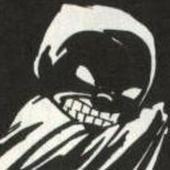
Volume 2 continues the re-presentation of Sam Kieth's and William Messner-Loeb's masterpiece series, The Maxx, with all new colors by Ronda Pattison collected in this beautiful oversized hardcover. Collects issues #5–8.
Kieth first came to prominence in 1984 as the inker of Matt Wagner's Mage, his brushwork adding fluidity and texture to the broad strokes of Wagner's early work at Comico Comics. In 1989, he drew the first five issues of writer Neil Gaiman's celebrated series The Sandman, but felt his style was unsuited to the book (specifically saying that he "felt like Jimi Hendrix in The Beatles") and left, handing over to his former inker Mike Dringenberg.
He acted as illustrator on two volumes of writer William Messner-Loebs' Epicurus the Sage and drew an Aliens miniseries for Dark Horse Comics, among other things, before creating The Maxx in 1993 for Image Comics, with, initially, writing help from Messner-Loebs. It ran for 35 issues and was adapted, with Kieth's assistance, into an animated series for MTV. Since then, as a writer-artist, he has gone on to create Friends of Maxx, Zero Girl, Four Women and Ojo.
Ojo comprises the first and My Inner Bimbo the second, in a cycle of original comic book limited series published by Oni Press. Loosely connected, the cycle will concern the intertwined lives of people with each other and sometimes with a supernatural entity known as the Mysterious Trout. Kieth has stated that other characters from The Maxx series will appear in this cycle of stories. My Inner Bimbo #1 was published in April 2006. Issue #2 was delayed past its original release date; It was finally resolicited in "Previews" in 2007 and hit the store shelves in November 2007.
DC Comics' Batman/Lobo: Deadly Serious, a two-issue prestige format mini-series that started in August 2007, was written and drawn by Kieth. This was followed by 2009's two-issue prestige format mini-series Lobo: Highway to Hell, written by Scott Ian and featuring art by Kieth.
The Maxx looks like your typical ‘90s superhero comic – ridiculously proportioned hero, lots of bombastic fighting, etc. – but Sam Kieth and William Messner-Loeb’s comic brilliantly uses the superhero medium to tell the story of a traumatised woman working through repressed memories. The superhero of the title doesn’t actually have a story and the character plays second fiddle to the woman, Julie, and her very down-to-earth problem, which makes The Maxx easily one of the most interesting superhero stories ever!
IDW continues its reprint of the series with the artwork re-worked, or “maxximised”, in this second volume but here the balance between plot and weirdness is a bit too skewed toward weirdness than in the first book. It’s an episodic volume that doesn’t really have an arc, where one chapter focuses on Maxx waking up as a Saturday morning kids’ cartoon, to Maxx fighting a Savage Dragon villain, to Julie and Maxx going to the grasslands of Pangaea, to Maxx and Pitt (a Hulk-inspired ‘90s creation) shrunk to the size of toy soldiers and battling an Isz in Julie’s apartment.
While the concept of the series remains interesting, there seem to be too many pages of overly silly goofiness that don’t really go anywhere or add anything to the overall story. The Saturday morning cartoon chapter seemed to be an excuse for Kieth to play around with different artistic styles, while the fight with the shark villain from Savage Dragon felt like an overlong joke – Julie and her friend are talking about the gratuitous violence in media today which Kieth juxtaposes with, yes, gratuitous violence. Ha… ha. And the whole fight between Maxx, Pitt and the Isz too was bonkers – the miniature angle made it feel a bit like the Monster in My Pocket (remember those ‘90s toys?) comics that were published for a spell, but overall kinda pointless.
However there are some excellent moments too when Kieth gets around to exploring Julie’s story. The whole grasslands setting is visually arresting and compelling, and also very revealing of her identity, and I like how Kieth’s teasing details out but not giving away too much. Like who Mister Gone (the villain of the last book) really is, and what’s under Maxx’s mask – is Julie the Maxx? Is Julie all of these characters or are they real? Has Julie gone too far or can she save herself?
Kieth’s art has never looked better than it does in this series. This second volume really sees him take off so that there are some superb layouts, wonderful panels, and varied experiments with different drawing styles. The grasslands remains my favourite art of the book, though Julie is still a bit too overtly sexualised to be uncomfortable (but maybe that’s intentional, hinting at what her trauma has to do with?), but every page is spectacular. Savage Dragon and Pitt make cameos as do, surprisingly, Calvin & Hobbes!
The Maxx Volume 2 is a little too meandering, a little too hallucinatory, for its own good and I’d like Kieth to rein in his artistic whims and focus more on the story, because when he does, it’s really great. But despite that, it’s still a decent addition to the series which I’m still interested in following – The Maxx is an entertaining, alternate take on the well-defined superhero genre that’s definitely worth reading.
The crossovers aren't great, I feel like they're pretty forced. But all the typical Maxx things around it are pretty amazing - if a little bit too jumbled.
Well didn't think it could get weirder but it somehow did.
This is mostly Maxx traveling through like almost a cartoon world. At first he's getting his back worked on and falls asleep and slips into a cartoon like world. Julie is also in her own dream-like world but you soon find out she's dealing with a lot of dark and personal issues. The book splits it up from her world she's in to where Maxx is meeting up and crossing over with different heroes such as Savage Dragon.
The book's strength is mostly in the art for me. Sure, it's very 90's, but it's so well done. The landscapes can be breathtaking, the change of art styles is fun, everything runs so smooth and clashes well together. On the flipside the stories wage from trying too much (especially the first one in cartoon world) to being very powerful and sad (mostly anything with Julie). I do like the mystery behind it all too still, even though it does get very odd to the point of being hard to follow at times.
Still, I do like mostly everything I'm reading. For the art alone this is a 4 or 5. But the story can be a bit much for me to fully invest in a 5. So A 3.5-4 it is.
This volume in the series is all about experimentation. Lots of crossover with other Image characters. A couple of dream sequences and every few pages seem to be done in a different style. Some of it works and some does not. Story still does not make sense.
O mais interessante é que tudo que eu reclamo no Spawn eu gosto no The Maxx. É confuso, será que isso está mesmo acontecendo? Os dois moram em algum beco imundo de alguma metrópole tomada pelo crime. A arte é exagerada. Os personagens se encontram e se desencontram de uma maneira meio maluca - aparece o Savage Dragon e o Pitt. E a história parece que não vai para frente. Mas por que aqui funciona? Porque aqui, apesar de tudo, eu acho que eu vejo um objetivo, uma motivação final para a história da Julie, do Maxx e do Mr Gone. Eu acho que nós estamos explorando psiques atormentadas, traumatizadas e que precisam de uma certa ilusão para funcionar no mundo real, aos poucos isso vai aparecendo; uma página aqui, uma página ali, um quadrinho perdido, uma pergunta, nenhuma resposta clara e concisa. Claro que nada vai explicar porque o Maxx e o Pitt diminuíram de tamanho e enfrentaram um dos seres maléficos numa cozinha, mas não dá pra ter explicação pra tudo.
This volume suffers a little from the tie-ins with other image comics, but Keith and Messner-Loebs make it work and there is a coherent message in each of these issues. It's not a simple message, but every issue is packed with great art, unique weirdness, and nuanced meaning. The Mako vs. Maxx issue is infamous for having a mixed message and a big dumb violent fight in the middle of a conversation about violence in media. But that's the whole point. Keith and Messner-Loebs know that the fight is dumb. What they are saying is not that we have to cut meaningless violence, but that we have to portray more wrestling with trauma and the impact of violence. These issues don't have the same tight direction as the first four, but they are still wonderful and the big reveal was spectacular.
The weirdness continues and the art continues to look great. We have crossovers from other Image heroes in this volume, Savage Dragon and Pitt. And yes, they are really strange crossovers, probably some of the weirdest you'll see. But that works here since a straightforward crossover wouldn't have worked. This series is really too weird for me, but just interesting enough to keep me reading. The great art helps too.
Even more confusing than the previous volume, while still unfortunately nothing really happens. A lot of visual chaos that is super creative, but, sigh, just tough to get through. I see there are several volumes to go and while I read the first two on Hoopla, the rest aren't available there and it seems probably not worth it to track the rest down. I admit I read the plot summary on Wikipedia and if at all accurate, then uhh jeez I'm not sure I have any desire at all to keep going.
Continúan las aventuras de The Maxx, en este tomo aparecen algunos invitados de la editorial como Savage Dragon y The Pitt. Y funcionan muy bien con la historia. Cada capítulo siembra una nueva intriga. Me gusta.
De la mano del creador de Vaca y Pollito, con visitas de Savage Dragon y Pitt y con charlas filosóficas entre una chica acomplejada y un cacho de arcilla malvada, este segundo tomo no sólo no baja el nivel del primero sino que se juega a irse un poquito más al carajo todavía. Y eso que lo mejor está por venir...
Volume 2 was heavy with cross-overs (ie: Mako of "Savage Dragon" and the title character of "Pitt") that added nothing to the overall story and that were even a bit disorienting (and only slightly in a fun surreal Kieth kinda way). In addition, V2 included some heavy-handed (read: uninteresting, unoriginal) analysis of violence in pop culture (and the censorship thereof) that fell rather flat. Nevertheless, plenty of laugh-out-loud humor, intriguing character development (Mr. Gone & Julie), and, of course, captivating Kieth artwork was also present throughout (hence the 4 rather than 3 star rating). In sum, I don't regret buying this volume, but I doubt that I will revisit it as often as the rest of the series.
This continues Sam Keith's Maxx, and the backstory continues to develop as does the focus on Julie as well as Sera. Mr. Gone's role is slightly clarified, although his origins remain obscure. The art is strong and the new coloring does make it pop, Sam Kieth and William Messner-Loeb's depiction of trauma is still surreal but believable. The only qualm I have with this volume is attempted crossovers with other 90s Image hero's book while actually slightly hurt the continuity as it makes the "reality" of the situation more questionable and really seems to be superfluous to both the character's and the plot.
I always kind of felt like that in the beginning, The Maxx was just supposed to be about The Maxx, Julie, and Mr. Gone and then they kind of exhausted that and had to start bringing in others. At this point, they've definitely had to do that. But, it still works. It's still an interesting read. This volume includes a Calvin and Hobbes tribute that's very cute.
I have to give the Maxx and Sam Keith a lot of credit. Jon Spencer once said that good rock music has to at least be a little bit weird. Well the Maxx did the same for me and comics.
I have no idea what first attracted me to the comics (maybe the crossover with Gen13 which was my gateway comic?), but once I started, I was hooked and I didn’t know why. Its convoluted story, its weird characters, its graphic subject should have turned me off to the series, but instead they kept me coming for more. One thing I knew for sure was that there was nothing out there like it and being original counted for a lot in that era of comics.
Many years after I’ve read the comics, I’m still at a loss to describe what it’s about. Sure, the Maxx appears to be about good’s struggle over evil with superheroes and supervillains in the mix, but it’s also so much more. As you read on, you realize that this is a very psychological book, and that these apparently superhuman characters are actually dealing with very real inner struggles, learning to cope with their life, afraid of their own weakness. And even though I originally remember the Maxx series being about the Maxx, then I thought maybe it’s about Julie, rereading the series almost 10 years later I’m starting to realize this series is actually about Mr. Gone. A shocking revelation that the villain of the story is actually the hero. Then again, Sam Keith was never one to write conventional stories. Quite honestly, my mind is being blown all over again. I know I said there was nothing out there quite like The Maxx and years later, there still isn’t.
IDW has stepped up to the plate once more and truly revamped the series in these Maxximixed editions. The series is not just printed on thick glossy paper, collected in hardcover books with all new art, but here they’ve also rescanned the original artwork and recolorized the pages. Kieth is nothing if not a breathtaking artist and the Maxx looks even better than it originally did, if you can imagine that. A much needed and truly apt collection of a grossly underrated series.
These first four books end right before we truly get into the root of Julie’s trauma and where exactly the Maxx as we know him came from. Until now we’ve have unpacked quite a complicated story and the boundaries have been drawn. Now, let’s see if Sam Kieth can put everything back in the box.
Hold onto your butts. Things are about to get much weirder.