“Could this be the best book on football ever?” —Tyler Cowen
"Another masterwork from one of our greatest minds.” —Esquire
“[An] essential playoff-season read.” —People
A hilarious but nonetheless groundbreaking contribution to the argument about which force shapes American life the most. For two kinds of readers—those who know it’s football and those who are about to find out.
Chuck Klosterman—New York Times bestselling critic, journalist, and, yes, football psychotic—did not write this book to deepen your appreciation of the game. He’s not trying to help you become that person at the party, or to teach you how to make better bets, or to validate any preexisting views you might have about the sport (positive or negative). Football does, in fact, do all of those things. But not in the way such things have been done in the past, and never in a way any normal person would expect.
Cultural theorists talk about hyperobjects—phenomena that bulk so large that their true dimensions are hidden in plain sight. In 2023, 93 of the 100 most-watched programs on U.S. television were NFL football games. This is not an anomaly. This is how society is best understood. Football is not merely the country’s most popular sport; it is engrained in almost everything that explains what America is, even for those who barely pay attention.
Klosterman gets to the bottom of all of it. He takes us to a metaphorical projection of Texas, where the religion of six-man football merges with America’s Team [sic] and makes an inexplicable impact on a boy in North Dakota. He dissects the question of natural greatness, the paradox of gambling and war, and the timeless caricature of the uncompromising head coach. He interrogates the perfection of football’s marriage with television and the morality of acceptable risk. He even conjures an extinction-level event. If Žižek liked the SEC more than he liked cinema, if Stephen Jay Gould cared about linebackers more than he cared about dinosaurs, if Steve Martin played quarterback instead of the banjo . . . it would still be nothing like this.
A century ago, Yale’s legendary coach Walter Camp wrote his unified theory of the game. He called it Football. Chuck Klosterman has given us a new Camp for the new age, rooted in a personal history he cannot escape.
Charles John Klosterman is an American author and essayist whose work focuses on American popular culture. He has been a columnist for Esquire and ESPN.com and wrote "The Ethicist" column for The New York Times Magazine. Klosterman is the author of twelve books, including two novels and the essay collection Sex, Drugs, and Cocoa Puffs: A Low Culture Manifesto. He was awarded the ASCAP Deems Taylor award for music criticism in 2002.
Anybody who knows me well, knows that I have always had a deep loathing for football. It used to be a lot stronger than it is now. I feel like I've gone beyond deep pathological hatred to a point where I don't even really think about it at all. I've become completely indifferent to football, which I can only hope is a more healthy reaction.
So, it may come as a huge surprise that I just finished reading an entire book about football, entitled, simply, "Football". One may wonder why I did this.
The simple answer is because it was written by Chuck Klosterman. Indeed, this is the only reason I picked this book up. If it had been written by anybody else in the world, I would have walked by it on the library shelf without giving it a single thought. Klosterman, however, is a writer that I trust, so I figured, even if it's a book about a subject I care nothing about, there is probably something worth reading in it.
I was, of course, absolutely right.
This is not a normal book about football. In fact, it's not really about the sport so much as how much the sport has impacted, influenced, and ingratiated itself into the American milieu. Basic takeaway: Football is America, and America is football, and Klosterman---despite the fact that he is an uber-fan---feels that this isn't necessarily a good thing.
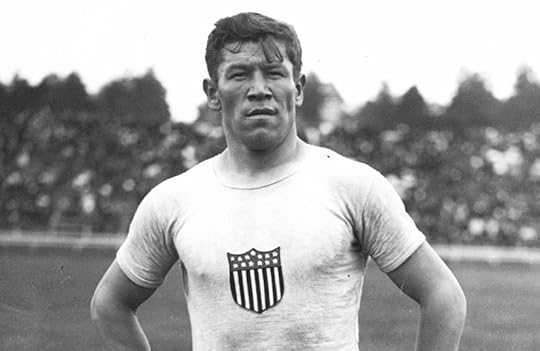
Jim Thorpe
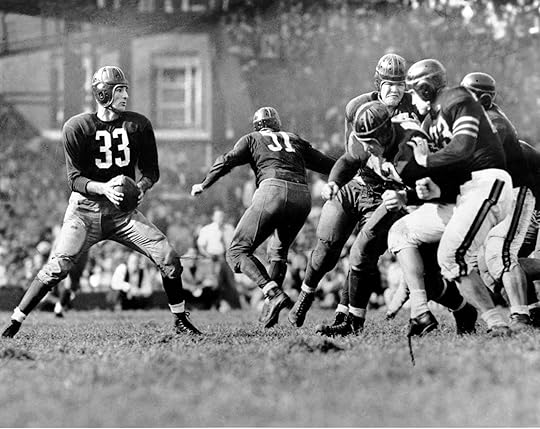
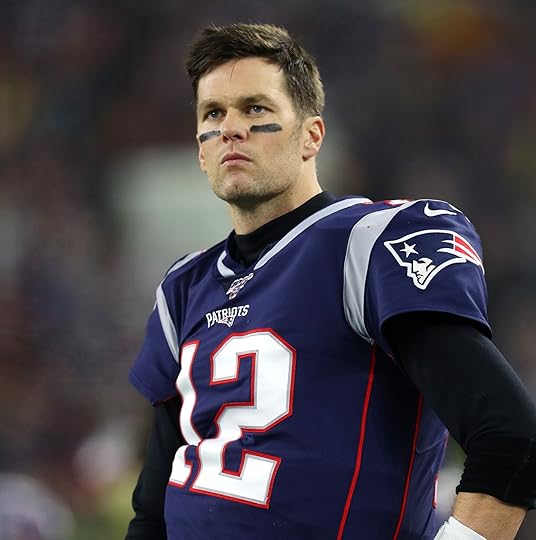
There is a lot of intellectualizing about football in this book, as only Klosterman can intellectualize. For example, there is a chapter in which Klosterman ranks the top ten best players of all time, going back to the 1920s, when football wasn't nearly as popular, to today. One might think this would just be a simple chapter of short biographical sketches of great players and what made them great. It is that, but it also becomes an examination of how different the sport has changed over the decades and how Jim Thorpe---a legendary Native American player from the 1920s who helped found the NFL---couldn't really hold a candle to, say, Tom Brady---arguably considered to be the best modern-day player. Partly this is because the game has evolved to a point where the needs of the sport requires certain genetic and biological strengths that players prior to the 1970s didn't, and couldn't, possess. Football players today are literal giants of brute strength, and the game has helped breed them that way.
Tom Brady
There is also another chapter devoted to Chronic Traumatic Encephalopathy (CTE). This degenerative brain disease is caused by repeated head trauma and causes severe depression, aggressive behavior, and dementia. Sadly, there is no way to diagnose the disease, and it is only detectable after death. Of 376 NFL players who have died over the years, 345 of them were posthumously diagnosed with CTE. For years, the NFL denied the existence of the disease and/or campaigned to downplay or eliminate the media attention about it. Doctors and scientists are learning more about it with every new case. Klosterman raises the question, then, about the future of the sport and whether players should continue playing a sport that could eventually, literally, kill them.
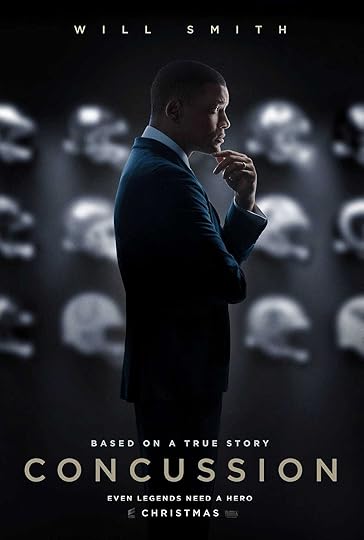
The 2015 film "Concussion" starring Will Smith was the true story of Dr. Bennet Omalu, who "discovered" the connection between repetitive high-impact head trauma in NFL players with the disease CTE. While some critics complained that some liberties were taken with depictions of real-life characters, the film received kudos by neurologists for its accurate portrayal of the science.
In fact, the book concludes with a fascinating hypothetical about the future of football. Klosterman believes that in a hundred years, the sport---due to extremely plausible financial, economic, and socio-political reasons---will no longer exist as we know it today. It certainly won't be played with the vigor or interest it is today. It will be referenced in history books and in movies. Future people will wonder what 21st-century people saw in the barbaric sport. Klosterman, of course, is saddened by this prospect, but he realizes that it is inevitable and appropriate.
Regardless of whether you love, hate, or are indifferent to the sport, "Football" is a great thought-provoking and entertaining book, and it's worth reading.
Getting the granular musings about why the monoculture only exists now through football is both fascinating and largely unsettling. Klosterman is brilliant, sometimes wrong, and always grasping with the “why’s” of it all through really resonate “how’s” that meander about through memoirs and history. It’s a book that doesn’t have the answers, and we’re all the better for that. Regardless of how much you like or know about football, I think this would be the exact book for readers that love thinking more than learning.
No one who doesn't already read sports books will believe me about this, but I genuinely believe this is a great book both for people who adore and abhor football alike. Klosterman often takes such an interesting, out of left field approach that it frequently feels like a book entitled Football is about almost anything else. A part of me wishes this was twice as long.
I just finished Football by Chuck Klosterman, and like most of his work, it’s smart, funny, and definitely thought-provoking — though not always a perfect landing for me.
Klosterman takes on America’s most popular sport and examines it through his familiar lens as a kind of pop-culture philosopher. He guides readers through a wide range of football topics — cultural, historical, and personal — always circling the big question hovering over the book: Is football doomed?
As expected, there are plenty of classic Klosterman “aha” moments mixed with a few laugh-out-loud observations. I especially enjoyed the offbeat detours — including discussions about Jim Thorpe, the uniqueness of football’s structure, and even the long history of the Grey Cup. Those unexpected angles are where Klosterman shines.
One of the more compelling sections is his exploration of Colin Kaepernick and what his story reveals about football’s place in American culture. Klosterman has a knack for taking everyday sports conversations and elevating them into broader cultural arguments — like listening to a really sharp friend hold court at a bar.
For me, this book also hit on a personal level. I played college football, have coached youth and high school football, and all of my sons have played the game. Two of my sons have even worked for the Chicago Bears! Football has been woven into the fabric of my life for decades — Friday nights, Saturday afternoons, Sunday rituals. I love the game deeply.
Because of that, I’m not sure I buy that football is doomed anytime soon. But I do recognize the strength of Klosterman’s argument — particularly around rising costs, participation decline, and very real safety concerns surrounding the sport. Those issues are impossible to ignore, and he lays them out in a way that makes you pause, even if you ultimately push back.
That said, the book can feel like it’s trying a little too hard at times. Some arguments stretch thin, and a few chapters drift into overanalysis that didn’t always hold my attention. I found myself wishing certain sections were tighter and more direct.
And for the record — no, I did not give the book only three stars because of its lack of Chicago Bears coverage. Though I wouldn’t have complained about a few more pages there either!
Still, even when I wasn’t fully buying the premise, I appreciated the questions Klosterman was asking. He presents strong ideas and backs them with solid reasoning — even if I didn’t always agree with where he landed.
Final thought: Not Klosterman’s best in my book, but still an engaging, conversation-starting read for football fans — especially those of us who love the game enough to wrestle with its future.
My favorite writer currently doing it. Klosterman possesses a rare combination of knowing ball (I've watched multiple hours of football every weekend since I was like eight and I learned a few things about the game reading this) and being willing to go down intellectual rabbit holes (nobody is better at forcing Bill Simmons out of his comfort zone on his own show). I will say there are points where he chases his own tail (there's a bit about the metric system near the end of the book that just felt sort of pedantic) but I think he's earned that right given his previous body of work. Would recommend for anyone who even tangentially cares about football.
Of course I wouldn't give anything less than five stars to a new Chuck Klosterman book.
I can easily quantify my enjoyment of the big dog's writing, but the challenge here is to qualify it. Football did not make me want to watch more football, but it made me concede that it's of considerable importance beyond the confines of the sport itself in American culture. While I couldn't relate to the more specific historical reflection, I did to the cultural consideration on the importance and interests of sports in the abstract. There's notably an essay at the end about the inverted socioeconomic logic of why football is called football and why football is called soccer in the US that was both clever and personal. Klosterman always keeps the most personal stuff for the end of his books.
But self-examination is what I responded to the most, I believe. Although it's clear from reading this book that Chuck Klosterman loves football and doesn't plan to stop watching it for as long as he breathes, a lot of Football is about why America loves such a violent, idiosyncratic and culturally conservative sport. So when people review this book and say "this is for people who either love or hate football", this is what they're talking about. The loving, but thoroughly cerebral analysis of this extreme devotion to a sport only Americans could love the way they do from concussions to the patriarchy of coaching by the way of racial prejudice, there's a thorough gut check of American identity that's being operated here without any political judgement. That always been Klosterman's biggest strength. Talking about something without talking about it.
I will probably read this book several times and own it in different formats like I did with the others and I invite you to do the same on the basis that it's a great idea to use a cultural proxy to have a pleasant and detached conversation on topic you're now demanded to urgently side on. Chuck Klosterman's still got it.
I struggled to give this book a star rating. Like most Klosterman books, some essays genuinely interested me, some felt laughably dumb, and others landed as fairly obvious observations dressed up as insight. But that inconsistency is also kind of the point—and the reason I keep reading him. His writing feels like late-night dorm room conversations: half-baked, occasionally sharp, and mostly valuable as a catalyst for better conversations. It wasn’t a bad book. It also wasn’t that good.
I'm not a football fan. The only part of the Superbowl broadcast I watched this year was the halftime show. I'm a diehard hockey fan (Go Leafs Go!) and I've dabbled in baseball (especially during the Blue Jays run to the World Series last fall), but the only football I really enjoy is the fictionalized version I've seen in movies or as window dressing for a small-town crime novel (The Prophet).
That said, I would literally read/listen to anything Chuck Klosterman writes, so I absolutely loved this. His breakdown as to why football is the only sport that is specifically catered to television as well as his essay explaining why football itself is ultimately doomed truly captured my imagination.
There's some good stuff here, but the way this guy presents arguments is exhausting. Parody: "There are three reasons this is true. The first is factual, the second is cultural, and the third is epistemological. Now maybe you are thinking, and you might be right to think (I could even agree with you), that once the factual argument is presented the heuristic loop closes. You would be right. And wrong. And that's why this is so important. And why it isn't."
It’s really easy to write off football as problematic and doomed to fail when you aren’t a sports person. It was really interesting to read about the game and its flaws from someone who loves it.
The author acknowledges his own bias and the impossibility of the task he set for himself with this book, but I appreciate him trying. I wasn’t fully satisfied with the chapter about race, particularly being a bit dismissive of police violence, but he also acknowledged his limitation here. I think he was trying to walk the neutral line, given the audience, which I don’t like but understand from a sales perspective I guess.
I think this would be an interesting read for any football fan. I also think the football bubble will eventually burst, and that will be a sad day. But I’ll wear green and gold every Sunday (or Monday, or Thursday, or Saturday) regardless.
Interesting read about football and if you're into the sport, you will like this. I did feel like it wasn't very well organized and went all over the place. It had some personal anecdotes and then some stats and research but it kind of all flowed together and abruptly would switch topics. Definitely needed smoother transitions or more organized groupings of topics within the book. The other big gripe I had which almost made me give this a lower rating is that the author felt confused about his audience. This is a deep cuts book about football. A casual is not really going to enjoy this. Not to typecast but there is usually a type of person who enjoys football, namely, it skews heavily male. Some of the references and comparisons they were trying to make were like something football related vs like a very niche Taylor song or some other female skewing culture zeitgeist moment (sorry it’s vague because my book highlights aren't loading!). It was weird and happened often and I couldn't imagine the average reader crossing over to know both references that were being discussed.
The problem with having listened to Chuck Klosterman for dozens of podcast hours is that he’s been working on this book for years and these ideas aren’t novel.
I argued my way through this book. It was great fun.
This is the most thoughtful book about football. Klosterman wrestles with questions like, what will people think of football in fifty years? or would football be better if there were five or three downs to get a first down? or should players have the freedom to play football no matter how dangerous we learn it is?
Klosterman gets at these questions with his special mix of personal stories, ruminations on games he has seen, consideration of large philosophical questions, history and just quirky things to consider. Sometimes he tips into nerdy abstract talk as in, "The rise of football is the epiphenomenal result of how America works, though not in the way we typically insinuate." or "If there's no universal path to self-actualization, a path must be creatively forged by every individual, and anything that exists can be transformed into a vessel of meaning.".
Other times he has great fun dragging in stuff from all over the place. Looking under "C" in the index we get Catholicism, "Call of Duty", James Carville, "Cheers", Noam Chomsky, "Citizen Kane", Eric Clapton, Cocoa-Cola, colonialism, comic books, and The Book of Corinthians in the Bible. It is great fun following him down these paths.
I had some serious disagreements with him. Jim Thorpe was not the greatest football player of all time. On of my pet theories is that arguments about the GOAT are always really arguments about what do you mean by the GOAT. For example, in the NBA, if we say the goal of the game is to score points so the GOAT is the one who is best at that, then Chamberlain is the GOAT. If we say the goal is to contribute the most to winning the most championships, the GOAT is Russell. The argument is about, what do we mean by Goat?
Klosterman starts by saying that a GOAT in any field is the one who first establishes what greatness is like. The Beatles in pop music or Citizen Kane in movies. The problem is that his choice for GOAT didn't do that in the NFL.
Jim Thorpe was the greatest American athlete. He was a great hall of fame football player, but he didn't change or revolutionize the game in any great way. Running backs didn't change their style because of Thorpe. No new schemes or plays were introduced because of him. He was the most famous NFL player of his day because of the Olympics and many of his contemporaries said that he the best player in the NFL for most of his career, but he was not the GOAT.
Tom Brady is, of course, the NFL Goat. Klosterman's GOAT definition doesn't work for NFL players. They don't revolutionize the game in the NFL. Coaches do. Paul Brown, Sid Gilliam or Bill Walsh, for examples, changed the game the way no player has. In the NFL the Goat should be the player who contributed the most to winning the most Championships. That is Tom Brady.
It is also worth mentioning that, as far as I can tell, Thorpe's NFL stats were not GOAT level impressive. The stats from the 1920s are scant but the Football Hall of Fame site says that he played 52 games in the NFL, and he scored 6 rushing TDs and 4 passing TDs. To give some context, Jim Brown played 118 games. He scored 106 rushing TDs and 20 receiving TDs. Thorpe's college numbers were unprecedented. He scored 53 TDs in 44 games as well as being the best kicker in football. His NFL numbers, as far as I can tell, were very good but not close to GOAT level.
I disagreed with Klosterman on several of his other theories but each time his case was entertainingly and well made. He says many things that make me stop and think.
"Describing how the NFL transpires on a play-by-play basis is like trying to explain the incremental mechanics of a nuclear reactor." or
Watching an NFL game because your fantasy football future depends on what numbers a single player gets is "like eating a seven-course meal and only paying attention to how much paprika was added to the potatoes." or
"Football is a chaotic replication of bureaucratic life. Life is a means for watching football (so that our bureaucratic life can be better understood.)."
I agreed with Klosterman more than I disagreed and I enjoyed arguing with him when I didn't.
I was moved by a personal story he tells near the end of the book. Klosterman was 12 in 1984 when he saw the 1984 Flutie -Phelan pass in the BC-Miami game in his living room with his father. I was thirty and I saw it at home. My father called me seconds after the play. Klosterman and I will never forget the play because of what it showed us about our fathers.
I really liked the start of this book but at the end of the day, it fails to add anything new to the broader discourse of footballs impact in the US. Everything discussed, while interesting, are all topic people have talked about for years.
Probably 25% of this book makes little-to-no sense. But that doesn’t matter, because I couldn’t read so much as a page or even a paragraph without smiling — if I wasn’t laughing! Though I often disagree and I find his arguments induce in me more questions than conclusions, I never fail to delight in reading Chuck Klosterman. I’m only sad that it’s over.
p.s. even the acknowledgments here are priceless, not to be missed!
This was incredibly fun. If someone asked me what its about or what I learned from it, my response will universally be "you'd just have to read it." Even now, just minutes from finishing it, I am not quite sure what my takeaway is, except I liked it. And I like football. I do think this can be enjoyed by people who love football and people who dont. As much time as I've spent watching football and talking about football, I can say I've never thought about football in alot of the ways the author has. Some neat perspective, some wild perspective, some scary perspective, some unnecessary perspective- but a new perspective all the same. And perhaps alter how I think about the whole thing going forward.
Chuck Klosterman is a unique voice and I loved this book! I've read two of Klosterman's books so far and I find him a highly intriguing character. My lovely girlfriend gifted me Football recently for Valentine's Day and it's highly deserving of the 5 Stars I awarded it!
Klosterman spends a lot of time being like, "I don't really know who this book is for" and I will tell you: it is ME. I do not like football. I think it's essentially bad. Klosterman understands this. He is not here to change anyone's mind about football, in fact, true football enthusiasts might dislike this book (see: my husband, to whom I relayed several of Klosterman's points and he started to get in a fight with me about them.) But I loved this. Over and over Klosterman does my own personal favorite thing to do, which is come up with a question no one was asking and then debate it all the way to the end even though you've veered into true nonsense (see: time machine full of babies.) He's having the debate for the fun of having the debate. And it's about football as culture, which is a thing I'm fascinated by even if not a fan of football as sport. Anyway this was a lot of fun even though I did skip the back half of "The cottage life" chapter, bc it was too much about yards and inches and not enoug about the fellows from Heated Rivalry.
An incredibly well-researched book covering every aspect of football that you’ve ever thought of, and many that you’ve never thought of.
“We are incessantly told that history is written by the victors. That axiom is true about wars but rarely about culture. Cultural history tends to be written by those who see victories as regrettable and unjust, particularly when the victory is otherwise undeniable.”
“Two shirtless dudes throwing a pigskin around the college quad has almost no connection to playing quarterback or wide receiver. For one thing, it’s exceedingly rare to throw a football at an uncovered, nonmoving target; for another, completing a pass in an actual game is the end result of reading a defense and making an instinctive decision in less than three seconds; for still another, both the passer and the catcher need to accomplish those acts while other people try to put them in the hospital.”
“So how many NFL quarterbacks should be Black? There is no acceptable answer to this question. I’m probably racist for wondering about it, and my inability to understand why such wondering is bad probably makes it worse. When one is considering demographic representation, math is never helpful. The population of Samoa is only around 220,000, yet there are 30 Samoans currently playing pro football. An astounding 5.1 percent of players selected in the 2024 draft were Polynesian. The likelihood of a Samoan teenager making the NFL is around 56 times greater than a teenager from the U.S. mainland, a disparity seen as both a positive reflection on Samoan athletes and a negative reflection on the limited opportunities for young Samoan males. It’s a cool thing we’re not supposed to be happy about.”
“What I’m arguing is that football is not popular because it’s violent, but that violence is a critical component to the other qualities that make its popularity possible. The distinction is subtle, but that’s not the problem. The problem is that its violence-adjacent popularity has grown so gigantic that every detail related to football has taken on an outsized importance, most notably the moral ramifications of 150 million Americans choosing to spend their weekends watching healthy people pulverize their brains. Which is why I must ask the same question for a second time: Should strangers be allowed to do very dangerous, very popular things?”
“I would never classify Antonio Brown as a proxy for all football players. He’s been charged with numerous crimes, accused of sexual assault by multiple women, once threw an ottoman out of a fourteen-story window, and was banned for life from a Holiday Inn Express in Albany, New York.”
“Its physicality is uncompromising, and no one knows if the reward trumps the risk. It’s crazy that we do it at all. It’s crazy that it controls the culture. It’s crazy that it defines huge swaths of the country, including some swaths that barely care. It’s crazy that so many men play a brutal game, end up with incurable dementia, and still insist they’d do it all over again in the exact same way, despite the awareness that they’ll eventually be unable to remember the very thing they fell in love with. It’s crazy. Football is crazy. But it is an insanity we must accept and permit ourselves to enjoy, unless we believe people are obligated to remove every unessential hazard from day-to-day existence. And I just don’t believe that obligation is valid. I don’t believe human life can be fulfilling if the only goal is ensuring that it lasts as long as possible.”
a truly odd and ultimately unsatisfying book, though it's Klosterman's best in some time (and I've read them all, save a fiction effort I vaguely recall). CK tees up the topic quite well, has some quality chapters on things like the CFL's "three downs" problem (he's seemingly wrong until the very end, when he discusses the Vince Ferragamo situation and appears to reverse course or at least recognize the strangeness of what he's arguing, some strange case for familiarity as "sounding right" re everything from soccer to the imperial measurement system), the end of football (a decent bit of speculative work I largely agree with), and the "best player of all time" question. the chapter on race, despite some real work on his part to "split the difference" as he does throughout, is pretty mediocre (though he seems to have added it merely because he had to). the "allegory of the cave" chapter could've easily been the entire book, covering the various purposes football serves as simulation (the tl;dr: active simulation - video games, passive simulation - gambling, symbolic simulation - war as it once was), because what he writes about video games and gambling is good enough to have supported the kind of real research he simply does not have time for (he already knows a lot about football, and it's in these connected essays).
one fascinating final note: various chunks of this book read like AI but are clearly not, because CK has been writing like this for his entire career. (not this but that, staccato sentences, etc.). indeed, he was a proto-SLM whose pleasing style - an easy-to-compose-in style others emulated, including me for a brief "spell" in the 00s, to the point that when the machines started doing the work, much of the work looked like this. that said, there's way more substance in here than there has been with him of late, largely because what he says about this being a strange obsession of his appears to be manifestly correct (besides, what else is he going to do with his life? he's run the race). recommended for the gen-x nostalgia value alone, though it's much better than I expected. nice simple cover, too.
I rarely watch American football, but I liked this book quite a bit. It is a series of more or less self-contained essays on the topic including: fantasy football, gambling, race, an assessment of the greatest players in the history of the game (Jim Thorpe and Jim Brown, among them), and other topics. This is my third Klosterman book and I anticipate I will read a fourth in the near future. He also does a good job narrating his own audiobook, at least in my opinion.
If the book has a flaw it is Klosterman’s occasional exuberance that leads him into going into too much detail for the casual fan or the person who almost never watches or talks about football.
Here are a few sample passages:
… football is always, always, always better on television than it is in person. The televised experience is so superior to the in-person experience that most people watching a football game live are mentally converting what they’re seeing into its TV equivalent, without even trying (p. 19).
What makes Texas different is not a manifestation of what happened in any one game or any one season. It’s the manifestation of a quasi-antediluvian ethos that makes small-town football a MacGuffin for everything else. It’s as if nothing would happen at all, or even exist, if football were removed from the equation (p. 76).
In fact, if asked what class of professionals are most consistently competent at their job, my answer would be whoever is setting the betting lines in various Las Vegas casinos. If I had a brain tumor, I’d want a neurosurgeon to handle the operation, but if I wanted to know the likelihood of my post-surgery survival, I’d trust an oddsmaker from Caesars Palace way more than any doctor. Bookmakers know things that cannot be known (p. 140).
I wish I loved sports, and particularly football, a lot less than I do. It consumes too much of my memory and too much of my time (p. 273).
Kindle and libro fm audiobook. 298 pgs. 8 February 2026.
I was recently having a discussion with my wife that led us to a clarification that was both obvious to both of us but also previously unstated: We both love to read/listen to an expert explain something. And it doesn't particularly matter what that expert is an expert in and thus, what they are talking about, just that they are an expert on the subject. Chuck Klosterman isn't an expert on football, nor is he on the 90's or popular music or contemporary American popular culture, so why have I read 5 (and counting) books by him on these and other topics? Because he is an expert on thinking. I find that whenever I listen to Klosterman speak on a topic, or read one of his books, it doesn't matter the topic. I will invariably be compelled to think about the subject in a way that I haven't previously Football is used here for Klosterman as scaffolding to erect his thoughts on America's consciousness. Though it's stated (and obvious) that he loves simply watching football, it is also clear that he loves it just as much when used as a lens to view contemporary culture
Chuck Klosterman is not for everyone, in the same way that going to Raising Cane’s a couple times a month doesn’t intrigue everyone. I’m unsure why some doubt either, but I can’t deny each choice is unique.
This book is a collection of essays that achieve more connection than a book with that undertaking can usually achieve. Most of Klosterman’s media appearances have focused on his idea that the NFL—he surmises in two generations—will lose its stranglehold as one of America’s last monoculture events. In a way only Klosterman could, he used unique analogies like the decline of horse racing because people stopped having any personal experience with horses.
I thought this was a much better book than “The 90s” which seems more likely to stand the test of time or be relevant for a while. A fantastic and quick read.
Chuck Klosterman is at a point in his career where he can pretty much write whatever he wants and someone is going to publish it. And that is pretty much what Football is. Klosterman lays down a few ground rules at the start of the book and one of them, he claims, is that this is a book about football, not a book "about football." This is a book about Chuck Klosterman's opinions on football. They are sometimes very entertaining, funny and insightful but they are also sometimes very tedious. At one point, he dedicates an entire chapter to Canadian football and my eyes glazed over. This book is at its best when it examines football as a form of entertainment. This is why I found his argument that football is not long for this world so compelling. There are so many evolving factors like the declining value of TV advertising, the impact of sports gambling, and the threat of CTE - all of which could spell doom to America's favorite sport. Klosterman makes his arguments in the witty, conversational way that makes his writing so singular. This was a fun read, especially since I got lucky and my library hold came in just in time for Superbowl weekend, but maybe not a particularly memorable one.
Fun easy read. Has a unique way of presenting common conversational topics in football such as the GOAT debate. Each chapter is on a different topic which is nice if I ever want to reread some chapters. Don’t need a ton of knowledge on the history of the game or individual stats to enjoy this book