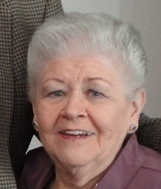
“Lee Grant has lived her life and practiced her craft with reckless abandon, bravery, honesty, and ultimately brutal clarity.”—Tony Award-winner Frank Langella
Already a celebrated Broadway star and Vogue “It Girl,” Lee Grant was just twenty-four when she was nominated for an Academy Award for Detective Story. A year later, her name landed on the Hollywood blacklist, destroying her career and her marriage. Grant spent twelve years fighting the Communist witch hunts and rebuilt her life on her own first stop, a starring role on Peyton Place. Set amid the 1950s New York theater scene and the starstudded parties of 1970s Malibu, I Said Yes to Everything will delight film and theatre buffs as well as the beloved star’s myriad fans.
I found this to be a truly exceptional memoir - powerful and gutsy.
A long, stylishly written, fascinating, richly detailed, warts and all life story by the Academy Award winning actor/director. It won't be for all tastes as Ms. Grant has written a powerful and gritty revelation of every aspect of her colorful life and career, and I mean every aspect! At times I got put off a little by often repeated references to some of the more controversial parts of her life, but I quickly got back on board, enthralled by the sheer scope of the telling.
The Hollywood Blacklist is of particular interest to me, and I found Grant's coverage of the lunacy and tragedy of that period has rarely been so accurately defined as in this book.
Lots of autobiographies, especially show biz ones, can be bland affairs or the author can skip around the lesser and/or more difficult periods of their life but not this one. It's all out there in this remarkable achievement by a multi-talented actor-filmmaker.
I say YES to this memoir!
P.S. Just caught a repeat viewing of Grant in her remarkable, Oscar nominated film debut as the shoplifter in William Wyler's 1951 'Detective Story.' Outstanding, then unfairly blacklisted, sadly only appearing in a couple of minor roles during the next decade.
This was a guilty displeasure as I picked this out of the local library discard pile as it has not been checked out for over 10 years. If this was a movie script instead of Grant's autobiography, she would refuse to do the movie because the main characters are too weird. Just a few of her weird moments are her constant fear of getting old from the nose job, face lifts to shooting up pregnant horse mares' urine (not kidding-page 230) to lose weight in her thighs which the side effects were to give her splitting migraines for the rest of her life and to taking cocaine to keep alert while directing shows. Her flaunting her affairs with too many married men to mention because of Goodreads limit on characters made this disgusting to read.
Lee Grant, who turns one hundred this year (yes, you read that correctly) is a national icon and in this autobiography a treasure house of stories. Lyova Rosenthal first chose her profession, acting, and then new name. Both needed defending. Grant's outspoken leftist political views got her blacklisted in the Fifties by Joseph McCarthy, Roy Cohn and the HUAC, and only gradually was she able to restart her Broadway and film career. Enduring the sneering remarks of her peers wasn't easy either. "You weren't blacklisted because you were a Red", Shelley Winters told her at the end of the Sixties, "You were blacklisted in Hollywood for having no talent". Ouch! Grant went on to stardom and an Oscar playing one of Warren Beatty's many lovers in SHAMPOO, and earned some measure of retribution in playing Roy Cohn's mother in CITIZEN COHN. The Eighties saw her take up a second, side career making incisive documentaries on the plight of the American working class under Reagan, homelessness in DOWN AND OUT IN AMERICA, and the little-seen THE WILMARR 8, on striking female bank workers in Minnesota. It's all here in glorious detail and full of gossip.
Sorry, but this is a terrible book. Grant's opening section is deadly dull, with nothing interesting about her childhood or family. She lacks much self-awareness (she claims she didn't know she was Jewish as a child, even though she describes family Jewish traditions!) and seems upset at having caring parents. She starts her career at a young age and immediately makes some poor choices (some of which she admits) but seems to have no sense of morality or right & wrong. Instead she comes across as one confused, inept, unintelligent woman.
As an adult some of those choices included shacking up with a married man who also was a well-known Communist. She became a Communist (and admits in the book to signing something that said she was a Communist) yet seems confused about it. She makes a little speech about how she admires Communist writers and how unfair it is that some of her actor friends live among the rich and have maids.
Then she moves to live among the rich on Central Park West and has a maid. As a Communist. She is then called before Congress, uncertain why because she suddenly isn't sure if she's really a Communist, and pleads the Fifth repeatedly. She complains that she's on the Blacklist, saying she can't get work. Then she writes in the book about how much work she gets during that time, especially from her Communist friends.
Get the point? She's really screwed up, liberal, snobby, and unrelatable.
Her "stories" (if you want to call them that) are droll and lack details. She stars in a movie and only uses a couple sentences to mention it. She stars in one of the biggest flops in TV history and devotes about 8 paragraphs to it. There are a few sections that have more detail (like working with Warren Beatty). But if a major life event occurs, like a birth or a heart attack, she barely mentions them. Her mind seems to be skipping through her life's experiences with little depth. And it's all very boring. A whole lot of nothing. And nothing to be proud of.
Good actor auto-bio with honestly the best title ever. In the early 50's Grant was blacklisted, which lasted for 12 long years. But she came back with a vengeance in the mid-60's to a long and successful career as an actress and then director. Reading her account of all these tumultuous events I was with her all the way (doesn't hurt that I've always liked her a lot and despise rightwing goons). She's a good, frank, very present writer, with an occasionally dirty mouth (yeah!) and a righteous sociopolitical indignation (when she went off on Reagan I was all in, egging her on from afar). There's some juicy celeb gossip in here too, of course. If you like indulging in these kinds of books you can't go wrong here. By the way, Grant is in her nineties now, while those who blacklisted her are mouldering in their graves. Sometimes there's a little bit of justice in this world. ***1/2
This book is absolutely captivating. I haven't seen very many of Lee Grant's movies (although I've seen a few and plan to see more) but you don't need to to appreciate this book or its stories.
After reading this, I get the feeling that Lee Grant would be a fantastic person to be friends with. I also believe that there could be another whole book full of Hollywood stories; as fun as this one was, you can tell that it didn't even scratch the surface of the things she could say.
I was extremely disappointed in this book. I can understand why no one wanted to edit Ms. Grant's memoirs, but they really should have! The book is disjointed. Snippets of events are helter skelter throughout the book. For example: she mentions recuperating from a nose job, except we haven't heard about the nose job. A few chapters later she talks about the nose job. I finally decided that reading this book was like being stuck at a cocktail party with a drunk person who thinks they are fascinating (and probably are in this case) but can't cohesively present their story.
What can I say about this biography? It’s stark, all-encompassing, heartfelt and honest. Ms. Grant lays bare her soul. I wanted to read this because I have always liked her as an actress. My favorite movie with her is Buona Sera, Mrs. Campbell. Admittedly, she has a supporting role; but in my opinion, she stole the movie without trying to upstage anyone. Her mere presence on the screen is riveting, and so is this autobiography.
She begins literally at the beginning: her relatives emigrating to Ellis Island, how her parents met, her birth, her parents’ divorce and subsequent remarriage, etc. She explains how difficult it was growing up Jewish in New York, and how she survived it.
She became an actress as a teenager, and was nominated for an academy award in 1952. She married Arnold Manoff, a Communist; and while he attempted to get her to join the party, she was basically apathetic about it. Yet because of him, and friends they socialized with, her career was completely and finally cut off. The marriage was tempestuous, and everything she did had to be with Arnie’s approval. When she finally struggled her way back to acting, she eventually did win the coveted Oscar, for Shampoo.
I was extremely interested in hearing her stories about the HUAC (House Un-American Activities Committe), which was started by Senator Joe McCarthy. For those who have no knowledge (and I am sure that is not many), it was a time in America where famous people were expected to ‘name names’ if they wanted to keep on working. Many would not, and their careers would be over forever. Ms. Grant was one of the lucky ones; she was able to find her way into acting again, although it was not easy.
Ms. Grant tells some interesting stories about the people she knew, the sets she worked on, the movies she made. She tells us about the mistakes she made, her life with her husbands (her second husband is Joey Feury) and her children, Dinah Manoff and Belinda Feury. She is honest in her mistakes in parenting, and the things she did right.
Not all of the stories are flattering to the people portrayed; but neither are they intended to be hurtful. I believe they are honest, and although I already knew some of them, there were still quite a few revelations about others.
I believe that anyone who is interested in biographies, or Ms. Grant herself, will enjoy this book immensely, if only for the honesty with which it is written. Highly recommended.
A good book about the life and times of one of my favorite actresses. One of only a few actresses to survive the blacklist. She was on the list for years, and had to fight her way back.
She also became a gifted and sought after director late in her career.
She bares her feelings, her loves, her triumphs and mistakes.
This is a fun book, but it isn't very satisfying. When I was a teenager I saw Lee Grant in OMEN II, a trashy horror film, and I thought she was the sexiest, classiest, most seductive woman I'd ever seen. It turns out she was a promising stage actress who was blacklisted in the Fifties and lost the best years of her career. When she came back she had to do stuff like OMEN II just to pay the bills.
With all that background, I thought the story of her life would be a lot more substantial. But she just skims the surface. She makes her first husband sound like an absolute creep, a manipulator, a user. But then she insists that she just had to stand with him in the McCarthy era, even knowing it would ruin her career. That doesn't make a lot of sense. She talks on and on (and on) about her adoring mama and her aunt spoiling her and telling her she was going to be a great, great actress. She admits to being incredibly spoiled. Yet for some reason she had to side with the Communists? It doesn't make sense.
There are a lot of stories about other celebrities in this book. The best one is about Lenny Bruce crashing at Lee Grant's place in the Sixties, when he was strung out and going downhill fast. It's nice that Lee admires him, I guess. This is a guy who martyred himself for truth, so they say. But still, it's a strange path from worshiping Lenny to cheerfully making dreck like OMEN II.
There's a big Hollywood vibe to this book, and not in a good way. Like Lee Grant boasts that while she was in labor, giving birth, she screamed "F--- the Pope!" I can relate to that sentiment, although probably for very different reasons. But if that was how I felt, I wouldn't want to appear in a cheap Exorcist knock-off like OMEN II. I mean, those devil-child movies are really almost like a love letter to the Catholic Church. The idea is, modern society is so dirty and perverted that Satan feels right at home -- and once the scary music starts, we've all got to run back to Church!
There are a whole lot of missed connections and loose ends in this book, and Lee Grant never seems to even be aware of them, let alone uncomfortable with them.
Lee Grant has lived a very adventurous life as an actor and director. She was blacklisted for 10 years for marrying a communist and got her career back. Great story.
I admire her very much in some ways, and it other ways I question the personal decisions she has made. Still, an interesting look at a very courageous woman.
I didn’t even know how much I loved Lee Grant until I read this book.
Of course, I knew I liked her or thought she was cool, otherwise I would have looked over her autobiography, but all I knew about the girl was that she was amazing in In The Heat of the Night and I’m incredibly interested in basically any of the girls who were in The Valley of the Dolls.
And if that’s all you know about Lee Grant right now – believe me, this lady is way cooler than that.
Lee Grant wasn’t always Lee Grant. She was born, in a year frequently tinkered with on passports and driver’s licenses, as Lyova Haskell Rosenthal, but of course, that’s not a name to get the good roles with. The story starts with adorable insights into her girlhood, my two favorite being 1) being called precocious by adults and being so flattered because she thought they meant precious, and 2) having her first love as a child, only to see it end when her mother forced her to wear this certain dress.
Of course, it starts getting good when Lee breaks off on her own. She leaves the home of her parents and moves straight in with a man about 10 years her senior, already a father of three and already a suspected communist during the McCarthy era. Being a young actress linked to a suspected communist would have been, of course, death to a career, which makes it all the more fascinating that we still care about Lee Grant today.
After a suspect commie dies under circumstances that look very much like he was pushed to an untimely death by investigators, Lee says this at his funeral, and for the next 12 years, puts the nail in the coffin of her career. No one would hire her; there was no point going to auditions. In one story, Lee remembers getting a call from a young girl asking her to come audition, to which Lee replies she must be mistaken, the girl looks at her lists again, and apologizes, they have no work for her.
Was America really like this? Today, celebrities can spew off speeches of hate towards Obama and nothing prevents their next role.
When Lee’s name is finally cleared 12 years later, when the offers are finally coming in, it’s the parts of 20-somethings that people are interested in. So, in this time before IMDb, before the internet, she went lied about her birthday, claiming to the officials they’d made a grave error, marking her a ten years older than she was.
I swear it seems like I’m writing a review of a piece of fiction, like this is some story of a girl that’s too improbable to be true, too literate to be real life. I suppose that’s a bit of what I Said Yes to Everything feels like.
The blacklist lifted, Lee shares the details (and the dirt) of the movies she’s worked on, the directors and stars she’s worked with, the successes and the failures. She’s got a refreshing honesty – admitting the parts she took for money, admitting her own stubbornness looking back on events.
Actually, that’s one of the things I admire about this book most. As Lee says: “I write not anticipating what I’ll say. Sandy Meisner said, ‘Don’t anticipate, surprise yourself.’” And truly – Lee’s the first to admit the things that surprise her as she recounts. So many sentences start with “looking back,” and end with Lee coming to self-realizations of her own behaviors.
As she grew older, maturing in the industry, Lee couldn’t help but try her hand at directing, and I’m so glad she did. It’s probably a really insignificant part of her story for most, but I was intently drawn to her telling of the first documentary she’d directed, a film called Willmar 8 that captured the strike carried out by 8 Minnesotan women who had spent years teaching and training young men that would soon become their own bosses (when they confronted their boss on this, his response was “You are women, after all.”) It’s really a fantastic story of feminism and strong women, and, Willmar being my hometown (as well as the hometown of Lee Grant’s best friend), it’s a story I’ve only heard a different side of in school. I’d love to say the strikers were now revered as heroes, that the groundbreaking strike and the exposure from Lee’s film changed the landscape of women in the workplace in Willmar, but…
Can I keep going on and on over every insight shared by Lee, every detail of this story that stuck to me? It’s in the hundreds. I’m amazed at the honesty, the heart and humility found in I Said Yes to Everything, and I’m sure you will as well. If you’re not a Lee Grant fan already, read this, and you will be.
Lee Grant shares her childhood story and the relationships with her mother and aunt while living on 148th street in New York. Ms. Grant further reminisces about her education and training in the Arts field of dancing and acting that lead to starring in several stage plays and movie films. She discusses her long-term companionship with Arnold Manoff before their marriage including the twelve-year black list she endured due to an affiliation with a Communist Party Arnie believed in and supported.
Ms. Grant recalls the early years of dating and the relationships with famous and well-known stars that sometimes lasted only one or two dates. She discusses in depth her formative years as a teenager through the absent twelve years of perfecting her trade on screen cut short by accusations of befriending Communists living in America extending from the famous ‘Hollywood 10.’
In addition, Grant discloses a play-by-play recount of her widespread on-stage Broadway plays, filmography, and documentaries under her direction after being released from the Red Channels blacklist used by the CBS television company.
Lee Grant’s memoir provides enormous information regard the problematic situations she endured and the driven force within herself not to give up at any cost. I recommend this book to readers of celebrity memoirs and those wishing to learn more on her personal stance on the handling of actors blacklisted during the reign of terror during the ‘McCarthyism’ years, as she had become a victim.
I received this book free from the Net Galley reviewer program in exchange for an unbiased opinion in accordance with the Federal Trade Commission guidelines.
I knew someone a very long time ago who worked with Lee Grant. He said that she was a terrible person. Funny thing is, this man was the perpetrator of the worst kind of crime and was truly the most terrible person I've ever personally encountered, pot calling the kettle black? Anyway, because of this man's assessment of Lee, I was curious to learn more about her.
This autobiography is one of the most honest I've ever read. I can't believe that someone so open and honest can be a bad person. I think Lee is just demanding of herself and others so that they can be their best. This book is well written and interesting throughout.
A superb read on the life of an Award winning actress who we have, previously, known little about privately. Blacklisted unjustly, abused by lovers, husbands and "the system" and triumphant in the end, Grant speaks in a frank, to the point, yet beautiful voice as she tells her very complex life story. A "Smart" autobiography....with notes of political thinking, a view of the changing roles of women, and naturally, an insiders' view of Hollywood. Yet, Grant is deeper than most and delves into human emotions in a lovely way!! A Great read...almost perfection!!
I've always liked this actress so I grabbed the chance to read her autobiography. I would love to have learned more about certain actors but Grant has been in show business for so long that she tells us what's important to her personal life, which was affected by being black listed for 12 years. She makes a comment about writing a sequel, which I hope she's serious about. She's a very gutsy woman.
I've admired Lee Grant's work as an actress and wanted to love this book. It was okay, but I don't recommend it unless you're a huge fan or if you're really interested in her stories about Hollywood life. I liked reading about all the celebrities, but her writing style left a lot to be desired, as it is very disjointed and often confusing, jumping back and forth in time. It needed a better editor.
An entertaining, if a bit sporadic, journey through the life of this Oscar-winning actress and filmmaker. I've always like her daughter, Dinah Manoff, so it was interesting to learn more about the lives of these two talented ladies.
(Picked up for $2 at the Broadway Flea Market) Life seldom goes in a straight line. Lee Grant's zigzagged for several decades and she documents the journey in a breezy, fun, thoughtful 450 pages (I got a beautifully beat-up paperback.) In her early 20s she rocketed to success with a memorable supporting role s a shoplifter in Detective Story on Broadway and garnered an Oscar nomination for the film version starring Kirk Douglas. Not long after she was blacklisted by the House UnAmerican Activities Committee for speaking out against the Committee at the funeral of a fellow actor who was hounded by them. She re-emerged in the 1960s on the thrice-weekly prime time soap Peyton Place, winning an Emmy. An Oscar for Shampoo and two more nominations (for The Landlord and Voyage of the Damned) followed. But the realities of aging and a bad case of stage fright and not being able to remember lines pushed her towards directing docs and features for film and TV, resulting in a second Oscar (for HBO's Down and Out in America.) Grant is brutally honest on the status of actresses in Hollywood. Unlike in Britain where mature ladies such as Vanessa Redgrave, Dame Maggie Smith and Dame Judi Dench can continue starring well into their 80s, American women are thrust aside at the first sign of wrinkles. Grant chronicles her battle with aging, not out of vanity, but out of the necessity to keep working. That's another reason she was so mad about the blacklist, it robbed her of 12 youthful years of working in movies and TV.
The book is also valuable in its detailed history of the blacklist. She gives the true history of the events covered in the TV movie Fear on Trial.
We also get plenty of info on working hard for the money in Airport 77 and The Swarm, her two marriages, her daughter Dinah Manoff (Tony winner for Neil Simon's I Oughta Be in Pictures) and her adopted daughter, an affair with Burt Bacharach and juicy gossip on Liza Minnelli's wedding (the guests were kept waiting over an hour while Maid of Honor Elizabeth Taylor sent her assistant to get the right shoes.)
I interviewed Grant on the phone for my bio of George C. Scott (She played his wife in the NBC mini-series on Mussolini). She was very forthcoming and full of insights on working with Scott who was withholding of emotions until his wife Trish Van Devere arrived on the set late in the filming. The last film I saw her act in was David Lynch's super weird Mulholland Drive. It was a cameo with Ann Miller and the ladies were shot through a screen door. Miller played a landlady and Grant was a nutty tenant. At the time I thought, why is Lee Grant, such a great actress, doing such a nothing role? Now I understand. It was a farewell to acting in Hollywood in a crazy, surrealistic takedown of Tinseltown, the place where Grant was victimized and ultimately triumphed.
A quick and enjoyable read. Lee Grant is one of those people whose name I recognize but can't place, a hey-it's-that-guy person; I'm glad to have a better appreciation of her long (and varied!) career.
I'm a sucker for a Hollywood memoir: they're usually juicy, in addition to being the movie equivalent of inside-baseball. Lee Grant's contribution to the genre includes her experience on the Hollywood Blacklist (unique in some ways), and a better-than-average understanding of her own privilege and how this has benefited her (and in some cases, set her at a disadvantage--when she finally moved out of her parents' home, she'd never done her own laundry or cooked a thing!). Grant is, for the most part, very honest about her own shortcomings, and that's refreshing in ANY memoir.
I say for the most part because there are times when she's markedly clueless and cavalier about her immense privilege, like when . PHEW.
My only stylistic criticism is that there are very few dates in the book and it's hard to keep track of when events are happening and in what order. There's a general sense, and a general "time flow" of the book from the past to the present, but some things are jumbled around and I find that very frustrating. I'm just asking for a year, even a year per chapter! Help a reader out!
tl;dr Good book, quick read, author is uncommonly self-aware. It's tough to keep track of the order of events except in a very broad way but overall it's solid and I'm glad I read it.
PS Lee Grant has positive things to say about most people. There's only 1 person I can think of that she just plain didn't like; everyone else she wound up not speaking to or something either named names to the HUAC or was her abusive ex, etc. PPS Elizabeth Taylor once held up a wedding for WELL over an hour because she brought the wrong shoes by accident. It wasn't even HER wedding! (It was Liza Minnelli's; Taylor was a bridesmaid.) Also her dress was so long you couldn't see her shoes anyway. PPPS Burt Bacharach was a PLAYER.
I always liked Lee Grant as an actress. She was never conventionally beautiful, yet she is deliciously slender and strikingly attractive. Although not known as a comedienne, she's hilariously funny in certain roles ("The Landlord," "Plaza Suite"). A wonderful dramatic actress, especially when she's a baddie (episodes of "Ironside" and "Columbo" come immediately to mind). Although retired now, she's best known as an actress: as a shoplifter in Detective Story (1941), especially good in In the Heat of the Night (1967) and in Voyage of the Damned (76), and often seen in TV fare. Yet she's also directed over a dozen TV show episodes, TV movies and feature films. After reading her memoir, "I Said Yes to Everything" I like her even more. Grant had barely begun to come into her own as an established performer when the godawful House Un-American Activities Committee took it all (or nearly all) away from her, largely because she declined to name names. She persevered, fighting back where she could, while struggling with a difficult marriage and the demands of parenthood. Grant touches on all sorts of things in a thoughtful, direct way, revealing things about her life that other actresses of her generation (and younger) might prefer to have concealed. Provocative. Poignant. Funny. Brave. I didn't want "I Said Yes to Everything" to end. Which I guess means I don't want Lee Grant to end. (And no: she didn't say Yes to murder, incest, armed robbery, etc.--about which some of us have "a thing") A must if you like her.
This entire review has been hidden because of spoilers.
3.5 It would be higher, but the story is disjointed throughout. (Did she have an editor?)It is very repetitive when it comes to the blacklist. She can't let it go, but 12 years is a long time to be shut out. I found it difficult to understand her lack of depth in terms of behavior (did no one in her family discuss sex, politeness, etc..), Communism, relationship with her lover then husband (why stay?), skims over drugs, but very detailed on migraines, avows great love for her daughters, but not really there for them consistently, etc. . She has a "backbone" with her acting, but not, it seems, her personal life.
That said, she had a very interesting life and career. She is obviously talented--actress and director. She does not dish "dirt" and that is admirable. She is very critical of herself. It is too bad she never had a supportive and skilled therapist. She has many loyal friends so she must be much nicer than she thinks she is. Amazing memoir overall. She bares all in some areas and is very discreet in others.
Lee Grant is the only actor to have been blacklisted during the Red Scare in her 20s to then resurrect herself from a career grave in her 30s. She made a string of well-known movies with the leading stars of the day — including “In the Heat of the Night,” “Valley of the Dolls” and “Shampoo” (for which she won an Oscar) — before turning to directing. Her story, told in this long though rewarding memoir, covers her upbringing, years in professional wilderness and two wild marriages. Grant won me over with her brutal honesty and willingness to bare the many struggles and triumphs of her unique career, parenthood and married life. My watchlist also grew quite a bit as I made my way toward the end of her story.
This is the rare show business memoir/bio in which the material preceding its subjects move into show business is as fascinating as anything else in the book. Ms. Grant is a perceptive, vivid writer who tells some great family stories and offers keen insights into her work as an actress. The tortuous account of her battles with the black list read like the best suspense novel, only they're more gripping because she's talking about things that really happened. Like the best memoirists, she owns her mistakes and doesn't indulge in an ego trip. The highest compliment I can pay is that her book is as compelling and moving as her best performances.
I’m a pretty fast reader and this took forever for me to get through because I paused A LOT to Google movies and actors she mentioned. It’s absolutely wonderful- weaving old Hollywood with the new and moving from starring in films to directing them. She spoke at length about being black listed in the 50s- which is just utterly fascinating that our nation wasted its time on such ridiculousness. She is and was fierce, opinionated, strong, and assertive. I appreciate her telling her tumultuous story.
This entire review has been hidden because of spoilers.
While Lee did not say yes to everything outside of her career, the idea was in acting you are forced to agree to any job that came along just to survive. I barely remember her as a screen actor though she did earn an Oscar in that forgettable film Shampoo which I did see first run at the movies. Filled with the usual celeb stories and some creepy ones by business types (like her foot being licked under the table by some big shot producer). One read was enough.