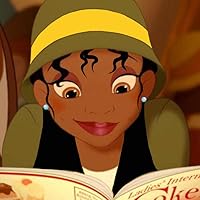
Claudie is traveling from Harlem to Georgia with Mama and Cousin Sidney to meet her grandmother and cousins for the first time. She hopes that learning her family's story will inspire her for the variety show she's planning to raise money to save the boardinghouse her family lives in. Claudie's grandmother tells her a legend from slavery times called "The People Could Fly." In it, an old man whispers magic words, and the enslaved people grow wings and fly home to Africa. This gives Claudie an amazing idea for the finale of her show--but will Claudie's creativity be enough to save the home she loves?
Born and raised in Southern California, Brit Bennett graduated from Stanford University and later earned her MFA in fiction at the University of Michigan, where she won a Hopwood Award in Graduate Short Fiction as well as the 2014 Hurston/Wright Award for College Writers. She is a National Book Foundation 5 Under 35 honoree, and her debut novel The Mothers was a New York Times bestseller. Her second novel The Vanishing Half was an instant #1 New York Times bestseller. Her essays have been featured in The New Yorker, the New York Times Magazine, The Paris Review, and Jezebel.
Because of QNPoohBear's review. Yay for honesty in children's historical fiction. --- Done. Yeah, a lot of intensity in such a short book. Easy to read, but not so easy to feel. Rich back matter.
I've often wondered why formerly enslaved people stayed on the land they were forced to work on. "Because he knew the land.... That's why his crops did so well. Nothing hateful about the land, he always said. Land don't know color.... [This land was] bought by blood. For generations, we slaved over this land, and now a piece of it belongs to us. We can't just give that [legacy] away."
People would go to see lynchings as if it was a special event. "'The lynching has destroyed you, too. Even if you didn't string up the rope.'"
This is my favorite recent American Girl historical character book! It somehow manages to both be heartwarming and not at all shy away from the realities of 1920s racism. I'm disappointed that it seems to wrap up Claudie's story, as I'd hoped we'd be getting a longer series with the new book format - I'd have loved an entire book set in Georgia instead of just half of one - but it's still a great ending and a great book.
CW: racism, anti-Black hate crimes (off-page arson and discussions about lynching), threat of eviction
Most of my thoughts on this book kind of naturally went into my review of Meet Claudie, so I'll just link that instead of repeating myself.
I did like this one slightly less, since I felt like I never got a sense of the extended family and their personality - which was odd, considering how well-fleshed out I thought all of the cast in Harlem was.
Still - an excellent book which shows that, if given the proper time and space, Claudie could have been the *best* American Girl book series.
this girl is so cute!! also very interesting thought that was the closing thought of “A Right To Sex” and was reiterated in this which is the bravest thing someone can do is survive.
four stars because i think the six book series is so much better. you get more time with the girls. the two book abridged version is too short.
These books were well written and I wish there were more! I really liked how Brit explored, as in her own words "multiple things can be true at once -- that the Harlem Renaissance was a period of Black creativity and art, but it also happened alongside a rise in racial violence."
I would argue Claudie's second book deals more directly with racism than her first one, as here they have traveled out of Harlem and she learns about lynchings and sundown towns. I did think her learning to find her talent was really cute.
This book made me radically recalibrate my rating of the Claudie books. This book is a HIGH five stars, perhaps one of the best books in the entire American Girl series, maybe after Melody's and Addy's (and maybe after Kit's too), but better than all of the other American Girl books FOR SURE. I think the problem I had with the first Claudie book is that the first Claudie book and this book should actually just be one book. Claudie's story should be the same length as Melody's book, with these two books forming her first book and then another book of equal length to follow (and ideally we would have gotten to spend more time in Georgia with her due to the longer length, and perhaps to know her cousins better). I really would enjoy spending more time in Claudie's vivid world and with her family and friends (especially her wonderful mother!), and the series would also have benefitted from greater length to allow characters like Claudie's friend Nina, brother Jody, and cousins to be more fully fleshed out characters.
I found this book MUCH more immersive and cohesive than Claudie's first book, with the incidents and the plot being fully explored and the setting and time driving the story much more than in the first book, where the setting and time felt like more of a backdrop. But in this one, there wouldn't have been a story if they weren't in Georgia in 1922 and then Harlem in 1922. Claudie has to be from Harlem to understand Georgia, and she has to go to Georgia to understand Harlem. I love her understanding that home is the place where the people you love are, and that home isn't something that can be measured objectively by what is "better" or "worse." Also in this book, there are fewer topics that get mentioned and then dropped than in the last book; the closest thing in this book is the conversation of "sundown towns," but even that is better integrated into the story because it makes sense why it would come up since they are driving down to Georgia. And also, an important topic to raise in a children's book!
I love Claudie seeing all the different sides of Georgia; she has the experience with the sheriff, but also crowding into a house full of family who love her, and looking up at a clear night sky full of stars, and learning to climb trees from her cousins. And I like Claudie contrasting her experiences in Harlem with her experiences in Georgia and the conversation she has with her cousins about climbing trees and how she wouldn't want to live in Georgia and they wouldn't want to live in Harlem. I love her considering the reasons why "home anchor[s] some people in place and make[s] others flee," and I love her considering what kind of person she might be.
I really like that this book shows the different ways people react to oppression; for Claudie's great-grandpa and her grandma, this land was bought with their family's blood, and they are staying put; Shellman is what they know, and this land is THEIRS. Claudie's great-grandpa's experience as an enslaved person and then a sharecropper on the same land is such an important story to include in a children's book; it's not something I learned about myself until I was an adult. I wish I'd had Claudie's book to learn from when I was nine! I also liked how Claudie's mom has a different perspective; the same things that made her grandma determined to stay in Georgia are the things that made her mom determined to leave. I love that her mom and grandma are both strong, brave, admirable women with very different personalities and perspectives.
I also liked the conversation in the first chapter about Harlem not being free because of people not being able to own their own homes, and Claudie realizing if Miss Amelia owned the boardinghouse, they wouldn't be in danger of losing their home. I liked the nuance of her considering that maybe it's better to own land in Georgia than to rent in Harlem, but then considering later how her great-grandpa always slept with the deed to his farm under his pillow, and seeing the Boman's farm be burned down, and understanding that even ownership isn't always enough to keep you safe.
The racism that Claudie experiences in Georgia is very sensitively portrayed for younger readers. On the one hand, nothing extremely violent happens to them...but Claudie still feels very frightened and angry and helpless. It's kind of like the shark in Jaws. You know there's a shark. Even if you don't see the actual shark (lynchings, violent attacks, destruction of property), all of the things in the environment are showing you that the shark is there. (The Boman farm does get burned down, but I don't count that in this paragraph because it doesn't happen directly to Claudie.)
I thought the scene of Claudie and her mom being stopped by the sheriff was particularly well portrayed, and Brit Bennett explains all the context that makes this encounter so dangerous, and has Claudie's mom explain directly that the sheriff stopped them "to scare us, to show that he's in control." That was a good way to describe it. And Brit Bennett portrays the harm done very subtly and sensitively. It makes sense that Claudie is angry at watching her mother be made small, when that is so unlike the mother she knows. And it makes me wonder if this is one of the reasons why her mother thought Claudie should be older to come to Georgia, not because she needed to be sheltered from racism and unfair rules for Black people, but because she wanted Claudie at age nine to continue to see her mother as powerful and capable and not small and helpless. And perhaps also her mother wasn't ready to feel small and humiliated in front of her daughter.
I also thought the scene in the store with the shopkeeper being rude to them and being suspicious of them for shoplifting was subtly portrayed (more subtly than in Melody's book, even though I didn't have a *problem* with how Melody's experience was written). I can understand Claudie being confused about "the rules," and I liked Claudie's mom explaining that her dignity is worth more than a few pennies. I liked Claudie starting to understand the life her family left behind, and the questions she asks (why did Mama and Cousin Sidney even come back here? And why did her grandmother want to live in a place like this?) are all reasonable.
The family moments in this book were lovely. I liked how happy Claudie is to have her mom all to herself and to listen to her stories as they drive, and I thought the reunion of her grandma and her mom (and Claudie thinking about the fact that her mom is a daughter too) was super sweet. I loved that her grandma already feels so familiar even though they haven't met before, and I liked Claudie hanging out with her cousins. And I loved her grandma telling her stories. The story about the coloured people who could fly was lovely, and I LOVED the payoff to that story at the end of the book!
Claudie's mom is a wonderful character, perhaps one of my favourite in all of the American Girl books (up there with Melody's sister Yvonne and Rebecca's Bubbie, although for different reasons!). I love how she sees something wrong in the world and wants to say something about it. I love her taking action to show the world what's happening. I love that when Claudie's teacher accused her of cheating on a spelling test because how else could she have gotten all the words right, her mom wrote an editorial about even coloured teachers expecting so little from Harlem kids. She knows what needs to be said and she SAYS IT. It's no surprise to me that she left Georgia!
It made sense to me that she would want to report on the Boman farm being burned down, and Claudie drove me nuts about this. I wanted to smack her! It irritated me so much that she got mad at her mom for reporting on the fire and was fuming about "maybe she didn't care about how her articles affected real people." Like I did understand Claudie's grandma's perspective about how reporting on racial violence in the south can lead to people being hurt in retaliation, and I think that's valid (similar to in Melody's books, Yvonne takes action to promote social change and Charles keeps his head down and tries to look after his family, both are valid). In the short term, reporting on racially motivated arson might indeed make things worse. In the long run, it's the only thing that might make things better. It's annoying that Claudie doesn't see that even though her mom has modelled it for her for her whole life, and it's extremely irksome to watch her be so unkind to her mother when Claudie literally knows nothing about this issue.
I like her mom acknowledging Claudie's perspective and saying that it's easy to shout about the fire from Harlem, but there are different ways to be brave, and sometimes speaking out puts people in harm's way, like how Claudie's mom knew that speaking out in the store or with the sheriff would be putting herself and Claudie in harm's way. Like this IS true; I don't think Claudie's grandma isn't brave for not speaking out, or that Claudie's mom isn't brave by making herself small with the sheriff. But I feel like Claudie is coming from an uninformed position, which is mostly trying to avoid conflict, and I don't respect that. Whereas her grandma or Charles in Melody's books are actually in physical danger from speaking out, so I have more empathy for them deciding not to. For Claudie, it doesn't seem like her opinion is informed in the same way; even in the previous book, she was asking her mom why she can't write about happier things. She should respect her mom more; her mom is doing AMAZING things!
When Claudie's mom explained that when she was younger, she saw a man hanging from a tree, I literally said OH GOD. I really liked her mom saying that she started writing because she thought if she just made people see, things would change, but then she realized people could already see, that in fact some people WANTED to see, like the mobs that gathered to watch people be lynched and took pictures of it. I liked her explaining how she realized that bad things weren't happening because people didn't know about them; bad things happened because people WANTED the bad things to happen. That must have been such a devastating realization for her, and I understand why up until now she's protected Claudie from this reality.
I like that Claudie's conclusions based on her mom and grandma's experience is that she wants to be a writer and to imagine things as she wants them to be. I liked her wanting to believe the story about coloured people knowing how to fly was true, and her grandma saying, "That's the power of a story. Just because something didn't happen doesn't make it any less true." I loved how Claudie adapted her grandma's story into her sketch for the variety show, and the ending was GORGEOUS. The illustration of her flying was so beautiful.
So the storyline leading to Claudie deciding to write/create fiction and using her fiction to bring people together all felt cohesive and satisfying, and the idea of Black people all flying from all the places they came from into Harlem is very moving. And the Langston Hughes cameo made me smile big (and was a nice tie in to Melody's books). I still wish Claudie was a bit more like her mom, since her mom is the kind of character (and person) I have huge respect for, but I also understand and can (kind of) accept that that's not Claudie's path. I liked the growth she experienced in the book and the greater understanding she ends the book with. But she still doesn't feel as fleshed out as a character as, say, Kit or Felicity or Melody, which I think is due to her series being so short. I think if I could spend another book or two with her, I'd get to know her a bit better. I really love her world and her family (especially her mom and grandma), but I wish again that we'd gotten to see more of them. Nevertheless, as a book, I'd rank this one up there with some of the best American Girl books (in my view, Melody, Addy, and Kit). Brit Bennett is such a beautiful, skilled writer, and she did outstanding work here.
This entire review has been hidden because of spoilers.
Like Claudie’s first book, the hardcover edition is a gorgeous book. The cover art and illustrations are beautiful. It has a ribbon bookmark. Under the dust jacket, the cover is embossed with a gold art deco-style design on a pale pink cover. *chef’s kiss*
When we left Claudie at the end of her first book, she had one foot out the door to join Mama on a trip to visit family in Georgia. When we pick up here, they’re on the road with Cousin Sidney in his Model T.
We see just enough of the roadtrip to get a good sense for how different Claudie’s experience is from zooming down the interstate today. (For one thing, it take three days, where Google estimates it would take about 16 hours today.) And when we arrive in Mama’s hometown, Bennett doesn’t waste any time in showing us, and Claudie, just what Mama’s warnings were all about. Although this interaction with the town’s white authorities is brief, it’s infused with enough menace that Claudie, and the reader, sees where the lines are.
This plot line makes a nice companion to the couple chapters in Melody's second book, where she visits family in Alabama, including the site of the farm where her mother grew up. Both Claudie and Melody are children of the Great Migration, and in both cases these trips south help them better understand both their mothers and grandparents.
As Claudie gets to know her extended family, it becomes clear that, like any family, not everyone sees things the same way: Some are willing to put up with a lot as a way of standing their ground, while others see it as a reason to look for a better situation elsewhere. Some place more value on a connection to the land, while others prioritize the opportunities of city life. Especially in a book for young people, it’s so valuable to show that no group of people is a monolith — and that in cases like this, there's no one right answer for everyone. We also see a lot of strength in Claudie's mother and grandmother, who are both wonderful characters.
While they’re in Georgia, Claudie is also building relationships with family members she’s never met before. Cousins her own age teach this city girl how to climb trees and care for farm animals. And her grandmother’s stories provide a new level of connection to her culture and her heritage.
Through all of this, Claudie is noodling on what she can contribute to the variety show she’s planning to raise money to pay the back rent. In the spirit of the Harlem Renaissance, what she lands on draws from the traditions of her ancestors and infuses it with her own sense of the present.
Claudie is a treasure, and her books are excellent. I only wish AG would develop her world and her story further — I'd love to spend more time with these characters.
Great historical story. I love Claudie’s grit and her determination to save her boarding house. There were some sad historical realities included, like mentions of lynching and house burnings. It was handled in a way that children can learn and not be too scared, and I will definitely be reading this book again with my 7 year old.
THIS is what American Girl is known for and in this age of censorship and people fussing over "Critical Race Theory", I was shocked AG allowed the project to go forward and didn't pull the plug. They're not making money off this book but it's fantastic. If you're a fan of the classic historical character fiction that showcases history as it was - warts and all - you'll enjoy this novel.
In this story, Claudie joins her mom on a trip south to Georgia to visit relatives. Her mom is an anti-lynching crusading journalist and she sets out to cover Jim Crow and what's happening to her family's neighbors. Claudie enjoys getting to know her family and learns that there are good things about living in Georgia just as there are bad points to living in New York in an apartment in the asphalt jungle. She learns a lesson about racism and different ways of dealing with it. Brit Bennett wasn't afraid to go there and parents should read this book before and with their young readers so they can discuss what's happening in the story. Read about Addy first. And yes, Claudie finally discovers her special talent and it's unique to her and her family background.
I like the illustrations in the story. The Looking Back section features illustrations and photos from the Harlem Renaissance. There's also a Readers' Guide and an interview with the author.
Hurry and buy the book before AG cancels it and turns Claudie into a cheesy graphic novel journal like the other newer characters.
I wish the first book hadn't ended on a cliffhanger, but Claudie's story reminds me so strongly of my own connection to the American Girls series as a child. Partly because Brit Bennett included such a passionate description of her own connection to the original Addy, but also because of the frank inclusion of hard topics (I still have memories of when Kirsten loses Marta to cholera in Meet Kirsten), as well as an abundance of historical context in the backmatter.
Claudie's story itself also reminds me of Ballet Shoes, another childhood favorite, in the way a boarding house becomes a found family. And while Claudie's journey is ostensibly about her finding her artistic talent, the two-part tale as a whole looks at different ways of storytelling and how those stories connect both families and communities. From her mother's newspaper articles, to her grandmother's tales of Brer Rabbit and other folktales, Claudie absorbs the power of words and finds ways to harness her own creativity.
This was good! It was interesting to compare life in a rural farming community in Georgia to life in Harlem. I really felt for Claudie’s grandmother and family and friends as they were treated like dirt in Georgia. I can only hope my own Georgia relatives treated everyone with respect, but they were also poor farmers. I can understand why Claudie’s mama wanted to live in Harlem! Not perfect, but much more freedom for African Americans.
I loved Claudie’s talents for writing and storytelling. I loved that she wove the African folktale her grandma told her into the performance and how she ended up finding her wings! It’s neat that Claudie ran into a young Langston Hughes!
If I disliked anything, it’s that I feel these newer historical books are a little bit more rushed than the originals…but that’s not limited to Claudie. In fact, I really love the hardcover Claudie books with the art deco inside, ribbon bookmark, name plate, discussion questions, author interview…I think all historical AG books should have those.
Part 2 of Claudie's story. (I so wish they hadn't abandoned the six book format and made these "easier to read.")
Again, does a really good job of reaching the target audience: 8- or 9-year-olds who want to learn about history, including the difficult and sad parts (racism). One of the things it really portrays well is why *some* Black people moved out of the South in the Great Migration, but also why others chose to stay despite the realities of segregation and violence. You really get a sense of Claudie's family's history on their land in Georgia.
And of course, the African-American folklore woven into the story, esp. my favorite "The People Could Fly." I just loved how the story inspired Claudie.
She does save the boardinghouse, in case anyone was worried. Still not sure why that should be a child's responsibility, but she does an AMAZING job with her show. YAY CLAUDIE!!!
The first Claudie book was good, but this second volume is excellent. I love Brit Bennett's adept way of introducing & discussing intense/ dark history but ultimately focusing on community strength.
Personally, Claudie's internal conflict over her mom vs grandma's ways of navigating racism was really good to see.
I love that Bennett didn't overly sugarcoat what life was like for Black Americans in the 1920s in Harlem or Georgia.
Plus - finally - closure on the unresolved central plot issue from Book 1!
Honestly, this is now one of my favorite AG historical novels hands down! (and that's with no nostalgia coloring my reading...)
Brit Bennett, from the research and gems of wisdom to making Claudie a solid mix of curious and clever, you've done it again! The beauty of the Harlem Renaissance and harsh reality of racism and segregation was well-balanced, we finally have a historical American Girl that writes stories, and AG fans will be happy to know there was not a best-friends-get-mad-at-each-other-and-don't-speak trope (well, not quite--you'll see what I mean if you read it). Despite being packed with history and solid messages, this is a far cry from dull--instead, it should have you smiling and wondering what'll happen next! Recommended!
Such an excellent addition to the AG historical collection.
Bennett handles complex issues of race in a way that is navigable for the intended audience. History's darkness isn't made saccharin sweet, but it isn't too dark for children either.
I also appreciate how Claudie's internal conflicts were handled as she puzzles out her mother's life and her choices. It's the type of conflict a kid would have, and it was done well.
The illustrations are gorgeous, with rich tones and beautiful renderings.
It's good to see AG creating something more along the lines of what a girl would treasure over something that seems more commercial.
YAASSS. Now this is how an AG book should be written! Bennett took the assignment and knocked it out of the park! The story is written for children but you never felt like she was writing down to you. In fact, it seems like she has a lot of respect and understanding of young curious minds. She doesn’t try to hide the horrific things that happened. She believes that it’s important for her readers to know this part of history and understand why it was happening. I wish more of the AG books took this approach. My only complaint is that I wish there were more Claudie books! Maybe Bennett will write that reconstruction era AG story… We’d be so lucky!
4 stars. I adored that ending! I love that Claudie took the story her story her grandmother told her and made it something personal to her. There was so much to love about these books. The family farm that Claudie’s grandmother owned and how she took pride it in was beautiful. Brit Bennett put a lot of heart and soul into these books and I adored them so much. Adorable reads but also full of history and Black pride. Loved them.
Adventures with Claudie provides a solid conclusion to Claudie's story. Bennett continues to depict both the joys and difficulties of life for a Black family in the 1920s in a clear and kid-friendly way. The comparison between how Claudie's family and neighbors are treated in Harlem vs in the rural South was especially well-depicted. The boardinghouse/fundraiser plot is still rather predictable, but I liked seeing what Claudie ends up writing!
This American Girl sequel takes Claudie on a new adventure and resolves the story threads left hanging after the first volume. The book is tightly plotted and well-written, explores difficult racial themes in age-appropriate ways for the audience, and has a great emphasis on family bonds and friendships.
If I didn't love Claudie already, I definitely love her even more now. This book is very well written and doesn't shy away from the hard subjects that come with this time period and written in a way children can understand. Also, if Claudie's mom read the Wizard of Oz as a child, is she the same age as Samantha? 🤔
4.5 stars. I think American girl needs to go back to its roots. This was a great book but it needed to be longer!! Give the author time to shine! I get it’s for younger children, but I still think this book should have been combined with the first book. The 2016 beforever rebranded books (2, 200 pg books) were amazing for what they were. Claudie deserves more time to shine!!
Claudie's books are some of the best-written AG books out there. I felt this way about the first book and this second book did not disappoint. Brit Bennett did an amazing job pivoting to a younger audience with a really tight plot. I also love that Claudie's mom is inspired by Ida B. Wells.
This is a very good book! It does a great job of addressing the difficulties that Claudie would have faced in the 1920s from a child's perspective. It also resolved the dilemma faced in the first book. The one thing that bugged me was that Claudie's face looked like a different person in each illustration.
Claudie goes to Georgia to see where she came from and to find inspiration to write a story for a play to raise money to keep her home in Harlem. A short read as it is an extension of the first book in the series.
This series was so important to me as a kid, and its so great to see that they've continued to diversify the characters and the stories. The way Bennett approaches really hard stuff, like lynching, is nuanced and just really well done.