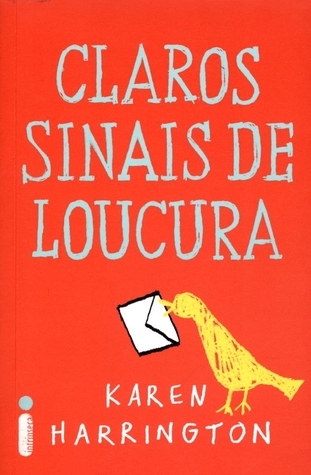
Você nunca conheceu ninguém como Sarah Nelson. Enquanto a maioria dos amigos adora Harry Potter, ela passa o tempo escrevendo cartas para Atticus Finch, o advogado de O sol é para todos. Coleciona palavras-problema em um diário, tem uma planta como melhor amiga e vive tentando achar em si mesma sinais de que está ficando louca. Não é à toa - a mãe tentou afogá-la e ao irmão quando eles tinham apenas dois anos, e desde então mora em uma instituição psiquiátrica. O pai, professor, tornou-se alcoólatra. Fugindo da notoriedade do crime, ele e Sarah já se mudaram de diversas cidades, e a menina jamais se sentiu em casa em nenhuma delas. Com a chegada do verão em que completa doze anos, ela está cada vez mais apreensiva. Sente falta de um pai mais presente e das experiências que não viveu com a mãe, já se acha grande demais para passar as férias na casa dos avós, está preocupada com a árvore genealógica que fará na escola e ansiosa pelo primeiro beijo de língua que ainda não aconteceu. Mas a vida não pode ser só de preocupações, e, entre uma descoberta e outra Sarah vai perceber que seu verão tem tudo para ser muito mais. Bem como seu futuro.
Karen Harrington is an author and former speechwriter. Her books include SURE SIGNS OF CRAZY (2013), COURAGE FOR BEGINNERS (2014) and MAYDAY (2016) all from Little, Brown Books for Young Readers. Her books have appeared on nine state reading lists.
Sure Signs of Crazy was also a Kirkus Reviews Best Book of the year, a 2014 Notable Children’s Book selection from the Children’s Literature Assembly and a 2014 Bank Street Children’s Book Committee Best Book of the Year.
Karen lives in Dallas, TX with her family, where she enjoys reading, writing, cooking and long walks with her rescue dog, Sam.
I’m writing to tell you how much I enjoyed the story you share in your own words called Sure Signs of Crazy (by Karen Harrington, who helped you write it down). It makes me so sad that your mom tried to drown you when you were only two years old. How hard it must have been for you to grow up without your mom, since she was confined to a mental health facility. On top of that, when your dad drinks too much and forgets to take you out for your twelfth birthday, and the only best friend you have to confide in is a plant you’ve taken from one rental home to another as you and your dad try to stay one step ahead of the awful media that is always digging up your family’s past—well, it sounds to me like you’re in a really depressing situation.
But your buoyancy amazes and inspires me. You find joy in the little things, like collecting your favorite words, writing letters to Atticus Finch (the beloved father of Jem and Scout in your favorite book, To Kill A Mockingbird), and learning how to make King Ranch casserole. It’s not easy to have fun when you’re stuck in a small Texas town during the long, hot summer. You manage splendidly, though, and you even meet your first big crush.
Of course, you still think about your mom a lot. You wonder if you’re like her at all. You worry that maybe you’ll grow up to be crazy like her, and you keep watching for signs. When you receive a generic birthday card from her, you confess, “I ache to know more about my mother, while at the same time I wish she’d never send me any cards at all. Feeling two things at once must be one of the first signs of going crazy.”
Sarah, while I read your story you became as real to me as Atticus Finch is to you. I wish I could give you a big hug and tell you that you are not going crazy! You say, “I am not strong like Scout,” but you are much stronger than you realize. You find the courage to trust yourself, even when your feelings take you to uncomfortable places. You find the courage to forgive. And you find the courage to make new friends. Thank you for sharing your story and reminding me that no matter what happened in the past, the future is still wide open.
I was really excited to read this because it had been on my shelf for a whole year and MG contemporaries involving Mental Health are books you rarely see. But sadly this was one big borefest of a read and it's only 270 pages long. This takes place during a summer and nothing really happens, except for Sarah finally finding the courage to tell her alcoholic father how she really feels. I was really rooting for this because it was super intense, I mean the main character's own twin brother was drowned by their mother and she was the only one to make it out alive. I found myself skimming the last 70 pages and found that this was pretty much a waste of good reading time. On to the next one and I hope it's better than this was.
phenomenal
adjective
1. highly extraordinary or prodigious; exceptional
That is what I think of this wonderful book by Karen Harrington. Sarah Nelson is a newly minted twelve year old who just happens to be a logophile. She also has a pet plant that she confides in and her favorite novel is To Kill a Mockingbird.
How could I not love a kid like that? Sarah just wants to have a great summer for once in her life. Unfortunately, she and her alcoholic dad are always trying to keep one step ahead of a devastating secret about her mother. Sarah is always worried that she will turn out too much like her parents, and this causes her to continually question herself and her actions.
This novel was well done and I would recommend it to ages 11 and up. I would caution recommending this for the 9 to 10 year olds that are usually included in the middle-grade reader group.
I am so glad I had the chance to read and review this novel I won on goodreads, and as usual my review is unbiased.
It's an absolute pleasure to spend time in the head of Sarah Nelson. For a twelve year-old, she is lugging around a heavy burden. Her mother, in a terrible fit of crazy, drowned Sarah and her twin brother, Simon, when they were two. Only Sarah recovered. Mostly. Sarah's mother is now in prison, and her awful crime is public knowledge.
Sarah is that wonderful combination of smart, observant, and naive. She tries to puzzle out life by gleaning wisdom from Atticus Finch, the too-old boy next door, and her sad, alcoholic father. Sarah also collects favorite words. Seriously, you have to love a kid who says, "Sometimes you meet a new word and think, where have you been all my life?" (p184)
I was skeptical that a book dealing with catastrophic mental illness could be targeted to middle grade readers and deal with the subject in an authentic and significant way. I was very wrong to be skeptical. Karen Harrington's novel is moving and memorable and not even a little bit overly sentimental or superficial. Protagonist Sarah Nelson is an inspiration and a role model for how to deal with life's difficulties. From minor horrors like having to buy a box of "girl supplies" from a young male clerk, to having her Dad humiliate her by interrogating her new friend - the teen boy from across the street - to unimaginable burdens like making sure no one at school, or in her new neighborhood, learns her mother is in a mental hospital for trying to kill her when she was a baby, Sarah struggles, but survives with courage and resilience. Using Atticus Finch as her guide, and her diary as her therapist, Sarah vents her anger, owns her fears, and plans out how to be happy anyway. Sure Signs of Crazy is going to be a classic.
I totally thought this was going to be emotionally riveting. A young girl is dealing with her life 10 years after her mother tried to drown her and her brother, succeeding in killing her twin brother, while she survived. As Sarah approaches age 12 and is growing into a young woman, she is faced with many challenges. She lives with her dad who is very sad and drinks to cope, she is curious about her mother who is institutionalized, and is worried about doing a family tree in her upcoming 7th grade year in school. Since her story was all over the news, her father and her have moved several times once people find out who she is so Sarah lives in fear of people finding out. She is coping who growing, finding a crush, have a college age girl be a sort of replacement mom and writes to Atticus Finch in her diary to sort out her feelings and she collects words.
Other than that nothing really happens in this story. I found being in her head only slightly interesting but not the emotional punch I thought it would give me. It's was just meh.
Children's books have ventured into ground once held only by the occasional teen read. Poverty. Alcoholic parents. Dwarfism. Issues that were once taboo for younger, sensitive readers.
I was one of those sensitive readers. I still am. I've had to put away a lot of books that are too difficult to read.
After i read the blurb on the back, I was very worried that I'd have to set aside this book.
No fears. Yes, it is a difficult subject (the main character's mother drowned her son and tried to drown her daughter). But it is perfectly explored, with all the thoughts and questions you might expect from a young girl.
Sarah Nelson, que linda que eres, que dura es tu vida, y que ganas tienes de vivirla.
Querido Atticus, es un libro narrado por ésta peculiar, encantadora, inteligente, e ingeniosa pre adolescente llamada Sarah. Ella es una niña que vive únicamente con su padre, que por desgracia vive emocionalmente ausente en su vida. La madre de Sarah esta viva, pero dejo a su familia cuando Sarah tenía apenas 2 años. A Sarah le gusta mucho leer y coleccionar palabras, su mejor amigo es una planta, a la que literalmente llamó Planta y muere por tener unos agujeros en los lóbulos de las orejas como todas las niñas de su edad. Este verano, como todos los otros, estaba destinada a pasar las vacaciones con sus abuelos. Tener un verano aburrido era uno de los dos principales problemas de Sarah, ese y pasar a séptimo grado y hacer el terrible proyecto del árbol familiar. En realidad a lo que Sarah le tenía miedo, era a escarbar en su historia familiar y presentársela a sus compañeros, mostrarles quién era su madre y que todo mundo le diga que la locura es algo que se hereda, pues en efecto la madre de Sarah esta internada en el psiquiátrico de la ciudad de origen de Sarah y es un personaje bastante popular, la razón nos la dice el libro pero es mejor leerla. Esta es una historia ummm... diferente y normal a partes iguales, triste y feliz; de aprendizaje y reflexión. Sucede que la protagonista apenas ha cumplido los 12 años, y aunque este pueda parecer un libro infantil por la edad de la protagonista, resulta que no. Sí Sarah es una niña a penas y sí, tiene las mismas preocupaciones de otras niñas de su edad, pero por la vida que ha llevado, Sarah es adulta y niña a la vez. Su madre esta en un psiquiátrico y su padre se sumerge en el alcohol para huir de un pasado que atormenta tanto a Sarah como a él. Prácticamente ha crecido sola, y por lo que Sarah puede apreciar en la actitud de su padre, eso es algo que no parece que vaya a cambiar. Por otra parte, Sarah no vive deprimida, o enojada con el mundo, su padre o su madre, sí bien es cierto que en ocasiones a Sarah se le cruzan uno que otro pensamiento duro para su padre, la verdad es que ella lo ama y siempre trata de hacerle las cosas más fáciles, aún cuando debería ser al revés. Cómo muchas personas, ella encuentra un refugio en los libros y las palabras, al grado de mantener un diario real para la real Sarah y uno de mentirilla, como ella suele decir. Es gracias a un "deber" de la escuela, que ella se anima a escribirle cartas a Atticus Finch, personaje de su libro favorito, Matar a un ruiseñor. Es mediante su diario y éstas cartas que podemos apreciar el intelecto, la madurez, los miedos y preocupaciones de la pequeña Sarah. El libro esta narrado en primera persona, por lo que el lector tiene una relación muy estrecha con nuestra protagonista, y es inevitable no querer adentrarse en el libro y abrazar muy fuerte a la perdida y vulnerable Sarah. La trama del libro es muy sencilla, prácticamente se nos habla del verano de Sarah, de sus palabras favoritas, así como las que ella considera conflictivas; de su primer amor, de las personas que ella admira y poco más, a pesar de eso, la autora hace un magnífico trabajo con la narración, pues es una sencilla y profunda a la vez. Casi no ahonda mucho sobre la relación de Sarah y su madre, en parte entiendo eso, pero me hubiese gustado que la autora desarrollara más esa parte. Es un libro como pocos, que habla sobre un hecho bastante fuerte desde la madurez e inocencia de una niña que está descubriendo su lugar en el mundo. Por momentos fuerte y triste, así como divertidos e ingeniosos, Querido Atticus es un libro que me ha cautivado y sorprendido. Sure signs of crazy (este título me gustó más) o Querido Atticus es un libro que recomiendo completa y totalmente, no sabía que esperar de este libro y supongo que eso contribuyo a que me gustara tanto como lo ha hecho.
I kind of liked this book and kind of hated it. Good: 89%, Bad: 11%.
Does Plant count as a character? Because she was my favorite. Just standing there, giving Sarah advice. It's adorable, actually. It ridiculous, but when Sarah put Plant in the ground I was like "No! No, Sarah! Don't leave your best friend to die! No!". Almost in tears, I tell you. That Plant is like Old Yeller or something.
Sarah was a interesting character. I also have a love of words, but I can't say that I love writing letters constantly.
Sarah's father was stereotypical, which was expected for his type of character.
Mrs. Dupree and Sarah's grandmother got mixed up in my mind. I couldn't keep them apart.
I know Sarah talked of Charlotte like a celebrity, but I think she was a bad example and a jerk. I liked Finn up until the end. The Finn/Sarah plot was left hanging. Yah, yah, that's a nice bowler hat. But, come on! And Charlotte? What happened to her! On page she's one of the main characters, the next she's is the far background!
I know this is probably unrealistic, but I expected more of an outcome with Sarah's mother. She didn't even acknowledge Sarah! Not a wave, not a "hi", just a stare!
When Sarah lashed out on her father, I think the author went a little too far. She just kept rambling on about how her father is so in debt to her, and how he is such a horrible person. It seemed like she was bullying him, sneering at him constantly to make him feel guilty. Look, Sarah, I know you have all these feelings inside you just need to get out, but could you just lay-off?
This book has bad parts and good parts. The good parts are only kind of good, and the bad parts are only kind of bad. Overall, my feelings on this is neutral. But I'm giving it 4 stars because I think it was a little more good than bad.
Para no ser un género al que recurro constantemente, ni por mi edad ni por mis gustos me tuvo bastante entretenida, lo único que no me terminó de convencer, es que toda la tensión que va acumulando la historia, se termina por concentrar en las últimas 50 páginas, y el resultado, en mi opinión, fue un final demasiado sencillo.
Es una novela para adolescentes y preadolescentes, con un estilo sencillo y ameno, y que no por eso los temas que trata son sosos, al contrario, creo que es una buena lectura para compartir entre padres e hijos, que pasa por los típicos problemas adolescentes, hasta contenido más complejo como la muerte, las enfermedades mentales y las adicciones.
3.5/5 also another book i think i wouldve liked when i was younger, but it was cool to read about a younger character at my age but also about the older characters in the book. i liked the other characters and the view that the main character had on them. the author was good at invoking the perspective of a 12 year old when it comes to things like your neighbors and things that concern them. it was nice good writing. i also like the end. wish i wouldvde read this earlier and maybe reread at my age rn, which i sort of did but i hadnt finsihed it before. yeah, 3.5/5
The more I write reviews the more I realize how much my biases come into play. I like a story with a fast pace. This story is not fast-paced. I like a story with lots of dialogue. This story has more interior monologue. I like a story that is funny. This story is dramatic and sad. I like the fantasy genre the most and the horror genre the least. You get the idea. The difficulty of writing a book and then having a review based solely on biases must be irritating for authors. I find it hard recognizing when my likes and dislikes are interfering with an analysis. It reminds me of when I was learning to be a reporter at 19. The professor said that it is really impossible to be objective. I was not a very good reporter. I'm probably not a very good reviewer. But at least I like writing book reviews better than being a reporter. It's enough to drive a person crazy. "Crazy" is a trouble word in the home of twelve-year-old Sarah Nelson. Crazy is a mom that tries to drown her kids and succeeds with one but not the other. Crazy is trying to learn to live with it.
This book has quite the premise. Sarah is worried about being crazy like her mom. When Sarah's mom killed her brother and tried to kill her, it was the only case of filicide in Texas and got so much publicity that Sarah and her dad move all the time to sustain some anonymity. They are recognized and ostracized wherever they live. Sarah's mom was found insane and put in a mental institution. Sarah worries that something might be wrong with her like her mom. While her dad deals with the tragedy by drinking too much, Sarah, for the first time, gets to stay home with her dad for the summer rather than go to her grandparents home in another city.
Her babysitter has a boyfriend and passes the watching of Sarah onto her brother, Finn. Sarah develops a crush on Finn and learns he has his own painful past. When another parent kills her children in the city, the press start to pester Sarah's family. Even after 10 years the family can't move on. She also wonders about her mother and she wants to get to know her. When the English teacher suggests keeping a journal and writing to a favorite fiction character, Sarah writes letters to Atticus Finch in "To Kill a Mockingbird." She talks about problems with her dad and longing to know her mother.
The character's arc begins with Sarah worrying about her mother going crazy, but changes later to wanting to get to know her mother. The result is a fractured plot. I preferred the beginning message of Sarah worrying that she'll have signs of mental illness. I worry I will get alzheimer's like my mom. Others worry about inherited diseases such as depression, strokes, heart attacks. Fear can be so crippling in people's lives that it is a universal theme that speaks to the adult as well as the child. The switch to wanting to meet her mother bored me in comparison. I kept waiting for the doctor to give a scientific reason for the mom's psychosis or some statistics on mother's killing children. When our family had a loved one die from suicide, our family couldn't get enough information on what makes the brain go haywire.
The romantic subplot is going to appeal more to girls than boys. Sarah trying to find a mother substitute in her babysitter to discuss her body changing is not going to interest boys either. The other subplot of Sarah's dad as an alcoholic as a result of their mom was more interesting. After 10 years Sarah and her father seem to be in a perpetual groundhog's day where they must relive the event until they can transcend it. He is depressed and unable to deal with the tragedy. He also seems to still love his wife. He was charged in the death of his children for neglect and I kept waiting for that issue to be addressed more in-depth with Sarah. The neighbor whose husband dies and Finn's past water down Sarah's story. It seemed that the author was trying to do too much.
Sarah loves words and writes the definitions of them throughout the story. I remember the first time I came across this in a middle grade novel and thought it so clever. While it is a good way to help readers toward fluency, it has become almost cliche. I have seen it in way too many realistic stories and it no longer enthralls me.
When readers come to a story with their own experiences and backgrounds, they make unique connections that help them deal with issues in their own life. Sarah's letter writing shows this and was a highlight for me in this story. Sarah is so lonely. She's isolated at school because of her past. She's teased so much she talks to a plant rather than people. Sometimes I feel so isolated living overseas. One thing multilingual students do is switch to another language when a monolingual adult is walking behind them in the hallway. They will do it to other monolingual or new students too if they want to exclude them. I feel the most isolated then. I'm sure the students do too. A foreigner on foreign soil that is illiterate. Move over Sarah. I'd like to talk to your plant.The story ends on hope with the family moving on, but leaves too many loose ends.
SURE SIGNS OF CRAZY is the story of a momentous summer in the life of Sarah Nelson. She has just finished sixth grade and turned twelve. Her best friend Lisa has gone away to camp and Sarah has finally convinced her father that she is old enough not to be sent to her grandparents' house for the summer vacation. Sarah and her father have lived many places in Texas and are currently in Garland. Each time they are spotted, they have moved.
Sarah's mother is infamous because she tried to kill Sarah and successfully killed Sarah's twin brother Simon when they were two year old. Since then, she has been in a mental asylum and Sarah has only seen her twice. Sarah's father also went to trial regarding the incident but was acquitted. Whenever reporters find and harass them, they move on.
Sarah spends the summer taking care of Plant and writing letters to Atticus Finch in her journal. Her favorite book is To Kill a Mockingbird and she has adopted Atticus as the mentor and father she wishes she had. Her own father is an alcoholic and Sarah spends a lot of time in the role of caregiver.
Sarah has an articulate voice and a fascination with words while still have the world view of a twelve-year-old. She is a faithful observer of those around her but her observations are colored by lack of context because of her lack of maturity. She grows up a lot this summer. She has her first crush (on a very nice young man), confronts her father, and helps an elderly neighbor deal with the loss of her husband.
Pair this one with To Kill a Mockingbird. It would also be a great book to use for a classroom literature study.
This is one of the best older children's books I've read. The story follows, stream of conscience style, the life of Sarah Nelson who grapples with turning 12, a burgeoning sense of self-awareness, and a need for answers. She has more questions than God to ask and no one she can turn to, so she addresses imaginary characters and inanimate objects. Her family lives under a cloud of infamy that dogs them wherever they go, making them afraid to be recognized.
I found it surprising how candidly some very troubling social issues come up in the story: what happens to families when an unimaginable tragedy occurs: the strain it places on those who survive; how kids are affected by the adult's reactions; how these situations occur far more often than we realize. It's sobering to see - from a kid's perspective - how kids yearn to live normal lives despite these extraordinary circumstances. They take on responsibility that seems unwarranted, but helps the adults cope. It's also obvious how often the world fails to help these kids grow up, because the world is too busy going after what it wants. The way the legal system, medical professionals, media, and public treat her family is grotesque. And yet, despite all of this, the kids manage to keep going, grow up, and find their place in the world.
Sarah's tale is about how she comes into her own, forcing those around her to understand how keenly aware she is of her circumstances, and that the broken status quo no longer suffices. Things will remain difficult, but Sarah learns how to confront her life with more confidence.
Sure Signs of Crazy by Karen Harrington, published 2013.
Realistic fiction.
Novel.
Grades 5-8.
Found via Booklist, reviewed by Abby Nolan.
When Sarah Nelson was two, her mother tried to drown her. She succeeded with Sarah's twin brother, but now Sarah's mother lives at a psychiatric ward, and her father habitually drinks to sleep at night. Sarah, now twelve, just wants to have a normal summer instead of being shipped off to her stay with her grandparents. Surprisingly, Sarah's father obliges, and Sarah spends the summer learning about dating from her college-aged neighbor, falling in love with her neighbor's spelling-champion brother, and worrying that everyone will learn about her family's tragic past during the seventh-grade family genealogy project. Though readers should be warned about the references to psychiatric disorders and infanticide, Sarah's intelligence and strength will appeal to readers, especially those dealing with their own difficult family circumstances. Reviewer Karen Harrington agrees, noting that "Harrington [...] makes it clear that it's Sarah's courage and urge to communication that will push her beyond her traumatic childhood."
Twelve-year-old Sarah Nelson worries she will inherit tendancies to be crazy like her mother, who tried to drown Sarah when Sarah was two and did succeed in drowning Sarah's twin brother. There were two sensational trials and Sarah's mother was institutionalized in a mental facility in Texas. Sarah hates it when people discover she's from that Nelson family because it means her professor father, with alcoholic tendancies, will pack them up and move to yet another rented Texas house. There's no one for Sarah to confide in except her plant until her teacher gives the class a summer assignment to write letters to a favorite book character. Sarah chooses to write to Atticus Finch from To Kill a Mockingbird.
That summer Sarah keeps a dictionary of important words and starts to understand the definition of the word, courage, through her letter writing, and coming to terms with what courage means to her and her family.
I loved how Sarah truly felt she had a larger than life father figure in a ficticious literary character. Who are other book characters children relate to?
Her mother has been institutionalized ever since she tried to drown 12-year-old Sarah when Sarah was two. At the same time she was successful in killing Sarah's twin brother. Will Sarah be mentally ill too? She is worried - but there's no one she can talk to about such terrifying issues. Her dad is a functioning alcoholic. Every time a new story comes out about her mother, they pull up stakes and move to a new town where no one knows them. Sarah is tired of moving, and tired of hiding, and tired of her dad's drinking. So when the local news does a piece on her mom once again she puts her foot down. A great coming-of-age story - Sarah realizes that no one is going to do things for her, and that adults aren't right about everything, and that overall life is hard - but that there is always hope and a chance for redemption. Wow!
Sarah Nelson is one of my new favorite characters in Young Adult Fiction. This is the quirky story of a girl in the summer between 6th and 7th grade. She has already had to navigate a mine-field is issues in her short life: crazy mom, distracted/stressed dad, and moving constantly. On the advice on her English teacher, Sarah begins her summer writing to her favorite character: Atticus Finch. The reader follows Sarah on her summer of discovery as she finds her voice and the strength to face her scariest issues. After reading this book, I want to start writing letters to Sarah! While this book is about a middle school aged character, the themes and issues Harrington writes about would be appropriate for high school students, too!
Loved Sarah, the main character, her inner voice, her interactions with others, and and especially the tie-ins to Harper Lee's "To Kill A Mockingbird." The premise of following up on a child a decade after a botched murder attempt made by her mother is fascinating & heartbreaking, but too grisly a premise for my elementary age readers. Also the book is (justifiably) very harsh on the media exploiting the story for cheap ratings boosts, at the cost of ruining Sarah & her father's attempts to move on. This was done so well, it made me feel guilty for being so interested in the premise. It did its job well, then, I suppose. I also wanted more detail on how Sarah survived the attempted drowning by her mother with no brain damage, and her brother did not.
Laughter, tears, and, if you have read To Kill a Mockingbird, a punch of extra genius with the last line. As a person who has a loved one with mental illness, this was a heart-wrenching and hilarious read. Sarah handles her fears as any child would--don't talk, don't ask, examine every move in case you are next. But she finds a friend in Atticus Finch, and the summer assignment other kids blow off becomes her redemption.
The only negative I have is that most kids who read this book will never have read TKAM, so the references to the book could be lost; however, Harrington does a wonderful job in describing the references, so I don't think they will be terribly problematic. The kids will just miss wonderful parallels, especially at the very end.
Though not normally my preferred genre, I really enjoyed this book. I just loved the feeling that I was actually hearing a child's way of thinking about adult issues-- her voice seemed very authentic. This is an interesting and unusual story premise and a very likeable main character. Tough topics, but done tastefully, so this book will be great for the middle school library.
I am in LOVE with this book. Sarah and I had SO much in common. She inspired to me to write about anything and everything I'm feeling. She gave me the desire to write a letter to her, her mother, her father, and her twin, Simon. I even teared up a bit! I could go on and on about this book saying wonderful things. I want more people to read this book!
One Sentence Review: Had some nice moments in it and it's certainly a readable premise, but I'm a little disappointed that the central worry (whether or not she'd turn out crazy like her mother) was dropped like a hot potato midway through.
3.5 I was a huge fan of courage for beginners and mayday, they were some of the best books I read that year. I really wanted to like this but Sarah's wasn't a very believable 12 year old, she seemed a lot younger like 9 or 10.
As an eclectic reader, I enjoy delving into young adult books as well as books for children. Recently, I read Sure Signs of Crazy by Karen Harrington, written for readers aged 10 and up. The story follows Sarah Nelson as she leaves elementary school and is heading for seventh grade after the summer break.
Sarah’s life is complicated by the fact that when she was two, her mother tried to drown Sarah, and the mother was successful in drowning Sarah’s twin brother. Her mother now lives in a mental institution. Sarah rarely gets to see her mother. Even when she does see her mother, the visits are extremely unsatisfactory.
Sarah lives with her dad, a college professor. The two have moved frequently because her father feels compelled to leave a city once his wife’s actions are brought to light again. Approaching the tenth anniversary of the attempted murders, Sarah fears reporters will dredge up the information again. She is always watching over her shoulder for journalists who might ambush her to ask questions.
Another sad complication is that Sarah’s dad is a good man, but he often drinks to excess. Sarah is concerned about her dad and his drinking, but she usually bites her tongue rather than say what she is thinking. With summer on the horizon, Sarah knows her dad will pack her off to his parents’ home for the vacation. She begs him to let her stay with him, and he relents when Charlotte, the college student across the street, agrees to watch Sarah for the summer.
The title comes from Sarah’s worries that she may be like her mother, although crazy is not a word her father allows her to use. She also worries that she may be like her dad and abuse alcohol. These are very real concerns for Sarah, so she writes about them in her journal. In fact, she keeps two journals. Her fake journal is all sweetness and light; she leaves it out so that anyone could read it. Her real journal delves into the questions that plague her, and she keeps this one carefully hidden. Sarah’s journal is also a place for her to keep trouble words
When Sarah’s sixth-grade teacher is sending the children off for the summer, he challenges them to write whether they write letters or keep a journal. Sarah starts writing letters to Atticus Finch because To Kill a Mockingbird is one of her favorite books. Too, Atticus Finch is the perfect father, one who listens to his children and teaches them without being preachy. Sarah also wishes for someone like Calpurnia in her life.
Sure Signs of Crazy gives readers a moving story of a young girl and the trouble she faces without a mother and a nearly absent father. Readers will be glad to know that the story gives Sarah and readers hope.
Em nenhum momento a leitura me prendeu de verdade. A personagem principal é divertida e até arranca umas risadas, mas a história que conta não envolve. Todos os assuntos são tratados de forma muito superficial e você não consegue se envolver de verdade com nenhum personagem. A relação com o pai oscila entre completo descaso e abandono a apenas um caso de depressão. O relacionamento com a vizinha/babá vai de admiração a ranço em segundos. O amor platônico, que é o que o livro tem de mais divertido, não desenvolve e ainda bem que não porque seria bem errado. A vizinha Dupree chega tarde demais na história. E o que seria o clímax da história deixa tanto a desejar que chega a ser frustante. Claros Sinais de Loucura está longe de ser um livro horrível, mas é uma leitura mediana que faz você questionar várias vezes se não deveria aproveitar seu tempo lendo outra coisa.