Jump to ratings and reviews
Rate this book

Blood Zero Sky

Rate this book
Unprofitables are banished to work camps to pay off their credit. Other tie-men and women look on apathetically. Fair is fair. Everyone knows you shouldn't use more credit than you are worth to the Company. They turn their attention to the next repackaged but highly coveted N-Corp product on the market, creatively advertised on the imager screens that adorn virtually every available flat surface. All the while, their mandatory cross-implants and wrist-worn "ICs" keep them focused on the endless cycle of work and consumption to which they are enslaved.

May Fields—the CEO's daughter—would like to believe she is above all that. Head of N-Corp's marketing team, the young woman who has almost everything anyone could want spends her days dreaming up ingenious ways to make workers buy more of what they already have and don't need. Even before May discovers that the Company is headed for its first loss in thirty years, she is feeling the stirrings of dissatisfaction with the system that has given her everything she's ever wanted . . . except the freedom to be herself.

When she is kidnapped by a member of the Protectorate—a secret order dating back to the American Revolution—May is suddenly faced with the frightening truth of what the Company's greed has done to our most basic human rights. Will she embrace who she is and join the battle to restore America's democratic freedom, or put her blinders back on and return to her safe and passionless life?

More prediction than fiction, Blood Zero Sky is a riveting, nonstop, and suspenseful gaze into the looking glass, destined to rise with the zeitgeist of our times to become the anthem of a generation.

300 pages, Kindle Edition

First published October 1, 2012

2 people are currently reading
543 people want to read

About the author

J. Gabriel Gates

15 books217 followers
Author J. Gabriel Gates is a native of Marshall, Michigan. The son of an English teacher, his passion for the written word began at a young age. During college, another passion – for performing – led him to get his B.A. degree in theater from Florida State University.

During his years in Los Angeles, he appeared in a dozen national TV commercials and penned several screenplays while laying the groundwork for his career as a novelist.

J. Gabriel now lives in Michigan, where he is on the city council of his small town and is the executive director of a prominent arts organization.

His novels include horror novel "The Sleepwalkers," and dystopian sci-fi epic "Blood Zero Sky" as well as the YA fantasy books "Dark Territory: The Tracks Book 1," "Ghost Crown: The Tracks Book 2," "Shadow Train: The Tracks Book 3."

Look for his new urban fantasy novel "Girl of Hearts" coming in June of 2022!


Ratings & Reviews

What do you think?
Rate this book

Friends & Following

Create a free account to discover what your friends think of this book!

Community Reviews

5 stars
25 (27%)
4 stars
26 (28%)
3 stars
21 (23%)
2 stars
11 (12%)
1 star
8 (8%)
Displaying 1 - 27 of 27 reviews
Profile Image for Ruby  Tombstone Lives!.
338 reviews438 followers
October 26, 2012
This was disappointing. There were some elements to the book that could have made for a fantastic YA dystopian story:
- A world where multinational corporations have ousted governments and every person has a company-controlled computer interface surgically implanted
- An enigmatic gay female lead, daughter of the most powerful man in the world,
- Robotic birds of death!

Sadly, these plot elements were wasted. The dystopian storyline was spoiled by the simplistic and patronising tone. The gender and sexuality issues were trivialised and unrealistic, ("Oh he's so handsome. If only I wasn't so very gay....") Worst of all, I think the ego of the writer far exceeded the quality of the writing. This was confirmed for me in the epilogue, which consists almost solely of the writer's hyperbolic praise of their own insightfulness.

It's actually mildly entertaining (and I did stick with it to the end - well, until the epilogue), as long as you don't think about what a wasted opportunity it is.

ARC provided free by NetGalley
Profile Image for Samantha Boyette.
Author 12 books26 followers
September 15, 2012
This book was epic fantastic. Call me crazy, but I liked it way better than that old dystopian standby 1984.

So of course the world has gone to crap, government is gone and N-Corp runs it's half of the world. One of only two companies that own the world. With no competition they are the only people to work for and the only people to buy from. Everyone lives on credit and N-Corp is very strict when you become unprofitable.

May Fields is one of the few well off in this new world. Her father is the CEO of the company and she is well on her way to becoming one of the few people who live debt free. But May isn't like everyone else and the secret she has kept is about to push her to the edge.

The world was perfect, realistic and believable. From start to finish I was pulled into it. Like all well created worlds, it was scary because of how familiar it was. It took almost no imagination to see our world becoming this world.

May is one of my new all time favorite characters. She is wonderfully flawed and damaged. She makes bad choices, deals with the consequences, and does whatever she can to redeem herself. I loved the bits that gave a look into her life growing up in this world and the challenges she faced even though she was well off compared to others.

Overall story? Awesome, awesome, awesome. On its own it was a great dystopia, but to have it be a dystopia with a lesbian main character just made it even better for me. It also gave May a gigantic reason for all the choices she made. Because N-Corp doesn't agree with her being gay, she is willing to do anything and everything to live in a world where she can be who she is and find true love.

So very good because so many parts of the story could easily be true in a few years. A must read for dystopian fans and GayYA fans alike!
Profile Image for Krista (CubicleBlindness Reviews).
603 reviews109 followers
December 20, 2012
I recently read other books by J Gabriel Gates The Sleepwalkers being still to this day one of my favorites and the highly enjoyable Karate filled Dark Territory is one I have recommended to friends as well. This author has fast become one of my favorites. Blood Zero Sky was everything that I was hoping that it would be. I recommend this to fans of author Cory Doctorow.

When the Protectorates (Guardians of Freedom, founded by George Washington) kidnap May, each find out more than they were expecting to find about each other. May's discoveries not only question her loyalty to the Company, but also to her family.

This novel has some scary predictions for what could happen if we allow the big companies to rule us, above the controls of the government. What kind of future does that hold for us? Most of us ending up like robots, only focused on what we can do for the Company and gain credits to stay in good status with them. But how much control can Companies have over humankind? When is enough, enough?

The Protectorate are battling this overpowering of the Companies over the people. They have been able to control and maintain heads of the government, but the Companies have grown and become a force to be reckoned with, maybe already beyond their control.

Blood Zero Sky is an intense read that will get the reader thinking about our connection to technology and the Companies running our technology today. What we consider entertainment, could very soon lead to control. An intense thriller with a great cast of characters. In my opinion this is an author to watch out for.

At 384 pages this is not a fast read-but it's engaging and mesmerizing. It will make you think.
Profile Image for Angela.
1,091 reviews53 followers
February 9, 2015
Loved it. Finally, a book that is described as a dystopian that *is* an actual dystopian and where the author has done his research!

An excellent dystopian novel, honestly one of the better in this genre I have read in recent years. Excellent descriptive writing and an overwhelming understanding of what actually entails a dystopic tale (I've read far too many books that claim to be dystopic but clearly have no idea of the meaning).
Profile Image for Alexa.
279 reviews45 followers
July 11, 2012
But we had forgotten that alongside Orwell’s dark vision, there was another - slightly older, slightly less well known, equally chilling: Aldous Huxley’s Brave New World. Contrary to common belief even among the educated, Huxley and Orwell did not prophesy the same thing. Orwell warns that we will be overcome by an externally imposed oppression. But in Huxley’s vision, no Big Brother is required to deprive people of their autonomy, maturity and history. As he saw it, people will come to love their oppression, to adore the technologies that undo their capacities to think.
- Neil Postman, Amusing Ourselves to Death: Public Discourse in the Age of Show Business
What Blood Zero Sky has going for it is excellent world building. J. Gabriel Gates paints a futuristic world where corporate greed has completely taken over vividly and with disturbing detail. The first couple of pages are suffocating. Not only that, but its clever too, particularly with vernacular (“by the way,” is replaced with “sidebar” which I thought was pretty cute). The fact that the dominant company, N-Corp, based itself out of Nabisco I think is pretty poignant considering that it was quite recent that many conservatives got a wakeup call when they proposed boycotting Nabisco due to its new stance on gay rights, but would’ve (if they did some research, which honestly I don’t know how many did) found that its actually near impossible. The world that's painted here is one of constant entertainment and constant work and constant need for the next big thing when you're already in unimaginable debt. It effectively illustrated what it truly means to be owned and not only never know it, but love it.

The other thing that’s done well is rhetoric. Gates would make a fabulous speech writer. Whether its the Protectorate's charismatic general, Ethan Greene, riling up the troops, or the Reverend Jimmy Shaw spewing hate and fear in the form of faith and love, the dialogue in this book is extremely convincing.

That's pretty much what those two stars consist of, because the rest was a whole lot of nothing. The first big problem lies with the main character, May Fields. When the book opened, I got the distinct impression that Gates was trying a bit too hard to create a nihilistic voice, one that is overly aware and trendily apathetic about the world around her. May seems to know that there’s a lot wrong with her world, but she benefits from it so she doesn’t complain. This overwhelming ennui eventually slacks off, so you'd think I'd feel better about it. But I couldn’t, because it runs off into a whole big mess. May Fields was going in so many directions I couldn’t even keep track of her. One second she’s our nihilist hero, the next she’s a God-fearing devotee of the company, the next she’s entertaining the thought of rebellion for a pretty face. In short, she lacked conviction, and when you’re telling a story about rebellion and dying for a cause, that is a big freaking deal. Her lack of focus kept me from really getting into the story, and all the emotional investment that was needed to carry the second half of the book just wasn’t there for me.

Oh and to add salt to the wound, as this was an unedited e-ARC, there were bound to be mistakes. This one sadly had a rather massive continuity error in which a big reveal happened twice. Whoops. And the timing of said reveal has pretty a big impact on May's mindset and development, so yeah, that definitely took me out of the moment.

So. Now that I’ve gotten all that stuff out of the way Imma take my earrings out and get mad about this *cracks knuckles*. Because this book made me mad. I’m mad about how a book about insurgency against a totalitarian corporate entity not unlike what we’re experiencing today is dominated by white characters. I’m mad that the one adult black character is referred to as “exotic” at one point. I’m mad that rape was used as a plot device for a male character, but otherwise has little bearing on the character development of the female character who was actually raped. I'm mad that one of the ways May is painted as a special little snowflake is by noting how many sets of fake breasts she sees. And it makes me incredibly mad this revolution Gates’ portrayed is founded in the voice of institutions like government and the military and even religion. When a child tells the May, as they march to their deaths “God bless you, and god bless America” it took everything in me not to throw my Kindle.


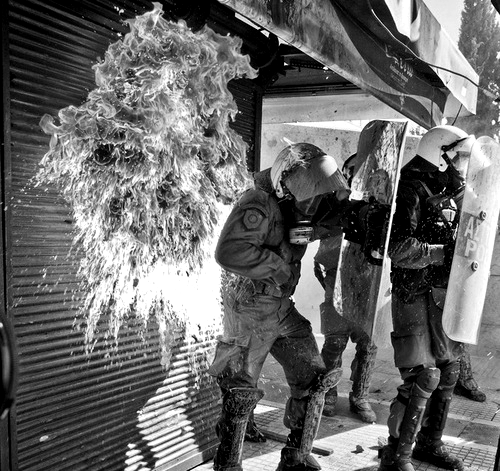
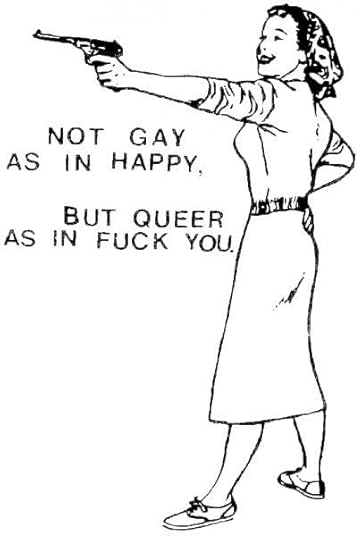
The roots of insurrection do not lay in institutions. It’s not something that you can buy, or claim through nationalism, or even learn in school. It’s something that grows from being labeled by said establishment as an Other, it is in the markings of being stepped on. There's no glory in that fight because its one that should never have to be fought. Really, May Fields should know this. She may be of privilege (like many protagonists in dystopian settings, effectively creating a kyriarchal white savior), but she’s a queer woman who had her first love stolen from her along with her ability to express herself as who she is. She was raped by squadmen who prance around throughout the entire book, flaunting their right to abuse their authority. This stuff isn’t strange, it’s not reserved for fiction. It happens all the time, though not nearly as often to the daughters of CEOs. These are the kinds of stories that fuel rage, that get molotov cocktails thrown, yet all we get from May is a few twinges of anxiety at the sight of authorities that have abused and used her. It’s not until she’s effectively given permission – she’s absorbed into the Protectorate and has the backing of two male characters (her relationships with the women she meets is much more shaky at first) – that she becomes more passionate.


The fact that May is a lesbian was really exciting for me at first. It seemed like a great opportunity to portray the defiance and rebellion of queerness, as opposed to the heteronormative perspective that dominates media. But ultimately it felt incredibly sanitized. May pined after her love the same way any airheaded YA heroine does after some boy she barely knows, and in May's case hers is in love with a man. As with much else she does, there was disconnect between her emotions and the events in her life because she waffled back and forth so much.

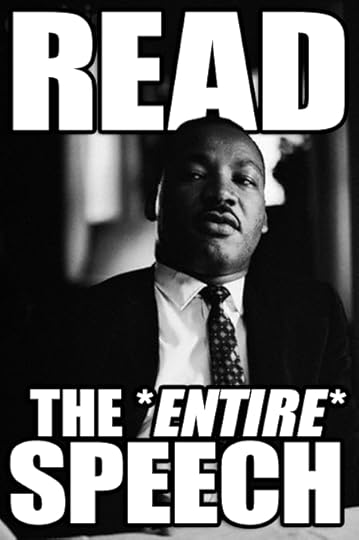
There's even a brief moment where, despite May expressing the satisfaction she feels of being in battle ("Though I can hardly admit it to myself, I am in love with war. The feeling of firing a gun, like holding thunder in my hand, is intoxicating. The power to kill compensates for all I've been deprived in my life"), she speaks of her wish for a nonviolent solution, invoking the name of Martin Luther King Jr. To which I declared "Oh hell no."

Dr. King was not a gentle lamb who wanted us to hold hands and sing Kumbayah. Back in the day he was an Angry Black Man™ and a communist and a queer and everything else ‘bad’ they could lobby at him. He was angry, angry about racism and war and poverty and sexism and homophobia and all the things that are swept under the rug when the same white Republicans who back then would have called him a traitor now mumble a few lines of the “I Have a Dream” speech once a year as if that makes their salty asses not racist.

Dr. King never thought that being a pacifist meant being passive. And now white people want to pass him off as some watered down civil rights leader who made white people realize that, oh, racism is kind of bad. - tumblr user piinboots



This is a lot to talk about, as you can see, and probably not even the best space for it. I don't think I've even touched on all I want to say, but I'm starting to burn out and I'm not even sure if any of this made sense. My point in all this is that stories like this are in fact happening. But they don't have the faces that we see in movies. And they don't have the protection of the American flag to wave as they go through with their final charge, even when they are technically citizens. It's not military war, its a guerrilla one, that gathers from one eaten-through rubber sole up, not from a title or a uniform down. And it just frustrates me that no one seems interested in telling those stories. That's all.

Anyway. I've got Insurgent on request from the library coming in soon. I'm thinking I should read something a little fluffier in between, yes?

(ARC provided by NetGalley.com)
Profile Image for J. Gates.
Author 15 books217 followers
June 1, 2012
The anthem of our generation. Epic to the one-hundredth power.
Profile Image for Melinda.
602 reviews9 followers
November 6, 2012
Blood Zero Sky by J. Gabriel Gates is a science fiction/political tale as well as a prophetic, and cautionary novel that extrapolates that the globe has knuckled under to two companies which have defeated the government. These two Companies both run their respective parts of the globe as monopolies – using God and debt to drive worker/slaves to new heights of debt/labor, it's like a combination of 1984 by Orwell and the old Coal Mine plots of yesteryear, where workers were veritable slaves – never getting out of debt to the Company, due to their need to buy food, clothes, and tools that only the company could provide at exorbitant prices which were higher than the person's wages – always leaving the worker with a growing debt. Could it happen in our future? The signs are rife that we are already going down that road - where our freedoms are slowly dying, due to poor commercial practices, government bail outs and other internal and external threats. Read more for details...

THE PLOT: May Fields, our protagonist, is the daughter of the CEO of N-Corp (formerly Nabisco), one of the companies that has taken over half of the world. She has a luxurious life, but she also has her secrets. One secret is that she is miserable and doesn't fit the mold of a perfect employee. She has been different all her life and that is against the HR-handbook. She could be fined, or worse. The anarchists know this and want to recruit her to bring the Company down. This book is about the struggle between Freedom versus Apathy – between Advertising and Propaganda versus Thinking and Truth. Even the Founding Father's of our Country are referenced in this struggle as a fourth branch of the government is activated in what amounts to a second Revolutionary War. May must choose between a life that is a lie but comes with luxury and toys versus a life of poverty that is honest and free, but that is branded unprofitable and bad by everything that she has been taught since she has been a child. What will she choose and what will happen when she does? Will she sell out the revolutionaries that have been the only people to care about her? This plot has some basis in fact, as our American government privatizes more functions each day to reduce the deficit. When things are driven by a bottom line instead of the good of the people they serve, there is no justice to be found in sight, and freedom is just a word bandied about. It has no bearing on what is really going on. We can't let this happen in America. Whether it comes to violence or not, we must stop this privatization from happening. A prophetic novel and a cautionary tale. For plot, I give this novel, a 9/10.

CHARACTERIZATION: The author did an outstanding job of characterizing his characters. Showing that a corporation was more than the sum of its parts, and no one person was in control. Like cells in the body – the people could have honorable intentions, and yet the company, being bottom line driven, could do horrific things in the name of profit with just a few people driving those horrific things. Jimmy Shaw was a classic example, a Jimmy Swaggart-like preacher, he taught that God was on the side of the Company, and labor was God's way. Like Swaggart, he led an alternate life, drinking and covering up for other people's alternate lifestyles, including his own. Did he even believe in God? I would have to say NO. May Fields, a conflicted lesbian, had a horrible childhood. Early on she was raped and had a child the Company took care of. Her Mother died, her Father was a workaholic, so no one was there for her as she grew up, except two friends, Kali and Randal. Kali disappears, due to a scheme by HR, who blackmailed May and Randal to get info on Kali's Dad. After that May is emotionally lost, but is sent to a boarding school in Switzerland to straighten her out. She comes back parroting the Company line, but inside, she is bleeding for Kali – who she is in love with. The characterization of even the blackest characters is well done. They all believe they are doing the right thing – which is a scarey thought. Most people in this world act like Magpies – you put something new and shiny in front of them and they are distracted from anything meaningful going on. This is how the Company keeps them in debt, by bringing out new, shiny things that people believe they have to have, reinforced by immersive advertizing. The Company just adds it to their tab – with no way to work off the entire debt in their lifetime, the debt is assumed by their kids, who start with their own debt plus that of their parents – and it just keeps going on and on. For characterization, I give this novel, a 9/10.

IMAGERY: If the imagery of this novel were to be in color, the color would be Grey for the Company, and Red, White and Blue for the Protectorate. Corporate grey is a perfect nondescript color for the Company, as tiemen and tiewomen wear it, the walls are that color in the Company, and it suits the mood, as most of the people that work there are scared that they will be deemed unprofitable and repossessed - and sent to a workcamp to work off their debt to society. There is one image of a product meeting being headed up by May Fields, where HR Stormtroopers are coming down the hallway. All in black, the Stormtroopers are still far away, but their marching in unison can be heard. Everyone looks at each other nervously, hoping that HR isn't going after them. Someone is going to be deemed repossessed. Who will it be? Everyone's throats tighten, as the tension rises in the room. The Stormtroopers boots get louder, as they march closer in unison – clearly headed for the meeting room now. All eyes turn toward May – like she can do something about it. She can't, so she sits there, wondering who it will be. The door bursts open, pinging off the wall and the lead Stormtrooper yells out the name Dagny. No one fesses up, so they start scanning the black crosses inset in peoples faces below each left eye that carry their ID. After a few tries, they finally find Dagny and pull her physically out of her chair. She struggles against them – exclaiming that she downsized her apartment and stopped spending so much, she can't be repossessed – it doesn't make sense. Her voice raises to a wail, as she is led away, her feet dragging against the gray carpet of the room. The Stormtroopers just drag her through the door – and tell her that the company recalculated employee profitability. They leave only a single, fashionable pump behind by Dagny's chair. May feels unsettled and about to nausea overwhelms her. She walks over to the shoe, picks it up and examining it, tosses it into the waste basket – irritated that they took Dagny, because she was the best member of her team. Not understanding her own feelings of tension, or why she is unsettled, she cancels the rest of the meeting. May goes shopping to make herself feel better. At this point in the book, she believes the Company knows best. This image of the Stormtroopers and May, the tension of the employees that May has no clue about is a strong image. These people are slaves to a system that is so tied to bottom line profitability at the expense of people and even internal function, that they would replace the best person on the team if that person was deemed unprofitable by a mysterious calculation by HR. This happened with no input from that person's manager – May Fields. It was all numbers. How sad is that. There are many strong images in this book. J. Gabriel Gates has a strong hand with imagery, and I give this novel a 9/10 for that.

THE GORE SCORE: If this was a movie, most of the gore would have been off screen, where one million thirty two people would have died in a painful way using neurotoxins or red-tagged as the Company called it. As it is, there is holographic video of a village in Africa being wiped out by triangular, black drones with toxic darts that are filled with one of the two hundred neurotoxins that the Company has developed to kill people better, especially one small child, who points to his village while the child sees it happening – a witness to the crime. During the revolutionary scenes, many die in a hail of gun fire, explosions, more darts of neurotoxin, and by falling debris. Many Stormtroopers die as well – in fact more Stormtroopers die than revolutionaries. At one point there was a count going, but that count becomes useless as there is a battle royale at the end, and that raises the count far above the numbers quoted in the book at the point – raising the number from hundreds to thousands. There is no reveling in gore in this book, it is just a means to an end, as violence was the only avenue left to combat the Company, or so they thought at the time. For a gore score, I give this novel, a 5/10.

DIALOGUE: The dialogue in this novel is so important. The difference between propaganda and true, heartfelt rhetoric. Propaganda as a weapon, and as the only source of information is a dangerous thing. Just like in Soviet Russia, and in Orwell's 1984, a single source of propaganda can lead a people to believe what it wants, which is what happens with the Company and Jimmy Shaw tying God to their cause. Demonizing everyone else – they made it illegal to be different, as well as evil. You were damned as well as convicted of a crime and sentenced to a workcamp or death for criminal infractions against HR.. The dialogue played a huge role in communicating the propaganda as well as illustrating the differences in the Company and the Protectorate. Their speech patterns alone as well as word choice and subject matter were so different it was impossible to mistake one from another. To see a character evolve from a Company drone to a Protectorate soldier was amazing. The dialogue slowly changed to compensate for the change in thinking, as the Protectorate was concerned about mind, body and soul. By reading the great thinkers of the world, each Protectorate member expanded their mind to include concepts like freedom, justice, redemption, equality, civil rights, the right to bear arms, the right of free speech, the right of assembly, and so on. These concepts changed their complete frame of reference. They now knew what they were missing. This was reflected in their dialogue, which changed drastically, because vocabulary enables thought. What you don't have the words for, you can't conceive. Propaganda controls vocabulary, so that people only think what you want them to. Gates uses these facts to his advantage when he wrote the dialogue. For dialogue, I give this novel, a 10/10.

PACING: The novel was like a rollercoaster ride. It was unclear at first what the novel was all about, though I still found it quite interesting to explore a world like ours, but in many ways, exactly opposite.. Gates was simply setting things up so that the reader was informed on who May was and what she did at the Company, how unaware she was of the world and people around her,.as well as how different her world was from the average person's, because she was the daughter of the CEO. This information is analogous to chugging up the big hill of the rollercoaster. You have the excitement of exploring a new world through May's eyes, because you know that something big is just over the top, so you definitely want to keep going. It wasn't an info dump at all, merely a setting of the scene so you would understand things when everything hits the fan later on. When you do get to the top; when the explosions literally begin, you find that the novel hits high gear, and doesn't slow down until you reach the end. The battle begins as the Protectorate takes aim at the Company, and escalates until the battle royale at the end, winding down, until the coup de grace is delivered, which is where the novel ends. The transitions were well done, while it is single character POV novel, we have May at differing ages at different times. You can tell by the setting which age May is speaking from by the things in the scene – some are old, and therefore May would be young, if there is a lot of new technology, then it is modern day May (for the novel). Many times, it explicitly states how old May is at the beginning of the section. “I am sixteen, and it is summer.” That is obviously a dead giveaway. Overall, once you got past the basic world exploration and the explosions started, the novel kickstarted in third gear, shifting to fourth, fifth, and sixth almost immediately and you never looked back. The pace was fast – a real page turner, and it flew by in a single sitting. For pacing, I give this novel a 8/10.

THE ENDING: This novel had a very satisfying ending. For one: it wasn't a cliffhanger, two, it gave people a non-violent way to just get up from their desks and protest the Company, and three, May's Dad did something I never thought he had the guts to do. While there was tragedy as well, it happened in the name of freedom. Hopefully the entire incident will become historical and be a day that is commemorated in the annals of American History for the good things that came about because of the actions done that day by real people in harrowing situations. There is an afterword by Gates that goes on to talk about his history with getting the book published, and how over time that job became easier, because the novel, which was viewed first, just as simply hyperbole, turned into being viewed as prophetic, based on government bail-outs of big corporations and other historic events occurred, which are described in the novel, as the beginning of the fall. I found that part very enlightening. I'm sure, at that point, Gates had more than one offer to publish his novel. Even though the Protectorate in his novel resorts to violence, Gates himself believes that words are the best way to solve our problems. The ending tied everything together in a single battle royale and added a coup de grace with the same characters we began with, though both had been deeply changed. One explains to the other what must have happened to the Company while he wasn't aware of it. The other delivers the coup de grace, enabled by a third, who built the technology, and the novel ends, as the effects of the coup de grace are just then rippling across the world. It was very nicely done. For ending, I give this novel, a 9/10.

THE UPSHOT: It is hard to describe how this novel effected me. My parents lived through the depression, so they instilled in me a hatred of debt. Being a stout individualist, I have a hard time with anything that makes me tow the line to what I perceive are other people's idiocies, or any type of drone position. I do not like to say Baa! I am not a follower. I do not suffer fools gladly, nor do they suffer me willingly either. This book reminded me that education of our past and an exhaustive vocabulary are our best tools to prevent something this horrific from happening anywhere in the world, not just America, but anywhere. Your thoughts cannot be controlled if you can think outside the controlling frame of reference, and historical education and vocabulary do that for you. This is a novel that everyone should read. I recommend this novel whole-heartedly to everyone around the world as a cautionary tale of what could go wrong if we continue down the path of greed, apathy, illiteracy, and ignorance that we are going down. If shiny objects and buying whizzy, new things each year distract us from the real value: each other, our freedoms and our societies, histories and communities with one another face to face, and we all don't work hand in hand to improve our democracies then we are doomed to fail. Learn the lessons of those old coal miners, which is a small parallel to the Company but the same practice nevertheless and read Orwell's 1984. The overall score for this book is 54/60, a mid 5 stars.

MLB SCORE CHART

50 – 60 5 STARS
40 – 49 4 STARS
30 – 39 3 STARS
20 – 29 2 STARS
10 – 19 1 STARS
00 – 09 0 STARS
Profile Image for Christina (A Reader of Fictions).
4,586 reviews1,760 followers
October 19, 2012
Originally posted on A Reader of Fictions.

I read a lot of dystopian/post-apocalytpic fiction, but, in the last couple of years, I've primarily read YA ones. Sometimes I forget just how much bleaker the adult ones are. Whereas in YA dystopias, the youth with newly opened eyes joins a movement and you know they have pretty good chances of defeating the evil government, in an adult dystopia, odds are a lot higher that the bad guy will win. Blood Zero Sky is one hundred percent dystopian, not watered down or limited to a small population.

The opening scene hooks the reader right off. The heroine runs, bullets flying around her and through her. The men and women nearby pull away, trying to avoid her and make it to work on time. That's all you get and then it's back in time, the novel progressing forward to that opening scene. This narrative technique is tricky, as the audience now has a pretty good idea of the ending. In this case, I think this opening sets the reader up for what to expect: lots of pain and fighting and powerful bad guys.

Our heroine has a pretty perfect life. Her father is the CEO of N Corp, one of only two corporations in the world. N Corp runs all of the western hemisphere. People either work for N Corp or they struggle to survive as Unprofitables. Essentially, most of the world's population works in indentured servitude to the Company, living in Company apartments and buying on credit, with very little chance of their salary every matching their spending. Those few that do manage to pay off all their debt are known as blackies.

May Fields will be a blackie in a matter of years. She runs the Marketing division, coming up with ways to convince the population that they simply must have the new version of this or that technology, which, honestly, doesn't differ much from the previous version. Like everyone else, she spends almost all of her time working. She has one friend, Randal, a genius, so brilliant that he was put into a special team, whose intelligence is enhanced by pills that have the side-effect of weight gain, stuttering, and sterility.

May has a secret, however, that proves her undoing. She is a lesbian, still dreaming of her childhood love, Kali. She also likes to dress in men's clothing, another taboo. The Company, you see, is smart, and pushes Christianity on the population, choosing to stress the stories that advocate hard work. They're big on morality, on behaving a particular way. Jimmy Shaw, the Company's face for religion, creeps me out so much. He's only in a couple of scenes but they are shudder city.

N Corp basically terrifies the shiz out of me, because it's just so incredibly soulless and in control of everything. They implant crosses in everyone's face, sold for convenience's sake as they allow the user to control technology with their brains. However, these can also be used for tracking. N Corp sells one person cars to ensure that every single person has to buy their own. Employees that are late to work are fined. People are charged money simply for entering a store, whether or not they make a purchase. Gates paints a gruesome picture of capitalism run rampant.

Gates' dystopian world building is marvelous, and I applaud him for that. I relished the return to a classic dystopian framework. As I feel like I'm always saying though,, I did not feel a huge connection to the characters. Only for three of them do we really get any kind of back story, one of them being May. Without a back story, the others are a bit one dimensional, either part of the Company or the resistance. May herself is icy cold and pretty much emotionless for most of the book. Towards the end she defrosts a bit, but she's the kind of heroine that sort of pushes the reader away. My favorites actually ended up being McCann and his son, Michel.

I recommend this book highly to readers that enjoy the works of Max Barry, as I felt a lot of the themes really spoke to my memories of his book Machine Man. When you get frustrated at a lack of world building in other dystopias, you can come revel in Blood Zero Sky.
506 reviews6 followers
July 30, 2012
Thanks to Netgalley for the text in exchange for an honest review!

May Fields never doubts that The Company is good. Thousands of Company employees have risen from poverty’s clutches, millions have embraced Christ, and innovation continues to create newer and better products for humanity. Proudly, she is part of the mechanics of The Company that makes such prosperity happen. But why then, does May long for something more? May isn’t sure--that is until she is kidnapped by an organization that wants more—but does she want what they are offering?

The narrator of the novel and protagonist, May, is very difficult to identify with. She is jaded, empty— and in case the constant reminders in the text don’t help you to remember—homosexual. Yet, her vapid nature and her vacillating values are reflective of the culture that she lives in—she is less heroine and more caricature, and her homosexuality opens the door to addressing sexuality in the eyes of the Christian church; so, in a clumsy way, her character works, so long as the reader remains open to the idea that the plot of the novel is more theme-driven than character-driven. “God, science and company policy” are intertwined in this novel, which can be somewhat jolting, especially when the narrative touches on so many issues, albeit timely ones, relevant to readers. Whereas individual problems with society have been addressed by numerous authors before, such as implanted net-links and consumerism (M.T. Anderson, Feed), the decline of literacy (Ray Bradbury, Fahrenheit 451), discrimination (Shine by Lauren Myracle for one), and Big Brother government (1984, George Orwell), no other novel has combined all of these issues with the corruptive nature of a prosperity-based theology and tossed in gay rights to boot; perhaps such all-encompassing commentary is a bit overwhelming.

However, there is much to be admired in this work. Without a doubt, Gates nails the dystopian genre, and uses current trends to predict the direction the globe might be heading. Standing apart, each issue seems slightly disturbing, but mixed together in an ever-simmering mixture of reality stew it doesn’t seem like much of a stretch to anticipate that our world pot might soon boil over. After all, aren’t larger corporations gobbling up smaller businesses? Aren’t some Christian religions now touting prosperity and blessings as the earthly benefit of being a follower? Don’t our youth (and adults) crave the next latest “thing” that is quickly trumped by the next, slightly-improved gadget? Aren’t the same companies that finance us, also producing the gadgets that we slave to obtain? Aren’t politics and religion, slowly merging their lines into a muddled picture, with liberals being accused of secularism and conservatives holding the keys to the kingdom?” How much farther then until church and state become married? Thus, is it really much of a stretch to see a world where The Company displaces government? One where Company “bystanders” allow those who have acquired too much debt to be sent off to Company work camps? Or a world where “…experts agree that debtor-workers across the globe stand to benefit greatly from what’s being called the final consolidation” (and hasn't this sort of happened before)?

Sure there are questionable plot points in the work. For instance, why is it necessary for May to be raped when this event seems to be more of a plotting tool to get to the climax rather than a revelation to illuminate and grow May’s character? Why does May kill Company employees with little reaction and then vomit at the sight of other bodies? How can May be so naïve? Isn’t some of the American singing and flag waving a bit melodramatic?

Yet, despite its quirks, this intricate weaving of apparent flaws becomes its own clever style of “propaganda”—one that might achieve the writer’s purpose—a “call to awareness” that all people should stand up and take notice of.
Profile Image for Mickey.
90 reviews1 follower
August 6, 2012
What the dickens just happened to me? I think I may have just gotten slapped with a halibut, or maybe I just read something completely original. Blood Zero Sky by J. Gabriel Gates has a believable, if unfortunate outlook on the future. Governments have been privatized and cash is pretty much debunk. Instead, everyone is given a line of credit, which they work to pay off. But hard work gives you more credit, opening up opportunity to get new shiny toys and go further in debt. Pretty much, every working person is in debt for their entire life. The point of the system is that you won't pay it off; you'll be indebted to the company forever. (Side note- Nabisco as a world superpower just cracks me up.) May is one of the few people that should be able to reach Blackie status and escape debt, but she's the company president's daughter, which could have something to do with it. So if you aren't going to be a Blackie...why not just dig yourself into bottomless debt and stop going to work? Because if your debt outweighs your usefulness, you can be shipped off to a work camp. Believe me, you DON'T want to go to a work camp. So this is the backdrop for our story. Now May starts out being a little happy peon of the system, but I'm sure you can imagine that she doesn't necessarily end up there. I didn't always buy into May's motivations, but I really enjoyed learning about the world Gates created. I almost wish the latter half had included more fleshing out of the system and how others live in it than the completely removed world of the revolutionaries. I give it 4 out of 5 cross implants and hope that our televangelists have a little more moral fiber than this story's religious mogul.
Profile Image for Christina (Ensconced in Lit).
984 reviews290 followers
June 24, 2012
I received Blood Zero Sky by J. Gabriel Gates from NetGalley (HCI publishing) in exchange for an honest review, thanks!

Blood Zero Sky tells the story of May, who is brought up in luxury in a futuristic world where ads and drugs have taken over the population. She works at the Corporation, one of two companies that are taking over the world, and her father is at the helm. Quickly, she finds out that the Corporation is more sinister than she ever was brought up to believe.

I was torn about this book. The author has a good imagination, and he painted a world that I could visualize in my head. I thought Ethan, the head of the Protectorate, was a great character. The book really picked up in the last 25%. Gates excels at action scenes.

That said, I had some major issues with this book. Just as a caveat, part of my discomfort was that this was an ARC kindle copy and the formatting still needs a lot of work. First, the main protagonist really has a male voice. We find out that she is a lesbian early on in the book, and perhaps this is the way that the author dealt with her masculine voice, but it was difficult for me to remember she was female. Second, I feel like I've seen this book before in different pieces. I know that he started writing this way before, but unfortunately, we've been inundated with dystopian books since then, and he works at a bit of a disadvantage. Third, I felt like I was being preached to for most of the book about the evils of corporation. It was a little too simplistic of an argument to be repeated (albeit to a disbelieving character) multiple times. I ended up skimming the rest of the speeches.

Blood Zero Sky had promise and moments of drama, but ultimately, I had issues with the unconvincing voice of the protagonist and preachy tone.
Profile Image for Sarah Coleman.
56 reviews2 followers
November 7, 2012
I’ve never read 1984, but I’ve seen reviews that compare it to Blood Zero Sky. This is not a book you pick up for a little casual reading on the beach – and I dare say that it’s an incredibly creepy book to finish right before Election day.

The movie Contagion was unsettling because of how realistic it felt – I found myself wanting to bathe in Purell in the first five minutes. Had it been more over the top, I wouldn’t have cared. That is precisely the best and most terrifying element of this book – nothing about it seems impossible. If I had any credit cards, I’d have chopped them up by now. As it is, I had half a mind to drag my building neighbors to the polls this morning.

In this setting, the world has done away with government and is controlled by two companies, the result of years of corporate mergers. The population no longer uses cash, but relies on credit. Work hard enough, long enough, and you may be fortunate enough to get out of debt. Fall too far behind, and the Company will come knocking, and deem you “unprofitable”. You don’t want to be unprofitable. Can anyone break the cycle of lust and consumption long enough to see the truth?

This is one of the best books I’ve read this year, and certainly the most chilling. Intense and thought provoking, I’m not sure it’s possible to walk away and forget about what you’ve just read. For this reason, I can’t recommend Blood Zero Sky enough. While it challenges your complacency, the story is entertaining. It’s a testament to how well-written it is that this book can carry such a heavy message without feeling preachy.
Profile Image for Stephanie Ward.
1,227 reviews115 followers
October 29, 2012
4.5 Stars

Lately I've been really into science fiction novels - especially dystopians, so this book sounded right up my alley. Needless to say, I wasn't disappointed. The chapters were short, which keeps the reader actively engaged in the story. The narrative is very well-written and the characters are complex and deep; it was really easy to get sucked into the creepy futuristic world that Gates created. The novel is very fast-paced; so even though it was a bit long, it didn't take very long to read. I couldn't put it down. The plot had so many twists and interesting ideas that it truly keeps the reader on their toes and trying to figure out what is going on - right up to the very last chapter. The back story, history, and descriptions of the world the novel is set in was vivid and completely intriguing. The level of detail is captivating and I was totally immersed in the entire scope of the book. I highly recommend this book to anyone who likes science fiction novels, especially dystopians, and futuristic thrillers.

Disclosure: I received a copy of the book in exchange for an honest review.
Profile Image for Mischelle.
8 reviews
January 11, 2013
Amazing book! The scary part tho is this is starting to happen now. Greedy companies are trying to take society over with promoting worthless products on a continuous people and we as humans are being bombarded by advertising propaganda, so we play into it and are always purchasing something! Most people are in debt up to they're eye balls having to have "stuff" and giving up alot in return mostly working like dogs. I get this feeling of being a piece of cattle often always going with the herd afraid to step out because then you are considered "odd" and such. Blood Zero Sky shows what happens when you step outside of your comfort zone and realize that "stuff", "credit", "I have to have this now" attitude amplified and how society is heading now.
I think this should be on alot of reading groups especially in the schools but I imagine that it will never happen due to corruption and people afraid to see how this is actually happening now.
112 reviews
January 21, 2016
Blood Zero Sky describes a scarily plausible future where two corporations run the world, coopting the functions of government, economy, religion, and every other cultural construct. May Fields, as the daughter of the N-Corps CEO, seems to have a bright and prosperous future with the company, but May has secrets. One of these is her dissatisfaction with her life, as she must hide her differences from the rest of society. May is a wonderful, complex character and Gates does a wonderful job of dramatic tension as he develops her from doubt and dissatisfaction, to rebellion and renouncement, but still troubled by uncertainties. The climax of the book is especially well done, riveting and emotional. It is a difficult ending to read, but not without hope. An immensely fine read.
Profile Image for Vesryn.
26 reviews
December 3, 2018
EXCELLENT book - I flew through this in less than 3 days. Sure, it's your run-of-the-mill, capitalistic-dystopian society, but honestly I thought it was fairly refreshing for being that.

I definitely saw those few twists (regarding R and Claire) coming, but it was still an enjoyable read regardless. That's probably my only complaint! Otherwise, I thoroughly enjoyed the intense world-building and I loved how the characters, especially May, felt flawed and real. I know one reviewer complained of May's wishy-washy attitude, but I just thought it made it more real, considering May's entire life had been dictated and brainwashed by the Company. The pacing was good - especially the last half or third, where it picks up - and I thought Gates' writing style fit. Read it!
This entire review has been hidden because of spoilers.
Profile Image for John Bascom.
Author 4 books6 followers
July 30, 2013
In all fairness, the book was so lame I did not finish it. First the good news: the author has a way with words that is unusual, refreshing and interesting. A good wordsmith.

Now the bad news. The dialogue was largely absent or amateurish and unconvincing. People simply do not talk like that. The characters were interesting enough, though unbelievable. The plot was preposterous, seemingly intent on advancing a leftist, occupy-Wall Street anti-establishment type ideology with little regard for research or getting reader buy-in. We all have to suspend disbelief a bit with fiction, but this book was just silly. For instance, the central character is escaping from a bombed building and just happens upon a helicopter on the roof with the keys in it. And she just happens to be a helicopter pilot, without any basis or rationale having been established. Then she flies the 'copter, only to find that the richest and most powerful corporation in the world has left it with empty fuel tanks to save money. Low on fuel, she bails from the helicopter and careens violently into a river, even though anyone knows a running helicopter is perfectly able to be put into a motionless hover inches above water (ever see Coast Guard rescue footage on TV?)if someone is planning to jump. Then there was the corporate board meeting held on a stage in a filled auditorium (it doesn't work like that), then...well, I think you get the picture, it just gets sillier from there.

Overall, the author has a way with words but is no novelist. His ultra-liberal ideology clashes with his ability to craft a compelling story. I'd say "back to the protests" and leave the story-telling to others who know how. Two stars out of pity.
8 reviews
January 26, 2016
While not on the level of Orwell's "1984," Huxley's "Brave New World," or Bradbury's "Fahrenheit 451" as far as dystopian novels go, this is an engaging tale. In this dystopian future the world is run by two huge corporations - one American in origin and one Chinese in origin. People's lives are pretty much owned by the company that encourages them to buy more and more things while striving to increase their credit level. Go over your credit limit and you're repossessed by the company and sent to a labor camp, ostensibly to pay off your debt.

May Fields is the daughter of the CEO of the American company, N-Corp. While her life is pretty lonely, she doesn't really consider any alternatives until she is kidnapped by a revolutionary group called The Protectorate. The Protectorate is supposed to be a fourth branch of the original American democratic government, created to put things back in balance should the checks and balances of the executive, legislative and judicial branches fail.

It's a world not far removed from our own, where the corporations have merged to become one and legislated the government out of existence. Gates' tale gets a bit obvious and heavy-handed at times, but it really held my attention nonetheless. I think it would make a great movie. Don't expect brilliant literature here, but do expect an intriguing story.
Profile Image for Corinne.
19 reviews3 followers
September 20, 2013


I really liked this book until the end where I felt like it got somewhat tea party preachy about our government. I felt like the whole book had a good thing going until May joined the camp and then it just became this long preachy thing about how America has gone to shit and how there's always been the protectorate and they keep America safe..

What I'm saying is that the ideas and concepts explored in this book were really interesting - globalization, hyper religious zealots, hypocrisy , drugs tailor made to make people more productive, corporations above everything, wealth and drones, debt and always having it- there are a lot of really great concepts..

But then it veers off into a political essay which would've been fine if it wasn't written so cheesy. I expected, well - more.

I suspect the author and I would get along well - he's an occupier, I did the same. I'm very involved in politics, so maybe it was the patronising tone of the book that bothered me.

All in all - great concepts, decent ending but I dont need a lecture on history or anarchy - maybe other readers do.
Profile Image for Sam Williams.
1 review
January 12, 2016
Blood Zero Sky by J Gabriel Gates

This book is a great read for people who like sci if. It packs a great adventure following the character May Fields as she ventures through her life as a high Roller working for her father's massive company.

This book was very interesting to me. It took me through crazy adventures and I think it many of you would enjoy it.

I liked how the plot never stopped to develop the story. What I didn't like was that it took a while to develop.

The writing style was great, very interesting, although he did use some different grammar I'm sure none of us had heard before.

I would recommend anybody into sci fi fiction, it packs a great adventure for those people into that, and also has a very intriguing story line for those looking for more detailed book.


This entire review has been hidden because of spoilers.
32 reviews4 followers
May 30, 2013
This may actually be more disturbing than the movie "Idiocracy" in terms of making me lose hope in humanity. It was an interesting read and well worth the discomfort I felt. Nice balance between heavy railing against corporations run amok to an epic scale and developing a multi-faceted character.
Profile Image for Lisa Mandina.
2,340 reviews496 followers
dnf
October 16, 2014
Just couldn't really get into it. Interesting idea, just not my cup of tea.
Profile Image for Anagha Uppal.
185 reviews58 followers
November 15, 2012
Just got a copy of this! Eeek!

A lot of unemotional descriptions a la 1984 that really affected me more than an emotional book might.

Another fabulous book by the amazing Gates!
Profile Image for Carol.
1,771 reviews22 followers
December 16, 2017
I really did try to read this. But I did not like the author's style at all. I did not care for the main character. I did read some ways in, but the only thing I liked was the premise.
Profile Image for Amy.
31 reviews7 followers
August 22, 2014
be warned.....it has one of "those" endings

Displaying 1 - 27 of 27 reviews

Can't find what you're looking for?

Get help and learn more about the design.